Categories
Living

Here and Now at the World Trade Center

The city of the future is here and now at the World Trade Center.

IN THE LATE SUMMER OF 2010,I got a phone call about a potential documentary film project. Would I like to meet with the producers, who were looking for someone to help develop their storyline? Sure, I replied. Could I come down to 7 World Trade Center for a meeting? A wave of dread washed over me. The World Trade Center, where 2,606 of my fellow New Yorkers were murdered nine years earlier, which I’d watched from my neighborhood in Brooklyn?

Nine years after 9/11, I still hadn’t been down to the site. The endless parade of headlines trumpeting lawsuits, stalemates, political opportunism, incompetence, greed, and infighting hadn’t exactly inspired a trip down to see what stagnation looks like up close. Why rebuild anything at all? I was still of the Speed Levitch school: just turn it into a buffalo park. Seven World Trade was the only tower that had been rebuilt (because its footprint wasn’t on Port Authority land) and still hadn’t reached full occupancy. That it was already home to an eclectic mix of firms from range of industries didn’t matter to me. Ground zero was still ground zero. I wasn’t alone. When I later asked our agent to come down for a meeting, his reply was unequivocal: “No way.” Such were the depths to which many New Yorkers’ feelings about the site still ran, even nine years after the event. I’m being irrational, I thought, and agreed to meet with them.

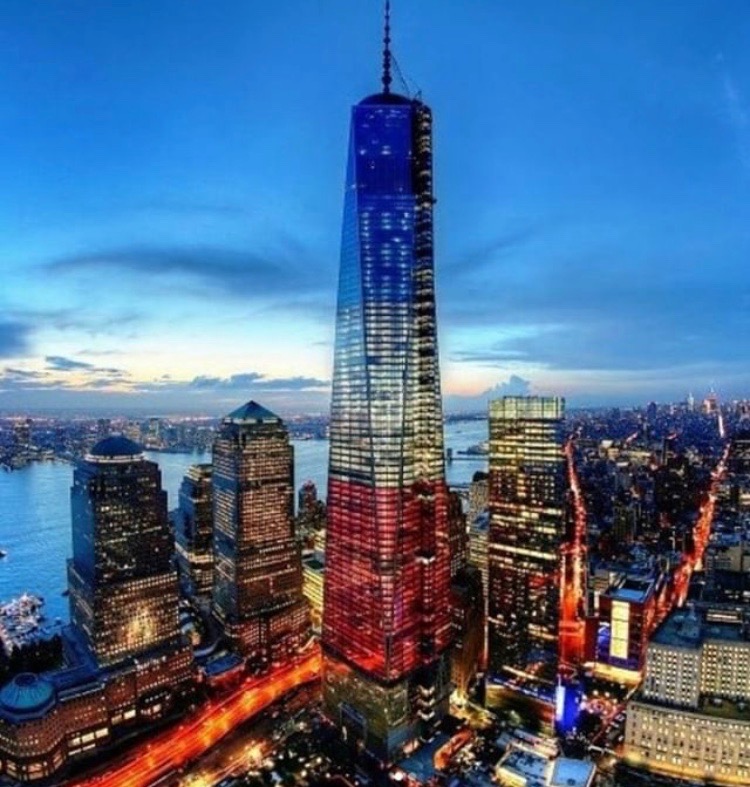
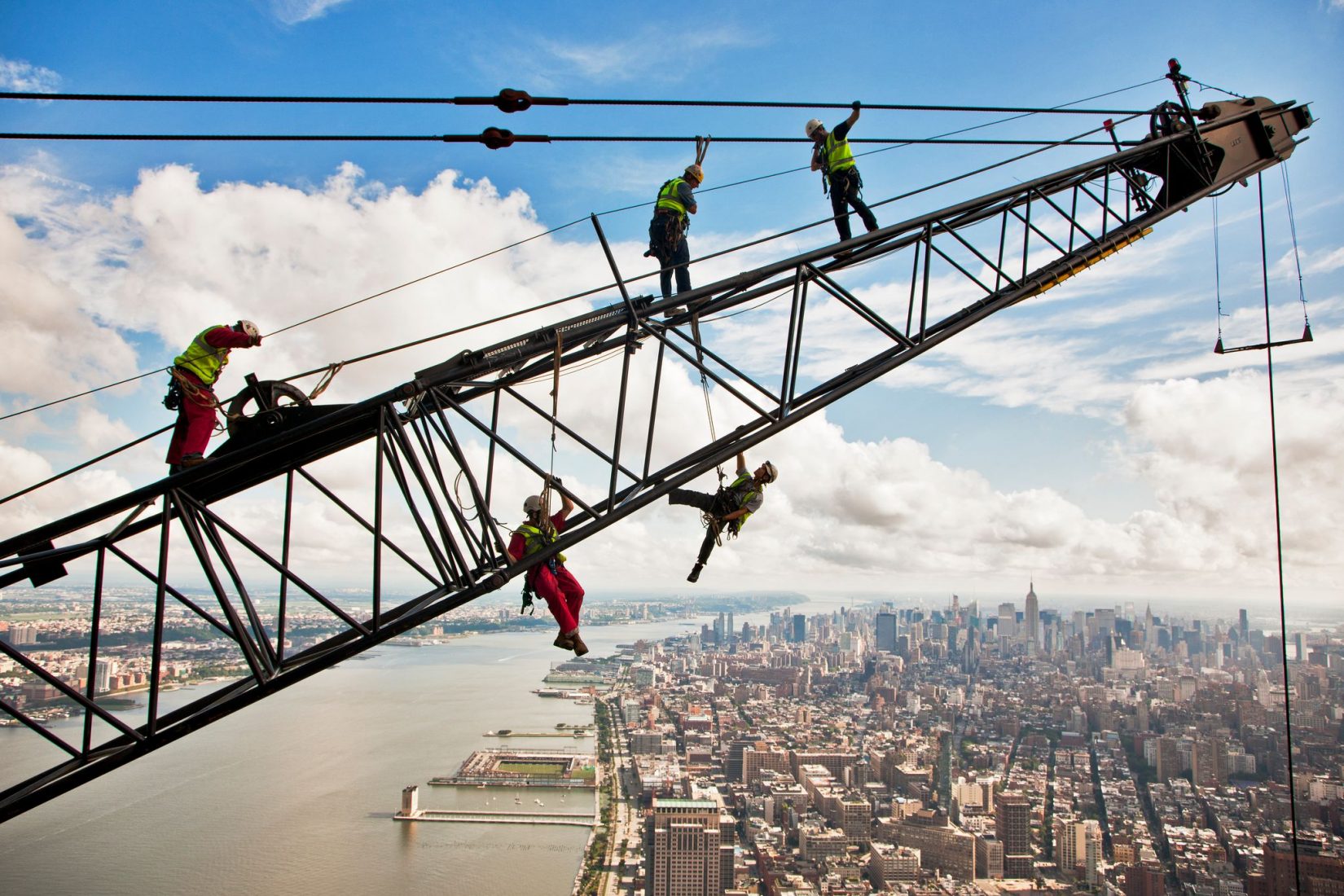
I spent much of the next three years on the site. On it, above it, beneath it, surrounding it, as we recorded the rebuilding process — from 70 feet below grade to a quarter mile above it — for what would become the documentary film 16 Acres.I watched as the “Freedom Tower” rose from a concrete stub up into the clouds, only to be rebranded the flaccid, if less ostentatious, “One World Trade.” I rode the interminably slow construction elevators and climbed the vertiginous open-air “stairways” that clung to the side of the structure, humbled by the seasoned construction pros who nimbly bolted up and down them as the tower surged skyward at the breakneck pace of a floor per week.

I touched the concrete slurry wall at the base of the pit — now part of the museum, then little more than mud and dust — with site master-planner Daniel Libeskind. I watched as an elite team of plumbers tested the colossal 26,000-gallon-per-minute water pumps beneath the Memorial pools, an area that would later be flooded by Hurricane Sandy, molding up the drywall and shorting out the vast below-grade electrical web mid-installation. This is just to name a few of the more memorable moments. It was only through this protracted, granular engagement with the site that I was finally able to fully process 9/11. That I’d one day be working in One World Trade Center had never entered the imagination. But sure enough, on August 3, 2010, Condé Nast — a company I’d freelanced for, for almost a decade — signed a tentative deal to become the anchor tenant of One World Trade. “Think: Anna Wintour, the imperious editor-in-chief of Condé Nast’s Vogue, who inspired the novel and film The Devil Wears Prada, and Graydon Carter, the bon vivant editor of Vanity Fair, stepping out of black limousines at ground zero,” marveled Charles Bagli in the Times. It would be another four years until moving day, but it was a major turning point for One World Trade and a bellwether in the evolution of downtown from “the Financial District” to the home of a diverse array of companies from a range of industries, many of the newcomers big media and technology firms. (The financial industry now represents just a third of the pie, down from 56 percent in 2000.)

Not everyone at Condé was thrilled about the move. I heard more than once: I hope they fire me before I have to work in there. It didn’t help when Chris Rock joked on SNL that the building should be renamed the “Never Going in There Tower” the very same week the move began. But it didn’t take long for the skeptics to thaw once we’d settled in. It only took a few Instagrammed sunsets over the Hudson for the anxieties to begin to melt away. Dazzling views like these certainly weren’t something we had at the company’s previous spread in Times Square.

Reinvention, transformation, innovation, devastation – these are just a few of the themes of downtown. Build it up, tear it down, and build a better one, or a worse one, depending on your point of view (but in any case, a newer one). The grand, ornate “skyscrapers” of Newspaper Row, arguably the world’s first, were torn down in the mid-20th Century. Radio Row, once home to the largest concentration of electronics businesses in the world, was reduced to rubble to make way for Minoru Yamasaki’s gleaming, gargantuan Twin Towers and their surrounding superblock. The iconic 47-story Singer Building was razed in 1968, at the time the tallest building ever to be torn down, to be replaced by One Liberty Plaza. “Do you actually think they might one day tear down this building to make way for something new?” a colleague at One World Trade once asked me. The question hadn’t yet occurred to me, but the answer was unequivocal: Why, yes, I do. Change is the only constant. Oh, and those stunning views.
Categories
Art

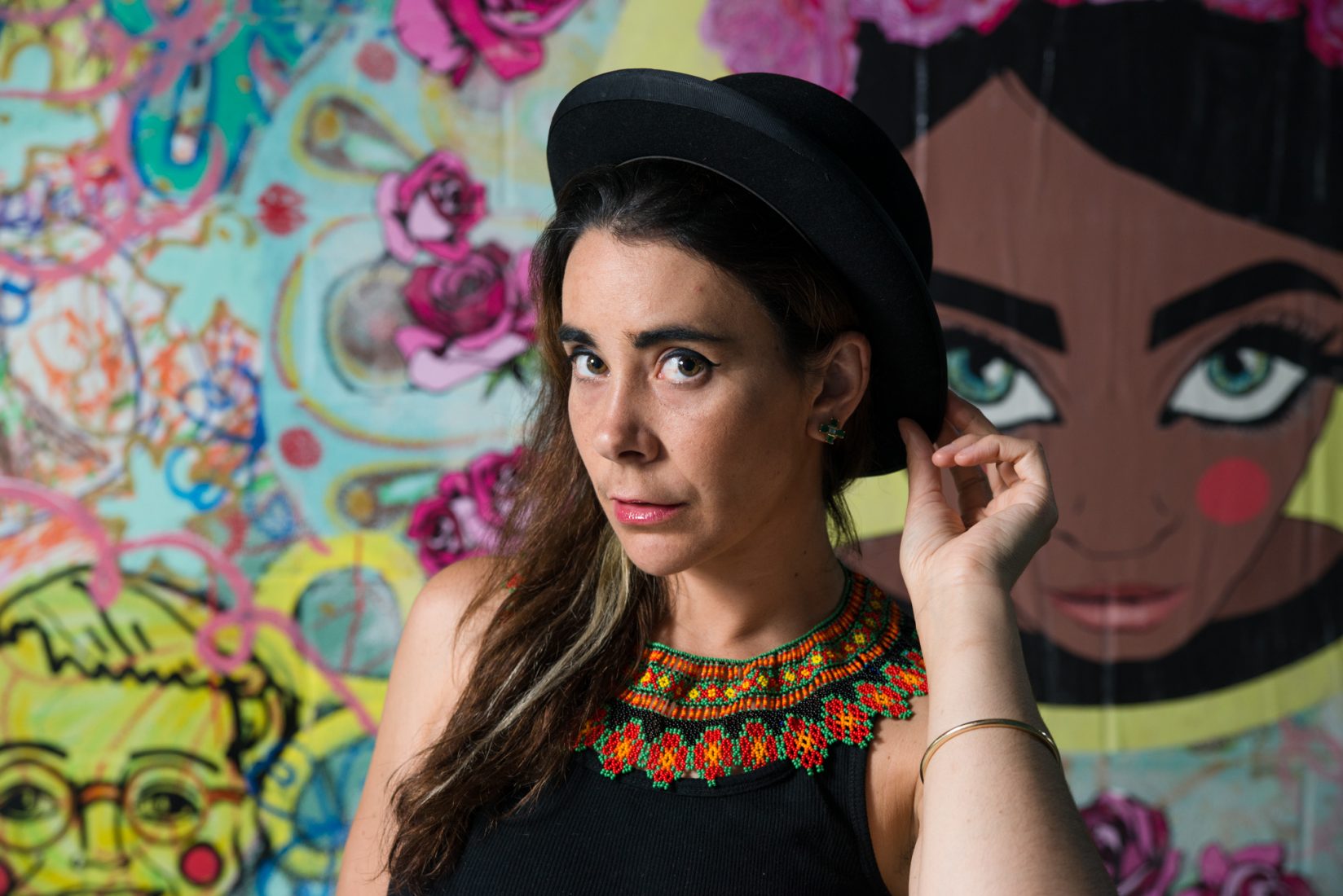
Chinon Maria at the World Trade Center

Artist Chinon Maria at the World Trade Center’s New Gallery

CREATING PUBLIC ART in the World Trade Center has been one of the most humbling and emotional experiences of my life,” says Colombian-born street artist Chinon Maria at the World Trade Center

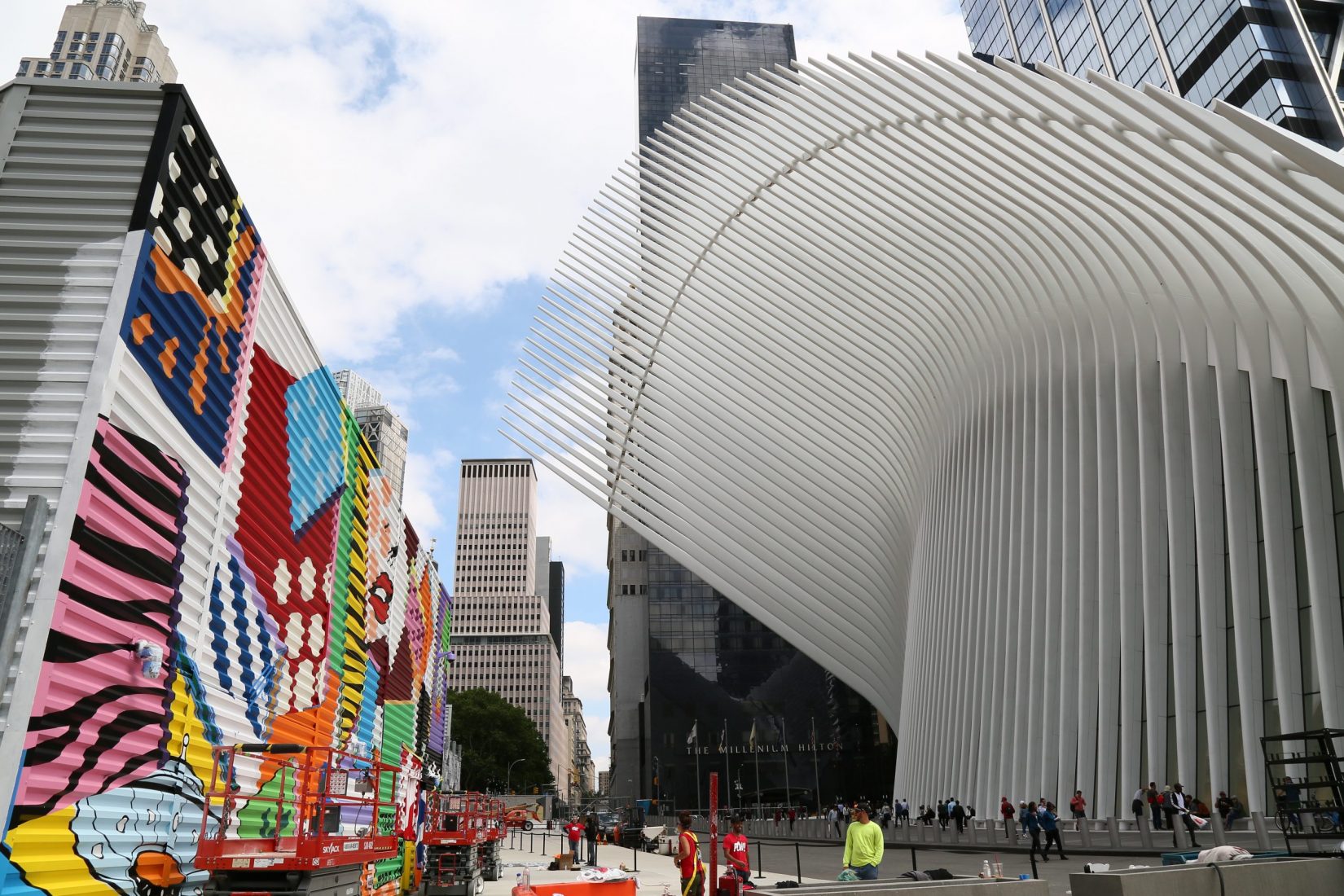
Chinon has four large-scale murals that call the World Trade Center home. Her latest, One World, Our Childrenwill be placed at the future site of 5 WTC and features faces of nine refugee girls from around the globe. Maria asked 1,500 children from 40 countries to mail drawings and descriptions of their dreams for the future, which she incorporated into the mural, with the help of 350 local student volunteers.

Drawing Inspiration Worldwide

“I like to think New York has a place for all these cultures, and all these ideas that I love from all over the world,” Chinon explains. “My artwork is vibrant, colorful, hopeful with an underlining message of unity, healing, and social activism.”

Chinon’s high-energy work has been comissioned for public spaces around the world, and always within her preferred medium—public domain.

“Public art is so important to me, that accessibility, you can’t put a price tag on it,” she says. “It has the ability to actually change space with positive reinforcement and the resurgance of hopeful attitudes.

Taking It Home to New York

“While new projects take her to Mexico and beyond, it’s in lower Manhattan where she feels most at home and spiritually connected.

“In Downtown, you can walk on any block and at any moment you can see people from all over the world and that’s, for me, really inspiring as an artist.”

Art’s transformative power is especially meaningful to Maria’s downtown work., as she aims to positive contribute to the area’s rebirth.

“Art has a power to bring together people from different cultures to identify with a piece of work, to enjoy a piece by just being able to see it on the street and getting the community involved,” Chinon says.

Murals at 4 World Trade Center

To do just this for 4 World Trade Center, Chinon wanted her mural to depict the rich history of New York City in an inviting way, and also sat down with children from the community to talk about the future of the city.

“It was not only 9/11, the tragedy that happened here,” she says. “There were so many other things that have made this city what it is today—good and bad—so I wanted to make sure we could honor that through a piece of artwork.”

“To end it on a hopeful note, I worked with community children to say the future of New York City is going to be bright, and beautiful, and filled with diversity and color.”

Visit the work of artist Chinon Maria at the World Trade Center at wtgallery.com/chinon-maria

Categories
Featured News NYC

What is took to Rebuild the World Trade Center

The World Trade Center in a pivotal era of rebuilding

A wealth of information exists out there on what happened during the 9/11 attacks. Documentaries, films, podcasts, books, you name it: most are a few clicks away. Yet considerably less so exists for what happened in the wake of those attacks, how the World Trade Center was rebuilt and Lower Manhattan was transformed into the thriving commercial and residential neighborhood it is today.

Top of the World, a podcast produced by Muddhouse Media in collaboration with Silverstein Properties, explores what it took to rebuild the World Trade Center campus and many of the other centers across downtown from the eyes of the rebuilders themselves.

Larry Silverstein, Daniel Libeskind, Mayor Michael Bloomberg, and Mary Ann Tighe are among those who led the development, design, and policy-making which indelibly changed the downtown landscape as the neighborhood sought to recover.

Top of the World also comes in the wake of another crisis: as Kris Meyer, the CEO of Muddhouse Media describes the podcast as it focuses on “the rebuilding and recovery of New Yorkers, again at lower Manhattan, but bookended with the rebuild and the recovery coming out of COVID for New Yorkers.” Yet as the city’s resilience carries on following this very different type of public health crisis, we can see that the spirit of New York remains strong as ever. “As Larry Silverstein says, ‘Never count New York out,’ New Yorkers are resilient, strong, and they’re rebuilders. Just as every city in the country, in the world, has to rebuild and recover, I think we as a people have that in our DNA: to rebuild and recover and come out stronger and better than we were before,” Meyer continues.

Stories from the Rebuild

As the podcast goes through the initial design competition for architectural proposals of One World Trade Center into the many negotiations that took place between developers and the Port Authority, guest features speak through their experiences while on the front lines of it all, including the anecdotes, pitfalls, and personal successes that accompany any project of a scale like this. Meyer recalls that of the most interesting points, listening to Larry Silverstein talk about the research put into making those buildings the safest in the world: what it took to build those and the research on how to build a better building, a safer building, a greener building, a cleaner building,” stood out as a particularly distinct nod towards the future of resiliency in Lower Manhattan.

Other highlights including hearing from the artists-in-residence at the World Trade Center on their unique role in capturing life downtown during its rebuilding phase, as well as the perspectives of leading designers Michael Arad and Daniel Libeskind, architects of the 9/11 Memorial and One World Trade Center, respectively, and those of policy leaders such as Jessica Lappin of Downtown Alliance, Mayor Michael Bloomberg, and Rick Cotton of the Port Authority. With New Yorkers checking out podcasts on the streets, in the subways, and while in offices, the beauty of Top of the World is its accessibility: “If you want to continue to learn and get educated on what it took to rebuild the World Trade Center, you can do it anywhere you listen to podcasts,” Meyer emphasizes. 

Top of the World was produced by Muddhouse Media with Creative Director Mark Carey, Production Director Mike Gioscia, Head of Business Development Annie Powell, and producer Stefen Laukien at the helm. Top of the World is available on podcast streaming channels including Apple, Spotify, Stitcher, iHeart, Google, and Pandora.

Categories
Featured News NYC

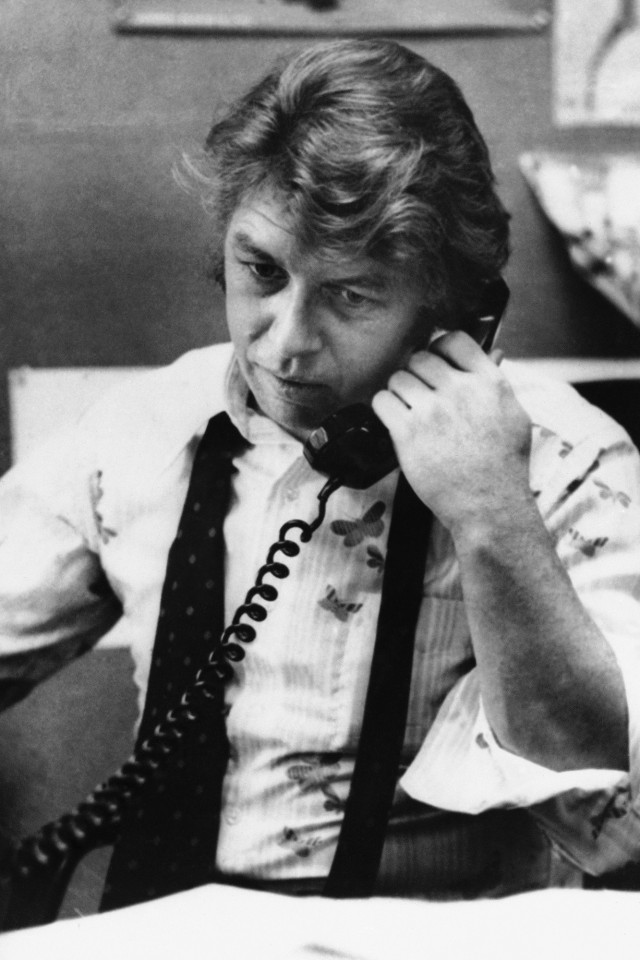
Pete Hamill The Quintessential Journalist 1935-2020

My literary hero is Pete Hamill

by John Esposito

His storied career as an acclaimed journalist, iconic newspaperman, editor of both the New York Post and the New York Daily News, best selling novelist, superb essayist, respected educator, lecturer, and screenwriter leaves behind a rich and enduring legacy that the journalism world can only hope to emulate. For many, he was the living embodiment of New York City who chronicled the life of New Yorkers more than anyone of his generation.

Pete Hamill served as my major influence and inspiration in pursuing a writing career. I loved his newspaper columns, novels, nonfiction, memoirs, and countless magazine essays.

He never forgot his Brooklyn roots and wrote powerful pieces that identified with working-class men and women including the suffering and downtrodden in our society.


Pete Hamill The Quintessential Journalist 1935-2020

Mr. Hamill’s writings are filled with honesty, real nostalgia, not sentimental drivel, and never syrupy sweet. He was proud of the writing craft and served it with great honor. He was immensely proficient as a hard-hitting tabloid columnist reporting on international and national events, local city politics, America’s urban riots of the 1960s, murders, strikes, the 1966 civil rights march, the Vietnam war, conflicts in Nicaragua, Lebanon and Northern Ireland, and the September 11, 2001 terrorists attack at the World Trade Center, as much as he was an equally skilled generalist in writing and conversing about the likes of Jackie Robinson and his beloved Brooklyn Dodgers, New York City history, Diego Rivera and painting, jazz, Ernest Hemingway, Jackie Gleason, Madonna and Howard Cosell, a love of newspapers, newsrooms, typewriters and deadlines, Milton Caniff and comic-book heroes, famous women in his life: Jacqueline Onassis, Shirley MacLaine, and Linda Ronstadt, talking boxing while mentoring Jose Torres, the education of Mike Tyson in prison, Greek coffee shops, the Great American Songbook, Paul Sann, editor extraordinaire, the indispensability of public libraries, drinking at the Lion’s Head, Billie Holiday and the blues, life on the Brooklyn stoop and playing stickball on streets empty of cars, the artistry of Bob Dylan and John Lennon, living in Mexico, Ireland and Rome, friendship with Robert Kennedy, the Knicks, sobriety, the art and cultural treasures to be found in museums, and the voice and tenacity of Frank Sinatra.

Pete Hamill The Quintessential Journalist 1935-2020
Pete Hamill

I had the good fortune of knowing Pete Hamill since 2001.

Our association resulted in five published interviews and book reviews for Downtown, My Manhattan, a memoir (2004), a required reading in certain New York City public schoolsthe best-selling novels, North River (2007) and Tabloid City (2011); the short story compilation, The Christmas Kid, and Other Brooklyn Stories (2012), and the national best-selling book essay, Why Sinatra Matters (1998 and re-released 2015). His masterpiece novel, Forever (2003), has taken its place among the great works of historical fiction, with New York City as the centerpiece. This tome is destined to stand alongside his most famous best-sellers, A Drinking Life (1994) and Snow in August (1997).

At the time of his passing on August 5, 2020, Pete Hamill, age 85, was writing a memoir about growing up in his native Brooklyn, where he had recently returned to live after achieving fame and notoriety in Manhattan and becoming a legendary journalist. It was to be titled, “(Returning to) The Old Country.” Mr. Hamill’s affinity for New York City, his proud Irish-American heritage, and proclivity to be the best possible newspaperman one could be, were only surpassed by the love and devotion he had for his wonderful and supportive wife, Fukiko Aoki Hamill, and the large, close-knit family that adored him.

Pete Hamill will be remembered best by those who knew him as a regular guy, a kind-hearted gentleman, who was always patient and giving of his time to young writers. I have never known anyone who disliked the man.

His politics differed from mine at times but that never mattered to me.

It was all about the writing, friendship, and respect. Mr. Hamill had a long list of friends and admirers. He was someone with whom you felt an immediate connection, whether meeting him for the first time on the Lower Manhattan streets or from reading his books and columns. In many respects, he personified the everyman, but we all knew he was so much more. When final days came calling for certain celebrated individuals who received high marks in various fields of renown, their greatness was sometimes embellished and exaggerated. That is unquestionably not the case when considering the merits of Pete Hamill. He is truly an American gem, whose contributions as an outstanding journalist and an admirable man will always be cherished.

In tribute to Pete Hamill, the name of my website, “Piecework Journals,” www.PieceworkJournals.com was borrowed liberally from the book title of his excellent work, Piecework (1996), a collection of brilliant essays. Thank you. Pete.

Byline: John Esposito is a freelance journalist based in New York and New Jersey. His work has appeared in various newspapers and magazines including USA Today, The New York Times, The Star-Ledger, The Philadelphia Inquirer, Greenwich Time, Stamford Advocate, The Record, Downtown-NYC, New Jersey Newsroom, The Irish Echo, UNICO, and Rosebud. Mr. Esposito maintains a website at www.PieceworkJournals.com


Categories
Culture Featured Music

Blake Charleton Keeps It Fresh

By Alice Teeple

Photos by Alice Teeple

What sounds blare from passing cars as you walk down the street? The wham-boom of eardrum-shattering bass. Monotonous mumble rap. The prefab autotune wasteland beckoning erstwhile partygoers. The dreamy music of Blake Charleton (Akudama, Poison Party) is a melodic breath of fresh air.

Charleton is currently one of NYC’s most prolific songwriters, a one-man Tin Pan Alley, who performed a gorgeous set this fall at Downtown’s World Trade Center music festival. The genial, energetic Charleton is responsible for a staggering repertoire, ranging from mythology-inspired folk, to psychedelic disco, to Baroque pop. He is a master of his craft and The tarot’s Fool, incorporating choirs, musique concrete, and samples from classic films.

“My biggest influences are Paul Simon, Lindsey Buckingham, Karen Carpenter, the Gilberto family that recorded The Girl From Ipanema, even the Wu-Tang Clan,” Charleton notes.

Blake Charleton has been pursuing music since age eleven, after discovering an ability to remember lyrics to songs from movies and the radio.

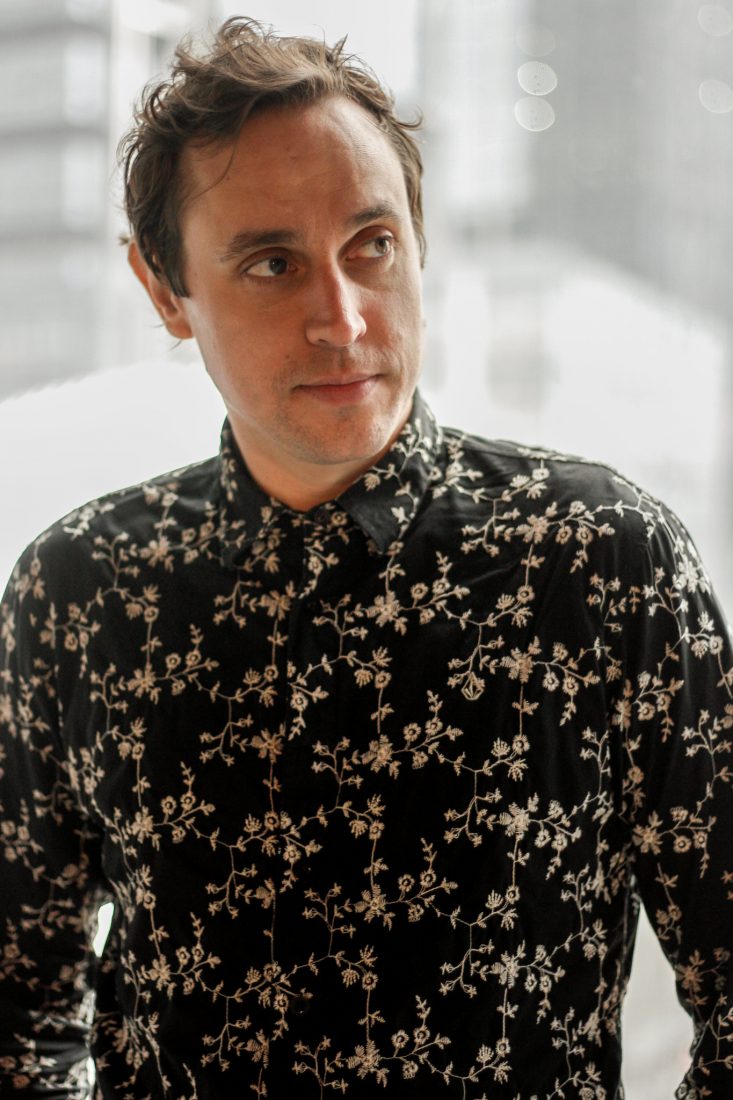
Blake Charleton

“I grew up very isolated,” he muses. “I would feel emotion, romanticism, and desperation in melodies. Music was the only thing that made me feel those feelings, and as a lonely child it was comforting, almost like an imaginary friend.”

Charleton made good on his childhood ambition. He penned songs for his four bands, as well as eight solo albums. As is the case with most geniuses, however, Charleton endured his share of struggling artist tropes. His music frequently explores darker themes with the veneer of Old Hollywood. Charleton oozes authenticity and pathos, with a sonorous bass reminiscent of Neil Hannon of The Divine Comedy.

He once found himself shocked by the power of his own voice: “I was playing a house party, and two of my peers had begun striking each other in the face. This brawl was getting bloody, fast. I screamed into the mic for them to stop, and without missing a beat, the two boys paused. I felt completely control of my surroundings. It was intoxicating.”

Charleton admits working democratically can be challenging but rewarding, and welcomes collaboration. “Creativity comes from all people, not just from the famous or those considered to be talented,” he adds.

“I take long breaks and step away from songwriting more often than not. I don’t ever seem to find myself working on something big, like a concept album. I’ll wake up with a melody in my head, and then add music to it, feel it out, write lyrics, and voila! It becomes something.”

What’s next for Charleton? Film scoring. He admits to being an avid people-watcher.

“I can see an expression on someone’s face and hear a melody, “ he says. “My mind works in mysterious ways when dealing in music. I love seeing someone noticeably happy, just on top of their shit, alongside someone that struggles to smile or keep it together. I start to create a story in my mind of what their private life must be like.”

But he’s in no hurry to jump into the next phase. “I’m just taking it one day at a time, kinda stepping back and letting life unfold.”

Blake Charleton is completely independent and his entire solo magnum opus is available for purchase here.

Blake Charleton

Videos:

See More

Virginia Marcs Goes “Wild” In Stunning New Video

Christine Smith Waits On The Far Side Of A Star

Adrian Sexton Draws The Death Card

Niabi Aquena of Searmanas Comes to NYC

Categories
Culture Entertainment Events Featured Music

Pictures From the World Trade Center Music Festival 2019

World Trade Center
Members of Kid Le Chat and Blac Rabbit pose with Dustin Pittman, Downtown editors, and Downtown’s CEO.

All photographs by Alice Teeple

On Friday, September 6th, bands took the stage as part of the 2019 World Trade Center Music Festival. Bands like Kid Le Chat, Blac RabbitGrekoMarc Scibilia, and Brooklyn’s Blake Charleton braved rain and wind to play for crowds of often-wet attendees. The event, put together by Downtown Magazine and WTC Silverstein Properties, honored first responders and Tuesday’s Children as well as the people and businesses who moved downtown following the September 11th tragedy.

“We heard about what Downtown Magazine (and Silverstein Properties) were doing, bringing these sort of cultural events and making more activities out of what’s typically a very corporate business environment,” says Blake Charleton Drummer Sam Berkowitz, “I work downtown as well. I work in one of the World Trade buildings. So it’s exciting to see all these creative and interactive events.”

Hundreds of people attended the event, including minor celebrity Hurricane Dorian, who traveled all the way from the Bahamas for the event. Unfortunately, some guests are better than others, and the rain from Dorian forced the show to end early. The show was short, but epic while it was going on. For those who unable to brave the rain this year, Downtown has brought some of the festival with us. Check out these pictures below, from the festival and a performance by artist Gus10 at the afterparty, and we’ll see you again next year. Don’t forget your raincoat.