There’s nothing we love more than a crisp glass of wine and a luscious chunk of cheese. As outdoor entertaining season returns, La Cafette and Murray’sCheese are ready to remind you how it’s done. The duo will be hosting a wine and cheese pairing class at the Williamsburg restaurant on April 10th at 7:00 PM. The 80-minute class costs $40 per person and will be led by French wine expert and Level 3 sommelier Yann Bouey of wine importer Wineberry. The class will feature five delicious pairings, and if you’re still hungry after you can order one of La Cafette’s French classics like escargots or steak tartare. Get your tickets today!
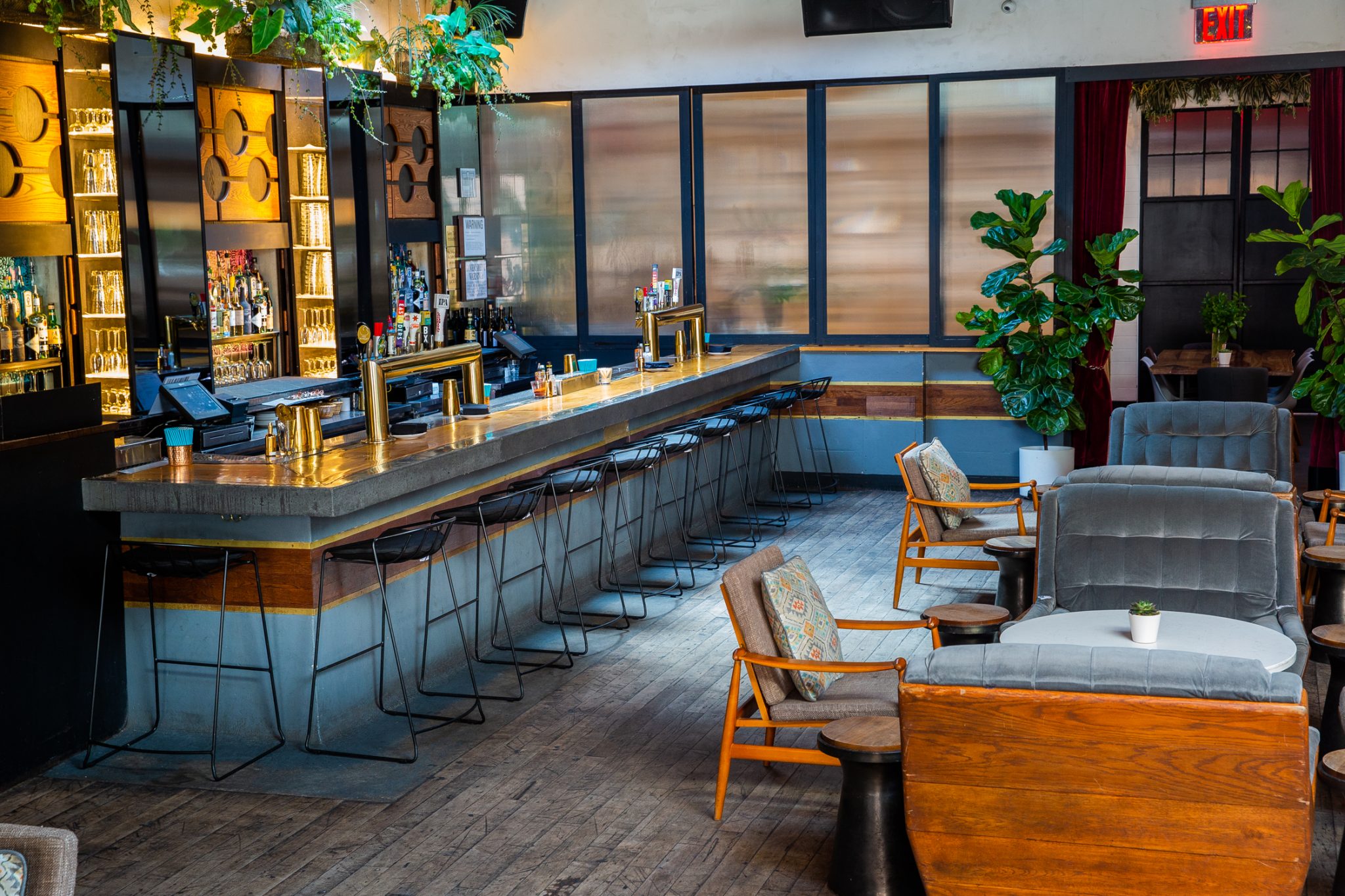
You might have heard of Freehold. It’s one of the most popular late night destinations on ride sharing apps, and one of the coolest places in one of the coolest neighborhoods (Williamsburg). There’s no sign outside, but you’re sure to be enticed in by either the coffee shop, workspace, bar, restaurant, or outdoor lounge. But Freehold is so much more than just a coffee shop/bar/restaurant/workspace – they have speaker panels, throw epic parties, host some of the hottest bands and comedians, give back to the community, and even travel to destination events like SXSW and Art Basel – they often refer to the space as a “hotel without rooms” (you can even pick up some merchandise with the saying “no rooms”). We recently sat down with Brad Gallagher and Brice Jones, co-founder and managing principals of Freehold, as well as executive marketing director and partner Lydia Mazzolini to talk about why they wanted to open Freehold, how they pick their programming, their epic membership program, and how they describe a space with so many functions!
Downtown: How long has Freehold been open?
Brice Jones: We opened the coffee shop portion in 2014,
Brad Gallagher: February, 5th 2014,
BJ: and then we opened the rest of the space in May 2015.
Downtown: Did you own the whole space originally?
BJ:Yeah, so it was our first time, we met at Soho House years ago. We basically bartended and consulted for a bunch of different companies and came to this and had all the normal issues that everybody has when they open a place from architecture to building delays to leases and such. We had to make a decision, do we do all the floors for the place at once or do we just do the coffee shop and show our investors that we actually know how to run a business? That’s basically what we did.
BG: It’s also a great way to meet the neighborhood, so we opened up and we just met the neighborhood and we got to talk about what’s going on in the back and the project and as a whole.
Downtown: What was here before?
BJ: It was a warehouse. The only thing that’s original is the ceiling, not the skylights, we made the skylights look like they’d been here, and some of the pillars. Every single wall and finish is different, even the floors. These floors actually came from Soho House Chicago. When a building is made they have scrap wood because they over order wood, so we took all the scrap from Soho House Chicago.
BG: It was our ode to Soho House, thanks for introducing us, thanks for the floor.
BJ: The coffee shop really allowed us, like he said, to open up to the neighborhood so when we opened up back here we kind of had a built in business of people working during the day, having a beer or a glass of wine, but mostly coffees and iced teas and lattes.
Downtown: What did you want to do with this space? Why did you open it in the first place?
BG: I think we wanted to do something very similar to Soho House but a public version of it, a non-membership version.
BJ: Throw more of a party I would say.
BG: We really zeroed in on ways we’re meeting that. There was already a massively creative population here, so we felt like Williamsburg would be perfect for it. We stumbled upon this place after seeing 100 different spaces, I think the number literally was like 87 different pieces of property we looked at. Every day I felt like I was waking up at 8 AM, being a bartender and going to see two or three new spaces and then reporting back to these guys like, “Hey, no, I fell through the boards on that one, let’s not do that”
BJ: Literally he fell through the board of the Urban Outfitters on North 6th. We got into a bidding war with Brooklyn Winery for a space, we got carsick, being in the back of a real estate broker’s car is just the worst thing in the world for us!
BG: Put vomit bags back there!
BJ: No, I don’t need to see this strip mall in Greenpoint, we’re good, we’re looking for something else. So this was a 1970’s built plumbing warehouse.
BG: So what happened was we went to the community board several times. They liked us but we just kept not being able to get the right space. We walked by this lot that was a parking lot that used to be a Domino’s sugar factor trucking depot. It had a for rent sign for $2000, and we said, let’s just take that and throw a barbecue party and have some fun. Then the landlord told us the plumbing warehouse was not doing that good and asked if we wanted to take half the space. We said, “that’s perfect, now we can do exactly what we wanted to do from the conceptual level.” Then the plumber went out of business so we also got the coffee shop in the front.
BG: It was kind of funny, while we’d be learning how to make lattes and cappuccinos and breves in the front, whatever a breve was (it’s a latte with cream), construction guys would come in and ask for quarter inch PVC and say, “you guys sell copper in the back, too, right?” and we’d be like, “No, it’s a nightmare back there! We’re in construction to open up a bar/restaurant, but I can give you a nice cup of coffee!” So it was kind of fun.
BJ:We needed this kind of place in the neighborhood for our purposes. We recognized there were great coffee shops, from Oslo to Blue Bottle to Toby’s, in the neighborhood, but they all kind of were anti-work-by-day. They’re all almost no laptops and all these rules, and there are so many creatives and entrepreneurs in Williamsburg, and we wanted to cater to that crowd, so we were always really friendly to that in the coffee shop. 2014 was, I think, two years before WeWork. We were really a beacon in South Williamsburg for that work-by-day crowd. When we opened up the doors we literally had about 300 people in here during the day. We’ll go like introduce ourselves or look to what people are doing have no idea what they’re doing on these computer screens. It looks like the matrix to me, but it’s just a really nice demographic of all these different professionals in all these different industries that all come together here.
Downtown: How do you support your membership program without fees?
BJ: So we wanted to throw a party. I think that’s a big part of what we do here on a Friday or Saturday night or Tuesday nights when we have a live band. We throw a really good party; it’s natural and it’s pretty organic. We’re not really pushing anything, we don’t use promoters in any way. We really try to support local talent, and we’ve gotten really, really busy because of that. We have a line around the block on Fridays and Saturdays, and we felt like it was hard for our core clientele to gain access on those nights after word got out. We opened up, we did no press, we had no sign outside, so to have that and have somebody that supported us come and have to wait in line…
So that was big basis of the membership, we wanted to take care of the people that supported us from the beginning and we wanted to really curate the crowd that’s made us who we are and to be able to deploy them any time. That membership gets you plus three on a Friday or Saturday, we do holiday parties for those people, we do live concerts for those people, we do speaker panels for those people, it’s a really great way for us to gauge the programing.
Downtown: How do you become a member?
BJ: You either apply or you’re invited.
Downtown: So you don’t have to prove you were here the day you opened?
BG: No, but most of those people are members. That is what we call our core membership, those couple hundred people. We wanted to make sure they could come back.
BJ: Our marketing director and newest partner, Lydia, she really heads up that side of the business. It’s been an unbelievable tool. We do so many special things on a programming level, I think that’s one of the things that separates us from a lot of bars and restaurants and workspaces, and that’s really now becoming the carrying point to a lot of the brands we work with.
Downtown: There are so many functions to this space, how do you describe it if somebody asks what you do?
BG: It’s tough. You start with the bar/restaurant, but it’s kind of like a hotel. We call it a hotel lobby without the hotel rooms. Several days a week we operate for twenty or twenty one hours a day, so we’re kind of hotel hours. At 7:00 AM the cafe opens, and at 4:00 AM the bar closes, so it’s a quick little reset on the weekends to get it cleaned up and ready to go. Programming wise we also do a lot of the same stuff that a hotel would do a: comedy night, a trivia night, a concert, speaker panels. So I think that fake hotel kind of helps describe us.
BJ: Just from the layout, we have outside space, we have a game room, we have a bar, we have a restaurant component, we have an event space, we have a coffee shop, at our front desk you can charge your phones, you can print stuff, we have a gift shop, so I think it also helped us. Not everybody has a background that they know what goes on at private clubs, but everybody knows the best hotel they’ve ever been to, it helps us kind of guide our process here.
Downtown: What programming did you start with?
BJ: Comedy was big, right?
BG: We did a comedy night that kind of took off, and we got some of the nations best comics to come here. We never paid them we just gave them a really, really nice room and a very PC audience to work in front of, and it became a thing. It was great. People with Comedy Central specials and who have been on tours where they make a lot of money were asking to do shows here. It was a really fun room for them to play in. You can play to about 50-70 people. I would say that was the first one that hit, and then we got a live music liquor license and started doing concerts. We had a band named St. Lucia that was close friends of ours, so they played here. The Knocks finished their tour here so that was kind of fun, and then other bands were asked if they could do a tour here in our main space.
BJ: Sometimes in the winter we’ll do a show here and condense the room. That leaves us with a green room that is arguably one of the best green rooms in the business. Then on the bigger nights in the summer we’ll throw a curtain up and use the outdoor space. We’re really good at flipping the space. Our core programming on an annual level, we obviously do New Year’s and Halloween. We do a black-tie New Year’s every year. Halloween we switch it up every year: disco the first year, studio 45. One of the fun nights for us is Ernest Hemingway’s birthday in July. We’re really busy in July because of the outdoor space, so we basically turn this whole place into Old Havana. We rent like 50 palm tress, get samba dancers, Cuban cigar rollers, change the whole menu over, do a craps table in the back for the local community for a charity,
BG: just celebrate Hemingway’s life and all the debauchery that it was.
BJ: A lot of the members, the Freeholders, dictate the programming in some way. There are a lot of things that we tend to do that we just believe in collectively, but we have speaker panels, now we’re getting approached with things from different brands and different partners to kind of co-brand things, which has been great for us. We’re running out of ideas.
Downtown: So if you’re a member, do you just walk in and work during the day or do you have to buy something?
BG: We hope that you buy something obviously, but there are people who don’t and that’s fine. That’s the double edged sword of being a public house, but the membership also is great because a lot of the programed events are for Freeholders only. A lot of the concerts we only invite our Freeholders, I think there are about 2000 of them at this point, so there they get preferred access to the space for some of these very, very special programed events.
Downtown: Do most of your members live in Williamsburg?
Lydia Mazzolini: Mostly they do, it’s around a 70/30 Williamsburg/Manhattan. Most of them are local, but what’s cool about all the events is there are more people that reach out to us that bring in their new network of people. We’re doing an LGBTQ variety show event with this amazing group, and they’re bringing in all these people that likely have never been here before, so we turned that into a freeholder only event so that my people come in and say wow this is great and I have a new network of people that come in. There are one hundred people that are going to come in and sit down at this panel presentation, and we’ve got a whole new market that just came in that had never seen the space before, so that’s how we kind of spread the word.
Downtown: How many nights a week do you have programing?
BG: A lot.
LM: Sometimes it’s like four. We always have trivia every Wednesday. I’d say on average we have three programing events a week. but we also program a DJ dance party every single Friday, every single Saturday,
BG: Jazz on Sundays.
Downtown: Is the restaurant full service?
BJ: Yeah, we do different food events from Sunday Supper to summer barbecues. We’ll grill for July 4th. We had a hot dog eating contest once upon a time.
Downtown: What’s some upcoming programming that you’re excited about?
LM: We’ve got a Mardi Gras party which is going to be amazing. We fly in the Prince of Treme, Glenn David Andrews,
BJ: Trombone Shorty’s uncle.
LM: We fly him in every year from Louisiana with his brass line, and they do a parade through the space to start off the event. We’ve got stilt walkers, fire breathers, gumbo, hundreds of people fit in the space.
We’ve got a recurring residency with this amazing trumpeter Spencer Ludwig that we’ve been doing on a monthly basis. We had these amazing drag queens the Dragon Sisters that came in from LA. Another residency we have is Instant Classic. It’s a mashup of artists from different bands. We’ve got that going on on a monthly basis. We’re going to SXSW, we do a pop up there every year.
Downtown: What happens there?
LM: So we’re doing a Brooklyn-meets-Austin block party at one of our favorite venues called Native Hostel in Austin. It’s actually a very similar concept to our space, except they have rooms, it’s a boutique hostel with hotel rooms. There’s so much programing going on, we’ve got everything from yoga in the morning to cbd brunch. We’ve got some very legendary hip hop names that are performing, we’ve got a halfpipe fashion show, we’re bringing down a bunch of brand pop ups from Brooklyn and New York to do some fashion pop-up shops because Austin doesn’t get that that much.
BJ: We did art basel last month, and, for us, you look at the freeholder program last year SXSW we had 1000 people that showed up from our membership in Austin, Texas. Our pillars of membership I think are fashion, entertainment, tech, and media so SXSW is a huge culmination of all those things except maybe fashion.
LM: Yeah, that’s why we’re trying to tie in that little arm,
BJ: which I love and to have. Last year was an unofficial party and it was just a really special time. Art Basel same thing, we debuted, we did the bar at the Wynnwood Walls Art Party. Every quarter we switch out all the art in here. We get local artists, people from LA, it’s more who’s in town with a Brooklyn vibe, friends and family that are good. The Wynnwood Walls are the epicenter of Miami’s arts and design district, and basically we got to be a part of this really, really special experience where they flipped 30% of the walls to different artists from Brazil, from Indonesia, China, Japan. So we felt pretty cool to be a part of that, and the Freeholders came to that as well. For us, it’s a really great anchor program to be a part of something that is growing bigger than us in a lot of ways.
Downtown: How have you been involved with the community?
BG: We really give a shit in a lot of ways. We have both been proclaimed by the City Council of New York for our work in the community. A lot of these events we do are charity events. We have 120 employees and we see 10,000 people in this venue a week. What that does to the local community has positives and negatives, so for us we feel responsibility to give back in a lot of ways, and that’s to work with the community, whether that be soup kitchen for Thanksgiving or in the summer we got our whole staff at 9:00 AM, which is relatively difficult, to give out food to the local community. We had a line of 300 people, you’d be sore by the end of serving. I think that’s an important part of just doing business in the city. You look at the Amazon deal, and there’s a variety of reasons why that fell apart, but they could have given a little bit more and that’s something that you should expect to do in NYC.
Downtown: What are some of the challenges of doing so much with the space and program?
LM: There just aren’t enough hours in the day, I think that’s the easiest way to say it. With the more that we do, the more we get reached out to by people, and I’m the type of person that wants to do it all and sometimes I have to reel myself back in and reel my team back in, which is also fun that you get to pick and choose. You want to be able to accommodate everybody and incorporate everyone in a specific type of way. With what we’re doing at SXSW, I have 65 partners involved in this, and then you’re in a place where you have 65 partners, and then in turn there aren’t enough hours in the day, but it all always works out in the end. We just try to maintain the relationships with the people that are reaching out and have creative ideas without saturating the market with very similar ideas.
BG: I think it’s also knowing the right amount of programming to do, and also letting the space just be itself, be what it is which is a bar/restaurant, which is a hospitality concept, which is a cafe, so we don’t like to shut down every day and do something. We want the space to be able to breathe and be the community space that it is. We’ll do fun stuff, like Stumptown our coffee purveyor, we actually have a Freehold blend that they did with us which is great, they’ll come in and do a coffee tasting during the day. We do it all, it’s all over the place, but for the most part it’s the nightly programming.
BJ: You’ve gotta remember, we’re not Duane Reade, We’re not Marriott, so at some level we need the place to be profitable, and for us that’s through food and beverage revenue or sponsorships and joint ventures. I think that’s an element that a lot of people that are doing similar programing to us don’t have to have.
Downtown: What are a few of the most important things people need to know about Freehold?
LM: Hotel without the hotel room concept is the best way for people to understand the space.
BG: The restaurant component is important for people to know about.
LM: You can make a reservation, you can book bottle service on the weekend if you really want to party, and we are a place that loves to host private events. Corporate events are big for us. We program a lot at night, and then during the day is when we see most of our private events and corporate offsites. It’s a nice place for companies to get out of the office.
Taste Of The Nation is one of the largest charity walk-around tastings, with all proceed going towards Share Our Strength’s No Kid Hungry campaign; the non-profit is dedicated to ending childhood hunger in America. This year’s New York City event will be led by Honorary Chair Danny Meyer of the Union Square Hospitality Group along with Culinary Co-Chairs Anita Lo of Annisa and Bryce Schuman of Betony. Some of the participating chefs who will be preparing special bites for the event include Lalito’s Gerardo Gonzalez, Samesa’s Eli Sussman, Oddfellows Ice Cream’s Sam Mason, Atoboy’s Junghyun Park, and Maialino’s Nick Anderer. Special culinary programming — as including The Doughnut Derby, Rosé Garden and Candy Carnival — will also help to make 2017’s Taste Of The Nation a unique experience for all in attendance.
This year’s event takes place on Apr. 24 at 180 Maiden Lane, kicking off at 6:00 PM for event-goers with VIP tickets. Downtown spoke with chefs Eli Sussman and Gerardo Gonzalez to learn more. Further info can be found here.
Eli Sussman: I started as a volunteer with Taste Of The Nation in Los Angeles seven years ago. At that time I was working in marketing and was asked to help on that committee to promote the event. After I left the advertising world and moved to New York City to become a line cook, I continued volunteering with Taste of the Nation in New York City. As I’ve grown in my cooking career I was asked to be part of the chef host committee and have been helping with the event by asking chefs to take part and promoting it by doing guest chef appearances around New York.
Gerardo Gonzalez: I’ve worked with some of the organizers before, and I’ve been a big fan of the cause and mission behind the event.
What’s to be expected from your participation in this year’s Taste Of The Nation?
Eli Sussman: Samesa restaurant in Williamsburg — which I co-own with my brother Max — will be one of the participating restaurants. We’re excited to serve our organic chicken shawarma at the event.
Gerardo Gonzalez: I’m working on a special item that will be introduced on the new spring menu at the restaurant. I’m debuting the dish at Taste Of The Nation.
Otherwise, what’s coming for you and/or your restaurant?
Eli Sussman: This summer we’re opening up seasonal locations of Samesa restaurant and Ed and Bev’s — a Detroit style diner concept serving sliders and chili dogs — down at Jacob Riis Beach in the Rockaways. And at the end of this year we’ll be opening an all-day cafe in Detroit called Wida’s.
Gerardo Gonzalez: We’ll soon be launching new items and menus inspired by the changing season. Very excited to get back to the food that inspired the restaurant.
When not busy with food, how do you like to spend your free time?
Eli Sussman: I like to plan New York City adventure days for me and my partner. Usually we’ll go to a museum or see some art, hit two or three restaurants, go looking for good vintage shopping, and either sit in a park or when the weather is bad play try to hit a dive bar with old video games and skeeball. Basically just try to enjoy the city and cram a ton into one day.
Gerardo Gonzalez: Biking around the city, going to all the neighborhoods.
Finally, any last words for the kids?
Eli Sussman: It’s been an honor to play a small role in the Share Our Strength No Kid Hungry campaign to raise awareness for childhood hunger. I cannot wait for the day, hopefully in my lifetime, when we come together to eliminate childhood hunger once and for all. No child should be worried about where and when their next meal is. They should be playing and learning and just being a kid.
Gerardo Gonzalez: I’m really excited to be contributing to this event that provides such a great service.
Vanishing Life is a new band, but its members are hardly new to music or to playing out in New York City. Walter Schreifels has been involved with a lot of influential New York City bands over the past 30-something years, including Rival Schools, Quicksand, Gorilla Biscuits, Youth Of Today, CIV and Walking Concert; he is also a co-owner of Some Records. Autry Fulbright is a member of …And You Will Know Us By The Trail Of Dead. Jamie Miller plays alongside Autry in …Trail Of Dead, besides drumming in Bad Religion and being the guitarist and co-founder of theSTART. Zach Blair, meanwhile, plays in Rise Against.
Surveillance, the debut full-length album from Vanishing Life, will be released through Dine Alone Records on Nov. 11. In support of Surveillance, Vanishing Life will be hitting the road for a week and a half of touring, including a Nov. 13 stop at The Studio at Webster Hall. Downtown caught up with Walter, Autry and Zach for some Q&A, and in the process got some great restaurant picks.
I’ve heard that Walter lives in Germany, I know some of you live in Los Angeles although you’re frequently on tour with your other bands. How many times have all four of you been in the same room?
Zach Blair: Actually, quite a lot considering. We’ve all been really excited to do this and made time for it — although I won’t be taking part in the November tour, dangit.
Walter Schreifels: I lived in Berlin for a few years, I love that city and still have tons of friends there. I kept my apartment there and go back for summers, sublet otherwise. I’m living in Williamsburg, Brooklyn — hipster capital, gentrification ground zero of New York City. Still has a vibe though, lots of great people here, tons of new venues too, lots popping off in Bushwick, Brooklyn too, just a few stops away. We have been in the same room at least 15 to 20 times, maybe more. Each time is very productive and significant, quality over quantity, VERY modern.
Prior to this album being made, had you played with any of the other Vanishing Life members on another project?
Autry Fulbright: Jamie and I have played together ever since he joined …Trail Of Dead nearly six years ago, and have worked on music outside of the band often. I made a short film several years ago following a Trail Of Dead tour with Rival Schools, one of Walter’s bands. I asked him to star in the film and our collaborative relationship began. Touring with Trail was collaborative as we shared the same bus, which is a real world situation, you become family quick. Being in Autry’s movie was a blast, showed me what a creative and prolific artist he is. I like to be around people like that, brings the best out of me.
WS: I’ve been seeing Zack around for years, all over the world. He’s famously nice and a great guitar player, having him join the band was a no-brainer, I looked forward to getting know him better, we got closer fast.
ZB: Nope, and I was so flattered that they asked!
Vanishing Life / Photo: Cecilia Alejandra
What do you remember about the first gig you ever played live in New York? Where was it?
ZB: CBGB! It was 1995 and I was with my band Hagfish, it was a surreal experience. It was pre-Giuliani and it was amazing!
WS: Mine was CBGB, too! Gorilla Biscuits opened for JFA in ’86. I could barely sleep the night before
When playing at Webster Hall, what’s to be expected? Any songs from your other projects besides Vanishing Life?
WS: We’ll most likely do the album, the album is really strong in my view but is meant to be played live, very psyched to let it rip. Vanishing Life is its own free-standing structure it doesn’t need the support of our past resumes. I think people will figure that out soon enough, which might sound cocky. but just a subjective opinion.
Do you have a favorite restaurant in New York?
AF: New York has too many amazing restaurants but among them I am fond of Diner and Marlow & Sons in Williamsburg, where I actually used to work in another life. Great French and New American-style food
WS: My fave for Italian is Adelina’s in Greenpoint, lot of vegan options and amazing wine curation, affordable. My favorite Japanese is Skyway in Bushwick, okonomiyaki done authentic Osaka-style – not a sushi spot, love it.
WS: We’ll be touring in Europe in February on Together Fest with American Nightmare, The Bronx, Trash Talk and I’ll be doing double duty with Youth Of Today, gonna be sick. We’re also looking for more touring in 2017 in the U.S. once we can sync our schedules up.
When not busy with music, how do you like to spend your free time?
WS: I want to be spending my non-touring time with my family, I’m married with an eight-year old daughter, the only activity I find more interesting then music is spending time with them.
ZB: Normal junk. Wife, dog, house. I still play a lot of guitar, though. Actually, I’m never not busy with music, which is a good thing.
AF: I really don’t have any free time as I work for a music managing company when I’m not playing music, handling tour logistics for artists like Flying Lotus and Thundercat.
Finally, any last words for the kids?
WS: Don’t worry about staying in school so much, it’s overrated, overpriced and you’re actually being just indoctrinated most of the time. Educate yourself, believe in yourself, do what you say you’re gonna do, build trust, take care of your friends, your family, don’t believe the hype.
From Oct. 6 through Oct. 10, the 19th Annual North American Cycling Courier Championship — as sponsored by Clif Bar — will be making its New York City debut. The hardcore messenger race will descend on East Williamsburg when 400 of the best bike messengers in North America duke it out in a closed course work simulation for the title of North American Cycle Courier Champion. Speed, routing, package control, and politeness are integral to earning this honor and will all be tested throughout the competition. A host of side events such as skids, sprints, track stands, footdowns, quick locks, wheelie contests, and more round out the talent, athleticism, and goofiness of the weekend, coincident with Messenger Appreciation Day.
On Thursday, the R2 group ride of messengers arrive by bicycle from Boston. That evening, an art show crawl — celebrating messenger artists and related work — begins at the Chrome store in SoHo and crosses over to friendly galleries and bike shops in Williamsburg, finishing at the Superchief Gallery in Greenpoint.
Photo: Brandon Lockfoot
Records have already been broken this year with State Bicycles sponsoring registration for nearly 100 women thus far, a staggering three times as many historically, according to Kelly Pennington of the Women’s Bike Messenger Association. “We are overjoyed by the messenger community’s support and eagerness for a New York City championship. While bringing closed course racing to Brooklyn streets has been challenging, we are incredibly stoked with the outcome and can’t wait for the races” said Event Director and multi-time champion Austin Horse.
Austin continued: “A closed course race on the city streets of New York City is the gold standard for a laboratory setting in which we determine the best best bike messengers on the continent. I love how the NACCC brings people together in friendly but intense competition — it takes the natural kinship amongst messengers and supercharges it.” So why the expansion into New York this year? “I think so many people are coming because of what New York City represents to bike messengers. It all started here and they are coming to pay homage to this city.”
When Lollapalooza was introduced in the early 1990s, it was reportedly Perry Farrell’s attempt at bringing the eclectic nature of a European music festival to the States. Two and a half decades later, music-based festivals have become a norm of sorts in this region, many of such also including food, tech and film tie-ins. The Brooklyn-based Northside Festival, which is currently in its eighth year, launches Jun. 7.
Running through Jun. 12, the week-long Northside Festival will bring an estimated 100,000 attendees. Among the 400-plus participating artists will be Beach Boys co-founder Brian Wilson, country-pop hero Kacey Musgraves, Bright Eyes leader Conor Oberst, and hip-hop pioneer Grandmaster Flash. Partners of the festival helping to curate programming include AdHoc, Bloomsbury Publishing, Hive Mind PR, Pitchfork, Noisey, and Wharf Cat Records. Ultimately, Northside will benefit the Open Space Alliance for North Brooklyn, a non-profit dedicated to building a stronger North Brooklyn by improving parks and playgrounds.
Dana Keith, the Northside Festival’s Director, spoke to Downtown about the festival — which will be streaming through Kiswe — and so much more. Dana took over as Director in 2014, also working with the festival’s parent company Northside Media Group as Director of Business Development. A Williamsburg resident that attended college in Burlington, Dana came across as both down-to-earth and intriguing.
Where did the idea for the Northside Festival come from?
Dana Keith: We were looking at how successful SXSW was and also noticing how many people down there are coming from our backyard. It spurred the question: Why doesn’t New York have its own discovery festival when so much of the talent and the attendees are right here? And that’s when Northside was born!
How does this year’s festival compare to the event when it started eight years ago?
DK: Northside started out as a four-day festival, with a few hundred bands — music only! And we held our festival headquarters in the back of a vacant shop on North 6th Street! Now Northside is a week-long music, innovation and content festival with two conferences at six stages, a 100+ exhibitor innovation and tech expo, multiple outdoor music stages, over 30 indoor music clubs with 400+ bands playing.
We close off Bedford Avenue for two days, we’ve brought huge talent in — Brian Wilson playing Pet Sounds, Conor Oberst and Kacey Musgraves co-bill, Wolf Parade and Grandmaster Flash both playing free shows. In a nutshell, the scope of the festival has continued to grow to showcase what’s next in music, innovation and content.
Around how many people are on your team? Or at least any idea how many people it takes to make a festival like this happen?
DK: Our full-time staff is about 25 and we have hundreds of volunteers and project-based employees who really help make the magic happen. The staff is so crucial and we’re lucky to work with many people year in and year out!
I’m assuming it’s too late now for someone to apply to volunteer this year, but for someone interested for next year, what’s the best way to submit to be a volunteer?
At what point did you realize that Brooklyn was “the” place for a lot of people, and not just a place outside of Manhattan?
DK: Our founders Danny and Scott Stedman — who are brothers — had the prescience to recognize that 14 years when they launched The L Magazine!
Are there any restaurants that are partnered with the Northside Festival? Or if not, any local restaurants you can recommend?
DK: Yes, we are partnering with a number of great local restaurants: Barcade, The Gibson, The Gutter, Huckleberry Bar, Broadway Stages, Daddy’s, Beer Street, Rocka Rolla, Skinny Dennis, Lucy Dog, George & Jack’s…
Is Brian Wilson the biggest performer you’ve had headline at the festival?
DK: Yes! We’re all so personally thrilled by Brian Wilson playing Pet Sounds — and the influence that album in particular has had on many contemporary artists who will also be playing the festival, it’s such a synergistic and exciting performance for Northside.
Are there any plans for the Northside Festival to release a DVD or some sort of compilation of performances?
DK: We do have a live-streaming partner for music this year: Kiswe! For now, that’s the best way to watch performances of the festival.
Once this year’s festival has wrapped, what’s ahead for you on the work end?
DK: I also handle business development for our other media like Brooklyn Magazine and BAMbill and events — SummerScreen, our outdoor film and music series in McCarren Park, kicks of in July, and then Taste Talks in Brooklyn in September, then Chicago in October and we’re launching L.A. in November!
When you’re not busy with work, how do you like to spend your free time?
DK: Well, I’m running the Brooklyn Half Marathon this Saturday, so that’ll be an adventure. Our staff likes to try and do it together every year! I’m happy trying new restaurants in the city, reading new fiction, and making my own essential oil blends — hippie alert!.
Finally, Dana, any last words for the kids?
DK: Don’t sleep on Northside! In a time when so many of the festivals — Governors Ball, Panorama, Coachella — are being consumed by large corporations — AEG, Live Nation, you know the drill — Northside really is a last holdout in independent booking, and we’re so proud to give artists, entrepreneurs and innovators a stage who might not have a voice elsewhere.
This is a chance for you, the listeners, learners, startups, music lovers to show that you want that!