Categories
Education Featured NYC

A LINE IN THE SAND


Sam Waterston is taking a stand in support of the world’s oceans.

by Mike Hammer photography by Andrew Matusik

AS A CHILD, SAM WATERSTON FELL IN LOVE with the New England coastline where he was reared. “I was a child in the days just after World War II,” he recalls. “Because of the war, fishing had been cut back significantly, and the oceans were plentiful. Growing up in Rhode Island, seafood was plentiful, full of variety, and inexpensive. Everyone believed the sea was inexhaustible until suddenly it wasn’t — and I knew I had to do something about it.”

The 80-year-old Law & Order icon has now resolved to use his enormous equity as one of America’s most respected actors to help restore the world’s waterways to the pristine and plentiful status he remembers from his youth.

He dove into the business of researching how much damage had been done — and even more importantly — what he could do to help stem the tide, and he was deeply shaken by what he discovered. On the advice of a good friend and fellow actor, Ted Danson, Sam looked into Oceana, a nonprofit organization dedicated to restoring the world’s oceans and waterways, that also boasted a long resume of environmental victories.


A Line in the Sand
Sam Waterston by Andrew Matusik


Recent triumphs have included helping to secure the banning of industrial activity in protected Canadian waters, ramping up digital monitoring of previously unregulated salmon fishing in Chile, and creating the world’s second-largest marine national park off Spain’s Mediterranean coast. “I saw that Oceana is an organization that gets things done and I wanted to be a part of that,” Waterston says. “Because of public pressure organized by Oceana, the Obama administration closed the North Atlantic for oil drilling for the next decade. Because of Oceana’s efforts, people up and down the coast lobbied for this destructive activity to end, and they swayed the governors of states on the Atlantic coast to join in.” He continues, “That gave me all the motivation I needed to get on board.”


He warns that in order to save species in the ocean — and secure our own survival


Sam joined Oceana’s Board of Directors in 2008 and within two years was testifying before Congress about the urgency of reversing ocean acidification. According to Oceana’s statistics, the world’s oceans absorb about 30 million metric tons of carbon dioxide every day. “It’s changing the chemistry of seawater and killing sea life,” Waterston says with palpable sadness in his voice. “To reverse ocean acidification, the United States must reduce its carbon dioxide emissions and transition to clean, renewable forms of energy before it’s too late.”

He warns that in order to save species in the ocean — and secure our own survival — we all need to change the way we live dramatically. Recognizing his commitment, Oceana elected Waterston Chairman of the Board last year, providing him with more opportunities to turn passion into action. “I feel so fortunate to have been placed in this position,” he says. “It’s a tremendous place with incredibly committed people and a history of important victories I would be proud to add to.”


A Line in the Sand
Sam Waterston by Andrew Matusik

Waterston’s family history includes some relatives that came from England on the Mayflower


One victory he’d love to add to Oceana’s record is replenishing the once-plentiful codfish population off the shores of New England and Canada. “I’ve seen first-hand the damage fisheries have done without serious regulation,” he says with passion. “Codfish drew Europeans to the Northeast Atlantic going all the way back to when the Vikings first got to Greenland.” Waterston’s family history includes some relatives that came from England on the Mayflower, so the history of the Northeast Atlantic runs in his veins. He says, “Alexandre Dumas wrote in the 19th century that if every cod egg reached maturity, you could walk across the Atlantic on their backs.”


To further the cause, he wrote an impassioned op-ed piece to try and compel the Canadian government to fall in line with American fishing restrictions to help save the species.

In it, he wrote, “In 2019, we stood — literally and figuratively — with the federal government to celebrate the new [Fisheries] Act, which for the first time included obligations to rebuild depleted fisheries and manage them sustainably.” Unfortunately, it seems the celebration was premature. He explains, “Rather than requiring clear, measurable actions to rebuild depleted populations to healthy levels, they went out of their way to avoid setting any enforceable standards.”

“Since the U.S. introduced a strong law in 1996 to stop overfishing and require rebuilding, 47 stocks have been rebuilt, generating about 54 percent more revenue than when they were overfished. The new Fisheries Act promised a brighter future for Canada’s fisheries. It’s time now to deliver on that promise.”

“And, if people make whales extinct, we’ll have exposed something awful about ourselves.”

Waterston’s focus is also riveted on the redemption of the imperiled North Atlantic right whales—he calls them the “Leviathans of the Bible”—which are rapidly disappearing from the planet. Oceana estimates there may be just 360 individuals left.

“Whales haven’t been diminished; they are what they were, magnificent creatures, but our capacity for wonder has been shrinking,” he warns. “And, if people make whales extinct, we’ll have exposed something awful about ourselves.”

He points to collisions with ships and entanglements with fishing gear as key factors
in the depletion of the species, with new threats emerging every year: key among them the deadly non-biodegradable plastics that are dumped into the oceans by the ton, that whales often consume or get caught in with deadly results.

But Waterston believes there is hope. “We have to produce less plastic because once it’s made, it’s here for good,” he says. “The equivalent of a garbage truck full of plastic goes into the ocean every minute. It’s an issue Oceana is rightly addressing with real urgency.”

He points out that Oceana is pressuring companies to take action to reduce plastic production and offer alternatives. It is also pushing for new legislation that will reduce the use of the deadly material in coastal countries worldwide, where a staggering 35 percent of plastic waste is generated each year.

“But the oceans are being killed by throwaway plastics,”

“Our oceans sustain life that could feed a billion people a healthy seafood meal every
day, forever. But the oceans are being killed by throwaway plastics,” Waterston says. “We should not be forced to pollute the ocean every time we eat, drink, or go to the store. We need a choice —a plastic-free choice.”

Luckily Waterston and Oceana are not alone in their battle to bring back our waterways.
In New York, the food chain has rebounded because of more stringent fishing regulations, the establishment of oyster farms in New York Harbor, and the resulting cleaner water that has welcomed the returning whales.

A significant factor was legislation to protect against over-fishing of Menhaden,
a small feeder fish, which is a key source of food for the returning whales. “It’s incredibly encouraging and a key proof of concept,” Waterston says. “This is the kind of thing that we’ve been fighting for at Oceana. It shows that the right actions produce results that prove our oceans can be fully restored if the proper actions are taken.”

And while Waterston remains highly focused on these noble efforts to save our oceans, he hasn’t given up on his storied acting career, which includes star turns on screens big and small, as well as the stage. The 80-year-old actor has played presidents (Lincoln, twice!); Shakespearian princes (Prince Hal in Henry IV and Hamlet); literary figures (Nick Carraway

“I can’t wait to be acting again,”

in The Great Gatsby); and journalists (Sydney Schanberg in The Killing Fields); not to mention his longtime role as District Attorney Jack McCoy in Law & Order, the series’ second-longest-running actor. He is looking forward to shooting another season of the hit Netflix comedy Grace and Frankie, with his equally accomplished castmates, Jane Fonda, Lily Tomlin, and Martin Sheen, as soon as the pandemic allows.

“I can’t wait to be acting again,” he says. “If it weren’t for the pandemic, I would be in a production of Measure for Measure at the Public Theatre in New York right now.

Working with Fonda and company is anything but work, Waterston says, and has led the former television D.A. to one of his more unusual experiences — getting arrested on the steps of the Capitol in 2019 when the issue-oriented cast assembled to protest climate change.

“It was a new one for me,” he laughs. “But getting arrested [during a peaceful protest] is
a wonderful way to get the message through to yourself about how deep your own convictions are.” And like the oceans for which he is a staunch advocate, Sam Waterston’s convictions are so deep they appear to be bottomless.
Categories
Architecture Culture Featured NYC Real Estate

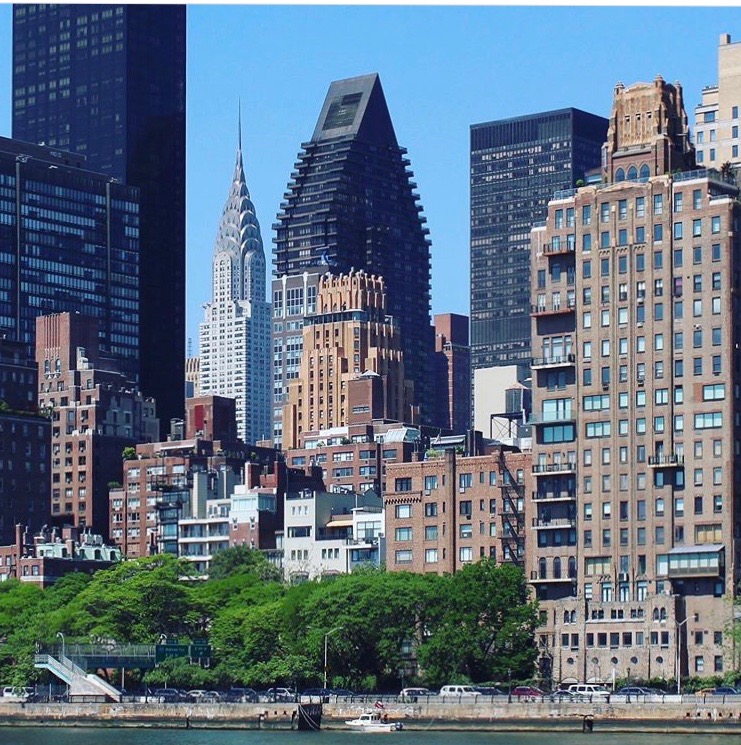
Architecture Cruise on New York Waterways

“Step aboard the teak decks of our elegant 1920s style yachts, the Manhattan and Manhattan II, and enjoy NYC’s architectural landmarks from the water.” CHL

Downtown Magazine NYC, was thrilled during our StayCation to have enjoyed one of the most informative cruises around New York City. A special branded partnership between Classic Harbor Line and the American Institute of Architects’ (AIA) New York Chapter.
Architecture Cruise on New York Waterways
Joseph Lengeling, AIA our tour guide Classic Harbor Line
We had the pleasure of inviting several guests, Elizabeth Velez of the Velez Organization, Cesar Astralaga President of Spectra Networks, Alies van den Berg, and Roel Hoekstra both from the Netherlands, working in the finance industry.

During our tour, we met and spoke with Joseph Lengeling, AIA Architecture, and our guide for the day.

Architecture Cruise on New York Waterways
Cesar Astralaga, Elizabeth Velez, Joseph, Grace A. Capobianco, Marsha Wright, Roel Hoekstra, Alies van den Berg


1. Tell us a little bit about yourself, how long you’ve been an architect and some of the buildings that you designed? I do believe you spoke about Stuyvesant High School, which is right near where I live—I love the building.


Architecture Cruise on New York Waterways


After graduate school at Cornell in 1980, I decided to come to New York for a two-year stint.  It didn’t work out so well as I fell in love with New York (and since my wife might read this, I fell in love IN New York also).  The lure of New York for a recent graduate is its architecture and the architects – many of my heroes.

I was fortunate to work at some of the most interesting and well-known firms in New York and designed primarily corporate office complexes, affordable housing, academic projects, and yes, Stuyvesant High School in Battery Park City.  When I get a chance, I am proud to point it out on the boat tours.  That was with Cooper, Robertson Architects where I also contributed to the design of the master plan for Battery Park City. 

  1. Tell us about your design process.

“A loaded question too difficult for any designer answer.  Sometimes it’s magic, sometimes it’s logic.”


Architecture Cruise on New York Waterways
https://en.wikipedia.org/wiki/Spuyten_Duyvil,_Bronx


  1. One of the things that really caught my attention was the attention/picturesque view you gave to the water towers, especially the ones atop low rise buildings that were from the early 1900s. You talked about how wooden water towers were built and why. It’s so interesting. Can you please give us more information/direct us to resources to learn more about this?
Architecture Cruise Architecture Cruise Architecture Cruise on New York Waterwayson New York Waterwayson New York Waterways
https://www.6sqft.com/nyc-water-towers-history-use-and-infrastructure/

The wood water tanks are part of the urban context of New York.  Even today if you see a high-rise building under construction you may spot the brand new wood tank being constructed.  We need them for buildings that exceed about 5 stories as the water pressure supplied by the city only goes that high.  So high-rise buildings need to supplement the pressure by pumping the water up to the top to create the head of pressure needed to serve the upper floors.  “Water seeks its own level; what goes down must come back up” is a basic tenet of physics.  There are still 2-3 companies in New York who have excelled at building and replacing these tanks.  


Architecture Cruise on New York Waterways
Joseph Lengeling, AIA

“I also contributed to the design of the master plan for Battery Park City.”

At one time they tried stainless steel, but they got too hot in the summer and too cold in the winter.  The beauty of the wood system is that all the individual components can be broken down to a size that will fit on a typical service elevator in a residential building.  Rosenbach and Isseks Brothers are the two premier suppliers of these wood tanks. The Hudson River portion of the tour is the best illustration of this as the entire skyline above Riverside Park is dotted with these urban artifacts. 

  1. You spoke about the development of the NY waterway, and land surrounding the edge of Manhattan. Could you give us more information on what you hope to see or what is already scheduled for the future and what we can see in another 5 to 10 years?


The goal of city planners is to fulfill the idea of an “Emerald Necklace” surrounding the entire edges of New York. This is a term borrowed from the great landscape architect Frederick Law Olmsted for his vision of parks in Boston.  The idea is to make the water’s edges accessible to the public in the form of parks, bike lanes, and esplanades.  Right now, it is possible to walk/bike from the Little Red Lighthouse on the Hudson River at the George Washington Bridge all the way down to the Battery.  As more and more industrial sites on the waterfront are abandoned, they become residential and parks.  In fact, in Brooklyn on the East River, for example, every new residential project is responsible to fulfill a component of the Emerald Necklace along the waters’ edge.  The most recent large scale parks, Hudson River Park, Brooklyn Bridge Park, Domino Park have all been born out of formerly industrial waterfront uses.  With the recent pandemic, our access to fresh air, open space, and landscape are more and more critical for our well being.  Since the boat tours have resumed, I find everyone wants to be on the outer deck to take in the views, and the fresh salty air once again. 


Architecture Cruise on New York Waterways
Manhattan Classic Harbor Line
  1. How does a city like New York plan its architecture when it started back in the 1800s? E.g. is there a land plan that was created many years ago that architects of today follow when building or designing a building in Manhattan?

While the city has embarked on numerous individual neighborhood and district master plans nothing was more visionary than when the city leaders decided on the grid system to grow the city in 1811.  Disappointed in how the city had grown more organically in the financial district or in the Village, they wanted a sound real estate idea as well.  The broad avenues marching north and south and the narrower streets east and west provide a pure form of geometric logic.  From the East River on the boat tour, we can look all the way across the island at 14th Street, which is considered the nominal start of the grid and the widest portion of Manhattan.  Then on the Hudson River, we can spot 155th Street at Audubon Terrace.  While the grid continues today in various forms above 155th Street it was truly a visionary idea for the city commissioners in 1811 to imagine the city would continue that far.


Architecture Cruise on New York Waterways
Cesar Astralaga

“I guess we could call it archi-tourism”

  1. Why do you feel it’s important for every day New Yorkers and visitors, to select the Architecture cruise from Classic Harbor Line (CHL)?

One of the big surprises for me when I first started giving these tours seven seasons ago was how few architects actually take our tour and yet how many real fans of architecture there are throughout the world.  I guess we could call it archi-tourism.  The fresh air, the great hospitality of Classic Harbor Line, and the unusual way to see the city – I call it from the “outside looking in,” are all compelling.  And then too, I trust our particular way of seeing the city and the buildings seem to genuinely interest people.  We find that on our AIANY walking tours also. You get to see the city as an architect sees it.  And yes, by the way, for professionals we also offer the all-important continuing education learning units required each year.  AIANY is the New York Chapter of the American Institute of Architects and we are the oldest chapter in the nation.  Since 2009, CHL and AIANY have collaborated to bring these tours to New Yorkers and visitors to the city.  

  1. Another thing that caught our attention was the oldest rock in New York City, can you tell us a little bit about that?

    Architecture Cruise on New York Waterways
    Classic Harbor Line
“He said it is from the Proterozoic period, which was quite long but ended over 500 million years ago.”

In Central Park, one can find these large naturally occurring formations of something called Manhattan schist.  But up, on the Harlem River, I suspect, is the largest exposure of anywhere on the island of Manhattan.  I once had a geologist on board as a guest and I took advantage of this to quiz him more about it.  He said it is from the Proterozoic period, which was quite long but ended over 500 million years ago. That is a very difficult number to wrap one’s head around. It is a reminder of how small we are on this earth. This prong, as it is called, runs down the spine of the island of Manhattan and is one of the contributing factors that support tall buildings in Midtown and downtown in the Financial District, which are anchored into this bedrock.  

  1. How has your experience been hosting these architectural cruises and your experience with Classic Harbor Line?

Well, first of all, these boats are gorgeous.  Unlike the larger party boats and tourist offerings, we get a dedicated audience who truly want to hear our narration and have some of the best questions.  And New Yorkers, bless them, are the first to propose a different historical reference date, to expand my narration or “suggest” a correction.  It’s a tribute when I learn a tour guide from another city or even from New York has chosen our tours.  

  1. New York City is a fascinating city—we always say one of the best cities in the world. As an architect why do you feel it’s one of the greatest cities in the world?

As I said earlier, I came here for a two-year stint and never left. Even when I do travel to the world’s best cities it is still a real rush as the plane approaches this amazing Gotham.  For an architect, this is IT. One of the greatest thrills for me is to walk a block somewhere in Manhattan and realize that I had yet never been there before.  For one city block, I can spend hours looking and digesting each building and trying to surmise how this block was formed in the development history of the city. 


“Conducting these tours is a bit like taking a graduate-level course in the history of New York.”


  1. Is there anything else you’d like to add to this, that we have not asked you?

I have always cherished the idea that we “practice” architecture.  Indeed, every project we do is practice for the next.  So, while I am largely retired these days, I like to introduce myself on the boat as “a practicing architect, practicing retirement.”  They both take a lot of investment. Conducting these tours is a bit like taking a graduate-level course in the history of New York.  I have learned so much in the preparation for these presentations and every season is a new “course” as there are so many more new projects on the waterfront as we go out again. 

Please find Classic Harbor Line dates and a few upcoming September & October special tours.
  • AIA Around Manhattan Tour – departing at 10:30 AM; 2.75 hours; $86/adult
    • Saturday, August 29
    • Sunday, August 30
    • September: Fridays-Sundays
    • October and November have even more dates
  • AIA Industrial Waterfront Tour to Freshkills Park – Saturday, October 3, departing at 9:45 AM (3.25 hours; $86/adult)
  • Architecture and the Lights of Gotham – on Wednesday, September 8, departing at 7:30 PM; Tuesday, October 6, Tuesday, October 20, departing 6:30 PM (2.25 hours; $78/adult)


Joseph Lengeling, AIA 

Joseph serves as the co-chair of the AIANY Architecture Tour Committee. He moved to New York following graduate school at Cornell University and planned a two-year stint to pursue his architectural career before returning to his roots in the Midwest. His plan didn’t work so well as he quickly fell in love with the city and has lived here for over 35 years practicing for well-known firms including Edward Larrabee Barnes, Mitchell/Giurgola, Cooper, Robertson, and FXFowle. Today, Joseph is a practicing architect practicing retirement so more of his time is spent conducting tours for the NY Chapter of the AIA including a walking tour of his neighborhood –Park Avenue South. He is a licensed NYC Sightseeing Guide. Teaching was always integral to Joseph’s career and his tours weave lively stories of history, biography, design, and current affairs with a passion that reveals his love of architecture. Joseph was on the design team for Battery Park City urban design and the lead designer of Stuyvesant High School seen on the boat tours. 

Categories
Events Featured

Event: Rocking Manhattan 2019

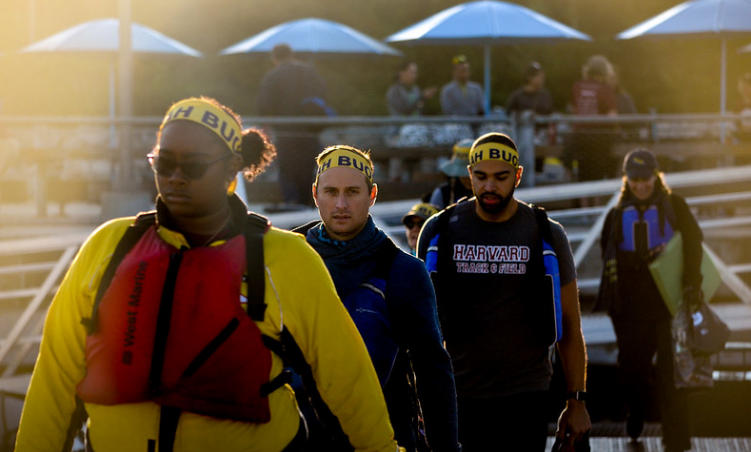
At 7:35 am on September 28th, teams of rowers will set out along the East River. No, this isn’t a mass exodus, nor is it an attempt to avoid morning traffic. It’s part of Rocking Manhattan, a 9-hour journey to circumnavigate Manhattan island in rowboats.

Rocking Manhattan is a 30-mile rowing event, providing participants with a rare perspective of New York City and a shared experience with a committed group of fellow New Yorkers (with a few Californians and Rhode Islanders mixed in). Formed into teams of between 4 and 12 people, they circle Manhattan Island along its three rivers—north up the East, west across the Harlem, and south down the Hudson. 

Each team is charged with raising at least $25,000 to support Rocking the Boat’s programs for youth in the South Bronx. Most raise significantly more towards the goal of $400,000, or 13% of Rocking the Boat’s annual budget.

Event participants include rowers, coxswains, and powerboat drivers. Event beneficiaries are the roughly 4,000 members of the Hunts Point community who take part in Rocking the Boat’s youth development and public programs.

Groups of relatives, friends, and co-workers form the always creatively named teams rowing around Manhattan Island in Rocking Manhattan, including Flotsam and Jetsam, Dismasted, Knots Unlimited, Shore Thing, Going Full Circle, Rabble Rowsers, Either Oar, Sirens and Argonauts, Ebb and Flow, Rock Lobster. Some have been involved since the first circumnavigation in 2009, others are rowing for the very first time. Some started as members of other teams and have now taken the plunge to captain their own team. Rocking the Boat Board members are leading six of this year’s nine teams. Rocking the Boat’s Founder an Executive Director, Adam Green, always rows one or two of the three legs.

Graduates of Rocking the Boat’s after school youth development program serve as coxswains, steering the boats and keeping their rowers synchronized and motivated. They are members of Rocking the Boat’s Alumni Rowing Team, which trains all summer for the event.

A dear friend of Downtown’s Alies Van Den Berg, will be rowing two legs. We felt that this was something everyone can get out to support.

Members of the tight-knit sailing community in Barnegat Bay, NJ fill a vital role driving safety boats that accompany the rowing gigs throughout the day, providing support as needed from filling empty water bottles to giving weary rowers a short tow.

Rocking the Boat

Starting and ending at One°15 Brooklyn Marina in Brooklyn Bridge Park, the route includes a breakfast stop at Socrates Sculpture Park in Long Island City and a lunch stop at Muscota Marsh in Inwood and brings rowers under bridges, past landmarks, and adjacent to ferries, cruise ships, and coast guard vessels. 

A celebration dinner and award presentation (for generating the most dollars, not rowing the fastest) takes place in Brooklyn once everyone returns to the dock.

Outside of a few smallish corporate sponsorships, this is a peer-to-peer fundraiser. Everyone involved has an individual fundraising page complete with progress thermometer. They post photos, write brief stories about their connection to the organization, and then proceed to hit up their networks for donations! 

Rocking the Boat posts updates on social media and engages sponsors like Hydroflask for water bottles and Hornblower (the operator of NYC Ferry and Hornblower Cruises) for dry bags.

Rocking the Boat

Rocking the Boat brings tremendous positive impact to the high-need youth of Hunts Point by sustaining a hub of crucial resources and opportunities that help students overcome the circumstantial disadvantages that threaten to stifle their full potential. Activities centered on small boats and local waters are the unique vehicles Rocking the Boat uses to affect profound changes in the lives of young people and the vitality of their community. Wooden boatbuilding, sailing, and environmental research and restoration captivate and challenge young people, expose them to new experiences, and show them they are capable of doing things they never imagined, or only dreamed of. In doing so they develop the technical, social and emotional skills to replicate the successes they have in the shop and on the water in their personal, academic, and professional lives.

Rocking the Boat

The event is a circumnavigation of Manhattan Island over the course of nine hours. The boats, the rowers, the hydration and snacks, and the accumulated enthusiasm of over 100 volunteers are all in place…the only element we cannot plan for (other than the weather!) is a cheering section. Downtown has assembled the following list of locations and estimated times (+/- 10 minutes) for anyone who wants to have a one-of-a-kind New York experience coming out and cheering on the rowers. 

Rocking the Boat

Schedule – Enjoy a one-of-a-kind New York experience come on out to cheer on the rowers at any of these viewing areas along the New York Waterway.

Leg 1: East River

Empire Ferry Fulton Ferry Park (base of Brooklyn Bridge): 7:35 a.m.

Main Street Park (base of the Manhattan Bridge): 7:40 a.m.

Gantry Plaza State Park (Hunters Point): 8:10 a.m.

Queensboro Bridge: 8:20 a.m.

Queens Bridge Park (Long Island City): 8:20 a.m.

Roosevelt Island Bridge: 8:40 a.m.

Leg 2: Hell Gate and Harlem River

Carl Schurz Park: 10 a.m.

Thomas Jefferson Park: 10:15 a.m.

The High Bridge: 11:15 a.m.

Sherman Creek Park: 11:40 a.m.

Leg 3: Hudson River

George Washington Bridge / The Little Red Lighthouse: 2:15 p.m.

Riverside Park promenade at 116th Street: 3:15 p.m.

Riverside Park Boat Basin at 79th Street: 3:45 p.m.

Pier 40: 4:15 p.m.

Pier 25: 4:30 p.m.

Rockefeller Park 4:35 p.m.

Robert F. Wagner Park: 4:45 p.m.