Categories
Architecture Business Design Featured News Technology

Toyota and BIG announce Woven City, the city of the future

Images by BIG-Bjarke Ingels Group

Today, January 7th, Toyota announced the future of city living at the CES technology conference in Las Vegas. The Woven City will be a technological playground and proving ground for the future of green energy, autonomous transportation, artificial intelligence, biophilic architecture, and more. They have not yet released information regarding a cost or timeframe, but the groundbreaking is scheduled for 2021. 

The Woven City, so named because of both the interweaving of technology with urban humanity and because of Toyota’s history as a textile company, will be constructed in Japan at the foot of Mt. Fuji. The 175-acre site is a former Toyota factory. It will be built on a grid that will emphasize different types of transportation: fast-moving autonomous vehicles, alternative transportation methods, and pedestrian traffic, with the latter two placed in more natural settings. “In Higashi-Fuji, Japan, we have decided to build a prototype town of the future where people live, work, play and participate in a living laboratory,” says Toyota Motor Corporation CEO Akio Toyoda, “This is a truly unique opportunity to create an entire community, or ‘city’ from the ground up and allow us to build an infrastructure of the future that is connected, digital and sustainable, powered by Toyota’s hydrogen fuel cell technology.”

The city was designed by Danish architect Bjarke Ingels, who has also worked on Two World Trade Center and a Mars simulation in Dubai, which began in 2017 and is expected to be completed in the next 3-4 years. 

woven city

It is always interesting when we get to one of these “sci-fi moments” in technology–the realization of something that writers have imagined for decades or centuries. A “city of the future” with cutting-edge technology has been in the imagination since Chicago’s 1905 White City, Disney’s Tomorrowland, and beyond. In fiction, it is often portrayed as either a utopian society or the epicenter of a corporate dystopia. It has, in fact, crept up in several recent movies. Not to say that Woven City will be one of these or the other–only that the intentional creation of a town interweaving humanity and cutting-edge technology seems to capture our dreams, hopes, and fears simultaneously. 

woven city

For now, let us watch as this new society at the base of Mt. Fuji is dreamed, built, and lived in. Maybe it will see our way to a brighter future. 

See More

Creating A Working Business Strategy For 2020

Downtown Magazine Hosts Premiere Showing for 77 Greenwich

Categories
Fashion Featured Lifestyle News Wellness

Getting Around NYC Efficiently: Are You Ready to Commute by Bike?

Something very interesting happens in New York City every morning. Thousands of affluent professionals, many of whom are wealthy executives, ride their bicycles to work. Despite the fact that they could easily afford to drive a Bentley, they actually choose to ride a bike. What exactly is going on here? 

Well, daily commuting in New York City can be challenging, tiresome, and even dangerous in some situations. The fact is, many wise business people have realized that riding a bike is the most reliable and efficient way to get to work. You can search for the best commuter bikes recommended by Pedallers

Cycling vs Other Commuting Methods

There are so many factors that make almost every form of transportation a hassle in NYC. However, after a brief comparison of the perils involved with each, you’ll find that cycling is generally the most reliable and preferable, particularly in scenarios that involve typical commuting distances of less than 5 miles. Here’s a rundown of cycling versus other commuting methods:

  • Bike vs Personal Vehicle – If you choose to drive your own car, then you have to contend with the absurdly crowded traffic, inflated NYC gas prices, and extreme parking difficulty in many places. Cycling might seem physically difficult, but many commuters have started using electric bicycles like these EMOJO bikes to reduce or eliminate the burden of pedaling. So, in a way, it’s sort of like a one-person, slow-moving automobile that can go more places than a vehicle can. 
  • Bike vs Public Transportation – If you opt for public transportation, you have to deal with unexpected delays, crowding, a complete lack of privacy and the possibility of sitting next to an odorous derelict, violent criminal, or anyone else that fate happens to throw your way. You don’t have to share your bike with other passengers and conform to routes & schedules. 
  • Bike vs Taxi or Rideshare Cab – Taxi cabs and rideshare apps like Uber and Lyft are options, but then you’re dependent on the timely arrival of the driver, and even if they pick you up on time, you could still wind up stuck in traffic in the back of a cab or Uber long enough to make you late for work. 

Ultimately, the best way to get around New York City is to use an electric bike. For traveling longer distances, use a rideshare app to get within biking distance.


Electric Bike + Rideshare is the Formula

Taking an electric bike with you in an Uber or Lyft ensures that you’ll never be completely stuck in traffic jams because you can always hop out and bike the rest of the way. An electric bike also makes it easier to get from one stop or station to another if you choose to go the public transportation route, so it’s a compatible accessory to every form of commuting. Of course, make sure you choose a rideshare driver who has a bike rack


Getting Around NYC Efficiently: Are You Ready to Commute by Bike?


Other Perks of Commuting on a Bike

By now, you should be thoroughly convinced that riding a bike to work is the smartest move in many scenarios, especially for people who live within a few-mile radius of their job. As an added benefit, it’s also great for the environment and it’s better for your health than sitting stagnant in a vehicle, train, or bus. Even if you choose to ride an electric bike, you still have the option of pedaling when you want to, so your bike can also be used as a tool for exercise. Additionally, studies have proven that boosting blood flow raises alertness and improves cognitive performance, so you’ll arrive at your job feeling ready to tackle the day after a morning bike ride. 

Categories
Featured Living

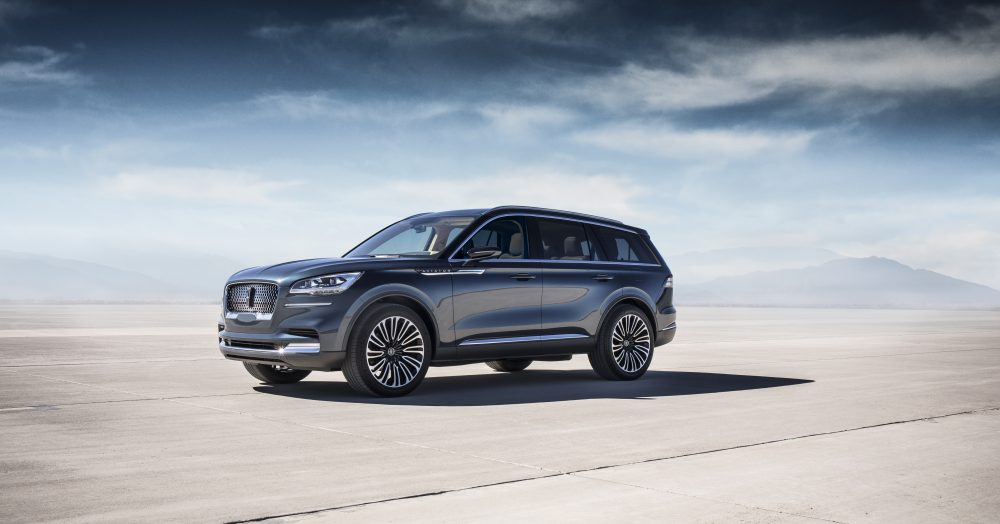
Lincoln Chases Innovation with the New Aviator

The automobile industry is feeling the pressure. As consumers, we’re no longer satisfied with the four-cylinder engine, flimsy cupholder, glovebox and barely-functional seatbelt combination wrapped in whatever horrible, geometric, die-cast and stamped sheet metal design that happens to be popular. Consumers want more – and Lincoln’s new Aviator represents a valiant effort to provide exactly that: more.

Lincoln Aviator Steering Wheel

Lincoln’s Aviator, formerly an afterthought to the bigger, bolder Navigator, has basically every innovation and piece of tech you could hope for in a mid-sized luxury SUV. From automatic emergency braking and predictive Suspension Preview Technology to the meaty Twin Turbo/Plug-In Hybrid drivetrain engine, the Aviator is breaking some serious ground and acting as the first installment of Lincoln’s movement “toward a broader portfolio of utilities and electrification in conjunction with effortless services,” according to the manufacturer.

This movement towards a more tech-savvy vehicle lineup has granted the new Aviator more injected tech than you can shake a stylus at – even an integrated app. You can start, lock, unlock and open the trunk of the new Aviator with a simple swipe of your smartphone. This new addition to the Lincoln line also features an absurd amount of driving modes, from the more modest “normal,” “conserve” and “excite” modes to the adventurous “slow climb” and “deep sand,” just in case you’re planning on crossing the Gobi Desert.

Lincoln Aviator Rear View

Styling is another big change for the new Aviator. Forget the boxy, encumbered body of the past, Lincoln has opted to implement an aircraft-inspired, aerofoil design on the newest member of their SUV family. “You have the stature and presence of the grille at the front, then the body and tail taper off,” explains Lincoln Design Director David Woodhouse, “from the headlight to the taillight, there’s a beautiful undercut feature varying in depth that connotes poise and grace.”

Lincoln Aviator Side Panel

Learn more about the brand new Lincoln Aviator on their website, and stay up-to-date on the latest tech by visiting our Tech Spot.

All photos courtesy of the manufacturer.