Categories
Culture Entertainment Events Featured Living Movies

Westfield WTC and the Tribeca Film Festival Announce Movies in the Oculus

For the third consecutive year, Westfield World Trade Center will roll out the red carpet for the Tribeca Drive-In: Dinner and a Movie film screening series, organized in partnership with the team behind the Tribeca Film Festival. The series takes place from Thursday, February 21st to Sunday, February 24th – just in time for this year’s major awards season!

During the four-day series, visitors to Westfield World Trade Center’s magnificent Oculus in Lower Manhattan will be able to enjoy free movie screenings of past Oscar-nominated and Oscar-winning fan favorite films:

•        Thursday (2/21, 7pm) – As Good as It Gets (1997) – Directed by James L. Brooks, starring Jack Nicholson, Helen Hunt, Greg Kinnear, Cuba Gooding Jr., and Skeet Ulrich.  When a gay artist is assaulted and hospitalized, his cranky neighbor must care for his dog, triggering a change in formerly selfish attitude.  Two Oscar wins and five Oscar nominations.

•        Friday (2/22, 7pm) – Field of Dreams (1989) – Directed by Phil Alden Robinson. This three time Oscar nominee for Best Picture, Best Screenplay, and Best Original Score, is a fantasy about a farmer who builds a ballpark in his cornfield, where long-dead Major Leaguers gather to play.

•        Saturday (2/23, 12pm) – Hugo (2011) – Directed by Martin Scorsese. A young orphan lives in a train station in 1930s Paris and tries to repair a mechanical man built by his father. Five Oscar Wins and six Oscar nominations.

•        Saturday (2/23, 7pm) – E.T. (1982) – Directed by Steven Spielberg. A lonely boy befriends a homesick alien stranded on Earth and attempts to help him find a way home. Four Oscar wins and 5 Oscar nominations.

•        Sunday (2/24, 12pm) – Finding Neverland (2004) – Directed by Marc Forster. A biography of playwright J.M. Barrie focusing on his relationship with a young widow and her sons, and the role it played in inspiring the children’s classic Peter Pan.  One Oscar win and six Oscar nominations.

Before the films, visitors attending the screenings will be able to enjoy live music performances presented by Broadcast Music, Inc. (BMI); relax in custom-designed seating lounges; explore special fashion and accessories vitrines curated by local influencer and personal shopper Samantha Brown;  take advantage of one-of-a-kind, Hollywood-inspired photo ops; and partake in exclusive food and beverage service provided by some of Westfield World Trade Center’s tastiest restaurants and eateries, including: Epicerie Boulud, Eataly NYC Downtown, Nunu Chocolates, and Sugarfina. 

“As film fans, awards season is the most wonderful time of year in Tribeca, so we are thrilled to be continuing our partnership with Westfield World Trade Center for a very special Oscar edition of our fan favorite Drive-In series,” said Cara Cusumano, Tribeca’s Director of Programming. “We hope everyone will join us, inside this time, for a look back at some of our favorite nominees of all time as we finalize our ballots for the 2019 winners.”

“Award-winning films in an award-winning setting – what better way for our visitors to enjoy all we have to offer inside Westfield World Trade Center!” said Shari Hyman, Vice President and General Manager of Westfield World Trade Center.  “We are excited that our continued partnership with Tribeca Films makes this unique experience possible.”

Screenings are free and open to the public. Tickets may be reserved in advance on Eventbrite. Admittance and seating is first-come, first-served. 

For more information on the series, including daily menus and artist information, please visit: www.westfield.com/wtc/dinner-and-a-movie.

Categories
Events Living

Downtown TripPicks: Apr. 16 – Apr. 23

Trip by Skyscanner is an innovative planning tool that tailors recommendations for places to stay, eat and play to your specific tastes. It also allows you to share your great experiences with people who have the same interests as you; people in your “tribes.” Trip by Skyscanner’s TripPicks This Week feature empowers you to discover and take advantage of great events, openings and exhibits throughout the city each week.

Here are some exciting events and sites to check out this week in Downtown New York, courtesy of Trip by Skyscanner. Visit the Trip by Skyscanner site or download the app for more upcoming events.

Tribeca Film Festival


In addition to film screenings, the Tribeca Film Festival hosts talks, art exhibits, galas, outdoor drive-ins and the Tribeca Family Festival Street Fair. One of the world ’s top international film festivals, expect to see stellar works (with a focus on Trump-era documentaries and female-directed films) from established and emerging filmmakers. FREE and paid events. Tickets start at $12.

Check site for complete list of venues
Wednesday, Apr. 18-Sunday, Apr. 29 (check site for showtimes)

Craft Beer Fest


You’re in a for a real brewer’s treat at NYC Craft Beer Festival. Over 75 breweries from across the country will be showcasing their craft beers, meads, ciders (including limited release and seasonal selections) and spirits. Chat with industry professionals, shop an array of cool vendors, play games and purchase yummy food! Tickets start at $55.

Metropolitan Pavilion (Flatiron)
Friday, Apr. 20-Saturday, Apr. 21 (Check site for entry times)

Car Free Earth Day

The third annual Car Free NYC event is bigger and better. Major areas of the city including Broadway, from Times Sq. to Union Sq., and St. Nicholas Avenue, from 181st Street to 190th Street, will be closed to traffic and open to people and fun activities like fitness classes, dance performances, workshops arts and crafts and much much more. FREE

Check site for complete map
Saturday, Apr. 22 from 10am-4pm

9/11 Memorial Run

The annual 9/11 Memorial 5K Run/Walk supports the 9/11 Memorial & Museum. The run is followed by a Community Day event on Greenwich St. with food trucks, activities, and music. Registration prices start at $20.

North Cove Marina at Brookfield Place (Tribeca)
Sunday, Apr. 22 from 7:45am-12pm

The High Line Kick-off Party

The High Line is ready for another excellent spring and summer season! Get a taste of it at the kick-off party which will feature live music, art, poetry, hands-on activities and gardening opportunities for all ages. FREE with RSVP

The High Line (Chelsea)
Saturday, Apr. 21 from 1-7pm

Categories
Culture Events Movies Uncategorized

Newton Filmmakers Talk Inspiration and Election


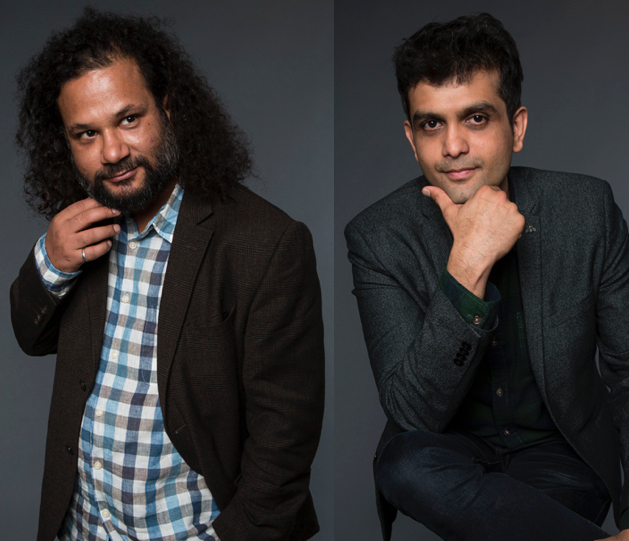
Amit Masurkar

“I’m not here to seek your votes.” A fat man festooned in bright orange garlands proclaims to the crowd gathered bellow the carnival-float podium he rode in on. He’s just there to stand up for the people, and to take care of the children, he says. All he wants is to make the lives of working people better, if only it wasn’t for all the other politicians, with goals not as pure as his, who stand in his way. This speech has been heard before, in many languages, and the scene, although set in rural India, is globally familiar. Thus begins “Newton,” a Tribeca International Narrative selected film, which is both a pointed satire of the election process and a love letter to all the people whose lives are affected by its outcome. On this pancontinental resonance of his film, director Amit Masurkar says:

“Film [in general] relates to what you are familiar with. So automatically you start seeing connections with things that you care about or you feel are unjust in your world. The German audiences related it to what’s happening there, in Hong Kong they were asking a lot of questions about Maoism and relating it to what is happening in China with government corruption. So people see a lot of similarities: even in North Korea there are elections. Saddam Hussein was democratically elected, so was Trump.”

At this, the interviewer and her subjects burst into knowing laughter, strangers no longer. And just like that, Masurkar and Tewari do it again: take a heavy subject lacking in easy answers, defuse it through an interaction between humans equal parts warm, awkward and immediate, and with the resultant laughter chip away a little bit of that heaviness, giving hope that even if not just yet, an answer will come. Each scene in the film achieves this feat, a testament to the pair’s background in writing for both sketch comedy and Bollywood. From that point on, the conversation flows fast:

Camila Gibran: What prompted you to center the film around an election?

Amit Masurkar: I was reading the preamble to the constitution. It’s such a beautiful piece of writing and a there is so much hope: the founding fathers thought that [India] was finally free and we could create our own destiny. The constitution is full of beautiful ideas… If you look at the constitution of any country today, I would say it would be beautiful, but then there’s a huge gap between what is written and what is practiced. So in order to do something about that, I thought to make a film about the physical process of electioneering.

CG: In your own words, please give me a brief synopsis of Newton.

AM: Newton is set over a day during an election in a conflict area. The election workers are supported by the police force in order to conduct “free and fair” elections in an area where the voters are not really free. So it’s ironic, the whole idea of the election there is a farce. The people there are disenfranchised, their rights aren’t really taken seriously, but when it comes to voting, they’re part of the statistic.

CG: There’s that gap again, that you spoke about, between the official record and the day to day reality. Does this apply to elections as well?

Mayank Tewari (screenwriter):  All over the world elections legitimize democracy while also being used as a tool for people to further their own agenda. The agenda is never set by people who have a stake. Policies are made about populations and the populations don’t have a say in what’s going on. If you’re able to show that a certain place had “free and fair” elections, a lot of things about that place are forgiven. If they have a democratically elected government, the feeling is “oh, they are plugged into the shared dream” so everything must be ok.


Mayank Tewarti

CG: Yet in the film, there’s hope. The main character keeps going for it, keeps believing in the process, in the importance of elections. Is there more than naiveté to the belief that one small person can change things?

MT: One thing, as a writer, I felt I accomplished, is the protagonist in the film not being a cynical person. Through his journey in the film, he starts sincere and he remains sincere, and I think that sincerity is what’s in need of here. Everybody seems to be wrapped in cynicism, being genuine and attentive is becoming a rare quality.

AM: You need patience for anything to happen, battles are being fought every day, but change take time. For example, in a country like say the U.S., women started voting much later. Turkish women were voting before American women were. And segregation was here until so late… It takes time for a society, generations for people to become aware of what they were doing and correct the historical wrongs of their forefathers.

CG: What is the role of art, and film specifically, in the process of bringing  about political change?

AM: We try our best, look at some if the singers from the sixties, so many of their songs are still being sung and they inspire people. One of art’s agendas is to make people learn about something new, discover something, question things, introspect. Film must also entertain at the same time, not make it into a serous topic that turns people off but make it accessible to everyone, and funny. Our intention was for people to find out more.

MT: An artist also has a political action. The fact that you are trying to draw humor from something which is not conventionally a source of humor is a political action, I feel, because art also creates a type of a context. If films like these are able to move you and to stay with you…

CG: We’ll be singing the songs of the sixties and watching films like Newton forever?

MT: That is my hope.

Interview by Camila Gibran

Photography by Leslie Hassler

Categories
Culture Movies

Dito Montiel’s The Clapper is a Glimpse into the Unnoticed Hollywood

Dito Montiel has lived A Life. A member of several successful hardcore punk bands, author of two books, screenwriter and director whose filmography is in the double digits, both Shia LaBeouf and Robert Downey Jr. played him in a movie, and yet, the only way to find any of this out is by googling him. His hat is knit, there are no scarves, bracelets nor other accouterments of past musicianship in sight, his anecdotes are of failing the NYC sanitation worker entrance exam (a job he was once happily prepared to accept), and of taking the Trailways bus to LA. The man sitting across from me is warm and gentle in a manner barely distinguishable from shyness. Had he told me he was an exam passing sanitation worker, I would have no reason to doubt him.

Svetlana Chirkova: Where does the story of Eddie, The Clapper, originate?

Dito Montiel: When I first came to Los Angeles 12 years ago, it was me and my friend Eddie, and we just needed jobs. I didn’t go with any particular aspirations; I didn’t mean to be a writer or a director. I had a friend who could get me a job and would let me sleep at his place, that was enough. We took the bus there and I went to work in the dub room while Eddie got a job as a ‘clapper’, a paid audience member. He got $75 dollars for each show, and all he had to do was clap, laugh when the sign said “laugh” and go “ooh” when it said “ooh”. I thought it was insane. He could do three shows a day and make $225 dollars. Then one time, he got to ask a question, and was paid an extra $100 dollars, he was so happy, but after he wasn’t allowed to work for the next month because his face had been seen, so he was really mad. That’s where the idea came from.

SC: You write about the forgotten working class of Hollywood in the director’s notes. Could you elaborate on that?

DM: It’s a funny thing, when you’re not from LA, everyone thinks of there being this “Hollywood Elite” which is insane because it’s a such a blue collar town. Sure there’s Steven Spielberg and Tom Cruise, but if you think every director is Steven Spielberg and every actor is Tom Cruise, you are forgetting 99% of the people working in the movies. They are plugging in lights, they’re sound people, electricians, plumbers… I never thought of the glitz of it, it was just a place I ended up. We knew of the really nice houses up in the hills, but we didn’t go up there…[laughing] if we got invited, we would’ve gone. Had we ended up in Pittsburgh, Eddie and I would’ve worked at a steel mill, you know? We didn’t go to LA to become famous people or anything, so it was fun making this movie and writing about this world.

SC: Famous has become a very desired thing to become, in an of itself.

DM: Not for Eddie [the character], I think he would be fine with it if he could still make his money, but it works in reverse for his job. It was an interesting way to look at fame without hitting anybody over the head with the message. When we originally showed a screening to a bunch of people in Hollywood, you know, actors, they couldn’t understand why he wouldn’t want to be famous. He’s not against fame, it just messed up his job. He’s a guy who prefers to simply go to work every day and live…There’s a lot to be said about having a regular job.

SC: Film has been your regular job for a number of years now. Despite it not being part of the original plan, what was it that drew you in?

DM: I don’t know how I got in to it, I really don’t. It was utterly insane, like Mr Magoo. Somehow I ended up doing this and now I do it. But as far as an art form, it’s pretty incredible, because you get to mix everything; there’s writing, there’s music, there’s acting, there is cinematography. I toured for a long time with terrible hardcore bands in vans, which is kind of like directing except you don’t see the end result. We’ll see what happens next, but I enjoy film a lot and they’re letting me do it. Until someone says ‘No’, I’ll keep doing it.

Dito wore the same knit hat to the premier, a man simply doing a job he loves which occasionally entails interviews, photographs and premiers. I never got to ask him if he has been invited to one of the nice houses in the hills yet.

Photography by Leslie Hassler

Categories
Culture Movies

Eliza Taylor in Thumper: A Portrait of an Actress

Dispatches from the Tribeca Film Festival: A look through the lens of films to see ourselves in the other, and the other in ourselves.

“It’s a little bit painful to watch at times, in the best way possible. It’s very gritty and raw”, Eliza Taylor tells me of her new movie that just premiered at Tribeca Film Festival, Thumper, a very real portrait of lower class America by Jordan Ross in which she plays an outsider who gets involved in a high school meth ring.

Cozily sitting in front of me, wearing all black, she is tired; her face is flawless but her eyes are sleepy. As she talks about the film and her acting, sentences encompass extremes–hard to watch/best way possible, rough/wonderful–but not for a second is she scattered. She seems to know her place in the world, ingrained in a path in which every challenge to her craft is as rough as it is a wonderful opportunity.
Camila Gibran: Thumper is “hard to watch sometimes”. Why did you decide to take this role?

Eliza Taylor: Because the way the script is written you get a real glimpse into these people lives. The lives of people who in a lot of ways feel like they’ve been forgotten about and left behind by society. And as an actress, for the first time in my life, I got to play a character like Kat/Meredith, a character playing a character and it was a wonderful challenge to separate the two.

CG: You do a lot of television. Can you tell what film means to you as a visual art form?

ET: Film has been a life long love affair. For me personally, it’s about taking people away. I remember being at the cinema and watching really powerful movies and forgetting I was sitting in the theater.

It’s about being able to have a glimpse into different people’s lives around the world that we wouldn’t necessarily have a glimpse into.

If we get to pull that off successfully for an hour and a half, you take people out of their daily lives into a completely different world.

CG: No commercial breaks …

ET: Yes, No commercial breaks (laughs)


CG: Can you tell me about the world of Thumper?

ET: The movie is about kids who get caught up in the world of making and selling methamphetamines. But one thing about it is that you can really empathize with every single character, none of them are black and white, you can see that they are doing the best they can in a situation they are in.

CG: It feels very real. How was the shooting process?

ET: It was fascinating. We filmed in people’s homes that are in these areas that aren’t necessarily the wealthiest and their quality of life isn’t perfect. They were all really good people and very welcoming. But the sad thing was, we would wrap and finish shooting in their houses for the day and they went back to their lives. It was humbling and quite touching.

CG: What city was it set in?

ET: We didn’t want the movie to be specific to an area in America. We wanted it to be very American but we didn’t want everyone to automatically assume that it was in one certain area, one place. We shot it in San Pedro in Los Angeles, but yah… we kinda wanted it to have a hot sticky industrial vibe.

CG: You said that if a movie pulls it off, it can take us away and give us a glimpse into a different world. How do you feel after immersing yourself in this particular world? 

ET: I didn’t know myself by the end of this movie… I was like “ Who am I
again?”

It was rough; it was a really intense shoot. I did a lot of research and learned a lot about methamphetamines and the effect it’s having on modern society, it’s quite incredible, even in Australia it’s an epidemic. I came out of it feeling quite overwhelmed by that.

It was a real experience and it wasn’t easy, which was great.

And just like that she gives me yet another glimpse into her world, the path she is on and the kind of actress she is.

Photography by Leslie Hassler

Categories
Culture Events Movies

Russell Peters Shines in The Clapper

Dispatches from the Tribeca Film Festival: A look through the lens of films to see ourselves in the other, and the other in ourselves with Russell Peters.


Russell Peters generously breaks the ice by mimicking farting sounds as he settles into an armchair, simultaneously setting the joke bar within an easy reach for me. It’s a comfortable place to begin when interviewing one of the world’s top comics whose career spans decades. He also designed his wife’s engagement ring to feature four lobster claws–or so the internet tells me.


Svetlana Chirkova: What is the world of The Clapper, in your own words?

Russell Peters: The film is about a guy, Eddie Krumble, who moves to Los Angeles and makes his money as a professional audience member. All he’s trying to do is make a living, he’s not trying to become “Hollywood”, he’s not trying to become a celebrity, he just wants to live a very simple life, and do a very simple job, then along comes this late-night talk show host, Jayme Stillerman, played by myself…

SC: You look great in a pink suit, by the way.

RP: Thank you, it may have been my own suit, actually… Anyway, my character, while doing his monologue and trying to make people laugh, unwittingly exposes Eddie as he thinks it’ll be a really funny ‘bit’ to try to find him, which in turn destroys Eddie’s life. So it’s a situation where one guy is trying to do the right thing, and the other guy, while thinking he’s doing something funny, wrecks it all.

SC: So there’s real gap in perspectives between these two as to what’s of value in life?

RP: Yeah, Stillerman is a TV cornball host, it’s his whole existence, so he really just can’t imagine how TV exposure could be bad for anybody. Eddie, on the other hand, is just trying to make his $100 dollars and the fact that his job ends up on TV is irrelevant to him. So there’s a failure to understand a very blue collar business by someone coming from the shiny, “glitzy lights” business, thinking that exposure is only going to lead to bigger and better things.

SC: This lack of mutual understanding between the so called ‘blue collar’ and the ‘glitzy lights’ classes has become a much debated topic following the election and the events since.

RP: There is no finger pointing, we are all the problem. Ultimately we all have to take credit for the problem.

SC: The world has become such a different place compared to a year ago, when this film was being made. Does the story of these characters take on a different meaning against the current backdrop?

RP: Isn’t it weird that a year ago seems like a much different time? Even 10 months ago was. We had a different president, we had a different mood, and now here we are with all this uncertainty about the future. There are so many threatening things in the world now, so many different things coming at us we don’t know what to dodge. It’s such a bizarre time. So I guess the thing that this film can offer is a glimpse back to a time when things were simpler – you know, 10 months ago.


SC: Ha. So apart from this time capsule property, what else can film offer above other forms of story telling?

RP: Film takes you into that world of escapism that we all desperately need, especially in these times. I think fewer people are going to movies nowadays, because the thought process is ‘Well, I can rent it on iTunes’, or wait to get it on Netflix, or just get a bootleg somewhere. We are detaching ourselves from tangible things which is a very bizarre thing to me. Going to the movies gives you something: to sit in a seat, to hold a ticket, to eat your popcorn and have a soda, to look at the person beside you and cheer, to be in the room full of strangers. Now we curate everything from the TV shows we watch to the music we listen to, we create a tailor made bubble. It’s hard to get that collective feeling anymore, because when you do find yourself in a group of people they too have been curated and are all in fact the same person. We are homogenizing ourselves individually. But what we forget is, back in the day, when these bubbles didn’t exit; we all talked, we had common ground, we had common things to talk about. We all just co-existed quite well with each other.

To further demonstrate his fondness for embracing the necessary discomfort of the true collective experience, the farting sounds got an encore as Russell distributed his goodbye hugs on the way out.

Photography by Leslie Hassler