Categories
Culture Featured Health Living

Found in the Woods: What City Kids Learn in the Wilderness

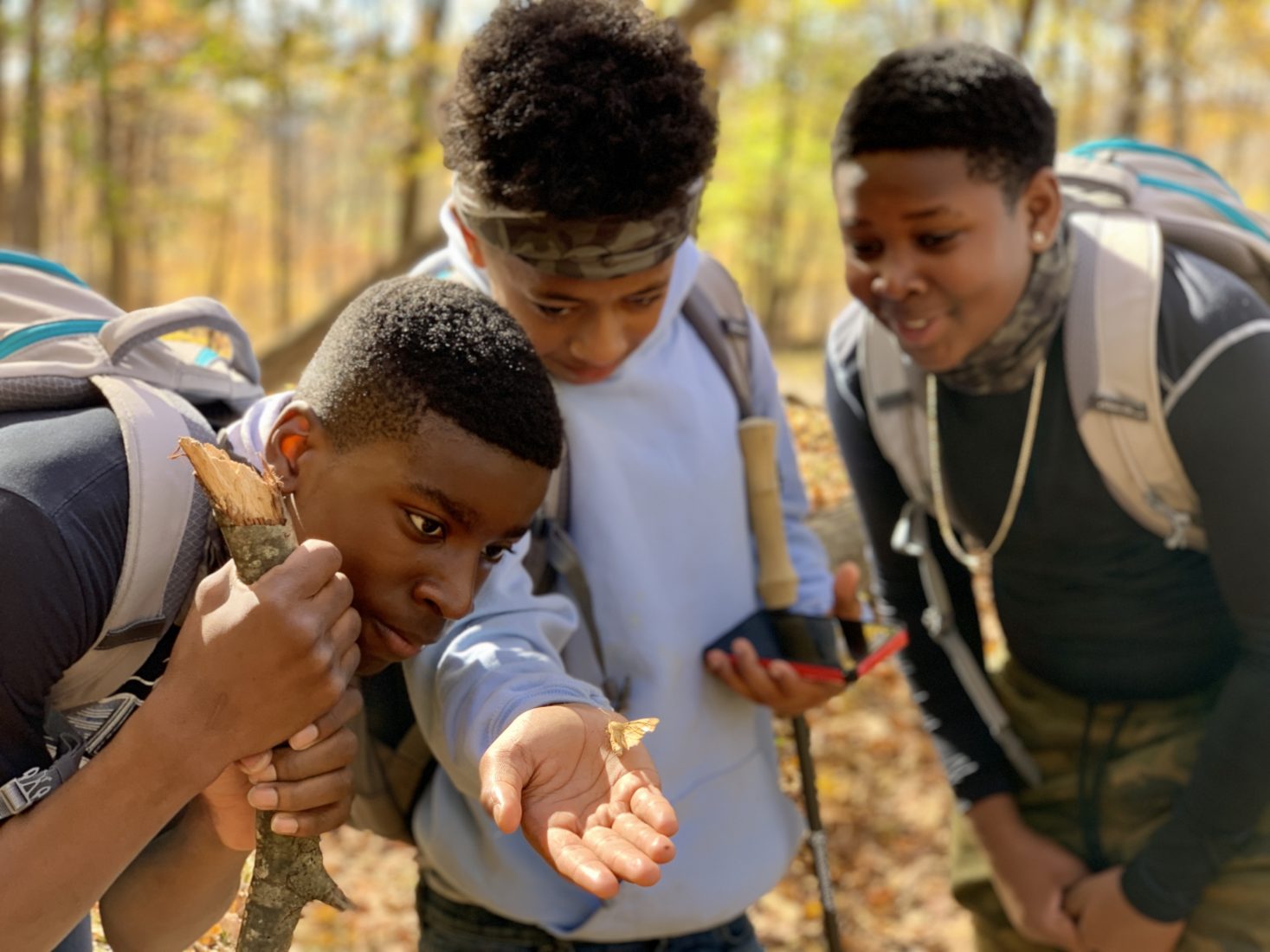
They take the kid out of the city, but Camping to Connect isn’t trying to take the city out of the kid. Instead, co-founders and facilitators Andy Isaacson and Manny Almonte are bringing the city kid into the wilderness, an experience they hope their charges can take back to the city. It’s working.

Camping to Connect is a product of the “Mastermind Connect” program, a community organization that brings men, mostly BIPOC, together for mutual enrichment. Each brings diverse skills to teach and support each other.

Camping to Connect is one of their programs, part of the Young Masterminds Initiative focused on young men. Qualified Mastermind Connect volunteers lead youth in trips into the wilderness beyond NYC’s borders. These range from day trips with three or four kids to overnight camping trips with more than 20 participants.

Their first trip was an experiment in exploring nature. “It was the idea of bringing them to governor’s Island–a metaphorical and physical island away from their lives,” says Isaacson, “and taking them out of the world they were familiar with and that they knew (and) bringing them to an Island and exposing them to camping and being outdoors. We found an opportunity to connect with each other in a deeper way.” After that first trip, the trips expanded beyond the five boroughs to places like Harriman State Park and the Delaware Water Gap.

Like their adult programming, Camping to Connect brings in specialists to help broaden the participants’ horizons. There are fitness and camping, but also urban gardening, singing, and opportunities to connect individually with mentors and each other. “Most of them share that when they hang out in school, they’re on their phones,” says Isaacson, “They’re kind of hanging out around one another, but not deeply with one another.”

For the volunteer counselors, it is an intimate experience and a responsibility. Almonte believes that programs like Camping to Connect are core to the vision of Mastermind Connect and the Young Masterminds Initiative. “These (counselors) are men who themselves are part of a group that has to do with self-growth and brotherhood and camaraderie. So we’re taking these young men at an early age and bringing them into our village, into our community. We’re investing in them, (preparing) them to be the type of individuals that we aim to be as adults.”

COVID has slowed down Camping to Connect’s expansion, but not its programming or mission. Counselors are still taking small groups on day and overnight trips under strict conditions to keep healthy and socially distant even as they socially connect. If you’re interested in finding out more about the Young Masterminds Initiative or Camping to Connect, check out their website here.

Categories
Culture Featured Movies

Review: ’18 to Party’ Explores Teen Experience in Slice-of-Life

Jeff Roda’s debut creation shines a light on the harrowing teenage drama of sitting around in a group doing nothing.

Everything feels like a big deal when we’re younger. Teenage girls get the stereotype of endlessly complex gossip and rumormongering about nothing, but that’s unfair–those social conspiracy theories are really the non-stop inner monologue of a young teen mind. They don’t have the filter of experience yet, so every interaction feels significant. Maybe even life and death. 

By some magic, writer/director Jeff Roda has trapped us in that world again. 18 to Party, his directorial debut, perfectly captures all of youth’s anxiety and fear in a plot where young teens mostly sit around and do nothing. He knows that, for young teens, every social interaction is dramatic enough for the silver screen. 

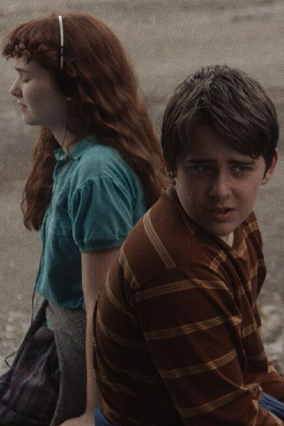
18 to Party is the story of a group of 8th graders in 1984 upstate New York waiting to see if they get into a small-town nightclub. Exiled to the back of the building to wait, the kids talk, argue, and discuss the strange happenings of their town. 

If the film has a main character, it would be Shel (Tanner Flood, Unbreakable Kimmy Schmidt), a perennially anxious boy who looks younger than most of his classmates, especially his friend Brad (Oliver Gifford, Unbreakable Kimmy Schmidt). We meet Shel agonizing over a test grade. He used to be “full honors” but isn’t any longer. Now he’s gotten a 3/5 on a quiz–a devastating blow. As subplots twist and unfurl, we realize that Shel’s previous academic record isn’t the only thing that’s bothering him. The kid is so wound up about his life that he has a hard time expressing himself about anything. That includes the aliens. Yes, aliens. There have been possible sightings around the town, and most of the parents are at a meeting discussing the possible extra-terrestrial incursion. 

Tonally, 18 to Party screams Richard Linklater’s “Slacker,” the 1990 film about nothing much happening in Austin, Texas. The kids out back behind the nightclub mirror the inane conversations of Slacker, covering conspiracies, art, and life, and passing the time with what feels like idle discussions. 

More than anything, though, 18 to Party feels like dropping in on an episode of Stranger Things that takes place between seasons. The beginnings of the conflicts happened in other episodes that we didn’t watch, and there are few developments. That makes sense in a show, where big changes accompany big moments. Big, definitive decisions happen when you’re getting chased by extra-dimensional creatures and shadowy agents. Life’s dramatic moments. And it’s clear that these kinds of moments happen in this 18-to-Party Universe. They just don’t happen in 18 to Party’s 90-minute run. 

So what’s the point of the story? If nothing else, it’s that these moments can still feel huge as a kid. We, as adults, as movie-goers, know that this story is almost entirely mundane. A different movie would skip it entirely for the more exciting nightclub scene. But that’s not how kids this age think. 

I still remember the abject terror I felt the first time I went to a high school Halloween party. I had seen Mean Girls a dozen times and knew the scene where Lindsay Lohan shows up…overdressed…to a Halloween party. Would this be the same? Would I get judged if I went in costume? It ended up the opposite: I was the only one not in costume, and I felt like every eye was on me the whole night. The entire episode feels like such small potatoes in retrospect.

Watching 18 to Party, you feel that hyperawareness of small details, a testament to the directing and the acting chops of the cast. When one character arrives and finds that all of his former friends have moved on without him while he was gone, you feel the weight press against him. Every twitch and fidget, every set of awkwardly shifting eyes, pushes him out of the group. If you watched the film on mute, you could follow the plot with body language alone.

That’s not to say that 18 to Party is without flaws. Unlike Linklater, Roda teeters between pure slice-of-life and a deeper metaphorical meaning. Certain elements, like the recurring UFO discussion, poke at a deeper meaning, but can’t seem to make them coalesce. It leaves some of the thematic exclamation points feeling more like question marks. 

18 to Party is a fascinating and fun ride for anyone who remembers their early teen years. In fact, it is so vivid that anyone who has forgotten those years might have flashbacks. A cast of young, mostly inexperienced, actors pull off great performances. Writer/director Roda shows a talent worth paying attention to with his debut in both roles, channeling a moment that feels as real as Linklater’s Slacker. It will be interesting to see whether this is a one-off passion project or the first of many promising creations.

Categories
Culture Featured Movies

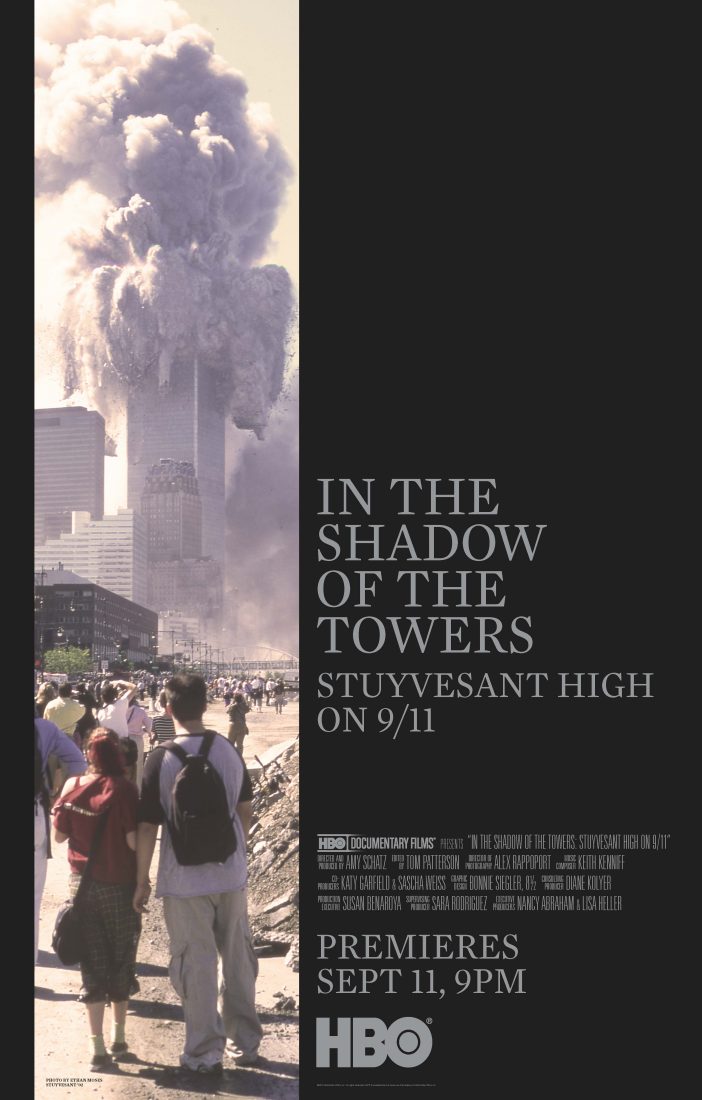
Review: In The Shadow of the Towers: Stuyvesant High on 9/11

In The Shadow
Poster courtesy of HBO

I was ten years old on September 11th, 2001. It was a big day of firsts for me. It was, for example, the first time that I experienced a feeling of unreality surrounding an unbelievable moment. I was, however, very young and 130 miles away, watching the collapse of the towers on television at a family friend’s house after my Jewish elementary school evacuated in the hour after the first attack. 

“In the Shadow of the Towers” focuses on the experiences of students at Stuyvesant High School, a commuter school only a few blocks away from the twin towers. Through interviews, pictures, and videos, they retrace that day from the perspective of children close enough to see the planes hit the twin towers from the windows of their classrooms, and the reflections of those students who have long-since grown up. 

The documentary, which is only half-an-hour long, doesn’t expand much past that day. It spends a few minutes in the end on reflection, from the bigotry experienced by some of the students of color–many of whom were the children of immigrants–to the ways they memorialize that day. The film feels almost understated in a post-9/11 world saturated with portrayals, documentaries, and commentaries. That focus aids the narrative. It knows you know the story, so it skips the broad strokes. Instead, it offers intimate recollections and personal disclosures of how that day changed the interviewees, and the ways they saw their world change in its wake. 

It is likely not a mistake that many interviewees for “In The Shadow” were the children of immigrants. The film isn’t afraid to contrast the emotional impact of the 9/11 tragedy on these students with the otherizing they experienced after the fact. Two of the men recall a man shouting anti-muslim slurs at a classmate as they fled the destruction. She was wearing a hijab, and the man shouted at her to “go back where she came from.” One of those two men became a rapper, and the documentary ends on one of his songs. The lyrics recount the experience of his middle-eastern family shopping for American flags after 9/11, both out of patriotism and the desire to show that they belong. It’s a sentiment echoed by other interviewees, all of whom make a call for unity and an end to post-9-11 racial paranoia. 

The story of “In the Shadow of the Towers” is one of vivid recollection and resiliency. It’s the story of the last, youngest, people to clearly remember the pre-9/11 United States. These teens were as much at the epicenter culturally as they were physically– I’m sure some of their classmates signed up for the subsequent war in Afghanistan. “In the Shadow” is a perfect vehicle to share their experiences. It is an important watch for those able to reflect on such things as the 17th anniversary approaches. 

In the Shadow of the Towers: Stuyvesant High on 9/11 will air on HBO tomorrow, Wednesday September 11th, at 9:00 pm Eastern Time. The film will be available on HBO NOW, HBO GO, HBO On Demand and partners’ streaming platforms.