The announcement comes with a list of restrictions and rules intended to prevent further spread of COVID-19. Restaurants will start at 25% capacity. If the citywide infection rate stays low, restaurants can increase their indoor capacity to 50% on November 1.
But if the infection rate goes back up, restaurants may be forced to shut down again.
Still, the announcement is good news for local restaurants. For months, establishments have been pleading with the mayor and governor to release a plan for a return to operating indoors, particularly since the infection rate has remained below 1% for the past month.
The service and hospitality industry has suffered considerably due to COVID-19, and the push for indoor dining was a push for its continued survival. The pandemic has been especially tough on bars and restaurants, an industry that recently employed more than 315,000 New Yorkers but has been operating at a fraction of its usual business since the city reopened. Thousands of establishments, including some of New York’s most storied diners and watering holes, have shuttered for good or shouldered a huge financial burden since the pandemic started.
—All patrons must get their temperature checked at the door
—At least one member of each party must leave contact information for potential contact tracing if an infected person is linked to the establishment
—Service must end at midnight
—No bar service will be allowed; table service only
—Masks must be worn by diners at all times except when seated
—Tables must be 6 feet apart
—Establishments must adhere to enhanced air filtration, ventilation, and purification standards, though specific details on these standards are not yet available
It’s unclear how many bars and restaurants closed so far, but a New York Times report in August said as many as one-third of small businesses may have been lost for good. Expanded outdoor dining, which was introduced in June, is currently slated to last through October — it has been a hit with patrons, and some hope it will get extended indefinitely. Still, industry leaders have complained, the governor’s restrictions and enforcement have been too severe, causing even more financial problems.
If you’re planning to do some indoor dining, remember to wear your mask when talking to your server and tip generously. It’s going to be a long recovery.
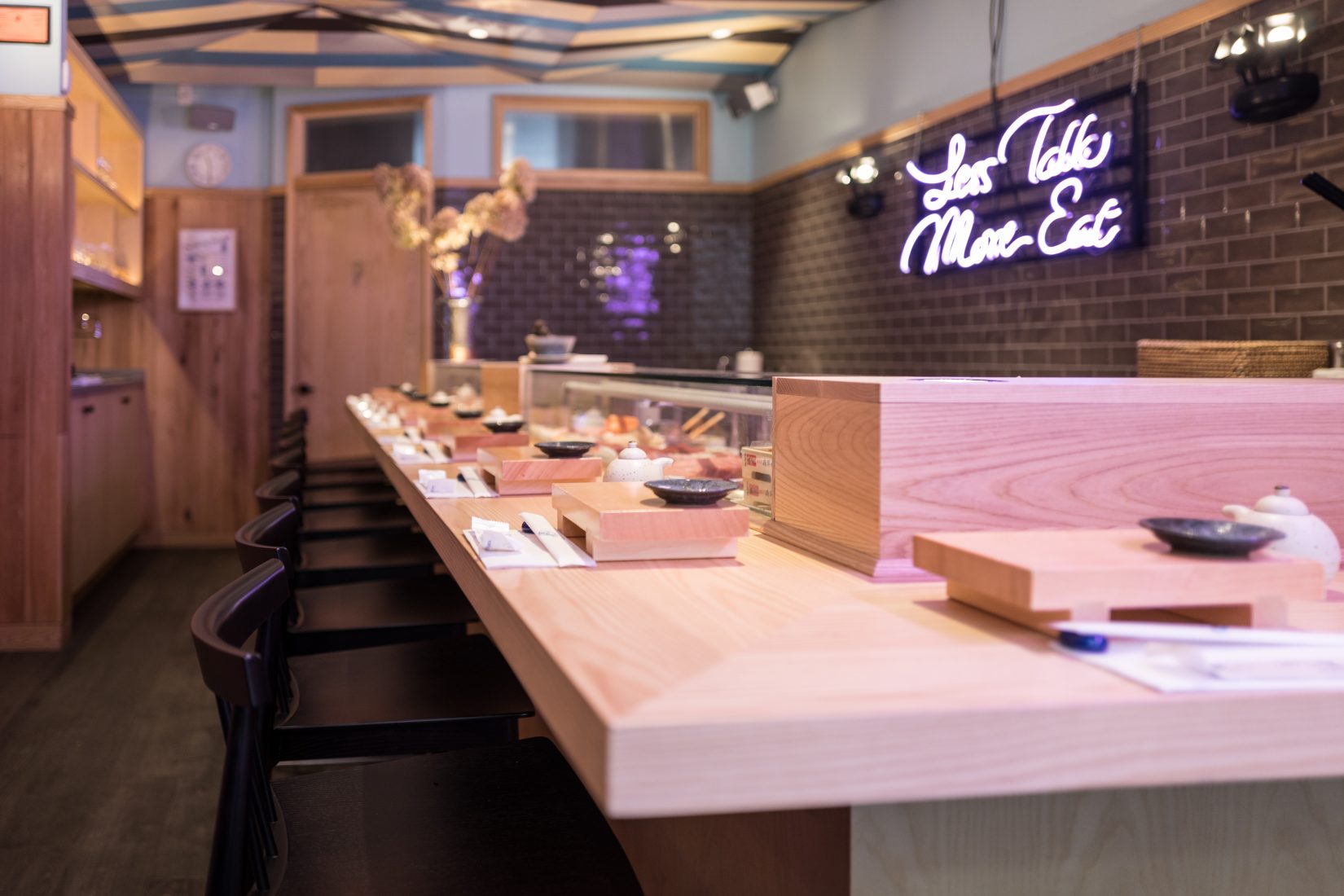
Manhattan’s Financial District has recently gained a high standard japanese restaurant. After the success of Chikarashi, in Chinatown, the owners of the poke-inspired spot opened Chikarashi Isso. With a minimalist design and cozy atmosphere, their new restaurant offers a kappo-style cuisine, with focus on seasonality.
Kappo, that means “to cut and to cook”, is a multi-course meal. This kind of japanese cuisine is less formal and emphasizes the proximity between the chef – who takes entire control over the meal – and the client. Traditional Kappo restaurants are usually small and people can watch the chef cooking in front of them.
Chikarashi Isso interior
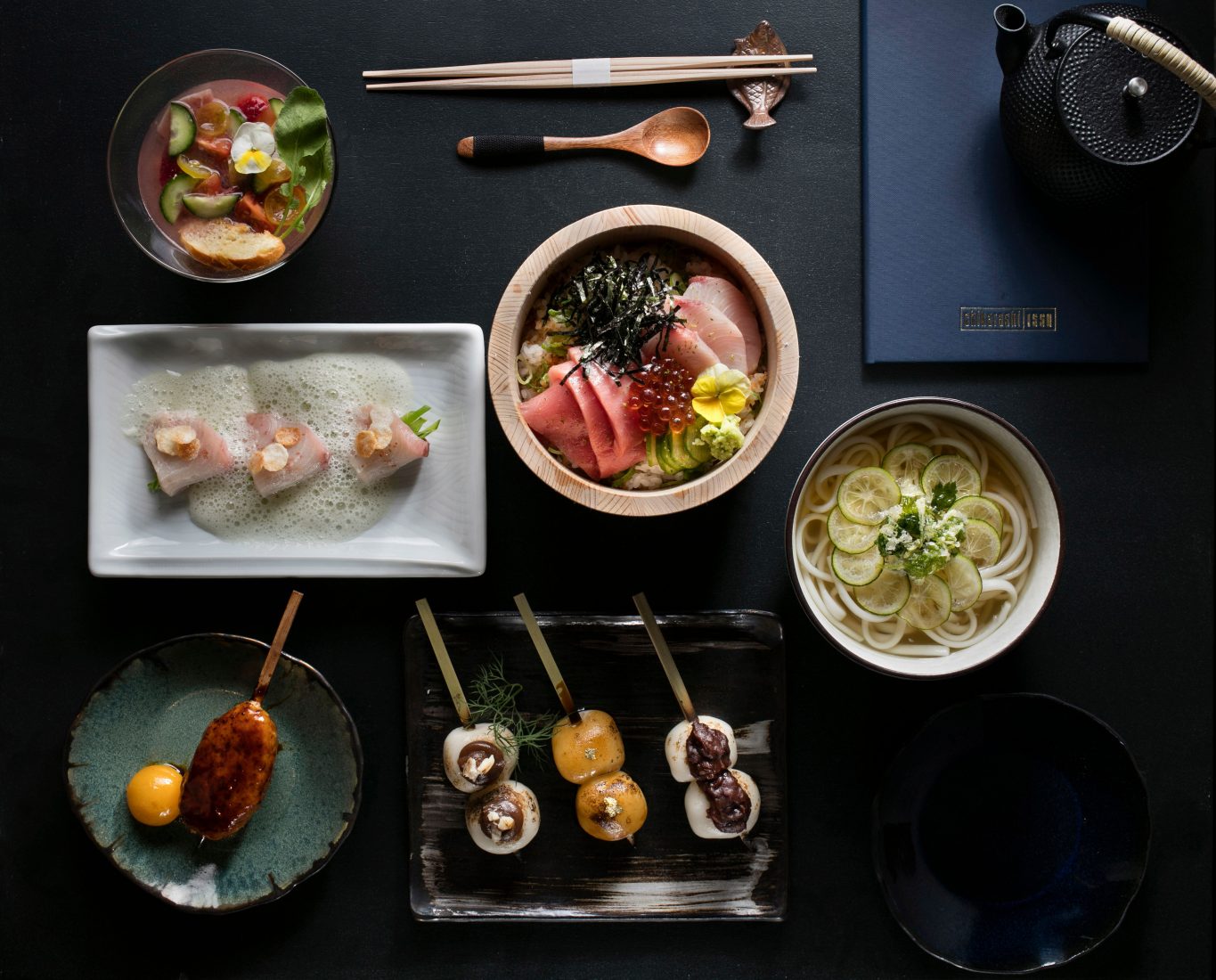
Chikarashi Isso menu is very eclectic, with plates developed by executive Chef Michael Jong Lim that highlight the meticulous techniques of Japanese cuisine. Some of the dishes are the A5 omigyu-maki, with crème fraiche and kaluga caviar, the Udon noodles, with Spicy Dashi, Shrimp Kakiage and Tokyo Negi, and a beautiful dessert called Yaki Dango (Grilled Mochi, Toki Caramel and Kinako Ice Cream).
You can order dishes from the menu or you can choose to immerse yourself in the Kappo-style dining experience and opt for the “chef’s choice”. This option is available at the bar counter and also throughout the restaurant.
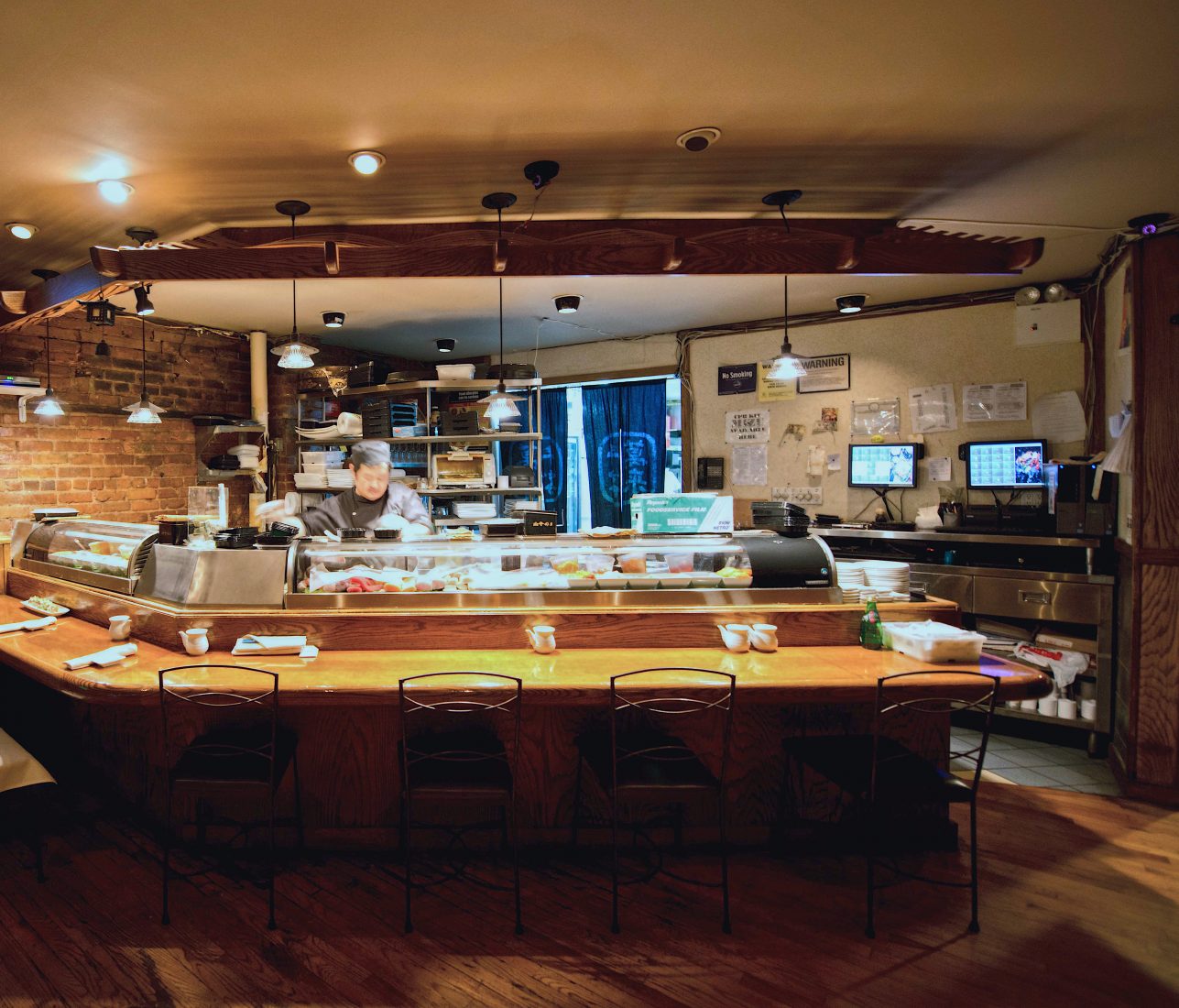
Mizu, a sushi spot in flatiron, is unpretentious. The dining area is simple, with plenty of tables and a tasteful yet simple aesthetic. Just enough to remind you that you’re here for sushi. In fact, the only standout feature of the restaurant–physically, at least–is their sushi bar, with stool seating and a window where you can see the fish. This focus will be a theme throughout the experience. Mizo understands that no amount of flash or finery can compete with a focus on the essentials.
The chefs at Mizu purchase their fish fresh every morning, as well as scallops, shrimp, and sea urchins on a seasonal basis. Their food is always made-to-order. If you want takeout, we were told, you might have to wait for as long as 20 minutes once you arrive–they don’t like to leave food waiting.
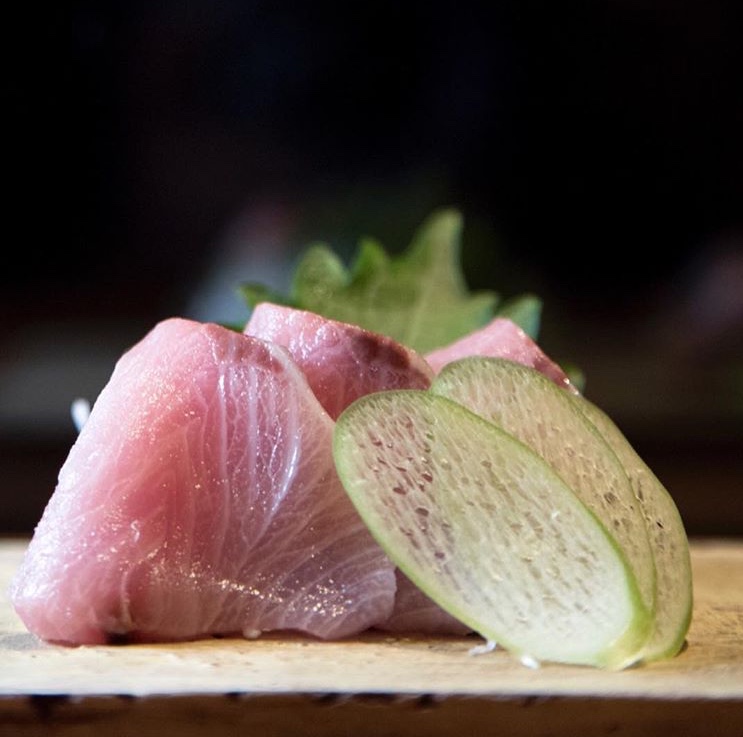
This dedication to freshness and quality at Mizu permeates the menu. Every dish which presents itself fish-forward is full and flavorful. The presentation is stylish but, again, never to the point of distraction. For starters, try the yellowtail carpaccio or the white tuna truffle. The yellowtail comes with jalapeno and yuzu dressing and has a fruity flavor, which is complemented perfectly by the spice. The white tuna truffle is milder and sweeter–it is a don’t-miss for fans of truffle oil.
When you get to the sushi, start with the Flatiron roll: spicy crunchy salmon topped with salmon, avocado, and ikura. It is a delicious example of Mizu’s fish-first sushi at its best. The salmon topping focuses the flavor with the sweet, spice, and crunch, letting them enhance the natural flavor. We ended our meal on the Jurassic roll, another of our favorites. The miso sauce topping the white tuna roll gave it a sweeter, almost dessert-like flavor which we loved.
Mizu says that they don’t compromise on their fish, and Downtown believes it. Try as we might, we weren’t able to taste every roll they have to offer. But we haven’t given up. We’ll be back soon–plus, we heard something about a happy hour. We hope to see you there.
Just last week, World Oceans Week was celebrated by people across the globe in honor of showing love and appreciation for oceans and the incredible life found within them. Events kicked off from beach cleanups, marches, and many more ocean-friendly activities.
One group that participated in celebrating World Oceans Week was AKUA, a company created to make healthy foods made from sustainably ocean-farmed seagreens. They participated in events such as speaking at the Explorer’s Club here in NYC and sharing their kelp jerky with explorers and scientists around the world.
As the coverage of World Ocean Week has begun to subside, the AKUA team put together a list of things they’ve learned from their activities.
1) The Seas are Being Polluted With Plastic
According to the U.S. nonprofit Ocean Conservatory website, 8 million metric tons of plastic enters the seas, which adds to the estimated 150 million metric tons that already circulate the oceans. The organization notes that it’s “like dumping one New York City garbage truck full of plastic into the ocean every minute of every day for an entire year.”
2) Seaweed Straws are Coming Up
LOLIWARE, a San Francisco startup is launching biodegradable straws this summer. These straws are made out of sustainably sourced ocean-farmed kelp.
3) Sushi Made From Plant is Just as Tasty
New York-based company Ocean Hugger Foods makes sustainable, plant-based alternatives to some popular seafood proteins. If you’ve ever had raw tuna, you have to try out their product Ahimi, the first plant-based alternative to raw tuna that is made from tomatoes.
4) Scientists Can Make Coral Grow 40x Faster
On average, it takes coral around 25 to 75 years to reach their full maturity, however, David Vaughan at the Mote Laboratory found a way around that. In his laboratory, Vaughan is growing coral 40 times faster than in the wild according to a new coral fragmentation method. He plans on planting around 100,000 pieces of coral around the Florida Reef tract by the end of 2019 and millions more around the world in the future.
5) Ocean Pollution Has a Dramatic Effect on Women
According to the United Nations, women are disproportionately affected by the greater concerns of pollution and climate change. They write, “This year, we strive to build a greater ocean and gender literacy, and to discover possible ways to promote gender equality in ocean-related activities such as marine scientific research, fisheries, labour at sea as well as policy-making and management.”
6) There are Health Benefits to Living Near Water
Apparently, living by coasts can lead to an improved sense of physical health and well-being and having contact with water can generate a meditative state that makes individuals happier, healthier, calmer, and even more creative.
Let’s take the time to soak up all this information and learn how to apply it in our daily lives and communities. As World Ocean Week subsides, let’s not forget what we learned today!
Who better to be the first guest chef at Sushi on Jones than Chef Yuki Chidui of Japan’s Nadeshico Sushi, the only all-female sushi counter and restaurant in Akihabara, Tokyo. Chef Chidui will be offering a limited time 12-course menu inspired by her favorite subject, outer space, with each course named after a celestial body or theme. Chef Chidui started in the kitchen at a young age and endured common industry hardships as well as sex based discrimination. Instead of giving up, Chef Chidui decided to empower other women and speak out against industry injustice.
Highlights from her pop-up menu include Earth: Botenebi shrimp, yam, uni, and marinated blue seaweed; Jupiter: Hotate, honeycomb, and Daikon radish; and Venus: Toasted Kinmedai skin, cherry salt, and raw yuba fry. On Friday, May 17 and Saturday, May 18, Chef Chidui will be serving lunch at the Bowery Market location from 12:00–3:30 PM and dinner at the West 10th Street location from 5:00–10:30 PM.
Photo by Daniel Krieger
Sushi on Jones Bowery Market: 348 Bowery Street W 10th Street: 210 W 10th Street
If you’re looking for a quiet end to 2017 with extraordinary cuisine, and mind you quiet only in its setting but loud in its taste, we have the place for you. For our second countdown to New Year’s Eve 2017, we recommend Kosaka, located at 220 W. 13th Street in the West Village. The space exudes zen with just 10 seats at their elegant-designed sushi bar, and you receive a warm welcome from the attentive staff, as they prepare your palate for Kosaka’s Michelin star Chef Yoshihiko, one of New York’s top sushi chefs.
Yoshihiko Kousaka, a Michelin star-rated chef for the past 10 years with accolades too numerous to mention, woos many sushi enthusiasts as Executive Chef Kousaka at his (almost) namesake restaurant in the West Village.
For New Year’s Eve, you won’t find gimmicks or new menus that aren’t tried-and-true rather outstanding selections featuring the highest quality sushi. Chef Kousaka focuses on fresh fish flown in daily from Japan. His menu is a delightful assortment of art like options of sashimi & sushi.
We recommend the chef’s tasting “Omakase- Sushi” which consists of:
15 pieces
Featuring the seasonal best Skillfully presented and delectable to taste $145
Let your taste sense rally in the New Year in culinary delight!
Kosaka 220 W. 13th St New York, NY 10011 (212) 727-1709 info@kosakanyc.com