Accomplished in multiple musical fields, Rob Mathes is a noted singer, songwriter, arranger, music director and producer. As an arranger, he has worked with Bruce Springsteen, Tony Bennett, Elton John, Bono, and Panic! At The Disco, to name a few artists. As a producer, he has worked with Sting, Rod Stewart, Carly Simon, and Beth Hart. As a music director — or “MD” — he has overseen high-profile performances at the Kennedy Center, Carnegie Hall, Madison Square Garden and the Super Bowl. Rob has also released several solo albums, which has led to him having two television specials on PBS. In turn, it is not particularly surprising that he is an Emmy winner and the recipient of Grammy, Tony and Drama Desk Award nominations.
On Dec. 18, Rob Mathes brings his annual holiday concert — 23 years and concert — to the Schimmel Center. Rob’s shows are known to feature world-class musicians, as including musicians from Saturday Night Live, The Late Show With David Letterman, and Paul Simon’s band. Rob spoke to Downtown about this year’s event, what else he has coming up for him, and plenty more. More info on all things Rob can be found at www.robmathes.com.
Where did the idea for the first Rob Mathes Holiday Concert come from?
Rob Mathes: My parents raised me as a Christmas kid. Once Santa came into view, I went into a kind of heat every year almost as if I was on a new anti-depressant. I loved the cold, the dark and the lights — everything — and I always saw the Christian part of the Holiday as this story about humility and grace entering the world right when it wanted a warrior. So from my teens I wrote Christmas songs. I admit a few were cheesy early on, but many came from the better tradition of Christmas music — i.e. the Bruce Cockburn record, the Ray Charles records. I grew up as a Pete Townshend and Beatles fanatic but who also listened to Stevie Wonder, Motown and Duke Ellington’s Nutcracker Suite. It was schizophrenic but wondrous.
Eventually I started to accrue real credits and started working with great musicians in studios thanks to the legendary producer Phil Ramone, who hired me regularly as an arranger, guitarist and piano player. I decided to collect the best of this music, released a few independent CD’s, put some of these musicians together and started giving this concert. Eventually an amazing Rabbi from Stamford, Rabbi Mark Golub — who hosts a talk show on Shalom TV — started coming to the concert regularly and I promised him some music. It became a true holiday concert, the Menorah, the Manger, the sleigh and reindeer.
Did you know that it was going to become an annual tradition?
RM: I had no idea. People loved the first concert and grew attached to a few of the songs that became our “hits” so to speak, the song “William The Angel” — which I eventually ended up singing with The Boston Symphony at Symphony Hall years after the Holiday event became a perennial — and the blues-oriented “When The Baby Grew Up.”
For someone who hasn’t attended before, what should be expected? Are there particular things that happen every year?
RM: It is an odd one, Darren. The original songs fall firmly into the singer/songwriter tradition. I grew up on Dylan, The Band and Stevie, so I write an equal amount of music around both the piano and guitar and it is the kind of singer/songwriter stuff that you might hear on WFUV. On the other hand, I grew up being raised equally by my mom and aunt, identical twin sisters both of whom were classical musicians who married men they met at Yale Music School, my uncle who played with big bands and was a composer/arranger and my dad, who was a classical clarinetist but who secretly was a folk music fanatic.
Because of this, I also adore Ellington and Gil Evans, Vaughan Williams and Mahler and have written hundreds of arrangements for various horn sections and string sections. So we do straight up swing versions of some carols and even a couple of Instrumentals for my six-piece horn section — full of brilliant virtuosos — that groove like music by The Meters and The JB’s. It is quite eclectic.
Who is in your backing band this year?
RM: It is the same group that has played with me for 20 years. Will Lee, the legendary bass player and studio session star from New York City, who played on the David Letterman show since the very, very beginning, is playing bass. We have two drummers, the great Shawn Pelton from Saturday Night Live on drums and Joe Bonadio, who is also an astonishing percussionist. Billy Masters, who played with Suzanne Vega and Dar Williams for years and who was often a part of my Kennedy Center Honors band, is my guitarist. Ricky Knutsen, a composer and keyboardist from Brooklyn, has played every single show since 1993. The six Horn players are Jeff Kievit and Don Harris on trumpet, Aaron Heick and Andy Snitzer on saxes, Mike Davis and Jeff Nelson on bones. Between the six of them the credits are insane. From Sinatra to Aretha Franklin to Springsteen to Paul Simon to Nile Rodgers to The Rolling Stones, these are six of New York’s finest.
Vaneese Thomas and James “D-Train” Williams are also unsung heroes of the vocal scene in New York. D-Train had big hits in the 80s but, along with Vaneese, became one of the first calls for any background vocal session had on major records over the last 20 years. Between them they have sung with Billy Joel, Stevie Wonder, Natalie Cole, Luther Vandross, Alicia Keys, Sting, Michael Jackson, Eric Clapton, etc. It is a great band and, while the show can be said to be about music that people the age of 35 to 60 will relate to, it is not staid and tired. This is a muscular evening musically, emotionally resonant and alternately funky, warm, resonant and meditative. To say it is appropriate for all ages is both true and somewhat self-serving. That said, it is an evening/afternoon I am very proud of and a focal point in my year.
Aside from the Holiday Concert, what is coming up for you?
RM: I have been doing a lot of work with the David Lynch Foundation, having produced the Music Of David Lynch record, recorded at the ACE Theatre in L.A. last year. There will be a big David Lynch event at the Kennedy Center in the new year and I think I will MD that event. I am hoping to do some more arrangements for both Twenty One Pilots and Panic! At The Disco who I have worked closely with for years and produced one of their records. I will musically direct a tribute to Jimmy Webb at Carnegie Hall next spring. When Sting finishes touring the new record with his long-time band late next year, there are plans for a London production of his musical The Last Ship, which I orchestrated and musically directed. Other things are floating.
You are a singer, songwriter, arranger, music director and producer. Do you identify with any of those categories more than others?
RM: I always wanted to be a singer/songwriter 24 hours a day, but I was so obsessed with music and it was coming at me from all sides at home. My uncle playing Sinatra and Ellington, my dad playing Dylan and Pete Seeger, my mom and Aunt playing Gospel music and Beethoven. I wanted to understand Mahler’s 9th, Sinatra’s In The Wee Small Hours, Stevie’s Songs In The Key Of Life — my favorite record ever made — Duke Ellington’s Blues In Orbit, and Radiohead’s In Rainbows. Therefore all four of the monikers above stand and I can’t pick. Schizophrenic indeed.
You have been honored with Emmy, Grammy, Tony and Drama Desk Award honors. Which was your first nomination of note?
RM: The country artist Kathy Mattea won a Grammy for her Christmas record, the title track of which was my song “Good News.” That was not a personal Grammy nomination like my production of Bettye Lavette’s Interpretations, but it was the beginning and meant a lot. I won my Emmy Award for musically directing and arranging the Kennedy Center Honors show. That year I had done a massive multi-genre arrangement of “Here Comes The Sun” for Chris Thile, Edgar Meyer, The Silk Road Ensemble, Emanuel Ax and Jamie Laredo and James Taylor, all conducted by John Williams. That was easily one of the most astonishing moments of my life. The point was to illustrate Yo Yo Ma’s musical playground and how he crosses borders. He was one of the honorees that year. Wow!
Awards aside, is there an accomplishment that you are most proud of?
RM: There have been moments that transformed me: Accompanying Al Green on piano when he sang “Amazing Grace” at the 9/11/02 Concert For America I musically directed for NBC. Writing and conducting a full orchestral version of “I Still Haven’t Found What I’m Looking” for an African Choir, Orchestra of St. Luke’s, Bono and The Edge at Carnegie for Bono’s Red Charity last year. The first studio session writing string charts for Bruce Springsteen. He came up to me in the middle of the session at the old MSR Studios on 48th Street and told me “you’re my guy from now on.” Huge!
Musically directing and arranging the Obama Inaugural at the Lincoln Memorial. Co-producing a few records with Sting, who was a huge influence on me when I was young. Writing the National Anthem arrangement for Renée Fleming for the 2014 Super Bowl. Having Lou Reed personally thank me on his album The Raven for a simple string arrangement I did — a first. There are many more but these stand out.
Your list of credits is essentially a who’s who, between Beyonce, Bono, Elton John, Sting, Panic! At The Disco, Twenty One Pilots, Tony Bennett, Yo-Yo Ma…All sorts of genres, to say the least. How does work usually come to you? Do you have a manager or agent pitching you? Is it more word of mouth?
RM: My manager is Jonathan Daniel at Crush Management. He manages Sia, Lorde, and Fall Out Boy, among others. He has saved me in that most people like myself get called for “Adult Contemporary Music.” He has hooked me up with Butch Walker and Panic! At The Disco and Fall Out Boy and many others. He has single-handedly kept me young — to a certain extent (laughs). He is smart and unpretentious. Super-important. But a LOT of my work comes from word of mouth.
Is there anyone you haven’t yet worked with but still hope to?
RM: I would love to work as an arranger with some younger hip-hop artists, because whenever I have written string or horn charts on those records, most of which were produced by my friend Just Blaze, he TURNED THAT SHIT UP! There is a spirit in that community and that music which just will not be denied. It is the center of popular music and has been for a while. So much of it is so vital, passionate and intense that when you bring in ideas coming from an arranger’s head, they get channeled in a way very unlike just a sweet string arrangement on a pop or rock ballad you can hear in the background.
I would love to produce a record of spirituals for Mavis Staples with a big gospel choir, orchestra and rhythm section. Mavis was great to me through the years when she came to sing some of my arrangements at the Kennedy Center. We performed a concert together in Connecticut. I think it is a long shot but I would love it.
When not busy with work, how do you like to spend your free time?
RM: With my three daughters and wife — Emma, Sarah, Lily and Tammy…Studying music, I want to look at every note in Elgar’s Violin Concerto and Stravinsky’s Le Sacre VERY closely. Reading the late and long Charles Dickens novels and re-reading The Brothers Karamazov. Writing my OWN music, one of the reasons the Holiday concert is such a joy).
RM: I am completely floored by the new Bon Iver record. I don’t listen to Beyonce’s Lemonade all the time but recognize both its power and its brilliance. Solange’s new A Seat At The Table record is beautiful and vibey and my daughter and I have listened to that a lot. I just discovered the band Fink from England and love the Jules Buckley arranged record they did with the Concertgebouw Orchestra from Amsterdam. Maybe my favorite though is A Moon Shaped Pool by Radiohead. The new Lisa Batiashvili — brilliant violinist — recording of the Tchaikovsky Violin Concerto conducted by Daniel Barenboim is ridiculously great.
Finally, Rob, any last words for the kids?
RM: By kids you must mean young people. I say “get busy.” You are a better generation than we were, more talented, quicker and with more passion than I can even remember…I can’t wait to hear your music. Come to my holiday concert. You may dig it and, if you don’t, tell me what sucked and I will LISTEN. I am NOT one of the old, cranky musicians who says, “It ain’t Aretha. It ain’t the Beatles!” The talent out there is ferocious right now. I am blown away and, don’t forget, by the time Bob Dylan was 25, he had written “Hard Rain’s Gonna Fall,” “The Times They Are A-Changin’,” “Chimes Of Freedom”, and “Blowin’ In The Wind,” not to mention the albums Highway 61 Revisited, Bringing It All Back Home and Blonde On Blonde. A word for the kids? “GO!”
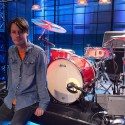
While the lead singer of a band may be the focal point for most people, the performers playing beside that frontperson often have remarkable backstories. In the case of Mark Stepro, he has been touring the world for nearly a decade as a drummer. His first gig of note was with singer/songwriter Ben Kweller, which would lead to six years (and counting) with Butch Walker. That work in Butch’s band has led to Mark playing on Butch-related sessions for the likes of Keith Urban, Train, Brian Fallon, and Panic! At The Disco.
But Mark Stepro’s story is not as simple as a guy from Ohio learning his craft, moving to New York, getting good work and living happily ever after. For starters, drums were not his first instrument and he was educated at the Capital University Conservatory Of Music. Prior to moving to New York, he was part of the group Red Wanting Blue, an Aware Records staple. At any given time — both past and present — Mark is an active member of multiple bands, seeming to be behind a drum kit almost every day. Now based in Los Angeles with wife Nicki and son William, Mark returns to our area for appearances on Aug. 29 (Irving Plaza) and Aug. 30 (Rough Trade) alongside the aforementioned Butch Walker.
Downtown caught up with Mark to learn more about how he got to become an in-demand musician for both tours and sessions. In brief, this turned out to be a very candid and informative Q&A, full of entertaining lessons and anecdotes. Even if you are not a musician, there is plenty to take away from Mark’s work ethic, demonstrated emotional intelligence, and appropriate use of social media. Mark can be followed on Twitter and Instagram via @MarkStepro.
Mark Stepro
You used to live in Manhattan, but are now based in Los Angeles. Is there anything you miss about living in New York?
Mark Stepro: There’s an undeniable electricity to the city that’s basically a cultural meme at this point. Cliche as it might be, I would be remiss not to recall those transcendent experiences that can only be found in the Greatest City In The World When You’re Young: the 4:00 AM microwaved curry on a styrofoam plate with Pakistani cab drivers on Houston [Street], sneaking beers onto the Staten Island Ferry with friends, wandering through Prospect Park all day with no agenda. That kind of stuff…
But mostly I miss the life-long friends I made and the career-influencing artists we used to obsess over. Friends who will mean the world to me until I’m very old and artists whose music I still check in with daily. Cities and scenes come and go, people go through different phases of life, and you can pretty much get good food anywhere these days, but there will never be anything like being 24 years old at Marion’s Marquee Lounge on the Bowery at 2:00 AM, watching the Tony Scherr Trio with Anton Fier and Rob Jost practically levitate the stage in front of an audience consisting of myself and my friend Aaron Lee Tasjan, a couple of Albanian gangsters, and Keanu Reeves.
Did you have a favorite venue in New York?
MS: I used to play in a band called the Madison Square Gardeners. That band was a departure for me in that I was the bass player. I’d always messed around on guitar avocationally, but the rest of the guys in the band were all positioned on their primary instruments, and they were all hot shit. So I really had to practice a lot and develop quickly in order to keep up. Fortunately they were — and are — some of my best friends, so they went easy on me. We had a weekly residency at a place on Houston and Allen called The National Underground, which was owned by Gavin DeGraw. The Gardeners became something like the house band there, so as a result I logged a LOT of hours on bass, on-stage, in a relatively short period of time, which any musician will tell you is a key ingredient to getting one’s shit together. Malcolm Gladwell writes about this when he discussed The Beatles in Hamburg, not that I’m making a Beatles comparison. They were young and they played a million hours worth of gigs. It tends to pay off. The National Underground was that venue for us, and I’m incredibly grateful for the time we spent there.
A second but equally important venue for me is/was Ken Rockwood with his Rockwood Music Hall Intergalactic Empire. That place was incredibly important when my friends and I were starting out in New York. You wanna talk about a guy who supports local musicians, Ken Rockwood is the closest thing to the Patron Saint of New York music that I can think of. Rockwood was the first place I played once I moved to New York, and I went on to play a million gigs there in a million bands and loved every one.
These days, a tour stop for me in New York usually consists of Irving Plaza, Webster Hall, The Mercury Lounge, Bowery Ballroom, Music Hall Of Williamsburg, or Joe’s Pub. But whenever I have spare days in New York while on-tour, I always hit up my friends to see if I can elbow my way onto one of their gigs, anywhere, everywhere.
Mark Stepro in the studio
I know you’re currently part of Butch Walker’s band and Mary McBride’s band. Who else are you playing with these days?
MS: I’m playing with a couple of artists in a couple different contexts, all of whose gigs add up to a full-time job. As you mentioned, I play with Butch Walker, who produces records and enjoys a successful career as a singer/songwriter. I play drums live with his band, I play on his solo records, and I and also play on records for other artists that he produces.
Apart from Butch, I’m part of The Mary McBride Band, which is a group that tours under the auspices of the U.S. Department Of State. We present a program of “Classic American Music” — think Ray Charles, Aretha Franklin, Hank Williams — in the interest of promoting American culture abroad. We perform in schools, orphanages, cultural centers, hospitals, women’s shelters, and prisons all over the world. That band has been to nearly 30 countries including Pakistan, Afghanistan, Indonesia, Argentina, and Russia. Right now I’m on a flight heading home from The Balkans; we just spent two weeks in Albania and Kosovo. That gig is as wacky and confusing and heartbreaking and mind-expanding and incredible as you’d imagine.
I’ve also been playing a lot with a woman named Morgan Kibby, who sang in the electro-pop band M83. She has a group called White Sea and we’ve been playing together for a little over a year now. Additionally, I’m going to be doing Bonnaroo, The Watkins Family Hour at Largo, and a lot of other dates this summer with Sara Watkins, the fiddle player from Nickel Creek. I’m also in a trio with guitarist — and New York ex-pat — Adam Levy and Tyler Chester, as well as a 70’s country/funk band called Ulysses S. Grant, also featuring New York expats Rich Hinman, Pete Harper and Jason Blynn. That band plays a lot of the 70’s disco-Haggard stuff. It’s kind of our bowling night. A total blast.
I’ve also been lucky to do a lot of recording, mainly with Butch, in the last year. We’ve recently completed projects for [Island Records act] The Wind And The Wave, Brian Fallon of The Gaslight Anthem — also on Island — and now we’re doing some stuff for a gal named Liz Huett, who has a record coming out on Interscope.
How do you manage to juggle so many projects at once? Do you give your availability to all of your clients in advance?
MS: An excellent question; one that could be kicked around over many beers and still not be satisfactorily-answered. There’s so much more to this game than being a great musician, although that’s a requisite. In order to juggle projects successfully — if you’re lucky enough to even have projects to juggle, that part alone takes 10,000 hours of practice and 10 years of relationship-building — it takes a logistically-focused, orderly mind and a lot of emotional intelligence. It’s usually referred to, somewhat-unimaginatively, as “people skills.”
So when the artists who hire me are planning a gig, a tour, or a session, they’ll check in to get my availability, but it’s not like they’re scheduling their moves around me. Sara Watkins doesn’t check in with Hayes Carll or whoever to say, “Hey, so I’m looking to book a tour next month; have you lined Stepro up for anything, or is he free?” A notable exception to this is Butch, but one, I’ve been playing with him for going on six years, and two, I have no intentions of pushing my luck there. So it’s up to me to at least have a vague idea of everyone’s schedules ahead of time, before they even ask about my availability. It’s akin to a market analyst following the stocks and making educated predictions about what’s going to happen based on what’s happened in the past. I have to be in-the-know that so-and-so just finished a tour, which means that they’re not likely to be busy, but so-and-so just released a new record so they’ll probably be hitting the road soon, and I should prepare for that call, etc. I’ll tell you one thing: it goes WAY beyond sitting on the couch, waiting for the phone to ring. When one is in the position that I’m in, juggling projects, you need to do your best to know when the phone is going to ring and have a pretty good idea who is going to be on the other end.
It’s tough though, because you can’t bug these people or their management too much, lest you become viewed as the annoying, high-maintenance sideman. Note: if the words “high-maintenance” ever come within 10 nautical miles of your title as “sideman,” you’d better head down to Starbucks immediately and start filling out applications.
So for example, if I email Butch’s manager 10 times in a week saying, “Hey guys, I need to know what Butch has scheduled in June of 2018 so that I can schedule other stuff,” and they keep coming back with, “Man, we’re not real sure, sorry,” and I don’t take that cue and back off…Then I run the risk of getting a response like, “Look dude, it seems like maybe you’re too busy to do this gig; we kind of just need you to be available when we call, or not, but we’re not really scheduled that far in advance, and you might need to either be okay with that, or look for a different gig.” Fortunately, I’ve yet to get this response, mostly because I really try to straddle that line between being communicative/proactive/up-to-speed and being annoying, and THAT’S the emotional intelligence component. More simply put, Shawn Pelton, the drummer for Saturday Night Live, sums this concept up by urging you to ask yourself at all junctures, “Am I being a pain in the ass?” Seattle-based banjo player Danny Barnes addresses this topic expertly in his essay, How To Play In Someone Else’s Band, which should be required reading for Berklee Freshmen.
Add to that the fact that every tour, every session, every gig is different in its scope of, one, the type of music, two, the personnel, i.e. how many of my friends or people I respect are on it, three, how long it lasts, four, where it’s taking me geographically, five, what the level of exposure is — are we playing a bowling alley or are we opening for My Morning Jacket at the Garden? — and six, how much it pays. Notice that I listed pay LAST? As a result, you can quickly find yourself in some pretty complicated decision-making processes. And that’s IF you’ve already spent your life practicing and making friends and moving to new cities and figuring out how to get people to call you in the first place.
These days, how do your gigs usually come to you? Is it mostly word of mouth? Does anything come from self-promotion?
MS: Another topic I could spend way too much time on. I feel like I’ve achieved a certain amount of, well, seniority isn’t the word, but just overall experience and demonstrative sticking-around-ness where the people who are inclined to hire me already know me and reach out on a personal level. I suppose that falls under your word-of-mouth heading. Often, I’m recommended or championed by another musician; perhaps someone is unable to do the gig themselves, so they pitch me as a suitable second choice. I’ll get an e-mail saying, “Hey there, we reached out to so and so but he or she wasn’t available, and they suggested that we call you.” That happens a lot, and it goes both ways: when I’m unavailable for something I’m more than thrilled to fire off a list of five folks who I think would do a good job.
I don’t really do a lot of self-promotion, at least not in the classic, conscious sense. I’m not a big website guy; I don’t have a resume. Maybe I’m guilty of what corporate culture refers to as counter-signaling — think Mark Zuckerberg wearing the sweatpants, deliberately 20 minutes late to the meeting with VCs — but I see some guys doing the self-promotion thing to death, and it just seems like they’re trying too hard. You know why guys like Jim Keltner, Victor Indrizzo, and Matt Chamberlain aren’t flooding social media with pictures of their “offices for the day” and hash-tagging every drum and cymbal manufacturer on their Instagram posts? It’s because they’re busy. Busy working. Busy making high-quality music all the time. They don’t need to try to prove to the internet that they’re bonafide professionals. Everyone already knows that. I have deep respect for that concept. Also, it’s really easy to have a fancy website with a list of artists you’ve “worked with.” It’s really easy to go buy an expensive G-Star jacket and be “a good hang.” You know what’s not easy? Being really fucking good at the drums.
Look, we’re INCREDIBLY fortunate that even though certain elements of the record industry have crumbled, the internet HAS empowered us to expand our reach and our profile as musicians far beyond what was possible 20 years ago and I don’t want to begrudge anyone of those opportunities. I can track down just about anyone in the music industry today using my phone, which was impossible when I was a kid. I wouldn’t have believed you if you’d told me that I could just tweet at Curt Bisquera and he’d tweet back. Guys like that seemed a million miles away. What I’m basically talking about is the idea of disintermediation, whereby there are no media “gatekeepers” anymore. Everyone is free to sort of present him or herself however he or she likes, and everyone is reachable. This is good, because it allows everyone a platform for self-promotion, but it’s bad when your Instagram feed gets clogged up with image-crafting pics of drum sets in arenas, where the implication is, “I’m a rockstar and I tour in big arenas all the time,” whether or not that’s actually true. Interestingly enough, I’ve been hit up by guys who “post a good game” and make it appear like they’re really busy, asking me to recommend them for stuff. I had to tell one guy once, “Man, do you think it’s possible that people aren’t calling you because your social media presence, which you’re carefully curating to entice people to call you, makes it look like you’re always gone, which is causing people not to call you?”
Your first instrument was piano. What inspired you to pick up the drums? Was it a particular album?
MS: My mother is a church pianist/organist in Ohio, and when I was a toddler I’d sit at the foot of the piano with my blocks and bang along as she played. I did several years of piano lessons — always a great activity for kids, even just in terms of cognitive development if you can keep them from getting super-frustrated. But drums always came naturally to me and my passion and excitement for it burned with the fire of 1,000 suns for some inexplicable reason. My dad is a public school teacher, and I remember him taking me to see our high school’s jazz bands when I was in fifth or sixth grade. For some reason, I just seemed to have a knack for figuring out simple, rock-based rhythms or swing patterns after watching them play.
And it’s that weird concept when you’re a kid where, in order to get good at something, you maybe already need to have some natural talent for it, because the talent keeps you excited about putting in the work required to get even better. This is another concept discussed by Gladwell, exemplified in the case of Pee-Wee league hockey players in Canada. If I had tried drums and found them to be impossible, I don’t think I would have had the patience to keep going for another year, let alone to embark on a lifetime of trying to get better. But when you’re a kid, you’re like, “Hey, I’m kind of good at this. Being good at this thing that I like is fun. People say nice things to me about this, so I’m going to keep working on this.” It’s a weird positive reinforcement feedback loop of sorts.
My parents didn’t like rock or contemporary music at all, so I was reduced to stealing cassettes from my babysitter — sorry, Denise. But once I had committed the crime and gained access to a stash of The Police, The Eagles, Pink Floyd, Billy Joel, Huey Lewis & The News, and Tom Petty tapes, it was full steam ahead.
When did you first feel as if you could make a living by playing music? Was it while playing a particular gig?
MS: I graduated college in 2004, and in late 2005 I moved to New York. I had saved up a couple thousand bucks working at a drum shop in Columbus, Ohio, and moved in with my my then-girlfriend-now-wife, who was getting a master’s degree at Columbia. A few weeks after I moved in with her, we were house-sitting for a friend on Fire Island. Instead of enjoying the situation for the relaxing getaway that it should have been, I was a complete stress ball because I was like, “Okay, I’ve got a couple of months’ worth of rent to figure something out here; what am I going to do?” By the way, if you’re doing it right, this specific type of what’s-the-next-gig-what’s-around-the-next-corner stress never goes away.
When we got back to the city, I hit the Lower East Side with a vengeance and just met as many people as I could. It was kind of like going to the prom by yourself because no one really gives a shit whether you’re there or not, so it’s kind of up to you to go up to people and make yourself known. Maybe that was my period of networking or self-promotion, but it felt really organic and genuine, because I was just going to gigs to watch other players, and if I liked what I heard — which was most of the time — I’d go introduce myself and say, “Man, you were great. I loved your playing. I just moved to town. When can I come hear you again?” Everyone was super-nice and I quickly made a bunch of friends.
About five months into living in New York, a friend called from back in Cleveland to see if I would come play with him, opening for Ben Kweller, a rock singer from Dallas. I wasn’t thrilled about being the guy who moves to New York but is then always taking gigs back in Ohio; it felt a little like a surrender or a refusal to really cut the cord or whatever, but I did it, and it was the smartest thing I could have done. After the set, Ben came up to me and said, “Hey man, you sound great. Someone told me you live in New York. I live there too and I need a drummer for my tour coming up in a few weeks. We start in Glasgow. You interested?” I said yes and toured the world with Ben for six years.
Who was the first session drummer that you were aware of? Or at least the first drummer that wasn’t necessarily in a rock band but making a living?
MS: When I was in high school, my mom made the extremely generous move of signing me up for drum lessons at Columbus Pro Percussion, the drum shop where I would eventually work prior to moving to New York. It was an hour drive there and back, and she took me every week until I was old enough to drive.
The teacher they assigned to me was named Jim Ed Cobbs, and he was a professional working drummer — and piano player — in Columbus. I thought he was the coolest guy on the planet. I still do. After studying with him, all I ever wanted to do was be a “working guy.” I didn’t care about being in a band and getting a record deal or being a rock star. I gravitated towards the idea of playing with a singer-songwriter on Monday, doing a recording session on Tuesday, playing with a cover band on Wednesday, that sort of thing. I truly thought that would be the coolest job on the planet.
When I write it down and look at it, I guess it’s a little un-sexy, but I had — and have — so much respect for the guy. He was absolutely crucial in helping me to form an aesthetic, too, because back in the day, I just wanted to learn how to play tunes by Rush and Phish because I thought they were complicated and “good” because they were “hard” and not in 4/4 time. It was Jim Ed who sweetly but very informatively said, “Uh, yea, man, I can show you this stuff, but like, you know these guys aren’t really that good, right?” He then sent me down the path of The Meters, Donny Hathaway, Brad Mehldau, Bill Frissell, John Scofield, a Jonatha Brooke & The Story record called Plumb that’s basically the platonic ideal of studio drumming, and Steely Dan’s Aja; say what you will about The Dan and my claiming to have an aesthetic here, but that record is just start-to-finish full of amazing playing. Ten Summoner’s Tales too, while we’re at it — I ain’t ashamed.
When you’re not on the road or in the studio, how do you like to spend your free time?
MS: Boring stuff, holding still. A lot of reading — driving myself crazy reading every piece of election coverage out there — a lot of running, a lot of cooking, and I spend as much time with my wife and our 10-month old son William as I possibly can. My wife [Nicki Paluga] is a TV writer, so our schedules sometimes require NASA-level coordination, but it’s the only life we know. It occurs to me that the way I spent most of my downtime, what little amount there is, is actually incredibly-banal; a lot of takeout and Netflix. When you get home after a month in Pakistan, the last thing you want to do is “get out there and explore the sights and sounds of Los Angeles.”
Is practice part of your daily routine? Do you have a practice space?
MS: I have a lockout rehearsal space in Echo Park with two other great drummers: Sarab Singh and Matt Johnson. We call it “The Drum Dojo” — mostly I just call it that in a jokey, obnoxious California accent; they probably think that’s ridiculous, which it is. Most days when we’re in town, we’re taking turns in there, doing the work. I try to get in there for a few hours in the morning before the demands of fatherhood, home ownership, and being a husband start to backlog my time for the day. I call it paying myself first, the same way a financial planner tells you to “pay yourself first” by investing such-and-such percent of your paycheck straight away before allocating it to anything else. I try to do that with my time. It feels GREAT to look at the clock, realize it’s 11:00 AM and that I’ve already put in three hours.
So the short answer is yes, practice is very much a part of my daily routine. I love to practice for its own sake, so much so that sometimes I get bummed being on tour because it inhibits my ability to practice. Which is kind of illogical, since the perceived point of practicing is to get good so that someone calls you to go on tour, ergo if you’re touring, it would seem that you’ve practiced enough, right? Wrong.
I tend to view my professional year in comprehensive, at-30,000-feet terms, not gig-by-gig or session-by-session. It’s more like, okay, I’ll earn — hopefully — a certain amount of money in a year, and in the course of that year, in the pursuit of that sum total, sometimes I’m doing sessions that pay well, sometimes I’m doing gigs that don’t pay well, sometimes I’m playing with friends for free, and sometimes I’m in the practice room which actually COSTS money when you factor in rent. But the point is that it all adds up to a year’s work. It’s all one thing to me. It’s my job; all of it. My dad gets up and goes to work every day. Just because I don’t have a paid gig or a session that day, it doesn’t mean that I don’t go work that day. To the contrary, that’s when I absolutely owe it to myself to go in and work on my craft. The past work I’ve done has resulted in gigs, which has afforded me down time, which I can then use to go do more work, which will enable me to get more gigs.
Or not. Sometimes I work on stuff that I would NEVER, EVER use on a gig. Frankly, a lot of it is stuff that would get me fired. Weird metric modulations. Crazy bombastic gospel chops. I just want to know how to do this stuff. It bugs me when I see other drummers doing stuff that I can’t do, which happens a lot. I don’t care that I’m “never going to use that stuff.” I know I’m not going to be in Lady Gaga’s band. But I sure as shit want to learn how to do those fancy church licks that Spanky McCurdy drops all over that gig! Maybe it’s like a housewife learning Italian just because. I just want to know how to do it!
I remember my first drum lesson at the college level as part of a curriculum. I walked in and the teacher basically said, “Can I help you?” to which I said, “Yes, I’d like to get better at the drums, please. Can you show me how?” And the teacher said, “Oh, um, okay, so what is it that you want me to show you how to do?”
He was deliberately being kind of rude and shitty about it, and later I realized that he was teaching me an extremely-valuable lesson, which is that when you’re a professional, there’s no one TELLING you what to practice, or even to practice at all. You see, I was naively-assuming that this teacher would chart a course out FOR me; that he would tell me exactly what to practice and all I would have to do is go master it, come back the next week, and get his approval, and then I’d be “good.”
But here’s the thing: in real life, there’s no one telling you to practice. You could move to L.A. or New York or Nashville and call yourself a professional drummer, and you could just sit on the couch all day if you wanted. The point my teacher was making is that you have to be a self-starter, both in terms of getting out of the house and down to the club to make friends and hear some good music, but also in the practice room. You have to be your own teacher and create your own course of study. I’ve been doing this professionally for 10 years at this point, and not once has anyone checked in to make sure that I was practicing.