Categories
Culture Featured Music

The Brilliance Shines Brightly At Rockwood Hall

The Brilliance Shines Brightly At Rockwood Hall in the LES

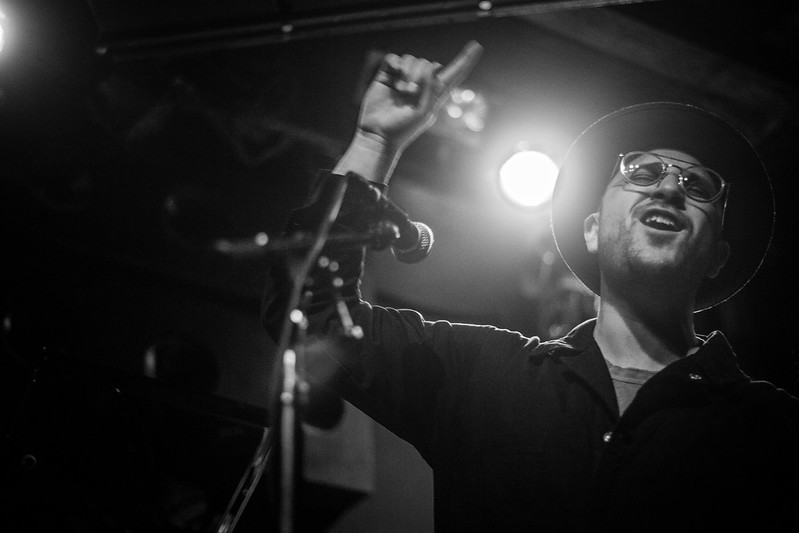
The January temperatures may have dipped below freezing the other evening, but the warmth emanating from Rockwood 2 thawed many hearts as The Brilliance took the stage.

Photo: Alice Teeple

The neoclassical/orchestral pop outfit, founded by childhood friends David Gungor and John Arndt, has seen many guises over its decade-long run. Gungor and Arndt grew up together in Wisconsin, often parting ways geographically, but finding common paths in music. Gungor currently lives in NYC, working at Trinity Grace TriBeCa; Arndt currently lives in Minneapolis (soon France) and works as a composer, film scorer, and producer.

The Brilliance is a uniquely American take on Judeo-Christian liturgical music, expanding the duo’s initial evangelical interpretations into a more urgent, universal message of peace. The Greek word here is agape, or higher love.

The Brilliance walks the walk with their message as well, having recently partnered with World Relief in their initiative to raise awareness for the DACA Dreamers. Their Dreamer Suite exploded on Spotify after a feature on New Music Friday, amassing over half a million monthly listeners and millions of streams as an independent release.

The spirit moves with Gungor and Arndt’s artistry –more importantly, it urges everyone to move toward balance and love. While most of the music world mires itself in repetition and monotone, The Brilliance is beautifully philosophical and melodic. Much like Sufjan Stevens, Arcade Fire, and U2, The Brilliance draws from spiritual allusions, seeking justice and mercy. The band takes cues from later Beatles recordings; their sweeping orchestral arrangements surrounding Gungor’s warm tenor and Arndt’s expressive piano.


Their lyrics are deep and earnest. As William Blake’s Jerusalem questioned the environmental and societal morality of the Industrial Revolution two centuries ago, The Brilliance asks humanity to take a grounding breath amidst the chaos. Be it faith in a deity, the universe, or within the Self, we must collectively navigate this planet. The Brilliance also embraces measured optimism. One song, Must Admit, opens with a recording of the haunting chorus of Parisians singing as Notre Dame burned last summer.

The shimmering Oh Dreamer, in particular, gives poetic nods to Marvin Gaye’s seminal album, What’s Going On?

We say long live liberty
Pretend equality
Let freedom reign
Let freedom reign
Does the cost of security
Bankrupt our humanity?
Let freedom reign

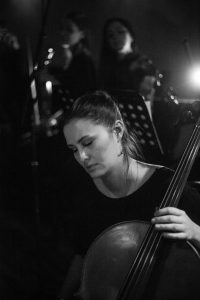
The Rockwood concert included a full string section, two backup singers, a guitarist, a bassist, a drummer, and Arndt on piano. (Gungor joked during the show that the crowded personnel was actually heavily stripped down version of the studio recording.)

Photo: Alice Teeple

The room was packed with smiling fans and family, filling the venue with a good old-fashioned sing-along for See The Love. There was barely a dry eye in the house as Gungor snapped his fingers and calmly pulled the room together.

The Brilliance confronts humanitarian and environmental crises and offers a message of hope. World Keeps Spinning acknowledges the point of critical mass as darkness engulfs the collective.

When fear becomes violence
I’m drowning in the silence
Light and bad, discertainty, and indifference
I wanna hear the song of peace
Would you sing it over me?
Can you help me to speak though I stutter?
We’ve got to live for more
Than just the end of the world

The sweeping song is an epic collage, fusing together the most stirring elements of Electric Light Orchestra, The Beatles’ Sergeant Pepper, Bach’s Passacaglia and Fugue in C Minor, and Stravinsky’s Firebird Suite, taking the band almost into the realm of prog rock at its bridge…almost. Ambitious, yes, but the postmodern approach pays off. The album is a breath of fresh air.

Check out the beautiful World Keeps Spinning, here.

See More

D’Angelico Guitars To Release New Products For 2020

Album of the Year: Civilian by Frank Tovey

Clan of Xymox Materializes At Le Poisson Rouge

Blake Charleton Keeps It Fresh
Christine Smith Waits On The Far Side Of A Star

Adrian Sexton Draws The Death Card

Categories
Featured News

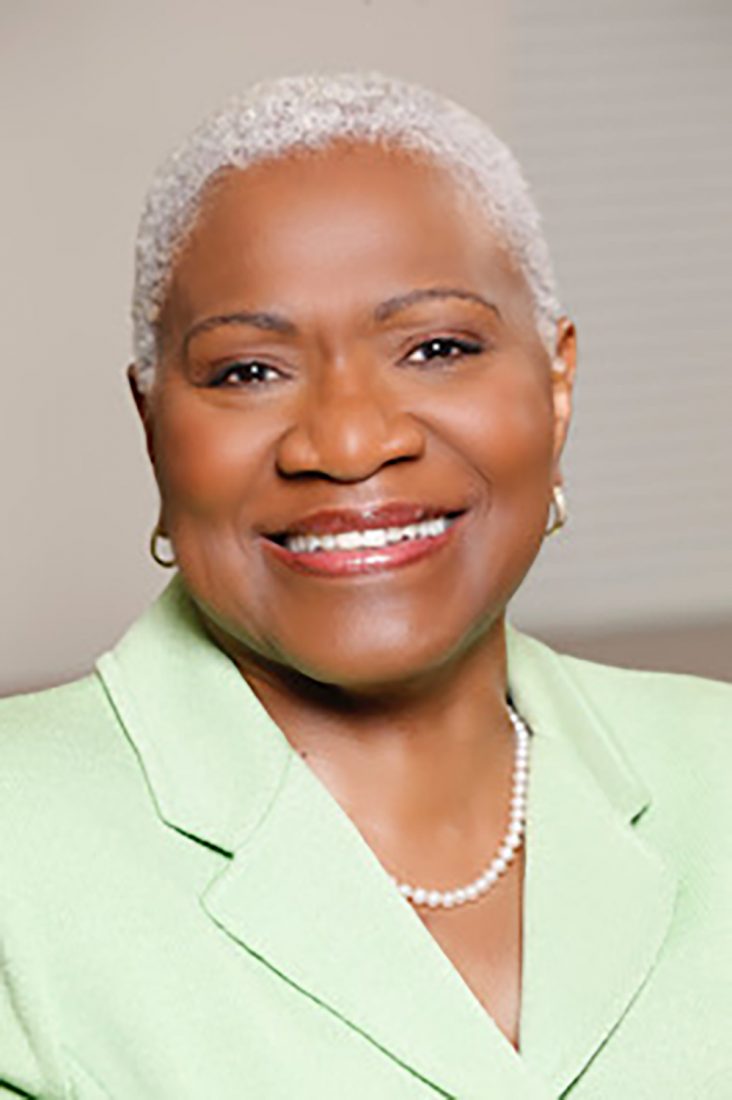
Downtown Q&A: C. Virginia Fields

C. VIRGINIA FIELDS Former Borough President of Manhattan. The current president of the National Black Leadership Commission on AIDS. Civil Rights activist as a teenager.

1. Name three women that inspire you, and tell us why.

Stacey Abrams: I am inspired by her tenacity, courage, and strength to stand in the face of tremendous challenges, at a time when it is increasingly hard to listen or engage people civically or politically. Stacey’s message of opportunity for all speaks to hope and is helping to renew a sense of belief and commitment that we can make a difference.

Dr. Adela Sanford: Educator extraordinaire; former Member, NYS Board of Regents. As a nonagenarian, Dr. Sanford continues to inspire through her teachings, sharing, mentoring, and commitment to preserving the African Diaspora history and culture. Her trailblazing success has touched the lives of many African Americans in education, business, and politics leading to important changes within the fields.

Dr. Marcella Maxwell: Retired Educator and considered by many as an education ambassador for the City of New York and at the national level. Dr. Maxwell has inspired my career and many other women in leadership development and education. Her passion for educating adults through networking and connecting woman across cultural, economic, and social lines has brought together women to address important issues of discrimination in shaping policy and budget decisions at all three levels of government.

2. What has been the secret of your success?

A. Preparation for opportunities that I have sought to pursue—academically, personally, professionally, and politically.

B. Willingness to accept advice, guidance, and criticism from people whose opinions I respect

C. Working with people in coalitions and from diverse backgrounds to achieve results.

D. Grit and determination!

3. If you were going to pass on one piece of advice to a young woman, what would it be? 

To know and understand that this is a journey. Prepare yourself for the journey!

4. In the fight for equality, what area do you think needs the most attention? 

The issue of income equality, including lower income wages between men and women as well as along racial lines among women.

5. What are you most proud of in your career?

Opportunities that have made it possible for me to make a meaningful impact in the lives of people nationally and globally through my profession as a social worker, elected representative, and non-profit executive. Seeing success in areas of affordable housing, healthcare, education, economic development, and establishing international relationships in South Korea and West Africa are proud markers in my career.

6. Where do you get your confidence

Growing up in the segregated south of Birmingham, Alabama, with a mother who encouraged me to believe in myself is how I began my activism. As a teenager, I marched with Dr. Martin Luther King, Jr., spent six days in jail, and braved the fire hoses, taking a stand in the civil rights struggle that transformed our nation. These early experiences and exposure to many dangers and challenges helped to shape my views about civil rights, equality, and social justice issues.

7. What makes a woman beautiful

I am a firm believer that “beauty is only skin deep!” The inner spirit that comes forth through her words, actions, and behavior is indeed what makes a woman beautiful.

8. What gives you joy

Spending time with family, especially during the holidays; national and international travels that continue to expand my knowledge of respect and appreciation for different cultures, people, and ways of living. Seeing people treated with respect and dignity regardless of their race, ethnicity, religion, sexual identification, or status in life. 

Categories
Architecture Business News Real Estate

Two Bridges Lawsuit Win for Lower East Side Organized Neighbors

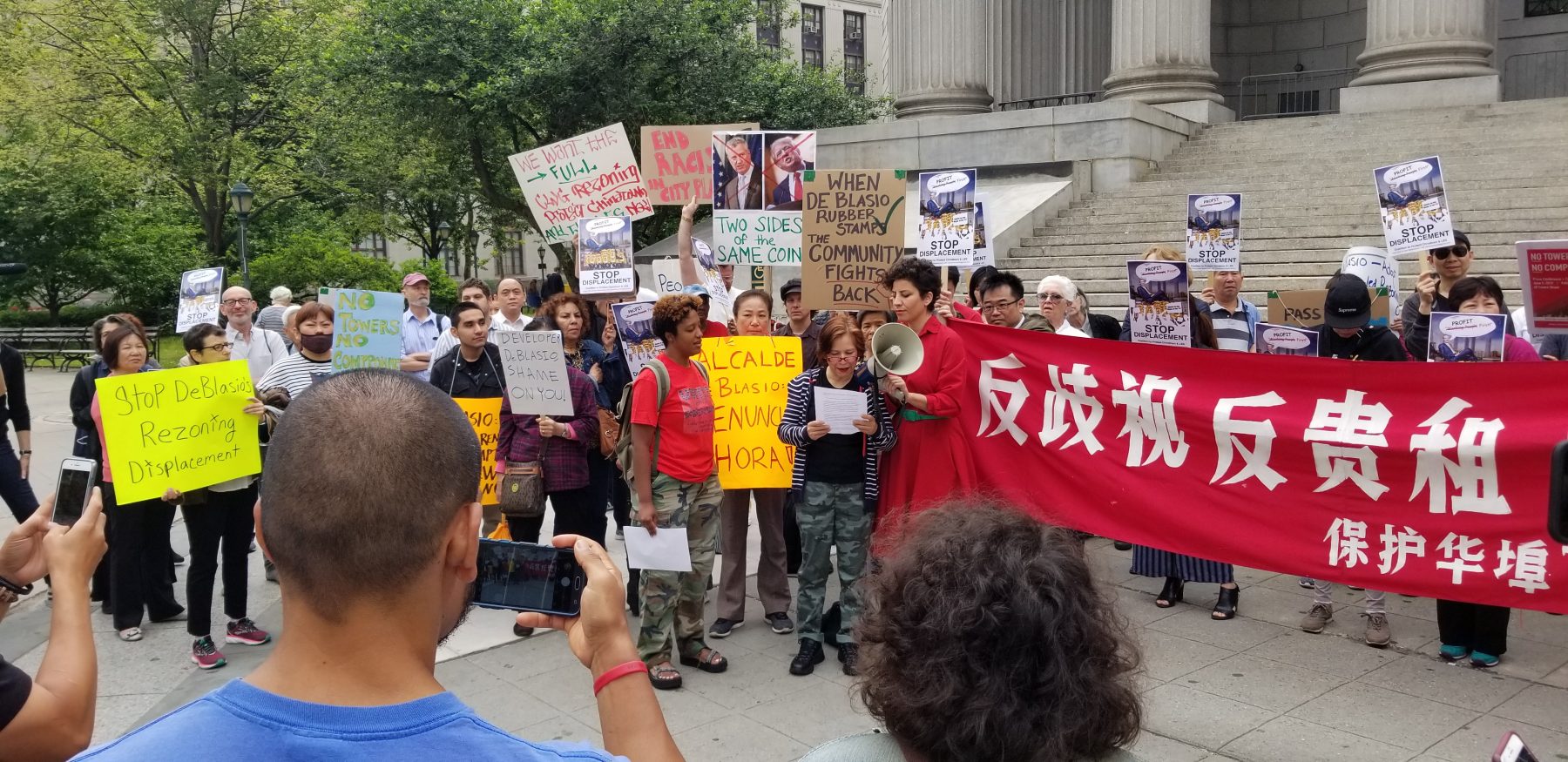
Dozens of supporters gathered outside of the New York County Courthouse Wednesday morning ahead of a hearing to halt the construction of four new towers in the Two Bridges area of Manhattan. Speakers raised concerns ranging from traffic increases to environmental impacts, and a fear that the towers would speed up gentrification in a diverse lower-to-middle-class neighborhood.

Organized by the Chinatown Working Group, the press conference supported a lawsuit by the Lower East Side Organized Neighbors (LESON). Their suit is one of four seeking to halt the construction. It was one of three heard in court on Wednesday. One of two which sought to stop the development plan altogether. Supporters of the other suit, brought by the Tenants United Fighting For the Lower East Side (TUFF-LES), attended another rally down the street. Emotions were high, with chants of “No towers, no compromise” from attendees and organizers.

Arnette Scott, a plaintiff in LESON's Two Bridges suit, shares her story with a crowd of supporters.
Arnette Scott, a plaintiff in LESON’s Two Bridges suit, shares her story with a crowd of supporters.

“This is not only a problem of the Lower East Side,” Arnette Scott, one of the plaintiffs, told the crowd, “It’s a problem in New York City. We didn’t come here just to complain. We didn’t come here to tell you that we can’t breathe. We didn’t come here to tell you that food is scarce. We didn’t come here to tell you that displacements were rapid. We came here to tell you we are fighting this.”

The highest profile of the three suits was that of the City Council, led by City Council Member and Manhattan Borough President Gale Brewer, against the city and the Two Bridges developers. The suit alleges that de Blasio and the developers illegally ignored the Uniform Land Use Review Procedure, which is under the purview of the City Council. The mayor’s office approved the construction for the towers, the tallest of which exceeds 1000 feet, saying that the required changes to zoning policy constituted “minor modifications.”

LESON, on the other hand, hopes for a broader ruling. The Chinatown Working Group introduced a plan for a new zoning district, the Chinatown and Lower East River District. The goal of the zoning district is to protect the residents of Two Bridges, primarily Chinese, Latinx, and African American, from gentrification, excessive rent increases, and other threats to a neighborhood which has acted as a haven for low-income families and new immigrants.

The developers in the case are JDS Development Group, a joint venture of L+M Development Partners and CIM Group, and Starrett Development. In a statement before the ruling, a spokesperson for the developers referred to the lawsuits as “wholly without merit,” citing extensive community consultation, public review, and environmental analysis. “At a moment when projects that stand to deliver tens of thousands of jobs and hundreds of millions in community investment are being opposed by anti-development sentiment across the city, it’s important to remember that those actions are not without direct consequences for the communities that stand to benefit.”

In what some saw as a surprising turn of events, State Supreme Court Judge Arthur Engoron chose to reserve judgment. Instead, he extended a temporary restraining order on the development into early August. “These are huge towers,” he said. “I’ve lived in the city my whole life. You can’t just do this because the zoning allows it. I just can’t believe this is the case.”

The halt will last until August 2nd, at which time he will make a final decision. The outcome is uncertain, but representatives for LESON are hopeful about the eventual outcome. “We see (the ruling) as a positive,” says Tony Queylin, a member of LESON and one of their suits’s plaintiffs, “and that gives us more time to build our momentum and our strength because what we’re doing is we’re just getting more people that know about what’s going on.”

A spokesman for the city’s Law Department responded to the decision, saying, “We are disappointed with this ruling. We respectfully disagree with the court’s preliminary findings. The approvals made by the City were appropriate, and we will continue to defend against the claims challenging these important projects.”

Queylin is hopeful that growing support could push approval of the CWG zoning plan. “Our strength lies in the people and the neighborhood and the community,” he says, “They might have a lot of money, but we have the people on our side.”

Categories
Culture Events Movies Uncategorized

Newton Filmmakers Talk Inspiration and Election


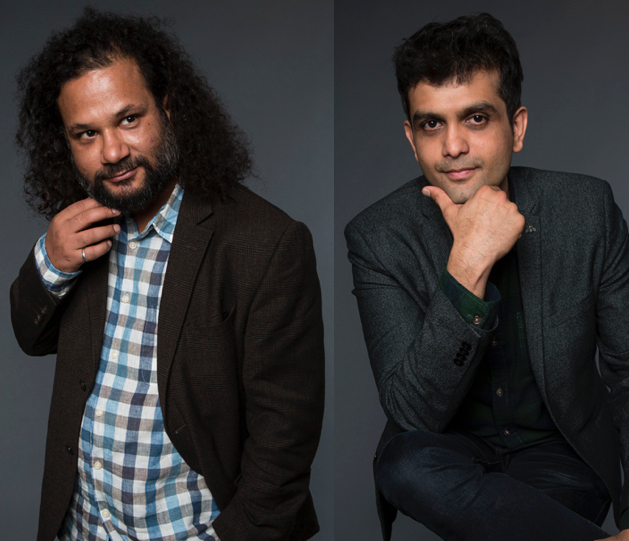
Amit Masurkar

“I’m not here to seek your votes.” A fat man festooned in bright orange garlands proclaims to the crowd gathered bellow the carnival-float podium he rode in on. He’s just there to stand up for the people, and to take care of the children, he says. All he wants is to make the lives of working people better, if only it wasn’t for all the other politicians, with goals not as pure as his, who stand in his way. This speech has been heard before, in many languages, and the scene, although set in rural India, is globally familiar. Thus begins “Newton,” a Tribeca International Narrative selected film, which is both a pointed satire of the election process and a love letter to all the people whose lives are affected by its outcome. On this pancontinental resonance of his film, director Amit Masurkar says:

“Film [in general] relates to what you are familiar with. So automatically you start seeing connections with things that you care about or you feel are unjust in your world. The German audiences related it to what’s happening there, in Hong Kong they were asking a lot of questions about Maoism and relating it to what is happening in China with government corruption. So people see a lot of similarities: even in North Korea there are elections. Saddam Hussein was democratically elected, so was Trump.”

At this, the interviewer and her subjects burst into knowing laughter, strangers no longer. And just like that, Masurkar and Tewari do it again: take a heavy subject lacking in easy answers, defuse it through an interaction between humans equal parts warm, awkward and immediate, and with the resultant laughter chip away a little bit of that heaviness, giving hope that even if not just yet, an answer will come. Each scene in the film achieves this feat, a testament to the pair’s background in writing for both sketch comedy and Bollywood. From that point on, the conversation flows fast:

Camila Gibran: What prompted you to center the film around an election?

Amit Masurkar: I was reading the preamble to the constitution. It’s such a beautiful piece of writing and a there is so much hope: the founding fathers thought that [India] was finally free and we could create our own destiny. The constitution is full of beautiful ideas… If you look at the constitution of any country today, I would say it would be beautiful, but then there’s a huge gap between what is written and what is practiced. So in order to do something about that, I thought to make a film about the physical process of electioneering.

CG: In your own words, please give me a brief synopsis of Newton.

AM: Newton is set over a day during an election in a conflict area. The election workers are supported by the police force in order to conduct “free and fair” elections in an area where the voters are not really free. So it’s ironic, the whole idea of the election there is a farce. The people there are disenfranchised, their rights aren’t really taken seriously, but when it comes to voting, they’re part of the statistic.

CG: There’s that gap again, that you spoke about, between the official record and the day to day reality. Does this apply to elections as well?

Mayank Tewari (screenwriter):  All over the world elections legitimize democracy while also being used as a tool for people to further their own agenda. The agenda is never set by people who have a stake. Policies are made about populations and the populations don’t have a say in what’s going on. If you’re able to show that a certain place had “free and fair” elections, a lot of things about that place are forgiven. If they have a democratically elected government, the feeling is “oh, they are plugged into the shared dream” so everything must be ok.


Mayank Tewarti

CG: Yet in the film, there’s hope. The main character keeps going for it, keeps believing in the process, in the importance of elections. Is there more than naiveté to the belief that one small person can change things?

MT: One thing, as a writer, I felt I accomplished, is the protagonist in the film not being a cynical person. Through his journey in the film, he starts sincere and he remains sincere, and I think that sincerity is what’s in need of here. Everybody seems to be wrapped in cynicism, being genuine and attentive is becoming a rare quality.

AM: You need patience for anything to happen, battles are being fought every day, but change take time. For example, in a country like say the U.S., women started voting much later. Turkish women were voting before American women were. And segregation was here until so late… It takes time for a society, generations for people to become aware of what they were doing and correct the historical wrongs of their forefathers.

CG: What is the role of art, and film specifically, in the process of bringing  about political change?

AM: We try our best, look at some if the singers from the sixties, so many of their songs are still being sung and they inspire people. One of art’s agendas is to make people learn about something new, discover something, question things, introspect. Film must also entertain at the same time, not make it into a serous topic that turns people off but make it accessible to everyone, and funny. Our intention was for people to find out more.

MT: An artist also has a political action. The fact that you are trying to draw humor from something which is not conventionally a source of humor is a political action, I feel, because art also creates a type of a context. If films like these are able to move you and to stay with you…

CG: We’ll be singing the songs of the sixties and watching films like Newton forever?

MT: That is my hope.

Interview by Camila Gibran

Photography by Leslie Hassler

Categories
Business Finance

The Dark Political Clouds That Could Threaten Luxury?

Photo courtesy of Pexels

Business Of Fashion writer Luca Solca smartly looks at three “dark cloud” scenarios that every luxury executive must heed. The world’s three largest economies — China, the European Union and the United States, of course — “could find themselves embroiled in major trade disputes should the more protectionist factions in the Trump administration get their way.”

Solca’s three main areas of focus are strife between the U.S. and China, the disconnect between the U.S. and the E.U., and the potential breakup of the E.U. with plenty of details given. But it’s not all bleak, per Solca: “French and Italian luxury goods companies should benefit from currency weakness, as they are long dollar plays.”

The full article can be read at http://bit.ly/2nkvEYV.

Categories
Events News

Women’s March On Washington Draws Large Crowd

page1

One day after President Donald Trump’s inauguration, the nation’s capital was flooded with a sea of pink hats worn by activists and protesters from around the country.

Sporting signs with slogans such as “Dump Trump” and “We want a leader,” participants of the organized Women’s March grassroots effort snaked down Washington’s streets in opposition of the new president’s ideologies and beliefs. Multiple attendees said they decided to attend to oppose President Donald Trump’s denigration of women, immigrants and minorities.

Some speakers at the five-hour rally preceding the Jan. 21 march included Planned Parenthood president Cecile Richards, actress America Ferrera and women’s rights activist Gloria Steinem.

“This is the upside of the downside. This is an outpouring of energy and true democracy like I have never seen in my very long life,” Steinem said to the crowd. “It is wide in age. It is deep in diversity. And remember, the constitution does not begin with ‘I the president,” it begins with ‘we the people.’”

The official number of attendees has yet to be determined, but the city’s metro system tweeted that over one million people rode the Metrorail on the day of the protest; event organizers had originally sought a permit for 200,000, according to the National Park Service’s permit application list obtained by Politico. D.C. police confirmed Jan. 22 that they had made no arrests related to the march.

https://www.youtube.com/watch?v=SutRQt915c4

“We are marching. We are marching straight ahead toward the Washington Monument to the ellipse of the White House,” read a press statement released by the Women’s March organization during the event. Police kept the White House blocked off during the march with barricades and police cars.

Protester Lisa Wisman said she flew in by herself from Michigan after purchasing her plane tickets the week before.

“I just feel like the things that Donald Trump is doing deserve to be protested and he needs to be held accountable,” she said. “He’s made all these promises and lies and the people need to take back their ability to hold their elected officials accountable. And protesting is one of the ways that I’m doing that.”

Joe Giro said he came into the city from upstate New York with friends.

“I want my nine-month old niece to grow up in a world that’s not filled with hate, and at least…where women are accepted,” he said.

President Donald Trump did not comment during the event on Twitter, the social media outlet widely regarded as one of his favorite ways to communicate with the public. However, Hillary Clinton, Trump’s Democratic opponent during the presidential race, used Twitter to show her support for the march.

“Thanks for standing, speaking & marching for our values @womensmarch. Important as ever. I truly believe we’re always Stronger Together,” Clinton tweeted the morning of the event.

Nearby the march, the “Bikers for Trump” group had also reserved a space in the city to hold “an event of celebrations provided by the biker community,” said R.C. Pittman, president of Florida’s Bikers For Trump.

“We’ve opened this park up to anyone who wants to celebrate with us. The women are welcome, protesters are welcome; I haven’t run anybody off. We don’t have any fences up,” he said. In front of the Bikers for Trump stage, both protesters and Trump supporters were sitting and dancing to music.

Ahad Yonus, who donned a hat emblazoned with Trump’s “Make America Great Again” slogan, said he went by the Women’s March protest to “see both sides of the spectrum.”

“Protesting is one of the rights protected by the first amendment, but I feel like the people here might not necessarily know what they’re protesting,” he said. Yonus also denounced riots that had ensued the previous day, saying “protesting is ok, our democracy is working, but that doesn’t mean set a limo on fire, go break a McDonalds and knock all the windows out.”

Following the march, the Women’s March website stated that “millions” of people around the world had participated in total, which included the simultaneous “sister marches” held in locations such as New York, NY, Chicago and Atlanta.

https://www.youtube.com/watch?v=-6ofCjjUz-Q