The World Trade Center in a pivotal era of rebuilding
A wealth of information exists out there on what happened during the 9/11 attacks. Documentaries, films, podcasts, books, you name it: most are a few clicks away. Yet considerably less so exists for what happened in the wake of those attacks, how the World Trade Center was rebuilt and Lower Manhattan was transformed into the thriving commercial and residential neighborhood it is today.
Top of the World, a podcast produced by Muddhouse Media in collaboration with Silverstein Properties, explores what it took to rebuild the World Trade Center campus and many of the other centers across downtown from the eyes of the rebuilders themselves.
Larry Silverstein, Daniel Libeskind, Mayor Michael Bloomberg, and Mary Ann Tighe are among those who led the development, design, and policy-making which indelibly changed the downtown landscape as the neighborhood sought to recover.
Top of the World also comes in the wake of another crisis: as Kris Meyer, the CEO of Muddhouse Media describes the podcast as it focuses on “the rebuilding and recovery of New Yorkers, again at lower Manhattan, but bookended with the rebuild and the recovery coming out of COVID for New Yorkers.” Yet as the city’s resilience carries onfollowing this very different type of public health crisis, we can see that the spirit of New York remains strong as ever. “As Larry Silverstein says, ‘Never count New York out,’ New Yorkers are resilient, strong, and they’re rebuilders. Just as every city in the country, in the world, has to rebuild and recover, I think we as a people have that in our DNA: to rebuild and recover and come out stronger and better than we were before,” Meyer continues.
Stories from the Rebuild
As the podcast goes through the initial design competition for architectural proposals of One World Trade Center into the many negotiations that took place between developers and the Port Authority, guest features speak through their experiences while on the front lines of it all, including the anecdotes, pitfalls, and personal successes that accompany any project of a scale like this. Meyer recalls that of the most interesting points, listening to Larry Silverstein talk about the research put into making those buildings the safest in the world: what it took to build those and the research on how to build a better building, a safer building, a greener building, a cleaner building,” stood out as a particularly distinct nod towards the future of resiliency in Lower Manhattan.
Other highlights including hearing from the artists-in-residence at the World Trade Center on their unique role in capturing life downtown during its rebuilding phase, as well as the perspectives of leading designers Michael Arad and Daniel Libeskind, architects of the 9/11 Memorial and One World Trade Center, respectively, and those of policy leaders such as Jessica Lappin of Downtown Alliance, Mayor Michael Bloomberg, and Rick Cotton of the Port Authority. With New Yorkers checking out podcasts on the streets, in the subways, and while in offices, the beauty of Top of the World is its accessibility: “If you want to continue to learn and get educated on what it took to rebuild the World Trade Center, you can do it anywhere you listen to podcasts,” Meyer emphasizes.
Top of the World was produced by Muddhouse Media with Creative Director Mark Carey, Production Director Mike Gioscia, Head of Business Development Annie Powell, and producer Stefen Laukien at the helm. Top of the World is available on podcast streaming channels including Apple, Spotify, Stitcher, iHeart, Google, and Pandora.
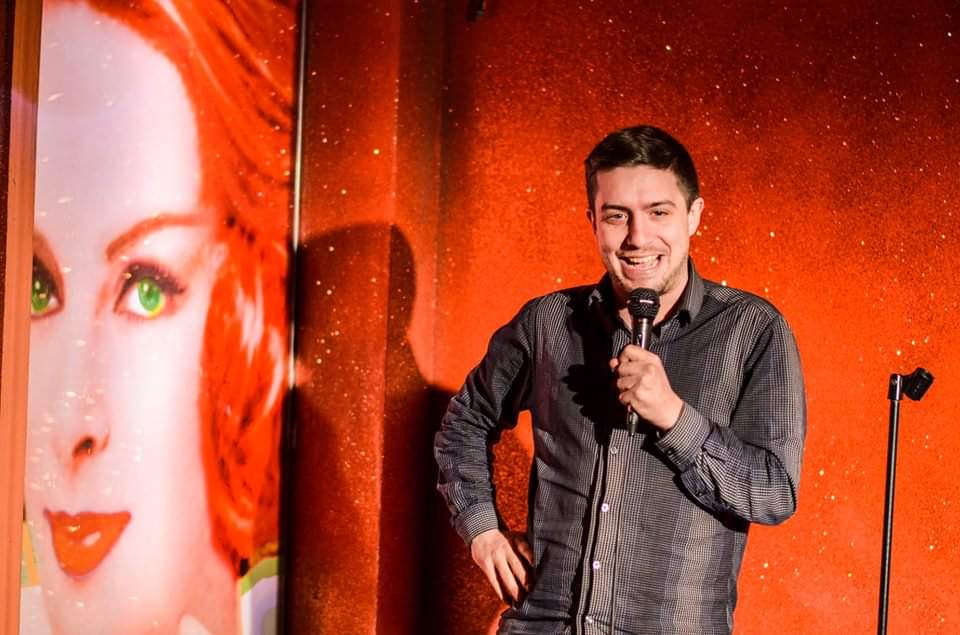
If anyone could be considered an online dating expert, it might be NYC Comedian David Piccolomini. His podcast, Tinder Tales, explores the often-bizarre world of online dating and has released more than 180 episodes over the last three and a half years. Each week, Piccolomini and a guest swap stories and examine dating habits, leading to strange revelations and good laughs.
He also understands why online dating can be so confusing. Many of his listeners found his podcast while googling for Tinder advice. “People get on tinder and they’re freaked out,” he says, “There are so many options and so many people. Either nobody’s swiping on them, or too many people are swiping on them. It’s a lot. And then they’re like, ‘Well, there’s gotta be a podcast about this.’ And there is!”
Online dating might seem like a recent phenomenon, but Piccolomini has been at it for more than 15 years. As a young teen in Wilmington, DE, he spent a lot of time in AOL chatrooms talking to women he’d never meet. “It was kind of like I was prepping myself for the world of dating at large, or for this world that we’re in now, and I didn’t even know it. I was just like, ‘Oh, hey, this is the one way I connect.’”
A decade later, he moved to Philadelphia to pursue stand-up comedy and picked up online dating again, this time actually landing dates. It became a hobby–one which he continued when he moved to NYC.
It didn’t take long for Piccolomini to realize that he had something that others wanted. “I saw friends’ profiles and was like, ‘Oh, you look like a serial killer. That’s why no one’s matching with you.” He started to give advice, helping his friends find dates and partners. The more advice he gave, the more stories he heard. The podcast seemed like a logical next step.
The first episodes of Tinder Tales were recorded in the living room of his Brooklyn apartment. His first guests were other comedians who, he says, often make the best guests because they’re natural storytellers and not afraid of being honest. It’s a big part of what he values in a good episode of Tinder Tales: great stories, vulnerability, and humor.
Photo courtesy of David Piccolomini.
“Part of what I like about doing tinder tales is the number of people I’ve talked to where they’re like, ‘Oh, I thought I was the only one who had this story,” or they listen to one of the episodes and are like, ‘I thought my story was crazy!” Some comedians will listen to each others’ episodes before they go out on a first date, just so that they’ll be prepared.
The stigma of online dating isn’t as bad as it was when Piccolomini started his podcast, but there are still a lot of misconceptions about it. “People look down on it sometimes, but I think it makes dating a more interesting experience. When I meet people through online dating, I know at the start that we have things in common. I don’t have to guess.”
Learning to find those people with similar interests is a common subject on Tinder Tales. The advice: find a way to work it into your profile. Piccolomini, a self-described “board game dork,” finds other fans with a dating profile which, among other things, asks a potential date to “settle the catan of my heart.”
After three and a half years of Tinder Tales, Piccolomini has become more thoughtful about dating. One of his biggest takeaways, he says, is that–for the most part–nobody does dating “wrong.” It’s just a matter of preference. What is ghosting? When should things get sexual? It changes from person to person. “What I’ve learned,” he says, “is that the more you communicate, the better your overall experience will be.” Whatever your expectations are, make sure you let the other person know.
That being said, he does have some general dating advice, no matter who you are or what you’re looking for in a date.
1. Ask Questions, preferably something personal–anything that makes it easier for them to respond. Stand out by actually saying something of interest, and whatever you do, don’t open the conversation with ‘Hey.”
2. Have Opinions, even if you disagree on those opinions. Chances are that any big differences were going to come up on date three anyways.
3. Listen. If you’re not listening, you’re not responding or engaging. That sounds like a very boring date for the other person.
For more advice, and for some of the wildest true dating stories you’ll ever hear, you’ll have to listen to his podcast, Tinder Tales, available on iTunes, Stitcher, Spotify, tindertalespod.com, as well as most other podcasting apps.
If you’re looking for a good place to start listening, try one of these episodes:
The recording studios of Stitcher in NYC.
Photograph by John Muggenborg.
The moment the door closes in one of Stitcher Radio’s three new recording studios, the room fills with silence. Real silence; the kind that makes a New Yorker wonder if they’ve ever heard it before. For a third floor office in midtown Manhattan, the experience is uncanny. It’s also a tribute to WSDG, the rock star architecture and audio design company headed by John Storyk, who designed the studio.
People familiar with Stitcher as an app might be surprised to find out that it’s also a major content producer. They create new shows, like Levar Burton Reads, as well as acquiring and developing already existing shows, like Freakonomics. Two years ago, Before WSDG, Stitcher was recording all of these shows out of a one-room studio on 8th Avenue. The room wasn’t completely isolated, a problem that Senior Audio Engineer John Delore remembers clearly. “Somebody up there had a very nice pair of Italian boots with heels that were built like a hammer. And so when they’d walk we’d all just kind of wait,” he pauses for effect, “and then we’d start again.” Sound issues aside, Stitcher’s production load had expanded to the point that one room just wasn’t enough.
Stitcher NYC’s Recording Studio A, as seen through its editing booth.
Photograph by John Muggenborg.
Stitcher’s new studios are an upgrade in terms of both capacity and sound isolation. The WSDG-designed space features 5 rooms (3 studios, 2 edit suites). The floor/wall/ceiling system has been designed to be fully de-coupled from the office structure. This was accomplished by using calculated air spacing for the walls and ceiling as well as specific rubber isolation mounts for the floors, a technique sometimes called a “box-within-a-box.”
To maximize space, each studio, sound booth, closet, and editing room are designed to serve as additional recording space. For now, a busy day could mean 6-8 recordings, and Delore says Stitcher is bursting with new projects. “There hasn’t been a month I’ve been here in 3.5 years where it hasn’t been busier than the previous month,” he says.
Storyk’s career started with Electric Lady Studios, which he designed for rock legend Jimi Hendrix in 1969, in the basement of a movie theater. Back then, the idea of artists owning their own studio was still new, a revolution in an industry dominated by commercial studios. Storyk says studios like Stitcher are built in that same tradition. “What I like about podcasting studios like Stitcher is that the facility is in fact a private studio for their art – for their content. They’re not in the business of renting studio time. They are in fact the new project studio format.”
One of Stitcher’s recording studios in NYC.
Photograph by John Muggenborg.
For WSDG, Stitcher is the next in a line of similar projects: Gimlet Media, Amazon’s Audible, and Seattle’s KEXP Radio; what Storyk calls “small format-streaming studios.” The medium interests him, he says, because it’s bringing him back to his roots. “What we see happening is that time after time facilities who have been used to building these small format on-air type rooms are also adding music production studios,” he says, “They want to make their own music. They don’t want to purchase content, but rather create content. They don’t want to be at the mercy of going out to outside studios from a scheduling point of view.”
At the heart of the partnership between Stitcher and WSDG is a belief in the power of good quality. “In the end, content is king,” says Storyk, “None of this makes sense unless the content is good. But I do believe that amazing environments which allow for better and better production, will essentially augment and allow and encourage people to deliver better content. And I’ve always believed that. If I didn’t trust that axiom, we’d be making records on headphones.” As Delore puts it, “You can make a podcast in your bedroom, in your garage, in a coffee shop, if you want. But if you can make it in a really well-designed studio, it will stand out. So that’s our belief.”
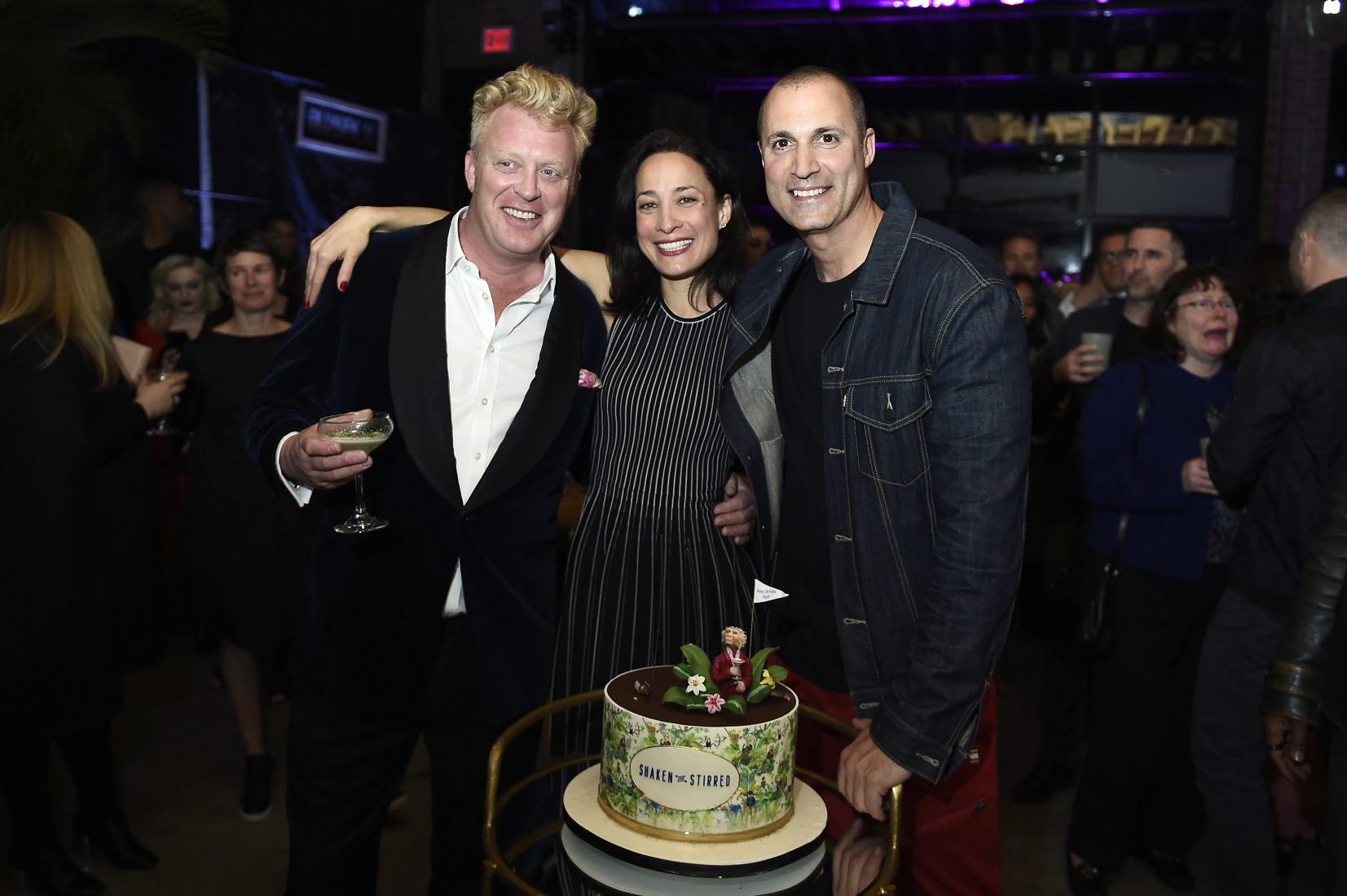
NEW YORK, NEW YORK - APRIL 27: (L-R) Tom Astor, Cristen Barker and Nigel Barker attend the Monkey 47 Gin Celebrates "Shaken And Stirred" Podcast Launch With Nigel Barker And Tom Astor At The Wild Monkey on April 27, 2019 in New York City. (Photo by Ilya S. Savenok/Getty Images for Monkey 47)
At my dear friend Nigel Barker’s 47th birthday, celebrated at Monkey 47 Gin’sgorgeous New York pop-up, I chatted with his best friend Tom Astor along with Nigel himself about their newest collaboration, a podcast called Shaken & Stirred that combines cocktails with interviews and some of the most interesting people they can find. See what they had to say below!
(L-R) Tom Astor, Cristen Barker and Nigel Barker. Photo by Ilya S. Savenok/Getty Images for Monkey 47.
Grace A. Capobianco: Tom, will you share one thing about Nigel that has remained “status-quo” over the many years you’ve known each other?
Tom Astor: Nigel and I have managed to maintain the ability to remind the other that we are not as important as we think we are or might think we should be. Thus, humility has remained throughout our friendship. I would like to think that at the same time we have kept the same level of affection for each other and our families and have nothing to prove to the other. We are, after all, just long serving best friends who have hopefully enriched each other’s lives and will continue to do so. Even him having an affair with my ex-wife wasn’t enough to ruin our friendship!
GC: For Shaken & Stirred, is there a script with each guest or is it truly off the cuff?
TA: We emphatically do not script our interviews/podcasts. Each podcast is ‘off the cuff.’
Nigel and I research our guests’ lives and careers thoroughly, which is key to steering any conversation once it gets going. Scripting our interviews would ruin the point of allowing our guests the freedom to go wherever they want in an interview.
GA: How do you choose the type of cocktail for each episode? Does it have anything to do with the guest?
TA: The cocktails are chosen for each show for any number of reasons. A guest may have been asked for a preference, in which case we will happily oblige, or I might have arrived at the studio with a hangover and be trying out the ‘latest cure.’ What we look for in all of our cocktails is their history and backstory. The history almost always makes the drink more interesting than the actual drinking…almost.
GA: Who makes the cocktails?
TA: I make the cocktails. Nige is too lazy to get involved. He prefers to pretend to iron the flags behind the set with his state of the art steam iron whilst checking himself out in the mirror.
GA: Do you, Nigel, and your guests actually drink during the show?
TA: Of course we drink during the show. It loosens up the interviewers (and the guests sometimes).
GA: Where is the show produced?
TA: At the moment, the show is produced at Univision Studios in NYC. The joy of the podcast is that we can pretty much produce them anywhere from a bar and studio in any city in the world. Given the fact that not everyone we might be interviewing lives in New York we expect to be hitting the road in the future and have started researching some pretty amazing venues.
Nigel Barker and Tom Astor. Photo by Ilya S. Savenok/Getty Images for Monkey 47.
GA: We know a lot about Nigel, tell us a bit more about your career and personal life.
TA: I live on my family’s farm in the Cotswolds in England with my three children. Merriscourt is a beautiful place to live, and I have converted some of the old barns into a wedding and events venue. My career has involved a stint in the art world, banking, buying and selling classic cars, and squeezing as much fun out of life as I possibly can for myself and kids!
I have always had a love for New York and have visited on too many occasions to count. I feel a strong family connection with the place which runs deeply through my veins. There really is not another place like it on the planet.
GA: Have you ever had a podcast before? What are some of the challenges you and Nigel experienced?
TA: I have never done a podcast before! Nigel had to initially explain what they were. I cannot say that I have found any of the process a challenge as such. It has been a fascinating journey and such a great way of finding out about so many things one would really never know about. I suppose the real challenge is making the guests open up which has so far worked well.
GA: How’s it going so far, any feedback from listeners or guests about the show, and what if anything would you do differently?
TA: The feedback has been overwhelmingly positive, both from our guests and listeners. I think the formula we have adopted/created works well and I cannot think of any reason to change things. Obviously we are open to criticism and should anyone feel we can improve our show we will sit down, listen, mix a drink. and either ridicule the suggestion or take it seriously…
I very much hope to continue to be able to do these podcasts with Nigel. There are so many interesting people out there whose views and feelings are worth listening to. I feel that we are at the beginning of doing something quite useful as well as fun. Useful in the sense of opening others (and our own) eyes to a raft of issues, fights, passions, experiences and life. I hope the listeners enjoy listening to the podcasts as much as we enjoy making them!
GC: Nigel, how and when did you meet Tom Astor?
Nigel Barker: Tom and I met when we were 13-years-old at Bryanston School, Dorset, England. It was a boarding school, and when you meet kids at that age and basically live with them force majeure, you quickly find the ones you really get on with and often times you grow up together like siblings, but ones you pick!
GC: When did you know you would be lifelong friends?
NB: I just turned 47, and looking at his answer to your first question we may not be friends for much longer!! Joking aside, Tom and I became close very early on and not because we had loads in common but because we both had a similar outlook on life. We both love to enjoy life, poke fun at each other, and are fascinated by a good stories, even when they are just rumors…
GC: Over the years, how have you and Tom kept in touch, and how did you two come back together to create your new podcast Shaken & Stirred?
NB: We were groomsmen and ushers at each others weddings, we made each other godparents to our first born, we take family vacations together every other year, rendezvousing at some exotic locale with our growing families en masse, and we realized that as our kids grow up we needed another reason to see each other hence Shaken & Stirred!
GC: I loved the bit about when you and Crissy had your first child Jack, was Tom really there 3 minutes after the birth? Can you give us a little more insight? it sounds like a interesting and humorous story.
NB: Timing is everything as they say, and there is another character we have not mentioned yet who is Dickie Dawson, the third musketeer. He is also a godparent to our children, and his family also vacations with us, and he was a groomsman/usher etc. We are all very competitive with one another and Tom wanted to make sure he saw his godson before Dickie and jumped on a plane when he heard Crissy was in labor arriving at the hospital 3 minutes after the birth…poor Dickie was an appalling two weeks late.
Nigel Barker and Bryan Greenberg. Photo by Ilya S. Savenok/Getty Images for Monkey 47.
Nigel Barker and Bridget Moynahan. Photo by Ilya S. Savenok/Getty Images for Monkey 47.
GC: You say the podcast came about from lots of boozy lunches and dinners, I’m sure that there’s more to its creation than that.
NB: Well there were brunches too! It really all culminated one weekend last year when Tom was visiting at our home upstate in Woodstock, NY. We were having a hilarious time, chatting, plotting, exaggerating, bragging, and joking as we do and thought what can we do to have a perfect excuse to do this more frequently and the podcast was born.
GC: It seems like it’s a little bit the male version of (formerly) Kathy Lee and Hoda, a morning show where alcohol is a prop. Alcohol sort of helps lift the boundary lines for you, Tom, and your guests, would you agree and give us an example?
NB: I have been on the Kathy Lee and Hoda show a few times and trust me, S&S is very different. We do indeed enjoy a cocktail or two on Shaken & Stirred, but as the name suggests the drink is a character throughout the show. Most of us have a story about the first time we had a drink, or what we were drinking when we met someone special, and every cocktail has a historical story of how it came about. For example, when I first met my wife Crissy, I took several girls to a bar in Milan, Italy and I asked Crissy if she would do a tequila body shot with me. Crissy being the good (clever) girl from Alabama declined but this other model from Canada piped up and said she would. So I applied the salt to her neck, placed a lime between her lips, then licked the salt from her neck, took the shot and bit the lime out of the girls lips…Crissy immediately changed her mind and said she would do one too. So I set Crissy up with salt on the neck and lime in the mouth but this time when I went to bite the lime out of Crissy’s lips she pulled the lime into her mouth and I had to give her a proper kiss to retrieve said lime. That tequila body shot was our official first kiss.
GC: What do you hope that your audience learns from Shaken & Stirred?
NB: We are fond of rumors, legends, and stories on Shaken & Stirred, but ultimately it’ss the truth and not the well rehearsed Hollywood publicist’s version.
GC: How do you and Tom choose your guests?
NB: So far (we have recorded 24 episodes) they have all been friends, but we designed it in a way that it really doesn’t matter what the guest is known for or what they are currently trying to promote. Rather, we think of topics we want to discuss and then our guests join the conversation. The only prerequisite is they need to be good raconteurs.
GC: Any exciting up and coming guests? And who would be your dream guest?
NB: Lot’s of great guests like Miss J, Coco Rocha, Michele Hicks, David Mixner, The Jauncey Brothers, Fern Mallis, Hugh Evans, and Hugh Jackman and Deborah Lee Furness are scheduled for our next taping.
GC: Many people attempt to become entrepreneurs, and those who are, know it’s certainly NOT easy. You shared with the audience that you have always a ton of balls up in the air, how do you juggle them, and when one drops, how do you handle it?
NB: I never really think of myself as an entrepreneur, I just liked to get involved in whatever interests me and don’t pigeon hole myself. Of course, not every idea or business is going to work perfectly, but if you don’t try you’ll never know. I look for opportunities that I am personally interested in and have some knowledge about already. I don’t need to be an expert but once I commit I am in 100% and try to become an authority on the subject for my own peace of mind. Just because I am a photographer doesn’t mean I can’t be a TV host, an author, movie producer and director, furniture designer, or gym owner!
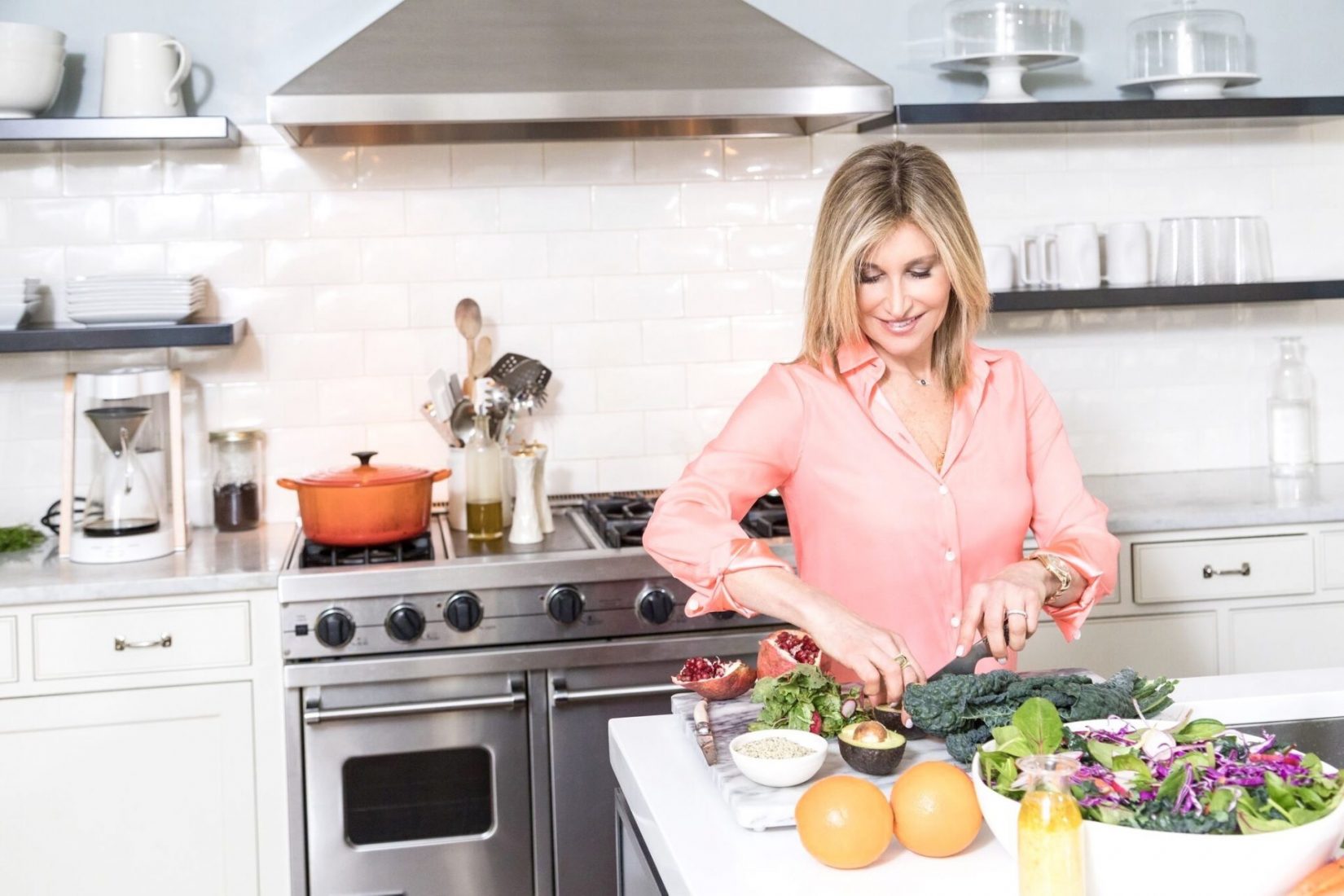
No matter our size or food preferences, we all have complicated relationships with food. Certified Eating Psychology and Nutrition Expert Elise Museles created the Food Story platform to help individuals understand that relationship with food and make sure it’s one they feel good about. We chatted with Elise about her work, her new podcast, and where she likes to eat in NYC!
Downtown: What even is a certified eating psychology and nutrition expert?
Elise Museles: Most people think of nutrition as the food on their plate and see an expert to learn “what to eat.” I realized early on that the “what” is only part of the nourishment equation, so I studied at the Institute for Psychology of Eating to empower people to think about how they eat and who they are as eaters. My training provided me with a strong skill-set and the ability to work with the most commonly seen and important eating concerns of our times: weight, body image, overeating, binge eating, emotional eating, endless dieting, digestion, fatigue, immunity, mood, and much more. In a nutshell, I help people with what’s on their plates and what’s in their minds.
Downtown: What are some key things to think about when figuring out your food story?
EM: Understanding your food story is the key to lasting change. Even if you’re reading this and thinking, I don’t have a Food Story, you do! We all do. Unlike your relationship with food, which is just YOU and FOOD, your Food Story is multi-layered and written over years and years. And the beautiful thing about a story is that it is always changing and evolving.
So, when you have behaviors and habits that you would like to release, discovering where those unwanted challenges came from can help you heal them. Because when your stories remain unprocessed, they can zap your life force energy, literally draining you of your vitality. But understanding the root cause, empowers you to release what is no longer serving you and enables you to write a new chapter! When you go back in time and make that connection, you can say, “well that’s not my story anymore, and I have the power to change it!” That awareness will propel you forward to change.
Downtown: When someone comes to work with you, should they expect to totally disrupt their current way of eating?
EM: I always meet people where they are instead of pulling the rug from underneath them. The only solution that I’ve found that works is to make small changes over the course of a long period of time and to focus on all the “do’s” as opposed to the “don’ts.” Instead of telling my client to “quit all dairy tomorrow” I suggest using almond milk in their coffee every morning for the next month. Instead of talking about the negative impact of some the processed foods they are eating, I help them add inlots of fresh colorful choices so they lose their desire for the less ideal foods. Nobody likes being told what they “can’t” do, and I find it much more effective to focus on all the awesome habits and meals that they canhave.
Lasting results usually come from consistent actions and subtle, meaningful shifts. It really is so much more sane and sustainable to be realistic and take it slowly with positivity. It all adds up, and those good habits are likely to stick around when you adopt this approach!
Downtown: What are the most important eating habits healthy people should practice?
EM: Every person and every single body is unique. Here are some ways that we can all benefit:
Eat more plants, which leaves less room for the not-so healthy choices.
Add lots of color to your plate.
Make sure to balance all your meals and snacks with a combination of good carbs, protein, and healthy fat.
Think ahead of time and be prepared. It is hard to make nourishing meals when you don’t have fresh food around.
Schedule me time into your calendar so you have a better mindset to follow through with your good intentions.
Sit at the table without distraction so you can tune into your body during meals.
Set realistic expectations instead of being so hard on yourself, allowing room for flexibility.
Downtown: What have you learned about yourself since getting into the food and nutrition field?
EM: The biggest takeaways that I have since immersing myself in this field:
Healthy eating is never black and white. I like to say there are many shades of green. I have released my rigidity and now allow space for flexibility and give myself permission to EVOLVE. That means, my habits and food choices might change with the seasons, my hormones, with age, and activity level. Saying goodbye to all the crazy food rules has made eating a lot less stressful and even helped me maintain a better weight!
I also now realize that you can eat all the kale, quinoa, smoothies, and superfoods in the world, but if your mind is filled with toxic thoughts, then you’re never fully nourished. I pay equal attention to what I eat and what I think.
Downtown: You started a podcast this year, what would you tell someone who wants to start their own?
EM: While it might appear to be easy, hosting a podcast is a big responsibility that takes a lot of time and effort, but it is also extremely rewarding. I decided to start Once Upon a Food Story as a different way to share my message and to be able to go deeper in conversation than I can in a blog post or social media caption. What I didn’t realize is that there is a lot of behind the scenes that takes place before an episode goes live, from interviewing a guest to editing the conversation to writing show notes to getting social media graphics and content ready.
Having said that, my best advice is to make sure that you have the bandwidth to take on the demands. Get clear on your why behind it. Have a message or niche carved out. Be consistent with your episodes. (Many podcasts publish weekly.) Most importantly, have fun with it!
Downtown: What’s your favorite recipe?
EM: My favorite recipe changes with each season since our bodies naturally crave different things in the cooler versus warmer months. One of my favorite meals any time is a sweet potato loaded with lots of veggies, spices, and plant protein like my Fiesta Stuffed version. And I always have a supply of a healthy (and vegan) chocolate chip cookies ready and waiting to satisfy my sweet tooth. Try out the recipes for yourself!
Downtown: Where’s your favorite place to eat out in NYC?
EM: I feel like a kid in a candy store in NYC because there are so many incredible restaurants and innovative places to eat. I love ABC Vbecause I can go and get a plant-based meal that is creative and satisfying even to people who aren’t as heavily plant-based!
Whether or not they know it, millions upon millions of people have experienced the work of Jensen Karp. The epitome of this column’s namesake, Jensen Karp is a true renaissance man within the creative field.
Jensen has written for television (e.g. VH1’s “Candidly Nicole,” ESPN’s “The ESPY’s, WWE’s “Monday Night Raw”). He has written for Rolling Stone. He has a memoir in the works for Random House, which follows the “Just Can’t Get Enough” book he wrote with Matthew Robinson. He was a major label hip-hop artist, signed under the name Hot Karl, and currently manages a major label rapper named Nova Rockafeller. He has appeared in and written content for web-hubs like Funny Or Die and JASH. He has co-hosted almost 200 episodes of the weekly “Get Up On This” podcast. He owns two Los Angeles-based, pop-culture-centric art galleries under the name Gallery 1988. He recently filmed a pilot for CNBC, which comes on the heel of acting in the first season of VH1’s “Barely Famous” series.
And believe it or not, those are not all of Jensen’s credits or businesses, past or present.
Jensen kindly took some time to answer questions about how he not only manages to get everything done, but also maintains such high quality in his output.
D: I believe I first found out about you when you were a guest on Dave Lagana’s podcast. So many projects and careers…When someone asks what do you for a living, what do you say?
Jensen: For a long time, I kind of just took a deep breath and picked one of them, mostly landing on art dealer. But nowadays, I’ve become more confident in saying “writer.” It doesn’t really encapsulate all of the gallery work, which is something I’ve been doing for 11 years, but writing is what I went to USC for and it’s been filling up my days for the past year. It’s also what makes me happiest, which is an easy way to decide how to answer, I’ve figured out. Everything you mentioned I’m proud of though, it’s just a weird thing when you rattle off a bunch of jobs to people like a creep, so you have to sort of have to settle on one and go with it.
D: When was it that you realized that it paid off to have a multi-faceted career, rather than just trying to do one thing?
J: I’m not sure it was a conscious decision. It’s a long story — and soon to be book — about how my rap career was pulled out from under me a little. And I’m sort of just learning that maybe I take on all these jobs, so that if one is taken away from me, then I have others. But also, I have a lot of interests and I’ve never been one to pass on an opportunity that I love, because that will depress me. So I started putting a lot of irons on a lot of fires, and I’ve been really lucky that a few of them paid off. I’ll stick to that theory for doing stuff I like, until I have a heart attack from stress.
D: Much has been said about your parents on your podcast, but not much about how they felt about your career choices. What sort of reaction did you initially get when it wasn’t clear that you were going to be a teacher or a lawyer or striving for an office-based career?
J: I don’t talk about their reactions much because they were always supportive. It’s boring. My mother was a singer and wished she had taken it further, and my dad wanted to manage me at some point. They never really expected me to be a desk job guy, but did always want to make sure I was writing, since they had noticed I enjoyed doing it at a young age. Also, some of my elementary school teachers started contacting them about my writing, and how I should be forced to stick with it. I think that’s what they expected me to do for the rest of my life. Rap was just a pleasant surprise.
D: Is there a field or profession that you haven’t yet worked in that you’ve thought about?
J: I would love to eventually write and direct a movie. I’ve been working on a short doc for the past two years that is near completion, but honestly, it was very hard. I wasn’t able to give it as much time as I’d like, and sort of had to do it in spurts, which is why it took so long, but I would love to just carve out a bunch of time one day and direct something real. Also, I would love to write a novel, which is my hope for after the memoir.
D: Is it your plan to stay so diversified? Or do you one day hope to slow down and focus on one or two things?
J: I REALLY want to slow down and pick something. I do. And I think I’ve done that a little. “Barely Famous” filmed over 4 days, and I have a pilot at CNBC that filmed over 4 [days]. Those seem like long ventures, but they aren’t. Once the book is done, and a few TV shows I’ve been working on wrap up, things should be a little better. But the truth is, I enjoy doing a lot at once, or have convinced myself I have to somehow. But either way, I’ve said I’ll be slowing down for about five years now and haven’t. But for my own sake, I still want the answer to be yes.
D: Are there particular tools or apps that you primarily rely on to keep everything on-track?
J: Yes. FantastiCAL. It’s a great iPhone app. When the new iOS systems started dropping consistently, I think the iCal took the biggest hit. It genuinely started messing up meetings and calls for me. So I downloaded FantastiCAL on a suggestion of [producer] Just Blaze and I have never looked back. If it were to crash, I would just move to Wyoming and take up fishing. It reminds me of everything that is going to happen or has happened. Without it, I’m lost.
D: When it comes to managing finances, are you a planner?
J: Sort of? I have a money manager for things like that, and I am always putting money away for my IRA, but I’m also not a very hands-on guy about it. I feel like I selected him, and my investment specialist, because I’ve known them for years. I can trust them to do their jobs, and if they don’t, only I’m to blame for placing that trust. But they’ve been great so far. I am not a big spender though at all. I fall on the modest side.
D: Your record deal and publishing deal came about when the music industry was still thriving, and the legend goes that you invested some of that into starting Gallery 1988. Do you have any overall strategy when it comes to saving or investing?
J: Yes, I used some of the last money I had from the advance to open G1988, which was a nice feeling actually. It felt better than just throwing it away on comic books. My strategy has always been to invest in things that seem fun. A bunch of friends and I all threw money into a bar a few years ago and it tanked. Two years later it closed its doors and we all laughed. It was a dumb move, but it taught me something: I only put my money into something that, if it fails, I will still be happy about. That bar made me feel dumb from the start. I put a bunch of money into this short documentary without ANY plan of what to do with it when I’m done. But I knew I HAD to do it. And that’s it. Same with Nova. When she flew out to stay with me years ago, it was to make cool rap music, not get a record deal at Island [Records]. I just invest in what I would like to do, and then again, you can only blame yourself when it fails.
D: When it comes to your career, how much of what you have accomplished is rooted in hustle versus having an agent or manager seek new opportunities?
J: Up until last year, EVERYTHING was through me hustling. I had agents and reps for years, but they never really did anything, except get me more money during negotiations; which I won’t pretend isn’t a big deal, it is. But over the last year. I signed to CAA and 3 Arts [Entertainment] and both of them have gotten me opportunities that wouldn’t have been in my realm without them. That’s been a nice feeling. But also, I still am hustling. If I see a job I would want, I can contact my reps or just contact direct still. It’s a nice thing to have, but I don’t ever see myself depending on it.
D: You’re known to be a prolific joke-writer on social media. Is that simply for fun? Or is it that more rooted in “wanting to create” and keeping your name out there?
J: 100% for fun. I started writing jokes on Twitter when I was focused completely on the gallery and its marketing division. Really trying to get that off the ground back then. But I knew I needed an outlet for joke-writing. It was something I had been doing since high school and usually would just write the bits down in a little notebook, so Twitter was ideal for me. I feel like I used to have an unhealthy relationship with Twitter, overusing and caring too much about it, but over the past two years I have really been able to find its place in my everyday life, especially as I’ve gotten busier. It’s just a hobby that is fun for me, and at the same time helped me get writing gigs, which is a nice bonus.
D: If you were talking to your teenage self, is there any career advice you have passed along?
J: Don’t invest in that bar.
D: On your podcast, you’ve mentioned relying on jogging as a cure for overthinking and worrying. How did you first get into jogging?
J: I had no other option. I suffer from Obsessive Thoughts Disorder and need to do something to stop it. I had tried intensive therapy and medication, and nothing had given me full clarity. It’s not a secret that exercise can do the same exact job as meds, and so I finally listened to the advice and tried it and I haven’t been the same since. I try to run everyday, but my schedule recently has been rough — I also broke my arm in January and am just getting better. It saved my life. Not sure I could live without it. Not sure it will work for everyone, but I can’t praise it enough.
D: When you’re not working, what do you like to do with yourself?
J: I fell back in love with TV over the past few years. I wasn’t watching for a bit, but now I try and watch a dozen shows at a time on DVR. And I am a die-hard NBA fan. I am specifically a Clippers guy and have been my whole life, but the NBA makes me very happy, unlike really anything else.
D: Finally, Jensen, any last words for the kids?
J: If you’re creative, do what you love. If not, don’t be hard on yourself. I know a lot of people who have a desk job because they feel most comfortable with that. And sometimes they make it seem like they don’t have exciting lives. I sort of hate that “exciting” is based on creativity, because it isn’t. Doing what you like and what makes you happiest, no matter what is, defines exciting for me.