Over the course of the summer, the series presented New Yorkers with more than 135 free programs filled with entertainment, fitness and music in Union Square park every Thursday.
This year’s Citi Summer in the Square offered a sweat-inducing mix of fitness classes each Thursday morning and evening, a rotating, live interactive performance for children, new dueling performance shows featuring beat boxers, DJs, dancers and more, live jazz performances by students from The New School, and two “Throwback Thursday” movie nights in August — “The Karate Kid” on August 3rd,and “Back to the Future” a week later.
The program was presented by Union Square Partnership and had a lot of great sponsors including of course Citibank, as well as Con Edison, Paragon Sports and NYU, to name a few. Check out the full list here.
We can’t wait to see what they come up with next year!
When it comes to creating feature-length, documentary, and short films that are informative and use unique concepts — including cell phone filmmaking — the New York-based film company Owltainment has an excellent international reputation. Having recently been invited to show their film Enduring Legacy – China Story at the Chinese Cultural Foundation’s Annual Award Ceremony in New York this past December, the company has its films showing in a cavalcade of 2017 film festivals in the coming months.
Owltainment was founded by Yuanyuan Chen and Mingda Dong, two New York University students who decided to use their creative talents to bridge the gap between the United States and Chinese film industries. With a versatile approach, helping to introduce American film scholars to China and hosting lectures and seminars for Chinese students and filmmakers, the company has been taking a head-on approach to film education. As film festival organizers themselves, they also continually host, support, and implement activities — like the Honor Festival — for festivals both in the U.S. and China.
For more on the award-winning Owltainment, please visit www.owltainment.com.
Located in the West Village, Analogue is a cocktail bar that has received rave reviews from the Wall Street Journal, Gothamist and DNAinfo alike. While many Manhattan bars aim to have music playing loud so that its customers have no choice but to dance and pound drinks, Analogue takes a very different approach. Whether it has a jazz trio live or its vintage Hi-Fi setup playing, Analogue keeps the music at a reasonable volume, allowing you to engage in conversation with ease. Analogue also offers a great food menu and has a lot of artwork on the walls for its patrons to look at.
Downtown had the pleasure of talking with owners Jesse Wilson and Jared Gordon, who met as students at NYU. As noted within our Q&A, Analogue is currently in the midst of expanding, although the location of its second spot has not yet been revealed. More info on all things Analogue can be found at www.analoguenyc.com.
You two met while studying at NYU. Where did the idea of opening a cocktail-centric bar come from?
Jesse Wilson: At first, the idea started when we would hang out at various bars around the Village and talk about how cool it would be to open a bar. After NYU, I moved back to San Francisco to work in finance and started to work on a business plan on the side. At that time I was also starting to notice a proliferation of cocktails and craft beers in the marketplace. I just couldn’t do it by myself due to work so kind of shelved the idea. When I moved back to New York City, Jared was ready to move on from finance himself and approached me with the idea of opening a bar. After a lot of discussion, we decided on the concept of doing a cocktail bar for a professional, grown-up crowd and Analogue was born.
Jared Gordon: We wanted to open a bar that featured the drinks we enjoy. That’s cocktails, whiskey and an occasional great beer. So that’s what we did. We pride ourselves on our cocktails and have put together an outstanding program, but we’re agnostic as to how we’re perceived or what the guest wants. As long as they’re enjoying themselves, it doesn’t matter to us whether they’re having our most complex cocktail, our rarest whiskey or just enjoying a glass of wine or a beer.
Did you have any restaurant or bar experience prior to opening Analogue?
JW: We didn’t have any experience really. Jared had a little bartending experience in the Upper East Side and had read a few books, but that was about it. We figured with our strong business backgrounds we could run the business, but we also knew we needed to hire people we trusted with experience in the hospitality industry.
JG: I’ll echo Jesse’s thoughts. I started tending bar to get a sense of the business, but I was pouring neat well vodkas at a few dives on the Upper East Side. Not quite the same level. We knew what we wanted and we knew how we wanted to treat our guests. The rest is putting a team in place to help execute that vision.
The Dorian Gray / Photo: Michael Tulipan
How would you describe Analogue to someone who hasn’t yet been there?
JW: I think the name “Analogue” fits the bar well. It’s a high-end cocktail lounge that is almost a throwback to Manhattan in the 1950s and 1960s. We do great cocktails and food and have a great atmosphere that promotes conversation amongst friends. It’s a throwback to a non-digital era, hence the name. I actually notice people come in and use their cell phones a lot less and just talk with each other. This was one of our goals when we were designing the bar.
JG: Jesse put it perfectly. It’s a comfortable bar in which to enjoy a great drink and a conversation.
Do you have a favorite drink on the menu? A favorite food item?
JW: My favorite drink is our signature called The Analogue. It was our first drink on the menu. It blends Havana Club Anejo Rum, Four Roses Bourbon, Domaine de Canton ginger liqueur, St. Elizabeth Allspice Dram, Velvet Falernum and bitters. When we opened, we wanted a bourbon-focused drink that was good for the colder fall weather in New York. When I tasted it I said to our bartender Nesha Korak, “Wow, if I could taste our bar that would be it! What should we call it?” And he responded, “Well that’s what it is then, call it Analogue.” And it’s been on our menu ever since day one.
JG: I’d say my favorite drink is whatever the team is working on at the moment. I enjoy the evolution of the individual bartenders and the program as a whole through time.
Jared Gordon & Jesse Wilson
Who is in charge of your cocktail menu? How does your team come up with cocktails?
JW: Zack Berger is our head bartender and facilitates the process for the team. The menu is a collective effort for all of our bartenders. They are always creating, and when we do a menu, they bring several of their best drinks to the table to try. We do a few rounds of internal tastings and then pick the winners. We then adjust the menu to put on the best cocktails and remove any drinks that are out of season or slow moving. It is a constant process.
JW: One of the first concerts I remember was U2 during the Joshua Tree tour back in 1987. My father took me when I was 13 years old. This was when U2 was at their peak and becoming a global phenomenon. The concert blew me away. I remember walking out of the Oakland Coliseum to the crowd and everyone was still singing “40” in unison. It’s cool to see them doing the 30 year anniversary tour now!
JG: My first concert was the Concert For Walden Woods, featuring Billy Joel, Don Henley and Sting. The seats were terrible but the music was amazing. Live music and music in general have played an important role in my life ever since.
Black Boulevardier / Photo: Michael Tulipan
What was the latest concert or music-related live event you attended?
JW: The last show I attended was The Cult here in New York. The Cult was another band I grew up listening to and they are still going strong! I like a lot of alternative, hip-hop, jazz, country, metal, pretty much any genre if it’s good.
JG: I’ll echo Jesse’s sentiments. I love everything from old school East Coast hip hop to bluegrass, metal, and classical. The last shows I’ve seen were Iron Maiden (my second time), Dave Matthews Band (my 24th) and the Governors Ball, where De La Soul was the highlight.
I understand that Analogue features live music a few days each week. Who are some of the artists that regularly play there?
JG: currently we have Nick West and the Westet on Tuesdays and Monika Oliveira on Wednesdays. Nick West is a funky bass-driven trio, and Monika has a beautiful, mellow bossanova sound.
When you don’t have musicians playing at Analogue, I know that you have music spinning. Have you always been so vinyl-centric?
JG: We spin vinyl on special occasions, and for that we have a fantastic vintage turntable and tube amplifier. We’re also starting an audio salon where we will feature some truly high end systems and some classic albums each month. Vinyl has played a role in my life since birth, when it was just called “music.” As I got older, I started my own collection by stealing my parent’s albums and it took off from there. I have about 7,000 albums at the moment, down from a peak of about 8,500. I enjoy the hunt — scouring yard sales and thrift stores and finding new music or forgotten gems. And I enjoy building and tweaking my HiFi system.
The Analogue / Photo: Michael Tulipan
Who chooses the music that is playing at Analogue?
JW: Usually our management team will set the music that is played at the venue. We are always on the lookout for new bands in the area. A lot of the bands we discovered were from around the West Village area playing at venues or outside at Washington Square Park.
The walls of Analogue are also lined with music-related photographs. Were those from a personal collection?
JG: The photographer is Roberto Rabanne, who has shot some of music’s best. The prints in our space are all originals, and the collages of Ray Charles and Bill Evans are each one of a kind.
I know that Analogue has a private room. Is that only for private events?
JW: Yes, we host a lot of events in the back such as private parties, corporate events, cocktail classes and wedding receptions.
When not busy with Analogue, how do you like to spend your free time?
JW: Sleeping! I work full-time and help manage the bar, so in my little free time, I like to relax. But now we are looking to open our second location, so a lot of free time is spent working on the new location.
JG: I recently had my first child, a little boy we named Jack. So free time is in short supply at the moment. Between him, Analogue and scouting for the next location, there aren’t enough hours in the day. When I do find some down time, I like to play music, read, cook, and yes sleep.
Analogue / Photo: Michael Tulipan
Aside from Analogue, do you have a favorite bar or restaurant in New York?
JW: I am really into craft beers right now so I appreciate a good selection of beers and a nice atmosphere. I liked Cooper’s when I lived in Chelsea. I now live on the UWS and like Gebhards, a new craft beer place near my apartment.
JG: I like dive bars. When I’m at a cocktail or whiskey bar, I find myself too focused on the menu, the setup and the service. I relax when I can kick back with a beer and a whiskey and not worry about taking notes. Parkside Lounge on Houston and Lucy’s on Avenue A are two favorites.
Finally, any last words for the kids?
JW: Don’t get caught up in all of the cocktail hype! We try to focus on making cocktails that taste great and put a lot of work into that. We don’t get caught up in all of the hoopla to try and get too clever or go over the top with our creations. A lot of our drinks are rooted in tradition, the foundation if you will. The goal is to just make quality drinks that the customers will enjoy and have a good time. At the end of the day it’s all about giving our customers the best possible experience.
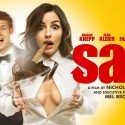
Last week, East Houston Street’s Sunshine Cinema played host to the New York City premiere and launch of the film Sam. While Sam is the first film by Nicholas Brooks, Nicholas has decades of experience within the film business as a writer and story editor. It also does not hurt that Nicholas is the son of the legendary Mel Brooks, who served as executive producer of Sam.
Nicholas, a native of New York City and an alumnus of New York University, spoke to Downtown about Sam and plenty more. More info on Sam can be found on the movie’s official website, www.samthemovie.com, and on its Facebook page. Nicholas himself can be followed on Twitter via @NickBrooks72.
Nicholas Brooks: What a fun question! You have to go way back to the late 80’s to answer that one! It was a script called Pumped that was optioned by a company called MCEG Entertainment. A classic 80’s comedy. Too bad we never made that one, but a lot of good stuff has happened since.
You had the premiere for Sam at Sunshine Cinema. Is that a place you had often gone when attending NYU?
NB: I was a commuter student at NYU, and so I saw a lot of stuff uptown — closer to where I lived. But I recall seeing some wonderful films at the Sunshine Cinema over the years. What a great theater! We need theaters like this — the kind that give so much love and attention to classic and indie cinema!
How would you describe Sam to someone who hasn’t yet seen the trailer?
NB: On the surface, Sam is a gender-bending switch comedy. Male chauvinist pig is transformed into a woman and has to see how the other half live. But under the surface, it’s all about the deeper bonds of love and friendship that two people — of any gender — can have. Ultimately, it’s about finding your true identity, and living from that truth.
Is Sam the first time you had collaborated professionally with your father?
NB: I worked as a story editor at Brooksfilms for more than 25 years, so we shared a lot of thoughts and ideas about moving films through the writing and production process. In terms of my directorial efforts, it’s the first time we have both had our name on the same movie — me as director, co-screenwriter, and producer, him as executive producer. My Dad has been an incredibly supportive EP on Sam, not only generous with his funds, but his praise and his nurturance.
Had you worked with any of the film’s cast prior to Sam?
NB: No, Sam is my first directorial effort, so everything was a first — but a very joyful first. Working with incredible thespians like James McCaffrey, Natalie Knepp, Sean Kleier, Stacy Keach, Morgan Fairchild, Bryan Batt — many others — has been an amazing experience. Each one is a gift to a director, full of great ideas and supportive thoughts and suggestions. I saw James McCaffrey and Bryan Batt at our screening last night, and the memories of their work on set came flooding back. James is a gem, such a thoughtful, giving, incredible actor. And Bryan is SO much fun to work with! Many joyful moments –- watching them on-screen, and then sharing hugs after the screening.
Do you have any goals for Sam? Does anything need to happen for you to view it as being successful?
NB: When you live in the indie movie world, you learn to keep your expectations modest. That leaves room for happy surprises. I am at this point so happy that Sam: 1) got finished, 2) got distributed, 3) actually got released. I am not looking any gift horses in the mouth. For those that have seen the film — and liked it — feel free to get the word out. Some nice commentary, on whatever forum works, always helps. But other than that, I am very happy with Sam’s trajectory thus far.
I know you were born in New York. Do you still see yourself as a New Yorker?
NB: Very much so. It’s in my blood, my soul. I look at the world through the eyes of someone who has grown up in this city, and appreciates its many many gifts; and yeah, some of its challenges, too! I love that we New Yorkers take for granted the wonderful, rich multicultural environment we live in. I love to talking to people who come from all over the world to be here — a cab driver from Senegal, a restaurant owner from Burma, my wonderful Sam producer Sibyl Santiago from the Philippines. I love the incredible energy of the city. It drives creativity and productivity. I love how New Yorkers love their art, their great food, their theater, and yes, their movies, even small ones. As for Sam, New York City is a character in the movie. I tried very hard to show both the energy and the beauty of the city. Some lovely skyline shots in Sam, as well as some beautiful views of Central Park, etc.
Once you are done promoting Sam, what’s coming up for you?
NB: Graphic novels! I just completed my first graphic novel –- co-written with SamUnit Production Manager Craig Nobbs, and edited by Andy Schmidt. It’s called Mercs and is set in the world of private military contractors, modern-day mercenaries. I love the form of the graphic novel, and love the process of taking an idea or concept, and moving it through the production process; artwork, coloring, text, etc. Graphic novels are such an incredibly-rich creative medium. I find myself totally immersed in them these days. Some ideas for TV too, but that’s a longer shot.
When not busy with film, how do you like to spend your free time?
NB: I love reading, mostly nonfiction, but some fiction too. I’m reading a fascinating biography of Meyer Lansky by Robert Lacey. I LOVE graphic novels — am practically living at Comixology and similar sites these days. I like surfing YouTube, especially military history, aviation, and of course politics. We are living through one of the most fascinating elections I can remember. If you see Sam, see if you can identify some links between the film’s theme, and some of the issues popping up in the current election. I had a couple of “wow” moments last time I saw the film. And — lastly — I love eating out with friends and/or family. I’m a foodie, and it doesn’t take much to get me to a great sushi bar, Chinese restaurant, or steakhouse.
Sam aside, what was your favorite film of 2016?
NB: I am a little surprised to say this — because I don’t usually go for big budget films — but I really liked The Legend of Tarzan. Excellent acting, very polished directing, mixed with some very relevant themes, like colonial oppression and slavery in Africa. I couldn’t help but wonder if an updated version of the Tarzan legend – for film or TV – might not work. Africa is a continent of extremes – wealth and poverty, opportunity, hope and despair. The themes in the movie are even more relevant today, as we see political shifts, economic growth – albeit mixed with corruption and inequality, environmental destruction, etc.
Do you have a favorite restaurant in New York?
NB: Thank you for the “foodie” question! I love those! I’ll pick five by neighborhood. Upper East Side — I love an old classic, Shun Lee Palace. Great Peking Duck, and wonderful steamed and fried pork dumplings! Midtown, it’s sushi! I love Hatsuhana, which has also been around at least a couple of decades, if not more. Incredible sushi served by a really attentive staff. Upper West Side it’s Cesca, great Italian, with some dishes I just can’t find anywhere else. The waiters are a mixed bag, some snooty, some gracious. But the management is terrific. Theater District it’s Orso. Incredible homemade pizza, great pasta!
Downtown, I love Il Cantinori — wonderful old-world Italian. Beautiful room! And every once in a while, I just go exploring in Chinatown. Joe’s Shanghai is great, with the best soup dumplings in New York City. I need to explore Brooklyn more fully, but one of the best steaks I have ever eaten is on the menu of a Williamsburg steakhouse called St. Anselm. Wow is that a good steak! I could go on for hours, but will end on this note — I could go to five restaurants a night for the rest of my life and STILL never fully sample or explore all the great food in this town!
Finally, Nicholas, any last words for the kids?
NB: For up and coming filmmakers several sets of advice, starting with two biggies: 1) Get GOOD, 2) Keep at it! In other words, practice your craft! Don’t assume the world will fall madly in love with your great idea if it is packaged in a poorly-shot, poorly-edited mess. Do the work of creating something that really enriches the viewer not only thematically, but texturally and aesthetically. Work with the very best camera crew, sound crew and actors you can find — and listen to their advice! Even if you don’t go with every suggestion, listen to people who are experienced, passionate, caring about their craft.
The second suggestion is even harder than the first — keep at it! Small cinema is mostly-failure, mixed with glorious bits of success. Learn from your failures, but use them to strengthen yourself as a storyteller in moving pictures. Best to start small, shorts are better than features for honing your craft. And network the heck out of your project. Get to know the people who run smaller film festivals, online fests, etc. Filmmaking is all about building and working with communities of creators, producers, distributors.
Finally: learn to take criticism well; you will get lots of it! And be very tough on yourself in perfecting your project. Good enough is usually not good enough. Find a way — three ways, 16 ways — to make it better. And then polish it a little more. And a little good luck never hurts!
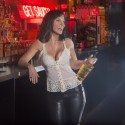
When the movie Coyote Ugly came out in 2000, it helped launch the careers of Piper Perabo and Maria Bello. It grossed well over $100 million at the box office, nearly half of which overseas, and its soundtrack went multi-platinum in both the United States and Canada. But many people do not realize that Coyote Ugly was based on an actual bar in New York City.
The Coyote Ugly Saloon was opened by New York University alumnus Liliana “Lil” Lovell in January 1993. Lil moved into the bar world after a short stint in the Wall Street world, bartending before she became a bar manager. The original Coyote Ugly earned a lot of attention when writer — and former bartender — Elizabeth Gilbert wrote about the bar for GQ in 1997, which ultimately led producer Jerry Bruckheimer to purchase the rights to Lil’s story. Lil began franchising locations of the Coyote Ugly Saloon in 2001, opening one at Las Vegas’ New York-New York Hotel & Casino. Currently there are over 20 locations open, the latest of which opened in Kyrgyzstan last month.
Lil spoke to Downtown about the past, present and future of the Coyote Ugly Saloon. Effective with her time, she opted to answer this Q&A while flying back from the opening in Kyrgyzstan. The bar can be visited online at www.coyoteuglysaloon.com, while Lil herself is on Twitter as @CoyoteLil.
A lot of people first learned about you as a result of the movie Coyote Ugly. How long did it take from the movie being optioned to hitting theaters?
LL: It was a quick turnaround. I was approached about the idea, and after everything was in motion, the move started filming about a year later.
Are there any parts of the movie that you feel misrepresent who you are or what the Coyote Ugly brand is?
LL: The movie gives an unrealistic vibe between the bar’s patrons. In the movie, it is portrayed that there was tension between the regulars and bikers. In reality, everyone who comes in — from bikers to doctors, to plumbers and average Joes — all get along and have a positive and happy vibe. Everyone is looking to have fun. Also, I would never buy a huge crowd a round of drinks, no matter what the situation was.
What about the CMT show The Ultimate Coyote Ugly Search? Was anything overly-played-up for television?
LL: The show was fun, but CMT kept changing the format. It was slightly played up in the sense that it’s not very easy to get a new Coyote Ugly employee to be awesome in a month. It was a challenge because it typically takes a few months for an employee to find their groove and shine.
When was the last time you stepped behind a bar to serve?
LL: I recently made a few reporters drinks at the Bishkek opening, but now I only go behind the bar to help clean glasses or keep on top of orders if they are slammed.
Coyote Ugly is known for being against overly-done drinks, but what is your drink of choice?
LL: At home I drink red wine, a big bold cabernet, but when I’m in the bars I drink Coyote Ugly whiskey.
NYU was a very different school when you went there. What made you choose that university?
LL: I was lucky enough to be awarded free tuition!
You worked as a stock broker’s assistant after graduating from NYU. Was it your plan to stick around finance long-term? Or was that just something you were doing due to a lack of direction?
LL: My plan was to work as soon as I graduated college. Around that time, most people applied in the financial sector, which is what I did. I quickly realized that’s not what I wanted to do for the rest of my life.
How did Coyote Ugly go from being one bar to a successful franchising machine?
LL: Through a lot of trial and error. After the movie, many people approached me about franchising, which was something I was always wary about. We tried licensing, but found people were changing the brand too much, so we went back to corporate locations. Now, we’ve found a system that works, but we are always learning to tweak things to fit the different cultures.
Did you have a mentor in terms of learning how to run a bar as opposed to just serving drinks?
LL: I managed a bar before I opened Coyote Ugly, where it was sink or swim. The owner would leave for a month at a time, and in those instances I was in charge, meaning I had to rise to the occasion. While it was hard times, I learned a lot about owning a bar and had fun in the process.
Do the locations of Coyote Ugly differ from one another? Do they have local specialties or concepts to them?
LL: All staff members are trained in the same manner, but each location does have some local flair depending on the culture. Our U.S. bars are much different than the overseas bars, but you can always walk into Coyote Ugly have the same wild, crazy, and fun experience at any location.
Lil Lovell
On a day to day basis, what do you work on for Coyote Ugly? Are you most focused on the licensing?
LL: My main job is to be a mom to my 16-year old son, after that everything else comes second. My main focus is to be available if any of the bars need me. I attend every anniversary celebration at all my bars, and I try to attend as many of the locations’ promotional events as I can.
With there being more than two dozen Coyote Ugly locations currently open, are there any particular tools you use to stay on top of things? Are you big on checklists, to-do lists or online calendars?
LL: We have a lot of procedures in place to manage multiple bars in faraway locations. Managers of each bar have a huge to-do list that has to be up-to-date and approved by the corporate team. Deadlines are a must for us, especially concerning certain promotions. Overall, the Coyote Ugly team each has a different task: someone to handle the finance, the marketing, location scouting, etc.
What’s coming up for Coyote Ugly?
LL: Right now we just opened our first location in Kyrgyzstan…Our next bars set to open include Wales, Fort Worth, and Tokyo in the next few months.
Do you have any projects in the works besides growing Coyote Ugly?
LL: As of now, Coyote Ugly is my main project…but who knows what could happen!
Work aside, what do you like to do for fun?
LL: For my own personal sanity, I complete triathlons and races.
When Andrew W.K. put out his first album for Island Records in 2001, a lot of people were confused. After all, I Get Wet featured a unique hybrid of heavy metal guitars, chant-along stadium-style choruses, dance music electronics, and Tony Robbins-style positivity. While no one truly knew how to classify what Andrew W.K. did on that landmark release, he made an immediate splash with hit singles like “Party Hard,” “It’s Time To Party,” and “We Want Fun.”
A second career as a TV personality took off for Andrew in 2004 with the MTV series Your Friend, Andrew W.K., which led to appearances on plenty of other Viacom programming. This ultimately led to him hosting four seasons of the Cartoon Network’s Destroy Build Destroy. Somewhere in between those two shows, Andrew became an in-demand motivational speaker, leading many to initially discover him as an on-air personality rather than as a musician. He also was one of the partners of the popular venue Santos Party House, which had a strong run from 2008 through May of this year.
Andrew W.K. is staying active as ever in the fourth quarter of 2016, embarking on the Power of Partying Tour, which takes him through all 50 states of our country. His New York stop will be at the Music Hall of Williamsburg on Nov. 20. Andrew spoke with Downtown about that November appearance and plenty more.
You are most associated with the word “party.” Has your definition of what a “party” is changed over the years?
Andrew W.K.: The main quality that first drew me to the word “party” was that its definition was very pure and almost inherent, it almost didn’t even need to be defined more than “to celebrate a specific event, occurrence, or phenomenon.” In the most expansive and specific way, the event/occurrence/phenomenon that I’m celebrating is being alive. So that’s what partying is to me — deciding to be in a constant celebratory state about life, even when it’s hard or painful or there doesn’t seem to be anything worth celebrating.
It seems like most people understand this idea of a “party mindset,” this party approach to daily life. I like that I don’t have to explain it — in order for someone to have their own version of partying, all they have to do is party. The word “party” communicated a sort of basic visceral power and clarity, while at the same time not necessarily offering too many instructions on how exactly to party. That’s why it’s appealing, because it is synonymous with freedom. It’s really the celebration of freedom. It’s the active expression of gratitude for all those most essential qualities life comes with.
What do you remember about the first gig you ever played in New York?
A.W.K.: I remember a great deal about it. It was in a storefront venue on the Lower East Side that is no longer in business. I believe it was called The Artnet. I had some friends playing there who were visiting New York from Michigan. They invited me to play too. I set up my keyboard and my drum machine and played some early versions of some of the songs from my first album. I think there were about 13 people there. I remember there was also a swing made out of a piece of chain hanging from the ceiling. I’m pretty sure there is a video of it on the computer somewhere.
Andrew W.K.
What should we expect from your upcoming appearance at the Music Hall of Williamsburg?
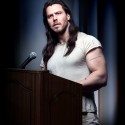
A.W.K.: Well, people should not expect music, so I guess the venue’s name is a little inappropriate for my event! I’m giving a extemporaneous lecture on the power of partying, and then opening the floor to a free-form Q&A discussion on life. This event in Brooklyn is part of my 50 state U.S. speaking tour, and it informally marks my 10-year anniversary as a motivational speaker. My first ever lecture was in 2006 at New York University’s Skirball Center.
Do you have any plans to perform live music in New York anytime soon?
A.W.K.: I’m currently recording my new album and I look forward to doing an eventual world tour for that. In the meantime, my band and I continue to perform concerts here and there. We played in New York City a couple months ago, at Coney Island, and I had played another show a few months before that. I imagine I will play another New York City concert in a few more months. It’s always on the horizon.
When not busy with your career, how do you like to spend your free time?
A.W.K.: I don’t like referring to people as “kids.” I remember adults calling me a kid and it always seemed “off” and meant to be belittling somehow. I guess I was smaller and younger than they were, so maybe they thought less of me and other children. I often hear people describing audience members as “kids,, but sometimes the audience is older than they are. Maybe it’s meant to be complimentary, because youth is seen as being a prized attribute, but of course even children are still people. My last words for any human being who might be reading this is: stay strong, never let down, and party hard.

 Over the course of the summer, the series presented New Yorkers with more than 135 free programs filled with entertainment, fitness and music in Union Square park every Thursday.
 The program was presented by Union Square Partnership and had a lot of great sponsors including of course Citibank, as well as Con Edison, Paragon Sports and NYU, to name a few. Check out the full list here.