Categories
Design Dining Living News NYC

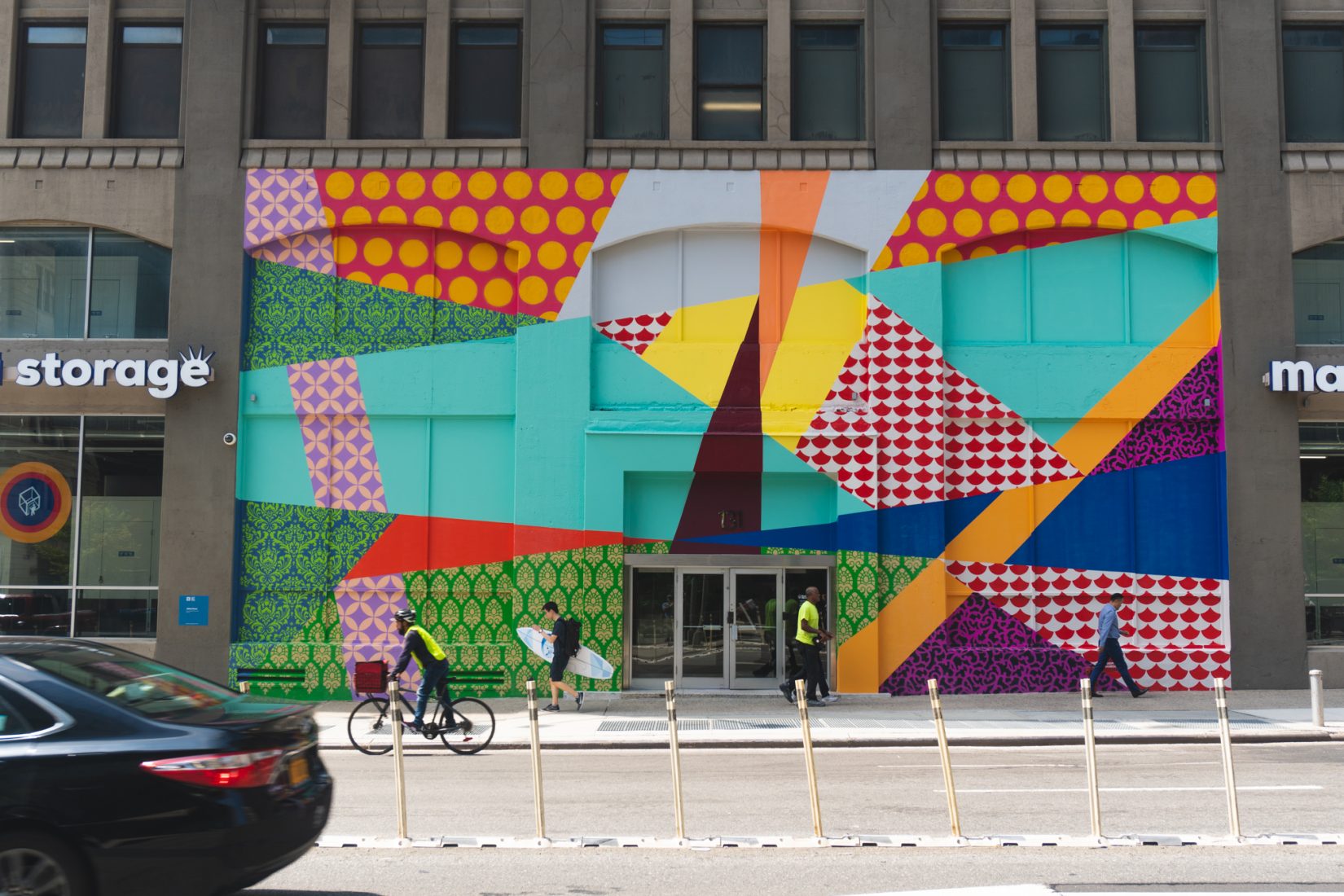
Hudson Square a Gateway to the Future

A decade ago, during the Great Recession,

Hudson Square was a neighborhood known as the gateway to the Holland Tunnel.

Hudson Square a Gateway to the Future
Courtesy: Hudson Square BID

Its streets packed with cars bound for Jersey, the heyday of being New York City’s former printing district was long gone. Beautifully built loft buildings stood half empty and there was almost no commercial business or pedestrian traffic to speak of.

But today that has changed.

In the past 10 years, fueled by a thriving economy, careful strategic planning, and the support of the city and the business community, the Hudson Square Business Improvement District has emerged and Hudson Square is thriving. Vacancies decreased 300 percent and development increased from zero to 4.75MM square feet. Grab-and-go establishments have doubled, and daytime pedestrian foot traffic grew from 30,000 a day to 70,000.

But what Hudson Square is known for is its creative sector. Sixty percent of the workforce is employed by a technology, media, or communications company. Google and Disney are moving their headquarters in, too.

All of that was before the COVID-19 pandemic hit. Since the shutdown, pedestrian traffic dropped over 80 percent, 87 percent of retail businesses have closed, and many other businesses have reinvented themselves in response to the crisis.

Hudson Square a Gateway to the Future
Courtesy: Hudson Square BID

By mid-March Adafruit, a maker of tools, equipment, and electronics, pivoted. Now it creates face shields for healthcare workers and electronic components for much-needed ventilators. Now, the company is making personal protective equipment and essential items available to all New Yorkers on its website.

Then there’s Vivvi. The employer-sponsored childcare center provides its 12-hour services exclusively to medical professionals and other essential employees on a drop-in emergency basis.

The neighborhood also is home to Deborah Miller Catering and Great Performances, which would normally be catering spring galas and other big events. But today, the companies feed frontline workers and the homebound elderly.

“While our creative businesses work on technologies, messaging and communications to get us through to tomorrow, the local businesses that support them are helping us get through today,” says Ellen Baer, president of the Hudson Square Business Improvement District. “We’re proud to serve this resilient and forward-looking community.”

The Hudson Square BID and its businesses are harnessing their resources and strengths to aid in the neighborhood’s recovery.

And although the answers aren’t all figured out, business districts can’t afford to just think about today. There will be a tomorrow and the Hudson Square BID is preparing for it.
Categories
Featured Lifestyle Living NYC

“Lights of Hope”

Long gone are the days when Downtown was dominated by the financial industry and the sidewalks were rolled up at 5:00 p.m., after the final call of the day. New businesses like Condé Nast, Seaport, Group M, Spotify, 10 Corso Como, Uber, Zola, have brought a vibrant, young and family-focused workforce with them.

Once again, Downtowners have banded together to send a message to the world. We have been publishing for 11 years now, and the changes we have witnessed and been a part of are epic. It’s difficult to report on the tragic news but, with tragedy, there is always triumph. Here in Lower Manhattan, like the rest of New York, we bounce back.

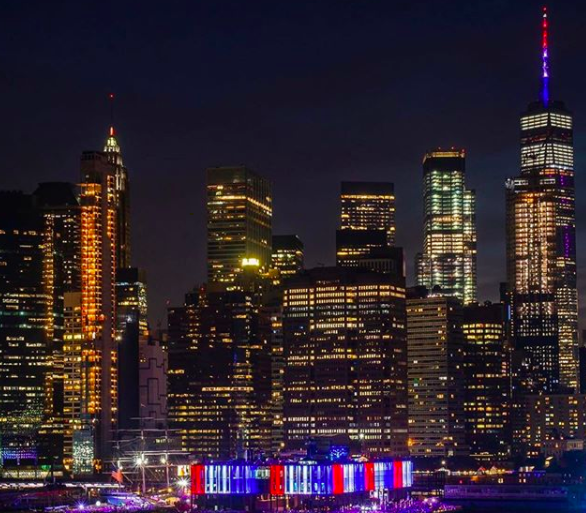
“Lights of Hope” Buildings in Lower Manhattan to Shine in Red, White, and Blue


Lights of Hope
Photo by Kirit Prajapati


One World Trade Center, Pier 17 at the Seaport District, Brookfield Place, 111 and 115 Broadway, 55 Water Street and 20 Exchange Place will be lighting up in red, white, and blue to show hope and solidarity, while other Downtown buildings are working to join them over the next several days. Buildings throughout the entire city are encouraged to follow suit and add their own “lights of hope.”

“This is a moment to band together, show pride in a tough time, and light up the Lower Manhattan skyline with hope,” said Jessica Lappin, President of the Alliance for Downtown New York. “Whether it’s red, white and blue or with a single white beacon, buildings across Lower Manhattan will light themselves in honor of our determination to endure and recover.”

One of the initiating property owners offered this:

“In this time of need, we as New Yorkers and Americans are looking for symbols of hope – both in our communities and across the country,” said Saul Scherl, President of the New York Tri-State Region of The Howard Hughes Corporation. “We Wanted to unite our community and light up the buildings of Lower Manhattan together to show our solidarity, our resiliency, and our persistent hope for the future.”

We as a city and world have gone through a lot in the past 20 years, the greatest trait is that we always come out on the other side stronger and better than before. Thank you to our leaders mentioned in this piece, and thank you to all who believe in hope!

See More

Development: Downtown’s New Diversity

Pier 17 Promises To Reopen The Waterfront

The “Big U” to Protect Lower Manhattan

Sale of 1 Chase Plaza Another Sign of Upturn in Downtown Real Estate

Categories
Architecture Business News Real Estate

Two Bridges Lawsuit Win for Lower East Side Organized Neighbors

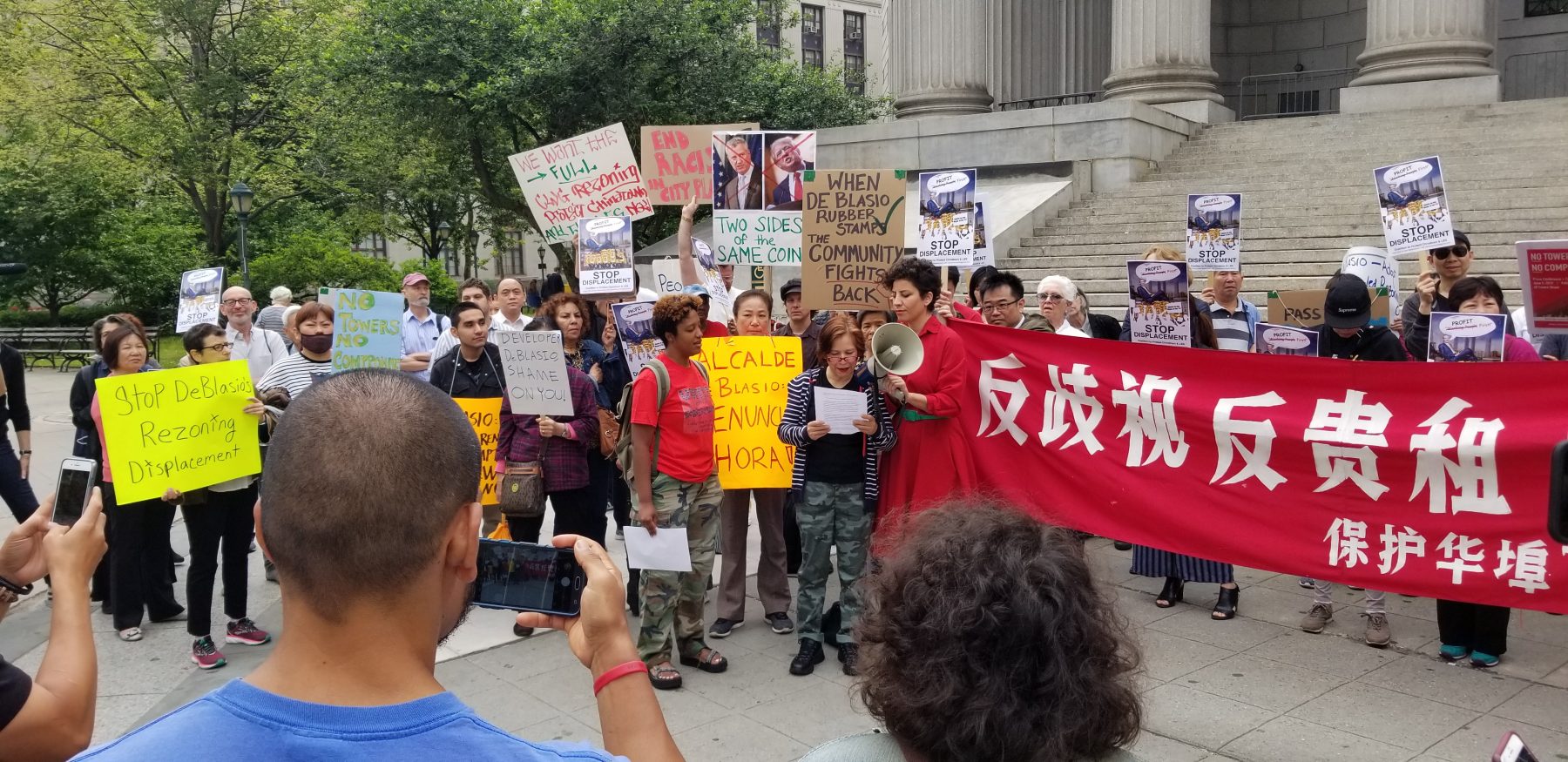
Dozens of supporters gathered outside of the New York County Courthouse Wednesday morning ahead of a hearing to halt the construction of four new towers in the Two Bridges area of Manhattan. Speakers raised concerns ranging from traffic increases to environmental impacts, and a fear that the towers would speed up gentrification in a diverse lower-to-middle-class neighborhood.

Organized by the Chinatown Working Group, the press conference supported a lawsuit by the Lower East Side Organized Neighbors (LESON). Their suit is one of four seeking to halt the construction. It was one of three heard in court on Wednesday. One of two which sought to stop the development plan altogether. Supporters of the other suit, brought by the Tenants United Fighting For the Lower East Side (TUFF-LES), attended another rally down the street. Emotions were high, with chants of “No towers, no compromise” from attendees and organizers.

Arnette Scott, a plaintiff in LESON's Two Bridges suit, shares her story with a crowd of supporters.
Arnette Scott, a plaintiff in LESON’s Two Bridges suit, shares her story with a crowd of supporters.

“This is not only a problem of the Lower East Side,” Arnette Scott, one of the plaintiffs, told the crowd, “It’s a problem in New York City. We didn’t come here just to complain. We didn’t come here to tell you that we can’t breathe. We didn’t come here to tell you that food is scarce. We didn’t come here to tell you that displacements were rapid. We came here to tell you we are fighting this.”

The highest profile of the three suits was that of the City Council, led by City Council Member and Manhattan Borough President Gale Brewer, against the city and the Two Bridges developers. The suit alleges that de Blasio and the developers illegally ignored the Uniform Land Use Review Procedure, which is under the purview of the City Council. The mayor’s office approved the construction for the towers, the tallest of which exceeds 1000 feet, saying that the required changes to zoning policy constituted “minor modifications.”

LESON, on the other hand, hopes for a broader ruling. The Chinatown Working Group introduced a plan for a new zoning district, the Chinatown and Lower East River District. The goal of the zoning district is to protect the residents of Two Bridges, primarily Chinese, Latinx, and African American, from gentrification, excessive rent increases, and other threats to a neighborhood which has acted as a haven for low-income families and new immigrants.

The developers in the case are JDS Development Group, a joint venture of L+M Development Partners and CIM Group, and Starrett Development. In a statement before the ruling, a spokesperson for the developers referred to the lawsuits as “wholly without merit,” citing extensive community consultation, public review, and environmental analysis. “At a moment when projects that stand to deliver tens of thousands of jobs and hundreds of millions in community investment are being opposed by anti-development sentiment across the city, it’s important to remember that those actions are not without direct consequences for the communities that stand to benefit.”

In what some saw as a surprising turn of events, State Supreme Court Judge Arthur Engoron chose to reserve judgment. Instead, he extended a temporary restraining order on the development into early August. “These are huge towers,” he said. “I’ve lived in the city my whole life. You can’t just do this because the zoning allows it. I just can’t believe this is the case.”

The halt will last until August 2nd, at which time he will make a final decision. The outcome is uncertain, but representatives for LESON are hopeful about the eventual outcome. “We see (the ruling) as a positive,” says Tony Queylin, a member of LESON and one of their suits’s plaintiffs, “and that gives us more time to build our momentum and our strength because what we’re doing is we’re just getting more people that know about what’s going on.”

A spokesman for the city’s Law Department responded to the decision, saying, “We are disappointed with this ruling. We respectfully disagree with the court’s preliminary findings. The approvals made by the City were appropriate, and we will continue to defend against the claims challenging these important projects.”

Queylin is hopeful that growing support could push approval of the CWG zoning plan. “Our strength lies in the people and the neighborhood and the community,” he says, “They might have a lot of money, but we have the people on our side.”