Categories
Culture Entertainment Featured Music NYC

Fascinating Rhythm

Bandleader, composer, musician, entrepreneur – Jon Batiste’s moment is now
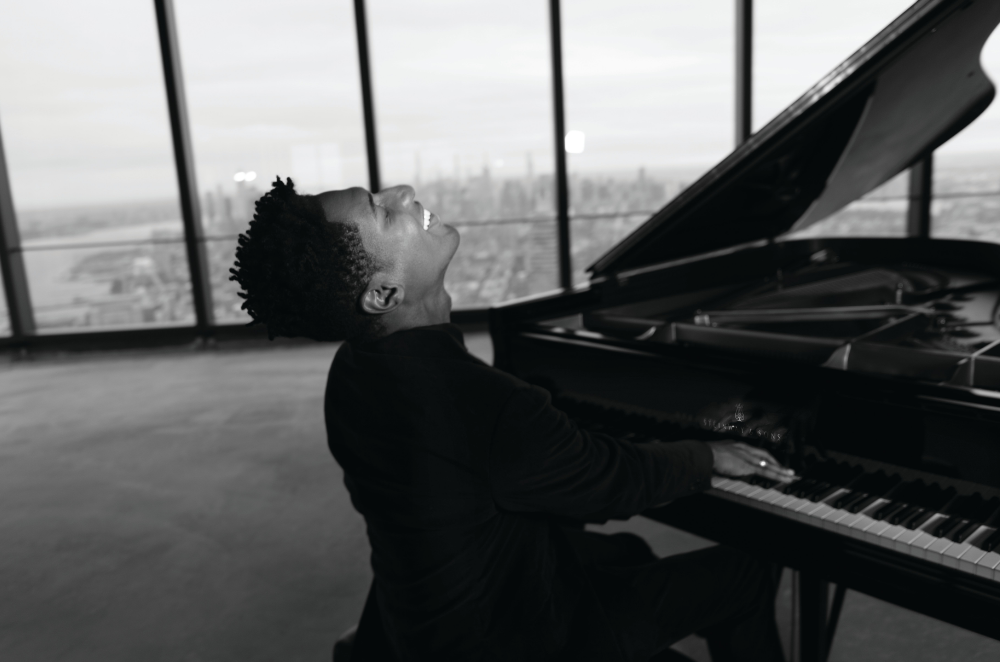


KEY OF LIFE Jon Batiste gives an impromptu concert on a Steinway & Sons baby grand piano, looking out over the city from the 79th floor of 3 World Trade Center.
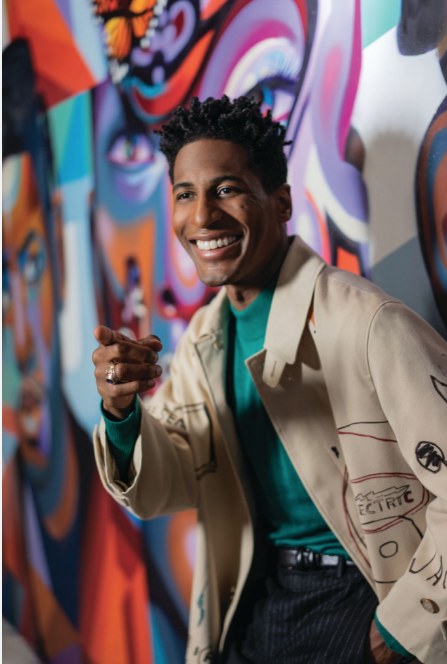


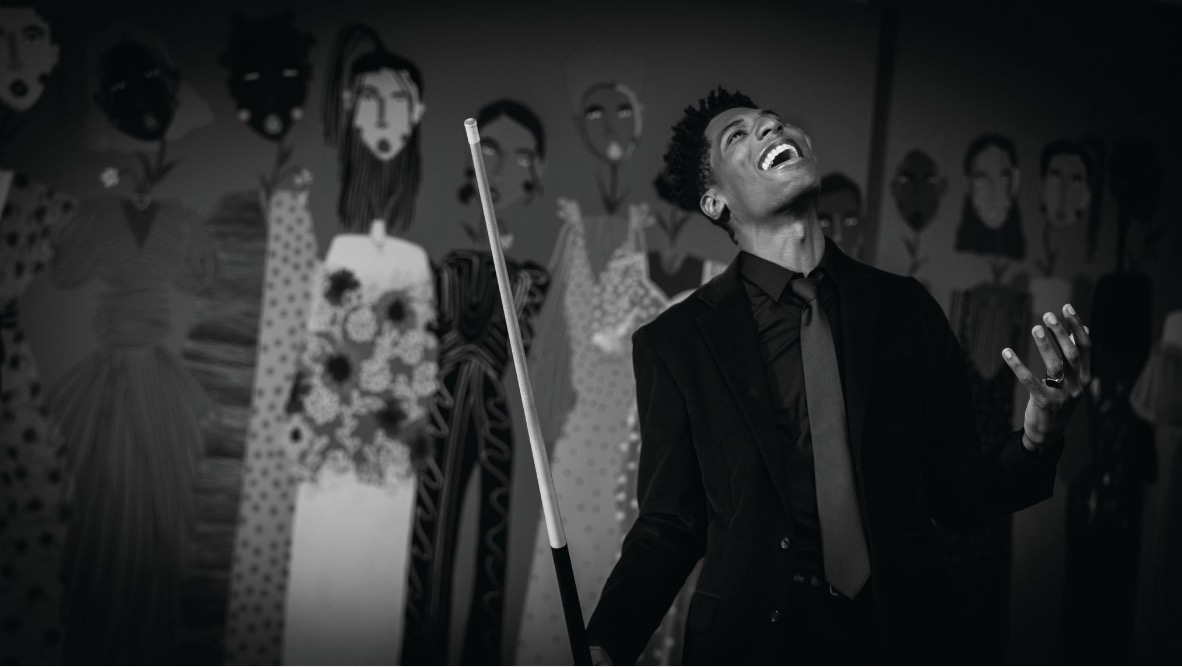
Batiste stands in front of “Akoma,” a mural by artist Georgie Nakima, in 3 World Trade Center. He is wearing a Coach X Jean-Michel Basquiat trench coat.
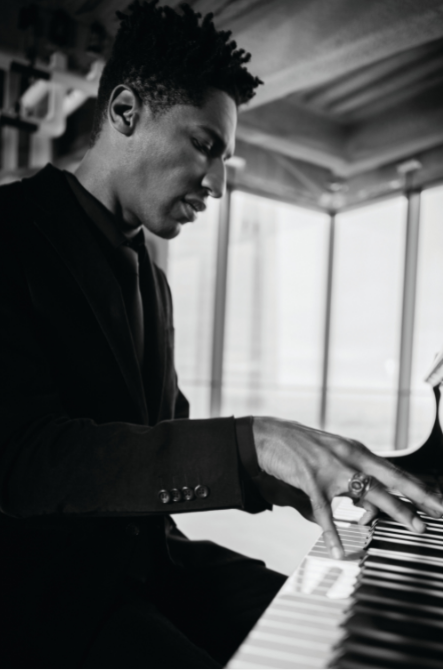


TAKE THE A TRAIN Batiste plays the classic Duke Ellington/Billy Strayhorn tune.
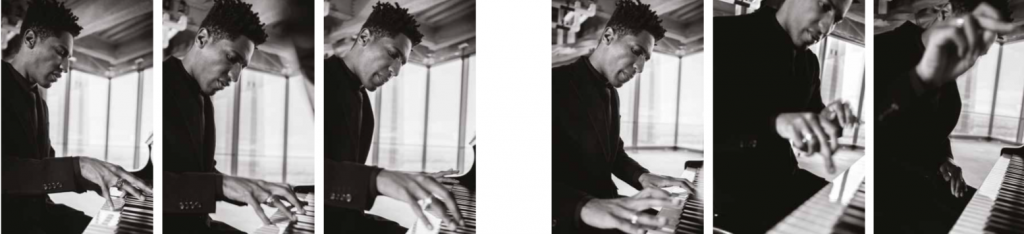


He has said that Duke Ellington is one of his many inspirations

IN A CAVERNOUS SPACE ON THE 79TH FLOOR of 3 World Trade Center, a tall, Black man summons glorious sounds from a baby grand piano, surrounded by endless views of Manhattan. He is full of kinetic energy, sometimes standing, sometimes sitting, shoes off, feet working the pedals, hands in motion, jumping from classical themes to jazz riffs to popular songs in a seamless flow of Music, with a capital M. This is Jon Batiste.

He arrives at our photoshoot tossing a tennis ball and sporting a jacket decorated with a Jimmy Carter campaign button. He radiates joy, and the personal soundtrack playing in his head spills out in phrases, snippets of songs, mischievous looks, inside jokes. Then the music goes on and it’s Billy Joel’s New York State of Mind. “Oh, that sax, Billy!” Batiste sings a little, plays air guitar on a pool cue, toggles between Rat Pack cool cat and exuberant man-child: “YEAH!” he shouts as Billy sings. He shares that he is really into Elton John lately, and we agree that Elton looks so happy with his family. “He’s at peace,” Batiste says. “It’s what we all want.”


“It must have been The Itsy, Bitsy Spider.”


Batiste’s musical timeline threads back through several generations. He is part of the legendary New Orleans Batiste family of jazz musicians. There is a pool table at our shoot and he shares that his dad became something of a pool sharp while touring on the Chitlin’ Circuit, where there was always a pool table to fool around with between sets. He knows a great deal about music history because his family helped write it. His first cogent musical memory is of being pushed on stage during the filming of a commercial. “I must have been around seven or eight, and I believe it was for a concert, a performance that my family was doing in Japan. I was asked to sing a nursery rhyme. It must have been The Itsy, Bitsy Spider.” Was he a natural? “I remember having such intense stage fright and going through many different takes. Fast forward 25 years later, and I’m on TV.”

Yes, he is. The Late Show with Stephen Colbert just recently celebrated its 1,000th show, and Batiste has been the show’s bandleader, with his band Stay Human, from the start. So, he has a day job that involves an intense schedule of composing music for the show, rehearsing, and taping—all complicated by a global pandemic. And while that would be a full slate for some, it’s just the tip of the iceberg for Batiste. He recently completed scoring, and collaborating on a Christmas Day Pixar release called Soul: “I put so much of myself in the film, it’s emotional to see this character’s essence in his story, and the things that are happening in his world draw so much from my personal experience in New York.”


This year, he also received two Grammy nominations


He has written a symphony that is scheduled to be performed next year at Carnegie Hall, where he will be the artist in residence. He says, “If you think about Beethoven, well, his Seventh Symphony is the one. The seventh one. Writing a symphony takes so much of yourself, so I wanted to start taking a swing at it at age 31 or 32 when I started it.” This year, he also received two Grammy nominations, and he is always working on new music. A body in motion, to the beat of his own internal soundtrack. And what does all of this sound like?

“It sounds like transition, evolution, growth, and leadership. It’s been quite a journey. If you look at the things that have happened over the last five or six years in my life: graduating from Juilliard and going on the road; doing television; writing plays and musicals; releasing albums; and all of the different awards and all of the people that I’ve met…” He pauses and then continues, “Now I feel like I’m at a stage where I’ve become a leader. And I’ve always, innately, felt like a leader and wanted to show people a better way. But now it has evolved into a very tangible state. I feel like I can see how my position in the world is meant to be facilitated, how it’s meant to be enacted.”

He’s grateful for the experience of working on The Late Show. “When you have something that you do five days a week for over five years, the consistency gives you perspective in a way that nothing else can. And I think that doing something like that is a blessing for me because if I didn’t have that, I don’t know if I would recognize this point in my evolution.”


It has always been a way to bridge the gap and connect.


Music isn’t only entertainment for Batiste. During the Black Lives Matter protests this summer he performed for the crowd at Barclay’s Center, and on election day he shared his particular brand of love and inspiration for people going to the polls in Philadelphia. He says, “Music is a gift because it can touch people and they don’t have to know why or how. It has always been a way to bridge the gap and connect. All of the different times that I’ve experienced really transformational life moments, there’s been some sort of music involved. Whether it’s through the form of tradition or whether it’s ritualistic, whether it’s worship, or whether it’s just nostalgia, there’s always some sort of soundtrack.”
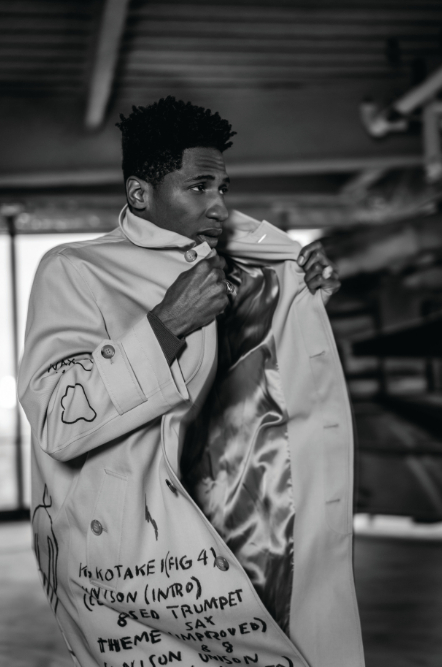
 

TOP OF THE WORLD Batiste’s Grammy-nominated 2018 album, “Hollywood Africans,” was named after a painting by Jean-Michel Basquiat, which makes participating in the new Coach x Jean-Michel Basquiat campaign a perfect fit.


This year, he collected two more nominations: Best Contemporary Instrumental Album for Chronology of a Dream: Live at the Village Vanguard; and Best New Age Album for Meditations.
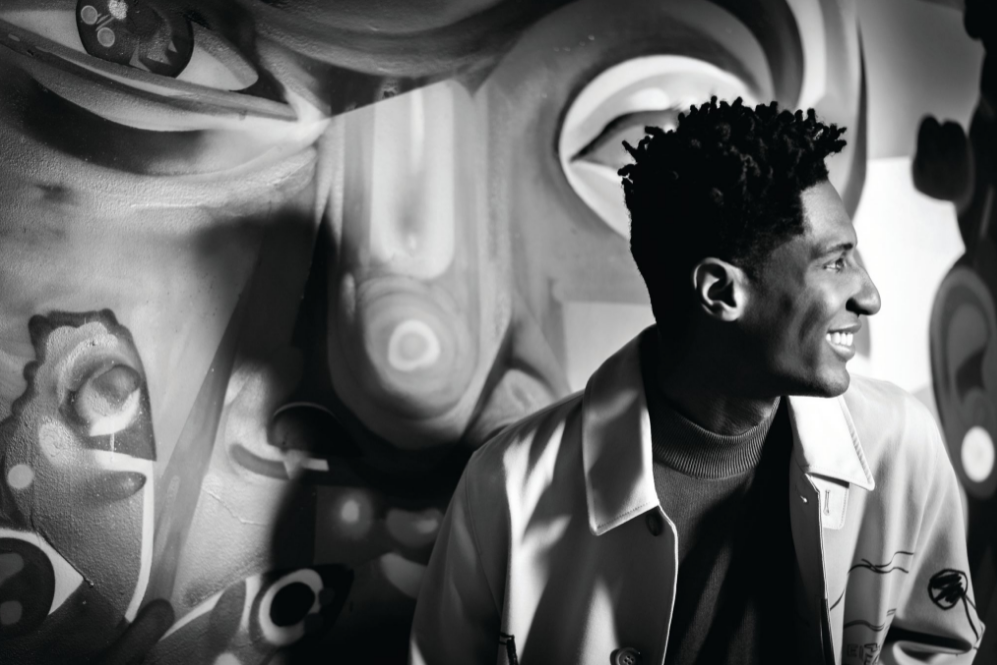


“The intention of something is always felt at a higher frequency when it’s about something bigger than oneself, and that’s across the board.” — Jon Batiste


Does he miss the live performance? “I miss performing in front of people, but I will say that I am enjoying thinking of different ways of presenting music, even in the virtual environment, because I think it’s more like being a movie producer now. I’ve always been into creating visual worlds and thought at some point that I would get into film as a director. But it takes a different muscle. And I don’t think a lot of musicians want to deal with that stuff.

So, the musician side of me is sick of it, and I just want to be able to go and play a show in front of people, even if it’s in my house. But the director side of me is having fun experimenting.”

He thinks the limits posed by COVID-19 offer a reset button for the way we experience music. “Music—before it was
put into the context of selling products and scaled so that it could be a commodity—was a part of the fabric of everyday life. It was something that people used to entertain themselves, in their home, in community gatherings, rituals, and cultural traditions, dating back to African tribes and drum circles or rumba sessions in Cuba. In New Orleans today, we have the second line in funerals. Social music is what I call it.”

He says, “I believe social music is really what we’ve always been primed for. People’s relationship to music is inherently social, and when it’s made into a commodity it skews that relationship. We lose something essential. Even with the protests that I’ve been doing, and in all of the different ways that I see music being made now remotely and online, it’s going back to a more social context, playing in small groups where the presentation is more geared to smaller community gatherings.”

I feel the responsibility to my family and my lineage.

He is conscious of his role as a leader. “I think about the different lineages that I’m a part of. Both New Orleans musicians, and all of the different styles of music and culture that I’ve drawn from, and I think about my great-great-uncle who fought in World War II, and my grandfather who was in the Korean War, and my uncle and my cousins who were in Vietnam. I think about the range of sacrifice that has allowed me to be a financially independent, successful Black entrepreneur, musician, artist. Apart from what I think the role of a musician is in society, I feel the responsibility to my family and my lineage.

Art doesn’t always have to be for a cause or to raise awareness. But I do think that for me, the intention of something is always felt at a higher frequency when it’s about something bigger than oneself, and that’s across the board.”

Photography and post-production by Andrew Matusik, Hair by Jenna Robinson, Makeup by Jesse Lindholm, Manager, David Patterson, Chris Chambers, Lauren Woulard, The Chambers Group
Piano by Steinway & Sons Location: 3 World Trade Center 79th floor Silverstein Properties

Categories
Featured Music Technology

D’Angelico Guitars To Introduce New Line of Products For 2020

Attention all D’Angelico Guitar fans, you’re in for a treat. The 88-year-old Manhattan guitar manufacturer is in the midst of a modern resurgence, offering new designs and a new line of gorgeous products for 2020.

D’Angelico has a storied history since its 1932 inception in Little Italy by master luthier John D’Angelico. The company’s devotees include guitar virtuosos Eric Clapton, Pete Townshend, Chet Atkins, and Bootsy Collins as fans of their instruments. In 2011, guitars by D’Angelico were included in the ‘Guitar Heroes’ exhibition at the Met. These guitars are absolutely gorgeous as well as being vessels for some of the most noteworthy music to come out of the last eight decades. Original D’Angelico guitars are considered prized collector’s items. Relaunched in 2011 by Brenden Cohen, John Ferolito Jr., and Steve Pisani, the brand blossomed into 125 partnerships in the United States with an additional 200 international dealers just three years later.

Here is the official press release from D’Angelico for the exciting new developments:

The Premier Series will see a refresh on all five of its acoustic models, plus the addition of a new “LS” variation – a satin mahogany option priced at $299.

Tammany LS

The popular OM Tammany will be available in all variations for the first time.

The Premier Series also welcomes the all-new Premier Mini DC – an ergonomic double cutaway semi-hollow, featuring a 14″ wide body perfect for players looking for a lightweight, easy-to-wield instrument.

And, coming off its triumphant first year in the Deluxe Series, the Bob Weir Bedford signature model is now available in the Premiere Series. Featuring the unique combination of two stacked P-90s and a middle single-coil controlled by a 5-way blade and blender knob, the Premier Bob Weir Bedford hosts an unbelievable range of tones.


Mini DC

In the long-standing Excel Series, 2020 welcomes new archtops for the first time since the re-launching of the brand. The Excel Series Throwback Collection hosts vintage-inspired takes on the flagship EXL-1 and the fan-favorite Style B. Features include the new Throwback scroll-style headstock, ebony headplate and pickguard, Throwback f-holes, ebony fingerboard, Seymour Duncan electronics, and Jazz Age finishes.

Also joining the Excel Series is the Excel Mini DC, an undersized double cutaway semi-hollow featuring Seymour Duncan 59 humbuckers and coil-splitting push/pull tone knobs.


Premier Bob Weir Bedford

The reimagined Deluxe Series is built to inspire – featuring Limited Edition takes on all four solid body designs, as well as the semi-hollow DC, SS, and 175. Across humbucking models, the Deluxe Series introduces the all-new Seymour Duncan Seth Love A4 – a pickup with remarkable depth, response, and richness in tone.

Meanwhile, the offset Bedford is now available in a stunning new variation. The Deluxe Bedford SH- a semi-hollow solid body featuring a unique modern f-hole window – adds an edge of acoustic warmth to its unique electronics configuration – two STR-52s and a Mini-Humbucker.


Limited Edition Deluxe Models are available in Matte Black, Matte Wine, and Matte Rose Gold. Only 50 pieces each.

D’Angelico will also debut the opening of its new USA Custom Shop and debut the shop’s first ten instruments at NAMM 2020. For the first time in brand history, solid bodies and semi-hollows will be built to spec in the USA, run by renowned luthier and longtime D’Angelico collaborator Gene Baker. Media outlets can contact jessica@dangelicoguitars.com to schedule an online interview and demonstration at the 2020 NAMM show.

All models will be officially available to select dealers on 16 January 2020.

See More

Album of the Year: Civilian by Frank Tovey

Clan of Xymox Materializes At Le Poisson Rouge

Blake Charleton Keeps It Fresh

Christine Smith Waits On The Far Side Of A Star

Adrian Sexton Draws The Death Card

Categories
Culture Featured Music

Succumbing To Sophie Kilburn’s Indigo Fever

By Alice Teeple

Photos by Alice Teeple

We are at the dawn of Scorpio season: a time of introspection and the upheaval of emotional baggage. It is a time for forgiveness of those who have damaged our self-worth, and of the darkness we self-generate in response. We need an anthem that cuts through the nitty-gritty to ask deep-burning soul questions. Are we worthy of love? Are we ready for it? It explores the deep fear of intimacy in a world of Tinder disposability, mass anxiety, substance abuse, and the emptiness of casual companionship.

British artist Sophie Kilburn’s searing new single, Indigo Fever, proves the perfect soundtrack for your inner healing. With a roaring voice and lyric style reminiscent of compatriots P.J. Harvey, Florence Welch, and Kate Bush, she repeats the question, “How can you love your body when nobody is loving you?” It becomes an exorcism of cumulative pain, finding itself at the stage of recognition; nearly at the precipice of healing. 

So I went down, down dirty 

Acted too flirty

Drank too much, too soon 

In a hurry

These pheromones

Lead to hearts of stone

The Derbyshire native has taken her time to craft her debut and lay the groundwork for its release. “I have been such a perfectionist with the song that I have had to force myself to say ‘enough, Sophie, it’s time to let it go!’  The payoff is sublime. She does not hold back on the pathos in her deliverance of the blues; there is a mesmerizing gravitas in her voice that commands attention. The atmospheric flair in the song highlights this demand for balance and the realization that it must come from within. 

“The song is me asking how can I feel comfortable in myself, when all I can think about is how people see me?” says Kilburn. “Am I doing what I want or what I think people want me to do? It goes deeper than just wanting to be liked – it is the overriding pressure to feel needed.”

Indigo Fever was recorded and mixed by platinum-selling producer Jack Gourlay

Sophie Kilburn
Sophie Kilburn

(Rhodes, Caitlyn Scarlett, and Paradisia) with soaring guitar work provided by fellow artist The Last Morrell. Kilburn is now back in the studio, recording her debut EP, My Room Made Public. Her second track, Broken Thing, will be released in early 2020. 

Sophie Kilburn’s true passion is live performance, and she hopes to bring her sound to the United States. Indeed, her acclaimed live shows have been gaining attention in the UK, where she has played legendary venues such as the Troubador, the 02 Islington, and the Camden Roundhouse, where she served a year-long residency and earned the status of Young Trustee. She has also shared the stage with folk legend Shirley Collins, whose melancholic English folk renditions lightly echo within the more cutting-edge art pop of Kilburn’s sound. 

It is time to reclaim your own power this Scorpio season. What a magnificent debut for Sophie Kilburn.  Good luck and godspeed to all our souls.

Sophie Kilburn
Indigo Fever

Apple Music: Indigo Fever

Spotify:

https://open.spotify.com/artist/0kLnk0k9gofq9UyfbugF1k?si=QSvC8r7ASqyoAQNiVyNL_w
Categories
Culture Featured Music

Artist To Watch: Natalie Clark

Natalie Clark
Natalie Clark

By Alice Teeple

Scene: Hot August night, secret location in SoHo.  A hundred people sit on the floor, eagerly awaiting the show. A petite, raven-haired woman enters the room with a merry wave and vermillion red smile.  She thumps her guitar, startling it awake. Natalie Clark is eager to get this Sofar Sounds party started. 

Cheers erupt as she launches her latest single, Grown Ass Woman, a raucous anthem for those constantly “on the go” to make ends meet. The message deeply resonates with the audience: heads nod sympathetically as Clark rattles off a wistful roster of activities one can do with a healthier paycheck. After the set, they thank her for “really getting it.”

Natalie Clark is a colorful storyteller in the vein of Dolly Parton and Loretta Lynn, liberally peppering her repertoire with joyful shrieks and fierce whoops. Her pleasant Glaswegian speaking voice belies a rock n’ roll ferocity: part Eddie Cochran, part oracle. 

Less than a decade ago, Clark was a schoolteacher in Scotland. Coming from a musical family with a passion for jazz and Motown, she daydreamt about a music career. For years, pragmatism proved an obstacle. 

Fate set her path in motion: while attending a BBC Radio One Academy session, Richard Branson invited her onstage for an impromptu performance of her song Weakness. Clark stunned the crowd and grabbed UK headlines. Despite the thriving music scene in Scotland, she hungered for a change of pace and moved to London. From there, Clark emigrated to Los Angeles. The relentless grind of odd jobs and gigging proved difficult in her new city, but Clark, ever the optimist, found inspiration.

“I feel excitement and creativity in the air! Also, being from Scotland, the sunshine helps,” she adds cheekily. “It’s inspiring to be surrounded by people making art in all different forms. I just followed my instinct to explore opportunities.” 

Clark’s gamble was rewarded: KTLA “Artist To Watch.” Mercedes-Benz ad campaign. Appearance on The Voice. Hand-picked opening act for the Indigo Girls. 

Natalie Clark
Natalie Clark

Clark’s sophomore album, Head North, explores the highs and lows of independence. No silly love songs in this EP, just blissful discovery of self-worth despite tight budgets, heady ideals, and roadblocks. Head North is the perfect soundtrack for getting your shit together. “It’s time to face the fear!” she roars in More Than A Mountain.

Natalie Clark is a familiar face in the LES music scene. In addition to several recent Sofar NYC appearances, she played a fiery set at Rockwood Music Hall in March. CraicFest also hosted Clark at Mercury Lounge, where she shared a bill with Pogues bassist Cáit O’Riordan, Ash’s Tim Wheeler, and The Mighty Stef.

“It’s been a magical journey,” she says, “I’d love to do a full US tour! I love connecting with people. I hope to get the chance.” 

No doubt this Scottish firebrand has the willpower and drive to make her dreams reality. Head North drops on 23 August. 

More Than A Mountain Video:

Grown Ass Woman Video: 

Official website

Categories
Culture Events Featured Music

Peter Murphy Spits Roses At Le Poisson Rouge Residency

Peter Murphy
Peter Murphy at (le) Poisson Rouge

By Alice Teeple

All photos by Alice Teeple 

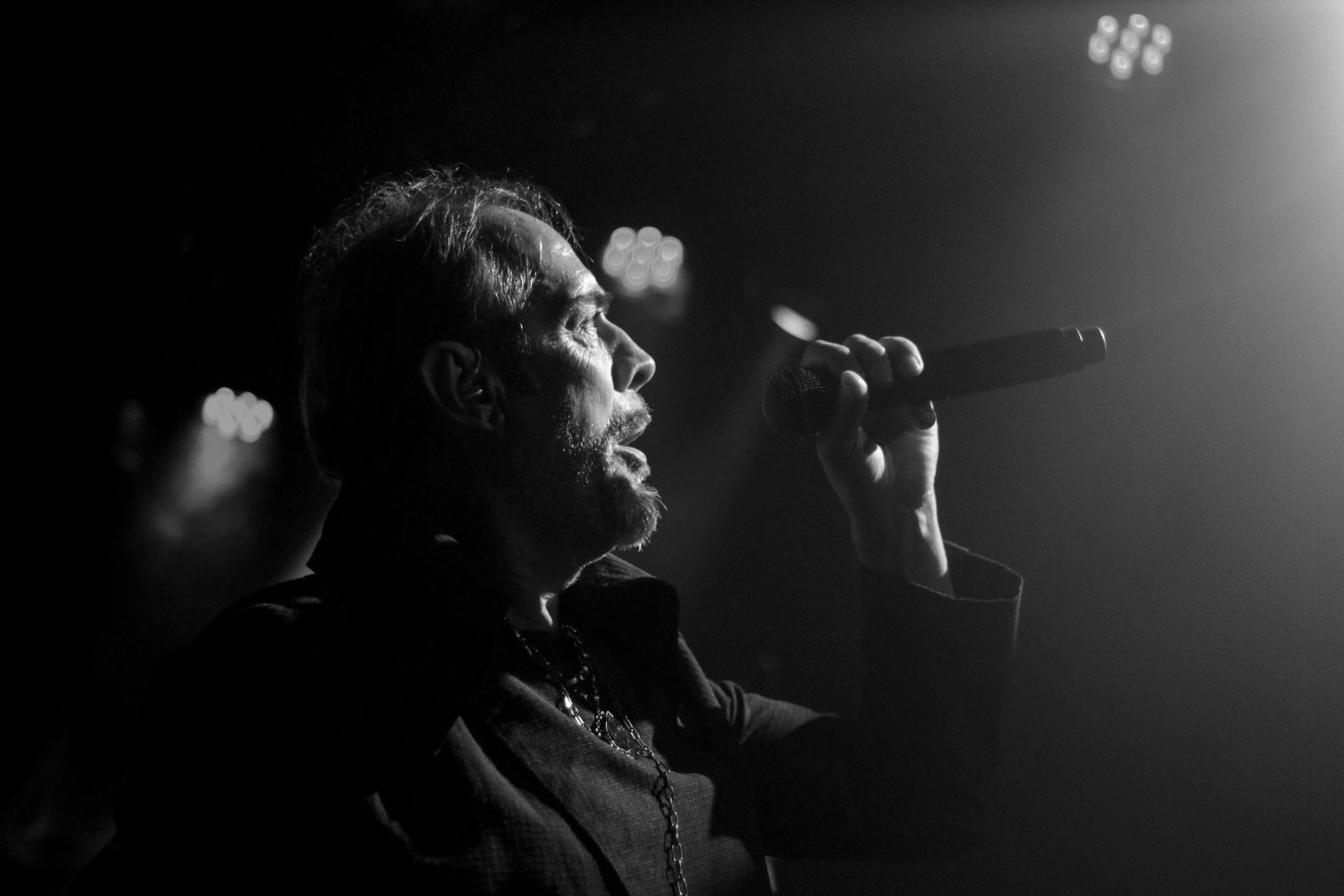
Peter Murphy is not resting on his laurels, hammering out the same songs for four decades. In fact, it speaks highly of his ever-evolving artistry that in 2019, his audience spans multiple generations. Scanning the sea of faces in the crowd at Le Poisson Rouge, where he is in residency this month, one sees the usual Siouxsie clones, spider dancing, Gen X goths, and wistful boomers. But there were many young faces present as well, equally eager to see their hero. Murphy has extraordinary charisma, even when he’s a bit salty. 

The Dust show at LPR was a jolt to the chakras. Murphy’s opener both nights, Soriah, blasted the room open with traditional Mongolian chant. The astonishing performance, created with a drum, bells, folk instruments and a loop, showcased the potential of the human voice. The introduction of Tuvan throat singing proved jarring to those who came expecting vampire songs, but it fit perfectly with the Asian and Middle Eastern-influenced sound on Dust. Murphy’s thundering voice has soldiered through recent strain and still holds court splendidly. It especially melted during the ode to his daughter, Girlchild Aglow.

Murphy commanded the stage with his full album shows, bringing a fierce intimacy with those hypnotic pale eyes of his.  And the clothing! For Dust he appeared clad in a jacquard kimono, massive rings on his spindly fingers. The singer has transformed from the gaunt spectre of youth to a veritable Emperor tarot card sprung to life; Lord Summerisle live in concert. 

There have been urban legends floating around of Murphy’s grouchiness, particularly over iPhones creating barriers to his performance, but he showed no sign of irritation this time. What did set him off, however, was a sound SNAFU.

“Stop the song! This isn’t on the album. STOP THE SONG!” he roared. “Alright, three verses is enough for a gig, innit?” He didn’t wait for an answer. Instead he paced around the stage, thanking his band, and fled down the stairs into the darkness, leaving some fans confused; others roaring with laughter. All was well when he returned for the encore, “Subway.” And what an encore. He played with the audience, sour mood restored to joy, fingers hopefully reaching toward a blessing.

The Ninth show and album had a more rock-n-roll oeuvre. The outfit of the night was a black Shakespearean blouse offset by long chains, and a patterned scarf that quickly made itself a nuisance and was last seen hurtling toward oblivion. 

“Why are you here tonight? Is it because I’m…gorgeous?” he drolly asked, basking in the ensuing shrieks like a sleek cat in a beam of sunshine. 

During I Spit Roses, a woman thrust a bouquet at him. The confetti of crimson petals exploded on the stage as the crowd sang the chorus. He was generous with praise for his musicians, particularly guitarist Mark Thwaite, and ended the show with the haunting violins of Créme de la Créme. Indeed.

The final shows are not to be missed. Murphy continues his residency through 19 August with the following performances:

15 August: Greatest Hits

16 August: Bauhaus (SOLD OUT)

18 August: Tribute to David Bowie (SOLD OUT)

19 August: Tribute to David Bowie 2

Purchase tickets here

Official Peter Murphy site

Peter Murphy
Peter Murphy at (le) Poisson Rouge
Categories
Culture Featured Music

We Can’t Wait for Violinist Gregory Harrington’s New Album of Standards

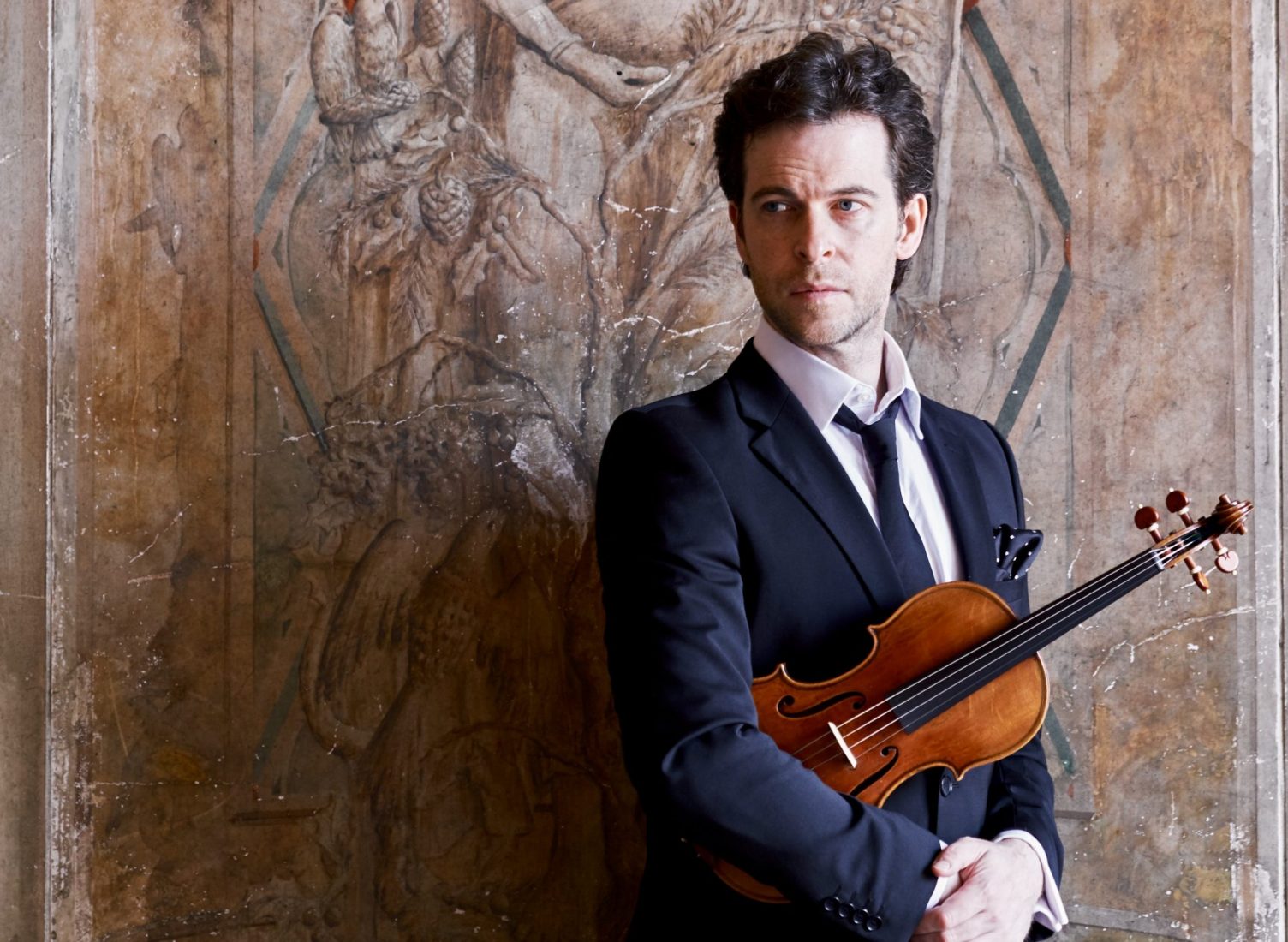
Gregory Harrington is a world renowned violinist and a top musician in Downtown’s heart. We chatted with him about his history, his love of travel, and his new album of standards due out this coming June. Keep reading until the end for an exclusive sneak peek at one of the tracks!

Downtown: Was there a moment when you realized that you wanted to play violin professionally? What was that like?

Greg Harrington: The moment I knew it was going to be my career I think I was about twelve. I started playing when I was four. I was in the audience for a show with my mother and I heard this string quartet playing and I just was so drawn to the sound, so she got me a violin that next week. We worked with this teacher that I had for around fourteen years. One of the pinnacles of violin playing is the Beethoven Violin Concerto and I told my dad that I wanted to play it. At the time you had to order music from music store, and he actually got it in London. He brought it back to me, and I started playing it and I brought it into my teacher and I said this is what I want to do. He had this wry smile on his face and he said, “Okay, would you like to play this for the rest of your life in a living room or would you like to play it in a concert hall with lots of people?” I gave him an honest answer, I said, “Well look, I presume if I can play it in a concert hall with lots of people I can play it in my living room.” I think that was sort of the moment that he said we’re going to change the direction we’re going. At times it was difficult when I was younger to get that motivation to practice but I’ve always loved it.

Downtown: How did you end up studying international commerce and Spanish literature in college?

GH: I had done so much music in Dublin, I think I did it just for the nature of having a fallback. My dad at the time was just more for get a real job and mom loved the whole artistic life so it was that sort of dichotomy of two parents. I think when it came to going into college I didn’t want to do music, I didn’t want to do law, I didn’t want to do engineering, I think I had international business and spanish down as my first choices in Dublin at University College Dublin. It actually was a really, really good idea because for a lot of what I’ve done has been self managed, self promoted. Now I’m getting to the stage where I’m getting more interest in artist management companies. Short story is it was a basically because I didn’t want to go away and do music, I wanted to do just a different degree and it turned out to be a really good choice.

Downtown: How did you end up in New York?

GH: I actually came over here to study with a teacher. After a short while, I ended up with another teacher up in New Haven who was a virtuoso and just incredible. He just made it absolutely black and white for me. I would go up once a month for a private lesson. I loved the train ride. I’m easily amused when I’m looking out a window. I love travel, I love the freedom that you can get. For me visual really causes a catalyst to think differently.

Downtown: What are some places you would love to visit?

GH: There’s a lot of great symphony halls that I’d still love to perform in. There’s certain personal things I’d like to do like play in the UN. It’s a long list so it’s hard to narrow that one down. There’s a lot of the most incredible concert halls and venues in the world that I still haven’t played, for example Blue Note or Berlin, there’s just a lot of beautiful concert halls. I think the other side of that, there’s just nothing like getting up on stage no matter what that stage is to play music. I think rather than looking at from defining where I want to play, if I can look back at the end of this and say that was some journey and I am so happy that that’s what I did that’s really the goal.

Downtown: What led you to start your own music label? What’s it like running a label?

GH: The label is wonderful because I have creative control over every aspect of an album. When I came to do my second disc the for a very classical market, the deals you get are just horrendous and you can be tied in until you earn the company back a certain amount. There was just nothing in it that was enticing; there was no creative control over visual branding, over content ,really over anything so you basically provided the master. I was never convinced that any of the labels had a really good plan for me.On my own, I had the opportunity to run the marketing or plan the publicity, try and target where the niches were and find out how I could sort of draw it towards those niches. I think it’s the creative control that I like. It’s part of the brand, so as this is growing, which is great, Greg Harrington is what you see visually, it’s what you hear, it’s what you see online, it’s what you see on Instagram, and again, it’s not a finished product but it’s developing into something that is much more consistent.

Downtown: Why is childhood music education so important to you? How are you involved with it?

GH: For a long time I was teaching at two private schools. I still do private students now, and there’s one school on the Upper East Side that I conduct the orchestra, so I arrange and conduct everything there and that’s a process that I still really love.It never matters what standard a student is, it’s about their willingness to learn and their willingness to absorb that musical language. Once you see a kid trying it’s really cool because then you can try things and you can get them to a level where they haven’t been and that’s the goal any time they walk in the door can they walk out a little better than where they’ve been. I want them to enjoy music to a level where it’s more human and it’s more relatable, irrespective of if you’re going to play Beethoven or Bach. It just depends on what they like, so if you want to mix that up with The Greatest Showman or music from Coco and stuff like that, it’s about giving that little hook where they really enjoy it and they really are able to figure out how to express themselves and what they’re trying to say.

Downtown: How did you decide what to put on your latest album?

GH: My latest album is standards that range from “Hallelujah” to “When I Fall in Love” to “Summertime.” I wanted to brand into a more mainstream market because I’ve been doing this for about five or six years and the reactions on stage have been phenomenal. I wanted to take materials that I had been doing for a while and some that I hadn’t done at all. It’s sort of a different sound with drums, bass, and piano as opposed to the more classical oriented stuff that I’ve been doing. The direction with this will be jazz clubs and more mainstream venues. I’ve always been inspired by and loved Miles Davis and Charlie Parker and John Coltrane so that was a big inspiration in this as well.

Downtown: What’s different about this new album than your previous ones?

GH: The first one was the edge of classical, a lot of classical encores and a little bit more edgy stuff like John Williams. The second album was purely classical contemporary so more modern composers, very niche. The reviews were incredible so I was delighted with that. The last one that I did before this was unaccompanied Bach which was just solo violin. Standards seemed to be the direction to go next.I recorded two albums last year, this is the first one and then I recorded Philip Glass’s work for violin and orchestra with the Janáček Philharmonic in Ostrava in the Czech Republic. That will be coming out at the end of this year or the beginning of 2020.

Downtown: Is there anywhere you’d love to perform or anyone you’d love to perform for?

GH: Yes, of course. I think that is an endless list. People like Tony Bennett or Chris Botti or the incredible Wynton Marsalis, people like that who are legends in their own field. In the classical realm, I’d love to play with one of the great orchestras and one of the great conductors, one of the big five orchestras. It’s just a huge list because I love the idea of having music to connect to others and making music with great artists is something that always drives you.

Downtown: What’s next?

GH: Once I release this I want to build the momentum of it and grow the brand more and try to put the music in television and get more exposure. One of the things I’d really love to do is create a travel program where I go down to Chile, take a motorcycle, and a team and try the food, play with local musicians, sample the wine, visit the countryside, and then finish up in a concert in Santiago. The mediums have changed so much and you can figure out ways where you can define your niche and be the only one doing this thing and pitch that to different outlets.

Here’s an exclusive track from Gregory’s upcoming album “Without You”! Listen to Autumn Leaves from the Album by Joseph Kosma now.