No, you’re not misreading this: LGBTQ youth in New York City comprise up to 40% of the homeless population.
LGBTQ youths are victims of greater levels of sexual assault, domestic violence, dating violence, stalking, trauma, HIV infection, mental health issue and substance abuse than their non-LGBTQ/cisgender counterparts. They are eight times more likely to experience homelessness. According to a 2007 study of the NYC Council census of homeless youth by the Empire State Coalition of Youth and Family Services, 28% of the street youth identified as lesbian, gay or bisexual, 5% identified as transgender, and 11% said “unsure.” These statistics are chilling.
Ali Forney was a gay/transgender youth abandoned by his parents at the tender age of 13. After a group home and the foster care system failed him, he took to the streets fending for survival by any means possible, until his tragic 1997 murder in Harlem at just 22. During his short time on earth, he advocated safe sex, HIV prevention, and sought justice for the murders of fellow queer street youth. Forney worked with the staff of the Safe Horizon Streetwork program to help others find solace and safety as well.
Ali Forney. Photo: Meg Handler
After Forney’s brutal murder, the Ali Forney Center (AFC) opened in 2002 as a shelter and counseling center for displaced Manhattan and Brooklyn LGBTQ youth.
As the homelessness levels rise in the city, sending some love to the Ali Forney Center is something you can do that will mean the world to a young person who did not feel safe being themselves, and sought safe shelter.
The Ali Forney Center is very transparent about where donation money goes. If you would rather purchase sundry items that immediately go to those who need it, they have an Amazon Wish List set up on the website, asking for basic necessities and clothing, GED prep textbooks, professional clothing for job interviews, and goods specifically for transgender youth.
Make a difference to someone special who could use a little kindness.
Thousands of people from around the world flooded the streets of New York City with rainbow-colored flags and banners, extravagant costumes, and music-blasting parade floats this past Sunday as the city celebrated its annual Pride Parade. This year’s parade coincided with the 50th anniversary of the Stonewall riots which occurred back in 1969 near where the parade was held.
The parade began at noon and continued until midnight. Members of the parade were dressed in gaudy and over-the-top outfits to show off their style, and love, for the crowd. Some parade members wore nothing but a thong and others wore outrageously, hand-made costumes like a human vanity, surrounded with makeup supplies.
Photo by Lauren Crenshaw
Parade attendees stood behind barricades in support, wearing radiant outfits and accessories while waving the rainbow flag high and shouting to the parade in excitement. Many attendees held up crafted signs that said, “Gay is good,” “Two moms make a right,” “Love is love,” and more. Parade participants gave attendees many high fives, hugs, and kisses to the cheek. Many people were feeling exhilarated and emotional on a day of celebration for the community of the LGBTQ+.
The parade went down a route which led them to pass historic landmarks including the Stonewall Inn and New York City Aids Memorial. Stonewall Inn is one of the most significant gay bars of LGBTQ+ history. When police raided the bar in Greenwich Village on June 28, 1969, patrons resisted. Marsha P. Johnson, an American transgender activist, was a significant person during this raid, throwing the first brick at police. This led to many riots around the city and the Stonewall Inn going up in flames. A year after the riots, the very first pride parade began in 1970 to honor the Stonewall Inn with only about one thousand participants. This parade was first named the Christopher Street Liberation Day. This year’s parade is recorded to be the largest LGBTQ+ celebration in the world with more than 150,000 participants.
One of the most famous symbols of pride is the rainbow flag. The flag represents the LGBTQ+ community and was created in 1978 by Gilbert Baker, an American artist and gay rights activist. His original design for the flag had eight colors that all represented a specific meaning: pink for sex, red for life, orange for healing, yellow for sunlight, green for nature, turquoise for magic, blue for harmony, and violet for spirit. The rainbow flag has had many modifications done to it throughout the years, leading the flag to have only six colors today.
In the past, the LGBTQ+ community has faced a lot of violence, harassment, and discrimination as they tried and worked to be accepted into the public. Homosexuality used to be illegal so many people would get arrested for reasons like not dressing in gender-appropriate clothing, kissing, or even two men dancing together. Gay people did not have fundamental rights as people who were not gay like adopting a child or getting married. Even though the LGBT+ community has come a long way in being accepted into the public, they are still more likely to be targeted in hate crimes than any other group.
People of the LGBTQ+ community are becoming more loved and accepted every day. Through numerous support groups like The Trevor Project, GLSEN (Gay, lesbian, and straight education network), or GLAAD (Gay and lesbian alliance against defamation), laws set against hate crimes, same-sex marriage becoming legal, protection for the transgender community, and removing homosexuality as a mental disorder, the community has come a long way in striving for a sense of empowerment and liberation. The pride parade is just one massive way that they are able to celebrate their journey, struggles, and remembering the ones who helped fight for their rights.
At 9:30 am on Sunday, June 30th, just hours before the step off of the World Pride Parade, thousands of people gathered near the historic Stonewall Inn for a different cause. The Queer Liberation March, organized as an anti-corporate activist alternative to World Pride, headed north along the path of the original 1970 Christopher Street Liberation Day March, stopping at Bryant Park to pick up latecomers. The march, which eventually picked up 45,000 participants, ended on Central Park’s Great Lawn with a rally which lasted for more than three hours. A banner above the stage read, “None are free until all are free.”
The Queer Liberation March marks a shift from the party-heavy trend of the past few years. Called an “Anti-Pride Pride” by the Daily Beast, the Queer Liberation March sought to bring Pride back to its more radical roots, and away from what they saw as corporate appropriation, or “pinkwashing,” of LGBTQ identity. “Our expressions of queerness have been corrupted by every corporation out there trying to make a buck,” Rally EmCee Marga Gomez bellowed out to the crowd assembling around the Central Park stage.
The boundaries of the event were not limited to LGBTQ rights, touching on every issue from police brutality to climate change to the concentration camps at the United States’ southern border. “There is no liberation while we have Rikers Island,” said speaker Cecilia Gentili, who is the assistant director of policy at GMHC, “There is no liberation while we have ICE.”
Ellen Shumsky, a veteran of the Gay Liberation Front, put it a different way: “I see this reclaim pride march as a natural expression of a new, more inclusive, sexual identity revolution (applause break) embracing a full complex spectrum of identities and self-realization all under a rainbow flag.”
Signs were likewise diverse, ranging from self-identifying pride signs (“Trans Pride!”) to the political, which called out ICE, Brazil’s Jair Bolsonaro, Donald Trump, and more, to the absurd–one individual dressed up as a demonic Jesus, with glowing eyes and small horns, and held a cross bearing the words “God is Gay.” And Demon Jesus was far from the only participant in costume: fancy dresses mixed with body glitter and leather, and one individual added to the fantasy aesthetic with chainmail and a pair of elf ears. Even those in everyday street clothes wore something pink or rainbow-colored, like one woman with a rainbow paper umbrella which we used as cover during a brief, very cold, rainstorm.
The tone was undoubtedly less festive than World Pride, but it was a response to a sentiment attendees of both events could understand. “Have you been to the downtown celebration?” one attendee asked me as we made our way to the park. “It’s great, but then you see the Google float, and you’re just like ‘I don’t give a f**k.”
From debuting as a web series with its first two episodes uploaded to YouTube back in 2012, Eastsiders has grown into an Emmy-nominated show with a cult following and three darkly twisted yet hilarious seasons with more to come.
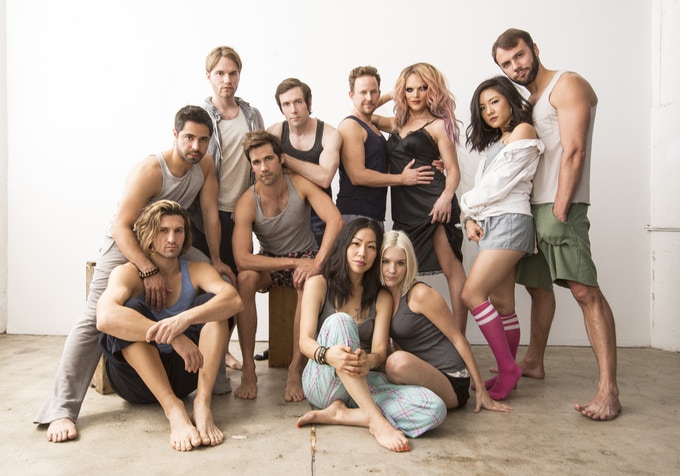
Eastsiders is an LGBTQ+, dark comedy series created by Kit Williamson that follows the turbulent and endearing relationship between Thom (Van Hansis) and Cal (Williams) as they grapple with issues from infidelity and trust to roadblocks in their respective careers as a writer and a photographer. The show also branches out to explore the relationships of their Silver Lake, Los Angeles friends, including Kathy (Constance Wu) and her boyfriend Ian (John Halbach) celebrating their six-month anniversary, making it Kathy’s longest relationship but Ian’s shortest and Quincy (Stephen Guarino), a gay club promoter, and Douglas (William Belli), a drag queen, sparking up a dynamic relationship.
This upcoming season will mark the final installment of the series and have the characters confront the hidden truths within their relationships, from answering questions on how love and commitment manifest into a long-term relationship, to examining the challenges of marriage.
Last week, Downtown Magazine attended a special screening for the new season and had the opportunity to sit down and chat with a few members of the cast, discussing the progression of the show since season one and the success found in crowdfunding the entire series.
Downtown: What do you hope your fans and viewers are going to get out of this season?
Kit Williamson: “For me, I hope that people enjoy a fully realized arc. I hope that they feel that every character’s journey is completed. One of the many reasons that this is the final season is that I believe good stories have endings, and I want to leave all of the characters in a not necessarily a happy place, but in the right place for the journey that we’ve seen them go on for the last seven years.”
John Halbach: “I’m so grateful for everyone for following along with us since 2012. And I hope that we can give everyone who’s been so loyal and amazing and supportive, a good, satisfying conclusion for these characters that I love as much as I hope that they do too.”
Van Hansis: “And I also just want to say that like Eastsiders has always been an ensemble show. And the last season, we went on a deep dive into certain relationships. And this one is so much more about, like, Who are these people as a community? And showing so many different types of relationships. It’s a love letter to the show.”
KW: “It’s a love letter to the characters.”
Downtown: “How is the Season 4 storyline and the way you’re ending the series compare and contrast with how you began the storyline originally in Season 1?”
KW: “The characters have grown up a lot over the last seven years, from being just complete and total methods to sort of having their shit together. But just because you have your shit together in your life doesn’t necessarily mean that you’re going to have your shit together in your relationships. And it’s important to depict that, that relationships are hard, no matter what stage of life that you’re in.”
JH: “The ensemble has grown so much. In the beginning, there were five main characters, you know, there’s what 20 main characters now. *laughs* It’s a much bigger, broader world with different stories and different representations and different relationships. It’s really cool patchwork quilt.”
VH: “Yeah, but there’s also a total through line from who these people were in Season 1 to who they are now. Even if like, we haven’t seen some of them for a couple seasons, like coming back into where their lives are now is really exciting. And it’s also exciting to see that like, everybody is different. Jeremy (Matthew McKelligon) is in a place that I never thought he would be in and seeing somebody like him occupy that space is really exciting.”
Downtown: “How have you seen your show fit into this bigger picture of telling queer people’s stories in more nuanced and complex ways?”
KW: “I think being an independently produced series affords us the freedom to tell stories that are a little bit off the beaten path and to represent characters that don’t necessarily fit into an easily understood box. And when you get into depictions of LGBTQ+ characters on network television, especially, they tend to be flattened, one-sided, and often fall into the tropes of respectability politics, with 2.5 kids and a white picket fence in the suburbs, because they’re trying to make these characters palatable to as many people as possible. But the humanity of these characters is just as valid as the humanity of these kinds of characters that I’m talking about. And we need all kinds of representation, we need representation of LGBTQ+ characters that are flawed and complez, and we need to allow them to fuck up their lives and relationships. Because there is catharsis in that. There is validity in that kind of storytelling as well. We need to represent the full spectrum of the human experience, because that’s what we are as LGBTQ+ people, we are every kind of person, we just happen to be LGBTQ+.”
VH: “I would say one thing that’s really amazing about Eastsiders is that our bottom line is so low, because we’re not an expensive show, we’re a very cheap show. We don’t have a lot of money to work with, with that we get to tell our story in a way that I think that if there’s a ton of money behind it, there’s a bottom line that’s higher. And I think that’s why we outlasted shows from fancy networks, because we haven’t taken much to tell the story. And therefore, the risk is less. So for somebody like that, to be behind us, we get to play a little bit more. Which, you know, it sucks that we don’t have the money that we would love to have. But I guess the flip side of that is that because we don’t have money, we get to play.”
JH: “There’s only been a handful of cases really in the history of television. I think that something really special about ours is that you get to see Thom and Cal in a loving, long-term committed open relationship over seven years and I don’t think I can think of another show where you’ve seen that. There’s been a lot of like wacky three-some episodes or it happens once in a thrown-off way.”
VH: *mocking voice* “What did we do?”
JH: “I remember like David and Keith had a three-some on Six Feet Under but it was just one episode.”
KW: “I put a nod to that in Season 2 actually with the coffee scene.”
JH: “So I think that’s something that stands out about Eastsiders.”
Downtown: “How have how have the characters you play on the screen affect your interpersonal relationships in real life?”
KW: “I think everybody assumes that the show is completely autobiographical, which is hilarious because it’s never autobiographical in the ways that people assume it is and often autobiographical in the ways that nobody assumes. Thom and Cal are not Kit and John, but obviously, as this visible gay couple making this gay show people kind of assume that it’s just our life story put on the screen.I don’t know. How has it impacted your life, darling?”
JH: “I don’t know if it has because my character is so close to me. I mean, it’s written for me by my husband so I don’t know that it has. Except in that I love the cast and I love the crew. And we’ve created a family making the show together. So in that way, it certainly has. But I don’t know if it has affected the way that I behaved as a person in the world.”
VH: “I think as far as my character, we actually talked about this, Kit has put a lot of himself into Thom as well. So it’s not like the Kit and John relationship. Like, Tom is the writer. Kit’s a writer, Kit’s the creator. Kit always has a million things in the fire and that’s one of my favorite things about him. But as far as my personal life, I don’t know, I guess the only thing I can think of is I’ve made some friends that I think I’ll have for life, I hope I have for life., You know, being a part of the show and if they share some of their lives with me, based on how they write for me, that’s an honor.”
Downtown: “You’ve had so much success with crowdfunding the entire series of your show, why do you think your show was so successful in doing so? And do you recommend that more shows should be crowdfunded, esp. as it relates to telling more queer narratives?”
KW: “I really recommend crowdfunding for any content creator, but I think that you need to come to the table having produced something independently and self-financed something first, so that you can provide a proof of concept. You’re not just asking for handouts, you’re asking to continue something that you’re already doing. I believe in crowdfunding, especially for projects like ours that are on unlikely to get greenlit by a traditional studio or network. And that’s one of the reasons why I’m continuing my own crowdfunding journey on Patreon. I’m extremely inspired by people like Amanda Palmer who has over 10,000 patrons on Patreon. Willam has over 4,000. You see, these creators who are creating unconventional work get embraced by the crowd because I think that we have a thirst and hunger as an audience, especially as a queer audience, for unique stories. And mainstream media is not known for its uniqueness. They’re known for getting on the bandwagon well after ideas have taken hold in the public consciousness. So for people who try to be on the avante garde, for people who try to innovate and create new ideas and put new ideas out there and really stick their neck out as storytellers, crowdfunding is an amazing place to be. And I am so grateful to have forged, meaningful and lifelong friendships and relationships with people who I met because they were supporters of my work. Like Jen and Jeff Sarabock, who are here today who began as crowdfunding contributors in Season 1 and are now executive producers on the third and fourth season of the show. And now we’ve become close friends. So it’s amazing to just open up your work, your life. You open yourself up to the goodwill of the internet, amazing things can happen.”
Downtown: “Lastly, do you have any advice for any aspiring screenwriters, actors, and anyone wanting to be in the industry to do what you’ve done? Especially as it relates to creatives in New York City?”
JH: “Yeah, I would say to just make something and get it out there. We meet people all the time who say they want to make a show and then wait. You’ve tried to sell it to HBO and try to sell it to Netflix and sit on it. If you can sell it to HBO or Netflix, great and let’s celebrate you. But I think that you’re probably more likely to find success in sharing your story if you just get out there and share it yourself. I mean, I’m so glad that we ended up on Netflix, but we would have not ended up on Netflix if we hadn’t started out on YouTube. And it has been a journey. So I would recommend that, make it and get it out there.”
KW: “Yeah, almost no one sells their first project HBO or Netflix. Almost no one comes out of the gate with the first idea they’ve ever had, the first thing they put pen to paper becoming a televison show. You’ve got to just create and that begets more creation, more success. And I’d say as it pertains to people in New York City, in particular, New York is actually very independent film friendly, very guerilla filmmaking friendly. We have an episode in season three that we shot almost entirely in New York or primarily in New York. And if you’re shooting on a skeleton crew, you don’t actually have to get permits to shoot and a lot of places in New York, you can go out there with a camera operator and a sound mixer and you can make some beautiful art because you have some incredible, timeless, unique places to shoot in New York City. So just get out there and fucking do it. You have no excuse. Your project can look like a Woody Allen film. Not that I’m endorsing Woody Allen. Though, Annie Hall was an important movie for me, I’m not currently endorsing Woody Allen. But I am saying that you can get out there and make things and take advantage of the artistic community in New York City because it’s it’s incredibly vibrant and unlike any other place.”
Seasons 1, 2 and 3 are available for streaming on Netflix right now. Make sure to catch up with the series before the fourth and final season premieres this summer!
Layleen Polanco, a transgender woman who was set to be released on the 13th, died mysteriously in her Rikers Island cell.
By Michael Izquierdo
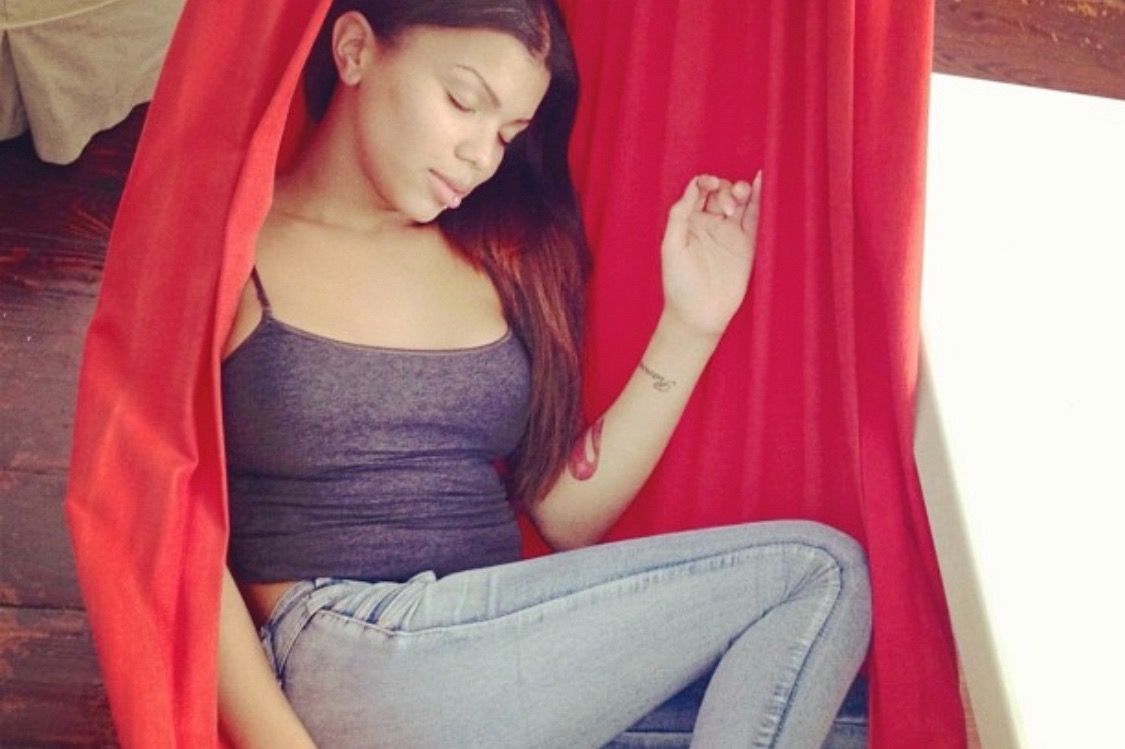
A crowd of hundreds gathered around outside in Foley Square Monday afternoon to demand justice for the death of Layleen Polanco Xtravaganza, a 27-year-old Afro-Latinx trans woman, who was found dead while imprisoned at Rikers Island. Polanco has now been listed as the 10th reported death of a trans woman in the U.S. this year.
According to the New York Post, Polanco was found unresponsive inside her jail cell at the Rose M. Singer woman’s facility on Friday afternoon. Medics on the scene tried to revive her for about an hour before she was officially declared dead.
“Any death in our custody is a tragic loss, and we are looking into how this happened,” a Department of Corrections spokesperson said. Polanco was reportedly placed in a housing unit within the facility as it was meant to reduce violence against trans and gender-nonconforming individuals.
Polanco was arrested on April 13th after allegedly assaulting a cab driver in Harlem and being in possession of a controlled substance, The Root reports. Her bail was set at $500. Polanco was set to be released on June 13th according to a GoFundMe account set up by her sister, Melania. The GoFundMe was set up to assist with funeral costs and has now surpassed its goal of raising $9,000 by raising over $12,500 as of this morning.
Even in the midst of the fog that clouded the scene, many supporters for justice persisted to come out and stand in solidarity with the trans community. Those that came out to the event included the many families of Polanco, notable transgender activists, and co-sponsors of the rally such as New York City Anti-Violence Project, Black LGBT Alliance of New York, Decriminalize New York, New York Transgender Advocacy Group, Transgender Law Center, Sylvia Rivera Law Project, Voices 4, New York City Anti-Violence Project, and many more.
At 6:05 p.m., the rally began when organizers started to chant “What do we want?” and the audience responding with “Justice!” This continued with, “When do we want it?” and a response of “Now!” Until ultimately ending in “If we don’t get it…” the crowd roared in response with “Shut it down!”’
Image taken from Facebook, courtesy of the New York City Anti-Violence Project
One message that was echoed at the event was a demand for justice as it related to a full investigation. This message was first mentioned in the Facebook event post made for the rally, saying “we demand a full investigation into the death of Layleen Polanco Xtravaganza and transparency with [the] community.” This comes after the DOC previously stated they were investigating the death but there was no cause of death issued out.
Members of Polanco’s family and their lawyer, David B. Shanies, discussed that a week and a half prior to her death, Polanco was in the hospital and had a history of experiencing seizures, although that wasn’t the cause of her hospital visit. Shortly after being released from receiving care, she was allegedly put into solitary confinement.
Just a few days ago, Mayor Bill de Blasio announced a monument would be in motion to dedicate two pioneering trans activists, Marsha P. Johnson and Sylvia Rivera, for their legacy and contributions to the trans community and LGBTQ+ movement as a whole. “We are sending a clear message: we see you for who you are, we celebrate you, and we will protect you,” de Blasio said at the announcement. Polanco’s family responded to this action in a statement demanding answers following Polanco’s death, stating “the city failed to protect Layleen, and now it is trying to sweep her death under the rug. We will not allow it.”
Polanco, also known as Layleen Xtravaganza, was a member of the legendary house-ballroom community’s House of Xtravaganza, which was founded in 1982 and popularized after the 1991 cult classic documentary Paris is Burning. She was known for walking the category of realness at balls. At the event, her daughters stood alongside the crowd and spoke a few words of her memory.
Indya Moore, an actress from the hit FX series Pose – a show exploring the 1980s/1990s ballroom scene in NYC, spoke a few words at the rally. She discussed how they were both members of the House of Xtravaganza, how much she looked up to Polanco as a role model, and the impact she had on Moore’s life.
Moments after the rally ended and died down, some protestors took over the streets of NYC in respect to Polanco. NYPD arrived on the scene and tried to repress the marching from protestors, but the protestors resisted all attempts to restraints.
“This tragic loss of yet another member of the trans community comes just days after the start of Pride season,” the original Facebook event post. “There is no Pride to be had while trans folks continue to face an epidemic of fatal violence.”
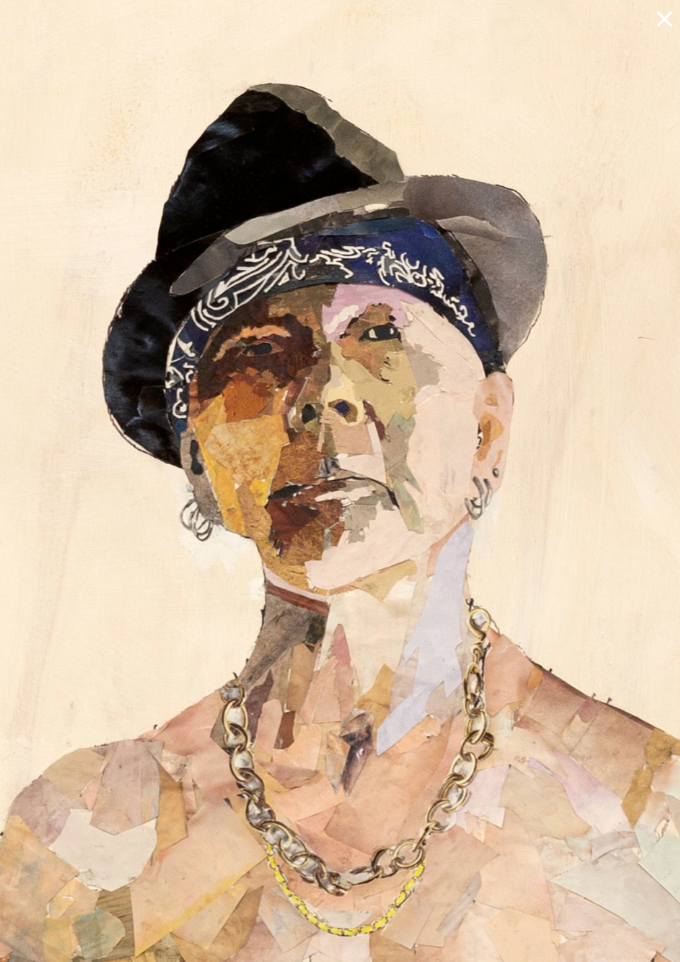
In a society that is obsessed with youth and where mature women are often invisible, the artist Jo Ann Block is challenging these constructs with her work at her pop-up exhibition, ‘Queer Before Queer,’ at the Leslie-Lohman Project Space in SoHo this weekend.
Her intimate portraits of butch lesbians pay homage to those who have fought so hard to bring the LGBTQ community to the place it currently occupies in American life, while also challenging the popular notion of the female form as “erotic, vulnerable and alluring.”
Using collage as her medium, Jo Ann’s images queer the representations of conventional male qualities of triumph and strength with their unfaltering postures. They triumphantly claim who they are and own the space they inhabit.
The exhibition opens Friday evening, September 21 from 6-8 p.m.at the Leslie-Lohman Project Space on Prince Street in SoHo, but the artist has also planned what will be a lively and thought-provoking conversation with with queer activists Carmen Vasquez and Lisbeth M Melendez Rivera on Saturday afternoon, September 22 at 3 p.m., as well as an artist’s talk on Sunday, September 23 at 4 p.m.
“My intention is to have others see what I see … fierce lesbians who are still a force to be reckoned with even with physical signs of age!” she says.