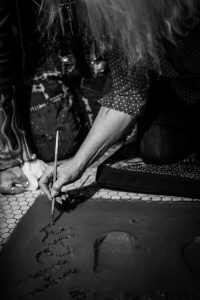
Just ask Jimmy Webb, owner of rock boutique I NEED MORE, tucked on the quieter side of Orchard Street in the LES. Webb, immediately recognizable by his punker coiffure, tattoo sleeves and bright smile, had the wonderful idea to immortalize the footprints of his friends Iggy Pop and Debbie Harry in concrete.
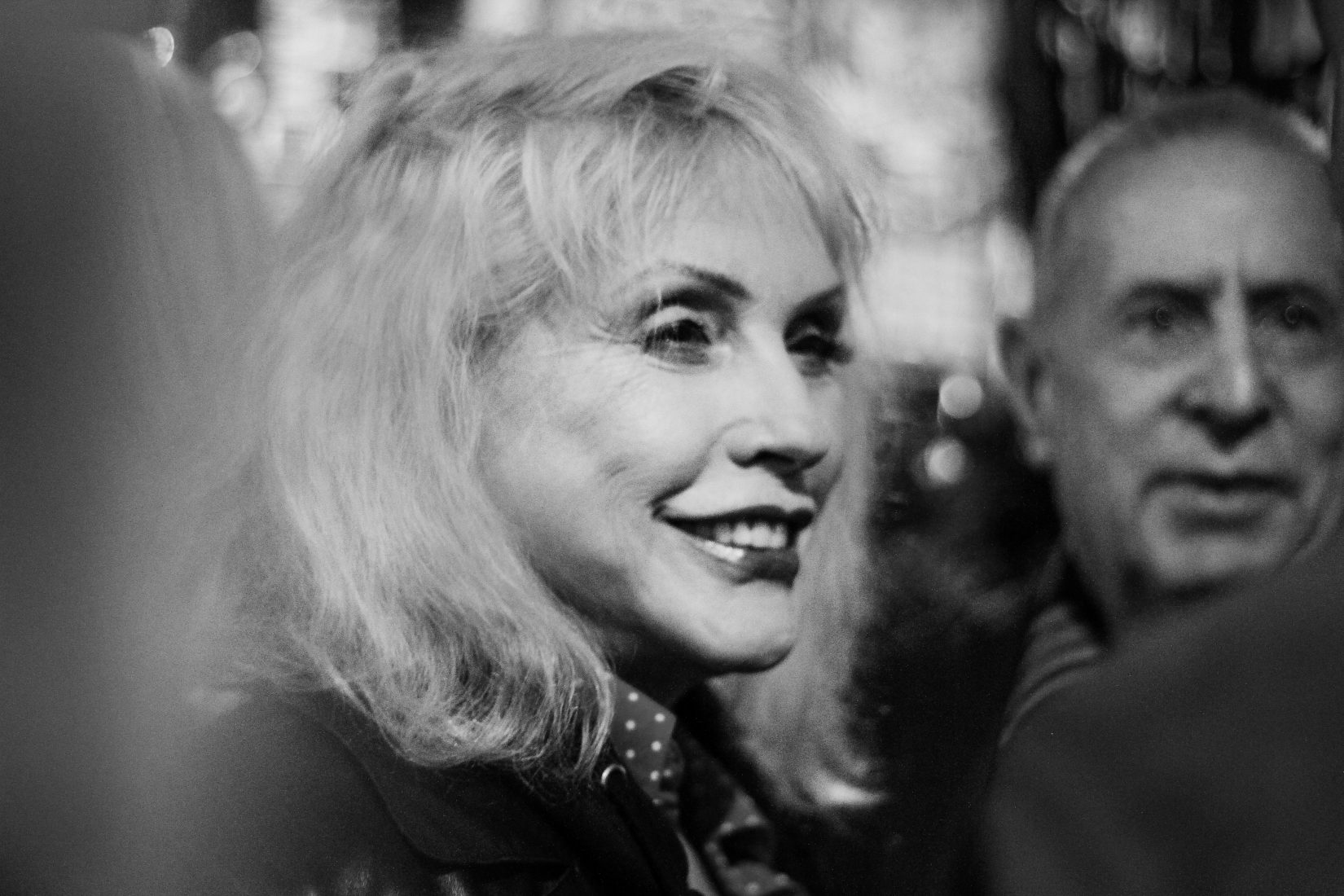
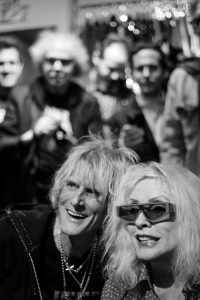
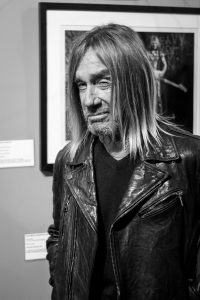
On 24 February, he made it happen. With Iggy Pop in town for the Tibet House Benefit, Webb and his army of PR, managers, and the fantastic I NEED MORE staff welcomed Iggy Pop and Debbie Harry to the hot pink emporium with unbridled enthusiasm. As each person filed in one by one, they were greeted with cheers and big hugs from Webb.
Iggy and Debbie are immortalized on either side of the counter. Iggy was reluctantly persuaded to not cannonball into the concrete, although one could understand the temptation. Debbie gingerly stepped in wearing a pair of gorgeous red heels, and embellished her autograph with her signature X’s. Both pairs of shoes were given to Jimmy Webb as gifts, and will be on display at I NEED MORE, along with other amazing music memorabilia, unique pieces of art fashion, rock photography, and merch from your favorite bands.
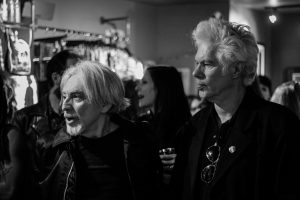
Amongst the fans in the crowded shop were Henry Rollins, Duff McKagan of Guns N’ Roses, Chris Stein, David Johansen and Mara Hennessey, famed photographers Bob Gruen, Godlis, Bobby Grossman, Roberta Bayley and Mick Rock; Danny Fields, Jim Jarmusch, Amos Poe, Sara Driver, and Nina Alu.
Boom for Real: The Late Teenage Years of Jean-Michel Basquiat opened tonight at IFC Center, in Greenwich Village. The documentary, by filmmaker Sara Driver, explores the artist’s early life on the streets of New York, and how the city, and the time, shaped his work. Driver, who was part of the Downtown scene, says, “I wanted Basquiat to be a touchstone throughout the film. I saw what Alexis Adler had saved from when she lived with him. After Hurricane Sandy I went to her house and she said, ‘Sara I just pulled all of this stuff out of storage and I have all this work of Jean-Michel’s, his writings, and his notebooks.'” Driver continues, “She had forgotten about it for 30 years. And then I remembered I had a box of clothes he painted. When I looked at all of it I saw it was an insight into him and his experimenting and finding his way as an young artist, but it was also about our city.”
Boom for Real, the Late Teenage Years of Jean-Michel Basquiat
The film is a visual time capsule of pre-gentrification New York in the 1970’s and early 1980’s when fires burned in barrels and on street corners, and buildings lay empty and gutted. The middle class had flown to the suburbs, and the streets were empty and silent. Punk rock, art, and performance coalesced and formed at places like CBGBs, Max’s Kansas City, the Mudd Club, and Club 57.
Through rare film clips, photos, and interviews with former and current denizens of Downtown such as Fab 5 Freddy, Jim Jarmusch, Alexis Adler, Diego Cortez, and Lee Quinones, among others, the film explores Basquiat’s beginnings through the lens of the scene in Lower Manhattan, where new ideas about art, music, performance, film, media were percolating and merging together to create a new type of artist. Says Driver, “Everyone was a musician. Everyone was into painting, everyone wanted to write poetry. All mediums feed each other. Basquiat wasn’t unique in that, we all did it.”
But, Driver says, this film is not meant to be a nostalgia trip.
It is, instead, a modern-day fable, with lessons for today’s gadget-driven world. “The city was dangerous so you had to have your antennae up all the time, to see where the danger was lurking. And you were always observing things on the street, which also gave you these incredible gifts. But I don’t think people are observing as much today. They are wrapped up in their phones.” She continues, “Basquiat spelled out his feelings through SAMO, and in his paintings and writings. He observed everything. It’s astounding how relevant he is. The work is still as fresh as it ever was. Great artists are always prophet-like.”
She continues, “I remember going to a Carlo McCormick show at Grey Gallery, about Downtown from 1974 to 1984. That was the first time I saw it all together: performance art, films, poetry. He had gathered everybody, and I realized how much we germinated each other.” She says, “We really fed each other and our love of ideas. Diego Cortez said it was like café culture in the 1920’s in Paris, or Berlin in the 1930’s. You had different generations. Burroughs, Ginsberg, Robert Frank, The Beats. The jazz musicians, Ornette Coleman and Thelonius Monk playing down the street. Our heroes were here.”
Filmmaker Sara Driver
Although the city has changed dramatically, Driver is hopeful about the new generation of artists and activists. “History is cyclical. You have the March for Our Lives kids, and the kids that do the Spring Break Art Show, who last year took over the abandoned floors of the Conde Nast building. They had 150 curators and 400 artists of all ages and everyone was so thrilled to be in one space together. It’s the grandchild of the Times Square Show. I think there is hope and possibility. It won’t be the same, but it’s still happening. Kids are going to cause the change. We did it, and they will too.”
NOW PLAYING: See Boom for Real: The Late Teenage Years of Jean-Michel Basquiat at IFC Center, 323 Sixth Avenue; 212.924.7771; www.ifccenter.com