As many of us are purposely spending more time at home these days, a rising demand for interior enhancements has hit the market. And with it, comes a natural uncertainty of how to approach a design upgrade when the end goal is to work with a professional. Simply picking out luxurious new bedding or that plush sofa you have been pining after doesn’t always do the job.
But lucky for us, many designers have been working with remote clients for quite a long time—and it’s much more personal and collaborative than most would expect. To get a more rounded out picture, we spoke toTurett Collaborative’s Director of Interior Design Jessica Shaw, who shared some insight on the benefits of working virtually with an interior designer.
5 Benefits of Working with an Interior Designer in a Virtual World
by Jessica Shaw
See Your Desired Design in 3D Before You Commit
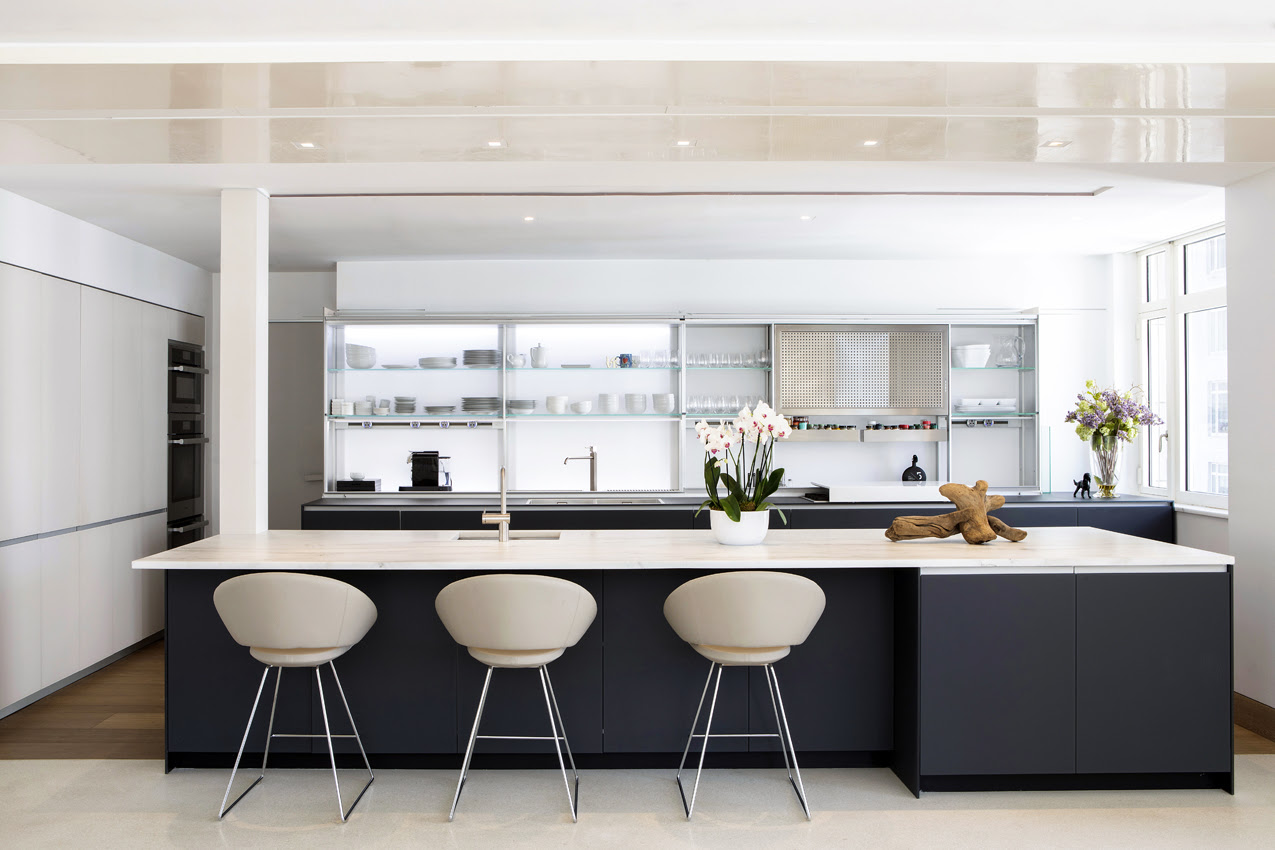
Designers are known for creating floor plans and mood boards, but a virtual world offers the opportunity to find a designer that can go beyond these traditional models. Search for one who is skilled in using 3D design software and can provide you with a virtual walk-thru of your newly desired environment. What was once a costly endeavor, now has become a competitive edge. Not only will you be able to see what your space will look like without having to “imagine” it, but this also allows you to adjust the design without making costly purchasing mistakes.
Access to an Informed Personal Shopper
While “shopping” has always been part of the job description for a designer, it’s more important now than ever before. If you are not comfortable going to a store, a designer can go for you. They also have access to private furniture lines and advanced knowledge of their products. Your designer can provide honest insights you need to make informed product decisions. Plus, they have access to samples and can send you materials and finishes for you to review without you ever having to leave the comfort of your own home.
The Mute Button is Your Money & Time-Saving Friend
Being proactive by prepping for your virtual call and utilizing the mute button can not only streamline the design process, but it can save you time and money when dealing with hourly rates. Whether you are the only one involved in the decision-making process or are consulting with others, use the mute button on virtual calls to honestly discuss in real-time what you like and don’t like for a more efficient meeting. Be sure to also ask your designer to send you the floor plans, ideas, and furniture suggestions before your call so you can review them and make more thoughtful decisions.
Insider tip: Since designers are visual people, share your design style, and taste digital by creating a Pinterest board or PPT presentation of images. This will not only save time on the initial design meeting, but it gives your designer a true sense of your taste. Be sure to also virtually introduce the people who live/work in the space and include information they might not otherwise “see” virtually. IE: if your partner is 6ft tall and you are 5 ft tall, that might not come across on camera and can be important when specifying furniture or hanging artwork. Or if your partner or kids are notorious for spilling on the rug every morning, make sure your designer knows to get a rug that’s easy to clean up. An added benefit: you might learn something new about yourself, your partner, or your family member.
Throw Out Your Calendar & Say Hello to a Scheduling Guru with a Deep Rolodex of Skilled Tradespeople
It is more important now than ever to know who is in your home, when they will be there, and to fully understand the installation, new construction, and renovation process. Does the painter come before the electrician or after? How do you know if the painter is a professional? As COVID-related issues have delayed this process, a skilled designer knows how to manage people and get them in and out in a more timely manner. Plus, since they have connections to and regularly work with professional installers, tradespeople and subcontractors you will get on the schedule faster.
Gain a Safety Advocate & Enforcer
It can be challenging and uncomfortable to enforce others to wear masks, shoe booties, gloves, and apply social distancing in your home. To take the burden off of yourself, your designer can act as your safety advocate and voice any concerns you might have. This could include implementing cleaning and safety protocols to ensure you are comfortable from start to finish.
Design by Daun Curry; Photograph by Emily Gilbert.
Since we are all adjusting to working from home these days, we tapped award-winning interior designer Daun Curry for some advice on how to balance it all. As Daun is currently operating herdesign business from home, she’s reflected on the importance of making your space a sanctuary while in quarantine.
Interior Designer Daun Curry’s 5 Tips to Turn Your Home Into a Sanctuary While in Quarantine
“A sanctuary should be all about personal preference and livable luxury. There is nothing more comforting than curling up in fresh new bed linens or on that lived-in piece of furniture you have loved for years. It’s surprising how much the energy of your space can change by simply livening it up with warm, earthy palettes, and infusing it with soothing scents, fresh-cut flowers, and cozy throws. Below are some of my easy-to-accomplish tips on how to turn your home into your own personal sanctuary.” – Daun Curry
1) Throw Family Dinners and Brunches
Design by Daun Curry; Photograph by Emily Gilbert.
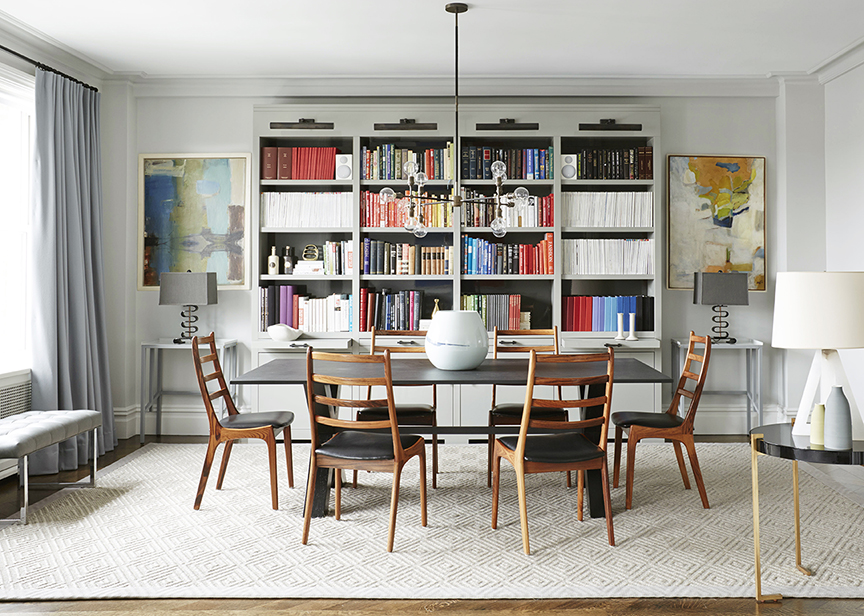
A formal dining room or any dining vignette and/or breakfast nook in a home can form a beautiful focal point, but it needs to be used! One of life’s great pleasures is bringing people together to share a meal, and it’s a shame that so many dining rooms sit unused. It’s tempting to keep a dining areas perfectly styled and photo-ready, but as we are all confined to our homes, it has become increasingly apparent how important breaking bread with family can be. A beautifully designed room really shines when it’s full of people to bring it to life—this is the time to be grateful and share with the ones we love. You won’t regret the wonderful memories you will create.
2) Invest in Quality Textiles
Design by Daun Curry; Photograph by Emily Gilbert.
Nothing lets a room down more than tired linens and textiles, and a great way to kick off a fresh new vibe is by giving your bedroom a refresh with new bed linens. You spend a third of your life sleeping, so don’t cut corners with this—go with serene neutrals and interesting textures for a calming and restorative night’s sleep.
3) Declutter the Closet
Design by Daun Curry; Photograph by Emily Gilbert.
It might sound like a cliche, but our new home-bound reality offers the perfect opportunity to give your closet some long overdue attention. We’re not talking about a once-a-year purge—but a commitment to maintaining a closet that’s chic, organized, and a place where you actually feel inspired when getting dressed in the morning. There is nothing more important than keeping to a healthy routine right now—and that involves getting dressed for the day. An organized closet will offer a simplicity of ease in selecting an ensemble to start the day off on a positive note.
4) Bring in Biophilic Design Elements
Design by Daun Curry; Photograph by Emily Gilbert.
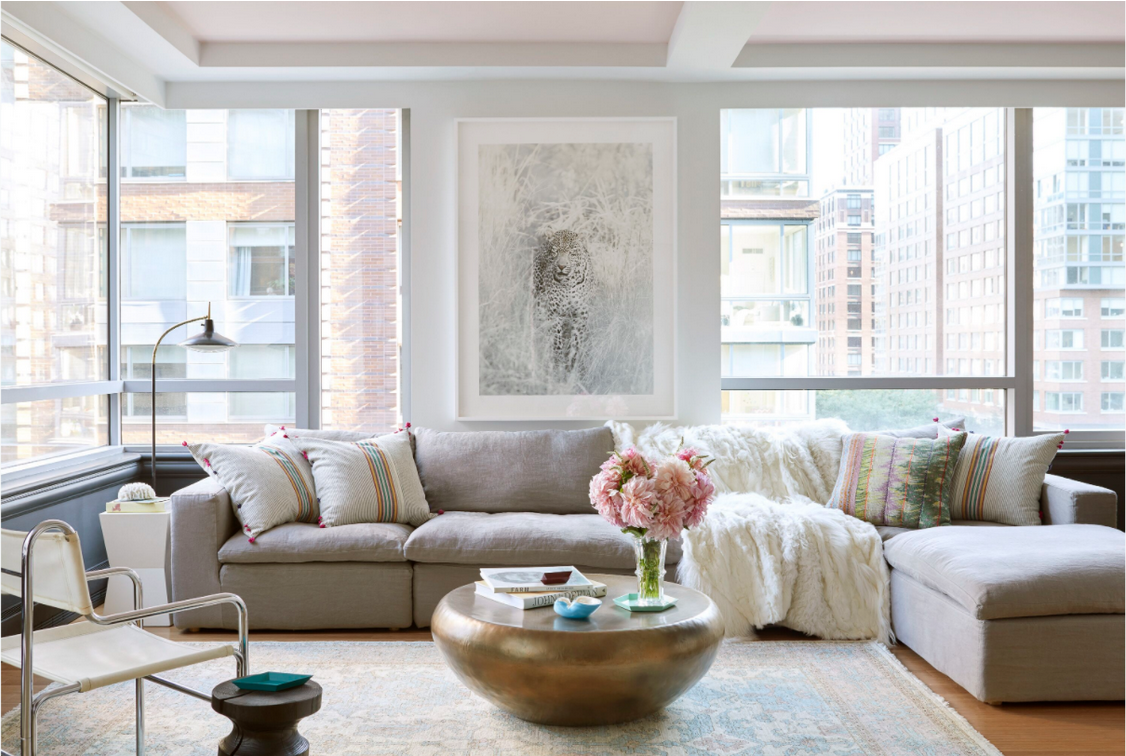
Incorporating nature into the built environment is a primary tenet of biophilic design. With an increased focus on wellbeing and the effect on the population at large by incorporating these design elements, it’s no wonder the trend is here to stay. While we don’t necessarily have every option available to us, the simplicity of adding in fresh cut flowers—even wildflowers—adds a surprising amount of cheer. In addition, don’t take the benefits of natural light for granted. A sunlit room can make all the difference—open your curtains! Rearrange your workstations so that the sunlight pours in and livens up your mood and your space. There is a reason light therapy lamps are made to combat winter blues and darker days—light helps your body stay in tune with the natural rhythms designed to inform your internal body clock.
5) Aromatherapy
Design by Daun Curry; Photograph by Emily Gilbert.
There are a multitude of studied benefits in regards to the use of aromatherapy to enhance your psychological and physical wellbeing. From including droplets of serenity-enhancing essential oils, such as lavender on pillows, linens, and in baths, to the aroma of fresh flowers and scented candles, it’s all about creating an inviting ambiance to promote relaxation and rest.
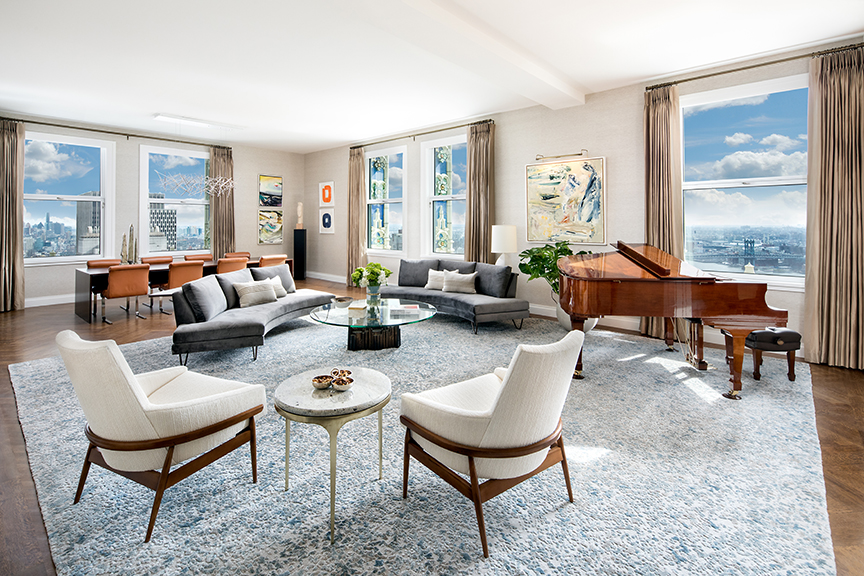
New York-based interior designer Alan Tanksley, a leading practitioner in residential design, has drawn acclaim for his versatility and attention to detail. Tanksley’s architectural approach to interior space planning combined with an organic approach to the comforts of every day living, is renowned. Below, Tanksley shares some of his design inspiration, project loves, and what he considers luxury.
Design by Alan Tanksley.
Downtown: How
would you describe your design style?
Alan Tanksley: My interiors reenvision luxury; luxury not as a remote idea, but as a quality and forethought imbued into a space. I believe in creating environments that enhance one’s life experience with an organic approach to how people really live every day. I’m not interested in creating a stage set, but rather places for people to live with comfort, function, and beauty all having equal consideration. I often draw from a transitional design aesthetic.
Downtown: Can you pinpoint the moment or period of time when your first knew you were a designer? What inspired it, brought it on, etc.?
Design by Alan Tanksley.
AT: Throughout my youth I thought that architecture was
my future. After two years studying the field, I felt disillusioned and adrift.
Only when I looked into the interior architecture and design courses did I find
my true love and unearth a natural talent. It was a field I had not even
considered prior to this.
Downtown: What
has been one of your favorite projects to date and why?
AT: A favorite project is a summer house we’ve just
completed in Little Compton, Rhode Island. This is our fourth project for the
same family. The project is especially wonderful as we’ve become close over the
years, enough so that we can collaborate in shorthand the way that partners in
any good relationship do.
Downtown: I am obsessed with the foyer in your Urban Manhattan project. Tell us about the mix of materials, accessories, cold and warm designs that made this room so striking!
Design by Alan Tanksley.
AT: Given my background in traditional design, it would have been an easy task to follow the given cues of a black-and-white marble floor and the corresponding traditional details by producing a complementary classic room. Instead, the client’s casual lifestyle called for a more eclectic approach where a mixture of furniture styles and periods were both accommodating to the busy family’s comings and goings, and reflective of their desire to express something fresh and modern.
Downtown: What
do you most love about commercial work? About residential? If you had to pick
one, which would you choose and why!
AT: I have been fortunate to work primarily on the high-end side of residential work for the majority of my career. In fact, my commercial work thus far has mostly been with developers of residential condominiums where I have advised on floorplans, chosen materials, fixtures, etc. and designed all public areas such as lobbies and amenity spaces. My experience in designing for how people live at home informs my work as I design for people in intimate public spaces.
Design by Alan Tanksley.
Downtown: Tell
us about your approach to the River house Condominium. It is the epitome of
chic!
AT: River House was a unique opportunity due to its open
skyline views, abundant southern light, and the peaceful movement of the Hudson
River. The room that we positioned the work space in sits like the prow of a
ship making its way to the distant city with the open living space giving the
feeling of a grand state room on a luxury liner.
Downtown: What
is a good rule of thumb (it can be your own) that you would offer to fellow
designers trying to make their mark in the commercial world. How do you keep
the design elegant yet uniquely chic?
AT: Listen, take notes, research similar projects, ask questions without hesitation (even if you feel you’re expected to already have the answers), and speak with assurance, but not arrogance. As far as elegant and chic, look to other designers past and present. Study how they’ve achieved exceptional results. The goal isn’t to copy, but to find inspiration for the project at hand.
Design by Alan Tanksley.
Downtown: Tell
us about your furniture designs. When did this come about and why? Where can
our readers purchase your pieces?
AT: Most of the furniture I’ve designed has been
specific to projects and has not been offered publicly. However, the
development of my “Genesis” line of acrylic tables for Plexi-Craft
has been very well received, as have my tables designed for Desiron. Both showrooms are
located at 200 Lexington Avenue.
Downtown: What have some of your
favorite project designs been and why?
AT: My favorite projects are those for clients who understand that they play a very important role in the success of their project through open and timely communication, collaborate with and share ideas fluidly, and understand the complex and imperfect processes involved in both design and construction. With those things in place we’re set to create something uniquely suited to their needs and aspirations.
Design by Alan Tanksley.
Downtown: If
you could design your own dream home, where would it be and what would it look
like?
AT: I am a New Yorker for life so my dream home would be
located here, preferably (moderately) high up in a south facing central
location set back with terraces on three sides. The interior look and feel
would be similar to what I’ve designed for many of my clients and the exterior
would finally afford the opportunity to have the dog I’ve yet to own in the
city.
Downtown:
What are some of your go-to furniture sources?
AT: The industry has evolved greatly due to worldwide internet access. We rely on all the various platforms when resourcing projects. That said, there’s nothing like going out and seeing finding things first hand, up close and personally so to speak. Shopping the trade resources at the Design and Decoration Building and 200 Lexington are common resources, as are the wonderful antique shops located around New York City. The hunt for just the right piece, or pieces, remains the great thrill when designing something remarkable
Design by Alan Tanksley.
Downtown: What are you working on now?
AT: I have a project in the Woolworth
Tower Residences, where I was originally commissioned by the developers, Alchemy Properties and Sotheby’s
International Real Estate, to create the premiere model apartment. It’s a
sensational apartment with city views that can’t be beat. We’re completing a
summer house in Little Compton, Rhode Island, a glamorous classic apartment
overlooking the Hudson River, and several others in the region.
Saudah Saleem’s interiors are infused with saturated color, cultural elements, engaging artwork, and beautiful designs melding styles, textures, and finishes. Saleem recently offered her talents to Housing Works’ Design on a Dime, creating a visual masterpiece that brought attendees back, again and again—including this Downtown editor. Below, Saleem agreed to share everything from her process and design style to tips for fellow designers hoping to soon embark on their first Design on a Dime Experience. We hope you enjoy the conversation as much as we did!
Design by Saudah Saleem for Housing Works’ Design on a Dime.
Saudah Saleem.
Downtown: Was this your first time creating a booth for Housing Works’ Design on a Dime? What was the experience like for you?
Saudah Saleem: This is actually my second year participating as a featured designer at Design on a Dime. Housing Works provides designers such a unique opportunity to share our time, talent and design perspectives as part of this amazing annual fundraising event. We spend months, days, and hours of planning to make our design visions come to life for this one very special evening.
As a returning designer, my experience was vastly
different from my first time around. This year, because I knew what to expect,
I found myself able to relax a bit and enjoy the process even more.
Downtown: How would you describe your booth? What was the theme?
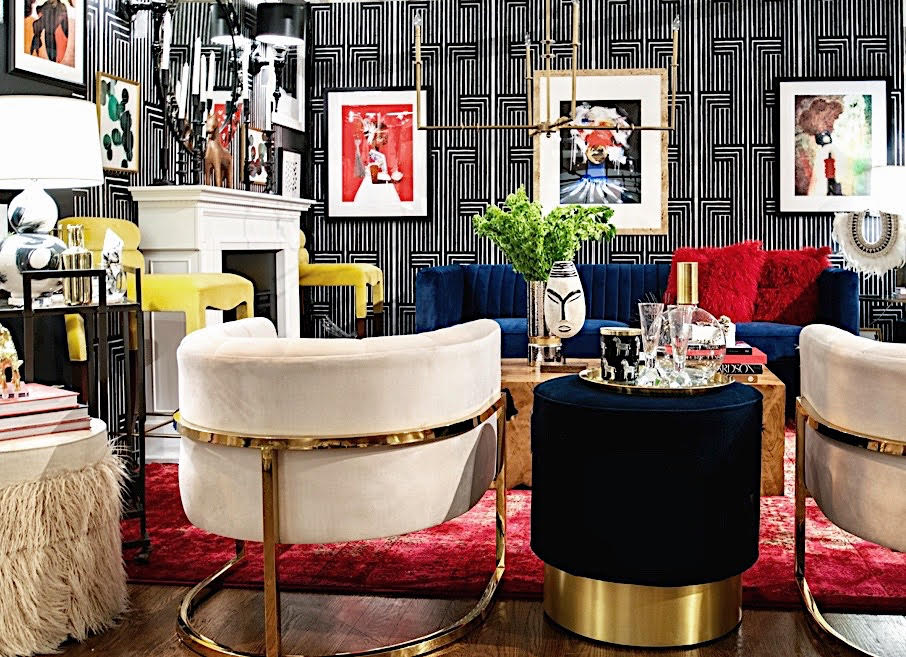
SS: My booth combined my love of bold color, cultural influence, and fashion with pattern, luxe textiles (like velvets and furs), and sophisticated detailing (did you see the tufting on the sofa or the Mongolian fur on the custom stools?!) to create what I called Soulful Luxe. My goal for the vignette design was to incorporate touches of culture, luxury and a sense of style in a way that was eye catching and reflective of a contemporary lifestyle.
Design by Saudah Saleem.
Downtown: We fell in love with everything about your booth. Where did you source everything included?
SS: Wow, thanks so much! It was a real joy to put together. I loved blending African-inspired and modern luxe styles to create this look. I used vendors and brands that I absolutely love. What made creating the space even more special was the fact that, with the exception of a few vendors, all of the pieces I used were from either woman owned/operated or minority owned establishments.
Design by Saudah Saleem for Housing Works’ Design on a Dime.
Downtown: Can you tell us about your design style and how it influenced how you approached your booth?
SS:
My signature design style infuses vivid color and a mix of both traditional and
eclectic design elements to create an aesthetic that is inspiring and sophisticated
yet approachable.
The spaces I design almost always include
bold color, a mix of finishes, and a nod to fashion and culture. While that
typically makes for a fun and visually interesting space, this year I wanted to
show that using these elements could also create a space that is quite
sophisticated and luxurious. I wanted to
create a space that mixed modern luxe with curated and cultural elements. Creating
a well-appointed space is more than just adorning it with cool pieces, it’s
identifying those pieces, their story, their history/meaning and then using
them in a way that connects with people.
Each unique piece I used in the vignette was curated not only for its
physical beauty but also for its ability to resonate and invoke a feeling or
mood.
It’s also very important to me to design
spaces that are not only beautiful to look at but also comfortable and
accessible. I think I accomplished that here.
This year I was blessed to work with some amazingly generous donors. From the fabulously rich red Karma rug donated by Nourison to the gorgeous blue velvet channel back Aviator sofa and cream and gold accent chairs provided by TOV Furniture, my vignette was filled with bold statement making pieces. The stunning graphic black and white print Mitchell Black wallpaper was a crowd favorite and provided the perfect backdrop for the artwork by Brooklyn Dolly and Rachel Stewart Art. Sprinkled throughout the vignette were more nods to culture and fashion, like the stunning oversized African feathered necklace and African glass beads from Chairish, a diverse collection of fashion books that included CHANEL, Seventies Glamour, and TheCoveteur, and the pair of Mongolian fur-trimmed ottomans from TUFT.
Design by Saudah Saleem for Housing Works’ Design on a Dime.
Downtown: How would you describe the process to a designer who has not yet participated? What advice would you give them?
SS: The whole process can be a bit daunting initially but the benefits of participating are beyond rewarding. There are lots of logistics to be considered (contacting vendors, arranging shipments and deliveries, creating a cohesive look from goods donated from a variety of sources). My advice to incoming designers would be that although, as designers, we pride ourselves on staying true to our initial visions, with DOAD, you have to allow yourself to be flexible in the process. We rely heavily on the generosity of donors. As such, there may be times when the product you want to use is not available. Those instances require you to think on your toes and stay flexible. Always keep in mind a plan B or an alternative look you can execute.
Advice:
Start soliciting for donations early on. If there’s an item you really want to feature in your vignette or a brand you’ve been dying to work with, go for it! Reach out to vendors and share Housing Works’ amazing mission on ending AIDS and homelessness. You’d be surprised how many people want to give back and are willing to generously donate to such a great cause.
Think ahead! As you’re planning the install of your space, try to anticipate both the best, and the worst case scenarios. Always have a plan B!
Pay attention to the deadlines!
Don’t hesitate to reach out to designers and creatives who’ve previously participated.
Design by Saudah Saleem for Housing Works’ Design on a Dime.
Downtown: Can you share any of the war stories in getting the booth actually set up? How much time do you have to get it all done?
SS: Although we plan for months leading up to the event, we have a very short period of time to actually install our spaces. We are allotted a total of 13 hours to essentially transform a completely empty box into a fully designed, curated, and styled space. So, it’s a bit chaotic, and it’s definitely an all-hands on deck sort of situation. In addition to calling in help from tradesmen, I called on friends to help with everything from unboxing to making runs to the flower district for fresh florals.
Downtown: Do you have any behind the scenes stories you can share?
SS: I was born and raised in NYC, but I’m based in Maryland now. So juggling the everyday duties that come with being a mom of five and the logistics of planning a long distance design and install with so many moving pieces can be a challenge.
Attendees get to see the perfectly styled spaces on opening night, but know little of the behind the scenes craziness that goes on just hours before the big night. During the install, I was fielding calls from everyone from the school nurse, my toddler wanting to FaceTime me to show me her latest unicorn drawing, to my college-aged daughter looking for advice on what to wear. Meanwhile, the wallpaper installer informed me that the wallpaper I’d been waiting all day to have put up wouldn’t be able to happen until day two of installation, throwing a monkey wrench in my plan to have the bulk of the installation of my space installed on day one times right?
Design by Saudah Saleem for Housing Works’ Design on a Dime.
Downtown: What is one item in your booth you wish you could have taken home yourself?
SS: Oh my goodness! There were so many pieces that spoke to me in my vignette. I would love to have taken home that gorgeous blue Aviator sofa from TOV! The rich color, tufted detail and the Lucite feet were giving full on luxe vibes.
Downtown:
What were a couple of your favorite booths and why?
SS:
Designers really bought their A game this year! There were so many amazing thoughtfully
designed spaces. A few personal favorites were:
Halden Interiors (serene, modern organic feel with cultural influences and so much texture)
Bailey Li (Her space spoke to the truly transformative powers of a designer’s ingenuity. Her custom-painted metallic finished walls were stunning. Every piece in her space had a unique story of its own yet she was able to visually connect each piece to one another.)
Beth Diana Smith (the way the lighting twinkled against the pieces in her vignette felt absolutely magical. Loved the jewel tones juxtaposed against those brass accents.)
Design by Saudah Saleem for Housing Works’ Design on a Dime.
Downtown: Would you participate in DOAD again and if so, why? Do you have an idea of what your booth would look like?
SS: Absolutely! It’s such an amazing opportunity to give back. I haven’t started working on what my booth will look like next year, but you can always count on me for a modern mix of color, pattern, and curated global pieces!
Downtown: What has been one of the most rewarding aspects of participating in DOAD?
SS: One of my favorite parts of this event is the beautiful
relationships cultivated with other designers as we work alongside one another.
Yes, we are all focused on presenting our best, but there is also this
collective spirit of support and comradery amongst the designers. Lending one
another a helping hand, sharing resources, giving styling advice, and even
splitting dinner orders are all part of the experience that makes this event so
memorable.
The reward is two-fold. There is
the beauty in the bond that’s created with fellow designers, and then there is
the reward in know that this beautiful experience we’ve been blessed to
participate in directly impacts and benefits the lives of so many. This year,
more than $1.1 million was raised in support of this effort. Talk about giving
back!
Downtown: What is next for you?
SS: It’ll be a busy summer. I’m currently working on client projects in NYC and Virginia as well as planning to do another design event in NYC in August.
Design by Saudah Saleem for Housing Works’ Design on a Dime.
Eve Robinson is a New York-based designer known for creating gorgeous interiors that stand the test of time. Her work features traditional elements infused with a modern aesthetic where textures, finishes, and colors meld in the most elegant manner possible. Robinson recently designed one of the most stunning rooms on view at this year’s Kips Bay Decorator Show House. Below, Robinson gives us a glimpse into how it all came about.
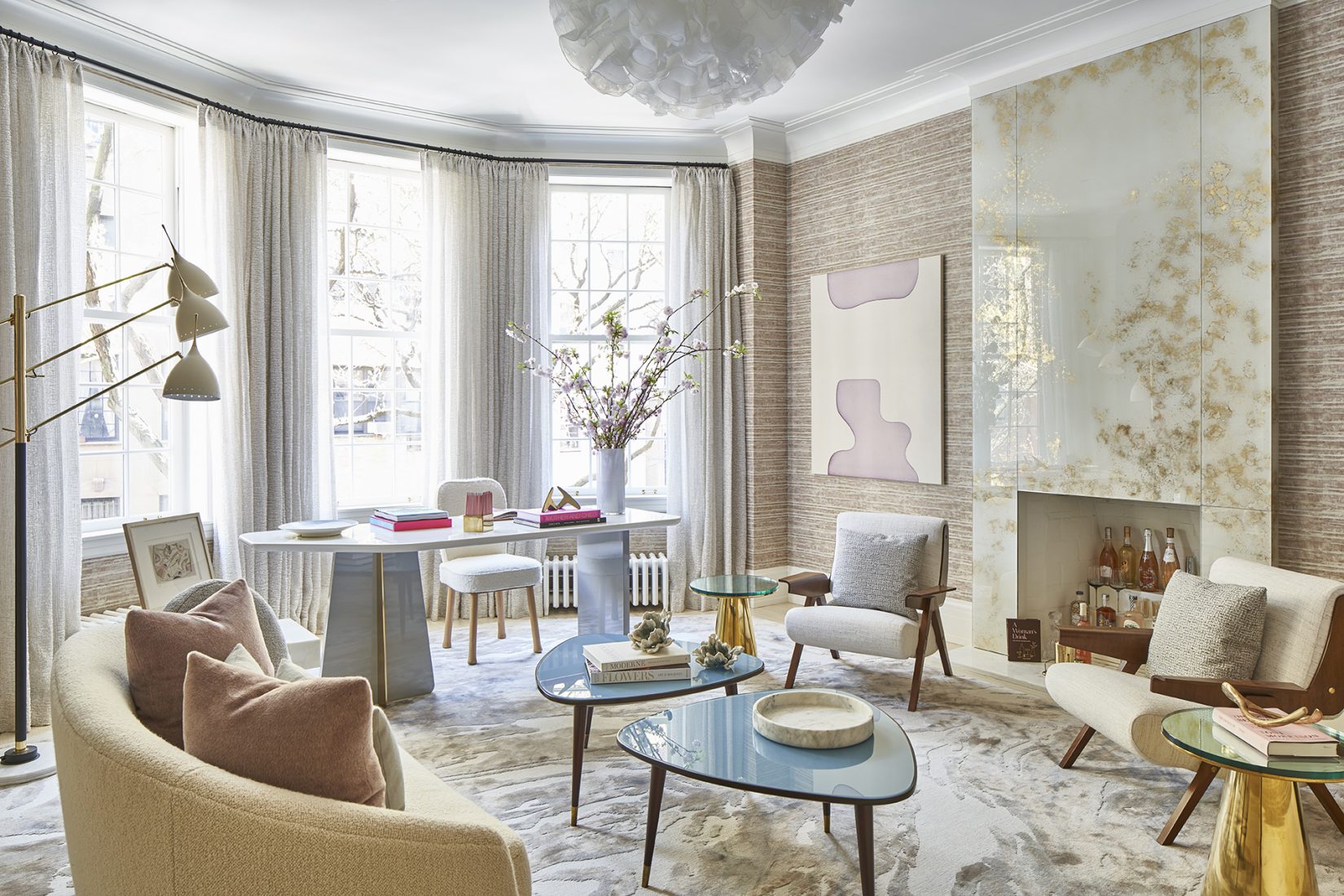
Eve Robinson: Calling my space ‘A Room of One’s Own’ pays homage to Virginia Woolf’s renowned feminist novel and also expresses my design philosophy. Interiors need to reflect the people who inhabit them. They become rich, interesting, and dynamic when one’s personality is shared and celebrated. I wanted to create a woman’s sanctuary that was soothing, sophisticated, and peaceful. The room was meant to support a woman who juggles the responsibilities of work, family, and home. The desk provides an area to do work, the seating area is perfect for entertaining friends, or even a great place for quiet reflection. It is a room that I wanted her to feel special in.
Downtown: Can you describe the space prior to your remodel?
ER: The room was in dire need of a renovation. I removed some
dilapidated shelving and concealed closets in order to have more wall space to
display art. The old moldings had no style and were not in keeping with the elegant
feeling I knew the room could have. The fireplace had a terrible shelf above it
as a makeshift mantle.
Downtown: How many times have you participated in the show house at this point, and what keeps drawing you back?
ER: This is my 8th time participating in the Kips Bay Show House. It is a tremendous honor to be included. I love the challenge of composing and curating an interior in such a short time frame with the added bonus that it will be on display for all to see immediately after. It is one of the most exciting (and stressful) projects a designer can do! I also am deeply committed to the Kips Bay Boys and Girls Club’s mission.
Design by Eve Robinson; Photograph by Marco Ricca.
Downtown: The color palette was exquisite. How did you achieve such impact with such subtle hues?
ER: I loved the idea of composing a soft color palette of
creams, blushes, and greys because they exude femininity. I believe they are so
successful because of the mix of different textures and the use of luminous
materials.
Downtown: We love the addition of metal accents and gold leaf, tell us about why you brought these accents into the space?
ER: The accents of gold throughout the room create an
ethereality that adds importance. The gold reflects light and sparkles. The
gold leaf cascades down the fireplace chimney breast and is subtly echoed in
the wallpaper. Many of the pieces of furniture have bronze or brass accents. The
gold is a wonderful tool that helps guide your eye around the room.
Downtown: Please tell us about the fireplace surround, it is absolutely gorgeous!
ER: I asked Miriam
Ellner to create the Verre Eglomise on the fireplace chimney breast. Gold
leaf was applied to back painted mirror in an asymmetrical pattern. The
lightness of the back painted mirror with the gold leaf creates a magical
union. Miriam’s work is stunning, and it was a pleasure to work with her.
Downtown: We fell in love with your custom pieces—especially the desk and sofa. What was your inspiration, why did you choose those particular shapes, and what do you feel they add to the room?
ER: I wanted the furniture to evoke a woman’s sensuality and thus chose for the desk and settee to have soft curved lines. A vintage settee I found served as our inspiration for the new design. I liked the idea of using polished lacquer and metal on the desk to create luminosity and richness. The bright white top with soft edges has a grey base that is balanced by a bronze leg.
Design by Eve Robinson; Photograph by Marco Ricca.
Downtown: Where are the wallcovering and curtain fabric from? We love that they are neutral yet add some rich texture!
ER: The wallpaper is from Alpha
Workshops. It has a wonderful layered texture and glow. The curtain fabric,
like all the fabric in the room, is from Holly
Hunt. It is soft, nubby, and deliciously inviting to touch.
Downtown: What was your crowning achievement with this room?
ER: I am so grateful to my team and the vendors who seamlessly
collaborated with me to create this wonderful room. In addition, I am really
proud of how the room captured the ethereal strength of women. It is a warm,
inviting, luminous space that anyone can feel special in. We all deserve to feel
good!
Downtown: Tell us about the seating, the side tables, rug, chandelier, and the coffee tables! We can’t get over how well they all go together.
ER: I fell in love with the pair of vintage Gianfranco
Frattini for Cassini lounge chairs
from Donzella. They have an unusual and
pleasing wood arm design that is ultra chic. R & Company’s Pierre Yovanovitch
Frog Chair has the most yummy boucle alpaca fabric on it. R & Company also
represents Jeff
Zimmerman who created the incredible hand-blown glass chandelier that is
both feminine and bold. The “Glacier” rug by Crosby Street Studio is wool
and silk and completely dreamy. I love mixing cotemporary pieces with vintage
ones. The thick white marble topped end table by KGBL has delicate bronze legs. The vintage
pair of triangular coffee tables that I found at Van Den Akker Antiques have the
original lovely blue glass tops. Bernd
Goeckler graciously loaned me the stunning pair of elegant brass-and-glass
end tables that flank the armchairs by the fireplace.
Downtown: Where did you find the art piece—it looks like it was made for the space!
ER: I was very fortunate to collaborate with the art
consultant, Wendy Cromwell of Cromwell Art
LLC. We have assembled a powerhouse of fantastic artists. Flanking the
fireplace are a pair of paintings by Landon Metz available through the Sean Kelly Gallery. Behind the sofa are two
black-and-white floral photographs by Bing Wright who is represented by the Paula Cooper Gallery, and on
the south wall is a stunning luminous purple painting by Kate Shepherd through Galerie Lelong.
Downtown: What did you most love about participating in this year’s Kips Bay Show Decorate Show House?
ER: I love the good feeling that was generated among the designers who participated and the happiness that it created for the visitors. Most of all, I love that the proceeds to this fabulous event go to help the Kips Bay Boys and Girls Club in the Bronx. It is an incredible organization that changes the lives of children by providing meaningful after school programs.
Downtown: What were a couple of your favorite rooms and why?
ER: That is a really tough question because there are elements in every room that I really adore. Here are just a few: The Fromental wallpaper in Young Huh’s room was masterful. The decorative wall treatments in the stair by Gluckstein Design and Richard Rabel were really impressive. Jeff Lincoln’s room featured amazing art furniture. I loved the gold pieces that adorned the fireplace in Cullman & Kravis’ dining room. Sheila Bridges’ design of a dog sitting room was incredibly clever and witty. Studio DB created a wonderfully inviting moody space. I could go on and on.
Downtown: Where can our readers find your room?
ER: Images of my room can be seen on my website www.everobinson.net and the Show House is open seven days a week through May 30th.
Alexander Doherty is a New York City-based interior designer with a global palette and workrooms in Paris. His interiors exude a classicist’s touch with an eclectic eye born from a worldly upbringing and a love for travel. We were so taken with his wide and diverse range of projects that we convinced him to sit down with us and give us a glimpse into his world of interiors.
Design by Alexander Doherty; Photograph by Marius Chira.
Interior designer Alexander Doherty; Photograph by Marius Chira.
Downtown: Tell us about your worldly upbringing! How did it influence your design style?
Alexander Doherty: I was born in the United Kingdom and educated in England, France, and Italy. Often I travel to Southeast Asia, Latin America, and Europe. Paris and Amsterdam are where I especially enjoy sourcing my collections of decorative art and finding inspiration in various galleries. Many of these artworks find their way into my designs as standout pieces. I also have a wonderful curated roster of dealers and reliable craftsman in Paris that I often use for my projects—everything from stone fireplace mantels to Danish rosewood cabinets. Through my upbringing and my travels, my love of art has evolved, bringing both elegant additions to my client’s homes and a historical point of view.
Downtown: How did you fall into interior design? Was it a lifelong dream or a path that became open to you?
AD: Prior to launching my
interior design firm in 2007, I was national sales manager for a leading
American fabric company and was responsible for expanding their business
throughout the US and Europe. Through this position I was introduced to many
design professionals and creatives throughout the industry. I was inspired to
pursue my own interior design career despite no formal training. I saw a gap in
the interior design world for an aesthetic that encompassed traditional,
elegant, and immaculately detailed homes but with a simple and modern day
touch. I found one of the things people mistakenly think is that anything
original must be wonderful. Which it’s not. There were as many horrible things
made in the 1900s as there were even three years in 2015. I began decorating
several friend’s homes and from there my work expanded through word of mouth.
Design by Alexander Doherty; Photograph by Marius Chira.
Downtown: How would you describe your aesthetic and approach to design in general?
AD: My aesthetic is modern traditional—I love creating timelessly elegant interiors while always employing harmony and restraint. Built on the traditions of classic design, each of my projects are tailored to reflect and enhance the client’s style of living. Through editing, refining and distilling the elements of each room, the result is an understated, luxurious, and sophisticated interior.
150 Charles Street; Design by Alexander Doherty; Photograph by Marius Chira.
Downtown: Do you think historical knowledge should play into design? If so, how and why?
AD: My work always
incorporates solid historical perspective. It is key to be able to give a nod
to the past while utilizing modern elements. It is the mixture of what is old
and new that gives a space character.
Downtown: What are a couple of the most beautiful projects you have worked on? Can you describe them to us?
AD: For 150 Charles
Street, I imagined a very subdued series of rooms, which brought strong
uptown architecture from ages gone by to a contemporary downtown location.
Getting the proportions right made everything feel organic and authentic. We
used a lot of very luxurious fabrics from England and France, so to contrast
with the softness, I wanted to introduce stone and metal. I rely heavily on
strong architecture, which allows me to go very eclectic in my choices for art
and furniture.
The Ardsley, design by Alexander Doherty; Photograph by Marius Chira.
We
spent six months converting The Ardsley from a dark, poorly laid out apartment
into a light, calming sanctuary. The previous owner had stripped the original
1920s features, instating an ’80s vocabulary that just didn’t make sense here.
There was also some very weird use of space, including wasted corners and
massive columns. We restored the architectural integrity of the apartment and
transformed the apartment into a serene, pale space off set by
beautiful woodgrain.
Downtown: Why do you think travel is so important for a designer?
AD: Traveling provides an authentic opportunity to learn about and observe different cultures, environments, styles, and trends that can influence a designer’s work. New sights and sounds will revitalize your creative process and open your mind to new and fresh ways of thought.
Downtown: We love your approach to color. Do you have a certain philosophy when it comes to color?
AD: If a space is too harmonious, it becomes snoozeville. There is no better way to add character and personality into a space than with color. I like what are referred to as ‘dirty’ colors. Using muddled-up reds, grays, and blues, it allows art to jump off the walls.
Design by Alexander Doherty; Photograph by Marius Chira.
Downtown: What is your absolute favorite project you have ever worked on and why?
AD: Obviously there are aspects of all of my projects that I absolutely love. Sometimes it’s just one room and sometimes it’s even just one view within a room. However, if I were to say which project I categorically love from start to finish, I think it would probably be my most recent project in The Eldorado.
The building is from an era I’m extremely fond of and the volumes within the apartment are architecturally extremely harmonious. I jokingly told the client that I was designing the apartment for myself. We created many of the pieces in our workshop in Paris and sourced remaining items in galleries both in New York and overseas. I’m very passionate about art and so to work in an apartment with so much wall space was extremely gratifying. The mechanical challenges were numerous and yet I feel we overcame them creating a flawless home.
Classic Eight, design by Alexander Doherty; Photograph by Marius Chira.
Downtown: We unexpectedly fell in love with Classic Eight. Considering that color combination is usually too much in many cases, how did you achieve such an alluring, inviting space with primary colors?
AD: The space itself is extremely
neutral. The walls and rug are both a soft grey and the upholstery moved from
navy to various shades of blue and grey. I do not believe that art should be
color coordinated with the furniture but, in this particular space the vibrancy
of the three colors in the painting added a somewhat necessary jolt of energy
to the otherwise tranquil environment.
Downtown: We love how and where you integrate art. Where do you source it and how do you feel about living with art?
AD: I source all of the art I use from Paris
because the quality is unparalleled. Art brings life into a room and is an expression of self. It is a beautiful way to reflect your personality into your space. Also, surrounding yourself with beautiful works from others is inspiring and reminds us of what is possible.
Design by Alexander Doherty; Photograph by Marius Chira.
Downtown: What are you working on now?
AD: Among several projects, we
are working on a glass tower with 360-degree-views of NYC— all glass—a very
challenging project that is lots of fun.
Downtown: If you could build and decorate your own home wherever you wanted, where would it be and what would it look like?
AD: There are two places I dream of buying a home. One in the Luberon in the South of France and one in Jaipur in the Indian state of Rajasthan. In the South of France, I can imagine owning a bastide surrounded by boxwood topiaries and many pea gravel courtyards. In India, I would love to restore an Havali using many of the wonderful trades still to be found in northwestern India. One would use all the rich tonal colors from that region of France whilst the other a riot of Hindustani colors.
Design by Alexander Doherty; Photograph by Marius Chira.