Categories
Business Dining Featured Restaurants Travel

The Flavor of Adapting in a Strange Age: The Original Hotdog Factory

Around the corner from the Liberty Bell, The Bourse Food Hall is adapting to COVID-19. The 130-year-old commodities-exchange-turned-food-hall, well known as a gathering for good food and good variety, has removed their chairs from indoor tables. If you want to sit and eat, there are tables set up outside. The lines are marked with social distancing diamonds that read “STAND ON THIS JAWN” (jawn is Philadelphian for “thingamajig”). 

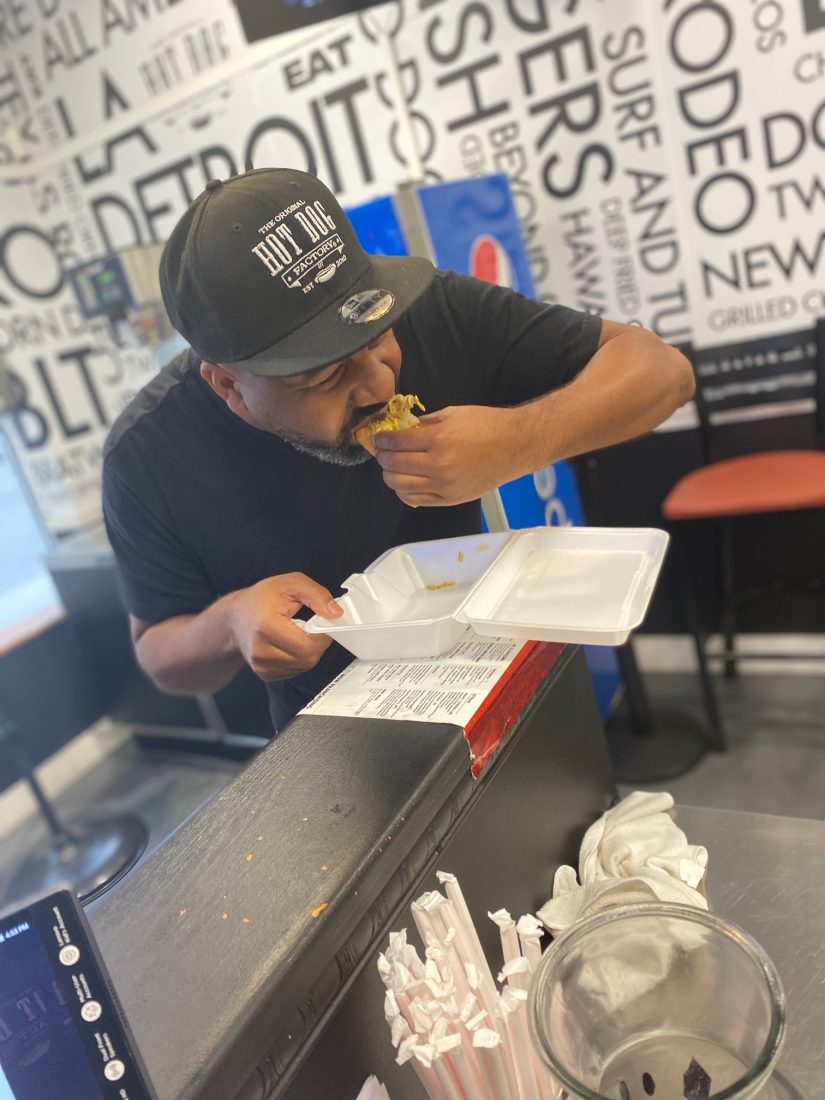
Last week, The Bourse is welcomed a new vendor: The Original Hotdog Factory. Any other time, this might be routine. The Original Hotdog Factory franchise specializes in a wide variety of hotdogs alongside wings, fried Oreos, and other delicious goodies. During COVID, though, opening any new food location is an aberration. But for franchise owner Aaron Anderson this is nothing new.

Anderson is quiet and friendly. For a man with a dozen successful businesses, including 5 Original Hotdog Factory locations in Philadelphia, he carries himself like a mom and pop shop owner–a modest smile, quiet voice, and focused attention. But he dreams big, including owning a sports team (his first choice is the Philadelphia 76ers) and running for office in Philadelphia.

This is the second Original Hotdog Factory that he has opened since COVID hit Philly. 

Technically, it’s his third. 

Anderson opened his fourth location in February of 2020, right before COVID. The location focused on indoor seating, and the sudden desertion of foot traffic drove it to extinction in weeks. So Anderson turned around and reopened in a new location in March. This time, he focused on takeout. He reached out to first responders and offered meals and services with organizations like the Ronald McDonald House. And the store thrived.

If other companies want to survive, he says, they’ll have to adapt. “Pivot in everything that you know. You’ve just got to change it…Stay focused no matter what. Times are definitely tough, but if you stay strong and sustain (then) on the other side is success for sure.” It is also, he says, about who has your back, including yourself. “It’s just being self-motivated and having a strong support team that keeps you motivated, and that’s always got your back.”

The next time you’re in Philadelphia, you can stop by The Original Hotdog Factory in the Bourse Food Hall, now open for business. Top options to check out at the Bourse location include the Surf n Turf (beef hotdog with crab meat), Fire Dog (loaded with peppers), and a damn fine Coney Dog. You’ll have to leave the Hall to eat them, but it will be worth the extra steps when you order the deep-fried twinkie for dessert. 

Categories
Art Culture Featured

THE CONCEPTUAL THINKER: Creating Change Through Art

This article was printed in an earlier issue of Downtown Magazine


DAN V. ANDERSON SEES MOVEMENT between shapes and colors by removing the boundaries of his own creativity through hyper-visualization. “I take all forms of composition: light, form, and energy, and create a constantly moving dynamic expression; there’s nothing static about it,” he says. “Each one of my works gets into a new theory—like order within chaos.”

A New Jersey native, Anderson began his creative journey at the age of seven when his mother convinced him of his talent through a coloring contest that she created. He “won” and was awarded his first coloring books along with a box of crayons. From that point on, Anderson was driven to pursue art, and eventually ended up with multiple scholarships to Syracuse University.

THE CONCEPTUAL THINKERAnderson does not consider himself to be a sculptor or a painter; he is inspired by Salvador Dali, and considers himself to be a “conceptual thinker.” He attempts to solve the perplexities of the world though his artistic expression, and to shine light on what others may not notice.

“I see a form in my mind that seems animated and must be translated and interpreted as another form,” Anderson says. He coined the term “supreme abstraction,” which is his own unique method of painting. His mind is constantly decoding, breaking down, and rebuilding compositional concepts to fully grasp and “feel the energy” of the various forms of matter. In Diffusion Series #6, Equilibrium Dissolve (above), he used sculptural canvas to create movement, energy, and resolution. Anderson says, “This relationship of light, shadow, and form in a physical evolution is what is captivating to observe. The viewer gets to witness the sculpture as an interconnected byproduct of the very factors that define its own dimension, only to be redefined by its very own compositional elements.”

The Dream Continued, which will be revealed on World Peace Day, is Anderson’s current project and philanthropic focus. The sculpture is inspired by Martin Luther King, Jr.’s “I Have a Dream” speech and focuses on the concepts of equality, opportunity, and unity in relation to education and the aspirations of children. The sculpture consists of four children playing a game of jacks. One of the girls holds a sphere that symbolizes the Earth and emphasizes that children hold the future of our planet in their hands. Each jack is a collection of four fists, symbolizing resistance to inequality. The Dream Continued is the first of six projects titled The HEX Factor. Each project will bring awareness to a world issue, and focuses on spreading feelings of “equality, unity, and love that reinforces the bettering of a global society.” The project will be accompanied by The Dream Continued XOXO bracelets and other purchasable works of art, the sales of which will be used to benefit philanthropic organizations. DT dvande.com

Categories
LA Music

Raising The Bar With Hank Fontaine

Hank Fontaine is ready for revolution.

On New Year’s Day, the Los Angeles musician trumpeted a public call for creative reformation:

You’re a creator? Awesome. Create. This idea that you’re supposed to be a living, breathing “brand” is gross and someday it’s gonna look really dated. Whether you paint, write, sing, or complain, own that it’s an extension of your soul, not “content” that you excrete on a daily basis like a robot. Can we please make 2020 the year that branding dies?

Hank Fontaine is a powder keg in an industry bursting with soul peddlers thirsty for fame and power. He refuses to be contained. He is content to stay honest to himself, his whims and his art. Conformity does not interest him in the least. Fontaine is a restless soul forever on the prowl for inspiration, both a citizen and student of the world. Ten years of touring as a guitarist; a lifetime of transience. For the time being, he’s existing in Los Angeles, eschewing that plastic Stepford Wife nonsense.

Living in the City of Angels has only deepened his determination to bring authenticity to his craft, encouraging others to follow suit. He walks the walk. After four years as half of sibling duo The Fontaines, touring with Dylan Gardner and Valley Queen, and resetting his path with a couple of singles, Fontaine released his first solo album in 2019: The Globalist Agenda or: Welcome To Frogtown. It is an eclectic tour de force.

Fontaine’s sound is impossible to pigeonhole, and he likes it that way. There are some echoes of retro influence, particularly in Fontaine’s guitar licks, but his lyrics are firmly rooted in the 21st century experience. He effortlessly weaves elements of Harry Nilsson, early Billy Joel, Supertramp, and Electric Light Orchestra in his sound, through the filters of English music hall, New Wave, and breezy California surf rock. Although Fontaine is primarily known for his guitar chops, he is a powerful and emotive vocalist who croons, growls, whispers and fearlessly falsettos.

Photo: Alice Teeple

Hank Fontaine’s strength lies in his curious voyeurism and refusal to mould himself to a false concept. He takes that kid-in-a-candy-store approach to sound, reminiscent of Odelay-era Beck. His self-penned Spotify bio cheekily mocks the industry push to brand musicians, which he sees as a limiting force on creativity. Not a single song on this album sounds like any other, but all work together in a sonic crazy quilt as varied as the people who influenced them. The Globalist Agenda was inspired by people Fontaine met while living in the Frogtown neighborhood of Los Angeles.

“I like to pretend to be other people when I’m writing. I think that’s gonna get me in trouble someday,” he quips.

Fontaine’s love of Seinfeld shines through in his observational lyrics: always wryly wondering, “what’s up with that?” This is best exemplified in his debut single, Bad Love, which sounds like a powerful breakup ballad, but was in fact about a time he got cut off in a Trader Joe’s parking lot. “I asked, what happened to this person to make them like this?” Fontaine explains. The ethereal, forlorn Hope Don’t Leave Me Now was inspired by a compulsive lottery ticket gamber at his local 7/11.

The album was a collaboration with his friend and producer Jason DeMayo. The pair recorded all the instruments together, one at a time.

“It was a very freeing way to work that I never tried before,” says Fontaine.

Fontaine headlined the Troubadour in LA to celebrate the release of The Globalist Agenda, and then took off the rest of 2019 to focus on writing. He’s in NYC for a few months doing an artist residency, working on a new EP of songs he wrote in his hometown of Paris.

Keep your eyes and ears on this one in 2020. Hank Fontaine is just getting started.

You can purchase The Globalist Agenda Or: Welcome To Frogtown here:

https://hankfontaine.bandcamp.com/releases

You can stream it here (but consider buying it, he’s completely independent):

Can’t Give It Up Single

See More

Album of the Year: Civilian by Frank Tovey

Clan of Xymox Materializes At Le Poisson Rouge

Blake Charleton Keeps It Fresh

Christine Smith Waits On The Far Side Of A Star

Adrian Sexton Draws The Death Card

Categories
Entertainment Featured

Stephanie Monseu Q&A

STEPHANIE MONSEU Queens native and founder of Bindlestiff Family Cirkus, a New York-Based troupe, Monseu is a 25-year veteran of the circus who studied metalsmithing at FIT, became a fire-eater, juggler, stilt-walker, and static trapeze artist, and is currently the ringmaster of Big Apple Circus.

 Downtown: Name three women that inspire you, and why.

Stephanie Monseu: Three women who inspire me? Just three? It will be hard to narrow it down, but I’ll focus on three different realms. Artistically, Nina Simone has always inspired me, as she is a powerful creator who followed her impulses, honed her voice and composition skills to perfection, and used her music to talk about important human and social issues. She also lifted emerging musicians and brought them into eminence. Socially, it’s women in my adopted community of Hudson, NY who run the Greater Hudson Promise Neighborhood. Their work supports families and children, focusing on out-of-school-time learning, bringing children and incarcerated parents together in a safe and supported environment, providing young families with parenting guidance, and empowering marginalized members of our community. And personally, my paternal grandmother. She broke away from a forced camp-bound march from Nazi occupied Warsaw with three young children and her own dying mother, hiding in forests, barns, and abandoned homes. Although my grandfather had been arrested and taken to Dachau already, she never lost hope and kept moving. Long story short, they were reunited, resettling in Queens. She was peaceful. She knew what the really important things in life were. She saw terrible things, yet kept light in her spirit.

DT: What has been the secret of your success?

SM: At 50, I finally understand that I get to define success for myself. It’s not about shiny things, or comparing mine to yours or hers.  It also means knowing what I don’t know, and seeking guidance and mentorship so I can learn and grow. In this process, I’ve found fulfillment on a level that goes way beyond status and attainment.

DT: If you were going to pass on one piece of advice to a young woman looking for success, what would it be?

SM: My advice for women would be, do not subscribe to the idea that the universe is stingy. There is enough fulfillment to go around. Just because someone else has success in your field, or had a great idea first, or gets recognition for something you do too, doesn’t mean you won’t have it as well. Keep following your true self, and never be afraid to lift up another woman along the way.

DT: In the fight for women’s equality what area do you think needs the most attention?

SM: In my own world, I see women in power on the grass-roots level. We need top-down change. It’s amazing to see the number of women running for political office. I think having more women, from all backgrounds, represented in government on local and federal levels will effect long-needed changes in areas like fair pay, family leave, child care, healthcare, prison reform, as well as diplomacy, environmental policy, scientific research, and global humanitarian issues. I have hope that the culture of sexual aggression will be eradicated with more females in leadership roles. In 2019 and going forward, people who identify across all genders should be working for social and economic justice for everyone. 

DT: What are you most proud of in your career? 

SM: In my 20’s and 30’s, I was very competitive, pushy, rebellious. I looked out for my interests first. At this point, I’m seeing the big picture – strengthening others and helping them succeed makes us all better. In my capacity as a circus producer, educator, and leader at the Bindlestiff Family Cirkus, I’m part of an organization that has been a platform for artists, youth, and the circus community. And as a performer at the Big Apple Circus, I get to welcome audiences into an incredible world where they see the possibility of human achievement.

Categories
Business Featured Real Estate

From the Tallest Building to the Most Luxurious Penthouse: The History of the Woolworth Building

During the early 1600’s, European entrepreneurs were seeking new markets for their wares as well as for scarce natural resources.  In 1609, Henry Hudson was hired by the Dutch West India Company for a voyage of exploration. He came to North America and sailed up what he then called the North River, the soon-to-be-named Hudson River. Within a year, the Dutch had begun trading for furs with the Native Americans along this as well as the Connecticut and Delaware River Valleys.

It was intended as a simple trading post. At the southern tip of this settlement, the Dutch governor purchased the island of Manhattan from the Manhattan tribe and called the area New Amsterdam. However, the transaction was not a smooth one, and there was much conflict between the natives and the colonists.  Between 1626 and 1664, the main town of the Dutch colony of New Netherland was New Amsterdam. They established Fort Orange at present-day Albany to take advantage of the lucrative fur trade with the Iroquois Indians. Beginning with the ‘purchase’ of Manhattan, the town of New Amsterdam was founded as a way to help protect trading areas further upriver while providing a great port of entry.

new amsterdam map

The English took control of New Amsterdam in 1664 and renamed the area New York.  While this area was henceforth British, the Dutch applications of laissez faire economics, religious freedom and free speech had already taken root.

There are numerous examples of successful American business enterprises exhibiting this Dutch flavor, but few more so than Woolworth’s.

F. W. Woolworth was born in 1854 in the small town of Rodman, New York. Woolworth started out working for other men, most significantly, William Harvey Moore, at his store Augsbury & Moore. In the fall of 1878, Moore’s store in Watertown, New York had a counter laden with goods pre-priced at 5 cents. This was not a new idea, but was still something of an innovation. Instead of asking the store clerkto weigh out items and then price accordingly, as was common at the time, the customer helped themselves. It was quick, convenient, had a high turnover, and required fewer store clerks to operate. Woolworth realized that what worked for one counter could work for a whole store. In 1878, he borrowed $300 and opened “The Great Five Cent Store” in Utica, New York. The store in Utica failed. Undeterred, Woolworth opened a 5 and 10-cents store on June 6, 1879, in Lancaster, Pennsylvania. The shelves were stocked with attractive, but inexpensive everyday objects — pencils, napkins, coal shovels, cake tins, boot blacking, police whistles — products designed to catch the eye, but not dent the pocket book. The store was a success. Woolworth attributed this in part to “the thriftiness of the Pennsylvania Dutch.” He opened other stores. Some failed, others, like the one in Scranton opened in 1880, did not. As more stores opened, Woolworth developed a formula for identifying the best place to locate his businesses; to wit: a small town with a prosperous economy, on a busy high street, and in the commercial part of that town.


Woolworth’s eponymous stores caught on, and by 1910 F.W. Woolworth and Company had nearly three hundred Five and Ten Cent Stores, including branches on the up market Ladies Mile around 5thand 6thAvenues in Manhattan as well as seven branches in the United Kingdom.  Woolworth’s colleagues when he worked for William Harvey Moore described him as a poor salesman. He was, however, particularly good at buying and made a number of trips to Europe to look for goods to sell in his shops. While in Europe, Woolworth became captivated by the architecture he saw there. This exposure would soon influence the design of the New York skyline.woolworth building construction


The term skyscraper, according to the Oxford English Dictionary, had been around for years before it was used to describe a “high building of many stories, especially one of those characteristic of American cities.” It was used to describe tall men, race horses, sailing ships, tall hats, big hits in baseball, and even tall stories. Seemingly anything deemed lofty in stature could be called a skyscraper. The early leader in the development of the skyscraper in America was the city of Chicago. Between 1880 and 1900, a number of skyscrapers were built there, the first of which was commonly thought to be William Le Baron Jenney’s ten-story Home Insurance Building.

Iron and then steel frames made the construction of very tall buildings possible, negating the necessity of the thick masonry walls of earlier buildings. With a sturdy, yet light steel frame, buildings could be strong, tall, and elegant. It also meant that due to the relatively thin walls and increased height, a property developer might generate maximum profit from a small area of very expensive real estate. Technology at the end of the 19th century meant that skyscrapers could now be built as high as proportion would allow. A similar engineering renaissance is currently taking place evidenced by ultra slim towers taking form upon narrow footprints assuming elevations seemed impractical just a decade or so ago.

It seems appropriate that a man like F.W. Woolworth should be behind the construction of the Woolworth Building. He was keenly aware of the importance of image and brand, and he already knew where to locate a building for full effect.  Woolworth moved his operations to New York City, originally with offices in the Sun Building at 280 Broadway.  Woolworth soon decided to build his own headquarters. The man himself said that he was given the idea to build a skyscraper when visiting Europe, where he was frequently asked about the Singer Building at 149 Broadway. He realized the Singer Company had built not just a headquarters, but an international talking point. In 1908, Woolworth began talks with the Irving National Bank regarding the construction of a modest office building to house both companies’ headquarters, which would eventually evolve into the world’s tallest skyscraper, the Woolworth Building. Beginning in 1910, Woolworth began to take measures to get the building constructed, and within a few months had selected and bought a site, arranged the financing of the project, and chosen an architect.

woolworth building postcard

With City government growing and 500,000 people a day streaming across the Brooklyn Bridge on their way to Manhattan, Woolworth saw the commercial potential of the skyscraper’s location, with the building acting as a “giant signboard,” advertising the greatness of his company, and as a way to make money, leasing floors to other companies, which would in turn raise the value of his real estate.

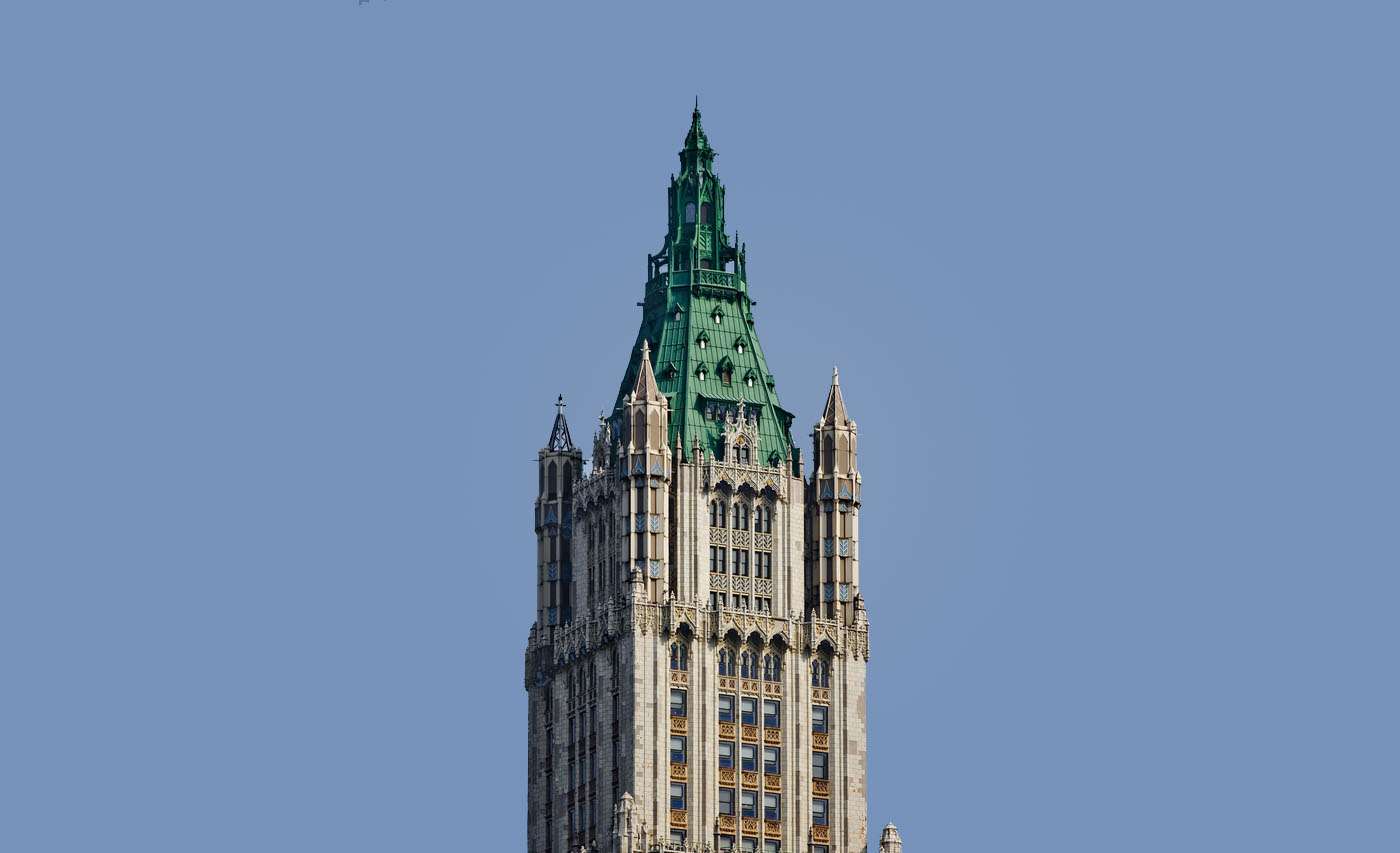
Soon dubbed the “Cathedral of Commerce,” the 60-story masterpiece was once the world’s tallest building. The breathtaking lobby contains jewel-like mosaics, filigree brass work and, hidden among the gnarled gargoyles tucked into the corners, figures of Cass Gilbert and the building’s namesake F. W. Woolworth. Woolworth, of “five-and-dime” store fame, paid $13.5 million in cash. While the lobby is no longer open to the public, the sheer majesty of the building is evident with the subtlest of glances through the front doors.  A Landmark Preservation Commission internal proprietary report in 1983 described the Woolworth Building as a 60-story skyscraper that rises 792 feet above street-level. It occupies the entire block front along Broadway, between Barclay Street and Park Place and features a 30-story tower built on a 30-story base. Its construction consists of a steel frame, designed by engineer Gunvald Aus, covered with masonry and Atlantic terra cotta and features carving and decorative motifs that are Gothic in inspiration.  It was built with a type of bracing to protect against high winds that had previously been used in the construction of bridges. It had its own power plant (a first), barber shop, restaurant, doctor’s office and swimming pool. Gilbert designed the building in a U-shape so that every office had access to daylight through one of 2,843 windows, as the corridors ran through the middle of each floor. The F. W. Woolworth Company, including Woolworth’s own marble lined office, located on the 24thfloor, occupied one and a half floors of the skyscraper until the company sold the building in 1998.

woolworth building

Today, under the architectural and aesthetic direction of Thierry W. Despont, the top thirty floors of this celebrated structure have been reimagined into thirty-three prized luxury condominium residences, crowned by the extraordinary, five-story Pinnacle Penthouse, which represents a new paradigm for penthouses in New York City.

woolworth penthouse


Categories
Business Featured Living Real Estate

Stylish Kitchen Islands That Are Perfect For Entertaining

While New York is often known for its on-the-go lifestyle, sometimes entertaining at home is just what the doctor ordered — especially in dreary weather. But you have to have the right space.

Life at home often orbits around the kitchen island. Long a place to prepare meals or mingle over cocktails, the island is arguably one of the most practical kitchen design elements. Now, designers are giving islands a serious upgrade, creating sleek platforms with built-in features that make smart use of space—without sacrificing style. You can learn more from the Boss Design, it can perfectly guide you about kitchen design.

If the cold weather has sparked the urge to entertain indoors, get inspired by some of the latest and greatest kitchen islands, found in a few of the city’s most sought-after luxury residential developments.


Jardim

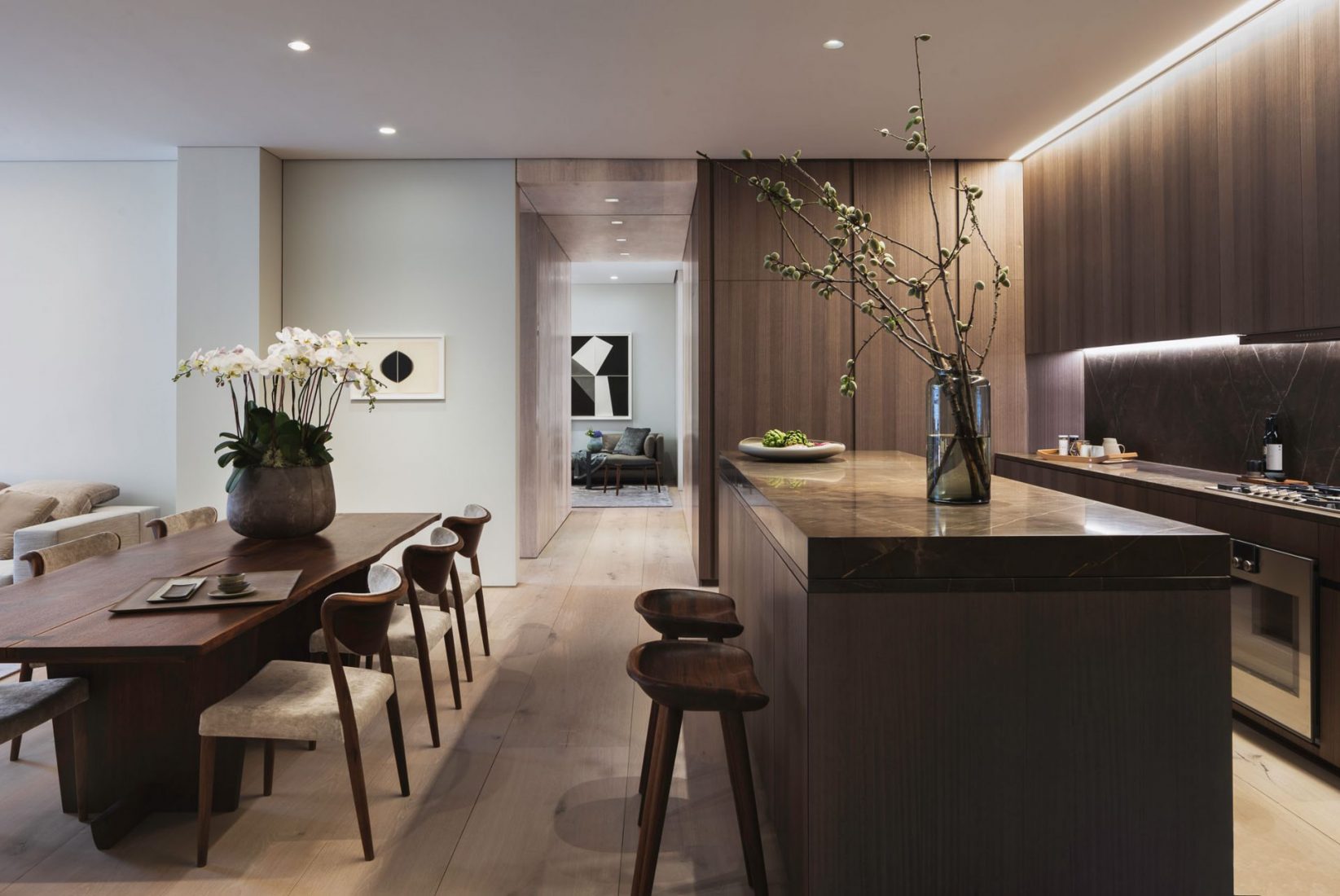
Tucked away in Manhattan’s West Chelsea neighborhood, Jardim is the first U.S. residential development by Isay Weinfeld, the world-renowned Brazilian architect and interior designer. With Jardim, Weinfeld has elevated its kitchens to the realm of finely crafted furniture. Doors and walls are wrapped in honey-hued American oak, with matching Italian-made cabinetry by Molteni. The islands also feature extra-deep double sinks, as well as built-in dishwashers and wine refrigerators—creating a professional-grade workspace that is as practical as it is striking.


152 Elizabeth Street

Photo: Paul Warchol Photography

Situated in the heart of Nolita, 152 Elizabeth is an ultra-luxury condominium designed by Pritzker Prize-winning Japanese architect Tadao Ando, in collaboration with Gabellini Sheppard Associates. The boutique seven-story building features seven meticulously designed homes with a number of special details, including stunning custom marble countertops by the Italian brand Minimal. The island countertops boast an incredibly unique feature—each slides back to reveal a hidden sink with a faucet that pulls up, seamlessly designed to make the most out of your counter space.


150 Wooster

Photo: Courtesy of 150 Wooster

Inside the spacious lofts at 150 Wooster in Soho’s Historic Cast-Iron District, developer and designer KUB outfitted the kitchens with Imperial Danby marble, which was used for the islands, countertops and cabinet faces. The marble was sourced from the largest underground marble quarry in the world, which happens to be in Vermont, and is the same quarry used for some of Washington D.C’s most famous monuments—including the Thomas Jefferson Memorial—as well as Martha Stewart’s very own kitchen! With an island like this, your guests will be flocking to it just for the design alone! Appetizers and cocktails will just be an added bonus.


252 East 57th Street 

Photo: Stephen Kent Johnson

Anchoring the eastern corridor of Manhattan’s Billionaire’s Row, 252 East 57th Street is a 65-story ultra-luxury condominium designed by the internationally recognized architectural firm SOM with interiors by AD100 interior architect, Daniel Romualdez. Romualdez’s interiors feature carefully curated fixtures including kitchen islands with 33” Kohler Stages Collection sinks. Surrounded by glass quartz, the Kohler Sink comes with a full array of integrated accessories like a walnut cutting board and prep bowls. The design offers a wide basin to accommodate large pots and pans, as well as a stepped, side platform for prepping food; perfect for entertaining guests and preparing them a homecooked meal at the same time.