Categories
Fashion NYC

Downtown Q&A: Lauren Wilson, Founder of Luxury Consignment Platform, Dora Maar

In today’s fashion landscape, influencers are everything.

Influencers have become the new innovators and early adopters that oftentimes will take the place of major mavens from yesteryear, as the runway designers. The beauty of such fashion leaders on the tiny screen is the direct link between them and their followers.

Why do you think influencers’ brand representation is so coveted?

Think about the spike in sales when influencer Kendall Jenner started tagging Alo Yoga in her social media channels, or when Emma Chamberlain nearly made Amazon sell out of yoga pants from one hard Instagram post. It is this kind of philosophy that birthed Lauren Wilson’s Dora Maar. The luxury consignment brand that centers around the link between influencers, their coveted closets, and customers.

Dora Maar ingeniously links these “Muses” of all different walks of life with their customers. Now, followers can own their favorite influencer’s best pieces.

Wilson is changing the game of luxury consignment, with the help of her brilliant concept for Muses that offer up their beloved high-end pieces to be sold on Dora Maar, lovingly nicknamed DoMa. You’ll find that this born and bred brand is reimagining what it means to consign.

Lauren Wilson, Dora Maar’s Founder

Downtown: What is your personal background in fashion?

Lauren Wilson: Fashion has been an integral part of my life on both a personal and professional level. I’ve always felt that fashion is synonymous with storytelling, which in essence is the brand ethos of Dora Maar. Fashion allows one to express themselves and share creativity, emotions, and feelings in ways words cannot. Curating outfits and being thoughtful about the craftsmanship of clothing have always been important to me.

As for my career, following my graduation from USC, my first full-time job in fashion was at Gucci as an assistant in their celebrity PR dept in NYC. After Gucci, I began my Master of Art in Costume Studies from NYU, which I describe as the anthropological study of fashion. I was so passionate about the program and it played a large role in my interest in vintage clothing. Outside of fashion, I also worked in the art world at Christie’s where I was a part of their marketing team for luxury. There, I developed the keen ability to identify the importance of provenance or the origin of a piece of fine art. I realized how this concept of provenance to showcase value and authenticity was missing from luxury fashion in the secondary market. Following Christie’s, I moved back to luxury fashion e-commerce at Moda Operandi. Through the mix of these experiences, my idea for Dora Maar was born.

DT: What is the story behind Dora Maar’s name?

LW: I named my platform after Henriette Theodora Markovitch – also known as Dora Maar – an influential French photographer, painter, and poet. She was depicted in many of Picasso’s paintings, including his famous Portrait of Dora Maar and Dora Maar au Chat. She’s widely known as Pablo Picasso’s ‘muse’ which does play a role in the idea behind my Muse concept. Our Muses are influential to our consumers by providing a human element to buying clothing. That being said, Dora Maar was my point of inspiration for her unprecedented, independent, and fresh perspectives and ways. She challenged the norms through her surrealist art whether it be her paintings or poetry.  With my platform, my mission is to do the same. We’re reimagining our relationship to pre-owned luxury fashion by leveraging the story behind each item through provenance and storytelling.

DT: How many designers do you carry at Dora Maar?

LW: We carry over 300 designers at Dora Maar, from Chanel to Emilia Wickstead and Carolina Herrera. We’ve designed our platform to be extremely user-friendly and serve as the link between influencers and our consumers. We’ve strategized our layout so our customers can be inspired by the apparel and accessories through various lenses. First, consumers can go through a dedicated closet page, carrying the items in a Muse’s closet. Or, they can opt to buy by the designer if they’re specifically looking for a Chanel or Saint Laurent item. We also curate special Edits which are theme-based and always a big hit for our clients. We’re really excited about our recent Bridal Muse Edit, a curated collection of hand-picked favorites for all types of wedding celebrations. We have innovative silhouettes from Huishan Zhang to incredible Balmain pieces.


DT: What does the consignment process look like at Dora Maar?

LW: Dora Maar is a high-touch consignment service, meaning we take all of the logistics in-house. Trust between our Muses and our customers is our number one focus, which is why the process behind each consigned piece is highly specialized. We handle the authentication, styling, and photographing, all the way through to the packaging and delivery of the item to our customers once a piece has sold. The reason we decided on this business model is that our mission is to connect our Muses and consumers, and we serve to make the consignment experience easy and bring a high level of trust to our customers when they are shopping for pre-owned luxury.

DT: Tell us about your “Muses” at Dora Maar. It is a really smart concept that is unique to Dora Maar. How was that idea born? What does being a DoMa muse entail?

LW: Thank you! Along with our commitment to sustainable fashion, our Muse concept is our favorite part of the platform. The idea was born when I ideated Dora Maar and was searching for a way to link influencers and customers.

We are thrilled to see how our Muses have connected the Dora Maar customers. Our Muses are inspiring tastemakers of all different shapes, sizes, and voices. We scout women (and some men!) who care about the craft and quality of clothing, and want to see their clothing passed on. Some of our Muses include  Lauren Levison, Edward Barsamian, Lyn Slater, and Krystal Bick. Many of our Muses use their proceeds from their closet sales to raise funds for organizations that are important in their lives. For example, Lauren Levison recently donated 100% of her proceeds to the Present/Levison Advanced Fellowship in Inflammatory Bowel Disease at Mount Sinai Hospital.

DT: Does New York City influence and inspire Dora Maar in any way? If so, how?

LW: New York is certainly an incredibly huge source of inspiration for Dora Maar– so much so that I would say the city is a Muse in and of itself for me and our team. I moved to NYC right after college to pursue a career in fashion, so the story of New York is woven through everything we do. The energy and collision of ideas, innovation, and joy for life are all that make New York one of a kind. We are a born and bred NYC brand and our studio is headquartered in Brooklyn. All of the creatives– from photographers to our models (who are also Muses to us!) are based in the city. It’s amazing to be able to bring so many forward-thinking, talented individuals together to create Dora Maar amidst the backdrop of New York.

DT: What is your personal favorite spot to get inspired in NYC?

LW: That is a tough question! What I love about NYC is that every neighborhood is its only little world, so I am constantly inspired by so many different pockets of the city. When I am in need of an injection of inspiration, I am a sucker for the Met or Neue Galerie, an old 5th Ave mansion that was converted to a museum for early 20th century German and Austrian art – the space is just beautiful. On the flip side, my first apartment in NYC was on Bleecker Street in the West Village, so when I need a dose of New York City magic, I love wandering the streets over there. They are beyond charming, and I love popping into the small neighborhood shops and cafes, like Rosecrans on Greenwich Ave for delicious coffees, beautiful flowers, and small and unique home goods. I could probably go on for days about the places and people that have inspired me in the city, that’s what’s so amazing about it, I am always in awe of New York.

For more on fashion from Downtown, click here.
Categories
Business Culture NYC

5 Ways Coffee Shops Can Increase Visibility Using Instagram


It’s no secret that New Yorkers love a good cup of coffee.

We love to drink, smell, talk about it, and even celebrate it in our own fun ways!

The only problem? There are hundreds upon hundreds of coffee shops in NYC, not to mention the big chain cafes that have the means and budget for mass advertising. Still, if you’re the owner or manager of an independent coffee shop, Instagram is an effective tool to promote your shop online and turn those views into paying customers at the door.

Of course, Instagram is just part of many online marketing tips for small businesses, but when used correctly, this hugely popular social media app can increase the visibility of your New York coffee shop business. Here’s how you can do it!


5 Ways Coffee Shops Can Increase Visibility Using Instagram
Kaboompics .com Pexels


Give people a reason to share and like your images

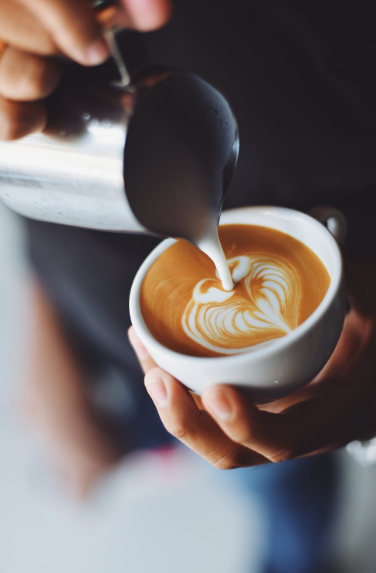
These days, it’s not good enough to post any old picture of a coffee cup or the interior of your shop… you have to consider lighting, the right angle, and of course, your coffee! People love coffee art using foam, and a fun well-designed mug doesn’t hurt either.

If the sunlight is streaming into your window and creating a beautiful halo of light, then grab a camera and snap a pic ASAP. If your customers give you permission, photograph people smiling and having a good time – positivity always wins!


5 Ways Coffee Shops Can Increase Visibility Using Instagram
Lina Kivaka Pexels


Create a snazzy profile

Posting some sharable images is one thing, but you’ll have to ensure that your profile looks the business by having a bright, discernable profile pic – ideally your logo. Use the description section to write something funny, earnest, or engaging. Make sure the theme, if any, is immediately identifiable from the description and that you appeal to your target market, whether that be vegans, comic book nerds, vintage lovers, and so on. Also, ensure that the coffee shops address is available and any current promotions you might be running.

Use hashtags effectively

Even though it seems easy and simple, adding hashtags and expecting people to follow you
won’t work that well. It’s often better to use smaller, yet trending hashtags that focus on your local area. This could be examples like #newyorkcoffee, #nyccoffee, #bigapplecoffee, etc.


5 Ways Coffee Shops Can Increase Visibility Using Instagram
Pixabay Hashtag


The next step is to see who is also using these hashtags and like their posts, comment on the images or videos, and follow their account. By engaging with locals, you have far more
chance of gaining fans who will follow back and hopefully visit your café. Don’t forget to geotag, either, as it’s good to add your location to every post.

Run contests or fun weekly quizzes

A great idea to increase growth on Instagram is to create your own little online niche. For
example, you could create a coffee-related question every Monday and use a hashtag like
#mondaycoffeequiz. This lets people engage with your profile and gives them a reason to visit
every Monday. You could use run contests like a caption competition, whereby you post an
image without a description and ask followers to leave the best caption. Your favorite could
win a free cup of coffee! You could even ask followers to tag a friend who they’d like to go for coffee with. These ideas will get people to your door and add a bit of fun.


5 Ways Coffee Shops Can Increase Visibility Using Instagram
Jonathan Borba Pexels

Work with local influencers

Even though the influencer bubble might be bursting one day, it’s still worth taking advantage of NYC influencers while you can. Get in contact with some who you think would do a great job of representing your coffee shop, and work out a deal where they promote your store and they get either a one-off payment or free coffee! You could also team up with other local companies, such as breweries or pizza shops or clothing stores, as you’re all in the business of a lively and thriving New York. Promote each other in your Instagram posts or even be old school and leave flyers in your shops.

Those are just some ideas to get people from online to in the store, as at the end of the day, it’s all about serving people great coffee in a perfect atmosphere in NYC!

Make sure you check out these accounts for inspiration in the meantime.

Categories
Industry News Technology Uncategorized

Instagram Trends Changing Through The Past Decade

As the widely accepted definition suggests, the trend is “a general direction in which something is developing or changing”. If we analyze the meaning of the word “trend”, just a little bit further, we’ll come to the conclusion that this kind of development is not necessarily a matter of growth, evolution or maturity. It’s more about spreading.

When something is called trendy, we already know that something is hyped, meaning popular in the sense of style, at a certain period in time. The trend is, then, more publicity, fashion, and marketing affair than an overall tendency toward change itself.

In the realm of social media, when something becomes a trend, it means that many posts, photos, or videos on the platforms, will be dedicated to this topic. Instagram is probably the trendiest of them all. Starting something new, which will be accepted by many and end up on the top of the Explore or Hashtag page, is not easier than buying Instagram followers https://howsociable.com/buy-instagram-followers/. Some work has to be done, but at the end of the day, trendsetters are probably very proud of themselves. 

Trending on Instagram can be a product of share luck, but according to experts, there are tips or rules that an ambitious creator should follow in order to start a new fashion. Generally, high-quality content, carefully composed to catch the attention of the audience with its esthetic, should be a good start. If the topic is interesting and authentic enough to provoke the reaction, the next step would be to choose a good hashtag. These little helpers can do wonders, in the sense of visibility and audience targeting. Additional effort to create relevantly popular or unique hashtags will be rewarded with an increased engagement rate. For those not skilled enough, few very good hashtag generator tools are already available on the market. Finally, timing, tagging locations, and working with other influencers are equally important, and should not be neglected during the trend pursuit.

Now that we know what is crucial for trending, it would be interesting to examine how were Instagram trends changing in the last decade.

The period from 2010 to 2020 transformed the way we see the world and ourselves almost fundamentally. Technology and digitalization can be “blamed” for this as well. Smartphones and platforms connected us tightly, into one large mass called the global audience. As we are so grouped and our attention is focused on the content services, it was an ideal situation for innovations, changes, and even new social movements. Although some of them came as positive, we witnessed more than one situation in which these perfect conditions to create something good mutated with the not so right outcome, socially, culturally, or even morally speaking.

Social media were probably the biggest trend in the last decade, especially Instagram. Launched in 2010, it evolved from a selfie sharing platform to a serious brand. Ten years ago, companies and influencers were almost nonexistent. It was a place reserved for amateur photos of faces and tables with meals and drinks. Nowadays, you can hardly come across a respectable brand, especially in the fashion and beauty industry, without a profile. Rule number one, if you want to be visible on Instagram, is a high-quality photo. Filters, apps, and other Instagram-only options can make posting more exciting and funny. At the same time, they can give the follower a sense of belonging to a big, happy family. Companies are able to directly communicate with their customers and nourish their relationship with giveaways, discounts, and similar tactics.

Instagramers went through some changes, as well. In the beginning, it was all about perfection, unrealistic lives, and photos of expensive items, houses, cars, and luxury holidays. At some point, followers obviously got fed up with too much flawlessness, which created the right moment for the rise of the relatable influencers. Tired moms and people with health issues and disorders attracted followers with similar problems, who needed to know that they are not alone.


Instagram Trends Changing Through The Past Decade
Photo by Omkar Patyane from Pexels


Social activism, such as climate change movements or campaigns dedicated to sexual harassment awareness, is no longer reserved only for the text-oriented platforms. Memes and stickers made it possible for people on Instagram to gather around the same idea or purpose, and to make it trending within hours.

Making trends on Instagram comes with a certain amount of responsibility. The University of Pennsylvania researched the connection between social media and our well-being and published the findings in the Journal of Social and Clinical Psychology. The study was conducted on 143 participants and showed that we need to “reduce opportunities for social comparison”, and generally “put our phones down” and live our lives.

Analyzing how Instagram’s body standards changed during the last ten years, should make us puzzled enough to wonder what is wrong with some trends. In 2013, it was the thigh gap trend, which demanded legs to be so thin to not touch above knees. Next year, the bikini bridge emerged, and women were trying to be skinny enough to make the space between hip bones in the abdomen area visible. After that, endless, exhausting workouts in order to get a thin yet muscular body took over the trending. The year 2015 was all about hashtag “strong not skinny”, healthy eating habits obsession, fitness gurus, and photos of perfectly shaped bodies. In the following years, we’ve had a thick fit, ribcage bragging, and thick slim trends. 

Looking at the perfectly edited photos can be harmless if you can keep in mind, at all times, that they are not real. It might sound strange but, otherwise, it can cause serious damage to our self-esteem and eventually become a source of depression and loneliness. So, be smart with trends, if you want to participate in the game, do it wisely.