Categories
Culture Entertainment Events NYC

Celebrating Diversity of Cultural Traditions NYC

Celebrating Diversity of Cultural Traditions NYC
Center for Traditional Music and Dance (CTMD)

Song. Dance. Culture. Celebrating the diversity of cultural traditions in New York City, the Center for Traditional Music and Dance (CTMD) is launching ​an online series, Beat of the Boroughs: NYC Online on Monday, November 16.

The series highlights the artistry of 54 of the City’s leading immigrant performers from around the world – but from right here at home in our five boroughs.

The artists include several National Endowment for the Arts Heritage Award winners. They represent traditions hail from Bulgaria, China, Colombia, Gambia, Haiti, Iraq, Japan, Mongolia, Ukraine, and West Africa, among other areas.

“New York City’s traditional and folk artists have been particularly impacted by both the pandemic and the anti-immigrant political climate in our country. Amid the pandemic, many of these artists have structural impediments, including the digital divide and language barriers to access federal relief funds or private sources of funding,” CTMD Executive Director Peter Rushefsky said.

“It is imperative that we come together as a city to support and celebrate our immigrant communities. Beat of the Boroughs: NYC Online showcases the immense talents of our artists and further the public’s understanding and appreciation of their work during these trying times.”

CTMD has worked closely with dozens of diverse communities

Since its founding in 1968, CTMD has worked closely with dozens of diverse communities to create a number of ongoing art programs, festivals, and community-based cultural organizations. Each year, CTMD serves thousands of New Yorkers through programs that provide unique opportunities to experience and participate in the City’s rich cultural traditions.

Organizers hope the series will build more support for the artists and for CTMD, particularly as the nonprofit continues to highlight the artistic diversity within New York City. CTMD encourages donations at https://ctmd.org/donate/.

From Borough to Borough

The schedule kicks off with:

  • The Crimean Tatar Ensemble, of Brooklyn, with folk music and dance from the Crimean Peninsula, Ukraine (Monday, November 16).
  • The Mencius Society with Xiao Xiannian and Julie Tay of Manhattan, with yangqin (hammered dulcimer) and Chinese percussion (Wednesday, November 18).
  • Sidiki Conde of Manhattan, with West African drumming and his sacred ancestral masks (Friday, November 20).
  • Malang Jobarteh and Salieu Suso of the Bronx, presenting on West African jali/griot traditions (Friday, November 27).

CTMD will highlight three artists or ensembles each week, on Mondays, Wednesdays, and Fridays. Audiences can tune in on those days at 5:00 PM to CTMD’s YouTube channel, ​​ or Facebook page.

“Through workshops, lectures, demonstrations, and streamed live performances, a stellar cast of musicians and dancers presents their personal stories, remarkable traditions, and pandemic experiences,” Project Director and Staff Ethnomusicologist Andrew Colwell said. “Their voices serve as a powerful platform for continued advocacy for traditional arts in our city of immigrants.”

Beat of the Boroughs: NYC Online is made possible through the generosity of​ ​the New York Community Trust’s NYC COVID-19 Response & Impact Fund and the Scherman Foundation.

Categories
Featured News NYC

Discussion with George Santana on his run for Civil Judge


We had the pleasure of speaking with George Santana about his run for Judge of Civil Court New York City. While speaking with George, we felt that his story and upbringing is exactly what our country was built on.

“Having been raised by a single immigrant mother has given me a strong work ethic, with the tolerance and judgment to deal with many setbacks and adversities.”


Discussion with George Santana on his run for Civil Judge
George Santana


DTM: How did you get into the political arena?

GS: Back in the old days prior to the reform democratic movement, old-time political clubs, dating back to Tammany Hall were famous for among other things dishing out jobs and finding apartments for people. The unwritten rule was that in exchange for the club leader’s largess, the recipient “volunteered” around the club when necessary.

In the early 1980s when I was 10 about 11 years old and my mother was in her 50s, the club helped her secure her second job cleaning offices. Back then, my mother worked two jobs as she was paying a whopping $35.00 per month for my Catholic school tuition.  But she was the only breadwinner because my father had walked out never paying child support. 

At the time the club was gearing up for a contested primary election which became an “all hands on deck” project.  Although she never said so, I suppose my mother was embarrassed because she really did not have any skills which could parlay into “volunteering” for the club because she never spoke English fluently.  Furthermore, like many other immigrants lacking a formal education, her skill set was limited to cleaning, sewing, ironing, and cooking. 


Discussion with George Santana on his run for Civil Judge
George Santana’s family

So that summer, my mother decided to kill two birds with one stone, by dropping me off at the local political club. I would be her “volunteering” substitute and the club would serve as my babysitter during the daytime which gave my grandmother then in her mid-seventies a break from having me around the house all day long. The club got more than it bargained for and a door opened for me that shaped the course of my entire life.

As an overly curious and precocious child, I wanted to learn everything I was a quick study and was willing to run errands, answer phones, and ride my bicycle all over the City of New York delivering packages to people that to this day were larger than life. 

That political campaign led to another the following year for a lady who was running for New York City Civil Court Judge.  After the lady won the election, I showed up at the Civil Judge’s chambers door a few weeks shy of my 13th birthday and offered to volunteer for her.  That daily volunteering job lasted almost 10 years and sealed the deal for me. I knew right there and then that I wanted to be an attorney and someday also a judge. 

“I was raised to believe that our laws must be obeyed, and our courts must be fair.”


Discussion with George Santana on his run for Civil Judge
George Santana

DTM: What is the most important thing that you want to achieve if elected?

GS: If elected, the most important thing that I want to achieve is making the courthouse user friendly for everyone entering through the door.  New York’s judicial system can be confusing and downright overwhelming for both lawyers and non-lawyers alike. Court users must be made to feel that they and their cases will be heard in a dignified and timely manner.


Discussion with George Santana on his run for Civil Judge
George Santana

DTM: Where did you grow up?

GS: I grew up in Hell’s Kitchen, and attended elementary school in Chelsea, and high school in the Lower East Side. 

DTM: What is the easiest thing to change that would really make a difference to every day working people?

GS: The easiest thing I will change to make an extraordinary difference to every day working people is respecting their time by taking the bench punctually and ready to hear cases at the time printed on the notices summoning the people to court, not two hours later. 

Discussion with George Santana on his run for Civil Judge
George Santana

“I have known Geroge Santan since he was 13 years old. For almost the entire 35 years I have known George, this is what he has wanted to do and worked so hard to attain – a seat on the bench. Candace C. Carponter P.C. “


DTM: What brings you joy?

GS: Since the age of 2, I learned not to take anything for granted and was trained to deal with loss, not to just accept it. My life on a good day has been challenging and on its worst day dreadful. The fact that I got to this point, and that I am in a place where I can help countless numbers of people, directly and indirectly, provides me the greatest joy I have ever felt.   


Discussion with George Santana on his run for Civil Judge
George Santana

DTM: Why do you love New York?

GS: I love New York not only because it is my birthplace, but also because it welcomed my parents from Cuba.  New York can be a rough place, but it is also forgiving and embracing. 

DTM: What makes New Yorker’s different than other states?

GS: New Yorkers are tough, fast-paced, no-nonsense.  However, New Yorkers have hearts of gold and we know how to unite and rise to any challenge to help our fellow New Yorkers.

Discussion with George Santana on his run for Civil Judge
George Santana

DTM: If you could change anything about the political arena/system what would you change?

GS: If I could change anything about the political system in New York it would be to make running for office within economic reach.  There are many wise, intelligent, and dedicated people who wish to get involved but are discouraged from becoming so due to the economics of politics.  

DTM: Where is your go-to place on a Sunday afternoon? 

GS: Unless I must prepare for a case or do work that I take home with me, my go-to place on a Sunday is my apartment which I convert into a mini version of Grand Central Station.  I like cooking for friends, and in a typical Cuban style, have more people than the apartment holds. On a given Sunday in my house, the priest is rubbing elbows with a Grammy winner who is rubbing elbows with a taxi driver, who is rubbing elbows with someone I met the week before at the supermarket. It is an opportunity to keep myself grounded and to never forget where I came from.


DTM: Is there anything else you’d like to say to our readership

GS: Growing up in a non-traditional, non-conventional setting coupled with attending the “school of hard knocks” has given me the skill set to easily navigate and diffuse difficult situations and cases fraught with raw human emotions while letting everyone walk away feeling that they were heard and that they “won” something.  


 ATTENTION NEW YORKERS

Voting options have changed due to the current COVID crisis.

Categories
Business Doctors Featured Health Living Wellness

Charles B Wang Community Health Center Recognized As Quality Improvement Leader Recipient

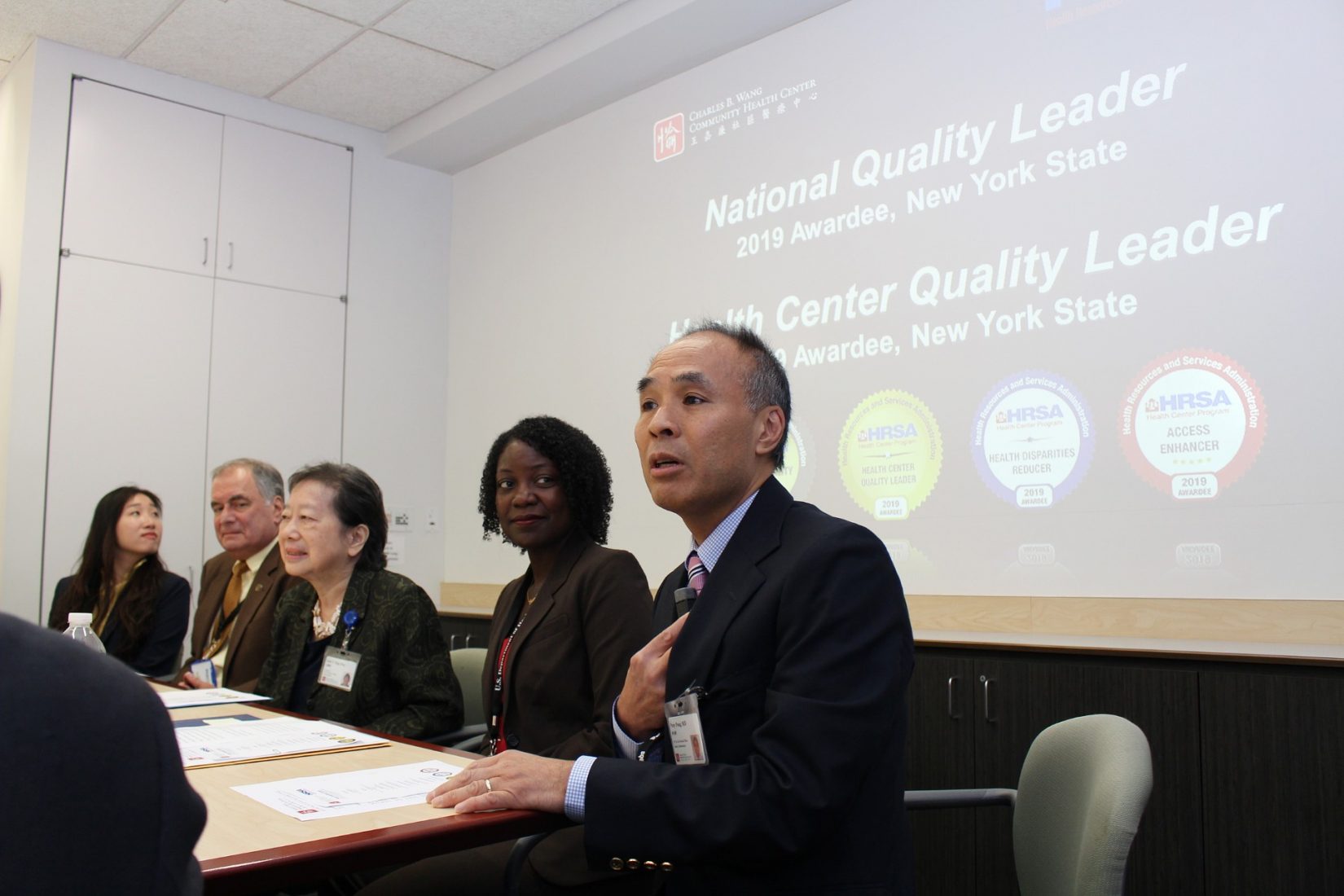
L-R Shephanie Cheng, Board Member, CBWCHC; Dr. Anthony Ferreri, Regional Director of HHS (Region 2); Jane Eng, President and CEO, CBWCHC;  Cheryl Donald, Regional Administrator of HRSA (Region 2); Dr. Perry Pong, Executive Vice President and Chief Medical Officer, CBWCHC.

The Charles B Wang Community Health Center, a Manhattan- and Queens-based nonprofit, held a press conference yesterday to celebrate recent administrative and quality-based victories in their mission to provide high-quality healthcare to their community. The CBWCHC was named a HRSA National Quality Leader for the fifth consecutive year, and the second consecutive year as the sole community health center recipient in New York State. They were awarded a total of $173,470 in Quality Improvement Awards, given to companies for providing effective preventative and life quality improvement treatment to their patients.

The CBWCHC is a fixture of NYC, with its five locations giving critical care to many of the city’s immigrants. The organization has an immigrant history itself, beginning in 1971 as a community-run health fair in Chinatown. Since then, it has grown to a 24-7 service provider with more than 61,000 patients in 2018. 

CBWCHC’s award recognizes them as being in the top 1-2% of providers in diabetes and heart and clinical quality measures. Dr. Perry Pong, the executive vice president and chief medical officer, credits their success to CBW’s commitment to what he calls genuine care. “When you care one patient at a time,” he says, “you will achieve your goal of the patients coming back. You will achieve patient satisfaction, loyalty, you’ll have more visits, you would have more revenue because you show that you care. That’s the difference that we can make that only at a patient level but also to the community.”

The health center has special meaning for many of the board members and officials present for the press conference. Stephanie Cheng, a board member and patient, recounted how her family had relied on Charles B Wang since her childhood, when her family first arrived in the US and was unable to afford more expensive medical care options. “Not only did we come for annual checkups,” she told the assembled group, “they also provided resources to help my dad quit smoking and metro cards to get to have from the center and mental health services for my family members.”

Jane Eng, President and CEO of the Charles B. Wang Community Health Center stands with The Hon. Brian Kavanagh, New York State Senator (26th District), The Hon. Yuh-Line Niou, New York State Assembly Member (65th District), Dr. Anthony Ferreri, Regional Director of HHS (Region 2), Cheryl Donald, Regional Administrator of HRSA (Region 2), and members of the Health Center’s Board of the Directors and executive staff.
Categories
Architecture Design Featured

Downtown Q&A: GISUE HARIRI

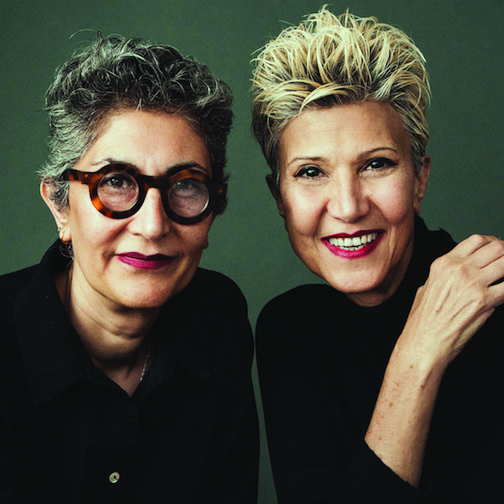
GISUE HARIRI Architects, authors, jewelry designers for Swarovski, and founders of Hariri & Hariri in 1986. Members of the Interior Design Hall of Fame. They left their home in Iran in the 1970’s to study architecture at Cornell University. In 2005, Hariri & Hariri won the Academy Award in Architecture at the American Academy of Arts and Letters awards, and their work has been included in exhibitions in the Museum of Modern Art, and the Guggenheim. Gisue Hariri serves as an adjunct professor at Columbia University, a visiting critic at Cornell, Parsons School of Design, and McGill University. Hariri & Hariri is described by critics as one of the most progressive firms currently working in the United States.

1. Name three women that inspire you, and tell us why.

Joan of Arc was one of my childhood idols, and I admire her courage, outstanding achievements, and her superhuman-like abilities—I believe that all women have the kind of power she possessed, but need to find it within themselves. Gloria Steinem became one of my role models later on. I was fortunate enough to see this longtime feminist Icon, writer, and political activist at the 2017 Women’s March in Washington DC. She emphasized that sometimes we must put our bodies where our beliefs are. This resonated with me and I have since become an activist, realizing that women have to speak up and be there physically to support one another if we want to make a change. And finally the in 2016 U.S. presidential election, we witnessed how an incredibly qualified, experienced, educated, compassionate woman—Hillary Clinton—was side-tracked by a white male, unfit to hold office. Hillary’s strength, courage, and determination to crack the highest glass ceiling will always inspire me. 

2. What has been the secret to your success? 

Being a warrior and not having fear of defeat. Examine everything and look within myself for answers and to find a way to express your own ideas and experiences in life. If architecture is about ideas and ideas are what we experience, then architecture that is created by women must be very different from architecture designed by men. Women experience and think very different than men. Our design approach and outlook on life is different, how could that not have an impact on what we create? Defining for ourselves what success is, what Architecture is, and what our goals are. For us, architecture cannot be defined as one thing, style, philosophy, or ism. It is the amalgamation of many things, which at its best can help us define who we are today and who we might be tomorrow. It is where beauty, sensuality, functionality, technology, and philosophy connect the body and mind. 

3. If you were going to pass on one piece of advice to a young woman, what would it be? In the “Old Boy” network mentality, being part of the “Boys Club” was a measure of success that defined who you were. For us, it is finding your “inner-voice,” using your Feminine-wisdom, and trusting your vision that gives you success and ultimately defines who you are. 

4. In the fight for equality, what area do you think needs the most attention? 

In my generation, most women ignored the gender-related roadblocks in our careers and now, when I look at my two daughters I realize that young women today are still dealing with the same issues! We must speak up and change this. Women can and should do a better job of helping one another. Society can and should support female-owned businesses, even if it does not make sense at times. In order to have equality, we first need equity and access to capital. The media and our cultural institutions have a duty to seek and find great, visionary women, educate them and introduce them to the larger public. 

5. What are you most proud of in your career?

I’m proud of our 35 years of hard work in a male-dominated profession and the fact that we never gave into the idea that we needed a male partner to succeed. A competition in Salzburg Austria, which we won, called JEWELS OF SALZBURG by the town’s Mayor. This residential and mixed-use complex is currently one of the largest all-encompassing projects Hariri & Hariri Architecture has completed. Winning among the world’s best known architects such as Souto Moura (Portugal), Snøhetta (Oslo), Kengo Kuma (Tokyo), Yamaguchi (Osaka), Toshiko Mori (NY), Delugan-Meissl (Vienna), Langhof (Berlin) to name a few. This 80 Million Dollar development includes 100 Apartments, exhibition space, courtyards, and underground parking Garage. It is, however, neither the scale nor the challenges we confronted that makes our Salzburg project significant. It is this relationship between architecture and nature that have created a dialogue and meditative experience that we have carved at the edge of the site’s rock face which guides and invites the public through the site. For us, architecture is more than construction of buildings—it is where our dreams transcend the realities of life. It is a commitment that will carry you to places you had never dreamed of or known could exist before. Finally, this project is significant being one of the very few new constructions permitted in the historic city of Salzburg, offering Mozart’s birthplace a destination for the architecture of the 21st century. 

6. Where do you get your confidence? 

From my inner guide, believing in myself, vision, and talent. 

7. What makes a woman beautiful? 

Having a sense of self, CONFIDENCE, and having a point of view. 

8. What gives you joy?

Sisterhood among women architects and women supporting one another. Having 102 Women in the U.S. House of Representatives. 

Categories
Chefs Culture

Lidia Bastianich Q&A

LIDIA BASTIANICH Emmy award-winning public television host, seven-time James Beard award winner, best -selling cookbook author, restaurateur, and owner of a flourishing food and entertainment business. Lidia has married her two passions in life—her family and food, to create multiple culinary endeavors with her children, Joseph and Tanya. Owner of Felidia, Becco, Esca, and Del Posto. Along with daughter Tanyam she owns Lidia’s Pittsburgh and Kansas City. Partner in Eataly NYC, Chicago, Boston, Los Angeles, Las Vegas, and Sao Paolo, Brazil. Member of Les Dames D’Escoffier and founding member of Women Chefs and Restaurateurs, two non-profit organizations of women leaders in the food and hospitality industries, and champion for the United Nations Association of the United States’ Adopt-A-Future program, in support of refugee education. 

Downtown: Name three women that inspire you, and why.

Lidia Bastianich: I am inspired by Eleanor Roosevelt. I recall being a twelve-year old immigrant and learning about her in American history. This First Lady was already standing up for Women’s Rights and the rights of African Americans and she left quite an impression on me; Julia Child was a beacon of confidence and direction, especially when I was a young female chef in 1971 and opening up my first restaurant in an industry that did not easily embrace women.  Her straightforward way of cooking and teaching America how to cook was an inspiration and confirmed that there was a place for women in the culinary industry. She visited me a decade later when we opened Felidia in Manhattan, and we remained friends until she passed away; I love classical music and am friends with great conductors such as Maestro Valery Gergiev. I was especially thrilled to see Marin Alsop, former conductor of the Baltimore Symphony Orchestra and current music director, join the ranks of such esteemed talent.

DT: What has been the secret of your success?

LB: I believe my success comes from the fact that I have always been passionate about food. I love what I do, and my work gives me a great amount of pleasure and rewards.  I am always learning and discovering new things and am grateful to all the mentors along the way. My success is also based on the happiness that I feel when I can also give back and mentor young talented chefs coming into the industry.

DT: If you were going to pass on one piece of advice to a young woman looking for success, what would it be?

LB: To young women just starting out I say, gender is not what defines you in our industry; it is the belief that you have in yourself.  Invest time in yourself and you will become better at your profession. Show passion and dedication and always be ready to learn.

DT: In the fight for women’s equality, what area do you think needs the most attention?

LB: The banks and financial institutions need to give more attention to women and their fight for equality.  For women to grow and become owners in their industries, they need encouraging financial institutions to back them.

DT: What are you most proud of in your career?

LB: I am very proud of the support that I receive from my family and the fact that my children, Tanya and Joseph, are carrying on the businesses which are continuing to grow.

DT: Where do you get your confidence?

LB: I think confidence comes from within and from the people that surround you. So, believe in yourself and listen to others.

DT: What makes a woman beautiful?

LB: A woman is beautiful when she is confident, content and willing to share with others.

DT: What gives you joy?

LB: What gives me the most joy is to cook and nurture people and see them enjoy my work.

Categories
Culture Entertainment Events

Immigrant Arts Women’s Empowerment Summit

Immigrant
immigrant arts and women summit

The Immigrant Arts Coalition, an advocacy support group comprised of New York City-based cultural organizations, will hold its second annual summit from August 5 to 8 at the Museum of Jewish Heritage in Battery Park. Honoring diversity and empowerment through the arts, the program will feature panel discussions, talks, workshops, performances from distinguished artists and participants representing the tapestry of arts, community leaders, and cultural organizations.

Entitled the Francesca Cernia Slovin Immigrant Arts & Women’s Empowerment Summit, this 4-day celebration of the contributions of those from abroad whose culture has contributed to the country’s vibrant mosaic is hosted by the National Yiddish Theatre Folksbiene at the Museum at  Edmond J. Safra Plaza, 36 Battery Place in New York City.

“It is an honor to come together and celebrate the vibrant culture that has been built here in America by immigrants from across the globe, who came here fleeing adversity and injustice to create a brighter future,” said Chris Massimine, Chair of the Immigrant Arts Coalition and Chief Executive Officer of the National Yiddish Theatre Folksbiene (NYTF). “We recognize the tremendous contributions immigrants have made to our country and our culture, and look forward to honoring this tremendous legacy at this year’s summit.”

The Coalition began forming in July 2017, when a group of arts and cultural organizations held their first arts summit at the Museum of Jewish Heritage and was officially launched in February. Leaders of the Coalition announced an agenda focusing on key areas of the arts: Advocacy, Diversity Support, Collaboration, Empowerment Through the Arts, and Artistic Engagement.

The summit will feature Alexandria Ocasio-Cortez, who on June 26 won the Democratic primary in New York’s 14th congressional district over a long-serving incumbent, who is of Puerto Rican heritage and is slated to become the youngest woman ever elected to Congress this November, and Tony Award-nominated dancer and actress Ariana DeBose (Hamilton, A Bronx Tale, Summer: The Donna Summer Musical) and Leaders representing over 25 national backgrounds from across the globe will come together to participate in the summit.

Immigrant
Sita Chay Musical Director of Cosmopolis

The summit opens on Sunday, August 5 with a free concert at Robert F. Wagner Junior Park featuring Cosmopolis Collective, an all-immigrant band with award-winning artists from seven countries. The concert will open with the public premiere of IAC’s anthem “Carry On,” performed by recording artist and television personality Kimberley Locke. Written by songwriter Celina Gray, and produced by Mark Ethan Toporek, “Carry On” speaks to the American Immigration experience and reflects the importance of the diversity that comprises the cultural fabric of the country.

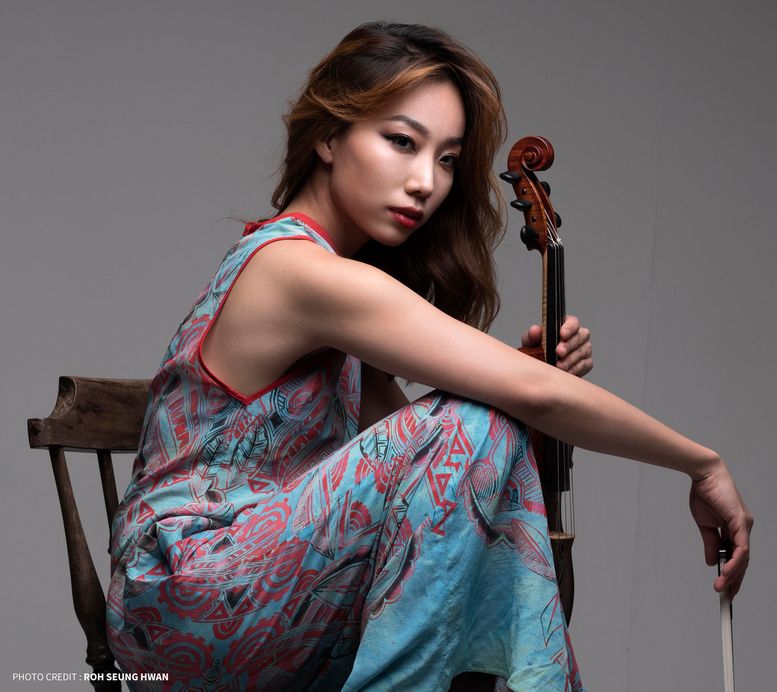
“We, as musicians, dancers, and artists, come together to show that traditions of immigrants have bolstered and generated the true beauty of American culture,” said Sita Chay, Musical Director of Cosmopolis Collective and violinist of the Grammy-winning mariachi band Flor de Toloache.

“The current socio-political environment inspired this summit,” said Marlena Fitzpatrick, President of the Immigrant Arts Coalition. “We are excited to come together to discuss the cultural and economic impact immigrant artists, women, and communities from all backgrounds have in the United States of America and Puerto Rico.”

Added Lindsay Beyerstein, Host of The Breach podcast, “The arts are an integral part of women’s empowerment. Through art, we explore possible futures and analyze pressing social issues. An artistic expression is a form of self-assertion, a way of claiming space and finding power.”

Free admission to the Museum of Jewish Heritage will be offered with the purchase of every ticket. For a full schedule and to RSVP, visit www.immigrantarts.org. RSVP’s are managed via Eventbrite and you must reserve your seat in advance. There are only 100 seats available to the closing night event, “The United States of Comedy,” at the exclusive Friars Club.

The Coalition’s Board of Directors includes: Chair Christopher Massimine, National Yiddish Theatre Folksbiene; Vice Chair Ayse Eldek, stage and screen actor and director; President Marlena Fitzpatrick, social and music journalist, musician and nationally recognized arts, labor and social justice activist; Secretary Carrie Beehan, artist at GOH Productions; Treasurer Giacinta Pace, actor, producer and journalist; and, Member at Large Laura Caparrotti, actor and Founding Artistic Director of the Kairos Italy Theater in New York and of In Scena! Italian Theater Festival in New York. You can learn more about the Coalition and its principles at www.immigrantarts.org.