Beer gardens offer patrons more than beer alone. No matter if the pub pursues a traditional take, or follows an unorthodox approach to the classic beer garden, local beer gardens create an atmosphere where the laughs flow as freely as the beer.
Sister bar to Spritzenhaus in Williamsburg, Grunhaus is one of the newest beer halls to open in NYC. It has already received glowing reviews from customers and critics alike. Everyone will find something to enjoy at Grunhaus since it offers 30 rotating beers on tap, 10 house sausages, and 10 dipping sauce options. Grunhaus, like its sister bar, is adorned with greenery and floor to ceiling windows that, weather permitting, open to the sounds of the city. At Grunhaus, patrons can enjoy their beer, with a breeze.
Clinton Hall in the financial district is famous for its comforting food. One of its most popular items is the doughnut grilled cheese. Clinton Hall forgoes the bread and replaces it with two glazed donuts. When served, the sandwich is dangled over their tomato basil soup. Occasionally the cheese waterfalls into the soup making it all the more satisfying. Clinton Hall also serves up fondue burgers, and ‘dangerously addictive donuts’ that are accompanied with caramel, Nutella, and raspberry filled syringes for guests to inject into their desert. The food is interactive, and so is the outdoor drinking area. Clinton Hall features communal style seating in a spacious area fully equipped with life-size versions of childhood games like Jenga and connect-four.
This restaurant and beer garden has indoor seating and the largest heated outdoor beer garden on the Lower East Side. The outdoor seating area is furnished with wooden tables capable of seating big parties on a first come, first serve basis. The pub offers a “sausage party’ that includes a selection of 5 or 7 different sausages, and a ‘beer flight’ of several German beers. The Loreley Bar is the perfect place to catch a game and to taste a variety of authentic German specialties in an atmosphere full of camaraderie.
Set in a turn-of-the-century beer hall, this bar has the ability to seat up to 400 thirsty customers at a time. Located in an abandoned factory building in Hoboken, the Austro-Hungarian garden adheres to the traditional standard by providing wooden plank tables reaching up to 40 ft in length. Prepare to be whisked away on a jovial experience that will make you question when you boarded a plane to Europe.
Pier 13, also in Hoboken, is a bustling hotspot in which a beer garden is just one of the many fun things to do. The pier’s beer garden is an unconventional family-friendly, outdoor bar with a backyard atmosphere. A plethora of award-winning food trucks are parked a short stroll from the drinking area, encouraging visitors to pare their brew, with some grub. The pier also offers outdoor activities like kayaking and paddle boarding nearby to enhance customers beer garden experience, and to foster the fun, summery vibe that the Pier 13 exudes.
Local pubs are bringing the joyous, and brotherly energy created by beer gardens right to NYC. Next time you see one of these neighborhood gems, grab a friend, grab a bench, and grab a beer to experience it for yourself.
The Replacements was a rock band that broke almost every rule, refusing to conform to the majority of industry norms or do most of the things that a band is “supposed” to do. In spite of those questionable decisions, The Replacements remains one of the most popular groups among musicians and music critics. Green Day, Nirvana, R.E.M., Wilco, Ryan Adams, The Gaslight Anthem, and The Goo Goo Dolls are among the artists that have cited The Replacements — often nicknamed “The ‘Mats” — as a major inspiration. Lorde covered “Swingin’ Party” in 2013. “Bastards Of Young” opens the movie, Adventureland. “Can’t Hardly Wait” is clearly the inspiration for the title of the 1998 movie of the same name. Even if The Replacements aren’t currently-active as this article is being written in June 2016, the band’s music is as popular as ever.
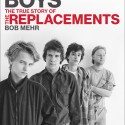
Acclaimed music writer Bob Mehr took on the daunting task of writing a book about The Replacements. After nearly a decade of work, Bob’s work — Trouble Boys: The True Story Of The Replacements — saw the light day this year. He conducted hundreds of interviews with, including those with current and former members, even getting subjects that are known to be media-shy to open up. Bob’s research was so in-depth that he was able to access government records of original guitarist Bob Stinson’s difficult childhood. Ultimately, this is THE book for anyone that likes, loves and/or wants to learn more about the Minnesota quartet.
In support of Trouble Boys, Bob is hitting the road for a series of live events. On Wednesday, Jun. 8, Bob will be appearing at Manhattan’s Strand Bookstore for an appearance alongside Jon Wurster. Bob — who is also a music critic at the Memphis-based The Commercial Appeal, a contributor to MOJO, and a prolific freelance writer otherwise — spoke to Downtown about the book, his Manhattan appearance, and what’s ahead for him otherwise.
More info on Trouble Boys can be found online at www.replacementsbook.com, while Bob himself can be followed on Twitter via @BobMehr.
Bob (center) with Paul Westerberg (left) and Tommy Stinson (right) – photo by Bob Medcraft
How would you describe your upcoming event with Jon Wurster? Will he be performing music as part of that show?
Bob Mehr: No music at The Strand, rather it’s going to be a casual but hopefully entertaining conversation between the two of us. In addition to being a great comedian, as part of the Scharpling & Wurster, and a first-rate musician, with Superchunk, the Bob Mould Band and many others, Jon has a deep connection to The Replacements. In 1986 at 19 years old, he joined a group called The Right Profile, who were managed by The Replacements’ managers, and later worked with Replacements producer Jim Dickinson. Jon has an insider’s view of that era.
Also, he was one of the people I had read the book as I was writing the draft. He’s a scholar of rock and roll and has a memory like an elephant, and he’s an old friend. Given all that, we’re just going to have fun and wide ranging conversation on all things relating to the book and the band.
Where did the idea for this sort of tour come from? I mean, most book tours tend to feature an author reading part of a book, and maybe a 92Y-style panel or two…
BM: With all these events I’ve tried to mix it up in terms of the format and presentation, to tailor each “show,” as it were, to the city or the audience. Basically, in some places fellow journalists — author Robert Gordon, MTV’s Jessica Hopper — have interviewed me. In others, I’ve shown old film footage of The Replacements and talked and done audience Q&As. In certain cities I will be interviewing people who’ve been involved with the band over the years, like their A&R man Michael Hill, tourmates like The Young Fresh Fellows’ Scott McCaughey, or latter-day Replacements members Dave Minehan and Josh Freese.
When I can, I’ll also add a musical component. In Hoboken the other night, we had a great collection of artists, including Freedy Johnston and Dave Schramm and Dead Wicks, playing Replacements songs. Rather than just stand there and read, I wanted to make as many of these events as possible multi-media, multi-format happenings.
What was the first Replacements song you remember hearing?
BM: “Bastards Of Young.” I had no idea who The Replacements were, but I saw them performing it on Saturday Night Live –- a moment I devote a whole chapter to in the book — as a wide-eyed 11-year old kid. The power of that performance — so loose, raw and loud –- stayed with me for another year until I got my hands on their next album, Pleased To Meet Me. Then I was hooked for life.
A very young Replacements – photo by Greg Helgeson
Members of the band cooperated with you, giving access and all. At what point in the writing process did you reach out to Tommy and Paul?
BM: I reached out before I ever started writing. My whole intention with the book was to have the band and their intimates involved in the process. I felt that so much of what had been written about The Replacements was done from the outside looking in. I wanted to understand the history of the group from the inside out, and the only way to do that was with their direct input and participation. So I spent a good year-plus working to secure that. I was persistent, but I was also lucky in that I think Paul and Tommy were finally ready to look back on the life of the band, to really reflect and try to understand what the whole experience had meant.
What was the most challenging part of writing this book? Was it arranging all of the interviews and traveling for such? Was it researching things from multiple accounts?
BM: It was a process filled with a never-ending series of challenges –- many of them the result of me being a first-time author and making some first-time mistakes. But fundamentally, the massive scope of the book was the most difficult thing. I interviewed over 230 different people, some just once, others dozens of times. So I had hundreds, almost a thousand, interviews to transcribe. I also had access to the archives at Twin/Tone Records and Warner Bros. While it was a huge advantage being able to go through that mountain of material and documentation, the real effort came in synthesizing all of that information into a compelling and moving narrative. Hopefully, I managed to do that.
One of the reviews on the book’s jacket notes the book’s contents as being “heartbreaking and hilarious,” which also sums up a lot of the music by The Replacements. Do you think the band was ever sabotaging themselves on-purpose and not just for laughs?
BM: I think everything The Replacements did was, in large part, genuine and instinctive. Much of it was fueled by a mix of alcohol and fear, of four guys who were desperate to transcend their limitations -– as Westerberg put it, there wasn’t a “driver’s license or high school diploma” in the band. When that is the foundation of things, I think it makes for both high drama and low comedy, and that’s sort of how of the band’s career unfolded.
How far into the Replacements’ reunion was it before you knew that some conflict was going on?
BM: I don’t think there was, or is, “conflict” per se with Paul and Tommy. The reality is they have a long, deep, and multi-layered thing between them. It’s a brotherhood of sorts, a family bond, a creative partnership, a business relationship –- all of that. What they have is far more complex than most relationships, so it has its share of ups and down; it always has and probably always will. But as you saw during the sold-out and raved about reunion tour, the power of what they have together is something unique and magnetic. Ultimately their chemistry together will always win out over any issues they might have.
In general, is there something you wish more people knew about the band? Or is there something inaccurate that you’re tired of hearing being said about The Replacements?
BM: I didn’t have an agenda. With the book, I just wanted to tell a real story of people’s lives, rather than a tired rock and roll tale. While there’s lots of excess and excessive behavior detailed in the book, I wanted to show what was behind all that –- the pain and fear, and the hope and power of them as kids getting together to form this band, and the roots of where they came from leading up to that moment, and everything that followed after. If someone comes away from Trouble Boys feeling like they’ve be enlightened or even just entertained, that’s enough for me.
Are you already working on another book?
BM: Not yet. Having invested almost a decade of my life into Trouble Boys, I’m dedicating this year to being on the road much as I can and spreading the word about it. After that, then I’ll look to the next project. But I have to say, I’ll have a hard time finding a subject as rich and colorful as The Replacements.
Your liner notes are always great reads, in my opinion. When preparing to write an essay along those lines, do you have a regular creative process? Do you listen to the album endlessly?
BM: Sure, I listen to the album, and try and read everything about it –- particularly press and reviews from the period it was released, but also later assessments to get a sense of how perceptions of a record can change over time. Also, when I can, I try to talk to the principals involved in making the record and look at whatever studio documentation I can dig up. I really like the idea of writing about individual albums and sessions, though I always try and bring a sense of the larger context surrounding its creation. It’s striking the right balance between the micro and the macro that make those kind of assignments fun.
Photo by Kevin Scanlon
What does Bob Mehr like to do when not busy with writing?
BM: Well, between the book, my day job as music critic at the daily newspaper in Memphis, and freelance work for MOJO, there’s not time for much else but music and writing. But I do try and blow off steam playing basketball at a local college with a bunch of kids half my age. My body is wearing down and I don’t have the explosiveness I once did on the court, but my jumper is still at Steph Curry levels of perfection.
So far, what is your favorite album released in 2016?
BM: Well, I’m sort of biased and will throw in a personal plug here. But my wife, Coco Hames –- best known for leading The Ettes and Parting Gifts –- is about to make her first solo album for Merge Records, set for early 2017 release. I’ve been listening and loving her demos for the record. That’s really what I’ve been enjoying most in 2016.
You’re a native of Los Angeles, but live in Memphis. What is it that brought you down there?
BM: An offer to become the music critic at The Commercial Appeal, which was then owned by Scripps and recently became a Gannett newspaper. To be able to live and work and write about music in Memphis –- where blues was birthed, rock and roll was invented, and soul was perfected –- is basically a dream come true.
Finally, Bob, any last words for the kids?
BM: Just for them to check ReplacementsBook.com for more tour dates and events this summer.


 Pier 13, also in Hoboken, is a bustling hotspot in which a beer garden is just one of the many fun things to do. The pier’s beer garden is an unconventional family-friendly, outdoor bar with a backyard atmosphere. A plethora of award-winning food trucks are parked a short stroll from the drinking area, encouraging visitors to pare their brew, with some grub. The pier also offers outdoor activities like kayaking and paddle boarding nearby to enhance customers beer garden experience, and to foster the fun, summery vibe that the Pier 13 exudes.