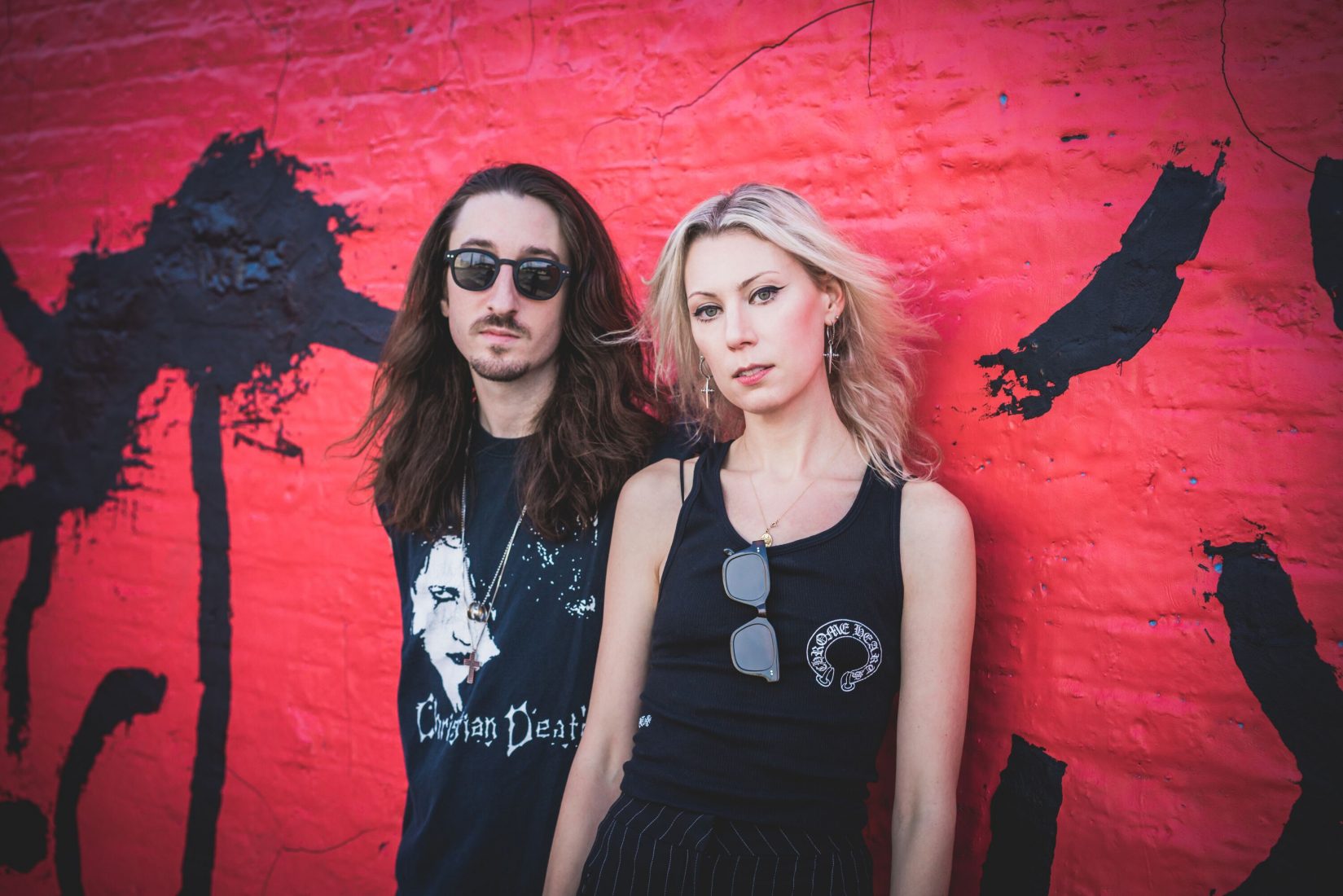
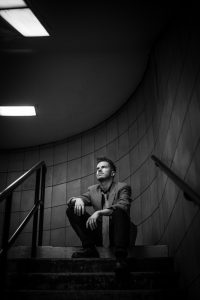
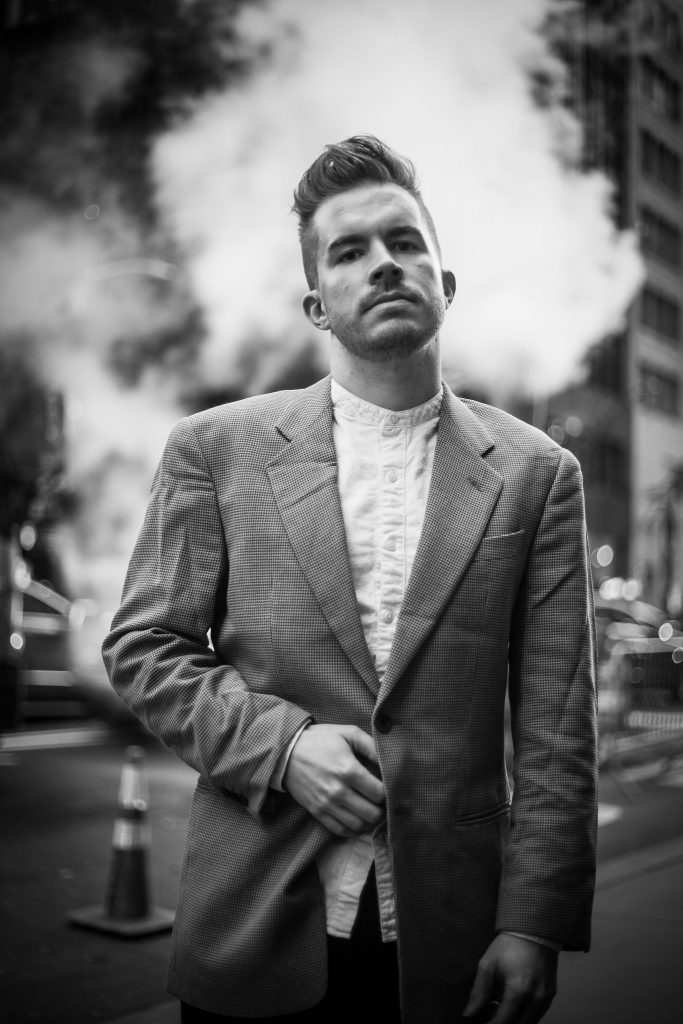
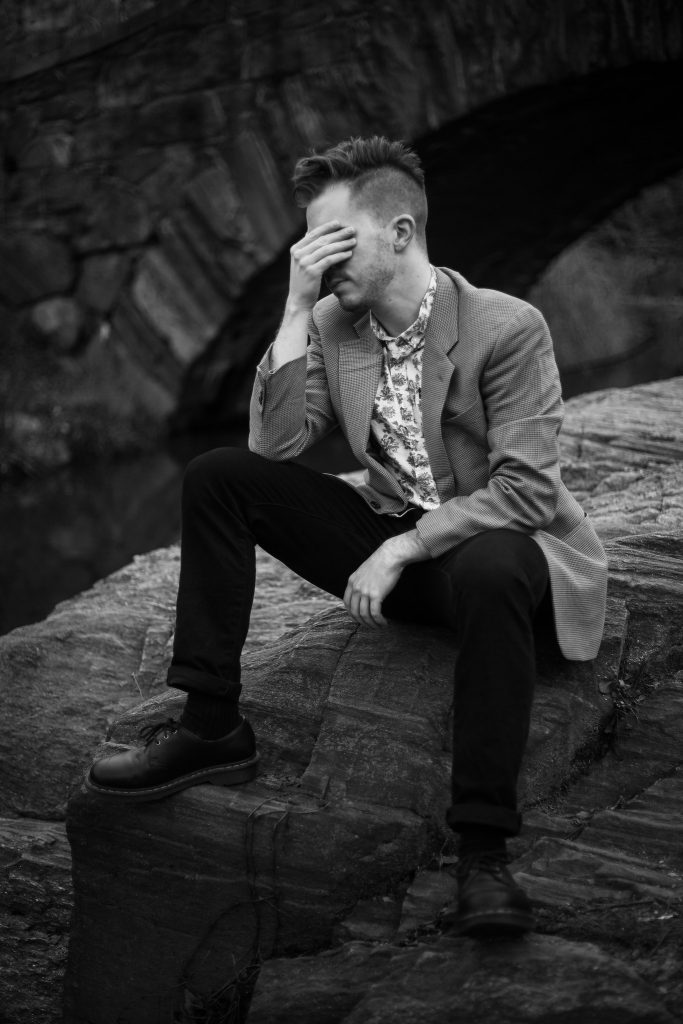
Songs For Sabotage are on a mission to create deep, danceable music within the pop spectrum.
FROM THE BAND:
Lina Sophie (lead vocals and guitar) and Richey Rose (bass and beats), the emerging duo called Songs For Sabotage, recently dropped their first, self-produced single, Fire. It’s a shadowy, cinematic gem with an undeniably infectious hook and guitar riffs paired with hypnotic vocals from Sophie.
The Stockholm raised, charismatic frontwoman sings with a subtle urgency over Rose’s bewitching bassline, especially on the chorus:
I’d set myself on fire for you / There’s not a single thing that you can do to convince me that I shouldn’t walk away.”
The lushly atmospheric b-side remix of “Fire” by Chris Huggett (formerly of Dragonette) features ‘80s horror flick synths and a moonlit-night-ride feel. The “Fire” music video was shot at Milk Studios in New York and directed by Mark Seliger’s first assistant, Nick Bean.
Fire is just one of the seven dark and very danceable songs off of the outfit’s debut album, ‘Deep Fake,’ due to be released later this year.
Songs for Sabotage’s story began in late 2018. The two musicians met when Rose was the featured DJ at Night of Joy, A few months later, they started writing and recording music in Rose’s home studio in downtown Manhattan. The band was largely born out of Sophie and Rose’s mutual love for Swedish pop, ‘80s new wave, and ‘00s electro.
“We want to offer more in regards to memorable songwriting, especially when it comes to a clever, classic pop hook,” explains Rose. The duo began collaborating around the same time their respective previous bands were breaking up. “One day we were at the Strand and saw this book of artwork titled Songs for Sabotage – we found it both an appropriate and humorous title for our then pet project.” says Sophie.
Though it’s barely been a year since they’ve joined forces, Songs For Sabotage have already played an impressive list of New York venues including The Sultan Room, Mercury Lounge, and Berlin.
Songs for Sabotage’s debut single Fire is available now on all streaming platforms.
They will be releasing a new single/b-side remix in February and March, and their 7-song debut LP ‘Deep Fake’ in early summer.
Enjoy the premiere of Fire here:
Upcoming Live Appearances:
Sunday, January 26th @ Otto’s Shrunken Head – NYC Friday, February 7th @Home Sweet Home – NYC Sunday, February 23rd @ Berlin Under A – NYC
On New Year’s Day, the Los Angeles musician trumpeted a public call for creative reformation:
You’re a creator? Awesome. Create. This idea that you’re supposed to be a living, breathing “brand” is gross and someday it’s gonna look really dated. Whether you paint, write, sing, or complain, own that it’s an extension of your soul, not “content” that you excrete on a daily basis like a robot. Can we please make 2020 the year that branding dies?
Photo: Alice Teeple
Photo: Alice Teeple
Photo: Alice Teeple
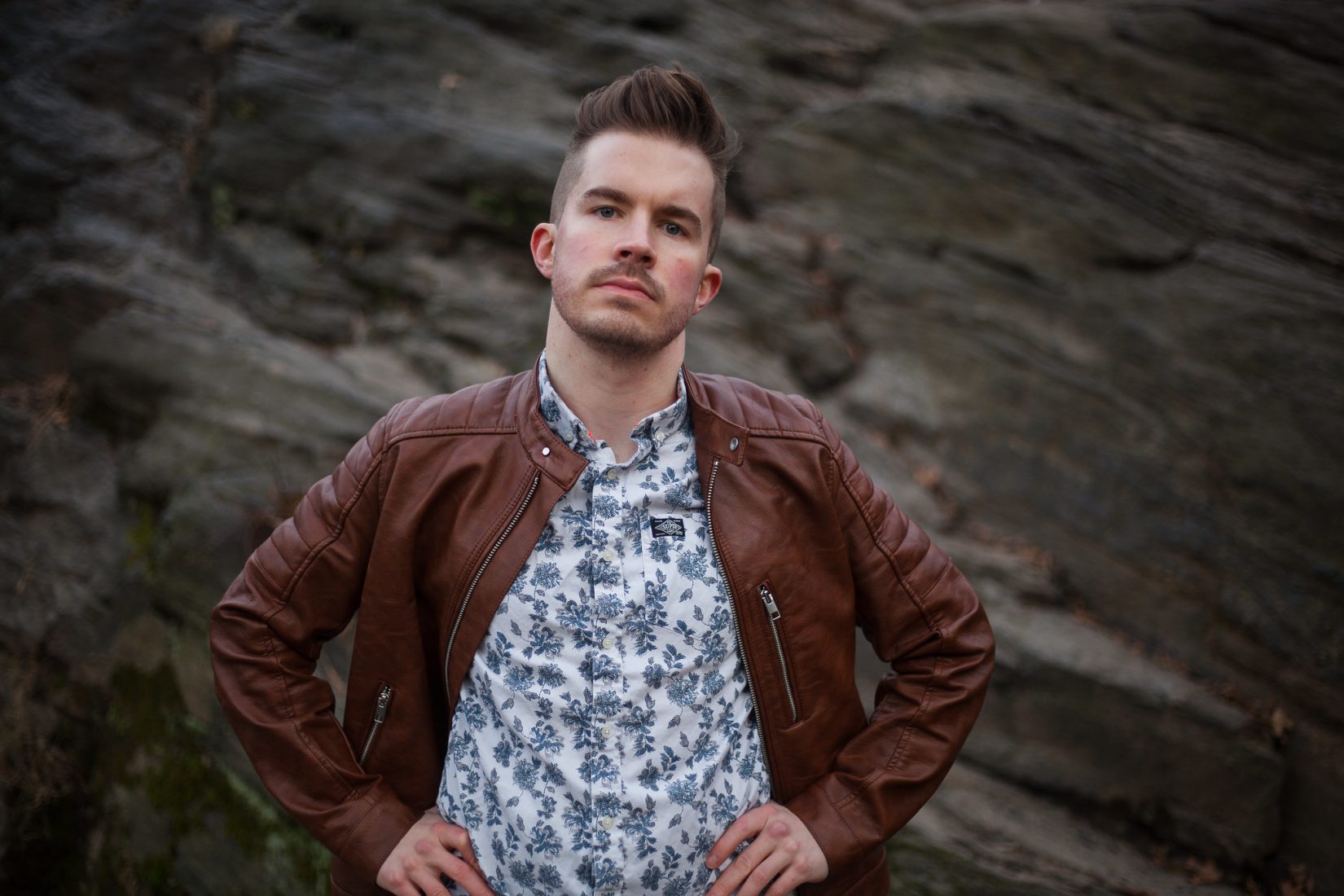
Hank Fontaine is a powder keg in an industry bursting with soul peddlers thirsty for fame and power. He refuses to be contained. He is content to stay honest to himself, his whims and his art. Conformity does not interest him in the least. Fontaine is a restless soul forever on the prowl for inspiration, both a citizen and student of the world. Ten years of touring as a guitarist; a lifetime of transience. For the time being, he’s existing in Los Angeles, eschewing that plastic Stepford Wife nonsense.
Living in the City of Angels has only deepened his determination to bring authenticity to his craft, encouraging others to follow suit. He walks the walk. After four years as half of sibling duo The Fontaines, touring with Dylan Gardner and Valley Queen, and resetting his path with a couple of singles, Fontaine released his first solo album in 2019: The Globalist Agenda or: Welcome To Frogtown. It is an eclectic tour de force.
Fontaine’s sound is impossible to pigeonhole, and he likes it that way. There are some echoes of retro influence, particularly in Fontaine’s guitar licks, but his lyrics are firmly rooted in the 21st century experience. He effortlessly weaves elements of Harry Nilsson, early Billy Joel, Supertramp, and Electric Light Orchestra in his sound, through the filters of English music hall, New Wave, and breezy California surf rock. Although Fontaine is primarily known for his guitar chops, he is a powerful and emotive vocalist who croons, growls, whispers and fearlessly falsettos.
Photo: Alice Teeple
Hank Fontaine’s strength lies in his curious voyeurism and refusal to mould himself to a false concept. He takes that kid-in-a-candy-store approach to sound, reminiscent of Odelay-era Beck. His self-penned Spotify bio cheekily mocks the industry push to brand musicians, which he sees as a limiting force on creativity. Not a single song on this album sounds like any other, but all work together in a sonic crazy quilt as varied as the people who influenced them. The Globalist Agenda was inspired by people Fontaine met while living in the Frogtown neighborhood of Los Angeles.
“I like to pretend to be other people when I’m writing. I think that’s gonna get me in trouble someday,” he quips.
Fontaine’s love of Seinfeld shines through in his observational lyrics: always wryly wondering, “what’s up with that?” This is best exemplified in his debut single, Bad Love, which sounds like a powerful breakup ballad, but was in fact about a time he got cut off in a Trader Joe’s parking lot. “I asked, what happened to this person to make them like this?” Fontaine explains. The ethereal, forlorn Hope Don’t Leave Me Now was inspired by a compulsive lottery ticket gamber at his local 7/11.
The album was a collaboration with his friend and producer Jason DeMayo. The pair recorded all the instruments together, one at a time.
“It was a very freeing way to work that I never tried before,” says Fontaine.
Photo: Alice Teeple
Photo: Alice Teeple
Fontaine headlined the Troubadour in LA to celebrate the release of The Globalist Agenda, and then took off the rest of 2019 to focus on writing. He’s in NYC for a few months doing an artist residency, working on a new EP of songs he wrote in his hometown of Paris.
Keep your eyes and ears on this one in 2020. Hank Fontaine is just getting started.
You can purchase The Globalist Agenda Or: Welcome To Frogtown here:
Since 1999, Raul Midón has released eight acclaimed studio albums. The latest of which — the aptly-titled Bad Ass And Blind — finds Raul showcasing himself as the guitar virtuoso he is known to be, while still genre-hopping and taking interesting risks. The fanbase of Raul probably includes many of your favorite musicians, as his list of collaborators includes Stevie Wonder, Shakira, Herbie Hancock, Bill Withers, and Jason Mraz; Bill specifically chose Raul to work with him on his first new composition in decades, as shown in the documentary Still Bill.
In support of Bad Ass And Blind, Raul will be headlining at The Highline Ballroom on Mar. 24, the date of the album’s release. One day prior, on Mar. 23, Raul will also be doing a guitar clinic at Guitar Center in Times Square. Downtown had the pleasure of speaking with Raul about his history with our city — he is originally from New Mexico — and what he has coming up in his career. He also talked about his surprising passion for ham radio.
More on Raul can be found at www.raulmidon.com. And Bad Ass And Blind can be pre-ordered here.
What do you remember about the first gig you ever played in New York? Where was it?
Raul Midón: As a musician? The first gig I ever played was with Shakira at Roseland. Then SNL. As a solo artist, the first gig I played was at a Chinese restaurant where the owner insisted on interrupting us during songs. She insisted that a guy had to sit in, the guy played spoons. It was also my last gig at a Chinese restaurant…
When did you first move to New York?
RM: I moved to NYC with my wife in May of 2002.
For you, is playing for a New York audience different than anywhere else?
RM: My mother was a New Yorker so it was in my blood, but since my mom passed when I was four, it was not actualized until I lived there. New York still remains one of the most relevant music scenes in the world.
RM: I’m playing material from a new album where I continue to explore eclectic songwriting, rapping etc. But I also have a couple of tunes that I explore modal tunes, tunes in complex time signatures. I have a new band — young cats from Baltimore who grew up with the church and a jazz education. I’m told we’re a good-looking group!
A lot of people call you a “one-man band.” When did you transition from performing into the traditional sense into more of a self-reliant performer?
RM: When I first moved to NYC, I needed to stand out in order to be noticed, so I did my best to cultivate that by creating a rhythm section with my guitar and voice.
Aside from your gig at The Highline Ballroom, what’s coming up for you? What can you tell me about your followup to Don’t Hesitate?
RM: I just got back from Australia and Dubai. After that I am on tour for my new album, Bad Ass And Blind, on Artistry Records. I’ll be going to the Singapore Jazz Festival, Japan and the U.S. then Europe through the summer.
Is there anything you haven’t yet accomplished but still hope to?
RM: So many things! I want to write a book. I received a full scholarship for college to study writing but I chose music and went to the University of Miami.
When not busy with music, how do you like to spend your free time?
RM: You would find it boring. I’m an amateur radio enthusiast. I have a 55-foot tower in my yard in Maryland. I talk to people all over the world on the radio. Lots of times when I go abroad, a ham guy will come get me at the hotel and then we talk on their ham gear to people all over the world!
Do you have a favorite restaurant in New York?
RM: Nyonya’s in the Village. I was introduced to it by dear friends Henri and Grace! Cash only — right next to Ferraro’s Bakery! Divine Malaysian food followed by decadent Italian desserts…
Finally, Raul, any last words for the kids?
RM: Don’t do drugs! Just kidding. Kids, whatever you do, be good at it. Work at it. Study it. Be nice to each other.
In his 30-plus years as a singer, songwriter and musician, Adelmo Fornaciari — better known as Zucchero — has sold over 60 million albums. Beyond being widely-recognized as the father of Italian blues music, he is the best-selling Italian artist of all time. Collaborators of Zucchero have included Eric Clapton, Miles Davis, Luciano Pavarotti, Andrea Bocelli, Stevie Ray Vaughn, Ray Charles, Sting, and B.B. King. Collaborations like these have led to Zucchero receiving six IFPI Europe Platinum Awards, six Wind Music Awards, and two World Music Awards.
Zucchero has not stopped created new music, and his latest full-length is 2016’s Black Cat. The Universal Music title includes work with U2’s Bono, Dire Straits’ Mark Knopfler, Elvis Costello, Loney, Dear, and Avicii. In support of Black Cat, Zucchero will be touring the United States next month, including a Mar. 31 stop at The Beacon Theatre.
Downtown had the pleasure of speaking with Zucchero about Black Cat, his history with New York, and what else he has coming up. Zucchero can be visited online at www.zucchero.it and followed via Facebook, Twitter and Instagram.
Where was the first gig you ever played in New York? What do you remember about it?
Zucchero: It was 2007 at Carnegie Hall. It was a great thrill for me to play in New York. We had a great time that night.
Do you ever come to New York besides touring here? Have you recorded an album here?
Z: There are many restaurants that I love in New York, but I have a good friend Fabio who owns Serafina, and I always to one of his restaurants.
For someone who hasn’t seen you live before, why should they expect from your Beacon Theatre show?
Z: I enjoy performing for the fans and new fans. The show has a lot of energy, tracks from my new album and my hits — the crowds seem to love it!
Do you have a favorite song on your new album?
Z: It would be unfair of me to pick a favorite, but the song “Streets Of Surrender” will always have a special meaning to me. Bono wrote the lyrics and I wrote the music. It is a track inspired by the attacks at The Bataclan in Paris in 2015.
Black Cat was produced by Don Was. When did you first meet Don?
Z: When I recorded my album Fly back in 2005/2006. He is a great guy and fun to work with we have a good connection.
Once you’re doing touring in support of Black Cat, what is ahead for you?
Z: I will take some time out in Italy with my family and friends. Then I will start to think about a new album and tour!
You’ve collaborated with many of pop and rock’s top stars. Is there anyone you’re still hoping to collaborate when?
Jean “Django” Reinhardt was a Belgian-born French jazz guitarist. While he passed away over 60 years ago, Django remains one of the most popular guitarists of all time as many of his compositions have become jazz standards. The list of guitarists he influenced includes Paul McCartney, Keith Richards, Les Paul, Jimi Hendrix, George Benson, B.B. King, Carlos Santana, Frank Zappa and Stevie Ray Vaughn; the Allman Brothers Band song “Jessica” was notably written by Dickey Betts in tribute to Django. Another film about Django is set for theatrical release in the coming months.
On Mar. 3, the Django A Gogo Music Festival will be celebrating its 10th anniversary with a show at Carnegie Hall. Performers will include headliner Stephane Wrembel, American fusion hero Al Di Meola, Dutch-born Stochelo Rosenberg, David Gastine, Ryan Montbleau, Larry Keel, Nick Anderson, Thor Jensen and Ari Folman-Cohen. Django A Gogo started with an intimate concert at the Brooklyn spot Barbes, later growing to Joe’s Pub, now touring around beyond moving into larger venues like Carnegie. This year’s run also includes the Django A Gogo Music Camp, which has master classes in Maplewood, New Jersey.
Downtown spoke with Stephane, Al, Stochelo and Larry to learn more about Django’s influence, the Mar. 3 event, and what else they have coming up. More info on all Django A Gogo-related events can be found at www.djangoagogo.com. Stephane Wrembel can be visited at www.stephanewrembel.com.
Do you remember the first time you heard Django Reinhardt?
Al Di Meola: First time I heard about him when I was 19 and played with Return To Forever in Europe.
Larry Keel: I discovered the music of Django when I was about six or seven years old, and my family was big into the first generation bluegrass greats, like Don Reno; he was an ultra pioneering banjo player — and flatpicking guitar player — who covered a lot of Django’s songs on the banjo. No one else in country and folk music was doing that at the time, and it really made an impression on me and on a lot of people in the Bluegrass culture of the 1960s and 70s.
Stephane Wrembel: I grew up in the Fontainebleau’s area in France, where Django was based. I have always heard of him and his music since I grew up. In this part of France you are raised in the sounds of his music! I remember clearly the first time I rediscovered him as a musician. I was 17 and wanted to study guitar in depth, so Django was the obvious next step. I bought the record Djangologie 49 and listened to “Minor Swing” for the first time. It was maybe the greatest musical shock I have ever had — I had never heard those notes or those rhythms before.
Stochelo Rosenberg: When I was a little kid, we played his records all the time.
AD: I love the improvisation parts of all of them.
LK: I love “Nuages.”
SW: My favorite composition by Django Reinhardt is for sure “Nuages.”
SR: My favorite song is the most famous song he composed, “Nuages,” because it is a fantastic melody. I like the melody very much.
Stephane Wrembel
Any idea what you’ll be performing at this tribute show?
AD: This year we are celebrating the 40th Anniversary of Elegant Gypsy.
LK: Lots of Django and the Hot Club Of Paris-type tunes, I’m sure. And I’m hoping I get to jump on any originals from Al Di Meola and any of the other iconic artists involved in the concert.
SW: This show is a concept: Django guitar masters and non-Django guitar masters performing Django’s music and non-Django music. For example, we are going to play “Nuages” with Stochelo Rosenberg, Al Di Meola and Larry Keel. Al and Larry are not Django players, but will provide an incredible and unique angle to this song. It will be fresh and new!
Also, Stochelo, Al and I will perform “Mediterranean Sundance,” Al Di Meola’s hit from Friday Night In San Francisco. You will also hear a lot of Django’s compositions, “Bistro Fada” — soundtrack from Woody Allen’s Midnight In Paris — a couple of old French songs and waltzes which are at the base of Django’s virtuosic style, “Spain” by Chick Corea, etc. It will be the most amazing guitar adventure one can think of!
SR: I discussed this with Stephane Wrembel. It will be a mix of own compositions by all of us. Also some jazz standards as well as Django Reinhardt standards.
Have you ever performed alongside anyone else on the bill?
LK: I’ve had the pleasure of performing with Stephane Wremble in a guitar “super jam” that I coordinated at Rooster Walk Festival in Virginia. He blew my mind!
SW: Besides my band members, I have performed with Larry Keel, Ryan Montbleau and Nick Driscoll. I only jammed with Al Di Meola and Stochelo Rosenberg.
SR: I never played with Stephane Wrembel or Al Di Meola on stage. But I did play many times with David Gastine in France.
Larry Keel
Tribute show aside, what’s coming up for you career-wise?
LK: Currently I’m involved in a lot of songwriting, on my own and co-writes with several great composers. I’m continually touring my own trio, The Larry Keel Experience, and I’ve got several unique collaborative ensembles that I lead or take part in throughout the calendar year. Lots of festivals and concert spaces all over the U.S. and beyond.
SW: Two new albums to be released the day of the Carnegie show, another one to be recorded in April in Mexico, and a lot of touring!
SR: Of course the Django movie. I composed some songs for the Django movie. It will be released in April, so that will be a good project for the Rosenberg Trio.
When not busy with music, how do you like to spend your free time?
AD: I’m spending time with my one-year old daughter Ava.
LK: I’m into being outdoors, mostly. Fishing, walking gardening, cooking, exercising, loving on family.
SW: Philosophy, meditation and painting.
SR: Mostly when I don’t have concerts I don’t touch the guitar, maybe one or two weeks. I like to work a bit on the guitar though, new compositions…but actually I am too busy with the family, taking care of the children.
LK: I wish I could remember all the names of the killer places I’ve enjoyed in that city over many years. I’m always into finding a new favorite every visit. In dining as with music, I like anything with authenticity and soul.
AD: If you want to be successful in music or anywhere else, shut your phone off and focus on what you want to achieve.
LK: If I’m speaking to kids involved in music — and I sincerely hope EVERY kid gets exposed to music whether to play or appreciate any kind and all kinds of excellent music — then I’d say to apply yourself seriously to your practice. Challenge yourself to learn and master techniques, but find your own “voice” with your voice or your instrument. Above all, enjoy every note of the music you play. My motto is: “Serve the music.” That’s deep, huh?!
SW: Like my mum said to us as kids when we didn’t want to practice our classical piano: “Music is part of education. No matter what you do with it later, it will affect you in very positive ways forever.” She was right.
SR: If they like to play Django music, they must listen to Django. That is the first thing they should do. How Django played and also the rhythm guitar, like Joseph. I think the first step to learn gypsy jazz style is to go back and listen to Django.
As a successful musician for decades, Steve Stevens has a lot of claims to fame. As Billy Idol’s long-time guitarist, he co-wrote most of the Idol anthems still regularly heard around the world. He won a Grammy for his work on the “Top Gun Anthem” from the hit Tom Cruise movie. He has played on recordings by Michael Jackson, P!nk, Diana Ross, Joni Mitchell and Robert Palmer, to name a few key artists. Steve was also featured on the E! reality show Married To Rock as his wife Josie was one of its stars. In turn, it is not surprising that Steve has his own signature guitar via Knaggs Guitars, a signature amplifier via Friedman Amps, and signature guitar pickups via Bare Knuckles.
In 2016, Steve is still at it with Billy Idol; a new album, Kings & Queens On The Undergroundwas released in October 2014. Notably, Steve also hits the road often as a guitarist in Kings Of Chaos. An all-star band featuring members of Guns N’ Roses, ZZ Top, Linkin Park, Slipknot and Stone Temple Pilots, Kings Of Chaos has gigs in the area this month. KOC can be seen at Montclair’s Wellmont Theater on Dec. 17, the following night at Long Island’s The Paramount, and a few days later at Irving Plaza on Dec. 21. In addition, Steve has a new solo album in the works.
Downtown caught up with Steve — a native New Yorker who lived downtown for years — for an interview via phone. More info on Steve and his upcoming shows with Kings Of Chaos can be found at www.kingsofchaosband.com.
I know that you were born in Brooklyn. Where in Brooklyn did you grow up?
Steve Stevens: I was born in Brooklyn, but my parents moved just to Far Rockaway by the time I was one and a half, two, so I grew up in Rockaway.
And you lived there until you moved to Manhattan?
SS: Yeah, pretty much so. By the time I was 16…I was in a cover band so I kind of moved out…The band was based in Ozone Park, Queens, so I’ve kind of lived in every borough of New York.
You and Billy first met in Manhattan?
SS: The band I was in before Billy Idol was managed by Bill Aucoin, who was the manager of KISS. And he had just brought Billy over from London. So I was still living actually, by then I was living in Kew Gardens, where my parents had moved to, so when I met Billy I was living there.
And where in Manhattan did you live over the years?
SS: My first place was on Jane Street over between West and Washington, so I was like right in the middle of Greenwich Village. And then I moved to Bleecker and Broadway, and I lived there until I moved to Los Angeles.
And when was it in your career that you moved to Los Angeles?
SS: I came out to do reunite with Billy, he had moved to L.A. And this is 1992, I believe…Different plan, let’s get together and do a record and I came out. Originally I was in a hotel, and I went into a residential hotel and got my first apartment, but I decided to live in L.A. officially like 20 years ago.
What was it that made you move out there? Was it just work or had you gotten tired of the weather here?
SS: Weather was never a factor, but a lot of musicians had moved out to L.A. and had started to…People would call to work with them, let’s say like Duff McKagan or someone, and everyone had a home studio and I thought, “Well that’s really cool, I want an environment at home that I could work in.” It seemed like a really hard thing to do in Manhattan, you always had to put money in the pockets of somebody else who had a recording studio, and I thought, “Well, I’d rather invest in it myself.”
And the environment, there just seemed to be a lot of musicians that I knew from New York that moved out here by then. New York is such a night city and stuff, and I’d made the decision to get sober as well, and I thought, “Well this is probably going to be so much easier, I can get In too much trouble in New York.” (laughs)
Sure. Do you remember the first venue that you ever played in Manhattan.
SS: Here in Manhattan we played Great Gildersleeve, which was the club right down the street from CBGB.
And then what was the first New York venue that you played with Billy?
SS: Max’s Kansas City. We played unannounced. We had found out it was closing and Billy had some friends who were [playing]…and we arranged to play unannounced. Because it was really important to us to play Max’s before it closed, so that was the very first Billy Idol gig.
So you have these East Coast dates with Kings Of Chaos. I understand that Billy Idol and you have some dates coming up in Vegas. What’s the next like six to twelve months looking like for you?
SS: Idol and I, we did our Vegas residency this year at the House Of Blues, which was just fantastic…We pulled out a lot of more obscure tunes off our records and when you’re in one venue for that long, you really gets to hone your show down. You get your lights exactly the way you want them. So we return to Vegas in March next year and I’m going to start recording another solo record…That kind of got put on the backburner for 2016, so that’s one of my priorities and I’m planning on doing a solo tour in Europe in April, and we’re just getting the dates together for that.
Do you have any hobbies when you’re not doing music?
SS: Hobbies…I don’t know, I do all the kind of same things that people like to do, I love films and all that kind of stuff, and my wife and I are a year overdue on a vacation, so we’re just now trying to find out where we’re going to go on vacation and kind of recharge our batteries.
Well, thinking about that for a second. You know a lot of people would go to Vegas for a vacation but that’s more of a working city for you and then you’re from New York and you live in Los Angeles. So you’re the kinds of people that would look to go somewhere remote?
SS: Yeah, absolutely. We try to get off the grid as much as possible.
Is there anything that you miss about New York and not having lived there for 20-something years?
SS: Yeah, I mean, the energy of the city is amazing and when I go to New York now I do all the things I used to make fun of tourists for doing, like going to Broadway plays. I guess growing up in New York, I went to High School Of The Performing Arts in Manhattan. So I kind of overlooked a lot of the things that Manhattan has to offer. So now when I go back, I make it a point to like hit up new restaurants and catch plays and things like that.
I think what I miss most is New Yorkers’ personalities because people will tell you exactly how they feel, and there’s not as much backstabbing. If somebody is pissed off at you, they’re going to tell you and you’ll either work it out or part ways or whatever. But I like the directness of New Yorkers…There’s an energy about New York that nowhere else has.
So finally, Steve, any last words for the kids?
SS: For the kids, yeah. People, come out and see Kings Of Chaos…Primarily we do it for the fun and just the catalog is just incredible and some of the players. And come on, just seeing Billy Gibbons and myself onstage, trading off solos and stuff. It’s a once-in-a lifetime experience.