Categories
Culture Featured

BEATNIKS, PUNKS, AND EGG CREAMS

by Deborah L. Martin photography by Bochun Cheng

ST. MARK’S PLACE HAS GHOSTS. It has a vibe. It has changed, but this is New York, change is what we do. Every generation believes it was better “back in the day,” but one thing remains true. You might have to search a little harder for that East Village cool, but it’s here if you pay attention.

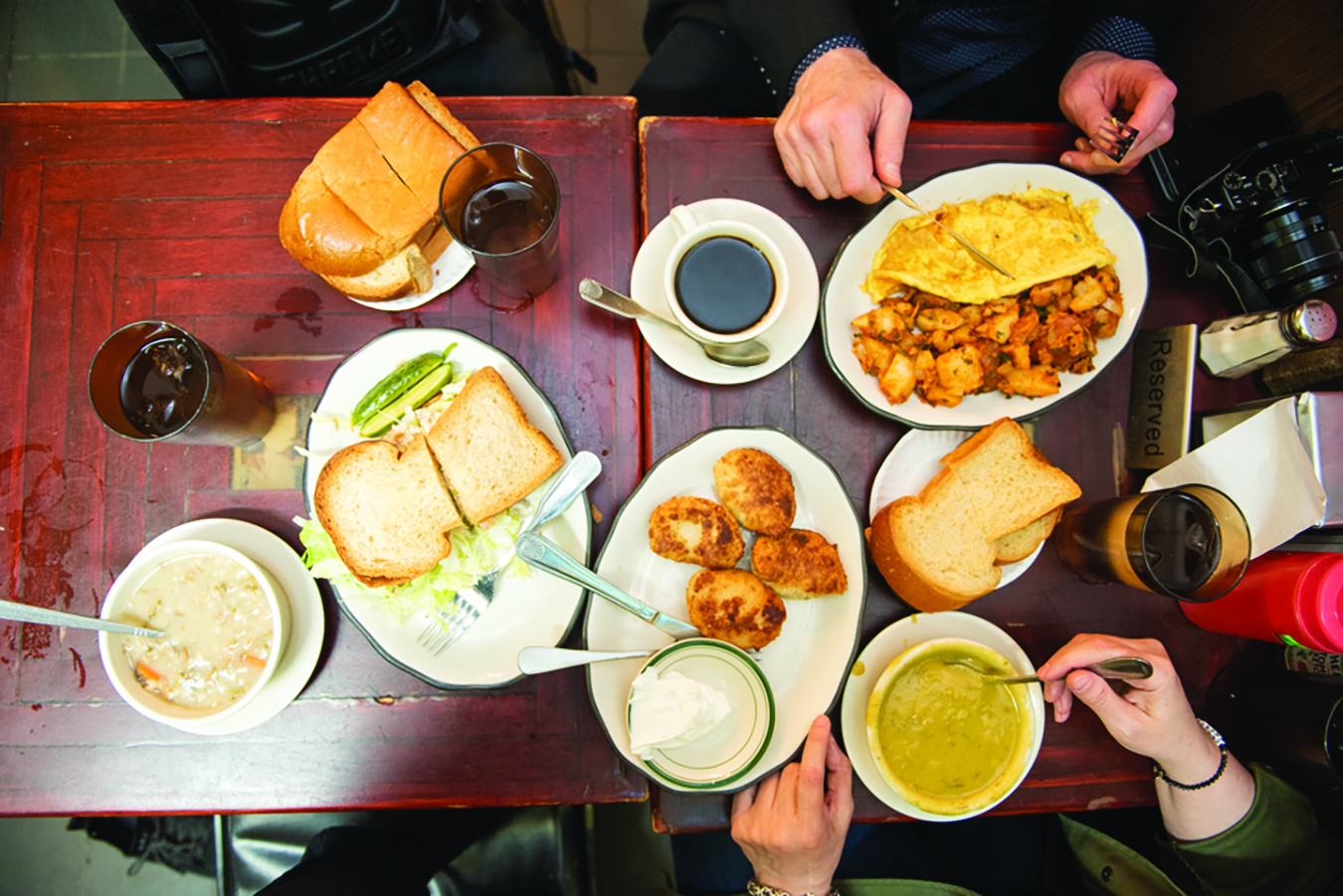
TRADITION B&H Dairy, on Second Avenue and St. Mark’s, has been serving kosher specialties since 1938, when the East Village was largely an Eastern European Jewish neighborhood. Pierogies, split pea soup, and borscht are just some of the delicacies on the menu. Every order comes with a stack of their delicious challah and a generous smear of butter. below: If you wander around the East Village long enough, you will eventually find Jim Power—The Mosaic Man— creating his public art. His work memorializes historic places and moments in Greenwich Village history.

St. Mark’s was the home place for the Beats in the 50’s, the hippies in the 60’s, and the punks in the 70’s and 80’s. In the 90’s the anarchists took over, and today the street—and the neighborhood—is in transition. It’s definitely more luxurious than when the New York Dolls posed in front of Gem Spa, but the history remains.

Like many New York locations, the story of St. Mark’s begins in the 1600’s, on tranquil farmland owned by one of New York’s first families, the Stuyvesants. It has a Hamilton connection too— Al Junior purchased the townhouse at 4 St. Mark’s Place in 1833, and he lived there with his family and his penniless mother for 10 years. It sold in 2016 for $10 million, but for years it housed Trash and Vaudeville, the first purveyor of Dr. Martens in this country.

Street photographer David Godlis has seen the neighborhood change in the 30 years he has lived on St. Mark’s. We wandered the street together, shooting, talking, and looking for that East Village magic. “The street is always there,” he says. “No matter what the storefront is, it’s the same street where Dylan walked, where Kerouac walked, where the Dolls walked, and where we are walking, right now.” DT

NIGHT OWL Street photographer David Godlis was born in New York City in 1951, and he picked up his first camera, a Pentax Spotmatic, in 1970. He has been shooting photographs ever since. He moved back to the city with his Leica in 1976, landing on St. Mark’s Place. He stumbled into the burgeoning punk scene at CBGBs, where he photographed legendary bands such as Blondie, Patti Smith Band, The Ramones, the Talking Heads, and Television. His photographs, collected in his book, History is Made at Night, capture the emergence of the punk rock scene in the East Village and the Lower East Side of New York City. Godlis says, “I was up in Boston at school, and taking pictures, and I wondered why they weren’t as good as Garry Winogrand’s photos and then I realized, it was because I wasn’t in New York.” He continues, “New York is designed for photography. If you stand on a street corner you can take a horizontal shot of the people walking towards you and it’s a great shot. Or you can take a vertical shot and get the buildings in—also a great shot. Winogrand used to say, ‘just pay attention to the four corners of your frame. If you can’t see it, it isn’t in the shot.’” Godlis’s book and photographs are available through his website, godlis.com, and at I Need More, 75A Orchard Street, NYC. DT
Categories
Art Culture Featured

BEYOND THE STREETS Extends Beyond Your Typical Art Exhibit

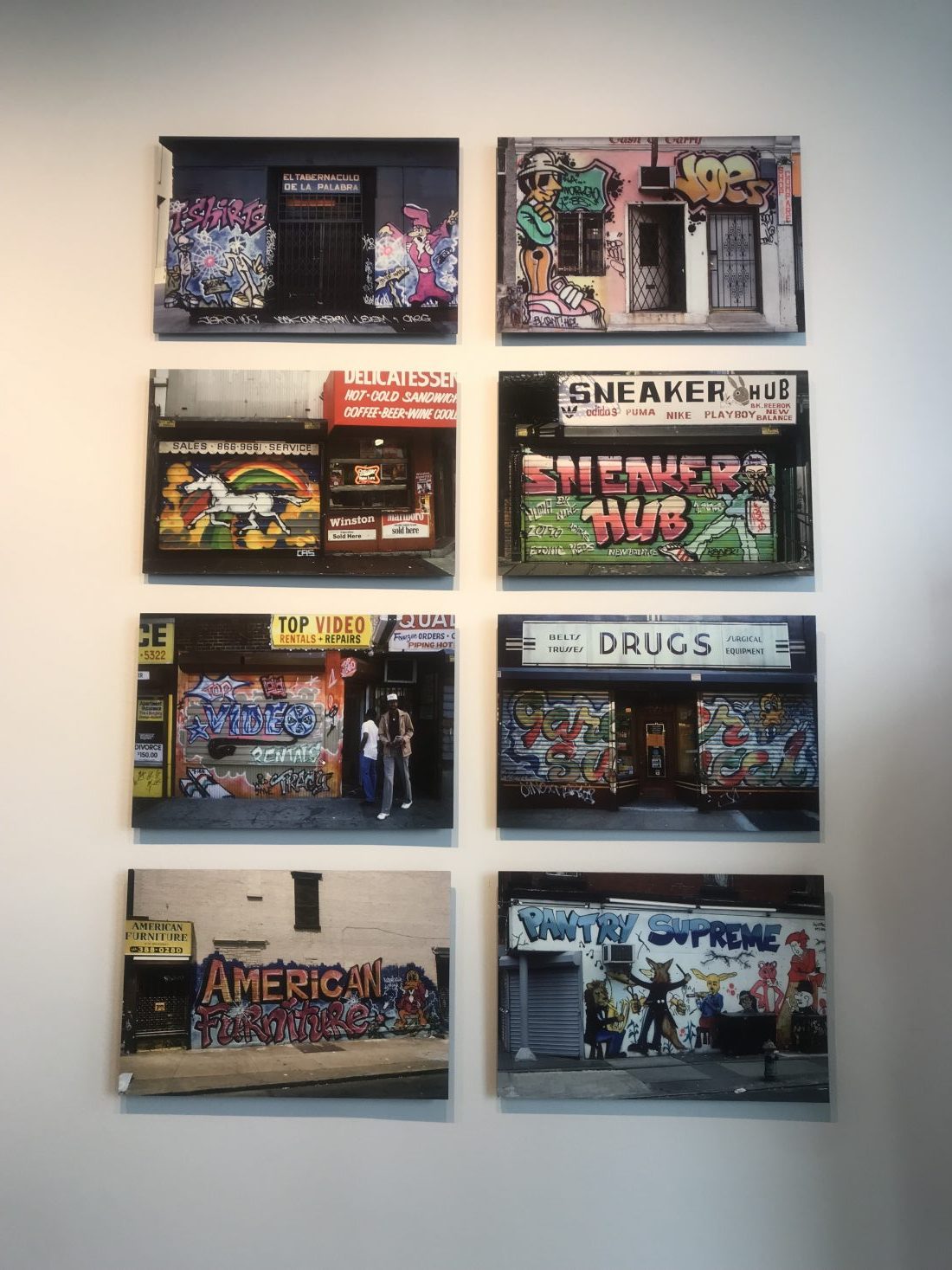
BEYOND THE STREETS has packed its bags from the streets of Los Angeles and traveled to the East Coast to make its debut in one of the art capitals of the world, New York City. Known as the premier exhibition for graffiti, street art, and everything in between, BEYOND THE STREETS decided to take over the city as it’s the epicenter where this art form prevailed. Taking over 100,000 square feet and two floors in the new 25 Kent building in North Williamsburg, the exhibition showcases original artworks, paintings, sculptures, photography, and installations from more than 150 artists from around the world, including the likes of Shepard Fairey, Vhils, Takashi Murakami, MADSAKI, Maya Hayuk, Lady Pink, among others.

DABSMYLA, an Australian husband-and-wife visual artist duo, partnered up with Amelia Posada from Birch and Bone, a floral company in Los Angeles, to do a breathtaking floral installation at BEYOND THE STREET’s exhibit in Los Angeles last year. This year, the couple decided to partner up with Posada to create another floral installation, but this time with a specific theme – unintentionally perfect in time for Pride month.

“We’ve been working on a series of paintings that are a rainbow series like this, with the painting, it’s like gradient, yellow down to blue. And so we wanted to make this installation, something similar to that. First, we collected all the flowers we had, counted them all together, and then worked a mathematical equation on how to add more flowers so that it would make the gradient. We got all the flowers in L.A. prepared and then we were in New York to set up the installation.”

Artists such as MADSAKI and Maya Hayuk talked about their humble beginnings in discovering their connection with art. MADSAKI, a Japanese-American, was born in Japan but moved to the suburbs of New Jersey around the age of six. Upon arriving and growing up, he couldn’t speak much English, partly because he didn’t understand what was happening around him. It wasn’t until he made the connection of drawing as a form of communication.

Artwork by MADSAKI. Images provided by BEYOND THE STREET

“I started to pick up the pen or crayon or whatever, and draw anything. If I wanted to tell the kids to look at the airplane, I can’t say airplane. So I drew an airplane. That’s how I really picked up drawing because I never drew before. But when I learned that I can communicate with drawing to people without speaking the language. I was like ‘Oh this is cool, I don’t even have to talk.”

By his mid-twenties and beyond, he’s worked with painting and focusing on working with cartoonish images from his childhood and a combination of words, some containing profanity.

Hayuk, on the other hand, start diving into street art when she was hanging around New York and the SoHo area was just beginning to be built and look promising. She always enjoyed working with large wax oil sticks. “We were painting like weird words and clowns and whatever, so I wouldn’t call it street art. It was more, ‘I’m bored, let’s go painting’,” she said.

Artwork by Maya Hayuk. Images provided by BEYOND THE STREET

However, one thing that Hayuk is very adamant about is refusing to use the term ‘street art’ or putting any descriptive word before ‘art.’

“I mean when you call art, art then it’s art. And you don’t have to put the word street in front of it necessarily. If you look at a group show, it doesn’t say street art on it. It’s just a group of artist names and then you see the association between them.”

One thing that Hayuk pointed out was the differences and dynamics of the actual exhibit. As BEYOND THE STREETS New York promotes itself as a graffiti and street art show, many of the artists don’t fit that particular mold, which is probably why the insert an “and beyond” in the advertising of their brand. She did joke around at the end and inserted that she hates the term ‘urban art’ even more.

There were many other standout pieces at the exhibit, including an honorary Beastie Boys section with archival pieces designed by Cey Adams and small toy-size rail carts repurposed with graffiti plastered on them. An additional bonus to the show was a pop-up shop on the second floor that featured refreshments and merch by many of the artists featured at the show.

BEYOND THE STREETS made its mark on extending the expectations of any art exhibit you’ve ever been to.

________________________________________________________________________

For more information and visitation to the exhibit, check out https://beyondthestreets.com/pages/visit to learn more.

Categories
Culture Entertainment Events Uncategorized

Street Art Gallery Graces 69th Floor of 4 World Trade Ahead of Spotify Move-In

Bradley Theodore, Coming To America

A project nearly a year in the making, 4 World Trade’s street-art inspired gallery on the building’s 69th floor is finally finished. The exhibit will feature the work of over 50 artists from New York, and around the world, in a variety of mediums.

Stickymonger, Cosmic Tower

ART4WTC is a dramatic and shift in style for the Silverstein Properties artist residency program, which they have used to decorate their unleased spaces for around the past 15 years. The idea for the art project was born when Silverstein Properties Chief Marketing Officer, Dara McQuillan, viewed a display of similar work at World Trade Gallery, and offered curator Doug Smith the opportunity to turn the 69th floor into a giant canvas.

Layer Cake + Belowkey, Joe LaPadula, Jenna Krypel, Beautiful Cleanup

Smith jumped at the chance, and since June 2016, the space’s barren cement interior has been transformed into a kaleidoscope of color propelled by each artist’s enthusiasm for their craft. The project not only seeks to revitalize the Lower Manhattan art scene and elevate street art from its humble beginnings, but also celebrate the Financial District’s progress since 9/11.

WhIsBe, Vandal Gummy Blue & Red

Some of the artists featured in the gallery include Bradley Theodore, Layer Cake, Rubin451, Logan Hicks, Stickymonger, Sonni, Cern, Hugo Bastidas, Lauren Ys, L.E.G., Itaewon and Ron English, and WhIsBe. His piece, Vandal Gummy Blue & Red, is a playful nod at street art’s past life as acts of vandalism, while Ron English’s piece, No Brain No Pain, is a powerful punch of reality and color.

Ron English “No Brain No Pain”

Fans of Hamilton can even find quotes from the hit musical in the very fabric of David Hollier’s $10 Bill, which faces the direction of the Trinity Church cemetery where the Founding Father himself is buried. Fortunately, Spotify — who will eventually occupy the space — plans to keep as many of the pieces as they can. Downtown recommends art fans of all ages check out the 3D tour available online to see the work of those keeping New York creative and colorful.

David Hollier, “$10 Bill”

Categories
Events

Trip.com’s TripPicks This Week: Monday, Feb. 13 – Monday, Feb. 20

Trip.com is an innovative planning tool that tailors recommendations for places to stay, eat and play to your specific tastes. It also allows you to share your great experiences with people who have the same interests as you; people in your “tribes.”

Trip.com’s TripPicks This Week feature empowers you to discover and take advantage of great events, openings and exhibits throughout the city each week.

Here are some exciting events and sites to check out this week in Downtown New York, courtesy of Trip.com. Visit the Trip.com site or download the app for more upcoming events.

Photo: Hernán Piñera/Flickr

1. Frigid Festival
Under St. Marks and Kraine Theater (East Village)
Monday, Feb. 13 – Sunday, Mar. 5 (check site for showtimes)

Here is why we love Frigid Festival: we get to see intelligent, thought-provoking independent theater; it’s super affordable; and, theater companies take home 100% of box office sales. Now that’s what you call art by the people for the people! Tickets start at $10.

Photo: Bobbie Vie/Flickr

2. Hip Hop Improv and History Lesson
The PIT (Flatiron)
Friday, Feb. 17 at 9:30 PM

Remember when teachers would teach really corny songs to help us learn and remember new things. Well, this historical improv hip-hopera is nothing like that. North Coast reintroduces you to major historical figures and puts together “a fully improvised and factually-accurate set to satisfy your hunger for hip-hop history.” $15.

Photo: Patrick Truby

3.Bacon and Bourbon Tasting
Astor Center (NoHo)
Saturday, Feb. 18 at 2pm or 6pm

While New York recovers from Saint Valentine’s, the Astor Center will celebrate a real match made in heaven: bacon and bourbon! The two hour walk-around tasting tour will feature over 50 bourbons, ryes, and whiskeys, served alongside “a wide array of smoky pork treats and craft cocktails.” $69.

Photo: Daniel Lombrana Gonzalez/Flickr

4. Graffiti Workshop
Check site for location
Thursday, Feb. 16 at 11:00 AM and Sunday, Feb. 19 at 3:00 PM

This week, leave your mark on the world. Learn the basics of aerosol arts with a real New York City graffiti artist. You’ll check out the works of other established artists and have the chance to create some original art, legally of course. $30.

Photo: Schezar/Flickr

5. Museum Of Interesting Things
Museum Of Interesting Things (SoHo)
Check site for dates and times

New York can be a pretty weird place. The Museum Of Unusual Things is proof of the city’s peculiar brand of strangeness. Here you will find curious objects like a pocket phonograph, relaxacisor and World War II Rationing Cookbooks. Call to book an appointment. $15.

https://www.youtube.com/watch?v=zasepT5ogXc

Categories
Dining

A look at the artists behind Chris Santos’ popular restaurant Vandal

Vandal
Vandal

Walking into Vandal — the only way in is, of course, through a boutique flower shop — we’re immediately greeted by a neon-lacquered breakdancing rabbit sculpture.

If you really, really know your street art, you know that it’s is a nod to the now-discontinued “Icy Grape” Krylon spray paint color still coveted by the street artist community.

It won’t come as a surprise that Hush, the U.K.-based artist who curated the art for Vandal, drew his strongest inspirations from graphic novels, animation and — of course — some of the most well-known and well-respected street artists of our time.

“I wanted to bring the outside inside to represent street aesthetics and complement the eclectic street food-inspired menu Chef Santos has prepared,” Hush said.

When anime-inspired characters and pop-infused imagery meet, they create a certain “wallscape” that reflects the dynamism of contemporary, global street art, while paying homage to the Bowery’s artistic history. The menu, a collaboration between Chef Santos and Vandal’s Executive Chef Jonathan Kavourakis, includes nods to global street culture of locales from Chile to Thailand, Greece to Amsterdam and beyond.

There are several themes running through the seven massive murals and curated photos and paintings that house the bi-level, 22,000 square foot restaurant: the female form; the contrasts between old and new, the fusion of Eastern and Western culture.

We’ve broken down the 7 murals by artist to give you a closer look at what makes Vandal feel more like a museum than a restaurant.

Shepard Fairey

Photo: Warren Jagger

As a skateboard-obsessed art student, Frank Shepard Fairey held a part-time job in a skateboarding shop and had a strong interest in the street art culture and graffiti movement.  One of the most influential street artists of our time, Shepard Fairey’s work has been used in screen-prints, stencils, stickers, masking film illustrations,, sculptures, posters, paintings, and murals. One of his most famous https://www.canadianmeds4u.com/​ works includes his portrait of Barack Obama, which drew national attention and received the Brit Insurance Design of the Year Award in 2009. At VANDAL, Shepard Fairey created two large murals on facing walls by using his wheat-pasting technique and his famed, propaganda-style art.

Tristan Eaton

Photo: Warren Jagger

Born in Los Angeles, Tristan Eaton began pursuing street art as a teenager, painting everything from walls to billboards in the urban landscape wherever he lived, including London, Detroit and Brooklyn. After growing up on comic books, graffiti and skateboard culture, Tristan designed his first toy for Fisher Price at 18 years old and began working as an artist full-time. He has since become a driving force in the world of ‘Art Toys’, designing the Dunny and Munny figures for Kidrobot.

Shortly after studying at the School of Visual Arts in New York City, Tristan founded Thunderdog Studios, of which he was the President and Creative Director for 10 years. Tristan’s work can be seen in galleries around the world and in the permanent collection of the New York Museum of Modern Art. Eaton’s mural on the back wall at The Library at Vandal was painted onto four custom bookshelves and depicts retro-inspired portraits of women alongside large text that reads “FANTASTIC FANTASY.”

APEX

Photo: Warren Jagger

APEX, AKA Ricardo Richey, creates colorful abstract patterns with spray paint. As part of the Gestalt Collective that participates in collaborative canadianmeds4u.com murals in San Francisco, he’s curated projects on Bluxome Alley as well as other districts of San Francisco. At Vandal, APEX was tapped to design the mural between the lounge and rickshaw room, where he used blue and white spray paint to illustrate the lyrics to a very well-known ode to New York.

Vhils

Photo: Warren Jagger

Alexandre Farto, who goes by the name of Vhils, penetrates through countless layers of posters, dirt, and plaster to “set free the poetic images hidden beneath urban spaces” by drilling away old plaster relief forms. Born in Portugal, he was raised during a period that was deeply affected by a revolution, and it was then that he witnessed a vast amount of destruction and the very real effects of the war.

He became well-known after one of his carved portraits was revealed alongside street artist Banksy at the Cans Festival in London in 2008. 

His relief portrait is chiseled into plaster and brick walls at Vandal, as they are around the world. He is also known for using etching acid, bleach, pneumatic drills, and other street art tools to reveal a wall’s layers. Vhils has two plaster relief pieces at Vandal — you’ll know them when you see them.

Will Barras

Photo: Warren Jagger

Will Barras is an artist, illustrator, and animation director who lives and works in London, where he first became part of a group of young artists working in Bristol’s renowned street-art district.  A founding member of the Scrawl collective, he’s best known for his representations of fluid movement, unique narrative-driven composition, and line work. Barras has traveled extensively, live-painting and exhibiting pieces throughout Europe, the U.S., and Asia. His work at Vandal can be found behind the main back bar wall in the form of a mural depicting hands walking across a globe.

Eelus

Photo: Warren Jagger

Eelus is a stencil artist who is drawn to mysterious images of science fiction, estates, female forms, and the bizarre. His work has been described as humorous, sinister, beautiful, haunting, a daring mixture of light and dark…needless to say, he is considered a master of the street art scene. His work is instantly recognizable, with its bold, bright and sharp colors. The advantage of creating street art, Eelus said, is how it can prompt discussion of art among those who wouldn’t discuss it otherwise. His work can be seen in the Secret Garden; a large-scale piece that depicts a mysterious winged female figure and other winged black crows watch over the hidden dining room.

https://www.youtube.com/watch?v=d3vTcX0p4So&t