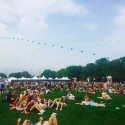
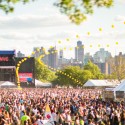
Launched last year, The Meadows Music & Arts Festival was a two-day event launched by Founders Entertainment, the team behind Governors Ball. Headliners at Citi Field included Kanye West, J. Cole, Chance The Rapper, The 1975, Grimes and Metric. Food and drink vendors, as curated by The Infatuation, included Roberta’s, Dough, Arancini Bros., Luke’s Lobster and Momofuku Milk Bar. Other on-site attractions included the Bud Light Beer Garden, the Don Julio 1942 Truck, the Viceland Tour Bus, and Sober Meadows.
In turn, the bar is set very high for the 2017 edition — now a three-day event — which returns to Citi Field from Sept. 15 to 17. While the lineup has not yet been announced, more than 60 performers are promised among the four stages.
Located in the West Village, Analogue is a cocktail bar that has received rave reviews from the Wall Street Journal, Gothamist and DNAinfo alike. While many Manhattan bars aim to have music playing loud so that its customers have no choice but to dance and pound drinks, Analogue takes a very different approach. Whether it has a jazz trio live or its vintage Hi-Fi setup playing, Analogue keeps the music at a reasonable volume, allowing you to engage in conversation with ease. Analogue also offers a great food menu and has a lot of artwork on the walls for its patrons to look at.
Downtown had the pleasure of talking with owners Jesse Wilson and Jared Gordon, who met as students at NYU. As noted within our Q&A, Analogue is currently in the midst of expanding, although the location of its second spot has not yet been revealed. More info on all things Analogue can be found at www.analoguenyc.com.
You two met while studying at NYU. Where did the idea of opening a cocktail-centric bar come from?
Jesse Wilson: At first, the idea started when we would hang out at various bars around the Village and talk about how cool it would be to open a bar. After NYU, I moved back to San Francisco to work in finance and started to work on a business plan on the side. At that time I was also starting to notice a proliferation of cocktails and craft beers in the marketplace. I just couldn’t do it by myself due to work so kind of shelved the idea. When I moved back to New York City, Jared was ready to move on from finance himself and approached me with the idea of opening a bar. After a lot of discussion, we decided on the concept of doing a cocktail bar for a professional, grown-up crowd and Analogue was born.
Jared Gordon: We wanted to open a bar that featured the drinks we enjoy. That’s cocktails, whiskey and an occasional great beer. So that’s what we did. We pride ourselves on our cocktails and have put together an outstanding program, but we’re agnostic as to how we’re perceived or what the guest wants. As long as they’re enjoying themselves, it doesn’t matter to us whether they’re having our most complex cocktail, our rarest whiskey or just enjoying a glass of wine or a beer.
Did you have any restaurant or bar experience prior to opening Analogue?
JW: We didn’t have any experience really. Jared had a little bartending experience in the Upper East Side and had read a few books, but that was about it. We figured with our strong business backgrounds we could run the business, but we also knew we needed to hire people we trusted with experience in the hospitality industry.
JG: I’ll echo Jesse’s thoughts. I started tending bar to get a sense of the business, but I was pouring neat well vodkas at a few dives on the Upper East Side. Not quite the same level. We knew what we wanted and we knew how we wanted to treat our guests. The rest is putting a team in place to help execute that vision.
The Dorian Gray / Photo: Michael Tulipan
How would you describe Analogue to someone who hasn’t yet been there?
JW: I think the name “Analogue” fits the bar well. It’s a high-end cocktail lounge that is almost a throwback to Manhattan in the 1950s and 1960s. We do great cocktails and food and have a great atmosphere that promotes conversation amongst friends. It’s a throwback to a non-digital era, hence the name. I actually notice people come in and use their cell phones a lot less and just talk with each other. This was one of our goals when we were designing the bar.
JG: Jesse put it perfectly. It’s a comfortable bar in which to enjoy a great drink and a conversation.
Do you have a favorite drink on the menu? A favorite food item?
JW: My favorite drink is our signature called The Analogue. It was our first drink on the menu. It blends Havana Club Anejo Rum, Four Roses Bourbon, Domaine de Canton ginger liqueur, St. Elizabeth Allspice Dram, Velvet Falernum and bitters. When we opened, we wanted a bourbon-focused drink that was good for the colder fall weather in New York. When I tasted it I said to our bartender Nesha Korak, “Wow, if I could taste our bar that would be it! What should we call it?” And he responded, “Well that’s what it is then, call it Analogue.” And it’s been on our menu ever since day one.
JG: I’d say my favorite drink is whatever the team is working on at the moment. I enjoy the evolution of the individual bartenders and the program as a whole through time.
Jared Gordon & Jesse Wilson
Who is in charge of your cocktail menu? How does your team come up with cocktails?
JW: Zack Berger is our head bartender and facilitates the process for the team. The menu is a collective effort for all of our bartenders. They are always creating, and when we do a menu, they bring several of their best drinks to the table to try. We do a few rounds of internal tastings and then pick the winners. We then adjust the menu to put on the best cocktails and remove any drinks that are out of season or slow moving. It is a constant process.
JW: One of the first concerts I remember was U2 during the Joshua Tree tour back in 1987. My father took me when I was 13 years old. This was when U2 was at their peak and becoming a global phenomenon. The concert blew me away. I remember walking out of the Oakland Coliseum to the crowd and everyone was still singing “40” in unison. It’s cool to see them doing the 30 year anniversary tour now!
JG: My first concert was the Concert For Walden Woods, featuring Billy Joel, Don Henley and Sting. The seats were terrible but the music was amazing. Live music and music in general have played an important role in my life ever since.
Black Boulevardier / Photo: Michael Tulipan
What was the latest concert or music-related live event you attended?
JW: The last show I attended was The Cult here in New York. The Cult was another band I grew up listening to and they are still going strong! I like a lot of alternative, hip-hop, jazz, country, metal, pretty much any genre if it’s good.
JG: I’ll echo Jesse’s sentiments. I love everything from old school East Coast hip hop to bluegrass, metal, and classical. The last shows I’ve seen were Iron Maiden (my second time), Dave Matthews Band (my 24th) and the Governors Ball, where De La Soul was the highlight.
I understand that Analogue features live music a few days each week. Who are some of the artists that regularly play there?
JG: currently we have Nick West and the Westet on Tuesdays and Monika Oliveira on Wednesdays. Nick West is a funky bass-driven trio, and Monika has a beautiful, mellow bossanova sound.
When you don’t have musicians playing at Analogue, I know that you have music spinning. Have you always been so vinyl-centric?
JG: We spin vinyl on special occasions, and for that we have a fantastic vintage turntable and tube amplifier. We’re also starting an audio salon where we will feature some truly high end systems and some classic albums each month. Vinyl has played a role in my life since birth, when it was just called “music.” As I got older, I started my own collection by stealing my parent’s albums and it took off from there. I have about 7,000 albums at the moment, down from a peak of about 8,500. I enjoy the hunt — scouring yard sales and thrift stores and finding new music or forgotten gems. And I enjoy building and tweaking my HiFi system.
The Analogue / Photo: Michael Tulipan
Who chooses the music that is playing at Analogue?
JW: Usually our management team will set the music that is played at the venue. We are always on the lookout for new bands in the area. A lot of the bands we discovered were from around the West Village area playing at venues or outside at Washington Square Park.
The walls of Analogue are also lined with music-related photographs. Were those from a personal collection?
JG: The photographer is Roberto Rabanne, who has shot some of music’s best. The prints in our space are all originals, and the collages of Ray Charles and Bill Evans are each one of a kind.
I know that Analogue has a private room. Is that only for private events?
JW: Yes, we host a lot of events in the back such as private parties, corporate events, cocktail classes and wedding receptions.
When not busy with Analogue, how do you like to spend your free time?
JW: Sleeping! I work full-time and help manage the bar, so in my little free time, I like to relax. But now we are looking to open our second location, so a lot of free time is spent working on the new location.
JG: I recently had my first child, a little boy we named Jack. So free time is in short supply at the moment. Between him, Analogue and scouting for the next location, there aren’t enough hours in the day. When I do find some down time, I like to play music, read, cook, and yes sleep.
Analogue / Photo: Michael Tulipan
Aside from Analogue, do you have a favorite bar or restaurant in New York?
JW: I am really into craft beers right now so I appreciate a good selection of beers and a nice atmosphere. I liked Cooper’s when I lived in Chelsea. I now live on the UWS and like Gebhards, a new craft beer place near my apartment.
JG: I like dive bars. When I’m at a cocktail or whiskey bar, I find myself too focused on the menu, the setup and the service. I relax when I can kick back with a beer and a whiskey and not worry about taking notes. Parkside Lounge on Houston and Lucy’s on Avenue A are two favorites.
Finally, any last words for the kids?
JW: Don’t get caught up in all of the cocktail hype! We try to focus on making cocktails that taste great and put a lot of work into that. We don’t get caught up in all of the hoopla to try and get too clever or go over the top with our creations. A lot of our drinks are rooted in tradition, the foundation if you will. The goal is to just make quality drinks that the customers will enjoy and have a good time. At the end of the day it’s all about giving our customers the best possible experience.
NEW YORK, NY – JUNE 03: Tom Howie and Jimmy Vallance of Bob Moses spin during BACARDI presents the BACARDI UNTAMEABLE HOUSE PARTY at Governors Ball Music Festival at Governor’s Island on June 3, 2016 in New York City. (Photo by Rob Kim/Getty Images for Bacardi)
For many New Yorkers, Governors Ball is the official kick-off of summer. This year was no exception. There were unforgettable fashion choices, outstanding musical performances, and even a rainstorm.
The festival’s lineup boasted big names including Kanye West, The Killers and Mac Miller, as well as The Knocks and De La Soul. The Knocks owned their afternoon set at the Bacardi stage on Saturday and surprised the crowd with two well-known guests: Carly Rae Jepson and Wyclef Jean. The Knocks are currently producing Wyclef Jean’s forthcoming record and said, “working with Wyclef is incredible.” The Knocks also gave a select group of festival-goers an intimate performance at the Bacardi House Party after their main set.
De La Soul absolutely wowed the crowd on Saturday. One band member, while discussing their new album said, “we’re not doing this album to just come out on tour again and make some money, it’s really about continuing our legacy.” The group’s energy was palpable and left the crowd excited to check out the band’s new material.
In addition to the music, Governors Ball is also known for their assortment of food vendors. This year there was an array of unique and delicious options from restaurants such as Uma Temakeria, Arancini Bros, and Café Habana. Festival-goers had the opportunity to enjoy New York City specialties such as the sushi burrito, sweet and savory rice balls and handmade ice-cream sandwiches.
NEW YORK, NY – JUNE 03: Jessica Serfaty and Alana Blanchard attend BACARDI presents the BACARDI UNTAMEABLE HOUSE PARTY at Governors Ball Music Festival at Governor’s Island on June 3, 2016 in New York City. (Photo by Rob Kim/Getty Images for Bacardi)
New York City is full of energy, eccentricity, and expression. Governors Ball is a perfect outlet, on an island bordering the city, for New Yorkers to relax, have fun, and enjoy the vivacity of a festival atmosphere.
I first found out about Mike Viola in 1997 when his old band, Candy Butchers, opened for They Might Be Giants at Irving Plaza. I was blown away not just by the songs, but the familiarity of his voice. While doing some research the following day, I uncovered that Viola was the voice (and primary instrumentalist and rumored co-writer) behind “That Thing You Do!”
In the nearly 20 years since that gig, Mike Viola has positioned himself as a highly-sought-after producer, composer and sideman. A lot of the music in “Get Him To The Greek” and “Walk Hard: The Dewey Cox Story” was written by him. Ryan Adams, Matt Nathanson, Rachael Yamagata, Mandy Moore, New Politics, Brett Dennen, Gin Wigmore and Andrew McMahon are among the artists who have recorded his songs over the past few years. Recent releases by Fall Out Boy, Jenny Lewis, and Butch Walker include his studio work.
2015 brings the release of “Stairway To Paradise,” a 4-song release featuring Mike’s first new music in a few years, as put out on Ryan Adams’ PAX-AM label. As part of Ryan’s band, Mike will be playing at this year’s Governors Ball Music Festival.
As someone who transitioned from a Boston novelty as a teenager (who made an album with Kim Fowley), to a New York-based major label artist in his 20s, to a project-based writer and producer in his 30s and 40s – now based in Los Angeles – Mike certainly has a lot to teach about long-term survival as a musician. He kindly took time to answer some questions for Downtown about how he became a “go to” for struggling artists.
Downtown Magazine’s Darren Paltrowitz: When someone asks you what you do for a living, how do you usually answer?
Mike Viola: Musician. That seems to cover it all.
You got your professional start as a teenager. Is that something you’re proud of? Or is there some regret in knowing that your work from so many years ago is out there?
M: It is what it is. Making rock music for a living isn’t something you decide. It just happens and if you’re lucky enough to be pretty good, that’s all it really takes to get people to notice. The trick is, having something to say, a purpose. Now I get hired to find the purpose for younger artists. There are so many young singers and performers who are hungry for this version of stardom they’ve been sold on TV by shows like “The Voice.” They are looking for record deals, and if they can sing and maybe play and they look great or have some quirky thing about them that feels like star quality, they eventually have to make a record. That’s usually the beginning of the end for these kids. Like betting on a pony. For me, and for people of my generation who just stumbled into it without any idea of what it would bring besides some kind of rebellion, or a way to get girls, we didn’t face that challenge. Our challenge was to get a gig, find people to play to, then we took it from there. I can remember as a kid being in the studio was something we HAD to do to sell the music, but we always thought we were better live. Which we were. Recordings exist of me when I’m really young and some of it is definitely not embarrassing. ‘Cause although I sound like Joan Jett — my voice hadn’t changed yet — we were participating in this DIY movement that was driving The Minutemen, Black Flag, etc., without even knowing it. We were trying to sound like Foreigner but ended up sounding like The Buzzcocks.
Photo: Courtesy of Mike Viola
Are there any skills or parts of your trade that you think you were better at 10 or 20 years ago?
M: Not at all. The real curse of time is that you end up finally honing your skills when it might be too late. This goes for everything, not just music. I’ve learned that the REAL music that exists is an extension of lives lived. A residual of lives lived. It’s not the end game. Being alive and interacting with people is the end game. Everything else just gets buried, sold off or put in a museum. The trick is to survive while you’re alive, not when you’re dead.
Of all the projects you’ve worked on, do you have one or two that you are most proud of?
When was the moment in your career where you knew that you were a lifer in music?
M: Really the second I picked up the guitar. The only question I’ve ever had is, “Can I keep on getting away with this?” As long as I can, I will. That’s the true gift.
Do you have any regrets when it comes to your career?
M: Probably. I mean we all do right? Definitely! I’ve tried to learn from the missteps.
Looking back at the past 30-plus years in music, how much of the work you’ve done came as a result of hustling versus proper auditioning?
M: I’ve auditioned for one thing in my life. One. It was for a commercial for sneakers. Zips sneakers. My mom thought we could use the money and I was approached by a talent scout and auditioned and won the spot. It’s on YouTube. It’s hilarious. I don’t hustle. I wish I knew how. My thing is, when I get a job working with an artist, I always try and do my best. That sounds righteous…or like… bullshit, but it’s not. My advice to anybody is simply: try, really try.
Are there people you are still itching to work with?
M: New artists that are lost and in need of direction.
Is there a field that you are interested in outside of music that you’d ever consider doing?
M: No.
What are the apps and/or web-based tools that you rely most on for work?
M: Just e-mail. I use Logic and ProTools for songwriting from time to time, but mostly I write on guitar. All the recording happens on tape.
You’re known to be a big vinyl aficionado. Are there any other old pieces of technology that you’re especially fond of?
M: I love my landline back home, and writing songs on hotel stationary.
When you’re not at work, what do you like to do in your free time?
M: Play with my kids. Usually in my driveway with the doors to my studio open wide, vinyl cranked up, usually something heavy so we can hear it over our playing.
With the Governors Ball Music Festival quickly approaching, there’s many things you need to keep in mind beforehand. For the past five years, thousands of attendees are bombarded with the excitement and their own adrenaline. For a pretty young tradition, the festival has already become the New Yorker’s summer event staple, and there’s no better way to kick off the season! Brace yourselves. It’s going to be a colorful weekend, fun-filled with great artists, green grass (endlessly ingrained by golf balls!), sweaty people, lots of sun, and bad air! Here are our rules for a successful fret-free Governors Ball weekend:
I. Never underestimate the forecast.
Whether it was 2013’s monsoon that had attendees tossing their shoes away and sloshing around in mud that essentially rose to their knees, or 2014’s scorching hot, 90 degree-plus weekend––you’ll never be expecting what chooses to fall from the sky in this day and age in 2015.
Basically–wear breathable clothing and don’t wear shoes you love.
II. Don’t judge the line by its length, check-in isn’t as bad as it may seem.
The check-in process before you get your wristband goes by pretty smoothly, but don’t pack too heavy. Open bottles/cans of water, juice, soda, etc. will be thrown away. Any bottles/cans of liquor, beer, etc. will be thrown away.
III. Try not to breathe… just kidding.
The air-quality is noxious (to put it lightly). The progeny of cigarette smoke, stage smoke, marijuana smoke, grill smoke, and what have you, will certainly do a number on your nasal canal.
Comparable to taking a walk through Hong Kong, some attendees experienced discoloration when they innocently blew their noses into a tissue upon arriving home. If your sinuses are sensitive, don’t forget to have some Mucinex and tissues handy!
IV. The bathrooms… will be… PORT-O-POTTIES.
You can’t escape them. Don’t we all wish we can bring the comfort of the cushiony toilet seats from our apartments everywhere we go? Evil comes in a tangible form with port-o-potties. The self-operated hand-washing faucets outside the rest area lack soap so hand-sanitizer and baby wipes are a must!
V. HYDRATE!
Don’t let Rule #4 discourage you from quenching your thirst. This rule is fundamental. We know, we know… you’re going to want to drink beverages other than water, but water is most important. Have your fun, but also, drink water!!! Got it?
VI. Feed yourself.
We get it. You’re afraid to leave your really great spot in the crowd to grab a bite, but you’re starving. Meanwhile, you want to be as close to touching Drake as possible.
Food is essential, we all knew that one. Grab a bite. There’s so many options at the festival: kosher, vegan, vegetarian, gluten-free, etc.
VII. PEOPLE ARE GOING TO COLLAPSE.
Do you want to be one of them? Then eat and hydrate. With the smoldering June weather, it’s easy to become dehydrated. Remember, alcohol and coffee are dehydrators. Make sure to keep a balanced ratio of beer to water.
Keep in mind that by the end of each day, you’re going to be covered in dried sweat of strangers you were sardined with. It’s hard not to become overwhelmed when you have the weight of strangers on top of you coupled with distracting music blaring, and nowhere to escape to. The crowd gets pretty intense and people are going to be pulled out onto stretchers in order to be taken into the medic tents. Or even worse, being frantically carried by their friends.
VIII. Try not to get impatient with strangers.
Who wants to come back with a black eye? That’s embarrassing. Alcohol lowers inhibitions and when someone in the crowd shoves you aside without saying excuse me, naturally, you’re going to want to kick them. But don’t. Just don’t.
Someone taller than you is going to stand right in front of you, blocking your perfect view of Tame Impala. You realize you’ve been farther away from the stage since the set started, and it just feels like we only go backwards. Don’t confront the person who cut you off, just shimmy around them.
Expectations couldn’t have been higher for this years Governors Ball. Thankfully, the music festival, taking place on Randalls Island, NY and featuring 68 live acts on four stages, didn’t disappoint. 150.000 music fans were in attendance for 2014’s Governors Ball.
Tickets for all three days of New York City’s very own music festival were sold out almost instantly, with Saturday selling out faster than any other day. We’re sure The Strokes and Jack White had something to do with that.
Friday was definitely the day at Governors Ball, with Outkast headlining in honor of their 20th year anniversary. Outkast‘s undeniable energy, charisma, and funky lyrics kept the crowd dancing throughout their entire hour and a half performance.
English electro music duo, Disclosure was an unexpected hit at the festival (if you don’t believe us, you can ask Madonna, who was backstage taking pictures during their performance). Los Angeles’ native band, PAPA had an amazing, crow-pleasing set that had everyone dancing. Saturday’s lineup was the festival’s prime acts, as it was the day that included electrifying performances by The Strokes and Jack White.
On the final day, Foster the People and Vampire Weekend incited the crowd to dance, bringing the festival to a close with an upbeat momentum that carried on long after the final act took the stage.
Luckily, over the entire festival weekend, the bad weather let up long enough to let the sunshine take the spotlight. Attendees of the music festival were recognizable, once they left Randalls Island, not only by their smiling faces but by their obvious tan lines.
The line-up for Governors Ball 2015 will be announced in seven months. The countdown has already started.