Categories
Culture NYC

The New York International Film Festival Turns 25

The New York International Children’s Film Festival is returning for its 25th anniversary starting today through March 19. Featuring new and emerging artistic films for kid audiences, the NYICFF is bound to surprise and delight families, children, and imaginative adults. With 20 different films to choose from in addition to exclusive short film programs, films ranging from animation to foreign drama to a child’s life will cover every scope of wonder a viewer could hope to have.

Films made in countries including France, Japan, Argentina, Germany, and beyond will be among those exhibited at this cultural festival. Children will find the stories and realities told in these films to be both personable and entrancing, making connections to their own lives and enjoying the possibilities of movie magic. The international scope of the festival also allows them to be exposed to other languages and cultures, which can instill an appreciation for diversity and foreign cultures from an early age. It can also support how children develop qualities such as an open mind and the ability to think critically.

The NYICFF has been carefully curated to offer the best qualities of an in-person movie theater experience while still cautiously planning around COVID-19 realities. In-person screenings will all take place at the SVA Theatre, located at 333 West 23rd St. in Chelsea. Proof of vaccination is required, and all theaters will undergo a rigorous cleaning regime between screenings to ensure complete safety for guests. Virtual programs for children both below and over 5 years old will also be available for those seeking to enjoy the festival from the comfort of their own home.

To learn more about the New York International Children’s Film Festival and purchase tickets, visit https://nyicff.org/festival/. The festival runs March 4 through March 19, with different films and programs available each day.

Categories
Culture Entertainment Featured Movies

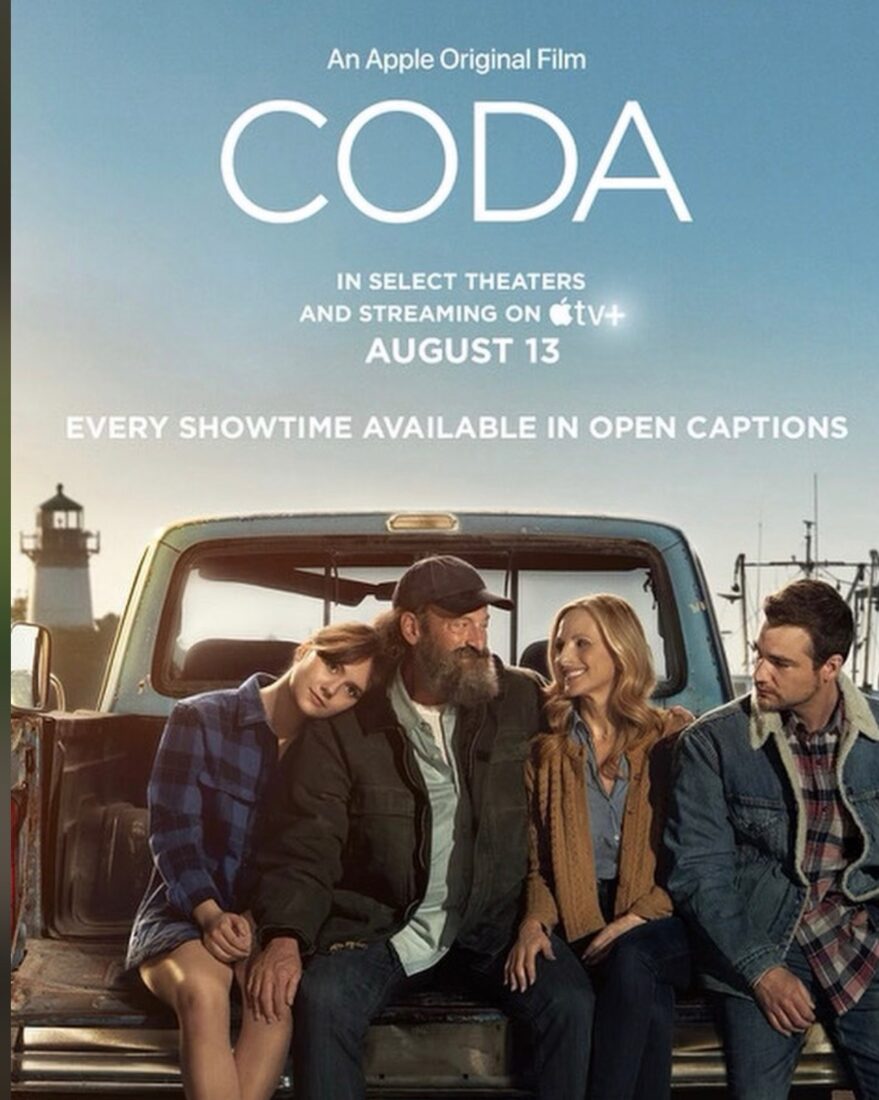
You Should Be Watching: CODA

Communication between teens and parents is notoriously tough. It has been fodder for hundreds of coming-of-age stories. CODA (2021), whose title is an acronym for “Child of Deaf Adult,” tells the story of a teenager whose parents and older brother are all deaf and her struggle to find her voice and be seen through her love of singing. This simple premise alone breathes new life into a coming-of-age story and infuses every moment with detail and love.


Ruby Rossi grows up in Gloucester, MA, the only hearing member of her family. All her life, she has acted as the ears and as translator for her mother, father, and brother. When her senior year comes around, she picks choir, mostly to impress a boy. There, she finds her voice through song, a talent she had never been able to share or express with her family. As Ruby starts to move toward her dream of attending a university of the arts, her family moves toward their dream, one that relies heavily on Ruby as their translator. The plot follows the tension between the two as life forces Ruby to choose between expressing her family’s voice or her own. 


CODA is a remake of a 2014 French film, La Famille Bélier, which it sometimes mirrors shot for shot. It is one of those examples of what I consider to be a justified remake. They took a look at the movie and said to themselves, “No, we can do better.” The original was a comedy, played much more for laughs, with most Deaf characters played by hearing actors. Much of the humor is at the expense of the Deaf characters. The emphasis on comedy takes the impact away from some of the strongest scenes in the story. 


The core story is a simple one: a family trying to get by and a girl expressing herself and getting the boy. What sets it apart, what forms its soul, is outside of language. There are two moments in this movie that, I believe, describe the experience of music better than anything else I’ve seen. The first is when Ruby’s choir teacher, Bernardo Villalobos, asks her what it feels like to sing. Unable to describe it aloud (before joining choir, nobody outside of her family had been around while she sang, so no one had ever heard it), she expresses herself through ASL. It is a moving moment, something that cannot be said out loud. The second example, equally if not more moving, is much deeper into the story, but I think you will know it when you get there. 


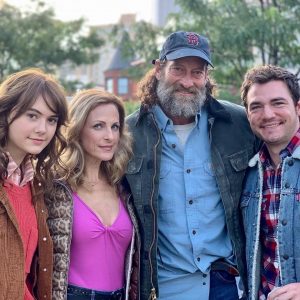
There is something in CODA, a certain je ne sais quoi (if we want to, like CODA, borrow from the French) that transcends language. Like music, it is something that you have to feel to understand. It demonstrates a deep understanding of its subject matter, displays stunning performances throughout, complete with great chemistry in the cast, especially the Rossi family. But that doesn’t entirely cover it. 


There is only one real way to understand the heart of CODA and those making it: watch it. Please. Go to a theater if it’s showing there. Hop on Apple TV, or head to your friend’s house if they have it. Watch this movie. 

Categories
Entertainment Featured Movies Uncategorized

Tango Shalom Wins Best Film for Peace and Tolerance at Cannes – Downtown Q&A: Judi Beecher

Tango Shalom has just won Best Film for Peace and Tolerance at the AFI awards for peace and tolerance at the Cannes Film Festival. Earlier in July, we sat down with a star of a film, Judi Beecher. Here’s what we learned.

We met Judi Beecher at the rally for the Battery Park City Community which won the fight to prevent Governor Cuomo from building a large monument for essential workers on their beloved land. While standing on a common ground for the love of grass and trees, we discovered another common ground. Beecher is not only a lover of Downtown but a lover of the arts. She is a multi-award-winning international actress, singer-songwriter, and filmmaker. Talk about a triple threat.

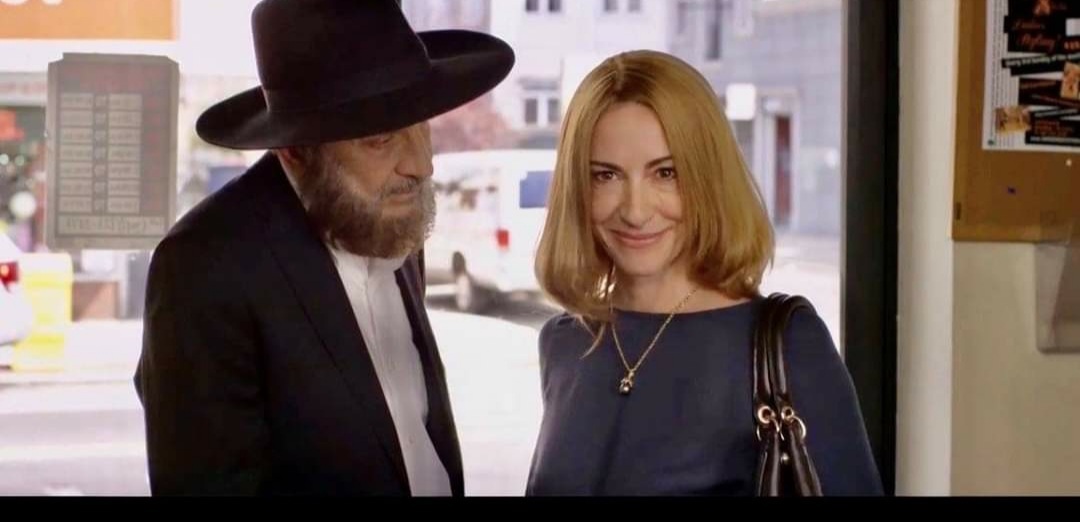
Her most recent project is with the NYC-based-in “Tango Shalom”, a film about a Rabbi who gets a calling from God to become a tango dancer, but his religion prevents him from touching women he is not married to. To get some sage advice, he confides in several other religions. Beecher plays the role of the Rabbi’s wife and tells us all about it – all the way from Cannes Film Festival.


Downtown Q&A: Judi Beecher
Judi Beecher


Downtown: How did you get into acting?
Judi Beecher: I studied business and international relations at Cornell University then interned for six months in a French Bank in Paris while modeling on my lunch breaks. I then briefly had a very successful import-export company at 512 7th Avenue in NY, repping upscale French and Italian clothing lines. When my best friend from college asked me where I saw myself in 5 years, I realized I wasn’t completely happy doing what I was doing. So I read the book “What Color is Your Parachute”. I realized that since I was a child I was always performing, everything pointed to acting, singing, and directing, so I closed my business and enrolled in Acting School.

DT: Who did you study under?
JB: I studied with acting masters and founders of the Actors Studio; Uta Hagen, Billy Hickey, Bobby Lewis, and Elaine Stritch at the Stella Adler Conservatory. I also did a two-year Meisner program at Gately Poole and Actors Movement Studio and Playwrights Horizons in NYC. In Los Angeles, I studied with Larry Moss and Gordon Hunt.

DT: Can you name some of your previous works?
JB: I was just on the French TV series, “La Garçonne” the same producers as “Call My Agent”.  I was in “Taken 3” with Liam Neeson, Dany Boon’s, “Family is Family”, “Law and Order,” “The Shield”, “Jag” and much more. 😉 I won Best Actress for the Romantic Comedy, “Only in Paris” which I also produced, and I was the voice and motion capture of the lead character Madison Paige in the acclaimed video game “Heavy Rain” where I was voted 25 best VO performances of all time by the “Complex” magazine.

DT: What roles did you have in the making of Tango Shalom?
JB: I played the role of Raquel Yehuda, the Chassidic Jewish Mother of five and the wife of Rabbi Moishe Yehuda who is told by God that he must enter a televised dance competition to resolve his financial problems. I was also an executive producer on the film.

DT: Where did the inspiration for the film come from?
JB: The inspiration came from Jos Laniado who plays Moishe Yehuda and who also co-wrote the film with his brother Claudio Laniado and Joseph Bologna. Jos is an actor, teacher, and also a Tango Dancer, who went regularly to Chabad where he imagined what would happen if a Rabbi got a calling to dance the Tango, and Tango Shalom was born!

DT: What motivated you about this particular film?
JB: Tango Shalom is about bringing cultures and religions together in a sweet, loving, fun way. It exemplifies the power of family, love, support, and being open to others’ faiths.  In the film, Moishe is forced to ask a Catholic priest, a Muslim imam, and a Sikh holy man for advice. Together, they hash out a plan to help Moshe dance in the Tango contest without sacrificing his sacred beliefs.

The film industry is a powerful medium, just before meeting Claudio Laniado at the Cannes Film Festival. I had recently had an epiphany that I needed to work on projects that would do something to change the consciousness of the planet, a few years later I auditioned for the lead role! The film is a feel-good film, with a message, fabulous music and dance! I can watch the film over and over again and never tire of it.

DT: Tango Shalom has garnered an 80% rotten tomatoes rating already. That’s quite the high score for rotten tomatoes! How does that make you feel?  
JB: It makes me feel fantastic. The film isn’t out yet and already we have won 7 awards.  I can’t wait for it to open in theatres worldwide so everyone can see it!

DT: For how long have you lived in downtown NYC?
JB: I’ve lived in Battery Park City/Tribeca for 11 years, it is the longest I’ve lived anywhere!

DT: What is your favorite spot in Downtown NYC?
JB: I love Rockefeller Park and Grand Banks when the weather is nice. I love to sit on the sailboat, have dinner and feel like I’m traveling in the Caribbean, in my own backyard.

For more Downtown Q&A, click here.

Categories
Culture Featured Movies

Oliver Trevena Takes The Plunge Back into Cinema

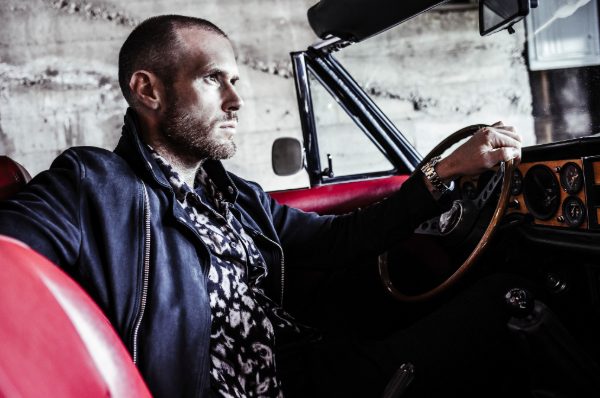
Photo credit Josh Beech

Oliver Trevena is a British actor and longtime host of the interview show Young Hollywood. In the two years after leaving the show, he has been part of more than a half dozen projects, two of which have already been released. In 2018, he had a role in Ariel Vromen’s The Angel. The Rising Hawk, a joint US-Ukrainian film, opened in Ukraine in October. A third film, Grand Isle, will hit theaters in December. 

Downtown Magazine: So how did your work with Young Hollywood get started?

Oliver Trevena: Kind of just a chance thing, really. I grew up in entertainment. I was in ballet and theater for 12 years. Um, and when I came to the States, I obviously found a lot of theater and acting and trained abroad. And when I came to America, hosting was never something that I thought I’d do. I’ve seen presenters–we call them presenters in London–but never really considered it at all. 

And on a chance night out, I was actually hosting a friend of mine’s birthday and we were doing karaoke and I ended up hosting the karaoke, I guess. I thought I’d be like, “Oh, next up we’ve got this…” You know, just for fun. And someone in the audience was the founder of Young Hollywood and he said, “Oh, you’re a great host.” And I actually had no idea what he meant. “He’s like, do you want to do some work for us?” And that lasted nine years. 

DT: So, What changed?

OT: I think in the last year or so I just made a conscious decision. I was missing my acting. It’s tough when you go to meet some incredible people and it’s amazing to sit with some of the people that I look up to as actors, but also I’m constantly talking to them about what they’re doing and this work. I was getting the itch again. Yeah. So it was time to kind of pullback. Uh, yeah, like last may–may of 2018–I let the contracts end that I was stuck in and I said, I want to take a gamble and get back into my acting. 

DM: What sorts of things that you learned interviewing all of those actors?

OT: It was great doing the interviews because a lot of the people that I’m now working with on set, I’ve been interviewed or I’ve met before. That’s great. I also go into some of these jobs and people would say, “you nervous? You’ve got to be acting on the side of…whomever.” I don’t have any of that because I’ve spent so many years around them. 

Also, just like realizing that the most memorable people are the people that are really just themselves. I mean I’ve done thousands of interviews. I understand why people obviously have guards up and stuff like that, but when you sit with someone and they’re just themselves, it’s an easier way to connect. It could be crazy. They could be quiet, or they could be funny, as long as it’s who they are. 

I guess what I learned is to just be myself and be comfortable with it. Um, yeah. Embrace all the craziness, you know, embrace the good, the bad, the ugly. It’s been good–and weird. It’s like I’m now 38 years old and it’s just been an amazing time in the last year. I feel like I’m in my early twenties, again, with an excitement for life and the lessons I’ve learned on the way.

Oliver Trevena

DM: You play one of the villains in Neil Marshall’s The Reckoning. How does it feel playing like that bad of a bad guy?

OT: I love it. I think that’s what I really miss about acting. I spent so long, the hosting world was great cause I got to be me. Which is fun. But I think that’s why it got a bit repetitive cause I was just being me–someone that loves to perform and create to just be someone else in moments. Acting is what I really miss. So it’s been nice because every role is just so, so different from real life.

DM: So you have a film coming out in October, The Rising Hawk. 

OT: It’s a 13th century kind of pre-Ghengis Khan film. Everyone in Ukraine has this book. It’s like the equivalent of Romeo and Juliet. It’s like their, their story, which is called Zakhar Berkut. They basically made it into a movie as a U S Ukraine kinda co-production. I play Bohun. Who’s this kind of Irish killing machine.

DT: I’ve heard people describe that the only difference between a dance number and a fight scene is the number of swords. Did you feel like that a lot of that on the set?

OT: It may shock a lot of people, but I was in ballet, modern and tap for 12 years. Um, and it definitely helps because it is a sequence, you know, it’s all memory. Everything is a dance routine with a sword. I will say I found it extremely difficult, at first. I didn’t grow up, playing with the whole sword thing wasn’t kind of part of my upbringing. I just played football, soccer, that was it. So a lot of the other cast members that had been in previous movies or had some sort of experience. So for me, it was completely new.

DM: So are you going to be trying anything else new?

OT: I’ve started to project produce, which a lot of friends are telling me I was doing anyway.

DT: How so?

OT: I always help friends out. They’d be like, “Oh, can you read the script? We need suggestions,” and I’ll be like, “Oh, I just interviewed this actor or he’s great or she’s great and I’ll put them in touch and it would go that way.” So was kind of similar to what I’m doing now, but we raise some financing and we’re funding a few projects and I’m really enjoying that side of things as well.

DT: And then what’s next in the acting department?

OT: Right now there are a couple of movies that I’m attached to. I’m just waiting for them to be greenlit and then we’ll move forward on them. One called Misdirection. It’s a great script for a thriller. The others, you know, it’s just a bit of a waiting game between projects. I’ve been very lucky to do so much in the last 14 months. So a bit of downtime right now is okay, but I could be on a plane next week. That’s the nature of it.

See More

Interview: Jessica Camacho Lays Down The Law

Interview: Alexa Swinton of ABC’s Emergence

Interview: Laura Gómez of Orange Is The New Black

Downtown Interview: Actress Li Jun Li
Categories
Culture Featured Movies Music

Review: ‘Murder in the Front Row’ Treads new ground in Thrash Metal Documentary

James Hetfield and Kirk Hammett of Metallica. Image from Murder in the Front Row: The San Francisco Bay Area Thrash Metal Story (2019), picture from IMDB.com

If I were writing this review in the San Francisco Bay Area in the early ‘80s, I’d be a dead man. It’s nothing personal; that’s just the way it was. I’m not a poser, but I am a casual, and that’s nearly the same crime. The local thrash metal community was tight-knit, offering fanatical support for metalheads and “death” to posers and outsiders.

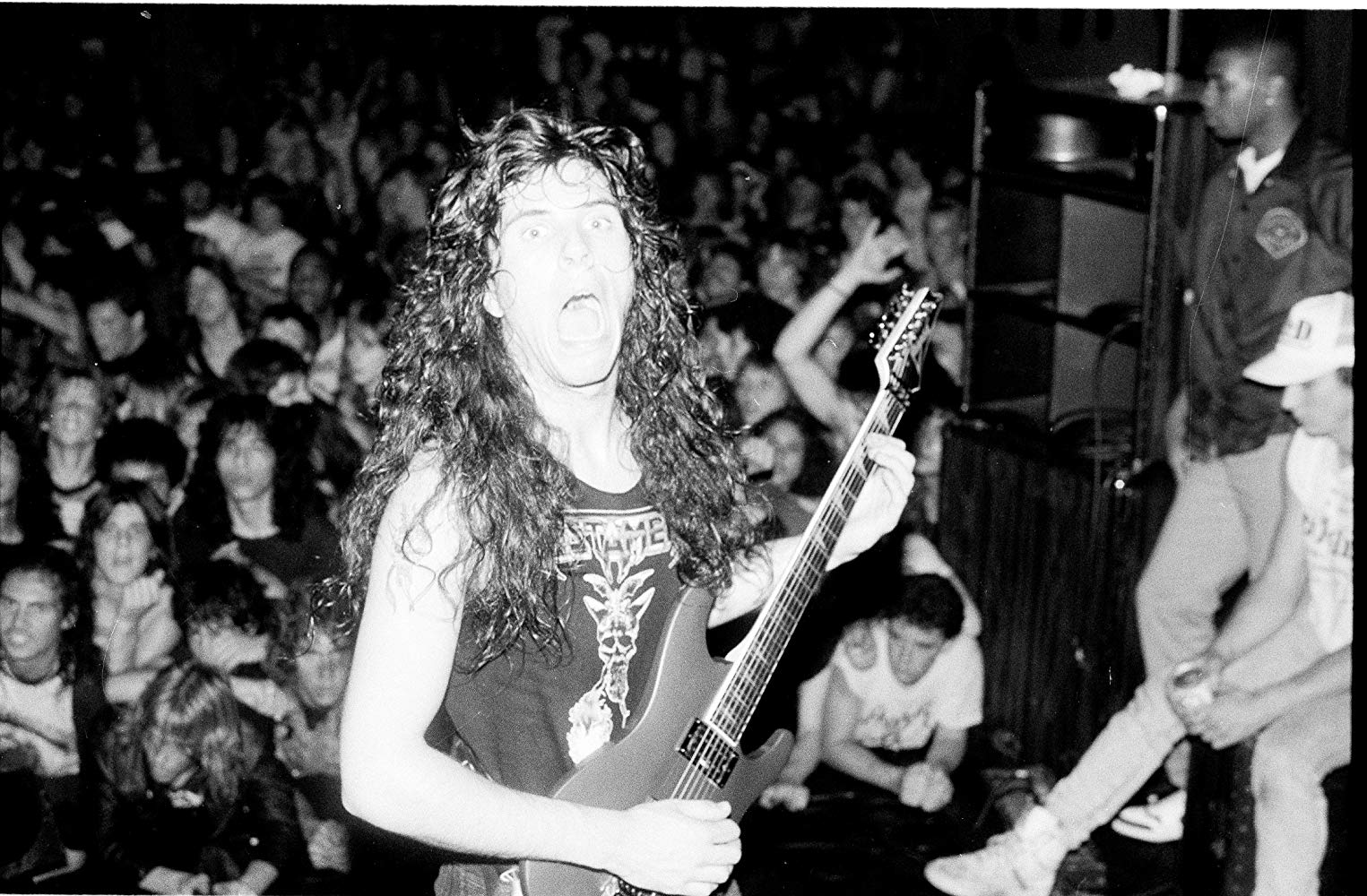
Murder in the Front Row is the story of Thrash, the metal music subgenre which grew out of the Bay Area at that time. It’s the story of bands with surprisingly household names like Metallica, Megadeth, and Slayer. More than anything, it’s the story of the community that birthed these bands in a unique primordial soup of suburban angst and malaise.

MitFR is an unorthodox music documentary. Rather than focus on their globetrotting musical subjects, director Adam Dublin chose to focus on a small pocket of diehard fans who had been around since the birth of thrash metal.  “From our point of view,” Dublin said, “the fans and the people who made the flyers, took the pictures, went to the shows, and hauled the gear, were as important as what the rock stars were doing.” By the time he recorded his first interview with a musician, he had already talked to dozens of fans from the scene. 

Murder in the Front Row
Adam Dubin, Dave Ellefson, Mark Menghi, Mike Portnoy, Chuck Billy, Phil Demmel, Alex Skolnick, and Troy Sanders at an event for Murder in the Front Row: The San Francisco Bay Area Thrash Metal Story (2019). Picture from IMDB.com

Part of this unique focus comes from the subject matter. MitFR was inspired by a table book by the same name, published by original mega-fans Harald Oimoen and Brian Lew. The book was a compilation of pictures from the early 1980s, sharing a piece of near-forgotten history that behind-the-music-type histories have glossed over. The book intrigued and inspired Dublin, who fought to convince Oimoen and Lew to let him make a documentary of the story behind those photos. 

The story MitFR tells also leaves out most of the drama and scandal, preferring to focus on the camaraderie of the scene and the accomplishments of the bands in their early days. “If you want to see the ‘Behind the Music,” he told a crowd when asked about his selective coverage, “you can already find that online.” He wanted to tell a happier, more heartfelt story.

The result is a love letter to the fans, to a community that supported these now-famous artists, and to the unique connection they shared. “If you go back far enough in time,” says Dublin, “there was a point in time where James Hetfield (Metallica) was just an 18-year-old kid just like the 18-year-old kids who were watching him play. He was no more famous and no more anything. And that’s the moment we wanted to accentuate.”

Murder in the Front Row
Picture from IMDB.com
Categories
Culture Featured Movies

Review: ’18 to Party’ Explores Teen Experience in Slice-of-Life

Jeff Roda’s debut creation shines a light on the harrowing teenage drama of sitting around in a group doing nothing.

Everything feels like a big deal when we’re younger. Teenage girls get the stereotype of endlessly complex gossip and rumormongering about nothing, but that’s unfair–those social conspiracy theories are really the non-stop inner monologue of a young teen mind. They don’t have the filter of experience yet, so every interaction feels significant. Maybe even life and death. 

By some magic, writer/director Jeff Roda has trapped us in that world again. 18 to Party, his directorial debut, perfectly captures all of youth’s anxiety and fear in a plot where young teens mostly sit around and do nothing. He knows that, for young teens, every social interaction is dramatic enough for the silver screen. 

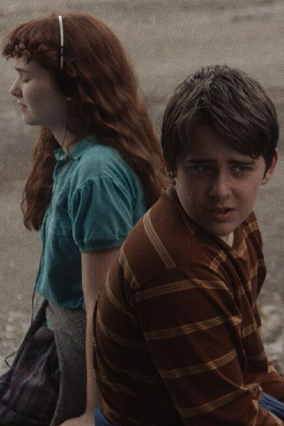
18 to Party is the story of a group of 8th graders in 1984 upstate New York waiting to see if they get into a small-town nightclub. Exiled to the back of the building to wait, the kids talk, argue, and discuss the strange happenings of their town. 

If the film has a main character, it would be Shel (Tanner Flood, Unbreakable Kimmy Schmidt), a perennially anxious boy who looks younger than most of his classmates, especially his friend Brad (Oliver Gifford, Unbreakable Kimmy Schmidt). We meet Shel agonizing over a test grade. He used to be “full honors” but isn’t any longer. Now he’s gotten a 3/5 on a quiz–a devastating blow. As subplots twist and unfurl, we realize that Shel’s previous academic record isn’t the only thing that’s bothering him. The kid is so wound up about his life that he has a hard time expressing himself about anything. That includes the aliens. Yes, aliens. There have been possible sightings around the town, and most of the parents are at a meeting discussing the possible extra-terrestrial incursion. 

Tonally, 18 to Party screams Richard Linklater’s “Slacker,” the 1990 film about nothing much happening in Austin, Texas. The kids out back behind the nightclub mirror the inane conversations of Slacker, covering conspiracies, art, and life, and passing the time with what feels like idle discussions. 

More than anything, though, 18 to Party feels like dropping in on an episode of Stranger Things that takes place between seasons. The beginnings of the conflicts happened in other episodes that we didn’t watch, and there are few developments. That makes sense in a show, where big changes accompany big moments. Big, definitive decisions happen when you’re getting chased by extra-dimensional creatures and shadowy agents. Life’s dramatic moments. And it’s clear that these kinds of moments happen in this 18-to-Party Universe. They just don’t happen in 18 to Party’s 90-minute run. 

So what’s the point of the story? If nothing else, it’s that these moments can still feel huge as a kid. We, as adults, as movie-goers, know that this story is almost entirely mundane. A different movie would skip it entirely for the more exciting nightclub scene. But that’s not how kids this age think. 

I still remember the abject terror I felt the first time I went to a high school Halloween party. I had seen Mean Girls a dozen times and knew the scene where Lindsay Lohan shows up…overdressed…to a Halloween party. Would this be the same? Would I get judged if I went in costume? It ended up the opposite: I was the only one not in costume, and I felt like every eye was on me the whole night. The entire episode feels like such small potatoes in retrospect.

Watching 18 to Party, you feel that hyperawareness of small details, a testament to the directing and the acting chops of the cast. When one character arrives and finds that all of his former friends have moved on without him while he was gone, you feel the weight press against him. Every twitch and fidget, every set of awkwardly shifting eyes, pushes him out of the group. If you watched the film on mute, you could follow the plot with body language alone.

That’s not to say that 18 to Party is without flaws. Unlike Linklater, Roda teeters between pure slice-of-life and a deeper metaphorical meaning. Certain elements, like the recurring UFO discussion, poke at a deeper meaning, but can’t seem to make them coalesce. It leaves some of the thematic exclamation points feeling more like question marks. 

18 to Party is a fascinating and fun ride for anyone who remembers their early teen years. In fact, it is so vivid that anyone who has forgotten those years might have flashbacks. A cast of young, mostly inexperienced, actors pull off great performances. Writer/director Roda shows a talent worth paying attention to with his debut in both roles, channeling a moment that feels as real as Linklater’s Slacker. It will be interesting to see whether this is a one-off passion project or the first of many promising creations.