Categories
Business NYC

The Real New York: Viviana Addo launches global real estate investment consultancy VMCASA

VMCASA was founded in 2012 by real estate industry veteran and NYU Schack alum Viviana Addo. The former properties and finance executive has a decade of practical, global assets and investment experience to complement her scholarship on the international real estate front.

Receiving her education from the vanguard of the business, Addo holds a Master’s degree in Real Estate Finance and Investment from New York University’s Schack Institute of Real Estate (2019). Viviana is equipped with expert education and a passion for providing honest, sustainable listings for buyers and investors worldwide.

Downtown had a chance to catch up for a Q&A with this powerhouse woman, founder of VMCASA Viviana Addo.

DTM: Tell me a bit more about VMCASA and how you got started in this new business venture and why? 

VA: I started VMCASA to offer a fresh and holistic solution to real estate investment. We are committed to creating an honorable legacy of transparency, outside-the-box thinking, inclusion, and sustainability in the real estate industry. 

DTM: What did you do before VMCASA?

VA: I started my career in industrial design as a junior furniture and lighting designer. From there I moved on to the fashion industry in operations. I studied Business Management at Baruch College and obtained my Masters at New York University’s Schack Institute of Real Estate. After college, I started working for Cushman and Wakefield as an asset services associate where I managed the New York Presbyterian real estate portfolio.

DTM: What was your foray into real estate investment? 

VA: I have always loved the arts and architecture, as well as finance and investment. I interned and worked in both industries. It was then that I discovered that real estate was the perfect mix of both worlds. I found that real estate also offered the opportunity to give back to the communities in a way that was special to me.

DTM: Where do you live? 

VA:  Downtown Manhattan in Battery Park City.

DTM: What do love about the area you reside in?

VA: I love the spirit of Downtown Manhattan. Forever cool, inspiring views, and there are always people from all over the world coming here! The new and old worlds are constantly colliding here—which creates such a vibrant culture.

DTM: Do you have a family, and if so, what is their favorite thing to do in your neighborhood?

VA: Yes. My family and I love Battery Park City, we love all the parks along the Hudson River, and its views. 

DTM: How did you spend Mother’s Day 2021?

VA: I had an amazing surprise Mother’s Day Brunch with my husband and daughter at STK. Lovely food, space, music, and, of course—company!


Viviana Addo VMCASA

DTM: Do you think there are any common misconceptions about property investment?

VA: Yes. The key one being—that the options are limited. There are so many ways to invest in real estate. A limited partnership, shares on a REIT, or digital shares—just to name a few. 

DTM: can anyone be a property owner?

VA: Yes—all it ever takes is a little bit of vision and the right advice.

DTM: Who in your industry is your mentor?

VA: I’ve had so many over the years. The biggest influences on me have been Betty Castro from Cushman & Wakefield, she really opened my eyes to the industry. And of course, my professor Manish Srivastava at my alma mater over at NYU. There are also colleagues within the industry, whose careers can serve as great mentorship roles— like Mary Ann Tighe from CBRE.

DTM: What do you think are some of the most important aspects of being successful in your industry?

VA: A client-oriented vision to find value. Resilience to stick it through. And a true love for the craft. Ultimately I feel the passion to serve these communities is what drives long-term success within the industry.


DTM: Do you foresee a resurgence in buying in NYC, and will high home prices and high demand continue/or go back to being a trend in the future?

VA: I absolutely see a resurgence in buying in NYC. No other city provides a sense of inspiration, freedom, and opportunity as the capital of the world.  

DTM: When you say VMCASA has global assets, what does this mean?

VA: I mean our digital assets. In 2021 I founded a media division to VMCASA called Growing Cities. The platform currently owns and produces international podcasts featuring some of the most interesting minds and voices in global real estate.

We have recorded 20 episodes that are streaming on iTunes, Spotify, and Google Play as well as at the website www.growingcities.com. We recently were awarded a 2021 Creative Muse Award for the podcast and are in conversations with sponsors to grow this digital asset to reach more listeners in more cities around the world. 

DTM: What is the difference between what you do and the everyday real estate broker, or high-end brokers like Ryan Serhant and Fredrik Eklund?

VA: I respect what Ryan Serhant and Fredrik Eklund do and I am a big fan of their work. Being a broker is just one part of my capability. I am a well-rounded real estate professional with real estate analysts and asset management experience.

I can see the big picture, and work at the institutional level in real estate. I am also very committed to giving back to the City of New York and my global community by raising awareness about sustainability in the built environment on my podcast Growing Cities. 

DTM: Where do you hope VMCASA will be in 5 then 10 years from now?

VA: We would by then have created an array of memorable transactions that bring value to the lives of our clients. Our goal by then is to be one of the leading real estate consulting companies in New York and one of the premier investment sales companies in Colombia.    

DTM: How is your industry toward women, and can women take the lead?

VA: In residential real estate, there are many successful female real estate professionals and valuable opportunities. However, within commercial real estate, there is a lack of opportunity for women and even more for women of color where we only make up 3% of the industry. I had to create my own opportunities since the barrier of entry to the industry (investment sales, and asset management) is so artificially high.

There is an even smaller percentage of women who make it to positions of leadership. That is a constant struggle for women in every industry and real estate is just showing signs of being open to inclusion.

That is one of the reasons why I joined forces with other women in real estate by becoming a member of CREW (Commercial Real Estate Women) New York. I am a member of the diversity and inclusion committee. I hope to inspire a new generation of real estate professionals to be pioneers, to think big, to lift others, and to leave a legacy for the community they serve.


Viviana Addo VMCASA


DTM: What book are you reading right now, and why?

VA: I am finishing Becoming by Michele Obama, and the Second Sex by Simon de Beauvoir. I chose them to inspire me to be resilient, and to break barriers.

DTM: As much as we hate to keep bringing it up, how did COVID affect your industry/and personal business?

VA: First, I would like to thank all the first responders and hospital workers in New York City and cities across the country and the world. Our industry was greatly slowed down. However, it was an opportunity to reinvent the previous approach the industry had. I am currently starting an exciting opportunity with a portfolio focused on the workforce and affordable real estate.

This is a segment of the industry, I anticipate will be very busy in the years to come, and one that allows me and the team to contribute to rebuilding New York post-Covid-19. 
Categories
Featured Lifestyle NYC

From Illinois SoyBean Fields to NYC Maritime

“Think corn and soybean fields as far as the eye can see”


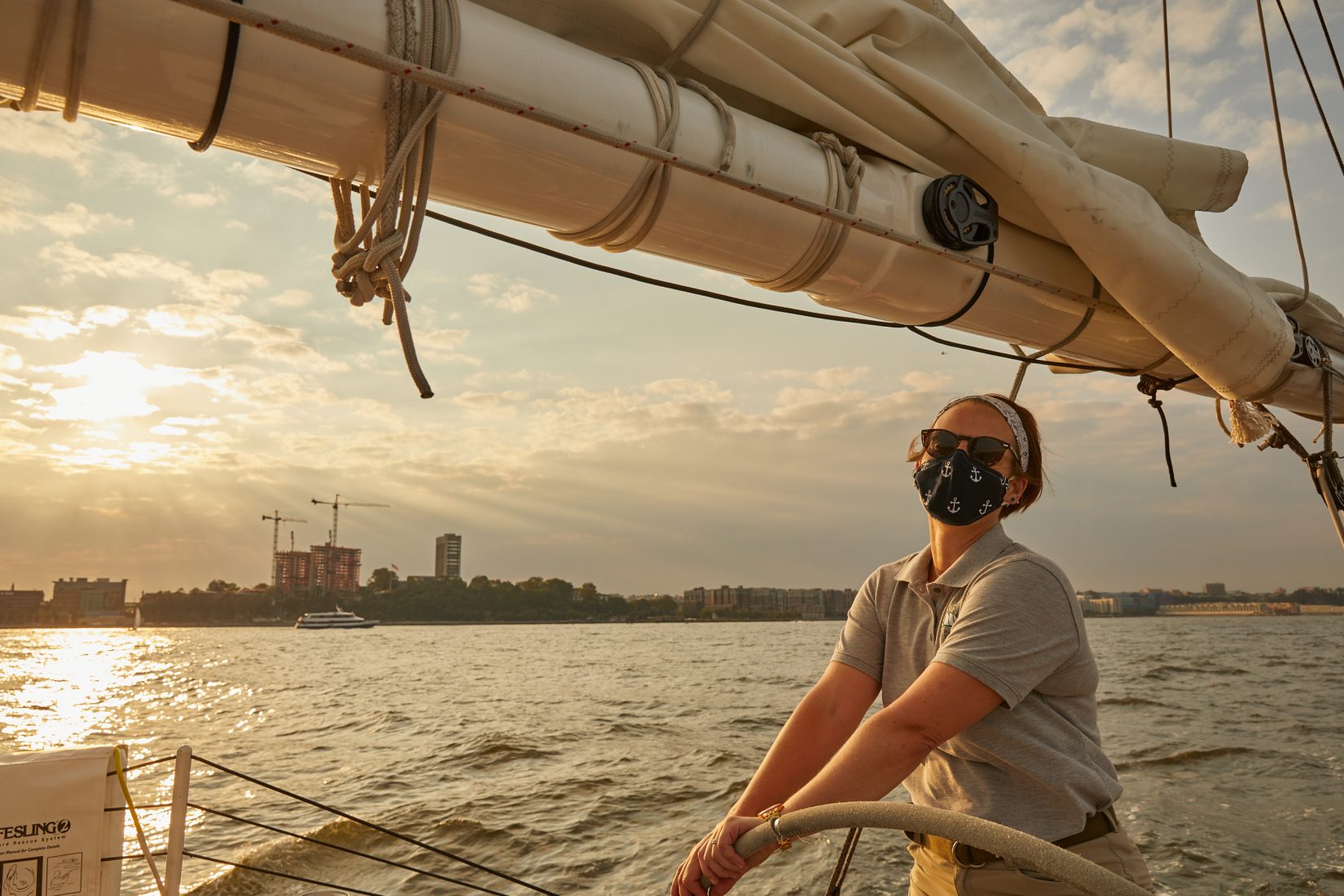
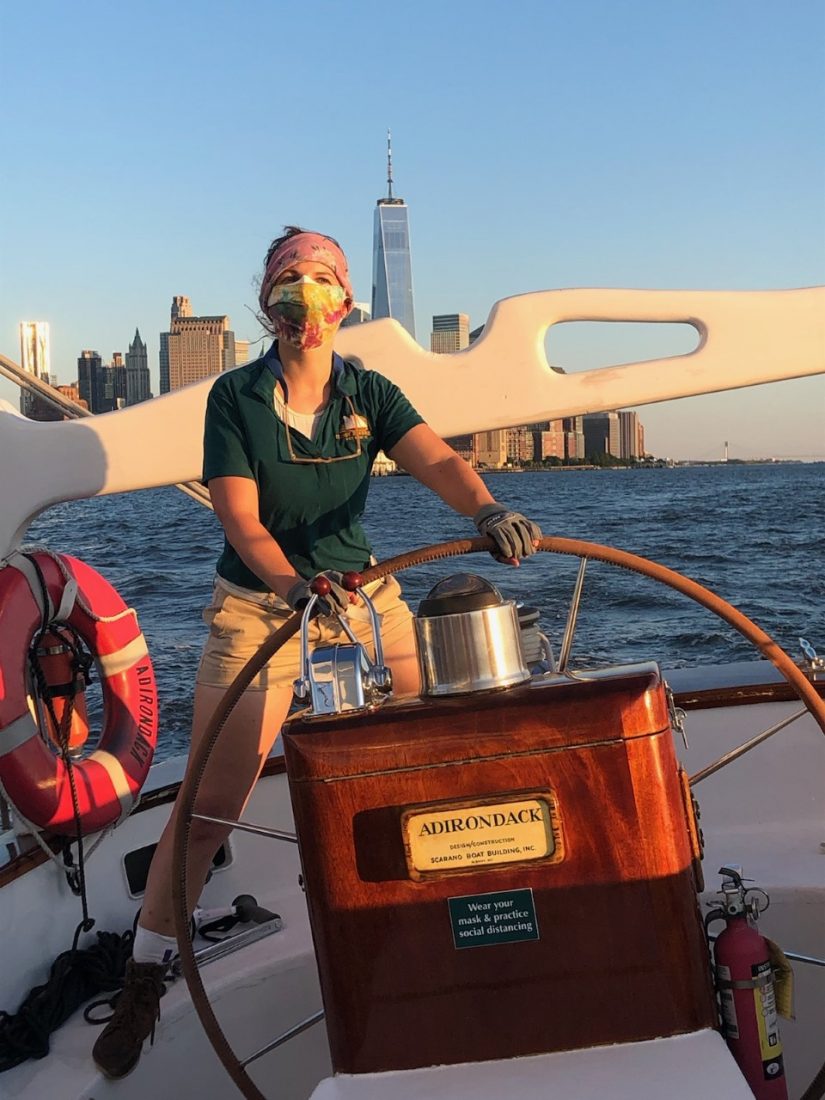
Today, we continue our series with Classic Harbor Line, Female Captains. The newest Captain found her love for sailing right here in New York. How luck can take you places and find a love for a new career when you least expect it!


Meet Captain Diana


DTM: How did you get started in this line of work and where are you from?


Capt Diana: I’m originally from Central Illinois (think corn and soybean fields as far as the eye can see) so working in the maritime industry in NYC was the last thing I thought I would be doing. 


DTM: What brought you to CHL?


Capt Diana: I lovingly say that sheer dumb luck brought me to Classic Harbor Line. I moved to New York to attend grad school for Occupational Therapy and my then-boyfriend, now-husband worked for the company and suggested that I interview. That was in 2012 and I haven’t looked back. 


Captain Daina CHL


From Illinois SoyBean Fields to New York City Maritime 


DTM: What type of education or updated education are you given with CHL?


Capt Diana: At a minimum, we conduct and/or attend monthly safety sessions for each of the boats we work on, but as a new crew (who was also new to sailing) I went through some serious on-the-job training in addition to self-study


DTM: What is your favorite thing about working for CHL in New York?


Capt Diana: One of my favorite things is the sense of community among the crew. I came in knowing virtually nothing and even though it meant more work for the senior deckhands they were all willing to share their time and expertise to facilitate my training. The same was and is true as a captain too. 


“I don’t think I will ever forget my first solo trip on each of the boats I captain for CHL”


DTM: Share one of your most memorable/rewarding moments?


Capt Diana:  While I’ve had so many wonderful moments in New York Harbor, I don’t think I will ever forget my first solo trip on each of the boats I captain for CHL.


DTM: What is the most common misconception people have about being a Captain of a vessel in New York vs sailing the ocean?


From Illinois SoyBean Fields to New York City Maritime


Capt Diana: I haven’t done any ocean sailing so I can’t speak to any of those misconceptions, but I am frequently surprised by the number of people who know that Manhattan is an island but are surprised by our active waterfront and the number of recreational water activities that NYC has to offer. 


Capt Diana and Capt Kat CHL


DTM: Do you ever get bored with sailing the same route?


Capt Diana: The route might be the same each time, but between the passengers, traffic, wind, and current each trip is different. Plus, I get a unique view of NYC’s ever-changing skyline. 


DTM: What makes a good captain?


Capt Diana: There are so many things that make a good captain, but communication and trust are two that are top of mind.


“Captaining a sail boat and motor yacht both require a similar skillset”


DTM: Is there a difference between being a captain for sailing vessels vs motor yachts?


Capt Diana: Captaining a boat and motor yacht both require a similar skill set; however, our schooners are much more at the mercy of Mother Nature, so we pay a great deal of attention to things like wind speed/direction and the tides. Additionally, the schooners have a lot of moving parts and the captain has direct control over only a small portion of them which is quite different from the yachts and what makes communication so important.


DTM: What’s the last thing you do on your ship before you depart for the day?


Capt Diana: I do one last visual inspection of the boat and dock to be extra sure that everything is safe, stowed, and secure. 


DTM: Because we are Downtown Magazine, what is your favorite place in Lower Manhattan Chelsea to the Battery to just get away and relax?


Capt Diana: I could spend hours in Battery Park just watching all the boats go by and catching a sunset over the Statue of Liberty from the land. 


DTM: Tips, I’m all about tips for the crew. It’s very important to show your gratitude, they work so hard in such a short time, why is it important to tip?


Capt Diana: The CHL crew works tremendously hard before, during, and after each trip to look after passenger safety and comfort, not to mention proper handling of the boat. The sails don’t go up and the drinks don’t go out without the crew and while they’re doing all of that they also act as lookouts and assist with other tasks for the captain. 


DTM: What’s the best advice to give new captains when working with the public?


Capt Diana: I’m still a pretty new captain myself, but for what it’s worth I try to reflect on something that went well and something to work on for next time. Also, it’s okay to be nervous-trust your training. 


Captain Diana Christopher Bio:

Captain Diana has been with Classic Harbor Line New York (CHL) since 2012. First as part of the sales team, then as crew, and now as captain. In 2018 she earned her USCG 100 Ton Master with Sail Endorsement. In her eight seasons with CHL, she’s passed by the Statue of Liberty well over 1,000 times. While NYC is home, she’s found a way to work at least one shift in three of CHL’s four locations on all but one of CHL’s 10 vessels (Sloop Eleanor in Newport, RI, would check all the boxes). When she’s not on the water you can find her exploring NY’s city and state parks with her dog and husband.


Categories
Featured NYC

At the Helm – Captain Sarah Pennington


She Captain, Sarah Pennington She’s all That!

The Old Man and the Sea is a short novel written by the American author, Ernest Hemingway. It takes place in 1951 Cuba and was published in 1952, long before females took the helm. One could argue that yes, in fact, there were female Captains back as far as 231 B.C. The Norwegian Princess Sela, considered a pirate, sailed in 420 A.D.

Fast forward to the 1970s and there was Krystyna Chojnowska- Liskiewicz of Poland, Naomi James of New Zeland, Kay Cottee of Australia. Today, we see female captains in the recreational cruise industry and the US Navy, like Admiral Michelle J. Howard, the first female four-star admiral.

Today we have captains, right now in our time and right here in New York City.

Being a female entrepreneur, I am extremely proud whenever I meet females in the role of power. If there’s a female in charge of the plane or a sailing large vessel I’m on, it makes me smile from ear to ear, a sense of female pride.

I just love being that “fly on the wall” only to hear men say, it’s a woman? She’s not the one in charge? I just chuckle to myself biting my tongue and watch in amazement when they quickly eat their words. This recently happened onboard Captain Sarah’s vessel.

I’ve not only had the pleasure of being a guest on her ship but also recently the extreme pleasure of interviewing, her.

A She Captain
Captain Sarah Pennington Sailing America 2.0 Photo by Nick Appice


DTM: How did you get started in this line of work and where are you from?
Capt Sarah: I am originally from Ohio. I grew up sailing with my family on a large lake in Kentucky and then in the Houston area.  I really learned to sail when I learned how to teach sailing at a girls’ camp in northern Minnesota while in college.  I took a tall ship job on a coastal schooner right after I finished college in Maine. That’s when I got hooked on schooners. 

DTM: What brought you to Classic HarborLine (CHL)?
Capt Sarah: I came to New York in 2002. I saw an advertisement in TimeOut New York magazine for the schooner Adirondack. I called them to see if they needed a crew. The ticket agent said, “Yes, please come over as soon as possible.” I came down that day to introduce myself. The rest is history. 

DTM: What type of education or updated education are you given with CHL?
Capt Sarah: I certainly have learned so much through working with CHL.  The most industry-specific education would be that of the regulatory requirements of the field. Tangentially, since I’m involved with the business side of the company, I’ve learned so much on the marketing, tourism, PR, finance, and online sales side of the business as well.  CHL also helped me get an MBA a few years back and that really helped me put a business strategy in focus and gave me a vernacular for business. 

DTM: What is your favorite thing about working for CHL in New York?
Capt Sarah: My favorite thing about working for CHL in New York is that anybody can be on our team if you just have the right attitude. 


A She Captain
America 2.0 Classic Harborline

DTM: Share one of your most memorable/rewarding moments?
Capt Sarah: The most rewarding part of work is seeing our crew develop and take on more responsibility within the company. Some become managers, some become captains. I love to see people grow in our company.  We have a roster of mostly homegrown captains, many of whom had no marine experience when they started. A captain who drives half of our fleet now started as a part-time salesperson in our office.  She just had the right attitude, kept learning, put one foot in front of the other, and now she’s running our boats.

DTM: What is the most common misconception people have about being a Captain of a vessel in New York vs sailing the ocean?
Capt Sarah: I think the biggest misconception is that guests think we have nothing to do in the winter. We operate year-round with part of our fleet. 

DTM: Have you ever raced or sailed the ocean?
Capt Sarah: I’ve done very little offshore work and very little racing. It is not something we get much time, since we run full time with our tours in NYC.

DTM: Do you ever get bored with sailing the same route?
Capt Sarah: I’d say I’m glad we have such a magnificent skyline that is always changing.  I’m also thrilled that we have such an active harbor. That keeps us on our toes for sure. The only thing that may make for a long, dull day is a day with no wind!  

DTM: What makes a good captain?
Capt Sarah: A good captain in our industry is one who communicates and connects with the crew and their guests regularly.  Regular communication throughout the trip amongst the crew and checking in with guests periodically make such a huge difference in how everyone perceives the experience.


A She Captain
Captian Sarah Pennington Jazz Cruise America 2.0 (interacting with her guests) Photo by Grace A. Capobianco


DTM: Is there a difference between being a captain for sailing vessels vs motor yachts?
Capt Sarah: The only difference in licensing is that a skipper needs a sailing endorsement on their license to run a commercial sailing vessel.

DTM: What’s the last thing you do on your ship before you depart for the day?
Capt Sarah: We have a long list of shut down “to-do’s” for each boat, but typically, the VERY last item is to lock up and ease our dock lines a bit so the boat is not pulled hard against the dock all night.


At the Helm - Captain Sarah Pennington
Captain Sarah Pennington


DTM: Because we are Downtown Magazine, what is your favorite place in Lower Manhattan Chelsea, to the Battery to just get away and relax?
Capt Sarah: I like to bike or take a run down the Westside of Hudson River Park.  One special spot for me to grab a coffee or nice breakfast is the cafe in the lobby of the Jane Street Hotel (also right on the west side highway)…when indoor dining was permitted.

DTM: Tips, I’m all about tips for the crew. It’s very important to show your gratitude, they work so hard in such a short time, why is it important to tip?
Capt Sarah: Making a living in NYC means being able to live in NYC.  Sailing is weather dependent, seasonal, and requires some very skilled labor. Certainly, good tips help us keep doing what we love and pay the bills while doing it.


A She Captain
View onboard America 2.0 with Captain Sarah Pennington at the helm Photo by Grace A. Capobianco

DTM: What’s the best advice you can give to new captains when working with the public?
Capt Sarah: I like to remind folks I work with, “It’s just a boat ride.” We are just taking people out to have fun, so let’s not stress out too much.  Let the brain surgeons stress out.  Our job is to make fun.  Keep them safe and have fun. 

Take my advice, go online, and book anyone of Classic Harbor Line’s vessels, you just may get lucky enough to be a guest on Captain Sarah Pennington’s ship!


Categories
Culture Featured Theater

Review: How We Love/F*ck is Intimate, Honest

Image courtesy of Lillian Isabella

How We Love/F*ck explores sexuality with a simple honesty that draws you in, exploring a topic normally too taboo for discussion. That’s why we need it.

My 7th-grade health class had one day of sex education. A presenter came into our classroom and told us the story of a girl with a red paper heart. Every time this girl had pre-marital sex with someone new, her heart was ripped in half. When it was time to give her heart to the boy she wanted to marry, all she had left was a little red stub. And an STD. The presenter made sure to add that part, too. 

That was sex ed. The whole thing. Nobody even talked about genitals. High school got into the biology of it, but that’s all it ever was. Tab A; slot B; a baby comes out. Practical sex education is what you find out on your own, usually through trial and error. 

Maybe that’s why Lillian Isabella created How We Love/F*ck. Why she visited dozens of female-identifying sex experts to talk to them about their knowledge and experiences. How We Love/Fuck portrays these testimonies, as well as Lillian’s own experiences, with tenderness and honesty. Sometimes, her confessionals show her growing and reacting from what she’s learned. Other times, she’s reflecting on her past, often in light of what she–and the audience–are learning. 

The end result is an hour-and-a-half-long journey through female sexuality, as told by her subjects. A stripper compares her personal sexuality with the one she portrays for work. An anonymous woman tells how, as a child, she promised Jesus every night that she would stop trying to explore her body. Barbara, a sex educator, tells the audience about a test to tell the difference between a disturbing kink and one you’re just afraid you might like. Watch someone perform the act, she says, and become aware of your body. If you find yourself leaning back, then you know it’s not right for you. If you find yourself leaning forward, then perhaps it’s worth a try. 

The set is simple. Director Lorna Ventura’s stage direction is minimalist. Actors Lindsay-Elizabeth Hand, Tulis Mccall, Greer Morrison, and Nancy Sun, shift characters with a shawl or a headband. As one speaks, the others are usually still, or else performing delicate reactions like a silent Greek chorus. Lillian takes a back seat when she isn’t narrating. She is off to the side, scribbling in a notebook as you imagine she was when she first heard the monologue.

How We Love/F*ck
Lillian is the author of How We Love/F*ck, as well as its narrator. Photo courtesy of Lillian Isabella

How We Love/F*ck is all about those voices, and Lillian’s voice as well. Many of the interviewees had no one to talk to about their sexuality when they were growing up. Most had to figure it out on their own. For some of them, you wonder if Lillian was the first person they had ever talked to. How We Love/F*ck is the story of how Lillian and her subjects discovered themselves. It’s an archive of their mistakes and realizations, shared out loud because people need to tell them, and hear them. 

In many ways, Lillian’s play feels like a talking-heads documentary. Characters are introduced, share their experiences, and exit, as part of a larger story. In fact, Lillian tells one of her subjects early on that she is creating a documentary, not a play. As time goes on her explanation changes, and it’s easy to see why. In the confines of the Cherry Lane Theater, with its small stage and 50 or so seats, the monologues feel intimate and confessional. Like you’re in a trusted circle, waiting for your turn to talk. 

How We Love/F*ck might not be for everyone. These kinds of stories might make you feel uncomfortable. Then again, you probably have stories of your own. I know I do. I won’t tell you that you need to see this play, but I will give you a test. Take a moment to become aware of your body. Are you leaning forward, or are you leaning back?

Categories
Art Culture Entertainment Sports

The Future is Female with Future Female Sounds

By Ali Glatt

Future Female Sounds

Saturday, September 14th I had the pleasure of attending another Future Female Sounds performance at the Ludlow House, a members club affiliated with the Soho House. The exclusive performances are invite-only, and curated by musician Michelle Rose, celebrate up-in-coming female voices from New York City. The quarterly shows started a year ago after the popularity of an all-women performance celebrating international women’s day in 2018. 

The stage, which is set amongst a cozy lounge reminiscent of a casual living room with its chic wallpaper and eclectic art-covered walls and comfortable velour furniture creates a welcoming, yet intimate space. What I love about each show is that you never know what to expect. Past shows featured significantly diverse genres that seamlessly fit beautifully and others like tonight, had artists whose styles were all reminiscent of moody music from the 90s. 

Each show generally features three to four performers whose sets include both original songs and covers, usually by artists that inspired them. Saturday night’s lineup included Jaki Doyka, Tanners, a music video premiere of Leanne based on the song featured in the TV show Broad City, and Chelle.

The premiere was a fun experience, especially for fans of the popular TV show Broad City. The song, voiced by Michelle Rose and created by the music director of Broad City, was made specifically to be used in the show as a radio song that appeared in season four in a karaoke scene, and also kept finding it’s way throughout the rest of the season. The song itself was never completed, which makes the music video that much more enjoyable to watch. 

Michelle who curates the most fun evenings always impresses me. So, I wanted to learn more about how the series got its start and what we should look forward to. 

AG: What inspired this series? How did it all come about? When did you realize that this should be a regular thing?

MR: In the wake of #metoo and #timesup, many female-focused meet-up groups and organizations began to organize. In the spring of 2018, Soho House commissioned my sister Sarah Frances and me to curate a concert for International Women’s day at Ludlow House. I wrote a short message asking artists to come together to celebrate the social, economic, cultural, and political achievements of women on International Women’s day, which marks a call to action for accelerating gender parity. 

The collaborative night became effortless to book as powerful women from nearly every genre of music possible signed on board to be a part of it. Each artist performed 1-2 songs–an original, and a cove–accompanied by a few words describing how the female artist they chose affected their musical journey. The night evolved into the most high-energy experience I’ve ever had at Ludlow House. With over 15 female artists incorporated into the collaborative night, the room was at capacity and the pride and enthusiasm were unparalleled. 

Refinery 29 set up a Livestream of interviews in the cinema room for their Facebook Livestream “The Mention”. And after this media platform was confirmed, Soho House decided to film all of the performances. There were camera crews, electric energy, a full house, and a star-studded crowd for close to five hours of live music & poetic interludes. 

After the success of the event, I sat down with Yasmin Daguilh, the previous event programming manager for Ludlow House. We decided to create a quarterly series based on the demand and reception from the concert. From there the series Future Female Sounds was born.

AG: Why all women? What is the goal? What do you hope audiences take from this experience?

MR: I’ve been a part of the New York music scene for over a decade, and have experienced the cutthroat female competition in a male-dominated industry first hand. The goal was and is still to create a safe space for female artists to perform, collaborate, network, and experience an intimate night of new emerging female artists. 

There’s a unique power to a female lineup. In this style of curation, I noticed women feel more confident to explain the backstory of a song, exchange contact information, and set up collaborative writing sessions when they’re not the minority gender in the room. I took a lot of inspiration from participating in Rachael Pazden’s all-female collaborative series “The Hum.” The goal of Future Female Sounds is to build community amongst female musicians in a beautiful safe space in New York City.

AG: What should people expect when they come to a show?

MR: They should expect a cross-genre showcase of female musicians, a safe space to network and form friendships, and a silent, engaged, and attentive audience.

AG: What is your curatorial process? How do you find the artists? What do you look for? Do you choose artists in a similar genre/style?

MR: I usually find my artists from experiencing them live, or finding their Instagram and DMing them. I aim for the showcase to be inclusive, diverse, and include multiple genres. 

AG: If someone wanted to be considered, how can they reach you?

MR: DM me on Instagram @heymichellerose

AG: When’s the next show?

MR: It’s the 2nd Saturday of the month every three months! So the next one will be December 14th.

AG: How do you get tickets?

MR: A private Eventbrite link that I circulate amongst the community.

AG: How can one find and follow up with the artists?

MR: All the artists plug their social media handles after their performances and engage with the audience. I’d like to create a unique space for the roster to live and I’m working on developing that. It will probably be an Instagram handle in the next coming months.

If you’re interested in attending or being in Future Female Sounds, as well as know more about and or follow the artists who recently performed, follow them and Michelle Rose on Instagram. 

Jacki Dokya’s soulful voice, accompanied only by a keyboard, beautifully renders a raw performance that’s hypnotizing. 

Tanners, known for her psychedelic pop music, gave audiences a stripped-down acoustic performance that was both passionate and haunting.

Michelle Rose is half of the pop duo Frances Rose, along with her sister Sarah Frances. She has also just premiered her new solo project, Chelle. Chelle, similar to Frances Rose, which is heavily inspired by 90s pop rock. It draws her audience in with powerful deep vocal chords that showcase her talent as a storyteller and performer.