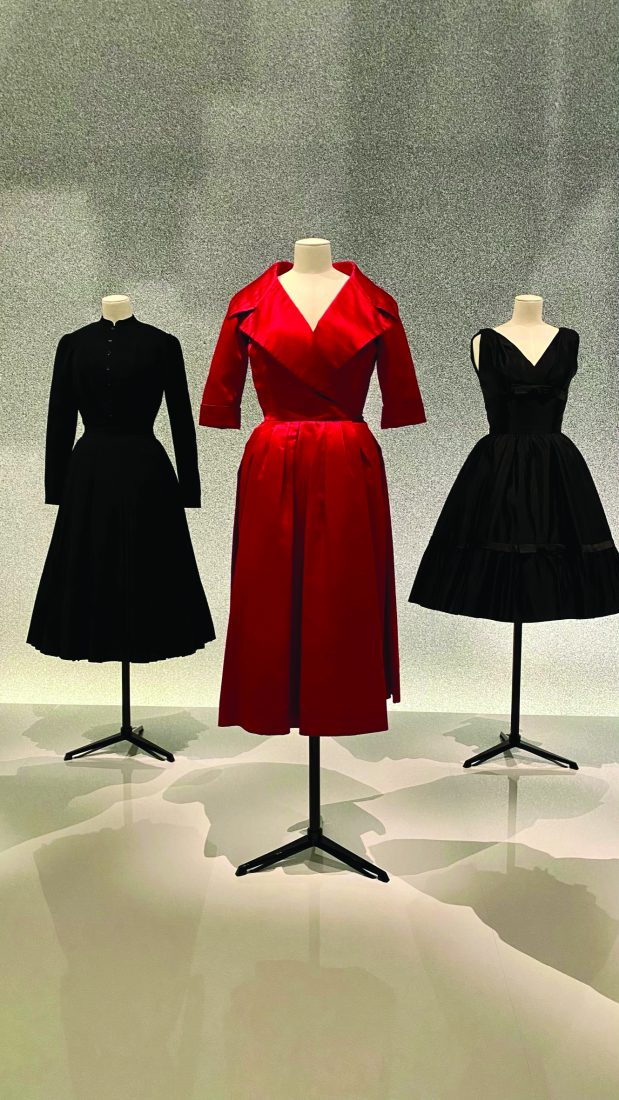
The Brooklyn Museum exhibit Christian Dior: Designer of Dreams features more than 200 of Dior’s haute couture garments.
This exhibit at Brooklyn Museum opens with a timeline of Dior’s legacy, beginning with his early life and later walking through the different designers to take the helm of Dior in the late 20th and early 21st centuries.
Different collections, from the post-World War II era “New Look” to all-black cosmopolitan wear, are highlighted alongside historic texts and images of Christian Dior and his work between both France and New York. Other highlights later in the exhibit include some of Dior’s most elegant ball gowns and evening wear, an all-white display of the studio’s many toiles, or working garments, and a final atrium of floral and nature-inspired designs reminiscent of the elegance of the outdoors.
Christian Dior: Designer of Dreams runs at Brooklyn Museum through February 20, 2022. brooklynmuseum.org
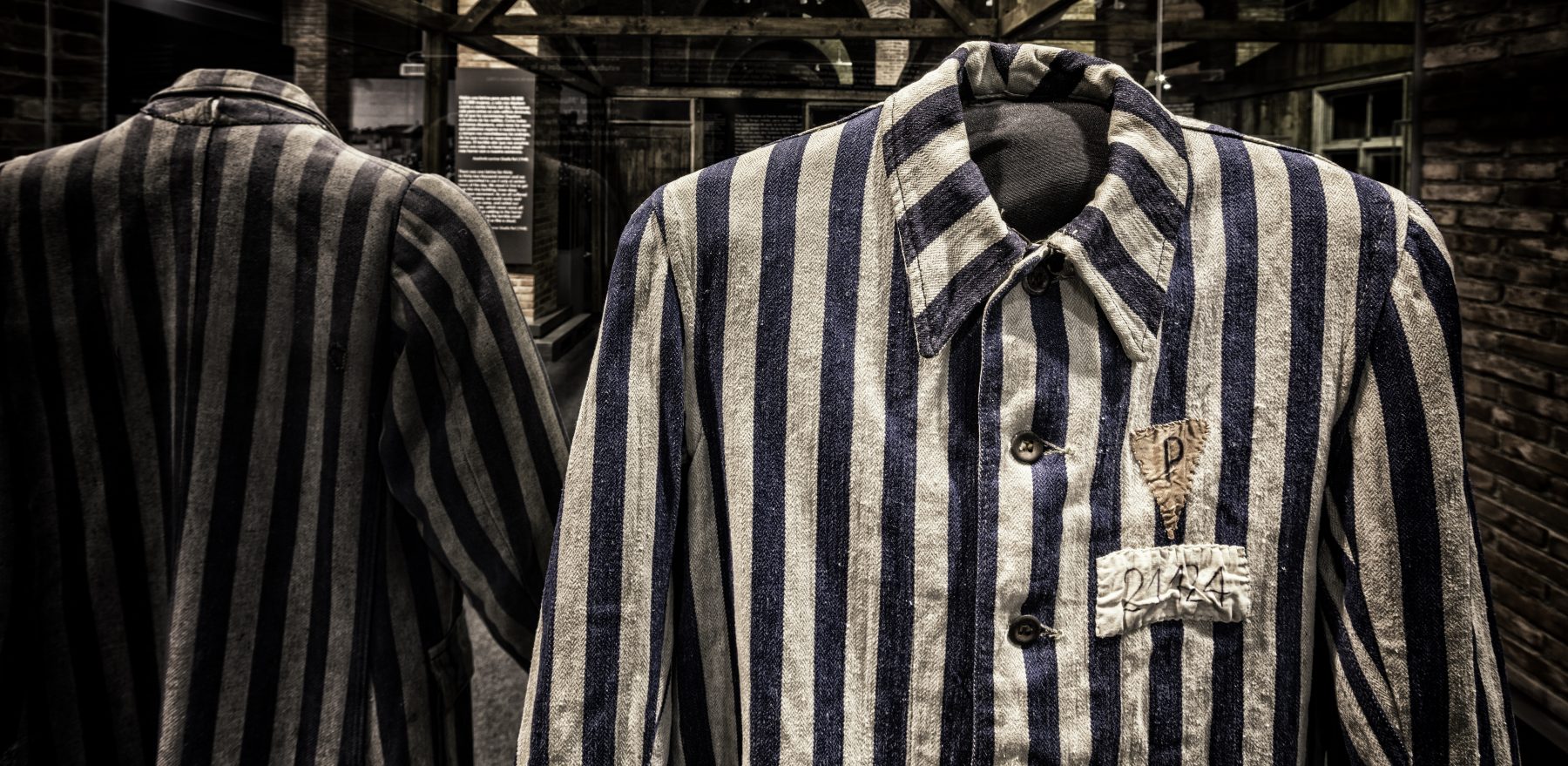
Next week, the Museum of Jewish Heritage – A Living Memorial to the Holocaust will open the most comprehensive Holocaust exhibition about Auschwitz ever exhibited in North America. Auschwitz. Not long ago. Not far away. is produced in partnership with the international exhibition firm Musealia and the Auschwitz-Birkenau State Museum in Poland. The groundbreaking exhibition has been curated by an international team of experts led by historian Dr. Robert Jan van Pelt. It runs through January 3, 2020 in New York City.
For the first time, 74 years after the liberation of Auschwitz, a traveling exhibition dedicated to the historical significance of the camp is being presented to a U.S. audience. The exhibition’s May 8 opening marks the anniversary of VE Day or Victory in Europe Day, 1945, when the Allies celebrated Nazi Germany’s surrender of its armed forces and the end of World War II in Europe.
Auschwitz. Not long ago. Not far away.arrives in New York City after the exhibition completed a successful run at Madrid’s Arte Canal Exhibition Centre, where it was extended two times, drew more than 600,000 visitors, and was one of the most visited exhibitions in Europe last year. The exhibition explores the dual identity of the camp as a physical location—the largest documented mass murder site in human history—and as a symbol of the borderless manifestation of hatred and human barbarity.
AUSCHWITZ EXPOSICIÓN DE MADRID
Featuring more than 700 original objects and 400 photographs, mainly from the Auschwitz-Birkenau State Museum, the New York presentation of the exhibition allows visitors to experience artifacts from more than 20 international museums and institutions on view for the first time in the North America, including hundreds of personal items—such as suitcases, eyeglasses, and shoes—that belonged to survivors and victims of Auschwitz. Other artifacts include: concrete posts that were part of the fence of the Auschwitz camp; part of an original barrack for prisoners from the Auschwitz III-Monowitz camp; a desk and other possessions of the first and the longest serving Auschwitz commandant Rudolf Höss; a gas mask used by the SS; Picasso’sLithograph of Prisoner; and an original German-made Model 2 freight wagon used for the deportation of Jews to the ghettos and extermination camps in occupied Poland.
Museum of Jewish Heritage Board Vice Chairman George Klein visited the exhibition in Spain and recommended to his Board that they bring it to Lower Manhattan. The exhibition features artifacts and materials—never before seen in North America—on loan from more than 20 institutions and private collections around the world. In addition to the Auschwitz-Birkenau State Museum and the Museum of Jewish Heritage – A Living Memorial to the Holocaust, participating institutions include Yad Vashem in Jerusalem, Anne Frank House in Amsterdam, United States Holocaust Memorial Museum in Washington, Auschwitz Jewish Center in Oświęcim, the Memorial and Museum Sachsenhausen in Oranienburg, and the Wiener Library for the Study of the Holocaust and Genocide in London.
Auschwitz. Not long ago. Not far away. traces the development of Nazi ideology and tells the transformation of Auschwitz from an ordinary Polish town known as Oświęcim to the most significant Nazi site of the Holocaust—at which around 1 million Jews, and tens of thousands of others, were murdered. Victims included Polish political prisoners, Sinti and Roma, Soviet prisoners of war, Jehovah’s Witnesses, and those the Nazis deemed “homosexual,” “disabled,” “criminal,” “inferior,” or adversarial in countless other ways. In addition, the exhibition contains artifacts that depict the world of the perpetrators—SS men who created and operated the largest of the German Nazi concentration and extermination camps.
The Museum of Jewish Heritage has incorporated into the exhibition more than 100 rare artifacts from its collection that relay the experience of survivors and liberators who found refuge in the greater New York area. These artifacts include: Alfred Kantor’s sketchbook and portfolio that contain over 150 original paintings and drawings from Theresienstadt, Auschwitz, and Schwarzheide; the trumpet that musician Louis Bannet (acclaimed as “the Dutch Louis Armstrong”) credits for saving his life while he was imprisoned in Auschwitz; visas issued by Chiune Sugihara, a Japanese diplomat in Lithuania often referred to as “Japan’s Oskar Schindler”; prisoner registration forms and identification cards; personal correspondence; tickets for passage on the St. Louis; and a rescued Torah scroll from the Bornplatz Synagogue in Hamburg.
Also on display from the Museum of Jewish Heritage collection will be Heinrich Himmler’s SS dagger and helmet and his annotated copy of Hitler’s Mein Kampf, as well as ananti-Jewish proclamation issued in 1551 by Ferdinand I that was given to Hermann Göring by German security chief Reinhard Heydrich on the occasion of Göring’s birthday. The proclamation required Jews to identify themselves with a “yellow ring” on their clothes. Heydrich noted that, 400 years later, the Nazis were completing Ferdinand’s work. These artifacts stand as evidence of a chapter of history that must never be forgotten.
“As the title of the exhibit suggests, Auschwitz is not ancient history but living memory, warning us to be vigilant, haunting us with the admonition ‘Never Again.’ It is a prod to look around the world and mark the ongoing atrocities against vulnerable people,” said Bruce C. Ratner, Chairman of the Museum’s Board of Trustees. “While we had all hoped after the Holocaust that the international community would come together to stop genocide, mass murder, and ethnic cleansing, these crimes continue. And there are more refugees today than at any time since the Second World War. So my hope for this exhibit is that it motivates all of us to make the connections between the world of the past and the world of the present, and to take a firm stand against hate, bigotry, ethnic violence, religious intolerance, and nationalist brutality of all kinds.”
Auschwitz. Not long ago. Not far away.was conceived of by Musealia and the Auschwitz-Birkenau State Museum and curated by an international panel of experts, including world-renowned scholars Dr. Robert Jan van Pelt, Dr. Michael Berenbaum, and Paul Salmons, in an unprecedented collaboration with historians and curators at the Research Center at the Auschwitz-Birkenau State Museum, led by Dr. Piotr Setkiewicz.
“Auschwitz and the Shoah are not just another single, dramatic event in the linear history of humanity. It is a critical point in the history of Europe, and perhaps the world,” said Dr. Piotr M. A. Cywiński, Director of the Auschwitz-Birkenau State Museum. “While commemorating the victims of Auschwitz we should also feel moral discomfort. Antisemitic, hateful, xenophobic ideologies that in the past led to the human catastrophe of Auschwitz, seem not to be erased from our lives today. They still poison people’s minds and influence our contemporary attitudes. That is why studying the Holocaust shouldn’t be limited to history classes. It must become part of curricula of political and civic education, ethics, media, and religious studies. This exhibition is one of the tools we can use,” he explained.
“Seventy-three years ago, after the world saw the haunting pictures from Auschwitz, no one in their right mind wanted to be associated with Nazis. But today, 73 years and three generations later, people have forgotten, or they never knew,” said Ron Lauder, Founder and Chairman of the The Auschwitz-Birkenau Foundation Committee and President of the World Jewish Congress. “This exhibit reminds them, in the starkest ways, where anti-Semitism can ultimately lead and the world should never go there again. The title of this exhibit is so appropriate because this was not so long ago, and not so far away.”
“Auschwitz did not start with the gas chambers. Hatred does not happen overnight: it builds up slowly among people. It does so with words and thoughts, with small everyday acts, with prejudices,” said Luis Ferreiro, Director of Musealia and the exhibition project.“When we had the vision to create the exhibition, we conceived its narrative as an opportunity to better understand how such a place could come to exist, and as warning of where hatred can take us to.”
AUSCHWITZ EXPOSICIÓN DE MADRID
Auschwitz. Not long ago. Not far away.is presented in the symbolic, hexagonally-shaped building at the Museum of Jewish Heritage. This 18,000-square-foot exhibition introduces artifacts and Holocaust survivor testimony through 20 thematic galleries. At the conclusion of this presentation, the Museum will debut its new permanent core exhibition.
Throughout its presentation of Auschwitz. Not long ago. Not far away., the Museum will host a series of related public, educational, and scholarly programming, featuring world-renowned experts on the Holocaust. The Museum also will expand its work with students in the tri-state area and introduce complementary educational tools for in-class and onsite use.
“All through the exhibition there are stories—stories about individuals and families, stories about communities and organizations, stories about ideologies that teach people to hate, and responses that reveal compassion and love. There are stories of victims, perpetrators, and bystanders, stories with heroes and villains—stories that all merge into an epic story of a continent marked by war and genocide,” said Dr. Robert Jan van Pelt, Chief Curator, who has published several books on the camp—including the award-winning Auschwitz, 1270 to the Present (1996) and The Case for Auschwitz (2002)—and participated as an expert witness in Deborah Lipstadt’s case against Holocaust denier David Irving.
Following the New York presentation, the exhibition is intended to tour other cities around the world. This destinations will be announced by Musealia and the Auschwitz-Birkenau State Museum in the upcoming months and years.
The Sylvia Wald & Po Kim Gallery and Donghwa Cultural Foundation in NoHo, New York is now presenting the CONFLUENCE Benefit Exhibition. This junction of talent is equal rivers merging culture, memory, and tradition with art innovation converging in confluence. When two or more rivers intersect at a certain point, these bodies of water may converge and become a source of a new river. Sometimes a stark visual contrast between the two rivers continues, side by side, for miles – never mixing during that span, yet harmoniously flowing in coexistence until ultimately becoming one body of water. This exhibition, Confluence, aims to capture the peaceful, balanced river of creativity in the spirit of artists. This group show is comprised of eight working Korean and American painters and sculptors. Fine oils, acrylics, mixed media, Hanji paper, glass, photography, stone, and resin mediums are the painter’s extension to canvas and sculptor’s pedestals shown with unique expressions. “By bringing together artists from Korea and the US, distinct in their artistic styles, we aim to create a harmonious East and West dialog while celebrating cultural diversity through the arts. The exhibition is homage to this natural phenomenon as a confluence of both culture and art.” says curator Odelette Cho.
The Sylvia Wald & Po Kim Gallery is a 501(c) (3) non-profit organization. It was founded by Korean-born artist Po Kim and his American artist wife, Sylvia Wald. In addition to preserving, maintaining and perpetuating the legacy of the founders’ uniquely accomplished artistic careers; the foundation aims to promote East-West cultural harmony through the arts by sponsoring and hosting temporary art exhibitions and other artistic events of established and emerging artists.
Yong R. Kwon
Sylvia Wald & Po Kim Gallery
417 Lafayette Street
7th Floor
Gallery Hours: Tuesday–Saturday 11 AM to 6 PM
The Confluence Exhibit runs from November, 15th 2018 to January 22, 2019
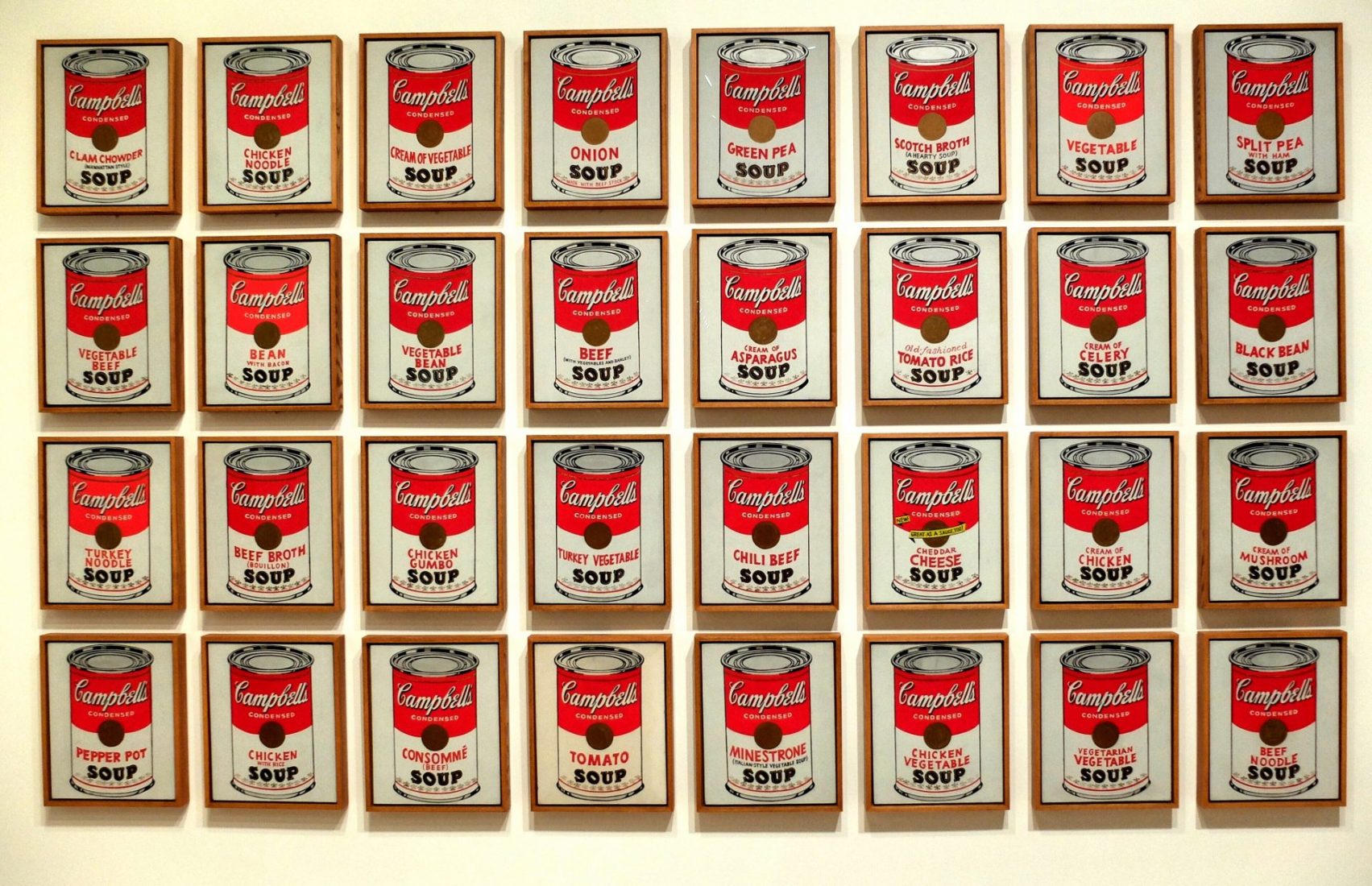
If you haven’t seen Andy Warhol at the Whitney Museum yet, make sure you get there before it ends on March 31. You have plenty of time, so no excuses. Andy Warhol–From A to B and Back Again includes over 350 works, and yes, the soup cans are present and accounted for. It is, according to the museum, the “first major reassessment of his work in thirty years.”
Andy Warhol at the Whitney
I think it’s safe to assume that most people in the world are familiar with Andy’s work. I mean, you’d really have to be living under a rock not to be. Soup cans and coke bottles and portraits of Liz, Marilyn, Liza–icons all, captured by an icon. These images are some of the most recognizable in pop culture. Of course, just because they are universally known, does not mean they are universally loved. I know many people who don’t LOVE Andy Warhol. And, I know some people who actively dislike Andy Warhol. “I mean, it’s just a bunch of Brillo boxes,” was a thing I heard at the exhibit (standing in front of the Brillo boxes). To each his own, especially when it comes to art. Full disclosure: I love the guy. He’s a disruptor. A troublemaker. I love troublemakers.
Portraits by Andy Warhol at the Whitney
I’m not going to give you a screed on Warhol’s contribution to art and culture. Like the saying goes, I’m no art critic but I know what I like. But whether you love him or hate him, this exhibit is worth seeing. Why? Well for one thing, it’s rare to see this volume of work in one place, spanning so much time. The scale of the exhibit is staggering. It includes everything from his earliest commercial work, Interview magazine, film and television projects, early silk screen experiments, private sketches, and ephemera, to collaborative work with Jean-Michel Basquiat, and a huge collection of commissioned portraits. It’s exhausting to view, just imagine what it must have been like inside his head.
Mao Tse Tung, Andy Warhol
If you think you know Warhol, seeing the work all together like this will give you a new appreciation. If you dislike Warhol, you may find yourself inspired by the sheer voluminous output. And if you are one of those people who thinks that all he did was reproduce soup can labels, you may find yourself reevaluating your opinion. Photographs of the silkscreened flowers or the gigantic Mao Tse Tung don’t show you how “painterly” these works are. Getting up close to the lovely and delicate shoe portraits is a rare treat. (I COVET the Diana Vreeland shoe drawing.) The line drawings, some never before seen by the public, are touching and intimate.
Diana Vreeland’s shoe, Andy Warhol
It’s true, no matter how you feel about him, that Andy Warhol had a huge impact on art, celebrity, society, music, print media–the list goes on and on. And for that reason alone, the exhibit is a must. But it is the personal moments that most resonate–a simple self-portrait, the portrait of his mother, Julia Warhola, the Time Capsule, the special projects and collaborations that give you a small window into the artist’s interior life. Those are the moments most valuable to me. Go. Meet the artist. He’s an interesting fellow.
But those soup cans, though.
Look for my weekly blogpost, THOUGHT PATTERNS, here, and follow me on Instagram @debmartinnyc
Valerie Carmet designs beautiful, complex and joyful public and private spaces. Her art pieces are one of a kind, and by combining ancient and cutting edge techniques, Carmet manages to give new life to discarded materials that provoke conversation and engage the senses.
With a degree in International Policy, French-born Valerie Carmet first came to the States to work in fashion. But after 10 years in the fashion industry, she had the opportunity to follow her first love—art. And since then, she has bestowed beauty and depth upon Downtown with her pieces.
“As a child I always wanted to be an artist, but my parents were afraid I would not be able to support myself so they insisted I study business,” Carmet told Downtown.
After she graduated from college, she was offered a job in NYC to work in fashion for a French company.
“My studies brought me the good fortune of coming to the States and experience a very different way of living,” she explained.
And it’s these experiences, she uses when she creates art. She’s able to combine the traditions of European culture with those she has adopted from her new home, New York City. It adds a unique complexity to her work.
Her background shows the same combination of American and European tradition. She studied art, painting and sculpting in a number of New York schools and mosaics in Italian studios. For 3 years, she worked at the Anandamali Studio in NYC as a full-time artist.
Art and Inspiration
Carmet finds inspiration in a number of things. It always depends on the piece, however.
“I find inspiration in everyday objects, sceneries, and even situations. I see beauty in what others might dismiss and, through re-purposing, I create a new artistic life for them,” Carmet said.
“When I am working on my Mosaic/Picocassette pieces, I let the design of the antique plates dictate my inspiration. I then create a very contemporary and modern esthetic, thereby bestowing the dishes with a new life,” she said.
When working on Pop Art 3D pieces, it’s the same approach.
“I am stimulated by the beauty, color and aesthetics of discarded toys. I merely look at them and ideas pop into my head,” the artist explained.
And then of course, her inspiration has to do with her surroundings. Here Downtown plays a special part.
“Downtown New York City is my neighborhood, my home since I have been in the States. My friends live Downtown and my kids went to school here. Everything about Downtown inspires me,” Carmet said.Memorable moment
“It was very emotional for me as I was a resident of TriBeCa for 17 years when September 11 happened. It was important for me to be part of the reconstruction of TriBeCa and to be able to create a public piece that demonstrated the support of an entire community coming together to rebuild,” she explained.
Currently, Carmet is working on some new ToyBox pieces for the Hamptons art fairthis summer as well as a few projects, the one pictured above is a work-in-progress for Chanel. Some of her ToyBox pieces can be seen on display at Red Market Salon. Carmet also has a pop up show this month at Caillebotteri–a gallery Upper East Side and one at Martial Vivot hair salon for Father’s Day in mid-June.
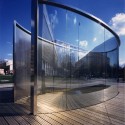
American artist Dan Graham was selected by The Metropolitan Museum of Art as the featured artist for its rooftop exhibit, coming this April. Dan Graham will work in collaboration with Swiss landscape architect Gunther Vogt for the exhibit, which will feature a unique steel and glass pavilion installed atop of the museum’s Iris B. and Gerald Canto Roof Garden. The Roof Garden Commission: Dan Graham with Günther Vogt will be on view from April 29 through November 2, 2014.
The focus of the exhibit is one of Graham’s masterfully designed pavilions, which are a unique blend of glass and steel, constructed of hedge rows and curves of two-way mirrored glass. The pavilion will be both transparent and reflective, offerring a changing and visually complex environment for visitors.
“We are thrilled to present this extraordinary new commission,” stated Thomas P. Campbell, Director and CEO of the Met. “For decades, Dan Graham has created work that challenges viewers to think in new and thought-provoking ways about the streets and cities they traverse every day. In his reimagining of the Met’s roof, visitors will discover a picturesque landscape that is at once unexpected and familiar.”
Graham rose as a prominent figure as head of John Daniel’s Gallery in New York back in the 1960’s, and curating Solomon “Sol” LeWitt’s first one man show back in 1965. His work designing pavilions has garnered him high praise since the 1980’s.
In 1966, Graham released his groundbreaking landmark photo-essay Homes for America, which dealt with issues of urbanity, public space, and the viewer’s own experience of it, through a multidisciplinary practice that includes writing, photography, video, performance, and the creation of sculptural environments of mirrored glass and metal.
Graham’s site-specific pavilions of the years that followed built on the artist’s interest in engaging the public with the space and structures that surround them. With its spectacular views of the city skyline and Central Park, the Museum’s Roof Garden presents a unique environment for Graham to further engage with notions of the city, its landscape and architecture, and the role of the public within its spaces.
Sandwiches, snacks, desserts, and beverage service—including espresso, cappuccino, iced tea, soft drinks, wine, and beer—will be available at the Roof Garden Café daily from 10:00 a.m. until closing, as weather permits. A martini bar will also be open on the Roof Garden on Friday and Saturday evenings (5:30–8:00 p.m.).