
Categories
Featured News NYC

Discussion with George Santana on his run for Civil Judge


We had the pleasure of speaking with George Santana about his run for Judge of Civil Court New York City. While speaking with George, we felt that his story and upbringing is exactly what our country was built on.

“Having been raised by a single immigrant mother has given me a strong work ethic, with the tolerance and judgment to deal with many setbacks and adversities.”


Discussion with George Santana on his run for Civil Judge
George Santana


DTM: How did you get into the political arena?

GS: Back in the old days prior to the reform democratic movement, old-time political clubs, dating back to Tammany Hall were famous for among other things dishing out jobs and finding apartments for people. The unwritten rule was that in exchange for the club leader’s largess, the recipient “volunteered” around the club when necessary.

In the early 1980s when I was 10 about 11 years old and my mother was in her 50s, the club helped her secure her second job cleaning offices. Back then, my mother worked two jobs as she was paying a whopping $35.00 per month for my Catholic school tuition.  But she was the only breadwinner because my father had walked out never paying child support. 

At the time the club was gearing up for a contested primary election which became an “all hands on deck” project.  Although she never said so, I suppose my mother was embarrassed because she really did not have any skills which could parlay into “volunteering” for the club because she never spoke English fluently.  Furthermore, like many other immigrants lacking a formal education, her skill set was limited to cleaning, sewing, ironing, and cooking. 


Discussion with George Santana on his run for Civil Judge
George Santana’s family

So that summer, my mother decided to kill two birds with one stone, by dropping me off at the local political club. I would be her “volunteering” substitute and the club would serve as my babysitter during the daytime which gave my grandmother then in her mid-seventies a break from having me around the house all day long. The club got more than it bargained for and a door opened for me that shaped the course of my entire life.

As an overly curious and precocious child, I wanted to learn everything I was a quick study and was willing to run errands, answer phones, and ride my bicycle all over the City of New York delivering packages to people that to this day were larger than life. 

That political campaign led to another the following year for a lady who was running for New York City Civil Court Judge.  After the lady won the election, I showed up at the Civil Judge’s chambers door a few weeks shy of my 13th birthday and offered to volunteer for her.  That daily volunteering job lasted almost 10 years and sealed the deal for me. I knew right there and then that I wanted to be an attorney and someday also a judge. 

“I was raised to believe that our laws must be obeyed, and our courts must be fair.”


Discussion with George Santana on his run for Civil Judge
George Santana

DTM: What is the most important thing that you want to achieve if elected?

GS: If elected, the most important thing that I want to achieve is making the courthouse user friendly for everyone entering through the door.  New York’s judicial system can be confusing and downright overwhelming for both lawyers and non-lawyers alike. Court users must be made to feel that they and their cases will be heard in a dignified and timely manner.


Discussion with George Santana on his run for Civil Judge
George Santana

DTM: Where did you grow up?

GS: I grew up in Hell’s Kitchen, and attended elementary school in Chelsea, and high school in the Lower East Side. 

DTM: What is the easiest thing to change that would really make a difference to every day working people?

GS: The easiest thing I will change to make an extraordinary difference to every day working people is respecting their time by taking the bench punctually and ready to hear cases at the time printed on the notices summoning the people to court, not two hours later. 

Discussion with George Santana on his run for Civil Judge
George Santana

“I have known Geroge Santan since he was 13 years old. For almost the entire 35 years I have known George, this is what he has wanted to do and worked so hard to attain – a seat on the bench. Candace C. Carponter P.C. “


DTM: What brings you joy?

GS: Since the age of 2, I learned not to take anything for granted and was trained to deal with loss, not to just accept it. My life on a good day has been challenging and on its worst day dreadful. The fact that I got to this point, and that I am in a place where I can help countless numbers of people, directly and indirectly, provides me the greatest joy I have ever felt.   


Discussion with George Santana on his run for Civil Judge
George Santana

DTM: Why do you love New York?

GS: I love New York not only because it is my birthplace, but also because it welcomed my parents from Cuba.  New York can be a rough place, but it is also forgiving and embracing. 

DTM: What makes New Yorker’s different than other states?

GS: New Yorkers are tough, fast-paced, no-nonsense.  However, New Yorkers have hearts of gold and we know how to unite and rise to any challenge to help our fellow New Yorkers.

Discussion with George Santana on his run for Civil Judge
George Santana

DTM: If you could change anything about the political arena/system what would you change?

GS: If I could change anything about the political system in New York it would be to make running for office within economic reach.  There are many wise, intelligent, and dedicated people who wish to get involved but are discouraged from becoming so due to the economics of politics.  

DTM: Where is your go-to place on a Sunday afternoon? 

GS: Unless I must prepare for a case or do work that I take home with me, my go-to place on a Sunday is my apartment which I convert into a mini version of Grand Central Station.  I like cooking for friends, and in a typical Cuban style, have more people than the apartment holds. On a given Sunday in my house, the priest is rubbing elbows with a Grammy winner who is rubbing elbows with a taxi driver, who is rubbing elbows with someone I met the week before at the supermarket. It is an opportunity to keep myself grounded and to never forget where I came from.


DTM: Is there anything else you’d like to say to our readership

GS: Growing up in a non-traditional, non-conventional setting coupled with attending the “school of hard knocks” has given me the skill set to easily navigate and diffuse difficult situations and cases fraught with raw human emotions while letting everyone walk away feeling that they were heard and that they “won” something.  


 ATTENTION NEW YORKERS

Voting options have changed due to the current COVID crisis.
Categories
Culture Events Movies Uncategorized

Newton Filmmakers Talk Inspiration and Election


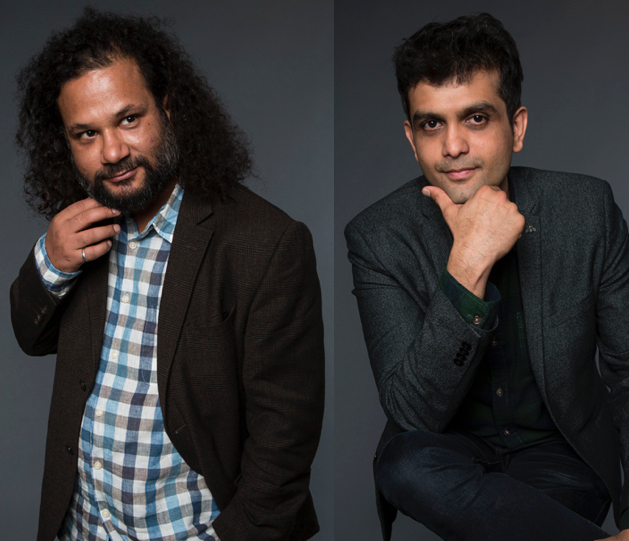
Amit Masurkar

“I’m not here to seek your votes.” A fat man festooned in bright orange garlands proclaims to the crowd gathered bellow the carnival-float podium he rode in on. He’s just there to stand up for the people, and to take care of the children, he says. All he wants is to make the lives of working people better, if only it wasn’t for all the other politicians, with goals not as pure as his, who stand in his way. This speech has been heard before, in many languages, and the scene, although set in rural India, is globally familiar. Thus begins “Newton,” a Tribeca International Narrative selected film, which is both a pointed satire of the election process and a love letter to all the people whose lives are affected by its outcome. On this pancontinental resonance of his film, director Amit Masurkar says:

“Film [in general] relates to what you are familiar with. So automatically you start seeing connections with things that you care about or you feel are unjust in your world. The German audiences related it to what’s happening there, in Hong Kong they were asking a lot of questions about Maoism and relating it to what is happening in China with government corruption. So people see a lot of similarities: even in North Korea there are elections. Saddam Hussein was democratically elected, so was Trump.”

At this, the interviewer and her subjects burst into knowing laughter, strangers no longer. And just like that, Masurkar and Tewari do it again: take a heavy subject lacking in easy answers, defuse it through an interaction between humans equal parts warm, awkward and immediate, and with the resultant laughter chip away a little bit of that heaviness, giving hope that even if not just yet, an answer will come. Each scene in the film achieves this feat, a testament to the pair’s background in writing for both sketch comedy and Bollywood. From that point on, the conversation flows fast:

Camila Gibran: What prompted you to center the film around an election?

Amit Masurkar: I was reading the preamble to the constitution. It’s such a beautiful piece of writing and a there is so much hope: the founding fathers thought that [India] was finally free and we could create our own destiny. The constitution is full of beautiful ideas… If you look at the constitution of any country today, I would say it would be beautiful, but then there’s a huge gap between what is written and what is practiced. So in order to do something about that, I thought to make a film about the physical process of electioneering.

CG: In your own words, please give me a brief synopsis of Newton.

AM: Newton is set over a day during an election in a conflict area. The election workers are supported by the police force in order to conduct “free and fair” elections in an area where the voters are not really free. So it’s ironic, the whole idea of the election there is a farce. The people there are disenfranchised, their rights aren’t really taken seriously, but when it comes to voting, they’re part of the statistic.

CG: There’s that gap again, that you spoke about, between the official record and the day to day reality. Does this apply to elections as well?

Mayank Tewari (screenwriter):  All over the world elections legitimize democracy while also being used as a tool for people to further their own agenda. The agenda is never set by people who have a stake. Policies are made about populations and the populations don’t have a say in what’s going on. If you’re able to show that a certain place had “free and fair” elections, a lot of things about that place are forgiven. If they have a democratically elected government, the feeling is “oh, they are plugged into the shared dream” so everything must be ok.


Mayank Tewarti

CG: Yet in the film, there’s hope. The main character keeps going for it, keeps believing in the process, in the importance of elections. Is there more than naiveté to the belief that one small person can change things?

MT: One thing, as a writer, I felt I accomplished, is the protagonist in the film not being a cynical person. Through his journey in the film, he starts sincere and he remains sincere, and I think that sincerity is what’s in need of here. Everybody seems to be wrapped in cynicism, being genuine and attentive is becoming a rare quality.

AM: You need patience for anything to happen, battles are being fought every day, but change take time. For example, in a country like say the U.S., women started voting much later. Turkish women were voting before American women were. And segregation was here until so late… It takes time for a society, generations for people to become aware of what they were doing and correct the historical wrongs of their forefathers.

CG: What is the role of art, and film specifically, in the process of bringing  about political change?

AM: We try our best, look at some if the singers from the sixties, so many of their songs are still being sung and they inspire people. One of art’s agendas is to make people learn about something new, discover something, question things, introspect. Film must also entertain at the same time, not make it into a serous topic that turns people off but make it accessible to everyone, and funny. Our intention was for people to find out more.

MT: An artist also has a political action. The fact that you are trying to draw humor from something which is not conventionally a source of humor is a political action, I feel, because art also creates a type of a context. If films like these are able to move you and to stay with you…

CG: We’ll be singing the songs of the sixties and watching films like Newton forever?

MT: That is my hope.

Interview by Camila Gibran

Photography by Leslie Hassler