
Categories
Education Uncategorized

Qualities in a Great Educational Leader


The education sector plays a significant role in society, and therefore it offers a wide array of exciting opportunities to advance your career.


Whether you’re considering a mid-career change or simply looking to make a greater impact on the world, you may already have what it takes to kick off a solid career in educational leadership. Here are some qualities that will make you a great fit.

You have problem-solving skills

There’s no better way to put your problem-solving skills to the test than working in education. Teachers, principals, and other NYC education jobs require you to think quickly on your feet to ensure that all children, regardless of their background, have ongoing access to a high-quality education. From developing curriculum to engaging with teachers and families, to advocating for what’s best for students, educators are involved in discerning the most important decisions that pave the way for a better educational experience.

You are strategic

If strategic preparation is your game, you could have the makings of a great teacher. The best teachers are extremely intentional: every move they make is carefully planned, starting with a study of the evidence (e.g., student work!). You create achievable but rigorous goals based on relevant data. Once you pinpoint a goal, you know how to map out a plan to get there. You understand how to clearly get from point A to point B and have the judgment to make adjustments or reroute when the time comes. You responsibly leverage results to create culturally responsive and equitable learning opportunities. When you achieve results, you can confidently back them up with evidence and envision the next best steps with a solid plan. All the while, you ensure your whole team is aligned and ready to tackle the game plan together. 

You have leadership skills

No matter what role you play in education, leadership skills are crucial. The decisions you make will have a significant impact on everyone you encounter and will trickle down to students and families. If you can make executive decisions, but also understands the importance of collaborating and receiving feedback that informs those decisions, teaching could be a great career path for you. After all, education is never a one-person show. Educators bring people together and are able to cultivate and develop leadership in others. While they command the classroom, they know when to step up and when to take a step back.

You are a great communicator

Great educators are great communicators. They express ideas efficiently and effectively in a way that is accessible and reassuring to whomever they are engaged with. They actively seek to understand their audience, the people they work with and know how to connect with them in a way that is unique and personalized. They do more than talk in the room; they are great listeners who know how to implement feedback just as well as they give feedback.

You love working with people

If you love working with people, you will thrive in education. People are at the center of this work, and if people are at the center of your heart, every day in an education role will feel purposeful. Great education leaders see the best in people and help them see the best in themselves. In addition to helping students receive the best education possible, they enjoy collaborating with teammates and being involved in the community. Being able to connect with people puts educators in a unique position to build the community, which this work is all about. It is more than setting up structures to teach children; it involves looking at the bigger picture and leaving a positive impact on children’s lives as a whole as well as the community.

You want to change the world for the better

Educators are at the forefront of building up the next generation of leaders and advocating for changes in the education system. They are on the front lines of the fight for equity in education and serve as lights in the dark. They are optimistic and have a whatever-it-takes-attitude because they want to see changes that will echo into the future. They take daily steps to ensure that each day is a little better than the day before because as Oprah Winfrey said, “Doing the best at this moment put you in the best place for the next moment.”

You are organized

Working as an educational leader involves overseeing many moving parts and managing multiple tasks, outside of overlooking a group of people. If you know how to prioritize, meet deadlines, and shift gears when necessary, you will thrive as a leader in education. Schools leaders need to be prepared to adapt to last-minute changes and the unexpected (because there will be plenty of those to come). But if you have schedules and plans in place, you can efficiently deal with anything that comes your way.

You are a good learner

If you consider yourself a lifelong learner, education is for you. That’s right—great education leaders love to immerse themselves in learning new things. They have the intellectual capacity and knowledge mastery that is foundational to teaching. Their passion for delving into new subjects and ideas allows them to inspire that same curiosity and engagement in everyone around them. At the end of the day, knowledge is power, and education is a career path where a passion for learning is absolutely foundational to excelling.

You foster inclusive environments

Schools are places where students, staff, and parents feel a sense of belonging. As a leader, you are intentional about getting to know everyone you work with so you can implement practices and create an environment where everyone feels comfortable and can thrive. This work is more than a job; it is an opportunity to close the achievement gap and create equitable opportunities for children. This starts with the attitude and perspective of leadership to break down barriers and propose new ways of doing things that will open up new doors for all.

You are passionate about your work

Education leaders largely influence the school culture and climate. Their energy and drive are contagious and inspire others to be the best they can, despite challenges. They believe that all children can achieve their full potential, and that starts with high expectations. They foster an environment that is both joyful and demanding, where productive struggle leads to accomplishment, not failure.  


Do you have what it takes?


Overall, individuals from a variety of professions and experiences can excel in education—after all, they’re building up the next generation of businesspeople, medical professionals, engineers, artists, and more. Working in education is an opportunity to leverage your current strengths and make a real difference that lasts a lifetime.
Categories
Featured NYC

Rocking the Boat during the COVID Pandemic


Rocking the Boat

We believe in giving back to our community and city. When you are a publication it becomes difficult to dig into your pockets for every great charity program. Rather, our part is to inform our readers of the causes that we have worked with and believe in.

Rocking the boat is one of the many programs that we feel is solid for you to invest your time and money. Launching in 1996 as a volunteer project in an East Harlem junior high school, Rocking the Boat worked under the aegis of New Settlement Apartments, which provided both workshop space and students for the cornerstone Boatbuilding Program.

They incorporated as an independent 501(c)3 non-profit organization in 2001,

Rocking the Boat continued to cultivate relationships with a wide variety of community-based, educational, environmental, cultural, and historical organizations, and over the years have expanded their size and scope of its services.

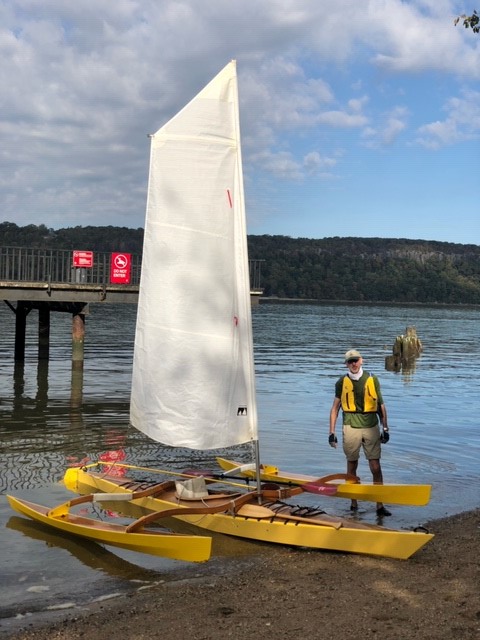
Namely, the On-Water Education Program which is near and dear to our hearts. This was added in 2002, the On-Water Classroom in 2005, the Job Skills Program in 2006, Community Rowing in 2007, and the Sailing Program in 2015.

This year with the pandemic we were worried as to how this and many children/young adults charity programs would manage. The word for 2020 seems to be Virtual.

Rocking the Boat was brought to the attention of Downtown by one of our subscribers, and close friends Alies van den Berg

Here’s our conversation with Rocking the Boat Development Director, Jaye Pockriss

DTM: Give us the rundown on how the virtual RTB is going this year and are the participants only walking or running this year or are they doing other activities like Rowan get home or cycling?

RTB: They are walking, running, rowing, kayaking, sailing, cycling, hiking.  One woman is riding an adult trike because she has multiple sclerosis.  At least two participants are volunteering to encourage voting in the election.  One woman is knitting, another gardening.  Some dudes are golfing.

DTM: Do you have as many participants and donors?

RTB: We have the most participants ever, roughly 200, and they are from more places across the country (Texas, California) capitalizing on the “anywhere and everywhere” aspect of this year’s event.  Going into the final weekend, 1,700 gifts have been received so far, on par with last year.

DTM: With all the many charitable organizations popping up, why would you encourage our readers to support RTB?

RTB: We can go in a couple of directions here…Rocking the Boat’s South Bronx neighborhood, Hunts Point, is in the poorest congressional district in the nation. Students here need comprehensive and sustained services to contend with the disadvantage of under-resourced schools, and the too frequent lack of adequate family support.

Despite having become synonymous with urban decay and pollution, the Bronx boasts some outstanding natural features including the oldest forest and the only true river in New York City. These spaces are home to a wide variety of trees, plants, fish, land animals, and birds. Rocking the Boat programs intimately connects Hunts Point youth to their environment by helping them enjoy it and giving them the skills to care for it.


Rocking the Boat during the COVID Pandemic
Leola Specht and Jeff Scales


Rocking the Boat students work together to build wooden boats, learn to row and sail, and restore local urban waterways, revitalizing their community while creating better lives for themselves.

Rocking the Boat is committed to helping its participants:

  • Stay in high school until they graduate or receive an equivalency diploma—on average 96% of Rocking the Boat students graduate from high school on time; the rate is an alarming 17.8% in Hunts Point generally
  • Enroll in college or trade school and be prepared academically and emotionally to succeed there—nearly 100% growth in social-emotional competency and enroll in a post-secondary program directly out of high school
  • Develop technical skills such as sailing, boat handling, navigating, chart reading, carpentry, sample collection and testing, scientific observation, and recording data, all of which reinforce STEM concepts and put them into a practical context
  • Develop soft skills such as leadership, communication, teamwork, problem-solving, and critical thinking
Rocking the Boat during the COVID Pandemic
Team members from Flotsam and Jetsam

DTM: What would you like our readers to know about your organization in order to get them involved?

RTB: Rocking the Boat kept rocking. Virtually, at the onset of the pandemic and on through the summer. We know that the current circumstances could change at any moment, but at the same time, we are excited to have resumed in-person youth development programming as of September 21.  We have confidence that our hands-on boatbuilding, environmental science, and sailing experiences are exactly what our participants need right now.  We are lucky that building, rowing, and sailing boats all take place in spaces—a 2,500 square foot shop with 15′ foot ceilings and outdoors on the Bronx River—that offer plenty of space to spread out and fresh air to breathe. Comprehensive distancing and sanitizing procedures are in place and will be strictly enforced to keep everyone safe.


Rocking the Boat during the COVID Pandemic
Thom Thacker


Rocking the Boat engages over 200 teens per year in a series of STEM-based programs that last throughout their high school careers and into college. Participants enter as freshmen and sophomores and choose from one of three programs: Boatbuilding, Environmental Science, or Sailing. They move from being students to paid apprentices to alumni once they graduate high school, at which point they are eligible to work part-time for Rocking the Boat as Program Assistants.


Rocking the Boat during the COVID Pandemic
Troy Messenger


In addition, roughly 4,000 local residents take part in Rocking the Boat’s free weekend rowing events and school-driven programs, most often through their math and science classes. 200 teens and 4,000 community members per year, this is a huge feat!

Categories
Featured Travel

NYC Experiences: Drinking and Prohibition History Tour

by Fernanda Mueller

No microphone or flags – Rory is not that kind of guide. In the drinking and prohibition history tour, you’ll feel like you’re walking around with a local friend. 

The actress and producer started her company, called Telltale tours, four years ago, with the mission of making history fun. Her award-winning tour guides are storytellers from all over the world. “I don’t really care if you were born here, I don’t care how long you’ve been here. I care if you are passionate about the city and if you can express this in the tour”, says Rory.

Learn history while drinking at local bars 

The Drinking and Prohibition History Tour is a dive into hidden and local bars in New York, focused on the Prohibition era. It explores a period in New York’s history from 1920 to 1933, during which all the production, importation, transportation, and sale of alcohol was banned in the United States. 

The groups visit three historical bars, with great cocktails recommended by the guide, while listening to some stories from the time. Drinks are not included in the ticket price, but having a cocktail is definitely part of the experience, and you will not want to miss it. 

The first location is in one of the two original speakeasies (the hidden bars that emerged during Prohibition). The Flûte Bar is an incredible, dark place specializing in champagne drinks. In this spot, everyone gets a sample drink. I recommend you to try the Green Kimono (vodka perfumed with cucumber and melon floated with Champagne).

The second location is not a speakeasy; it is a place that only locals go. The spot where Lilly’s bar is located used to be church! It was created to honor of Lillie Langtry, a British actress and socialite of the late 19th century, who challenged Victorian society’s attitudes to women. 

The third and last location is called Dear Irving on Hudson, a very exclusive bar with a James Bond-inspired interior decor. Try the Balto Old-fashioned, a New York classic, or, if you don’t like highly alcoholic drinks, the Panora Daiquiri (it’s like a Piña Colada, but it doesn’t taste too sweet) while enjoying a beautiful view of Manhattan. 

For bookings and more information about the tours, access Telltale Tours’ website.