Categories
Culture Fitness Health Lifestyle NYC Wellness

Sets in the City: Moving the Gym to your Home

By Lalaina “Lala” Duncan

WHEN NEW YORK LOCKED DOWN FOR THE COVID-19 pandemic last year, I was on vacation and figured I could improvise until things lifted — which had to be in a few weeks tops, right? “Workouts in the sand!” I decided, taking advantage of my surroundings. And honestly, why wasn’t I already doing this? Even though I was supposed to be on vacation, I was still taking meetings for the gym and frantically scouring the internet for fitness equipment I could have delivered and ready when I arrived back home. Back in New York, my clients were all one step ahead of me, transforming their living rooms, bedrooms, bathrooms, and kitchens into home gyms. They consulted me in the process:

Client: “Should I get the 15s or 20s or both?”

Me: “Obviously, both.”

Client: “I can’t find 15s but they have kettlebells, should I get those?”

Me: “Absolutely. We can do a lot with kettlebells.”

Client: “Now the kettlebells are sold out but they have a barbell, what do think?”

Me: “You have room for a barbell? Yes, get the barbell — but good luck finding plates for it, because it’s sold out everywhere I looked. You got the bands right?”

Client: “Yeah, those are coming this week.”

Me: “Perfect! Get the barbell and if you can, buy a landmine attachment. You can borrow plates from the gym. You’ll be good!”

As we spoke and they continued to revamp their home gyms, It was becoming apparent that this was going to be longer than a few weeks. I started strategizing with clients on how they could continue to train at home, which led to Live Virtual Training sessions via FaceTime or Zoom. I’m not going to lie, there was something exciting about this new venture. I was able to maintain some normalcy during this time and do it out of the comfort of my own home. From a trainer’s perspective, I relished the challenge of trying to provide a good solid training session for my clients with minimal equipment. “Okay, so we’ve got two mini bands, one long red band, two 20 pound dumbbells, a 26-pound kettlebell, and a yoga mat. I’m going to murder your legs. Happy Monday!”

 

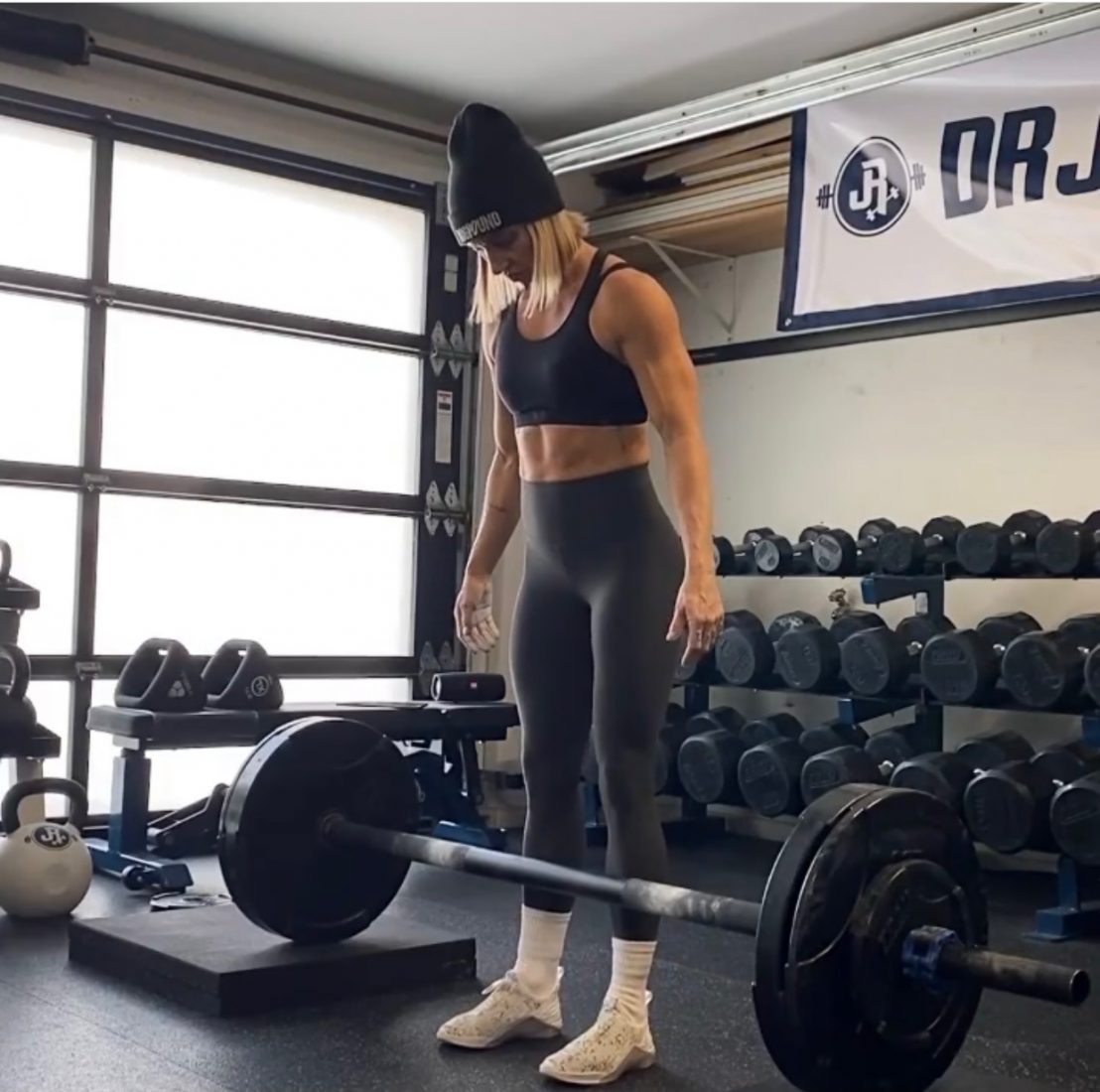
Lala Duncan and Walter Savage photo by Alice Teeple


By the middle of summer, the novelty of minimalist training was wearing thin, and many of my clients were starting to install full gyms in their homes. One of my clients in the Hamptons turned her basement into a full gym that would rival any boutique fitness studio, while another client moved to a slightly bigger apartment on the Lower East Side just so that she could have a squat rack in her living room. But our training program never changed. No matter what, in the gym or at home, on Mondays we squat. And as my client, Rachel, says to me, “No problem, let me move the chaise lounge to make room for my new squat rack.” As a strength coach and trainer, this can be better than hearing “I love you” for the first time from a new beau.

Now here we are a year later, and no one can predict what the future holds as the world starts to “open up.” What I can tell you is that in Manhattan and across the world, women are taking their health, fitness, and strength into their own hands. A lot of my clients have expressed to me that they now feel more comfortable strength training at home because there’s less intimidation than being in a crowded gym. And they feel confident that when gyms do fully re-open, they can walk up to the squat rack, adjust the height, load the plates themselves and lift like a boss. The conversations I used to have with my girlfriends and clients about handbags, clothes, and shoes have now turned into “Hey, what do you think if I bought a trap bar, do you think I’ll use it?” My answer? “Abso-freaking-lutely!”

Categories
Education Health Lifestyle Wellness

My experience going to college during a pandemic

The pandemic has been a difficult time for everyone. From the loss of jobs, lack of opportunities to safely socialize, and more, people around the world felt the impact of the pandemic. As I finish up my junior year, I realize that I learned quite a bit from taking in-person classes at college during a pandemic.

Photo by Charlotte May from Pexels

1. Teamwork is extremely important

As expected, there were a few outbreaks on campus throughout the semester. However, COVID-19 cases almost always spiked as a result of students failing to follow safety guidelines. Even when a majority of students follow the safety guidelines, the failure of a few students to do so will still lead to outbreaks on campus. It was essential for students to work together to prevent others from getting sick. We were able to effectively work together as a school to stop the spread, finishing the school year with two successful semesters in-person.

Photo by Charlotte May from Pexels

2. Planning your days helps you get a lot done

Being on campus always helped me focus more, but when the pandemic was factored in, I sometimes found it difficult to focus on my studies. In addition, since many of my classes were still virtual, the amount of work I had to do out of class was overwhelming. I realized that if I made deadlines for myself, I got work done in a more efficient manner. Planning your day really makes a difference in productivity.

Photo by Nicole Michalou from Pexels

3. It’s okay to give yourself a break

It’s frustrating when you’ve been working for a long time and get nothing done. This was something that I experienced often while at school. Due to the pandemic, there were a lot fewer activities to participate in. In addition, interaction with friends in other housing areas was occasionally not allowed depending on the number of cases on campus. As someone who relies on social interaction with friends as a refreshing break, this was very difficult for me. I found new ways to effectively give myself breaks such as cooking or baking, watching TV, and going on walks around campus.


Photo by Samantha Doria

4. Be thankful for what you have

Before the pandemic, I found myself living in the future instead of enjoying the present. Being at college during the pandemic taught me to enjoy every fun moment I had like it was my last. When I was able to safely spend time with my friends, I cherished these opportunities. Even if my junior year was not what I had hoped for, I am thankful for the experience I had.

Categories
Health

Embolization for liver metastases

Liver metastases are most often detected in patients with primary tumors of the colon, lungs, stomach, pancreas, and breast. Cancer of the biliary tract, esophagus, ovaries, prostate, kidney, and melanoma is less likely to affect the liver. Metastatic liver cancer is usually characterized by rapid progression.

Diagnostics of liver metastases

Diagnosis of cancer is based on a set of diagnostic methods. For liver metastases detection, ultrasound scanning, MRI with contrast enhancement, PET, and ultrasound-guided tumor biopsy are used.

It should be emphasized that MRI with a contrast enhancement is considered the modern “golden standard” of the diagnosis of liver metastases.

What is embolization?

Embolization is the minimally invasive treatment for liver cancer that is especially effective in secondary liver lesions, i.e. liver metastases.

The essence of this method is embolization (blocking of blood flow) of the artery feeding the tumor with the additional local administration of chemotherapeutic agents.

Types of embolization for liver metastases treatment

Liver metastases can be treated with several embolization methods.

Transarterial chemoembolization of the hepatic artery involves the injection of a chemotherapeutic drug, followed by particles that block the blood vessels. This procedure leads to the death of the cancer cells, without damage to healthy liver tissue. The hepatic artery can also be blocked without chemotherapy. This procedure is called bland transarterial embolization. However, in cases of liver metastases, doctors more often give preference to chemoembolization.

How does chemoembolization work?

Chemoembolization affects the tumor in two ways.

First, the targeted injection of a chemotherapy drug into the vessels that feed the tumor allows creating high concentrations of the chemotherapy drug.

Secondly, by introducing emboli (special small particles) into the lumen of the vessels feeding the tumor, the blood supply to the tumor is cut off. As blood carries oxygen and nutrients that are necessary for tumor growth, restricting blood flow significantly slows down or stops tumor growth.

How is embolization performed?

Under the control of special equipment (angiography), a doctor inserts a thin flexible catheter into a femoral artery in the groin region. The catheter is then moved directly into an artery that supplies blood to the tumor. Through the catheter, a mixture of embolizing substance and chemotherapy drug (in the case of chemoembolization) is injected close to the tumor. The embolizing substance blocks blood flow to the tumor, therefore stopping the tumor growth.

Contraindications for embolization

The embolization procedure is not performed in cases of:

  • Pregnancy
  • Treatment of malignant neoplasms of the uterus, except for inoperable tumors
  • Intolerance to the injected substances
  • Acute inflammatory processes in the genitourinary system
  • Blood clotting pathologies

How can I undergo treatment with embolization during a lockdown?

Many countries have closed their borders following the lockdown regimen, due to the spread of the COVID-19. Thus, undergoing treatment abroad has become more complicated.

In case you need to undergo chemoembolization for liver metastases promptly, to continue your treatment abroad, or to make sure you get the best treatment possible, know that you can still undergo treatment abroad even if your country is in lockdown.

Booking Health can facilitate the arrangement of embolization for liver metastases by providing the following services:

  • Communication with the chosen hospital
  • Providing patients with up-to-date information about the cost of treatment
  • Translation of medical reports
  • Solving the issues with receiving a medical visa, even if the request for a visa has been declined
  • If due to lockdown the embassy is closed completely, Booking Health resolves the issue through the federal police
  • Medical visa extension when it is necessary to continue the treatment abroad
  • Flight and accommodation booking
  • Interpreting services

You can be free of unnecessary stress, while Booking Health takes care of all organizational issues. To specify any information about cancer care during a lockdown, leave a request on the Booking Health website, and a medical advisor will contact you shortly.


Categories
Business Dining Featured Restaurants Travel

The Flavor of Adapting in a Strange Age: The Original Hotdog Factory

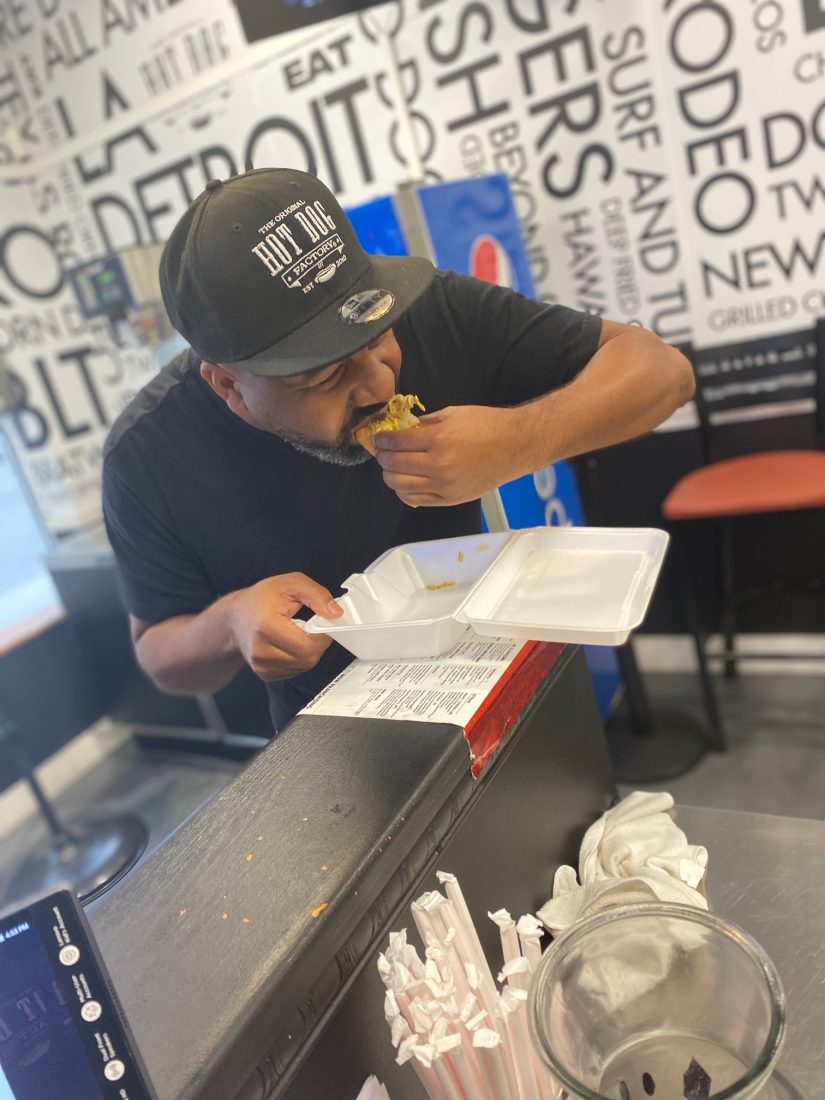
Around the corner from the Liberty Bell, The Bourse Food Hall is adapting to COVID-19. The 130-year-old commodities-exchange-turned-food-hall, well known as a gathering for good food and good variety, has removed their chairs from indoor tables. If you want to sit and eat, there are tables set up outside. The lines are marked with social distancing diamonds that read “STAND ON THIS JAWN” (jawn is Philadelphian for “thingamajig”). 

Last week, The Bourse is welcomed a new vendor: The Original Hotdog Factory. Any other time, this might be routine. The Original Hotdog Factory franchise specializes in a wide variety of hotdogs alongside wings, fried Oreos, and other delicious goodies. During COVID, though, opening any new food location is an aberration. But for franchise owner Aaron Anderson this is nothing new.

Anderson is quiet and friendly. For a man with a dozen successful businesses, including 5 Original Hotdog Factory locations in Philadelphia, he carries himself like a mom and pop shop owner–a modest smile, quiet voice, and focused attention. But he dreams big, including owning a sports team (his first choice is the Philadelphia 76ers) and running for office in Philadelphia.

This is the second Original Hotdog Factory that he has opened since COVID hit Philly. 

Technically, it’s his third. 

Anderson opened his fourth location in February of 2020, right before COVID. The location focused on indoor seating, and the sudden desertion of foot traffic drove it to extinction in weeks. So Anderson turned around and reopened in a new location in March. This time, he focused on takeout. He reached out to first responders and offered meals and services with organizations like the Ronald McDonald House. And the store thrived.

If other companies want to survive, he says, they’ll have to adapt. “Pivot in everything that you know. You’ve just got to change it…Stay focused no matter what. Times are definitely tough, but if you stay strong and sustain (then) on the other side is success for sure.” It is also, he says, about who has your back, including yourself. “It’s just being self-motivated and having a strong support team that keeps you motivated, and that’s always got your back.”

The next time you’re in Philadelphia, you can stop by The Original Hotdog Factory in the Bourse Food Hall, now open for business. Top options to check out at the Bourse location include the Surf n Turf (beef hotdog with crab meat), Fire Dog (loaded with peppers), and a damn fine Coney Dog. You’ll have to leave the Hall to eat them, but it will be worth the extra steps when you order the deep-fried twinkie for dessert. 

Categories
Bars Business Chefs Dining Featured Finance NYC Restaurants

SMALL BUSINESS TECHNICAL ASSISTANCE GRANT

Small businesses and locally-owned shops are the lifeblood of our city.

Unfortunately, almost all have been adversely impacted by COVID-19. To help businesses better cope with the changes the pandemic has imposed upon them, the Downtown Alliance is providing up to 25 small businesses the opportunity for one-on-one, technical-assistance consultations with Streetsense, a retail and urban-design consultant. The goal of these consultations is to assess operations and surface opportunities to better prepare businesses for the ongoing crisis. Streetsense has decades of first-hand operations experience across a variety of disciplines and industries, including research and analysis, hospitality, branding, and marketing and interior design.

Consultations will provide the following:

  • Individual 45- to 60-minute work sessions with retail or restaurant owners with two members of the Streetsense Pandemic Response Team.

  • A documented strategic guide for “pandemic readiness” for each business, delivered to the business owners, and to the Downtown Alliance.

  • Participating businesses will receive links to pandemic signage templates and the capital planning tool (for restaurants and bars only) following the completion of each session.


SMALL BUSINESS TECHNICAL ASSISTANCE GRANT
Pexels Artem Beliaikin

To be eligible, businesses must have gross annual revenues of less than $3 million and employ fewer than 30 full-time-equivalent employees and occupy a ground-level storefront in the Lower Manhattan Business Improvement District. If selected, businesses will be required to complete a self-assessment questionnaire to share with Streetsense providing relevant information about their business and describing the challenges they face as the city reopens.

To be eligible for a consultation, businesses must meet the following requirements and provide appropriate documentation:

  • Be located on the ground floor within the boundaries of the Lower Manhattan Business Improvement District.

  • Be an independent business with five or fewer locations in New York City.

  • Open by October 1, 2020.

  • Employs fewer than 30 full-time-equivalent employees as of March 1, 2020.

  • Gross annual revenues of less than $3 million.

  • Have a lease at their current location through December 31, 2020.

Applications will be reviewed and consultations will be granted on a first-come, first-served basis beginning August 10, 2020, at 9 am ET.

The application period will close when the available consultations have been exhausted. Consultations will take place between August and October 2020.

If you do not qualify for this program, please see our informational guide on COVID-19 relief programs available to businesses.

Categories
Art Events Featured NYC Theater

The Color Iz – Dance, Creative Expression and Performance

Dance is a form of expression, brings people of color, gender, age, and ethnicity together. One thing, I’ve always loved about dance is that there are no boundaries, no discrimination of any kind, it’s a forum like no other. Freeing oneself to feel the beat, hear the depth of the music and move to it. 

The New York Hustle Dance community saved me many years ago when I first came to New York City. They opened their arms, and hearts to me accepting me unconditionally. So when they come to me for a favor, I jump with pleasure!

by Abdiel Jacobsen
Kristine Bendul, Broadway veteran, and Abdiel Jacobsen, former Principal Dancer with the Martha Graham Dance Company, met through an incredible course of events in the world of Hustle dance. Although they both have extensive experience in their respective individual careers as performers – over 38 years combined – their partnership began on the social dance floor. 

It was love-at-first-dance and as dedicated members of the Hustle dance community, they decided to forge a new partnership committed to the cultural preservation and artistic evolution of Hustle.

Last year they co-founded  Trān-sēnd’Dæns, a Multi-Media Production and Talent Management Group, which produced their first production: The Color Iz conceived, directed and choreographed by Kristine and Abdiel. Premiered on August 14th, 2019 The Color Iz is a commemoration of the 50th Anniversary of the Stonewall Riots that gave birth to the Gay Rights Movement while celebrating diverse and inclusive artistic communities of NYC highlighting particularly The Stonewall Inn and Hustle dance.
Save Stone Wall Inn & The Color Iz
The Color Iz
Now the Stonewall Inn is under threat to close permanently due to financial constraints from COVID-19. Unknown to the mainstream, The Stonewall Inn has a second-floor space that is also a place for artists of the LGBTQ+ community of all experiences to come together in creative expression and performance. Kristine and Abdiel wish to use their artistic voices to advocate the importance of this welcoming creative space and its preservation as a national historic landmark.
Save Stone Wall Inn & The Color Iz
Photo credits, Christopher Jones, Cindy Sibilsky
Inspired to help, they decided to offer an online virtual reimagining of The Color Iz for its year anniversary to be streamed on Friday, August 14th at 9 pm EST as a fundraising event to support The Stonewall Inn.
Save Stone Wall Inn & The Color Iz
Photo credits, Christopher Jones, Cindy Sibilsky
Our team at Downtown and all of the Dance Community ask for your help. Please support, every penny counts. Grace A. Capobianco
100% of the donations will go to the Stonewall Inn Gives Back Initiative (SIGBI).
Donate to view HERE:gf.me/u/yg6m2j


Once you have donated you will receive a link to view the online event on Friday, August 14th at 9 pm EST.

In addition, you will be sent a separate Zoom link to join the closing online dance party right after the performance hosted by the one and only DJ Jamal Rigault.

Save Stone Wall Inn & The Color Iz
Photo credits, Christopher Jones, Cindy Sibilsky
 
Cast:
Kristine Bendul
Elizabeth Darchi
Coral Dolphin
Abdiel Jacobsen
Tomás Matos
Mihoko Ninomiya
Greg Osei
Joseph Prestamo
Waldemar Quionnes-Villanueva
Sal Rentas
Smitty Smith
Joana Matos
 
Social media:
Kristine and Abdiel: kristine_abdiel
Kristine Bendul: IG @kbendulny | FB Kristine Bendul
Abdiel Jacobsen: IG @abdielcedric | FB Abdiel Cedric Jacobsen
Trān-sēnd’Dæns: IG @transenddaens | Trān-sēnd’Dæns
Company Website: https://www.transenddaens.com/