Eyeliner? Check. Black lippie? Check. Mesh, lace and platform combats? All present and accounted for, with a gloomy rainy night for good measure.
It was undeniably a Clan of Xymox concert down in the rumbling subterranean catacombs of Le Poisson Rouge in the West Village. The venue found itself stuffed to the gills with New York City’s goths, punks, leather daddies, kohl-eyed Gen Xers, telephoto-wielding photographers…and most wonderful of all, a genteel-looking mama jacked up on Bud Light. She was over the moon to introduce the music of Xymox to her daughter. “I’m from the South, honey!” she shrieked with delight, waving to frontman Ronny Moorings. “We make our performers feel WELCOME!” She hugged everyone within her immediate radius, bumping the enthusiasm levels right up to eleven. What a fantastically eclectic crowd at this show.
NYC’s own Pawns and Chicago’s The Bellwether Syndicate (led by William Faith of The March Violets and Faith and the Muse) riled up the crowd with their outstanding sets. Thunderous, energetic, and gothic as hell, these two darkwave outfits were terrific choices to support Clan of Xymox.
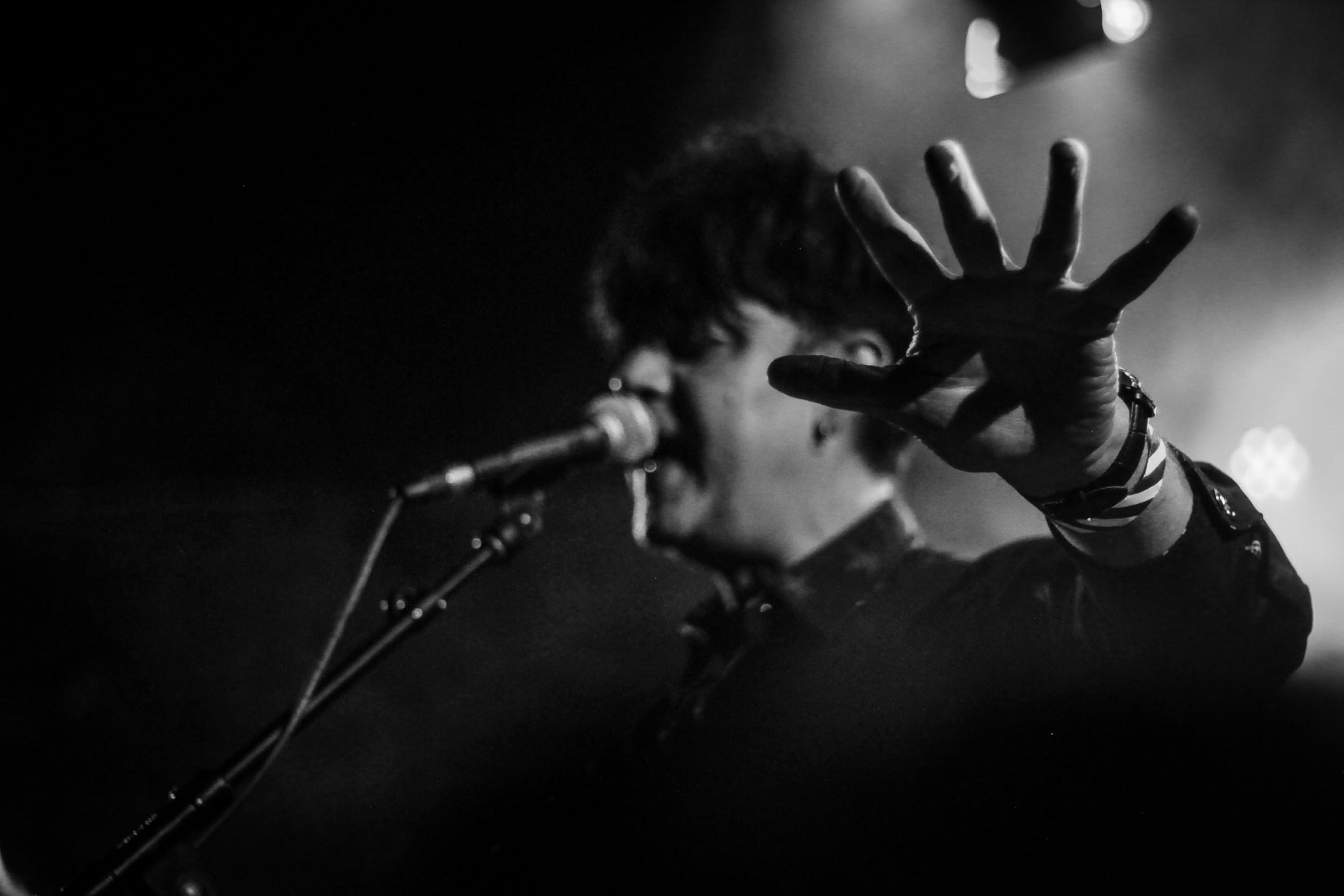
Ronny Moorings
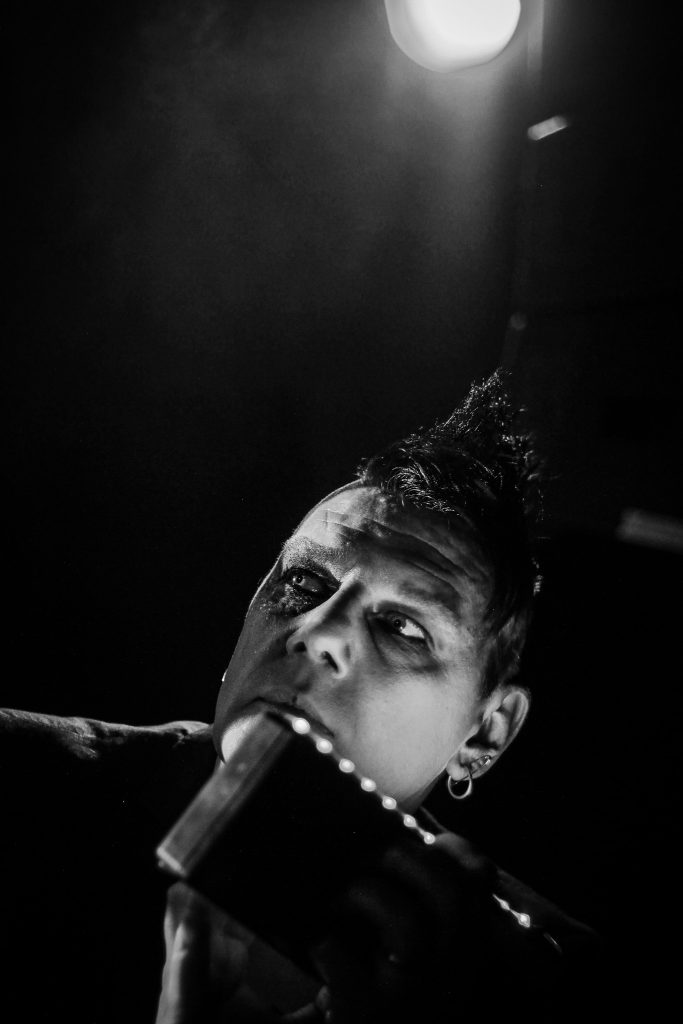
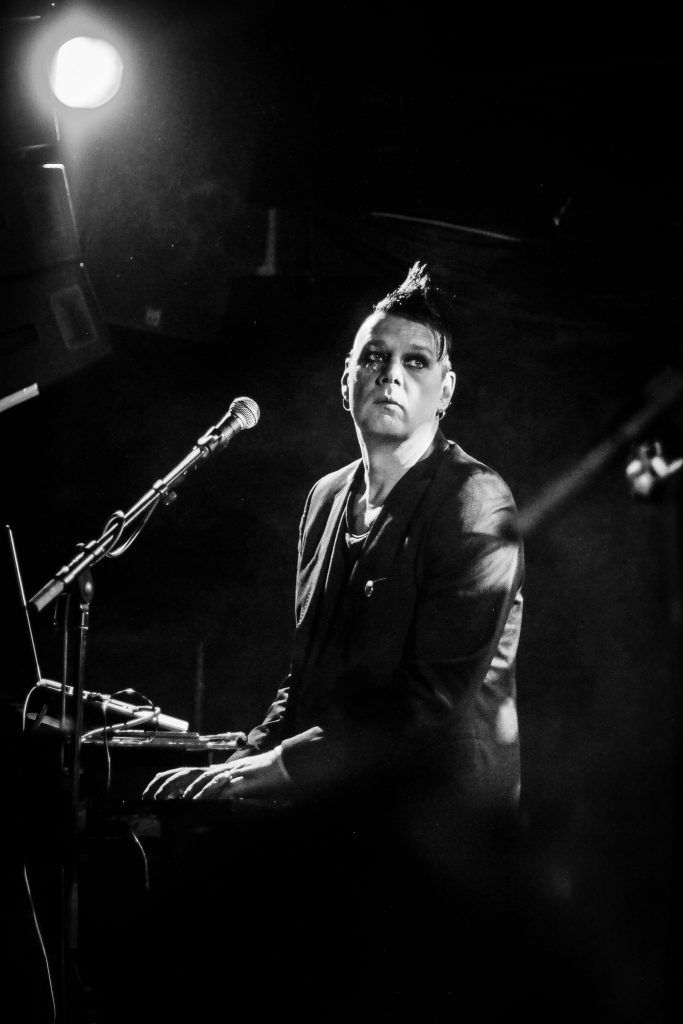
Sean Gøebel
Sean Gøebel
For the uninitiated, it was a real treat to see this new material live as well as the members in great spirits. The Dutch band, featuring Moorings, Sean Gøebel, Mario Usai, and Daniel Hoffmann, made a blessed final stop in New York, wrapping up this leg of their Days of Black Tour. Clan of Xymox was finally completing a cross-continental schedule of shows. If they were fatigued from the series of sold-out gigs, they certainly showed no signs of it.
Continuously playing in various incarnations since their formation in 1981, Xymox still sounded fresh and prescient with their philosophical lyrics and screeching synths. Xymox rolled out their old tried-and-trues like A Day, Obsession, and Muscoviet Mosquito, but introduced plenty of newer tracks as well.
Moorings, with his wonderful mop of jet-black hair, was in fine form, making wry political jokes. He mischievously taunted the audience and encouraged clap-alongs, as synth player Sean Gøebel went hog wild on a melodica. At times Gøebel appeared almost otherworldly as he serenaded the crowd, twisting and turning like a mohawked, German Expressionist Pan. Hoffmann and Usai kept up the pace, basking gleefully in the stage fog. The real surprise of the night was an inspired cameo appearance by their friend Curse Mackey of Pigface.
Xymox wound up the evening with two encores, and finally sent the children of the night off to their lairs with Going Round. The set lists were divvied out to the devoted, and the Southern mama’s daughter triumphantly snagged one ofMooring’s abandoned guitar picks.
“This will make a nice Christmas present for Mom. Maybe a necklace or something,” she said, just before the duo tackled Bellwether Syndicate’s William Faith in the lobby with big hugs and good ol’ Southern hospitality.
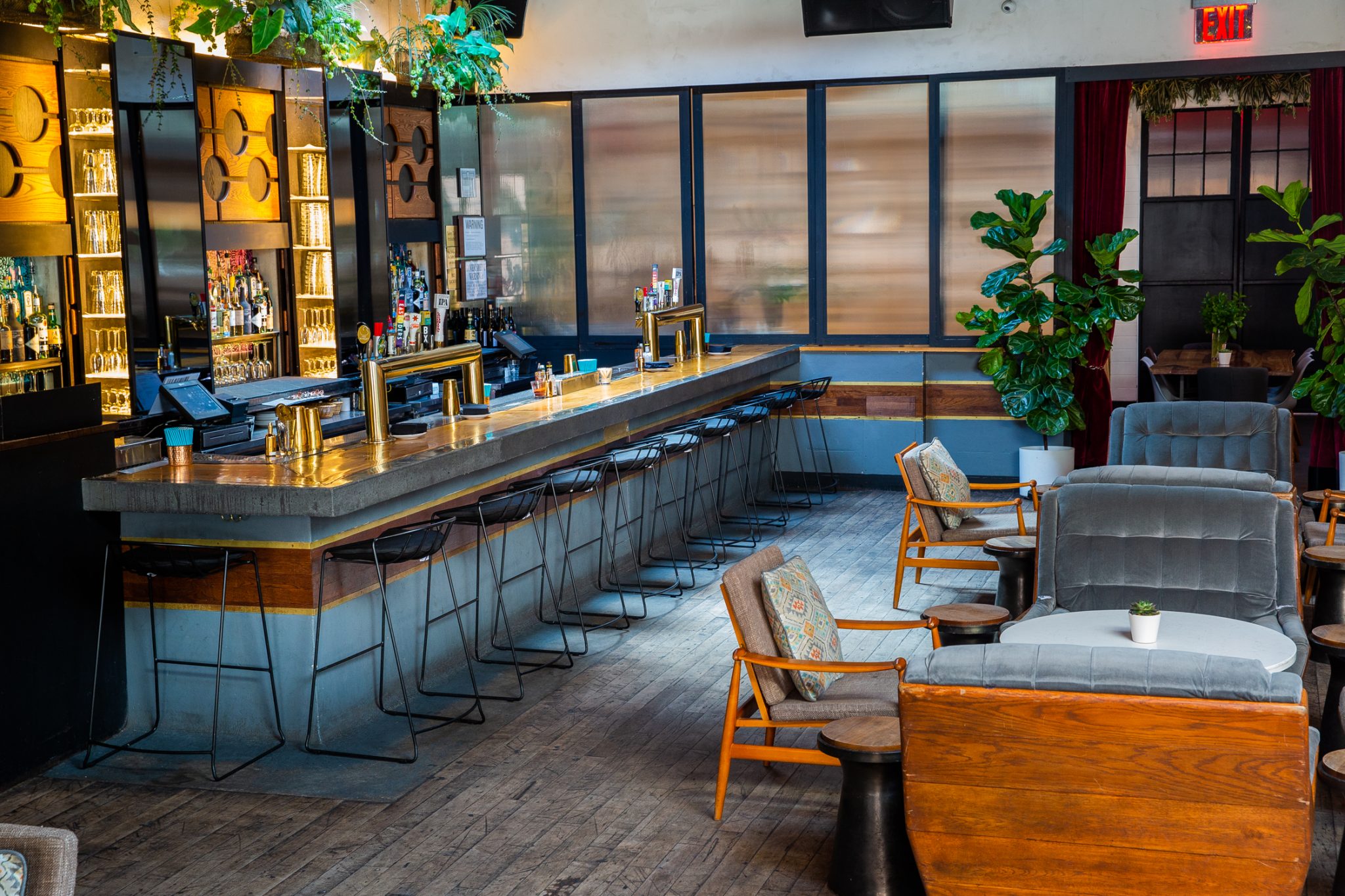
You might have heard of Freehold. It’s one of the most popular late night destinations on ride sharing apps, and one of the coolest places in one of the coolest neighborhoods (Williamsburg). There’s no sign outside, but you’re sure to be enticed in by either the coffee shop, workspace, bar, restaurant, or outdoor lounge. But Freehold is so much more than just a coffee shop/bar/restaurant/workspace – they have speaker panels, throw epic parties, host some of the hottest bands and comedians, give back to the community, and even travel to destination events like SXSW and Art Basel – they often refer to the space as a “hotel without rooms” (you can even pick up some merchandise with the saying “no rooms”). We recently sat down with Brad Gallagher and Brice Jones, co-founder and managing principals of Freehold, as well as executive marketing director and partner Lydia Mazzolini to talk about why they wanted to open Freehold, how they pick their programming, their epic membership program, and how they describe a space with so many functions!
Downtown: How long has Freehold been open?
Brice Jones: We opened the coffee shop portion in 2014,
Brad Gallagher: February, 5th 2014,
BJ: and then we opened the rest of the space in May 2015.
Downtown: Did you own the whole space originally?
BJ:Yeah, so it was our first time, we met at Soho House years ago. We basically bartended and consulted for a bunch of different companies and came to this and had all the normal issues that everybody has when they open a place from architecture to building delays to leases and such. We had to make a decision, do we do all the floors for the place at once or do we just do the coffee shop and show our investors that we actually know how to run a business? That’s basically what we did.
BG: It’s also a great way to meet the neighborhood, so we opened up and we just met the neighborhood and we got to talk about what’s going on in the back and the project and as a whole.
Downtown: What was here before?
BJ: It was a warehouse. The only thing that’s original is the ceiling, not the skylights, we made the skylights look like they’d been here, and some of the pillars. Every single wall and finish is different, even the floors. These floors actually came from Soho House Chicago. When a building is made they have scrap wood because they over order wood, so we took all the scrap from Soho House Chicago.
BG: It was our ode to Soho House, thanks for introducing us, thanks for the floor.
BJ: The coffee shop really allowed us, like he said, to open up to the neighborhood so when we opened up back here we kind of had a built in business of people working during the day, having a beer or a glass of wine, but mostly coffees and iced teas and lattes.
Downtown: What did you want to do with this space? Why did you open it in the first place?
BG: I think we wanted to do something very similar to Soho House but a public version of it, a non-membership version.
BJ: Throw more of a party I would say.
BG: We really zeroed in on ways we’re meeting that. There was already a massively creative population here, so we felt like Williamsburg would be perfect for it. We stumbled upon this place after seeing 100 different spaces, I think the number literally was like 87 different pieces of property we looked at. Every day I felt like I was waking up at 8 AM, being a bartender and going to see two or three new spaces and then reporting back to these guys like, “Hey, no, I fell through the boards on that one, let’s not do that”
BJ: Literally he fell through the board of the Urban Outfitters on North 6th. We got into a bidding war with Brooklyn Winery for a space, we got carsick, being in the back of a real estate broker’s car is just the worst thing in the world for us!
BG: Put vomit bags back there!
BJ: No, I don’t need to see this strip mall in Greenpoint, we’re good, we’re looking for something else. So this was a 1970’s built plumbing warehouse.
BG: So what happened was we went to the community board several times. They liked us but we just kept not being able to get the right space. We walked by this lot that was a parking lot that used to be a Domino’s sugar factor trucking depot. It had a for rent sign for $2000, and we said, let’s just take that and throw a barbecue party and have some fun. Then the landlord told us the plumbing warehouse was not doing that good and asked if we wanted to take half the space. We said, “that’s perfect, now we can do exactly what we wanted to do from the conceptual level.” Then the plumber went out of business so we also got the coffee shop in the front.
BG: It was kind of funny, while we’d be learning how to make lattes and cappuccinos and breves in the front, whatever a breve was (it’s a latte with cream), construction guys would come in and ask for quarter inch PVC and say, “you guys sell copper in the back, too, right?” and we’d be like, “No, it’s a nightmare back there! We’re in construction to open up a bar/restaurant, but I can give you a nice cup of coffee!” So it was kind of fun.
BJ:We needed this kind of place in the neighborhood for our purposes. We recognized there were great coffee shops, from Oslo to Blue Bottle to Toby’s, in the neighborhood, but they all kind of were anti-work-by-day. They’re all almost no laptops and all these rules, and there are so many creatives and entrepreneurs in Williamsburg, and we wanted to cater to that crowd, so we were always really friendly to that in the coffee shop. 2014 was, I think, two years before WeWork. We were really a beacon in South Williamsburg for that work-by-day crowd. When we opened up the doors we literally had about 300 people in here during the day. We’ll go like introduce ourselves or look to what people are doing have no idea what they’re doing on these computer screens. It looks like the matrix to me, but it’s just a really nice demographic of all these different professionals in all these different industries that all come together here.
Downtown: How do you support your membership program without fees?
BJ: So we wanted to throw a party. I think that’s a big part of what we do here on a Friday or Saturday night or Tuesday nights when we have a live band. We throw a really good party; it’s natural and it’s pretty organic. We’re not really pushing anything, we don’t use promoters in any way. We really try to support local talent, and we’ve gotten really, really busy because of that. We have a line around the block on Fridays and Saturdays, and we felt like it was hard for our core clientele to gain access on those nights after word got out. We opened up, we did no press, we had no sign outside, so to have that and have somebody that supported us come and have to wait in line…
So that was big basis of the membership, we wanted to take care of the people that supported us from the beginning and we wanted to really curate the crowd that’s made us who we are and to be able to deploy them any time. That membership gets you plus three on a Friday or Saturday, we do holiday parties for those people, we do live concerts for those people, we do speaker panels for those people, it’s a really great way for us to gauge the programing.
Downtown: How do you become a member?
BJ: You either apply or you’re invited.
Downtown: So you don’t have to prove you were here the day you opened?
BG: No, but most of those people are members. That is what we call our core membership, those couple hundred people. We wanted to make sure they could come back.
BJ: Our marketing director and newest partner, Lydia, she really heads up that side of the business. It’s been an unbelievable tool. We do so many special things on a programming level, I think that’s one of the things that separates us from a lot of bars and restaurants and workspaces, and that’s really now becoming the carrying point to a lot of the brands we work with.
Downtown: There are so many functions to this space, how do you describe it if somebody asks what you do?
BG: It’s tough. You start with the bar/restaurant, but it’s kind of like a hotel. We call it a hotel lobby without the hotel rooms. Several days a week we operate for twenty or twenty one hours a day, so we’re kind of hotel hours. At 7:00 AM the cafe opens, and at 4:00 AM the bar closes, so it’s a quick little reset on the weekends to get it cleaned up and ready to go. Programming wise we also do a lot of the same stuff that a hotel would do a: comedy night, a trivia night, a concert, speaker panels. So I think that fake hotel kind of helps describe us.
BJ: Just from the layout, we have outside space, we have a game room, we have a bar, we have a restaurant component, we have an event space, we have a coffee shop, at our front desk you can charge your phones, you can print stuff, we have a gift shop, so I think it also helped us. Not everybody has a background that they know what goes on at private clubs, but everybody knows the best hotel they’ve ever been to, it helps us kind of guide our process here.
Downtown: What programming did you start with?
BJ: Comedy was big, right?
BG: We did a comedy night that kind of took off, and we got some of the nations best comics to come here. We never paid them we just gave them a really, really nice room and a very PC audience to work in front of, and it became a thing. It was great. People with Comedy Central specials and who have been on tours where they make a lot of money were asking to do shows here. It was a really fun room for them to play in. You can play to about 50-70 people. I would say that was the first one that hit, and then we got a live music liquor license and started doing concerts. We had a band named St. Lucia that was close friends of ours, so they played here. The Knocks finished their tour here so that was kind of fun, and then other bands were asked if they could do a tour here in our main space.
BJ: Sometimes in the winter we’ll do a show here and condense the room. That leaves us with a green room that is arguably one of the best green rooms in the business. Then on the bigger nights in the summer we’ll throw a curtain up and use the outdoor space. We’re really good at flipping the space. Our core programming on an annual level, we obviously do New Year’s and Halloween. We do a black-tie New Year’s every year. Halloween we switch it up every year: disco the first year, studio 45. One of the fun nights for us is Ernest Hemingway’s birthday in July. We’re really busy in July because of the outdoor space, so we basically turn this whole place into Old Havana. We rent like 50 palm tress, get samba dancers, Cuban cigar rollers, change the whole menu over, do a craps table in the back for the local community for a charity,
BG: just celebrate Hemingway’s life and all the debauchery that it was.
BJ: A lot of the members, the Freeholders, dictate the programming in some way. There are a lot of things that we tend to do that we just believe in collectively, but we have speaker panels, now we’re getting approached with things from different brands and different partners to kind of co-brand things, which has been great for us. We’re running out of ideas.
Downtown: So if you’re a member, do you just walk in and work during the day or do you have to buy something?
BG: We hope that you buy something obviously, but there are people who don’t and that’s fine. That’s the double edged sword of being a public house, but the membership also is great because a lot of the programed events are for Freeholders only. A lot of the concerts we only invite our Freeholders, I think there are about 2000 of them at this point, so there they get preferred access to the space for some of these very, very special programed events.
Downtown: Do most of your members live in Williamsburg?
Lydia Mazzolini: Mostly they do, it’s around a 70/30 Williamsburg/Manhattan. Most of them are local, but what’s cool about all the events is there are more people that reach out to us that bring in their new network of people. We’re doing an LGBTQ variety show event with this amazing group, and they’re bringing in all these people that likely have never been here before, so we turned that into a freeholder only event so that my people come in and say wow this is great and I have a new network of people that come in. There are one hundred people that are going to come in and sit down at this panel presentation, and we’ve got a whole new market that just came in that had never seen the space before, so that’s how we kind of spread the word.
Downtown: How many nights a week do you have programing?
BG: A lot.
LM: Sometimes it’s like four. We always have trivia every Wednesday. I’d say on average we have three programing events a week. but we also program a DJ dance party every single Friday, every single Saturday,
BG: Jazz on Sundays.
Downtown: Is the restaurant full service?
BJ: Yeah, we do different food events from Sunday Supper to summer barbecues. We’ll grill for July 4th. We had a hot dog eating contest once upon a time.
Downtown: What’s some upcoming programming that you’re excited about?
LM: We’ve got a Mardi Gras party which is going to be amazing. We fly in the Prince of Treme, Glenn David Andrews,
BJ: Trombone Shorty’s uncle.
LM: We fly him in every year from Louisiana with his brass line, and they do a parade through the space to start off the event. We’ve got stilt walkers, fire breathers, gumbo, hundreds of people fit in the space.
We’ve got a recurring residency with this amazing trumpeter Spencer Ludwig that we’ve been doing on a monthly basis. We had these amazing drag queens the Dragon Sisters that came in from LA. Another residency we have is Instant Classic. It’s a mashup of artists from different bands. We’ve got that going on on a monthly basis. We’re going to SXSW, we do a pop up there every year.
Downtown: What happens there?
LM: So we’re doing a Brooklyn-meets-Austin block party at one of our favorite venues called Native Hostel in Austin. It’s actually a very similar concept to our space, except they have rooms, it’s a boutique hostel with hotel rooms. There’s so much programing going on, we’ve got everything from yoga in the morning to cbd brunch. We’ve got some very legendary hip hop names that are performing, we’ve got a halfpipe fashion show, we’re bringing down a bunch of brand pop ups from Brooklyn and New York to do some fashion pop-up shops because Austin doesn’t get that that much.
BJ: We did art basel last month, and, for us, you look at the freeholder program last year SXSW we had 1000 people that showed up from our membership in Austin, Texas. Our pillars of membership I think are fashion, entertainment, tech, and media so SXSW is a huge culmination of all those things except maybe fashion.
LM: Yeah, that’s why we’re trying to tie in that little arm,
BJ: which I love and to have. Last year was an unofficial party and it was just a really special time. Art Basel same thing, we debuted, we did the bar at the Wynnwood Walls Art Party. Every quarter we switch out all the art in here. We get local artists, people from LA, it’s more who’s in town with a Brooklyn vibe, friends and family that are good. The Wynnwood Walls are the epicenter of Miami’s arts and design district, and basically we got to be a part of this really, really special experience where they flipped 30% of the walls to different artists from Brazil, from Indonesia, China, Japan. So we felt pretty cool to be a part of that, and the Freeholders came to that as well. For us, it’s a really great anchor program to be a part of something that is growing bigger than us in a lot of ways.
Downtown: How have you been involved with the community?
BG: We really give a shit in a lot of ways. We have both been proclaimed by the City Council of New York for our work in the community. A lot of these events we do are charity events. We have 120 employees and we see 10,000 people in this venue a week. What that does to the local community has positives and negatives, so for us we feel responsibility to give back in a lot of ways, and that’s to work with the community, whether that be soup kitchen for Thanksgiving or in the summer we got our whole staff at 9:00 AM, which is relatively difficult, to give out food to the local community. We had a line of 300 people, you’d be sore by the end of serving. I think that’s an important part of just doing business in the city. You look at the Amazon deal, and there’s a variety of reasons why that fell apart, but they could have given a little bit more and that’s something that you should expect to do in NYC.
Downtown: What are some of the challenges of doing so much with the space and program?
LM: There just aren’t enough hours in the day, I think that’s the easiest way to say it. With the more that we do, the more we get reached out to by people, and I’m the type of person that wants to do it all and sometimes I have to reel myself back in and reel my team back in, which is also fun that you get to pick and choose. You want to be able to accommodate everybody and incorporate everyone in a specific type of way. With what we’re doing at SXSW, I have 65 partners involved in this, and then you’re in a place where you have 65 partners, and then in turn there aren’t enough hours in the day, but it all always works out in the end. We just try to maintain the relationships with the people that are reaching out and have creative ideas without saturating the market with very similar ideas.
BG: I think it’s also knowing the right amount of programming to do, and also letting the space just be itself, be what it is which is a bar/restaurant, which is a hospitality concept, which is a cafe, so we don’t like to shut down every day and do something. We want the space to be able to breathe and be the community space that it is. We’ll do fun stuff, like Stumptown our coffee purveyor, we actually have a Freehold blend that they did with us which is great, they’ll come in and do a coffee tasting during the day. We do it all, it’s all over the place, but for the most part it’s the nightly programming.
BJ: You’ve gotta remember, we’re not Duane Reade, We’re not Marriott, so at some level we need the place to be profitable, and for us that’s through food and beverage revenue or sponsorships and joint ventures. I think that’s an element that a lot of people that are doing similar programing to us don’t have to have.
Downtown: What are a few of the most important things people need to know about Freehold?
LM: Hotel without the hotel room concept is the best way for people to understand the space.
BG: The restaurant component is important for people to know about.
LM: You can make a reservation, you can book bottle service on the weekend if you really want to party, and we are a place that loves to host private events. Corporate events are big for us. We program a lot at night, and then during the day is when we see most of our private events and corporate offsites. It’s a nice place for companies to get out of the office.
While New York City plays host to world-class concerts pretty much every night, music aficionados often overlook Downtown as the hotspot to check it all out. It’s time to stop undermining the wealth of musical choice in Lower Manhattan.
We’ve lined up the best Downtown concerts to check out in the next week. Don’t miss these excellent live performances.
Joyful lyrics and soaring melodies define this Portland group’s stomp and holler sound. Similar to groups like Family and Friends, they use folk and indie sounds to address themes plaguing millennials. Before you go, check out this videothat includes them singing with a children’s choir.
Tickets range from $10 to $12 and are available here.
Tonight July 20, 7:30 p.m., doors at 6:30. Mercury Lounge, 217 E. Houston St.
If you were around for the feminist-punk-alternative-rock movement of the 90s, you might remember Juliana Hatfield, or one of her songs like “Universal Heart-Beat.” Let nostalgia carry you to her show with Jesse Malin and Matthew Ryan at The Bowery Ballroom this weekend. Malin, who was recently featured in a Paste Studios clip, is following up his critically acclaimed 2015 record with “Outsiders,” due out in October. His 2002 record was produced by Ryan Adams. This show is for fans of alternative punk and rock.
Tickets range from $22 to $25 and are available here.
Saturday July 22, 9 p.m., doors at 8. The Bowery Ballroom, 6 Delancey St.
You may remember George Ezra for his hit “Budapest” from a few years back, but the British singer-songwriter is worth checking for more than his songs named after European cities (see “Barcelona,” also). His deep, velvety voice is truly unlike anything you’ve ever heard, and his lyrics are often a toss-up between sweet and sarcastic. His most recent release is a new upbeat single called “Don’t Matter Now,” which comes complete with this quirky music video.
Tickets are sold out, but may be available from third party sellers.
Monday July 31, 8 p.m., doors at 7. The Bowery Ballroom, 6 Delancey St.
Okkervil River is running a slew of acoustic trio shows, and their next stop is Joe’s Pub at the Public Theater. They’re bringing a personal and low key feel to this tour of shows. Their album “Away” was named one of the best albums of 2016 by the Wall Street Journal and The Atlantic. Check out this show for a chill evening of singing and guitar.
Brooklyn Sports & Entertainment is partnering with The Bowery Presents — AEG Presents’ regional partner — to acquire the operating rights and assets to Webster Hall, the legendary music and entertainment venue located in Manhattan’s East Village. The parties will assume the long-term lease to the building, which will continue to be owned by current owner, Unity Gallega.
“We are excited to build on the iconic history of Webster Hall,” said Brett Yormark, CEO of Brooklyn Sports & Entertainment. “Webster Hall provides us with an extraordinary opportunity to connect with artists early in their careers and expands BSE’s venue footprint into Manhattan. We appreciate all that the Ballinger family has done to make Webster Hall an industry leading venue and we are looking forward to working with them, The Bowery Presents and AEG Presents to make it an even greater destination for live music.”
“Partnering with The Bowery Presents and Brooklyn Sports & Entertainment to program and operate this iconic live facility will continue to enhance Webster Hall’s worldwide reputation as one of the industry’s most important venues,” said Jay Marciano, Chairman and CEO, AEG Presents.
Webster Hall has undergone several waves of transformation throughout the past century. In the 1920’s, Webster Hall notoriously held masquerade balls and was nicknamed “the Devil’s Playhouse.” RCA Records purchased Webster Hall in 1954 and renovated the venue to include a state-of-the-art acoustically-treated ballroom. Notable artists who recorded in Webster Hall’s studio during this time included Elvis Presley, Frank Sinatra, Bob Dylan (his recording debut), Harry Belafonte, Tony Bennett, and Julie Andrews.
Beginning in the 1980’s, Webster Hall reemerged as a leading rock venue in the City, hosting artists such as Eric Clapton with Keith Richards, U2 (the band’s first-ever U.S. show), Tina Turner, The Beastie Boys, Prince, Sting, Metallica, Aerosmith, KISS, B.B. King and Guns N’ Roses. The Ballinger family began running the venue in 1989.
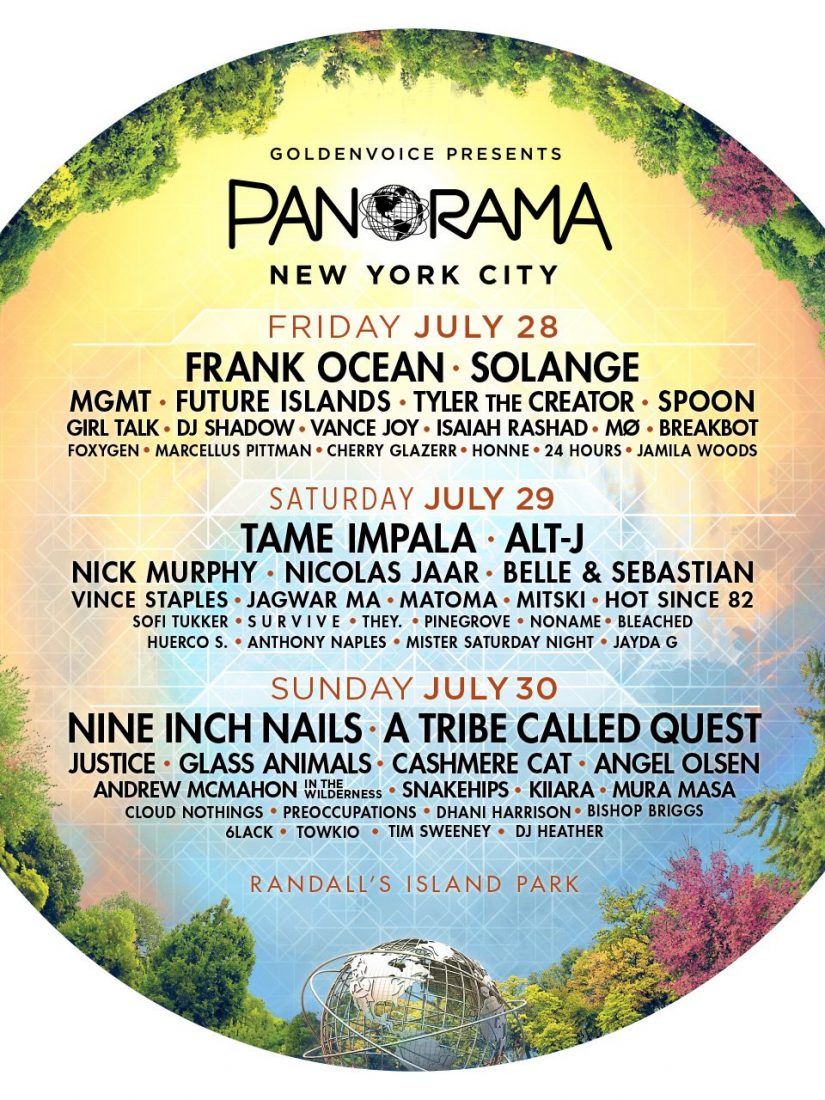
Music festival Panorama returns to New York City’s Randall’s Island Park for its second installment this summer. As announced earlier this, some of the top-tier talent performing will be Nine Inch Nails, Frank Ocean, Tame Impala, A Tribe Called Quest, alt-J, Solange, Justice, Nick Murphy, and MGMT. The critically-acclaimed festival sits at the intersection of New York’s unique creative community, bringing together music, immersive art and innovative technology as never before.
3-day, single-day General Admission and VIP passes go on-sale Friday, Jan. 13 at 10:00 AM EST on Panorama.NYC, where the festival’s full lineup can also be viewed.
American Express card members can purchase passes before the general public beginning Thursday, Jan. 12 at 10:00 AM EST through Friday, January 13 at 9:00 AM EST.
Whether you’re looking for something to do with the kids, with a date, or with your friends, here are some Halloween events to consider for this weekend, courtesy of Downtown:
Start Halloween weekend early and get into the autumn mood with some Thursday night cider tasting. Astor Center is hosting Applepalooza 2016, a casual tasting, perfect if you’re a cider enthusiast or just “cider curious.” Try different ciders from all around the world and relax into the weekend.
Want to kick off the Halloween celebrations in a more glamorous way? Put the costume aside and bring out your formal attire and mask. This secretive party is being held by Worlds Masquerades and the location will be announced on the day of. Your Thursday night will never be classier.
In the mood to blow off steam? On Friday night, head to a concert at the Highline Ballroom. Costumes are encouraged and DJ Khaled will host a night of great performances. DJ Spade, Scram Jones, and more will help you start the weekend off right.
Does you kid need some activities for this weekend? A twist on winter gingerbread houses, Taste Buds Kitchen is offering a Halloween gingerbread workshop from 9:00 AM to 10:00 AM on Saturday (the class is also offered on Sunday). Kids, from ages 2 to 8, can build their own haunted house out of gingerbread, while wearing costumes and listening listen to spooky music.
To entertain the kids (and maybe get some shopping done), head to Brookfield Place on Saturday between 12:00 PM and 3:00 PM. Kids of all ages are welcome for a Halloween party with science activities, magicians and performances. Show up in costumes so you can get some great photos of the kids on the costume catwalk.
Put on your best costume and head to The Stanton Social. This bar is “unabashedly luxurious” and will hold a lavish Halloween party on the Saturday night. With a premium open bar and a live DJ performance, and a 1940s vibe, this is a great place to dance the night away.
Halloween weekend will be busy and by Sunday, you might be a little exhausted. The perfect pick-me-up is a puppy parade! The High Line Hotel, known for being dog-friendly, is hosting a Halloween event from 10:00 AM until noon, with face painting and pumpkin carving and other events for the kiddos. The highlight (of course) is the Halloween pup parade at 11:30.
Speaking of puppy costumes, starting today tag your pets with #PawlloweenNYC and you could see them on the subway! LinkNYC will be taking photos from Facebook, Instagram or Twitter and will be featuring them on LinkNYC and the MTA On-The-Go kiosks from Oct. 24-31.