Categories
News NYC

Waterfront Alliance Advances Climate Resilience

Reprinted with permission from Waterfront Alliance

Waterfront Alliance Secures Congressional Grant to Develop a Climate Resilience Plan for Flushing Meadows Corona Park

The Plan will be a Community-Led Process to Identify Climate Hazards and Potential Resilience Strategies to Advance Plans for Shovel-Ready Projects

Waterfront Alliance is pleased to announce that its proposal for a climate resilience plan for Flushing Meadows Corona Park has been awarded Community Project Funding in the 6th Congressional District (NY) as part of the new federal spending package.

In Spring 2021, Congressmember Grace Meng submitted 10 Community Project Funding requests to the House Appropriations Committee for review. The funding was included as part of the FY 2022 spending bill signed into law yesterday.

Flushing Meadows Corona Park serves as critical infrastructure for multiple neighborhoods in the 6th District. The park is a space for recreation, reflection, and increasingly, refuge from urban heat. And yet, the park faces tremendous challenges due to climate change.

The primary objectives of Waterfront Alliance’s “Flushing Meadows Corona Park: A Hub for Climate Resilience” are to increase public awareness about local climate risks, build community participation in planning and infrastructure projects, and to identify potential resilience solutions for future investigation and development. Working with Queens community leaders, partners in city government, and academia, alongside the community, Waterfront Alliance will provide tools and lead events to share and gather information that will culminate in a climate visioning for the park. These concrete recommendations and concept plans can better position the Park and surrounding community to receive city, state, and federal funding for resilience projects.

Receiving much of the stormwater from surrounding neighborhoods, the park was identified by the Center for an Urban Future as the most-flooded park in the City alongside Forest Park due to increasingly heavy rains. Recent extreme weather events including Hurricane Ida reinforce the need for better preparation and planning. Torrential waters forced the NYPD to conduct multiple rescues from Flushing Meadows Corona Park and there was severe flooding as stormwater from the Grand Central Parkway and the Van Wyck Expressway ran off into areas of the park. Access to recreational programs and facilities in the park was halted due to sustained damage to buildings.

Additionally, the park faces risks due to sea level rise and storm surge, with much of the park facing permanent inundation by 2080, according to the New York Panel on Climate Change, and other areas only recently being brought back online following damage from Hurricane Sandy.

“As Queens’ signature local and destination park, serving several Central and Northern Queens communities with high social vulnerability, we must ensure that the park and surrounding communities are prepared for our climate future,” said Karen Imas, Vice President of Programs, Waterfront Alliance. “Tremendous thanks to Congresswoman Meng for her climate leadership. This project is particularly timely as increased funding may come to our region for climate change adaptation projects per the infrastructure funding package.”

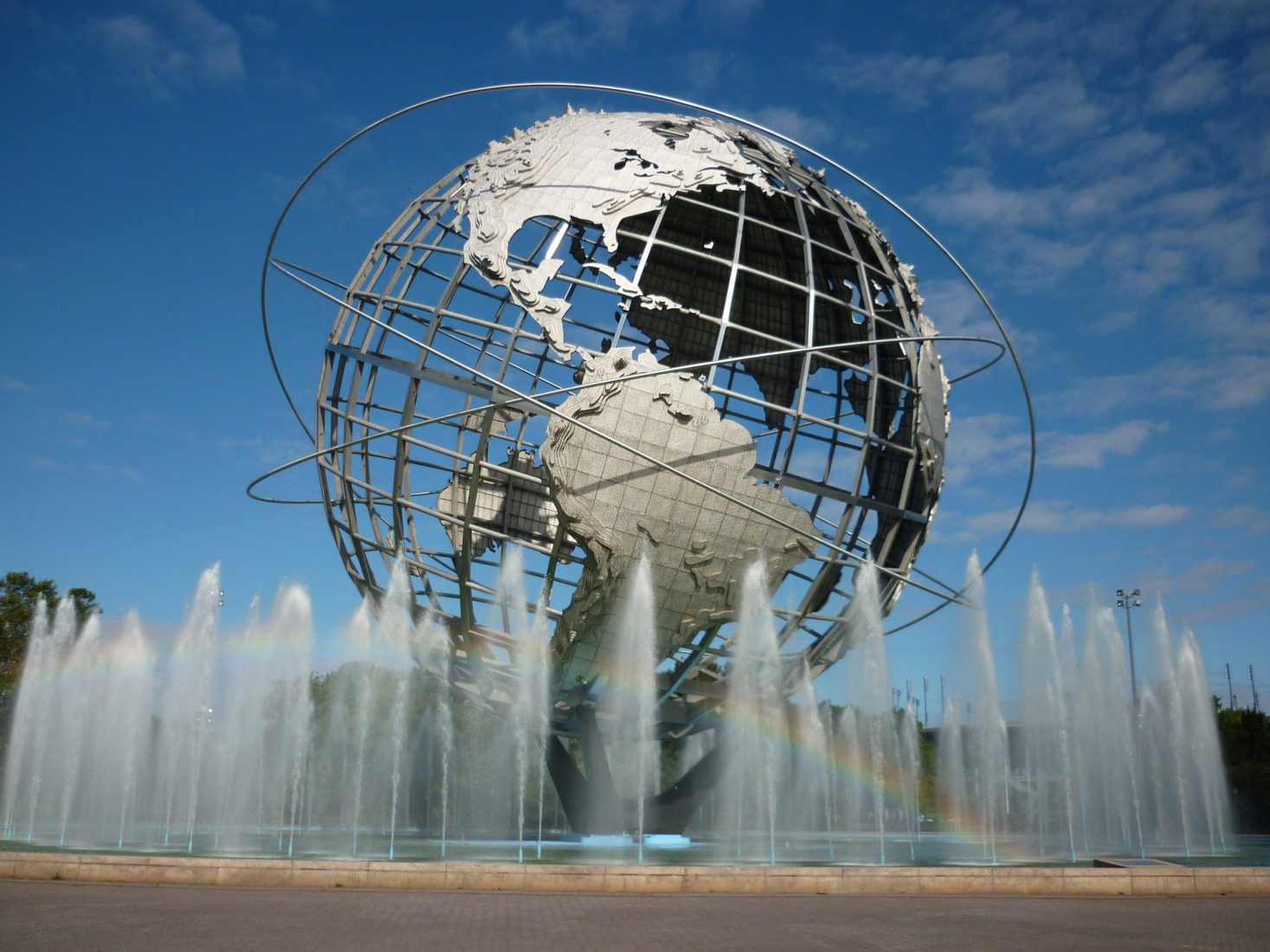
“Flushing Meadows Corona Park is a beautiful landmark of our district. It provides a lovely area for recreational and leisure activities, refuge from the heat in the summer and possesses one of the most beautiful sculptures in all of New York, the Unisphere,” said Congresswoman Meng, New York’s senior Member of the House Appropriations Committee. “That is why I am so pleased that the Waterfront Alliance will receive funding through the new government spending package to help the park battle the effects of climate change. Stormwater from surrounding neighborhoods continuously flood the park and in some areas, the park is projected to be permanently flooded due to rising sea levels in the coming decades. The funds will help make key assessments, plan out necessary strategies, and begin implementation to help keep the park open for Queens residents for generations to come.”

“Once a flourishing tidal wetland that absorbed waters from Flushing Bay and the Long Island Sound, Flushing Meadows Corona Park has undergone many transformations—a coal ash dumping ground, two World’s Fairs and one of the top 10 biggest parks in NYC,” said Rebecca Pryor, the Executive Director of Guardians of Flushing Bay (GoFB). “GoFB is eager to play a role to envision the park’s next stage of transformation: as a climate resilient hub for the surrounding environmental justice communities who depend upon it. We are looking forward to collaborating with Waterfront Alliance and our local partners in this process, and we are sincerely thankful to Congressmember Grace Meng for making the project possible.” 

“I am delighted that Federal funding has been awarded to support community-based resiliency planning and education in Flushing Meadows Corona Park,” said Kizzy Charles-Guzman, Executive Director of the NYC Mayor’s Office of Climate and Environmental Justice. “Together, communities and governments can build a more just vision for the future as we fight against climate change.” 

“NYC Parks is committed to improving Flushing Meadows Corona Park and ensuring this iconic park is resilient for decades to come. To that end, more than $350 million has already been invested in recent and upcoming park renovations, including projects that increase resiliency and improve stormwater management,” said NYC Parks Commissioner Sue Donoghue. “We’re grateful for the Waterfront Alliance’s partnership to raise awareness and engage the community around these important issues.”

About: Waterfront Alliance is a 501(c)(3) nonprofit organization with a strong track record of providing technical planning and project development services, developing community-based plans, and convening individuals and groups across New York City and the region to inform different public and private waterfront projects. Specifically, the organization has been engaged by NYC Department of City Planning, NYC Economic Development Corporation and The Port Authority of New York and New Jersey, among other government agencies and organizations, to either develop waterfront plans, convene community engagements on major projects and plans, and/or provide technical advice on critical coastal and waterfront projects. 

Categories
Culture Design Entertainment Featured Health NYC Wellness

ECO Solidarity Returns at CLOSEUP on May 18

At a moment when the world grapples with climate change, bold new ideas are needed more than ever. It is with this urgency in mind that eight countries have come together to announce the second edition of ECO Solidarity, an international project, movement, and initiative focused on design solutions for some of the most pressing issues of our time. Eight visionary designers were selected to share products and projects that thoughtfully consider positive social impact, design empathy, and sustainable materials. ECO Solidarity will launch as part of the CLOSEUP 2021 presented by ICFF + WantedDesign Manhattan event on May 18th, 2021 during two thought-provoking sessions, followed by an expanded online exhibition in June.

This inspiring movement, initiated in 2020 by the Polish Cultural Institute New York and Tomek Rygalik of Studio Rygalik in partnership with WantedDesign, continues its mission with eight European Union National Institutes for Culture (EUNIC) organizations to address the imperative need for human-centered design in response to humanitarian and public health crises by focusing on ecology, the climate emergency, public health, wellbeing in public spaces, and how shifts in the economy affects people’s lives. In alliance with WantedDesign’s co-founders Odile Hainaut and Claire Pijoulat, the ECO Solidarity 2021 program will also strive to address the key objectives of the Green New Deal, through interior and product design as well as spatial planning. “At WantedDesign, we have focused on sustainability as a topic in our programming for several years as we understand the importance of always keeping it top of mind,” explains Hainaut. “ECO Solidarity is not only a design exercise—it shines the light on designers who think about our future and propose ideas that push the conversation forward and help create a more sustainable, conscious, and harmonious way of living. Pijoulat adds, “The international exchange of ideas is key to what WantedDesign does, and we are thrilled to have the opportunity to bring eight European countries and regions together for the ECO Solidarity project at CLOSEUP in May and the WantedDesign Online Exhibit in June.”

To create a timely, forward-thinking project of the scale of ECO Solidarity, the eight EUNIC institutions tapped some of the most innovative emerging and established designers and leading field experts from their countries. The partnering organizations and their nominees include: Austrian Cultural Forum New York in cooperation with Austrian Federal Economic Chamber and Vienna Business Agency (Lotte Kristoferitsch, EOOS NEXT); Delegation of the Government of Flanders to the USA  (Sep Verboom, Livable); Wallonie-Bruxelles International New York (Theresa Bastek and Archibald Godts, Studio Plastique); The Czech Center (Eduard Herrmann and Matěj Coufal, Herrmann & Coufal); Goethe-Institut New York, (Renana Krebs, Algaeing); Arts Council Malta in New York, (Anna Horvath, AHA Objects); Polish Cultural Institute New York, (Paulina Grabowska, NAS-DRA Conscious Design; and Romanian Cultural Institute (George Marinescu and Maria Daria Oancea, Atelier Ad Hoc).

ECO Solidarity is a platform for designers to convene on issues relating to sustainability and the circular economy. The underlying objective is to unite design disciplines and industries around the globe in a resolve to create more ecologically-sound, human-centered designs that protect the environment, our health, and ecosystems—thereby restoring integrity in fractured communities and addressing the current humanitarian and climate hazards affecting our world.

Flemish Field Expert, Axel Clissen says “ECO Solidarity comes at a time where the world is realizing more than ever that joint efforts are essential to creating a unified and sustainable path forward. As such, the ambition of ECO Solidarity should lie beyond the design community as it deserves to aim for a global, broad, and diversified reach. The selection of narratives displayed show the true ingenuity humankind is capable of and aspire to in a world where nature and civilization go hand in hand.”

The program will commence at CLOSEUP 2021 presented by ICFF + WantedDesign Manhattan, a platform to showcase design, and feature two 45-minute sessions on May 18, 2021 in which the participating designers will showcase their product launches, brands, and project presentations followed by panel discussions. The designers will be split into one of two categories based on their product/projects. The first session entitled, Design with Empathy: Public Spaces and Social Impact (10:05 AM EST) will feature AHA Objects, Atelier Ad Hoc, EOOS NEXT, and Herrmann & Coufal. The second session’s theme, Sustainable Material and Process: Research and Innovation (11:00 AM EST), will spotlight Algaeing, Livable, NAS-DRA Conscious Design, and Studio Plastique. Registration to attend either or both sessions is available on CLOSEUP’s website or through the following link.

A two-month-long online exhibition curated by Odile Hainaut and Claire PIjoulat in consultation with the show’s Advisory Committee—itself composed of academic field experts nominated by each participating institution—which will be presented by WantedDesign and hosted on WantedDesignnyc.com from June 15–August 15, 2021. The entire program is formulated to bring attention to sustainable, contemporary design solutions with a special emphasis on helping fractured societal bonds. The ECO Solidarity Advisory Committee includes: Martina Fineder (Austria); Axel Clissen (Belgium/Flanders); Giovanna Massoni (Belgium/Wallonie-Bruxelles); Danica Kovářová (Czech Republic); Dunja Karabaic (Germany); Jevon Vella (Malta); Ewa Bińczyk (Poland); and Adriana Blidaru (Romania); along with special advisor Tomek Rygalik of Studio Rygalik.  For more information, visit wanteddesignnyc.com/eco-solidarity-2021.

The name of this initiative was inspired by the Solidarity social and political movement. Last year marked the 40th anniversary of the Solidarity formation (Polish: Solidarność), in 1980. It united displaced communities and various disciplines in a common cause and led to the collapse of the Soviet Union, setting the nations on course toward democracy.​

Categories
Dining News

How Kelp Can Save the Ocean

by Olivia Vengel

World Oceans Week may have ended, but awareness of how we can help conserve and protect the health of our oceans is still just as important as ever.

Regardless of whether you live by the beach or in the city, the oceans affect day-to-day life. Our oceans produce much of the oxygen we breathe, they feed us, they regulate the climate, and they are a vital part of our ecosystem.

Beach tote available at akua.co

Over the past decade, as ocean pollution has risen drastically and ocean health has declined, people have become more aware and invested in the upkeep of the world’s oceans. Countless ways of helping have become available through companies whose platforms are dedicated to promoting ocean wellness through volunteering and creating products that reduce the exploitation of our oceans and their ecosystems’ inhabitants.

AKUA, one such company, contributes to ocean wellness with their kelp jerky, which they launched in May.

“AKUA’s mission is to create products that are healthy and delicious but also healthy and regenerative for the planet too while raising awareness for climate change, ocean health, and food sustainability,” says Founder Courtney Myers of her company’s long-term goals to help the environment. “I believe that today, eating is increasingly becoming a political act. Consumers are voting every day with their dollars. And whether or not a consumer chooses a bag of beef jerky vs. a bag of kelp jerky makes a huge difference in the world.”  

The choice between beef jerky and kelp jerky may seem small, but as Myers says, it creates a ripple of effects. Kelp is a zero-input crop that filters carbon and nitrogen from the ocean, and AKUA’s jerky is sourced from a network of regenerative ocean farms on the Northeast coast of the USA. These farms and the regenerative qualities of kelp crops are helping to reverse climate change and ocean acidification because of how efficiently they filter out the rising levels of carbon and nitrogen in the water.

On top of being helpful to ocean conservation and just being a tasty snack, AKUA’s kelp jerky contains over 100% of the body’s recommended daily intake of B1 and B2, as well as substantial amounts of Iron, Magnesium, and Iodine, which supplements your body’s ability to absorb water and supports a healthy metabolism.

AKUA offers kelp jerky in three flavors so far, Spicy Thai & Spirulina, Rosemary & Maple BBQ, and Sesame & Nori Sea Salt, and they are available for purchase on their website in packs of three and twelve.

Returning our oceans to a healthy state as climate change becomes more and more daunting may seem like an impossible feat, but small things like buying kelp jerky instead of an alternative, pledging to stop using plastic straws and other plastic products, using reusable water bottles and grocery bags, and supporting companies like AKUA can create a big difference in the health of Earth’s largest ecosystem.

Categories
Featured News

Stringer and Constantinides Propose Bold Efforts Against Climate Change at Waterfront Conference

The specter of Hurricane Sandy hung heavy over the 2019 Waterfront Conference, “Rising Seas, Rising Risks.” The Waterfront Alliance hosted the conference on a boat in Hudson River Park, a reminder of what’s at stake for the city. In 50 years, one presenter warned, high tides or lunar cycles could flood the park. By 2100, it could disappear completely. The conference was packed with civil servants, nonprofits, scientists, engineers, and corporate sponsors. Two voices led the way with bold ideas: NYC Council Member Costa Constantinides and City Comptroller Scott Stringer.

New York City Comptroller Scott Stringer responds to a question from Marketplace's Janet Babin
New York City Comptroller Scott Stringer responds to a question from Marketplace’s Janet Babin

Constantinides presented a bill to create a Department of Sustainability for New York City. It would be the first of its kind in the country and would ensure climate change remain a focus through changing administrations. The bill, which he says he will propose soon, would put the DoS in charge of a five-borough “resiliency plan.” The plan would outline how each borough would adapt to and resist the effects of climate change. “The time is not for us to be timid in our goals,” he told his audience, “but to be bold and to move ourselves forward.”

Stringer proposed divesting the city’s pension plan from fossil fuel companies. The city has billions of dollars tied up with some of the worst carbon culprits, and the project could take years. If the plan works, it would pressure energy companies to become greener, something he says the city has failed to do in the past. “None of these energy companies will push to save the planet unless we push them into the ocean,” he said, “Negotiation is over.”

His mission, he says, is part of his duty as comptroller. Green investments are the future. The city will also have to be above water to collect those investments and pay pensions. “If I do not begin a process of divestment and study fossil fuel, I am not doing my job of protecting the retirees of our pension fund.” Time is crucial. He is looking for support. “As a society,” he says, “we have to make a decision now.”

Norwegian Consul General in New York Harriet Berg was in the audience listening. She believes that Norway and New York City face similar challenges when it comes to climate change. They might also find some of the same solutions. While she knows not every politician in America is as motivated about climate change, she says Stringer’s and Constantinides’s ambition gives her hope. “It makes me believe that there’s a political will (to fight climate change).”

Categories
Culture Events Featured

Marine Ecologist Enric Sala to Present at National Geographic Live Speaker Series

The NYU Skirball Center for the Performing Arts will be hosting the National Geographic Live 2015-2016 speaker series, beginning on October 20, featuring leading photographers, filmmakers, scientists and change-makers.  The four-part series kicks off with National Geographic Explorer-in-Residence and marine ecologist, Enric Sala, whose work through his Pristine Seas project, has made a real difference in protecting threatened marine environments.

enric sala
Explorer and marine biologist Enric Sala Photo National Geographic

The Pristine Seas project works to protect some of the last, untouched marine ecosystems throughout the world. The ocean — which makes up over 70 percent of the Earth — is vital to our survival on this planet. However, the life sustained in these environments is in peril due to a vast number of problems, and the numerous plant and animal activity within these environments is in danger of being completely changed or eradicated if nothing is done.

However, Enric Sala and his team inspire change and provide the knowledge and passion necessary to make a difference.

coral reef gabon
Fish covering an oil rig in Gabon Photo National Geographic

After being inspired by Jacques Cousteau documentaries, and throughout his childhood living on the northeastern coast of Spain, Sala became a marine biologist who was initially a professor at the University of California, San Diego.  He studied the human effects on the ocean, including fishing and climate change, and soon realized that more needed to be done to preserve and protect these environments.

“Climate change is making the ocean warmer and more acidic, so one day I realized that what I was doing was simply writing the obituary of ocean life, and I felt very frustrated,” Sala says. “I felt like the doctor who was telling the patient how to die in excruciating detail, but offering a cure. And I decided to work on the cure.”

pitcairn
The Pitcairn Islands Photo National Geographic

Sala then quit academia and took a year off, and eventually came up with the Pristine Seas project as his way to cure the marine environment. Since starting the expedition, he and his team have been to 14 different places, with six of them already being protected.

“Pristine, by definition, means its original condition, unspoiled. But to me, a pristine place is a place where the top predators, the large animals on the food chain, are abandoned, and they are able to sustain the populations, so they are not in danger of declining,” Sala says. “So if you go to a tropical place and jump in the water, you are surrounded by sharks. If you go to an arctic place that’s pristine, you see polar bears.”

pitcairn islands
The Pitcairn Islands Photo National Geographic

Some of his expeditions include Gabon in West Africa, off the coast of Chile, Costa Rica, the Pitcairn Islands, an overseas territory of the UK in the south Pacific, and the U.S. Pacific Remote Islands. However, Sala’s work does not only focus on the tropics; he is also leading expeditions into the Russian Arctic, northern Greenland and Canada. According to Sala and other projections, if the warming of the earth continues, by 2040 all sea ice will be gone during the summer, with the exception of a small piece of land north of Greenland and Canada.

“We went to the Russian Arctic two summers ago, following the footsteps of famous Norwegian explorers. And in the late 1800s, early 1900s…it was very difficult because these islands were under a blanket of ice throughout the year,” Sala says. “But when we were there, there was no ice to be seen…by 2040 in the summer, you’ll actually be able to go to the North Pole with a sailboat without needing an ice breaker. It’s terrifying.”

walruses in water
Walruses in the Arctic Photo National Geographic

According to Sala, the one thing that must be done to save the Arctic is to reduce the emissions of greenhouse gases and carbon pollution into the atmosphere. However, by doing that, there needs to be a combination of political leadership to come up with a plan to reduce the emissions, and businesses coming up with new inventions and technologies that will help us become less dependent on fossil fuels, Sala says.

In the short term, Sala says that the creation of large marine parks will help buy time while decisions and actions are put into to place to slow the warming climate. These areas are protected from all human activities, including welling, fishing, mining and drilling, and in the long run, will be more resilient through climate change.

In addition to dealing with the warming climate and pollution, Sala says they have also faced challenges with fisheries. Shockingly, only 1 PERCENT of the ocean is fully protected from fishing, meaning that there really are no limitations on fishing.

clownfish
Clownfish in New Caledonia Photo National Geographic

“The irony is that you hear from the fishing industry, and they need help because their resources are dwindling,” Sala says.

As for future expeditions, Sala and his team will be taking on a new project called “The Last Ice Area,” where they will explore the areas north of Greenland that will have the last remaining sea ice during the summer. In addition, Sala will be going to the Galapagos Islands in December for an underwater expedition.

“The Galapagos Islands are famous for their giant tortoises…and Charles Darwin, but we are going to explore and film what Darwin never saw,” Sala says. “You know, the underwater world he never was able to witness, and we’re going to explore the deep sea that very few people have seen in the Galapagos, so we’re going to do that in December, and hope to make a few discoveries.”

corals in shallow water
Coral reefs found in Palau Photo National Geographic

To see Sala’s presentation, tickets for the event are on sale now, with a subscription to the four-part series starting at $140. Single tickets for individual speakers are on sale ranging from $35-$70, and can be purchased online, or in person at the NYU Skirball Center Box Office Tuesday-Saturday, 12:00–6:00 p.m., or by phone at 212.998.4941.

The NYU Skirball Center for the Performing Arts is located at 566 LaGuardia Place at Washington Square, New York, New York 10012.

For a closer look at Enric Sala’s work and to get an idea of what he will be covering in his presentation on October 20, check out the video below:


-by Jackie Hart

Categories
Events

Activists “Flood Wall Street” to Support Fair Commerce and the Environment

IMG_1414

“Flood Wall Street” 

On Monday September 22nd, hundreds of protestors flooded the streets of Wall Street to advocate their goal of improving fair trade and commerce. Inspired by the massively large Climate March through the streets of New York City just the day before, this smaller group of activists marching for “Flood Wall Street” stormed the streets of Lower Manhattan to promote fair commerce, the equality of fair opportunities and to end the climate crisis.

To add an extra ounce of fight to the previous day’s Climate March, protestors stormed down Broadway in the Financial District, towards the heart of the world’s financial capital. 102 people were arrested or summoned after the “Flood Wall Street” march despite many protestors saying their original goal was to carry out the march peacefully.

DOWNTOWN has always supported the environmental movement and in fact, one prominent figure in the Climate March on Sunday was featured in our Summer 2011 issue. Leonardo DiCaprio appropriately took the place on our cover for our “Green Issue” which covered some of Lower Manhattan’s most eco-friendly businesses, residences and leaders. DiCaprio will be speaking at Tuesday’s UN summit on climate change to raise awareness of the urgency and important benefits of acting immediately to combat climate change in the future.

One protestor told DOWNTOWN, “Tomorrow is the UN gathering on climate change so we are just trying to show them that the environment is very important not only for us, but for the future.”

 -Lauren Price

Photography by Tara Salvemini  

IMG_1423

“Flood Wall Street”