Categories
Events

Trip.com’s TripPicks This Week: Monday, Jan. 16 – Monday, Jan 23

Trip.com is an innovative planning tool that tailors recommendations for places to stay, eat and play to your specific tastes. It also allows you to share your great experiences with people who have the same interests as you; people in your “tribes.”

Trip.com’s TripPicks This Week feature empowers you to discover and take advantage of great events, openings and exhibits throughout the city each week.

Here are some exciting events and sites to check out this week in Downtown New York, courtesy of Trip.com. Visit the Trip.com site or download the app for more upcoming events.

Photo: Celeste Lindell/Flickr
  1. Outsider Art

Metropolitan Pavilion (Chelsea)

Thursday, Jan. 19 – Sunday, Jan. 22 (check site for times)

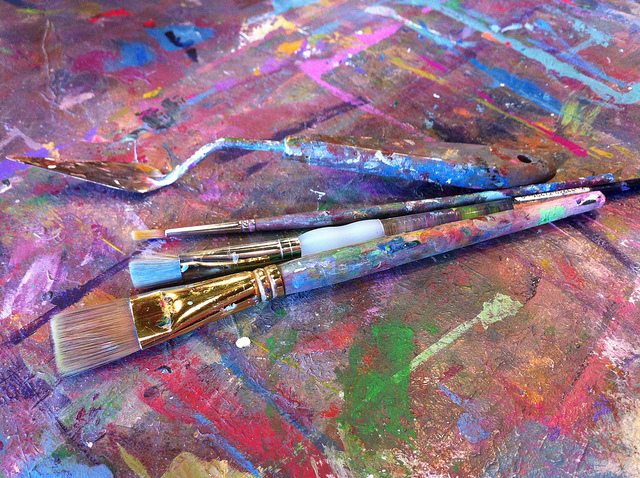
Sometimes coloring outside the lines makes for great — and some would argue pure — art. The Outsider Art Fair brings together artists from across the world who share one defining quality: the guts to march to the beat of their own drum. Tickets start at $20.


Photo: Wade Simmons/Flickr
  1. Scotch Walk

Check site for complete list of locations

Saturday, Jan. 21 from 12:00 PM to 10:00 PM

Nose, sip and savor six different scotches at six different downtown bars during NYC Scotch Walk. Whether you like yours neat, on the rocks, or with a splash of water, you’ll meet plenty of fellow scotch enthusiasts to share a drink with. $55.

Photo: Kenny Holston/Flickr
Photo: AK Rockefeller /Flickr


  1. TV and Society

Strand Bookstore (East Village)

Friday, Jan. 20 at 7:00 PM

We all indulge in a little binge watching, but is the entertainment industry’s fantasy world the source of our societal problems? The answer may surprise you. Think Olio presents, “Inside the Entertainment-Industrial Complex: How Guilty Pleasures Take the Edge Off Reality” with J. Ward Regan. You may want to cancel your Netflix subscription…$20.00, with complimentary drinks.

Photo: Fabio/Flickr
Photo: Fabio/Flickr
  1. NYC Vice and Murder Walking Tour

Corner of Chambers and Centre St. (Civic Center)

Sunday, Jan. 22 from 1:00 PM to 3:00 PM

Last Vegas may be sin city but the original sinner is New York. Join New York Local Tours as they take us through the streets of New York on a History of Vice and Murder Walking Tour. Explore the seedy past of Lower Manhattan and the legendary gangsters, “crooked cops” and “corrupt politicians” that shaped the city’s history and identity. Tickets are $25.

Photo: Kenny Holston/Flickr
  1. Brunch-n-Burn

Ludlow Studios (Lower East Side)

Saturday, Jan. 21 from 11:00 AM to 3:00 PM

Trillfit’s annual Brunch-n- Burn event is a wellness party where participants sweat it out in two Trillfit classes (a“Beyonce-worthy” cardio dance class followed by a yoga class with a live hip-hop and R&B soundtrack by DJ Nick Bishop) then enjoy a complimentary spa treatment and close out with fancy brunch bites. Don’t forget the gift bag on your way out!  $50


Photo: Alpha/Flickr
Photo: Alpha/Flickr
  1. Hot Chocolate Festival

Ladurée Soho (SoHo) – Wednesday, Jan. 18 from 6:30 PM to 9:00 PM

Check site for participating stores: Saturday, Jan. 21 – Sunday, Feb. 5

The Valrhona Hot Chocolate Festival KickOff Cocktail party ($35) this Wednesday will preview “all of the festival’s inventive hot chocolates, along with savory bites.” After that, stop by FIKA NYC, Lafayette Grand Cafe & Bakery, La Maison du Chocolat, Mah-Ze-Dahr Bakery, BAKED, Almondine, Sugar and Plumm, Dominique Ansel Kitchen, Epicerie Boulud, The St. Regis New York and Patisserie Chanson to try out unique hot chocolate concoctions and help raise funds for Valrhona Clean Water Project.
 

Categories
Culture Living

The Birth Of Chinatown

chinatown

Racism And Opportunity Give Rise To A New Nation In A Small Neighborhood.

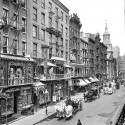
There is no more amazing area to behold than New York City’s Chinatown. The veritable nation-within-a-nation features the largest Chinese population on the planet, outside of the Asian continent, and has been a New York City fixture since its birth in the 1880s.

Established on the notorious geography that was Five Points, and the home of the tenement slums that produced The Gangs of New York, Chinatown is roughly bounded by Broome Street on the north, Chambers Street to the south, East Broadway to the east, and Broadway to the west, depending on the era you’re talking about or the people you’re talking to.

With a current population approaching 100,000, the area had its beginning in the tail end of the gold rush and the completion of the railroads in the Old West. When jobs in both industries began to dry up, the floods of Chinese immigrants who came to the United States to seek their fortunes needed a new alternative.

Because the Chinese were so desperate to work, they were more than willing to take on undesirable jobs at lower wages and as a result, faced anger, discrimination and violence from whites around the country. The intensity of this racism peaked with the onerous Chinese Exclusion Act of 1882, which was intended to stop the immigration of these people altogether.

As a result, many Chinese people came to New York seeking asylum and opportunity, along with the support of their own people. An early settler named Ah Ken, who lived on Mott Street and ran a cigar roll- ing business, is often credited with providing some of the first jobs and accommodations to other Chinese immigrants around this time.

When they arrived, new Chinese immigrants were provided contacts with whom they could board until they were on their feet. This sometimes placed 5-15 people into two-bedroom apartments, and the population boomed. Soon, new Chinese businesses began sprouting up all over the former Five Points area, and people flooded here by the thousands to escape oppression and find work. Uniquely, and to protect themselves from further violent attacks and discrimination, the Chinese people established internal associations of government, community, business and recreation to make the area self-sustaining, minimizing the need for contact with the outside world.

Sometimes this development took a dark turn when some of these associations turned out to be criminal and violent. They were known as “Tongs” and preyed upon local businesses and people. Because they were often from different backgrounds and regions of China, they would stage bloody, raging battles in the streets of the expanding neighborhood, further isolating it from other people who were afraid to venture inside

 By Samuel A. Southworth

The Rebirth of Chinatown is the Rewing feature of DOWNTOWN’s Summer 2014 editionIf you would like to continue reading the entire article, you can find our latest issue on newsstands now! Or you can subscribe to DOWNTOWN Magazine for home delivery by clicking here.

Categories
Business

Innovation: Southern Hospitality

Innovation01 DSC_4543

Innovative Programs And Incentives Have Created A More Diversified Downtown Manhattan.

This past decade, Lower Manhattan has evolved from being known almost exclusively as the heart of finance to its present incarnation as home to a diverse suite of industries, all thriving alongside New York’s financial center.

Today, thousands of companies have set up shop Downtown, drawn to the unique spaces and opportunities in the neighborhood and alleviating the significant losses of capital, personnel and real estate investment the area experienced in the aftermath of 9/11, and the economic downturn of 2008.

In the media and tech industries alone, more than 600 companies are bustling south of Chambers Street. The diversity of these companies includes the likes of Booker, which provides cloudbased service management platforms; Control Group, which partners with innovative companies to optimize their products, spaces and technology for the digital age; and even Delivery.com, which you may have used recently to order food online.

And that’s only part of the momentum. In addition to the rebuilding and highly-anticipated opening of the World Trade Center, more than $30 billion in public and private investment has revitalized the area, helping to transform the waterfront and creating the essential infrastructure and capacity to support new legions of workers and residents.

The City’s investments in infrastructure include the ongoing work on the East River Waterfront Esplanade, which has created new active recreation opportuni- ties for New Yorkers, while connecting them to the waterfront. In addition, the East River Ferry service has created a sustainable and convenient transportation option that connects Lower Manhattan with neighborhoods in Brooklyn and Queens, attracting more than three mil- lion passengers since its launch. Programs such as ConnectNYC Fiber Access and WiredNYC have bolstered the region’s development by helping businesses and New Yorkers access more affordable broadband opportunities.

To capitalize on this progress and further encourage the neighborhood’s economic diversification and resurgence, the City launched a competition called Take the HELM (Hire and Expand in Lower Manhattan). This initiative, which has completed two rounds so far, offers innovative companies $250,000 for moving to, or expanding in, the neighborhood, garnering more than 600 applications between two rounds. As a result, several companies such as Paperless Post, SiSense and the Flatiron School have also made the move to Lower Manhattan. [Continues…]

By Eric Gertler Executive Vice President, New York City Economic Development Corporation

Southern Hospitality is the Innovation article of DOWNTOWN’s Summer 2014 editionIf you would like to continue reading the entire article, you can find our latest issue on newsstands now! Or you can subscribe to DOWNTOWN Magazine for home delivery by clicking here.


Categories
Culture

William Tweed, Bringing Down The Boss

Bringing Down

State senator William Tweed was riding high in the early months of 1871.

By Terry Golway

Just a few months earlier, he had pushed through a new charter for the city, creating a four-member board that oversaw the city’s finances. Tweed himself was a member of the new board, along with his allies, Mayor A. Oakey Hall and the city’s comptroller, Richard Connolly, known to his friends and critics as “Slippery Dick.”

Tweed’s control over the city was just about complete. Not only did he have allies in high places in City Hall, but he ruled the Democratic Party of New York County, headquartered in a new building on 14th Street called Tammany Hall, on the northern edge of Lower Manhattan.

A new courthouse was under construction on Chambers Street behind City Hall, and Tweed and his friends were growing rich on fraud and graft. A friendly carpenter raked in more than $300,000 for a month’s work—some of that cash no doubt was kicked back to Tweed and his friends.

There was one powerful institution in New York that Boss Tweed did not control: the press.

More specifically, The New York Times. And beginning in the summer of 1871, The Times began printing story after story showing how Tweed and his friends were looting the city of millions through bribes and corruption. Thanks to a disgruntled clerk, The Times obtained access to the city’s books, and what they found was shocking. The city was borrowing millions for capital projects, but much of the money went to Tweed and his Tammany cronies.

The extent of Tweed’s thievery was astonishing. Although Tweed had an unsavory reputation, many civic elites, like the legendary reformer Peter Cooper, thought Tweed’s charter was a step forward for good government. But they never suspected that Tweed would use the city’s new powers to enrich himself, his friends and the organization he led, Tammany Hall.

William Tweed is the Rewind subject of DOWNTOWN’s Spring 2014 edition. If you would like to continue reading the entire article featuring the state senator, you can find it in our latest issue on newsstands now!