Does one really need to buy your dog a remote motorized car, or your cat a robotic litter box, do they even care if they receive these luxury items?
Well, I don’t know about your pets but Downtown’s Editor in Chief’s Cat Social Media Editor Petey and our CEO’s dog and our all-time favorite Pawblisher, Barclay certainly would say yes, to this question if they, in fact, had the capacity to speak.
Downtown’s Furry Pawblisher BarclayDowntown’s Feline Social Media Editor Petey
Barclay and Petey researched many pet holiday gifts for your oh so special furry friend. Enjoy!
Hey Hoomans, let’s not mess around. This carrier is for the most finicky fur-parent. The Louis Vuitton carrier in Monogram canvas is adapted to small pets and particularly resistant to water and scratches. It is equipped with a breathable mesh window and zip-around closure.
– Monogram canvas, cross-grain rounded leather handles, washable lining
– Golden brass pieces
– Double zip-around closure
– Breathable side mesh with roll-up flap
Parisian Series Airline Approved Soft Sided Pet Carrier. One of Barclay’s 2019 favorite carriers. Mr. Peanuts is a #PETA certified cruelty-free lifestyle brand with a purposeful mission statement promoting animal welfare. All of their products are produced ethically including the faux leatherette and fleece bedding pads incorporated into our totes. They actively donate to and fund rescues, shelters, and animal welfare organizations, along with promoting our Pay a Shelter Pet Forward program that helps them fund these activities.
Mr. Peanuts
Your pet will sleep like a lamb in this comfy Plaid Sherpa Rectangle pet. Harry Barker created a distinctive line of pet products that offer style, versatility and quality craftsmanship, all at an affordable price. They sell products that are beautiful, functional and eco-friendly—products that strengthen the relationship between people, their pets & the environment. This pet bed will give Fido or Felix lots of comfy and cozy nights, taking their rest to a whole new level, inspiring hours of snuggling on even the chilliest of winter days.
Harry Barker
Our Pawblisher Barclay is enamored with this toy. What’s more fun than chasing squirrels at the park? Chasing squirrels at home, of course! Finally, there’s a toy version of your pup’s favorite pastime. Just stuff the squeaky squirrels in the soft tree trunk, and watch your dog pull them out one by one. To keep the game going, just stuff them in again and again. These squirrels love to play!
Outward Hound
A subscription for your favorite feline friend from KitNipBox. These boxes contain the best high-quality cat toys, all-natural treats, and other fun, healthy cat products. We fell in love with this brand for our very own feline, Petey. KitNipBox supports over 100 animal welfare organizations nationwide. Each month, we donate a portion of our proceeds and products to shelters, rescues, TNR efforts, and a variety of other feline welfare causes.
KitNipBox
U-pet Bubble Pet Travel Backpack Carriers Green. Felix will go everywhere with you and be able to see all the knitters in the outside world. Besides all the functions of the regular pet carriers, u-pet’s patent-pending revolutionary semi-sphere window design. Mobile pet bed and car seat two in one approved on most major airlines.
We have witnessed pets in their own motorized cars so Barclay and Petey thought we would share some of their favorite options.
Luigi Maestro
This officially licensed Bentley EXP 12 ride-on is designed just like the real thing, so your little driver can ride around in only the finest of toddler vehicles. Made with working LED headlights, a horn and more, and drives like a real car with a foot pedal accelerator; switches between 2 speeds (high & low) with a thrilling 3 mph max speed
Bentley EXP from Amazon
What, no more scooping… Litter-Robot 3 is the highest-rated automatic, self-cleaning litter box for cats. Never scoop cat litter again while giving your kitty a clean bed of litter for each use. Petey is recommending this one for sure!
There you have it, we went all out to bring you some barking ideas for you meowing Christmas shopping days!
Every kid experiences that “rush” from going fast; whether it be a go-kart, bicycle or scooter. Some of us never shake it. In fact, entire industries of motorsports exist based upon this simple premise: speed.
For more than a century, drivers and manufacturers have done almost anything to garner the checkered flag. At the pinnacle of the sport is Formula 1 motorsports. However, this fierce competition has its advantages. In the pursuit of victory, engineers and manufacturers push the proverbial envelope seeking that elusive advantage. Many of these innovations eventually trickle down to us. Ever hear of carbon fiber, disc brakes, traction control, tire treads, paddle gearboxes and so on and on? All state of the art when developed yet truly functional in everyday applications and safety.
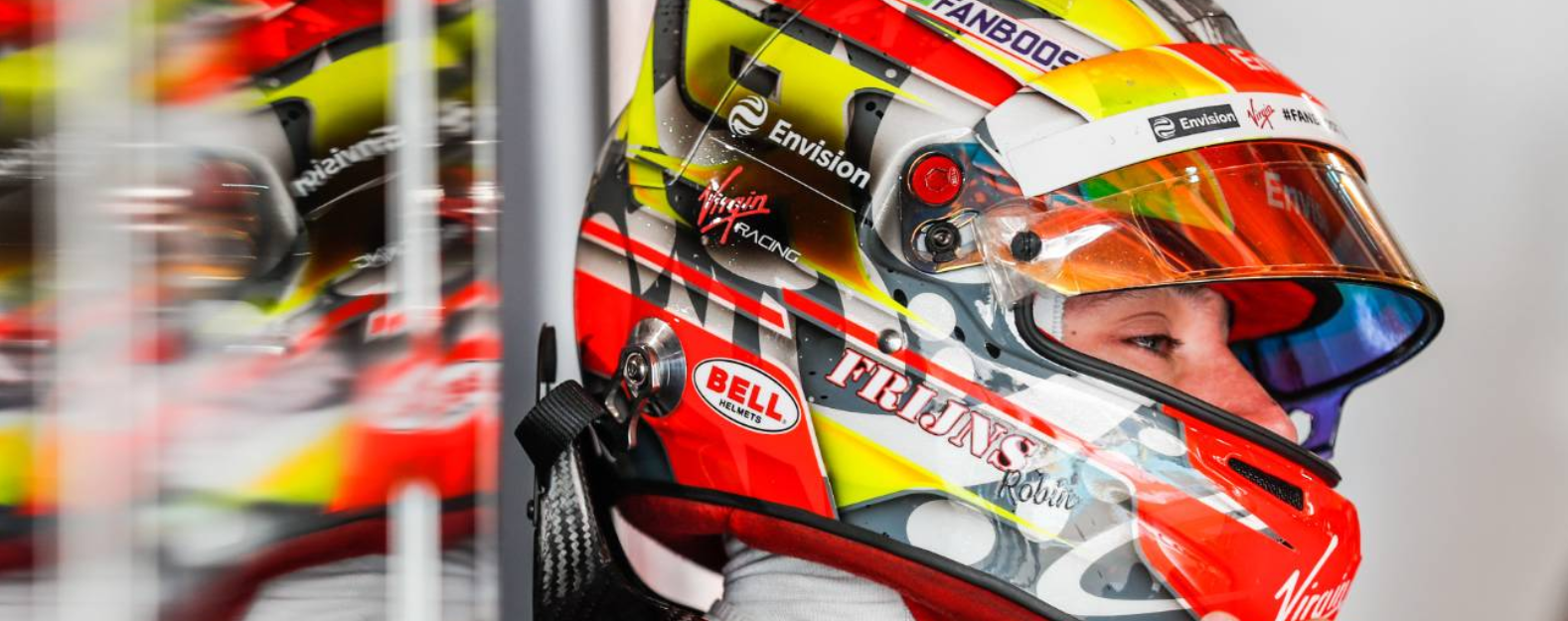
So, it is no surprise the folks at FIA (the motorsports governing body) have invested substantial energies (pun intended) into Formula-E; an all-electric racing series now in its fifth season. Their catchphrase is apt: “Friendly On The Track, Fierce On The Track”.
Photos by FIA Formula E Media Page
Formula-E is back in the Big Apple for the epic double-header season finale on July 13th and 14th. Witness 22 drivers and 11 teams battle over two races in what is developing into a highly contested season. NFL parity eat your heart out.
Photos by FIA Formula Media
Whether or not you are a “gear-head”, that weekend over at Red Hook, Brooklyn cannot disappoint. E-Village, Formula-E’s immersive fan festival at the heart of the circuit is geared to offer families a warm introduction to the sport.
Experience the latest innovations of cars and technology from some of the world’s biggest car companies while enjoying some of the best streets eats in the Taste Zone. Fans also have an opportunity to meet the drivers and get merchandise autographed. All while beautiful New York harbor serves as the backdrop.
As for us “gear-heads” – yes, those cars do go pretty fast!
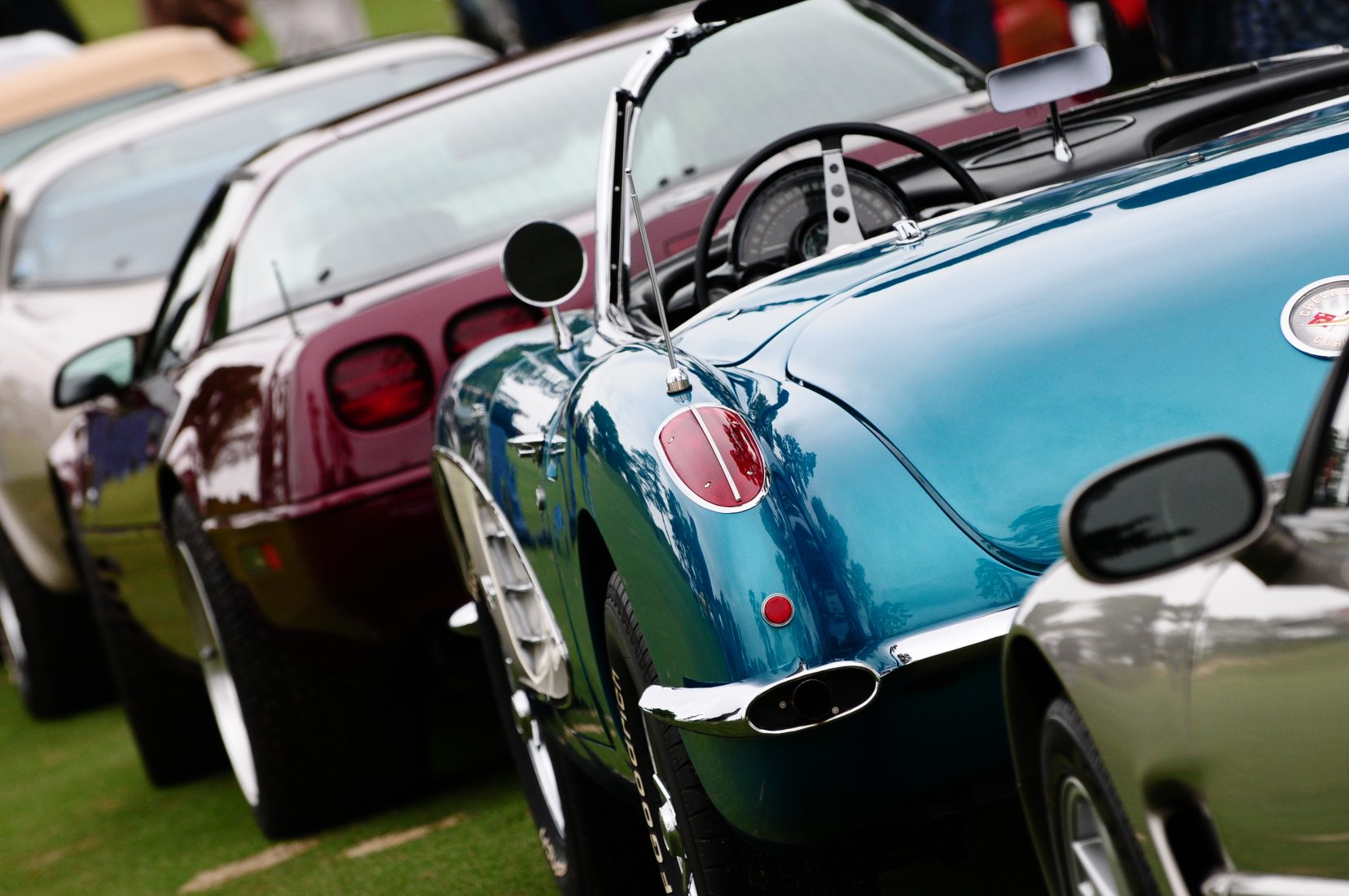
For the first time in Manhattan, twenty-five luxury cars will compete in an inaugural Manhattan Concours on Saturday, May 18 at Brookfield Place – the shopping, dining and office complex on the Hudson River in Lower Manhattan. Showcased along Brookfield Place’s picturesque waterfront plaza, the festival will combine the top vehicles of today with the best in class from generations past for a weekend full of luxury, style, and culture.
Photo Courtesy of Brookfield Place
Each unique high end or multi-million dollar vehicle will compete within individual categories based on type, and the top five “Best in Class” will compete for the coveted “Best of Show” award, which is presented by CHOPARD Swiss watches. Luxury car experts like Mark Moskowitz and Matt Orendac will exam each model to determine category and overall winners. Car enthusiasts will have the opportunity to mingle with owners and celebrate this unique form of art.
The age of autonomous vehicles is upon us. The time has arrived when driverless personal automobiles and commercial trucks, vans, and taxis owned by privately-operated tech companies, will take center stage on the landscapes of the United States, Europe, and Asia. Is this a truism or not? Ask the average man and woman on the street and you will undoubtedly receive several different answers: driverless vehicles are already operating in the here and now; driverless vehicles are right around the corner – at best a year or two away; driverless vehicles will not be seen on our roadways for many years to come.
Numerous benefits are touted by automakers, tech companies and software designers that predict the new technology will improve driving efficiency; provide more leisure time in this increasingly populated world; reduce serious traffic accidents, and the aftermath of resulting injuries and fatalities; eliminate or substantially reduce parking congestion; allow for lower fuel consumption; and eventually result in the manufacture of lighter and more versatile vehicles.
Benefits will obviously come with certain obstacles and limitations. The challenges ahead include: artificial intelligence and software functional limitations; susceptibility of vehicles’ sensing and navigation systems to address different types of weather conditions, and the avoidance of darting animals; the need for changes to existing road infrastructure; an increase in liability issues arising from vehicle accidents because of more finger-pointing among parties; increased tort litigation and a backlog of civil cases in our courts; and moral and ethical issues, including the loss of commercial jobs.
There will also be serious privacy concerns once a vehicle’s location and position are integrated into aninterface to which other people have access. This communication brings the risk for automotive hacking through the sharing of information via vehicle to vehicle protocols, including the potential risk for terrorist attacks by loading self-driving vehicles with explosives.
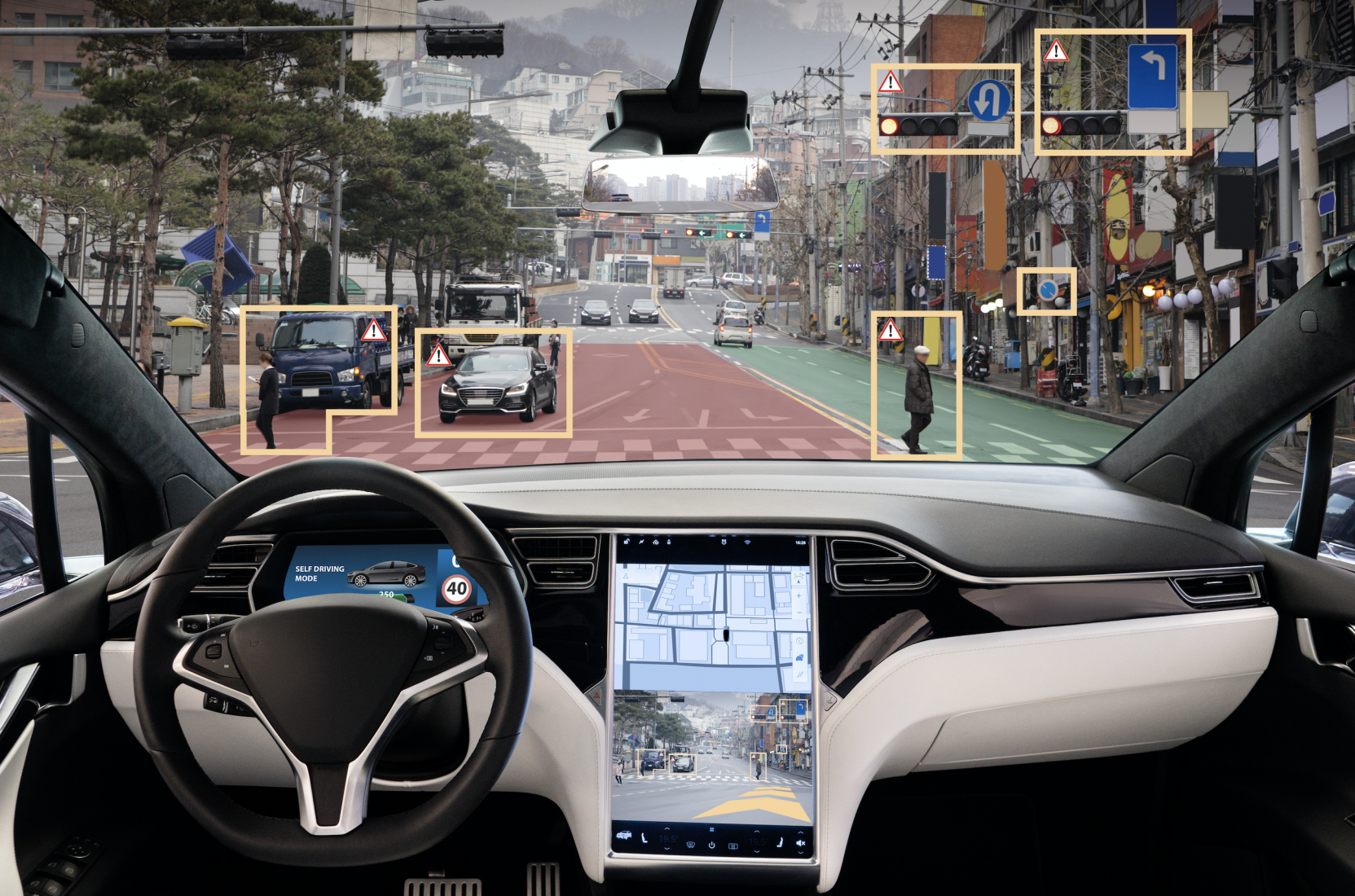
Smart car (HUD) and Autonomous self-driving mode vehicle on metro city road with graphic sensor signal.
Author John Esposito spoke with Dr. Scott Le Vine, assistant professor of urban planning at SUNY New Paltz, about the future of autonomous vehicles. Dr. Le Vine has authored and coauthored a number of studies on autonomous vehicles and provided expert testimony to various levels of government in both the United States and the UK.
John Esposito: Our discussion today will center on the future of autonomous vehicles in society, primarily here in the United States and also Europe and China. The term autonomous vehicles are sometimes used interchangeably when also referring to automated vehicles, driverless vehicles, robot vehicles or robo-vehicles. There is an important distinction between autonomous and these other terms. As we move ahead, I will ask you to please explain the differences.
Unless any one of us have been living under a rock for the past ten or so years, the population at large has been made acutely aware through the likes of social media that the age of autonomous vehicles is upon us. The big question is exactly when will this new technology become mainstream. The public’sacceptance of this new form of automation appears to vary. Some will embrace driverless vehicles at every turn and want to be the first in their neighborhood to own one, not unlike those who are willing to wait in line for ten hours every year for the Apple store in New York City to open so they can purchase the latest and greatest iPhone. Some consumers will completely resist because of their long-held love affair with automobiles and an unwillingness to part with their 5-speed shift. Others will remain on the fence and greet the news of this technology with much trepidation, fearing autonomous vehicles will result in serious injuries and even death should the software and sensor modules fail.
This leads back to my opening comments. Please explain the difference between autonomous vehicles and automated vehicles and how they do and do not constitute a driverless vehicle?
Dr. Scott Le Vine: That’s a great question and it is a nuance that is lost in many discussions both by the man on the street and by many who observe this industry. There is a clear distinction. Automated refers to the automation of driving tasks, and there are various levels of automation. Automation runs from no automation where the human is in complete control of everything, the complete driving task, and full automation which is the holy grail. Full automation is where the driver, the human in the vehicle is completely disengaged from the driving task. There may not even be a human inside the vehicle. The vehicle can go anywhere, do anything under its own control. That is automation. Autonomy (autonomous) refers to where the vehicle is getting its source of information. What information is that vehicle using to make driving decisions? Autonomous implies the vehicle is receiving information from its own sensors. Connected is the opposite of autonomous. Connected vehicles speak to each other, speak to traffic lights, speak to other bits of roadside infrastructure and exchange information that way. A connected vehicle can see around a corner if it is receiving information from something which can see around that corner. An autonomous vehicle only has its own sensors what it can physically see.
JE: Where do we stand today in the evolution of this technology? I understand there are actually five levels of the new automation which will ultimately all coexist on our roadways for the foreseeable future. Separating the available facts from speculation, what is the realistic time frame before we can realistically expect these vehicles to be in everyday use, in both the United States and Europe? Can you be specific?
SLV: Well, I can tell you that in planning school the first thing you are taught is: give them a number orgive them a date, but don’t give them a number and a date. So, it’s a really difficult question. You askabout the U.S. and Europe, but I think a more interesting comparison might be the U.S. and Europe versus China. Here there are issues of liability, of responsibility for crashes where there seems to be a different tolerance in China than there is in Western societies. It is plausible to me that you might see things move more quickly in places like China than in North America or Europe.
The answer to when, you can get an answer from yesterday at Tesla, with some automation, to never, as we’re unlikely to ever have a vehicle that can drive anywhere, do anything with no human input, except choose a destination. Humans also can’t drive anywhere and do anything. It snows and sometimes we don’t make our journey. If it’s a hurricane, we’re not making our journey, etc. So that’s unlikely to ever happen in that sense.
What automakers seem to be doing is moving forward quite rapidly with mixed, mushy mixed levels of automation, which is, level two to level three in the five-class categorization you mentioned earlier. That categorization comes from The Society of Automotive Engineers International (SAE). It runs from level zero which is no automated, (you think of the Ford Model T), through level five, which is the go anywhere, do anything, all dancing, bells and whistles driverless car. What we are seeing is automakers move forward with level two, level three vehicles, which can take on some of the driving tasks in some places, sometimes under some circumstances. What automakers and other mobility services seem to be doing in the near future with regards to the highest levels of automation is geo-fencing. This is allowing their vehicles to operate within very well-defined geographic boundaries, like city centers. Manhattan, for instance, or central Boston or central Phoenix. Within those geographic areas, the road system is extremely well mapped, extremely well digitized so that they have a great control over what that vehicle is doing.
The second thing which we are seeing is automakers planning to roll out these systems as parts of fleets of vehicles so you would use them before you will buy one. Later this year, Waymo, (formerly the Google self-driving car project), plans a rollout at commercial scale, of their driverless taxi service in Arizona.
JE: What do you anticipate the five-class categorization level would be for this rollout?
SLV: It depends on what the driver is doing. If the driver is actively engaged in monitoring the vehicle and has power to override a driving decision, that would be a level three or so vehicle. If the driver is simply there as a sort of chauffeur, then that would be a level four vehicle.
The initial deployment is in Arizona. They have been operating on public roads already. What’s changingis that they are allowing members of the public to use it on a commercial basis.
JE: I understand there are 46 corporations currently working on autonomous vehicles. The tech companies include Uber, Waymo and Lyft and automakers like GM, Toyota and Ford have spent upwards of $6 billion developing driverless technology. Dr. Le Vine, who in your estimation are the leaders in this field?
SLV: It’s a great question to ask. Certainly, Waymo, formerly Google, is head and shoulders ahead in terms of the miles of driving tasks that have been done with automated vehicles. The German carmakers are very far along, BMW, Dähler, Audi, etc. There is GM’s Cruise division. They are one of theleaders.
JE: Several recent fatalities associated with the operation of autonomous vehicles have made national headlines. On May 7, 2016, the first known fatality involving a semi-autonomous vehicle occurred when a collision took place in Williston, Florida between a Tesla Motors Model S, with autopilot technology, that was being operated by Joshua Brown, and a tractor-trailer. A second fatality occurred on March 18, 2018 in Tempe, Arizona when an Uber self-driving test car struck and killed 49-year-old Elaine Herzberg, who was pushing a bicycle, filled with plastic bags, across a four-lane road, allegedly by a distracted safety driver who failed to react in time. Following the accident, the governor of Arizona banned Uber from testing there; and Uber let its autonomous vehicle testing permit lapse in California. Uber also pulled its vehicles off the streets of Pittsburgh, Pennsylvania, the home to its self-driving research and development center. Then on March 23, 2018 a third fatality occurred in Mountain View, California involving a Tesla Model X, with autopilot engaged. The driver, Walter Huang, was killed when the car crashed into a freeway divider and burst into flames.
SLV: All these crashes are fairly well understood as to what had taken place. They all involve situations in which a human was, in principal, responsible for monitoring the operation of a semi-automated system and there was a breakdown in that system that the human did not, for whichever reason, correct in time. And one thing we are learning is that humans are pretty terrible stewards of machines. Machines that fail infrequently. Why? We like to text. We get distracted very easily. Humans are not built to maintain laser beam-like concentration when we’re doing a task which seems like it doesn’t require our involvement. That seems to be the case in at least some of these crashes. There may have been an overexpectation on the driver’s part about what the system could do or the human driver was simplymisbehaving in the sense of doing another task they should not have been doing at the time.
JE: This new technology that will bring consequences. Ethics and law often diverge and under certain circumstances when we drive our vehicles today, good judgment may compel us to act illegally. But what about a fully self-driving vehicle programmed to strictly obey the law? Can fully autonomous vehicles, those without any human driver input whatsoever, ever be capable of making difficult and ethical judgment decisions in the dangerous scenarios?
SLV: Well, you drive conservatively. You choose a safe following distance behind whatever is ahead ofyou; maintain a vigilant lookout for what’s happening on the side of the road, for objects or people thatare moving towards your path. Roads are an open system. Therefore, there are going to be balls runningout into street in front of vehicles. There’s going to be dogs running into the street in front of vehicles.There are going to be jaywalkers. Those are unpredictable open systems. We’ll never completelyeliminate crashes, fatalities, etc. That is not going to happen. The best strategy we can do is to do much better than humans do. And we can do that by driving defensively, not speeding, driving conservatively, being constantly aware of our surroundings. Humans have two sensors in the front of our face: our eyes.And that is what we use to learn about what’s going on around us. The vehicles we are talking abouthave a 360-degree field of vision, so they have that advantage. These vehicles have another advantage of being able to process information basically instantaneously, again on the order of milliseconds. Humans take something between one and two seconds to react, even in cases of emergency. Those are humans who are not distracted, and then think about someone texting. For lots of reasons we can expect to do better than humans, how much better is a judgment question.
JE: When the initial major rollout of autonomous residential vehicles occur, is it reasonable to expect that these vehicles will be permitted to operate only on less populated roads or country roads, but not in large populated cities like New York, Boston, Los Angeles and Philadelphia? I can’t comprehend howstate and local municipalities would even be able to enforce such restrictions.
SLV: I think we will see a messy evolution. We can only state that Tesla’s Auto Pilot system is notdesigned for Manhattan’s street grid. Tesla’s Auto Pilot is designed for freeways and not DowntownManhattan. On the other hand, for shared taxi services, like Waymo is rolling out in Arizona, demand is not on freeways, demand is not on country roads. The demand is in places like Downtown and Midtown Manhattan. There is a real tension between where the market is that is attractive to them, and what they are able to do in a technical sense. We shall see how that tension is managed over time.
JE: I believe several very important issues need to be addressed even prior to instituting speed changes, like establishing new vehicular laws and road rules, and new roadway infrastructure. In addition, computer navigation and car sensing systems must operate perfectly in these new vehicles. Please explain vehicle-to-vehicle communications functionality. You previously mentioned that eachmanufacturer’s system will have unique system attributes and operate in its own way. If this is the case, are vehicle-to-vehicle communication systems at a significant risk of not effectively “talking” to eachother because their unique systems may react very differently?
SLV: Vehicle-to-vehicle communications are known as “V2V.” We are working on a common language. It would be a Tower of Babel if every vehicle was only able to talk to friendly vehicles. The system would work best if every vehicle is talking to every other vehicle within proximity. At the moment we have a protocol for vehicle-to-vehicle communication which is a bit like every car screaming at every other car nearby and not listening whatsoever. And it’s screaming baby talk. It’s screaming extremely, extremelylimited information. In the future there will have to be Shakespeare talking to each other and gettingconfirmation: “Did you get my message? Yes, I got my message. So, what are you going to do? This is what I’m going to do.” Right now, it’s simply we’re screaming out who I am, this is the direction I’mgoing, this is what I speak. Very limited information.
JE: What is presently being explored to address the serious issue of privacy concerns, that potentially can result when a vehicle’s location and position is integrated into an interface which other people haveaccess? And more specifically, what are your thoughts about the risk for automotive hacking through the sharing of information via V2V (Vehicle to Vehicle) and V2I (Vehicle to Infrastructure) protocols, including the potential risk for terrorist attacks by loading self-driving vehicles with explosives.
SLV: I am not at the forefront of discussions about security. I think the point you make about a self- driving autonomous car being used as a directed bomb, there’s plenty of other ways for terrorists to blow things up. I’d be surprised to see that. I think the point you made earlier is more relevant to this specific technology, which is hacking, which is ways of disrupting traffic or disrupting peoples lives short of some sort of weaponization. There will need to be redundant systems, so the stealth fighters apparently have three or four different decision-making brains, each of which must agree before a decision is made. We will need redundancy built into these vehicles to deal with the hacking situations.
In terms of privacy, the lesson of the past ten and fifteen years, people have been willing to part with an awful lot of privacy in exchange for consumer goods and whether that will continue to be true here, mygut tells me yes, but we won’t know beforehand.
JE: Are you aware of the total number of fatalities related to vehicular accidents is this year in the United States?
SLV: It is presently somewhere between 35,000 and 37,000.
JE: Proponents have made the case that these figures will be drastically reduced after driverless vehicles have become mainstream. However, since this has not come to fruition and there is no hard-statistical data to bear this out, how can such a determination be made? These predictions seem to be more conjecture than anything.
SLV: That is an excellent point. The standard headline figure is that driver error is a factor in 94% of crashes. And that comes from police reports. The question is how much of that 94% will be reduced and in what way will it be reduced, and how many new crashes will occur that would not have occurred otherwise. Those crashes may not have occurred if there was alert human that was driving. So,therefore it is likely that car crashes will change in several ways. Maybe we’ll reduce them, my view iswe probably will reduce them. But the ones that remain might be more high speed because humans fail in different ways than machines fail.
JE: If I understand correctly by the examples you have provided, in the early stages of their release, autonomous vehicles will, in fact, be programmed so that you cannot increase the speed of the vehicles, and thus these vehicles will be operating as fully autonomous. Is that your understanding?
SLV: This decision will be made by the General Counsel of Ford, the General Counsel of GM, and the General Counsel of Tesla.
JE: A major topic which is probably quite high on everyone’s agenda are the insurance laws andregulation. Insurance is state-regulated as to existing tort systems and no-fault laws. This will undoubtedly require rewrites. Some state laws have comparative negligence liability laws and other states recognize contributory negligence laws where there can be more than one party responsible for an accident. There will quite possibly be more finger-pointing in the future as to who is liable for the accident then there is today.
SLV: Classically, motor insurance is to insure the driver. The individual human, me or you, or any of our colleagues are that driver. It looks like, what seems quite clear is, liability will shift, whether entirely or partially onto some combination of the system manufacturer, the software designer, the sensor manufacturer.
JE: Certain limitations may also impede or slow the arrival of autonomous vehicles in the short term. One such issue posing serious consequences that must be addressed is infrastructure. As an urban planner I am certain you recognize that the infrastructure of many roadways will require significant changes to function properly and bring about new rules and regulations. Would such regulations fall under federal control or be run state by state?
SLV: This is a meaty topic on the public agenda, right now. Who is in control of what? Traditionally, the federal government has been in control of vehicle safety and state governments have been in control of drivers licensing and driver safety. Now that the vehicle is a driver, what happens? This is an active issueof discussion and debate. I don’t think I will surprise you or any of your readers by saying that everybody seeks to stake their claim. The federal government is seeking ownership of the space and the states willeffectively do what’s left over from the federal government.
JE: We have spent considerable time discussing residential and commercial autonomous cars, buthaven’t delved into the autonomous commercial trucking. I can envision the look of total panic and doom on a driver’s face operating a conventional car if a fully autonomous 18-wheeler comes barreling around the bend on the north side of a highway, and crosses into the southbound lanes because of a software failure, striking the car head on.
SLV: Individual drivers don’t get to decide who the other drivers are, so it is a question as to how it manifests through our regulatory agencies and democratic processes legislatures. And here, my crystalball tells me it’s going to be a situation where victory has a thousand fathers and defeat is an orphan. Ifrollout is smooth and if it seems to be a success, then nobody will be wanting to play catch-up and we’llall want to be on the cutting edge. However, if there are more and more crashes and more questionmarks that we fully didn’t anticipate and things are not going well, then I think we’ll see much moreactivism from the public sector.
JE: It is certainly fair to say there are many benefits to be realized by the public once driverless vehicles become a part of the everyday landscape. There are also clear obstacles, limitations and much speculation which will need to be addressed and resolved by the ultimate decision-makers in various sectors. Any unsolved issues that negatively impact the public’s safety will no doubt stonewall any widespread release of fully autonomous vehicles for some time. Dr. Le Vine, do you have final thoughts on this very provocative subject, one that apparently will only intensify in the days ahead.
SLV: There is so much speculation and there is so enormously little hard data for many of these questions, the answer is simply, we shall see.
To learn more about this topic and read the extended conversation visit John’s website here.
John Esposito is a freelance journalist based in New York and New Jersey. His work has appeared in various newspapers and magazines including USA Today, The Star-Ledger, The Philadelphia Inquirer, Greenwich Time, Stamford Advocate, The Record, Downtown-NYC, New Jersey Newsroom, The Irish Echo, UNICO, Rosebud.
When it comes to embarking on that trip or vacation, travel with baby making them comfortable and at home is all you want to make them feel. Babies and kids, in general, can take some considerable time to adjust to new locations. The task falls on you to bring with you accessories that will make your baby most comfortable and most important of all, make her feel like she is at home. This task can prove to be quite daunting and may even brew unwarranted stress which is all but what we want.
But not to worry I got your back on this.
15 items when traveling with baby
In this article, I will take you through the items you should most definitely bring with you as you travel with baby. This will help you get that well-deserved break from your daily routine. The vacation will remain to be much fun for you and your baby just as it should be.
Here is what you should carry:
Baby travel accessories
1. Car seat
15 items when traveling with the baby
This has to be the one most vital accessory that you cannot leave out from your packing list. A travel car seat will help strap in your baby on the car seat, bus, train or even plane that is if you have paid for the seat. It is a good security measure and can interestingly double up as an extra seat for your baby once, you arrive at your desired destination.
2. Push Chair
A pushchair is a great addition to what you should bring as you travel with a baby. Choosing an all-terrain push-chair would be a good fit especially if you are not very sure of your destination’s terrain. This will help you get out the most of great outdoors in your destination without any upset whatsoever.
3. Baby carrier
15 items when traveling with the baby
A baby carrier is an exceptional choice especially if your vacation will involve outdoor activities such as hiking in the mountains or in the woods. Go for carriers that can cope with any weather thrown at them. Baby carriers can also come in handy when in busy terminals, airports or crowded cities.
4. Backpack
Backpacks serve as a perfect carrier to keep all day stuff in. Backpacks are less bulky as compared to baby bags and several come with large compartments that suit storage of nappies and baby wipes. It can also hold toys and extra spare clothes.
5. Special blanket
15 items when traveling with a baby
The baby will be settled and be comfortable as you travel with a baby, if they can smell the home scent, so make sure to throw in that special blanket that smells of home, on your packing list. The blanket will provide good comfort, warmth, and shade
6. Stroller
15 items when traveling with a baby
A stroller will help you travel with your toddler in great style and can be your best friend as you take the vacation. Take time to invest in a good quality stroller, if you do not own one already.
Food and drink supplies
7. Bottled Milk
15 items when traveling with baby
Bringing breast milk or formula with you for the vacation is a great idea and you should make sure to carry plenty. Babies will not mind drinking from the bottle as you travel with baby especially in planes. You can also throw in a manual breast pump, the reason being that they do not attract a lot of attention and are easier to carry
8. Snacks
15 items when traveling with baby
As you travel bring with you plenty of snacks. Consider bringing with you easily clean up snacks such as apples, rice cakes, fruit bars. Bring with you more than you may think you need.
Clothing
9. Hats
Pack some wide-brimmed hat for your baby to keep off the menacing sun from your baby’s face and neck.
10. Warm clothes
If you are traveling to a chilly destination bring warm clothes with you just to keep your baby warm and comfy. Carrying warm clothes even in relatively warm destinations is a great idea as the weather can drastically change for the worse and it is good to be prepared at all times.
Bed and bath supplies
11. Bath toys
15 items when traveling with baby
Bringing bath toys can be a great way to distract your baby as you bath him in a new environment and believe me, it will be considerably easier to clean your baby.
12. Bath plug
Bath plugs are a creative way of turning a basin into a bathtub. Go for universal bath plugs
Other baby accessories
13. Pacifiers
In case you are traveling by train or by air, pacifiers will be a great accessory to keep your baby calm and placid and can even give you the added benefit of putting the baby to sleep.
14. Sunscreen
15 items when traveling with baby
Carry with you an effective sunscreen for your baby. In Case your baby is less than six months, do not attempt to put her out in the sun.
15. A Video Monitor
15 items when traveling with baby
All the best as you go for the vacation with your young one!
15 items when traveling with baby
Sophia Nguyen is the founder of “Healthy Baby Happy Earth” website. She is a blogger, and she loves writing about babies and helping the parents by providing only the most useful information. Follow her on Facebook, Pinterest, Twitter, and Instagram
Nothing says the car like a Guinness World Record; the new Jaguar E-PACE was revealed last week and has, quite literally, barreled its way into the record books already.
The compact performance SUV received the official title for ‘The Furthest Barrel Roll in a Production Vehicle’ following a 15.3m jump with a 270-degree corkscrew barrel roll and a G-force of 5.5 at London’s ExCel center. The star-studded event was attended by British models David Gandy and Winnie Harlow, Lady MaryCharterisand actress Vicky McClure, among others.
Inspired by the F-TYPE sports car, the five-seater E-PACE was designed and created in just over two years and is the latest addition to Jaguar SUV’s. The E-PACE also features 4G Wi-Fi, a super-sized touchscreen and all-weather, all-surface traction technology with all-wheel drive.
“Established Jaguar design principles ensure the E-PACE is immediately recognisable as the sports car of its class. Our new compact SUV combines the interior space, connectivity and security that families expect with the kind of proportions, purity of design and performance not usually associated with such a practical vehicle,” said Ian Callum, Director of Design at Jaguar.
This isn’t the first time the luxury car manufacturer has won a Guinness World Record with its SUV models. In 2015, the F-PACE, which was recently named the 2017 World Car of the Year, took home the title of the loop-the-loop.
The wins should come as no surprise. Behind the wheel at both turns was stunt driver and 21-time Guinness World Records holder, Terry Grant.
“As far as I am aware no production car has ever cleanly completed a bona-fide barrel roll and therefore it has always been an ambition of mine to perform one, ever since I was a boy. After driving the Jaguar F-PACE in the record-breaking loop-the-loop, it has been amazing to help launch the next chapter of the PACE family in an even more dramatic dynamic feat,” Grant said.
Priced from $28,500, the E-PACE, is now available to order from Jaguar’s website.
Photos courtesy of David M Benett / Getty Images for Jaguar and Jaguar








 The compact performance SUV received the official title for ‘The Furthest Barrel Roll in a Production Vehicle’ following a 15.3m jump with a 270-degree corkscrew barrel roll and a G-force of 5.5 at
