In January, Governor Andrew Cuomo strongly reiterated his intent to legalize recreational cannabis — citing not only majority support from New York lawmakers but his own conviction to do so. During his video briefing, the governor stated for the record that this will be his third attempt to legalize cannabis in the Empire State and that he believed a legalization bill “should have been passed years ago.”
Why is legalization important?
Cannabis legalization has not only been shown to consistently reduce crime rates; it would also significantly increase tax revenue and tourism. Another important elephant in the room is the emergence of New York’s black market activity, which has been linked to an outbreak of a mystery lung illness in 2019.
A driving factor in New York’s rash of e-cigarette or vaping use-associated lung injury (EVALI) cases is the circulation of counterfeit THC vape cartridges, watered down with a dangerous additive known as Vitamin E acetate. A legal market would shift consumer traffic away from disreputable vendors and into state-regulated dispensaries. This would eliminate New Yorkers’ exposure to dangerous compounds and offer them safe, scientifically-vetted cannabis extracts, like blueberry terpenes or ethically-sourced CBD.
In this post, we examine the pressing issues behind the push for cannabis legalization in New York, as well as how advocates, business owners, and stakeholders within the industry are reacting to Governor Cuomo’s latest cannabis proposal.
The Looming Budget Crisis
A particularly pressing issue for New York is its estimated tax revenue deficit of $63 billion over the next four years. Governor Cuomo — a notably centrist Democrat — has publicly mulled a number of measures to curtail the shortfall, including the legalization of online gambling, broadening the income threshold for wealth taxes, heavy fines for COVID-19 lockdown violators, and legalizing recreational cannabis.
The impending budget crisis is the result of 2020’s perfect storm of recession catalysts, not the least of which was then-President Trump’s trade war policies and the economic fallout from COVID-19. With new veto-proof Democrat supermajorities in both legislative chambers, New York is better positioned than ever to increase tax revenues by tapping into the legal cannabis industry.
Drawing Inspiration From Neighboring States
As part of his annual State of the State address on January 6th, Governor Cuomo acknowledged the inevitability of cannabis legalization in New York, asking “As everyone knows, Massachusetts has legalized marijuana. New Jersey is going to legalize marijuana. So, what are we really talking about at this point?”
While much is still hazy about Cuomo’s current cannabis legalization proposal, the governor emphasized that it would “promote responsible use, limit the sale of cannabis products to adults age 21 and over, and establish stringent quality and safety controls,” essentially mirroring the gist of the MA and NJ legalization bills. Cuomo went on to state that New York would benefit from “opportunities to invest in research and direct resources to communities that have been most impacted by cannabis prohibition.”
According to Cuomo’s budget director Robert Mujica, cannabis legalization is expected to generate over $300 million in annual tax revenue once fully implemented with all appurtenant rules and regulations for industry operations within the state.
How Do Cannabis Advocates Feel About the Bill?
While the language of Governor Cuomo’s current cannabis legalization proposal includes plenty of specifications to stimulate the economy and suppress black market activity within the Empire State, industry advocates, investors, and business owners are unhappy with key provisions missing from its pages.
According to industry representatives, laying the groundwork for a legal cannabis market is only half the battle. Critical missing elements, such as the right to home cultivation for recreational consumers and medical patients, have been missing from all three of the governor’s proposals thus far. The provision allocating $100 million to grants for communities most impacted by prohibition is currently considered far too low considering New York’s population of over 8.4 million.
Cuomo’s proposal also lacks licensing categories for on-site consumption and cannabis delivery services, the latter being especially important for prospective lockdowns triggered by COVID-19, as well as its anticipated mutation and second wave scenarios. Industry representatives take particular exception to the proposed new Office for Cannabis Management, from where a single appointed executive director would have disproportionate power to regulate New York’s prospective legal cannabis market.
All in all, Cuomo’s proposal draws mixed reviews from the cannabis industry as a whole — not only due to its missing provisions but also because of some of the items outlined in it. While it generally sets up an amenable environment within the state for the industry to begin operations, advocates feel Cuomo’s bill is more grasping for increased tax revenue than opening up the state for a healthy cannabis presence in New York.
As of this writing, advocates and lobbyists are expected to continue pressuring the governor’s office for a significant number of proposed amendments before letting it go to a vote.
Marijuana is the new ingredient for tasty results in the kitchen. If you are at least 21 years and love to cook, put on your waist apron and get ready to set the culinary bar higher.
Smoking and vaping are the tested and proven medical marijuana delivery routes. Even so, patients that get medical marijuana prescriptions are increasingly exploring tastier ways to get the therapeutic advantage of the famed medical marijuana, and the kitchen is where it goes down.
P/S: When using these recipes or any other medical marijuana products, ensure compliance with your state laws.
The first step would be leveraging Veriheal’s NY services for a prescription and application of medical marijuana license in NY. Also, familiarize yourself with the state’s stipulations on usage and possession amounts.
Nastasya Day Pexels
Cannabis Candied potatoes
If you haven’t tried marijuana potatoes, you are missing out. This is a rich mix of potatoes and cannabutter. Get your biggest bowl and stir up three ingredients to make this incredible treat.
Ingredients
½ cup light brown sugar
¼ cup cannabutter
¼ cup walnuts
1 40-ounce can of drained potatoes
1 teaspoon nutmeg powder
1 teaspoon cinnamon powder
Small marshmallows
Directions
Preheat the oven to 325 degrees F
In a pot, melt cannabutter over medium heat. Add the sugar and walnuts and simmer for a few minutes.
In a bowl, crush the potatoes with a potato masher until you get a smooth consistency.
Add the sugar-cannabutter-walnut mixture, cinnamon, and nutmeg powders, and mix thoroughly.
Pour the mixture into a metal pie container and cover with marshmallows.
Heat for 15-20 minutes at 325 degrees F.
Remove from oven, then place in the broiler to grill until the marshmallows are slightly tanned.
Remember the pumpkin pies mom used to make? If you’ve been craving the childhood treat, there is a way to make it both tastier and healthier.
Ingredients
2 cups mashed pumpkin
8-ounce softened cream cheese
1/4 teaspoon salt
1 cup sugar
2 eggs, lightly beaten
1/3 cup marijuana oil
1/2 tbsp. ground cinnamon
Whipped marijuana cream
1 tbsp. vanilla concentrate
1/4 tbsp. nutmeg
1/4 tsp ground ginger
1 unbaked pastry shell
Directions
Preheat the broiler to 350 degrees F.
In a saucepan, beat the cream cheese with a hand blender
Add the mashed pumpkin and mix until smoothly blended.
Add the salt, sugar, and mix thoroughly.
Add the eggs and cannabis oil and mix until smooth.
Add vanilla, ginger, and cinnamon and stir
Place it onto a pan and bake for 45-50 minutes
Let it cool, then top the slices with whipped marijuana cream before serving
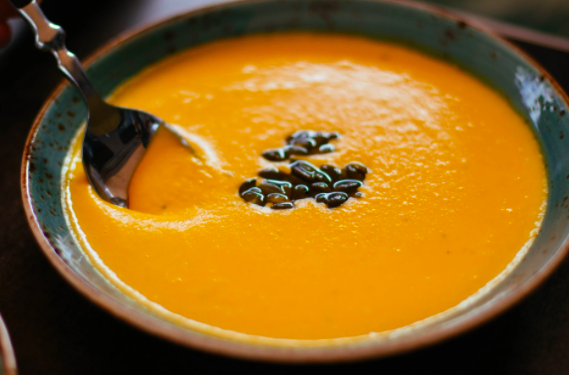
Butternut squash soup
Butternut squash soup is the authentic comfort food for the winter. The soup is delicious and super healthy, but the marijuana version tastes even better.
Ingredients
3-pound butternut squash seeded
½ cup sliced shallot
4 minced garlic cloves
3 tbsp. olive oil,
1 tbsp. salt
3 tbsp. cannabis oil
1 tbsp. Maple syrup
? tbsp. nutmeg powder
Fresh black pepper powder
2tbsp. butter
4 cups vegan broth
Directions
Preheat the broiler to 425°F
On a pan, mix butternut squash with olive oil, salt, and pepper and bake for 45 minutes.
Take it off the broiler, let cool for 10 minutes, and then remove and discard the tough skin.
Warm1 tbsp. Olive oil over medium heat and add 1tbsp. salt and chopped shallot.
Cook the shallot until mellowed. Add chopped garlic and heat for 30 more seconds.
Put the cooked garlic-shallot mixture in a blender and add canna oil, maple syrup, and the reserved butternut and black pepper powder.
Add the 3 cups of vegan broth and 2 tbsp. olive oil or butter, then blend until creamy and smooth.
Serve while hot or refrigerate for later use.
There is so much potential for medical marijuana in the kitchen for those who like experimenting. Use these recipe ideas to transform your culinary experience.
As the legalization of medical and recreational marijuana expands in many states. Trying to figure out exactly what is and what isn’t legal to use can be difficult. As more research and studies reveal the benefits of medical marijuana products for various health issues, it can leave people in a state of uncertainty.
Part of the uncertainty comes from the existence of CBD-based products, which can be completely legal for recreational use. CBD, or cannabidiol, is a component that can be derived from the cannabis plant, as can the other major compound from the cannabis plant, tetrahydrocannabinol (THC).
The reason that CBD can be bought even without marijuana legalization is that it contains little to no psychoactive elements, which is what makes you feel high when you smoke typical marijuana. The main component in marijuana that makes you feel high is THC. It’s what binds with the receptors in your brain and can cause a sense of relaxation, euphoria, and so on. CBD, however, has an extremely weak ability to bind to the same areas of the brain in that way. However, it does still offer much of the same benefits for treating health issues like nausea, chronic pain, and so on.
Difference #2: THC Is Illegal or Regulated, CBD Is Not
THC being psychoactive is the main reason that marijuana and any product with THC, is illegal, or at least regulated, by all state governments. The lack of any significant psychoactive elements is also why CBD products are far less regulated.
In fact, CBD can be derived from hemp rather than marijuana. Such products are completely legal to buy and sell for any reason under the 2014 Farm Bill. However, CBD oil derived from the cannabis plant may still be regulated and is also typically much more effective for medical use. In some states like Arizona, you may still be required to obtain a medical card and or in Arizona you may be limited to purchasing CBD oil from a dispensary such as Harvest of Scottsdale.
As the legalization of medical and recreational marijuana expands in many states, so do the options for obtaining a medical marijuana card.
Difference #3: Medical Benefits Will Vary
While CBD can help with a number of the same health conditions as THC, there are still some differences that matter depending on your specific issues. For example, CBD has been proven to help with the following conditions:
THC, on the other hand, can actually make symptoms of mental disorders, depression and anxiety worse rather than better when taken in larger doses. However, THC can also help with muscle spasticity, glaucoma, insomnia, and low appetite on its own or caused by things like cancer.
In the end, while CBD and THC oils are both significant compounds that can be found and extracted from the cannabis plant, there are important differences to be aware of. THC is the component that makes you high and can treat some health issues that CBD cannot.
CBD might not be psychoactive and is less regulated as a result, but might not be as effective in treating your health condition. Make sure you know the differences.
Celebrate National CBD Day today by learning how to incorporate this ubiquitous product into your wellness routine. Several national drug stores and supermarket chains stock it, and it’s in everything from hemp tea, lattes to lip balm. Lower Manhattan has over 35 CBD stores to choose from, with more on the way. In Oregon, Elixinol is working at the highest level to bring quality CBD to the market, and to help their customers understand what they are buying and how to use it effectively. The company’s vice president of marketing communications, Chris Husong, sat down with us to discuss how to make CBD a part of your life.
Downtown: Is there a difference between CBD derived from hemp versus cannabis?
Chris Husong: Biologically, there is no difference. It’s like asking if vitamin C is different from a lemon or lime. CBD is a molecule. The difference is that CBD derived from hemp is legal and, with the passage of the new Farm Bill, can be purchased nationwide. At Elixinol, we use a cannabis plant that is .3 or less of THC, which legally defines it as hemp. If it has more THC, it’s legal marijuana. As far as effectiveness, whether it’s from hemp or from marijuana, it should be “full-spectrum,” meaning that it has all parts of the plant, the waxes, the terpenes, and the CBD. If you are buying isolate, then the product will not be as effective.
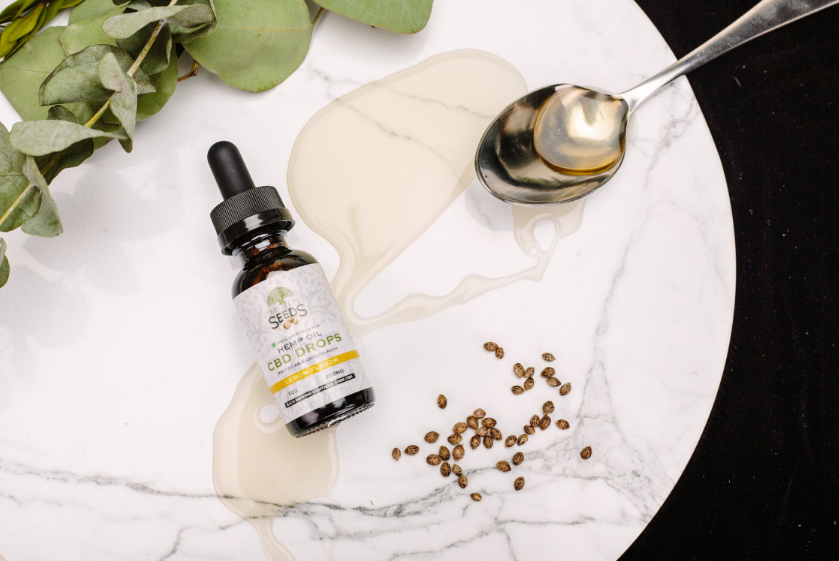
WELLBEING – Elixinol’s full-spectrum CBD tinctures come in a variety of flavors including cinnamint, grape mint, and natural.
DT: It is often confusing to find and understand this information. Why do you think that is?
CH: I think there are several sources of that confusion. First, there’s a lack of education. People like myself use marketing words for evil rather than good and trying to understand and take advantage of a Wa-Wa west market place much like bitcoin. Right? There was a lot of confusion over them, right? Same. Truthfully, cannabis, hemp, and marijuana are like craft beer. It should be available to anyone who wants it that is of proper age. They should be able to get it over the counter at the proper age and direction. There’s going to be less effective and less tasty versions, and there will be more effective top quality versions. Some are worth it and some aren’t. Some are going to make it and some aren’t. We’re going from being the weird internet thing to being as big and as prevalent as the aloe vera industry.
DT: Could you elaborate on the difference in cost between full-spectrum products and isolate?
PET CARE – Edibites are formulated by a veterinarian and a professional chef, and can contribute to your dog’s overall health.
CH: It is a little bit cheaper to produce isolate, and it’s easier, too. But additionally, it’s easier to put isolate in anything. It’s a powder. It’s easy to work with from a formulator; you don’t need to have a lot of former expertise to put that in a brownie or a gummy. You don’t necessarily need, do I put this much sugar? Do I put this much isolate? It’s easier. It’s much more difficult to put a full-spectrum oil in something and make it work well, smell well, and taste well consistently. There’s a level of expertise that has to be there. Additionally, you have to have a level of expertise and knowledge in hardware to be able to consistently extract the high-quality CBD, all terpenes, and the profiles that are full spectrum. Using things like propane or butane to extract that is not something that you necessarily want to do all the time. CO2 is much more costly, which is what Elixinol uses, but it creates a much more potent product.
DT: Why is there such a variation in CBD costs on the market today?
CH: As far as costs, that’s becoming part of a bigger conversation because initially, the industry uses to talk about percentages, and then we switched to talking about milligrams of CBD because that’s how you by Vitamin C and that’s how you buy Tylenol. You don’t ask, “how strong is the vitamin C today, pharmacy guy?” Initially, our products had 18% or 22% when we created it, but we made that shift because it’s easier for the consumer to understand, and it speaks to our quality control. We know exactly how much is going to be in there for you and exactly how much you’re taking. Then what we found, and it goes to your cost question, is the more bioavailable the CBD is, the better it’s going to work for you. Costs right now are very variable. I was just in Boston at Paleo F(x)—a big convention for all these biohackers and paleo diet people. A woman approached me and said, “I love CBD, I take it every day. It’s so great, it changed my life.” I asked her what she was taking and she said she was supporting a local guy who makes it in Texas. She was paying $130 for a bottle that said it was 1500 milligrams. I look at the back and it said it was 50 milligrams of CBD, 1400 milligrams of hemp oil. So, she was paying $130 for 50 milligrams of isolate CBD that this guy was making in his kitchen in Texas.
SOOTHE – Full-spectrum CBD Hemp Balm soothes the skin, provides relief from dryness and irritation and has a pleasant natural scent.
DT: Is there a way for the industry to regulate this problem?
CH: Labeling is a challenge. We are working closely with the FDA and working with the Hemp Roundtable, one of the largest regulatory boards and lobby groups that’s helping to regulate the industry. We’re on their board. We have a marketing committee. Our vice president or our president of the company is on the board. Joy, our regulatory officer, is working closely with them every day to help guide these laws, but overall, the country of origin needs to be important. Where did your hemp come from? How much CBD is in it? Is it full-spectrum? Is it isolate? All those things are important. What we hope is that we move from cost per serving rather than cost per milligram, so that people will understand that something that is 300 milligrams, is CBD in an MCT oil which is good fat.
DT: What is the best way to take CBD?
CH: CBD itself, unlike THC, doesn’t stay in your system. It processes out every six to 12 hours. THC can stay in your body for up to 21 days. Our medical director suggests starting with a 15 milligram serving of tincture, twice a day. The tincture has an MCT oil base and takes up to three minutes to absorb into your system. We also have a liposome version. CBD molecules are bound to fat cells, making it more bioavailable, so it’s going to absorb in ten to fifteen seconds. With the liposome product, we recommend a 5mg per serving twice a day. I don’t know if you remember when people use to do coconut pulling when people were swishing coconut in their mouths. The tincture is used the same way, it a minute to absorb through your system or you can just swallow it. It goes through your body and gets down into your small intestine. It’s mostly bioavailable because we use high-quality MCT oil. Our medical director suggests varying serving sizes when you first start. Starting with the tincture, 15 milligrams, and then rapidly and very quickly adjusting how much you’re consuming, so you see what works for your body best. I can take upwards of 30 to 45 milligrams from the time I wake up to the time I go to bed and not feel any effects of sleepiness. Some people only need 15 milligrams throughout the day. It really depends on your body chemistry.
DT: How does CBD help?
CH: The main thing that CBD does is reduce inflammation and bring the body to homeostasis. It reduces anxiety and can help you sleep by bringing you into balance. So, if your body is way out of balance, you might need more. CBD is an organic material that is an adaptogen that your body uses to heal itself. If you have extra stress, or you worked out really hard, you might need more. Putting yourself in homeostasis means reducing your fight or flight mechanism. It means allowing you to sleep better. If you sleep better, you can digest your food better, you can recover better, and your body has time to regenerate. Over time, you’ll see improvements just by sleeping better.
CLEAN AND GREEN – Sativa is Elixinol’s new, sustainable, 100% hemp line of skincare that includes body wash, moisturizer, shampoo, conditioner, and skin serum
DT: Am I right in saying that hemp is really good for the environment?
CH: A hundred percent. It breathes CO2 instead of oxygen. It puts out oxygen and cleans the soils. They plant it near nuclear wastes and there are huge fields of hemp growing out in Japan to help clean the ground. There are ones in the Chernobyl area today with giant forests of hemp to help clear up the area. That leads us back to the country of origin of why you need to make sure you know where your hemp came from.
DT: Is it also bacteria resistant?
CH: It is, and resistant to insects as well. You can grow ten crops of hemp before you grow one crop of trees. And it has many uses, plastics, concrete, fiber, and on and on.
DT: Can you talk about the benefits of the skin? I use it for pain in my knee as I would use a muscle cream.
CH: Our hemp balm is very unique, primarily because we use a very gifted formulator to make our products; the ingredients in our hemp balm would make our normal $30 hemp balm, if you bought it in regular stores, cost around the neighborhood of $60 to $80. But because of our sourcing skills, because of our formulator, it’s $30. For just the ingredients alone, outside of the CBD, it would make you feel amazing. In addition, we’ve added CBD components, so it’s very effective. It’s an almost immediate feeling to help people with temporary joint pain, inflammation from overextending themselves, but also our customers have told us they use it for psoriasis, eczema, and acne. There are two sides of those. Those are symptoms of autoimmune that CBD helps and can support recovery from and then additionally, inflammation.
DT: Are capsules less effective because of the way it’s delivered? Or comparatively, if someone was saying what would you recommend I do and what’s the best way to get it?
CH: The easiest answer that I give everybody who asks this question, “Which is the best for me?” The simple answer is: whichever one you’re going to take. Because if you’re going to take a tincture, please take the tincture. It’s way better than the capsule you won’t take, or the other way around. So, that’s my first answer. The second has to do with bioavailability. The more bioavailable and more bioaccessible we can make the product, the better it’s going to be. What we focus on is making high-quality delivery systems. When we started, we first made the tincture. That’s why we use MCT oil because it makes it more bioavailable. We took that same formula, and we put it in a capsule because people are, unfortunately, used to taking pills. This is our number one selling product. Capsules fly off the shelves because people are used to it. They can just put it in their normal vitamin daily regimen. So, we focused on putting a very high-quality capsule that’s going to make it to, as close as we can gage, your small intestines so that’ll be absorbed. We use a very high-quality veggie cap, so we’re not adding other gelatins or animal products into your body. We recommend our capsules very highly. Additionally, if you’re really concerned about it because it’s such a high-quality veggie cap, they work great as suppositories. You can skip the gut, and go right into your system. It works really well.