The Warsaw Ghetto Uprising, where 13,000 Jews died fighting Nazi oppression –
in April and May 1943, it was the largest single act of resistance during the Holocaust. The Uprising was the inspiration for “Zog nit keyn mol” (Yiddish: “Never Say”), known as the “Partisan Song.”
WeAreHere-IG-Timezones
The song, which exemplifies Jewish resistance to Nazi persecution, is inspiring a special virtual event this Sunday, June 14 –
“We Are Here: A Celebration of Resilience, Resistance, and Hope.” The concert – which will be live-streamed at www.wearehere.live – commemorates the 75th anniversary of the end of World War II and the 77th anniversary of the Warsaw Ghetto Uprising, even as it speaks to the challenges of the current moment.
“We are all inspired by the example set in the Warsaw Ghetto Uprising. The Partisan Song, which begins and ends this program, speaks to the fight for social justice and fundamental human rights,” said Bruce Ratner, Chairman of the Board at the Museum of Jewish Heritage – A Living Memorial to the Holocaust.
And they’ve enlisted a robust array of renowned actors, musicians, and civic leaders to participate. Among them is a four-time Grammy Award and National Medal of Arts-winner, star soprano Renée Fleming, who will perform the world premiere of a new work by Pulitzer Prize-winning composer John Corigliano based on a text by Kitty O’Meara.
Among the others participating are EGOT-winner Whoopi Goldberg –
Grammy Hall of Famer and Tony-winner Billy Joel, world-renowned pianist Lang Lang; the iconic Dr. Ruth Westheimer, Emmy- and Tony-nominated actress Lauren Ambrose, multi-platinum, Tony-winning Broadway star Lea Salonga, multi-Grammy-winning opera star Joyce DiDonato, and award-winning actress Mayim Bialik.
“Both the recent COVID-19 pandemic and the centuries-old pandemics of racism and antisemitism highlight the need for resistance and resilience,” Sing for Hope Co-Founder Camille Zamora said. Added Sing for Hope Co-Founder Monica Yunus, “As we seek to listen, learn from, and serve our communities in the days ahead, thoughtful organizational partnerships will be key. It is an honor to unite artists and stand together as allies with a global network that fosters resilience, resistance, and hope.”
National Yiddish Theatre Artistic Director Zalmen Mlotek –
and Executive Director Dominick Balletta noted that “In this time of rising antisemitism and global crisis, the themes of resistance, resilience, and hope are more important than ever, and the Partisan Song takes on even more resonance. The song begins with the words ‘Never say this is the final road for you,’ and ends with the words ‘We Are Here.’ It is the song that binds together those who fight for justice.”
The program also will feature an interview by The Forward Editor-in-Chief Jodi Rudoren with Nancy Spielberg, Roberta Grossman, and Sam Kassow about their film Who Will Write Our History, which chronicles the story of Oneg Shabbat, the group that daringly preserved the history of the Warsaw Ghetto.
You can view the list of all participants here. Local viewing times include 11 AM Pacific Time, 2 PM Eastern Time, 7 PM London, and 9 PM Israel.
On New Year’s Day, the Los Angeles musician trumpeted a public call for creative reformation:
You’re a creator? Awesome. Create. This idea that you’re supposed to be a living, breathing “brand” is gross and someday it’s gonna look really dated. Whether you paint, write, sing, or complain, own that it’s an extension of your soul, not “content” that you excrete on a daily basis like a robot. Can we please make 2020 the year that branding dies?
Photo: Alice Teeple
Photo: Alice Teeple
Photo: Alice Teeple
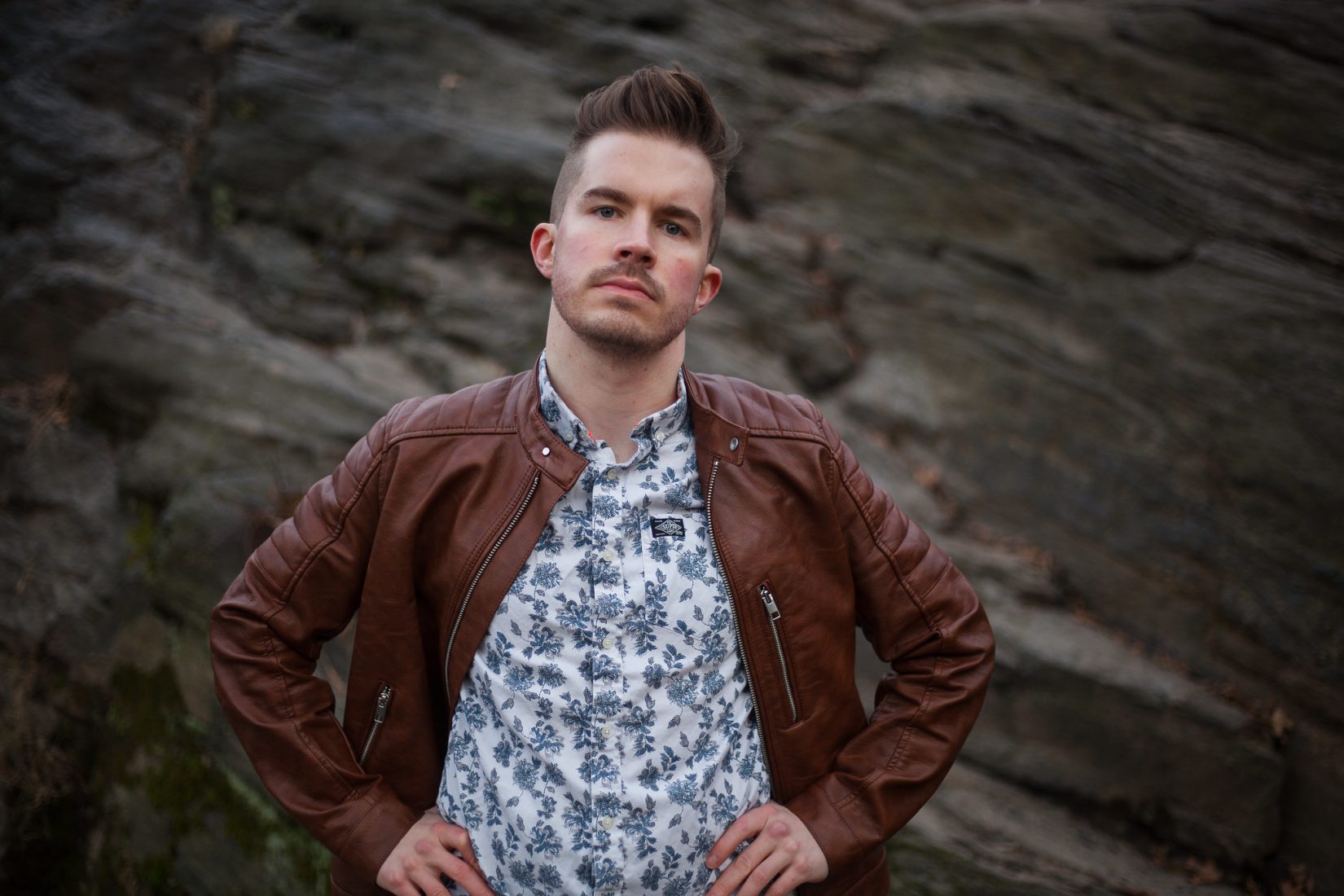
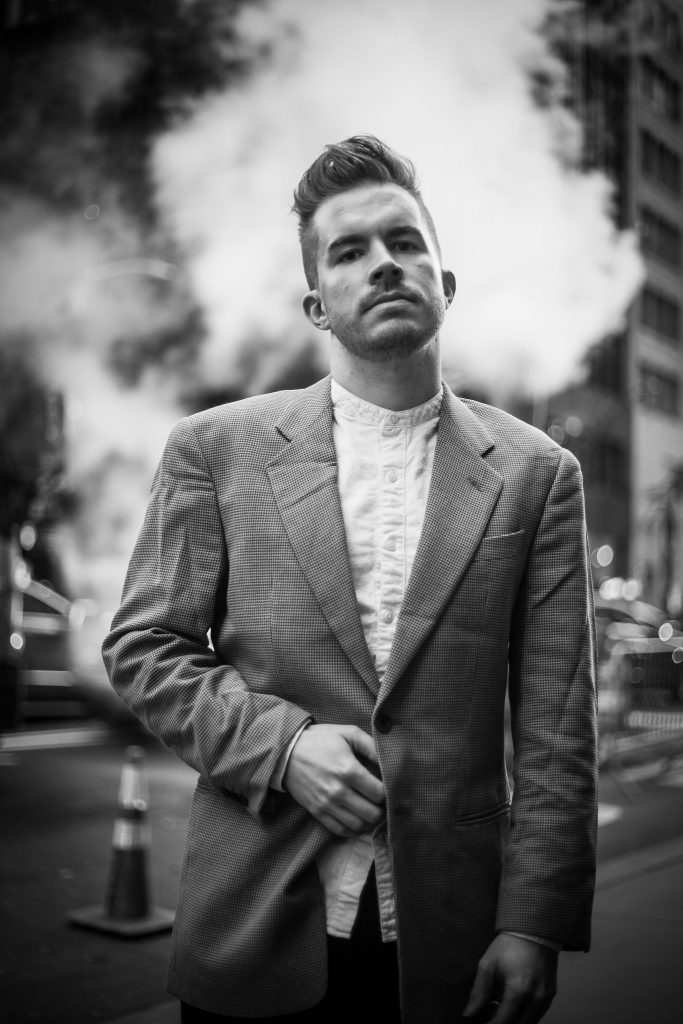
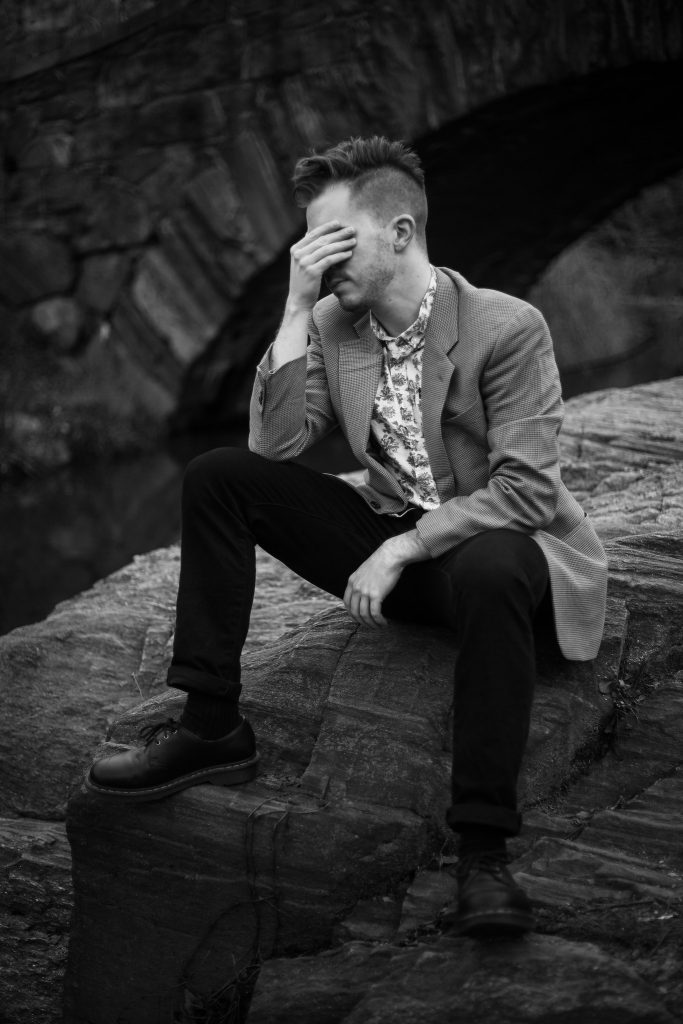
Hank Fontaine is a powder keg in an industry bursting with soul peddlers thirsty for fame and power. He refuses to be contained. He is content to stay honest to himself, his whims and his art. Conformity does not interest him in the least. Fontaine is a restless soul forever on the prowl for inspiration, both a citizen and student of the world. Ten years of touring as a guitarist; a lifetime of transience. For the time being, he’s existing in Los Angeles, eschewing that plastic Stepford Wife nonsense.
Living in the City of Angels has only deepened his determination to bring authenticity to his craft, encouraging others to follow suit. He walks the walk. After four years as half of sibling duo The Fontaines, touring with Dylan Gardner and Valley Queen, and resetting his path with a couple of singles, Fontaine released his first solo album in 2019: The Globalist Agenda or: Welcome To Frogtown. It is an eclectic tour de force.
Fontaine’s sound is impossible to pigeonhole, and he likes it that way. There are some echoes of retro influence, particularly in Fontaine’s guitar licks, but his lyrics are firmly rooted in the 21st century experience. He effortlessly weaves elements of Harry Nilsson, early Billy Joel, Supertramp, and Electric Light Orchestra in his sound, through the filters of English music hall, New Wave, and breezy California surf rock. Although Fontaine is primarily known for his guitar chops, he is a powerful and emotive vocalist who croons, growls, whispers and fearlessly falsettos.
Photo: Alice Teeple
Hank Fontaine’s strength lies in his curious voyeurism and refusal to mould himself to a false concept. He takes that kid-in-a-candy-store approach to sound, reminiscent of Odelay-era Beck. His self-penned Spotify bio cheekily mocks the industry push to brand musicians, which he sees as a limiting force on creativity. Not a single song on this album sounds like any other, but all work together in a sonic crazy quilt as varied as the people who influenced them. The Globalist Agenda was inspired by people Fontaine met while living in the Frogtown neighborhood of Los Angeles.
“I like to pretend to be other people when I’m writing. I think that’s gonna get me in trouble someday,” he quips.
Fontaine’s love of Seinfeld shines through in his observational lyrics: always wryly wondering, “what’s up with that?” This is best exemplified in his debut single, Bad Love, which sounds like a powerful breakup ballad, but was in fact about a time he got cut off in a Trader Joe’s parking lot. “I asked, what happened to this person to make them like this?” Fontaine explains. The ethereal, forlorn Hope Don’t Leave Me Now was inspired by a compulsive lottery ticket gamber at his local 7/11.
The album was a collaboration with his friend and producer Jason DeMayo. The pair recorded all the instruments together, one at a time.
“It was a very freeing way to work that I never tried before,” says Fontaine.
Photo: Alice Teeple
Photo: Alice Teeple
Fontaine headlined the Troubadour in LA to celebrate the release of The Globalist Agenda, and then took off the rest of 2019 to focus on writing. He’s in NYC for a few months doing an artist residency, working on a new EP of songs he wrote in his hometown of Paris.
Keep your eyes and ears on this one in 2020. Hank Fontaine is just getting started.
You can purchase The Globalist Agenda Or: Welcome To Frogtown here:
Opened last month in the heart of the Theater District, The Green Room 42 is an immersive 130-seat state-of-the-art entertainment venue. It not only offers audiences the chance to see some of their favorite performers up close and personal, but it also offers a food menu designed by Chef Gabriel Israel of the adjacent restaurant Green Fig. Beyond the food and entertainment, cocktails, craft beer and wine are also offered. Yes, all on the fourth floor of the YOTEL.
Since its Mar. 5 opening, plenty of major Broadway performers have taken to the stage of The Green Room 42. This includes Constantine Maroulis, Lillias White and Alice Ripley. A change of pace from the top stars of the stage, The Green Room 42 also offers a “Bottomless Brunch” on Sundays, featuring the undewear-clad singing duo The Skivvies, dishes from the aforementioned Chef Gabriel and 90 minutes of unlimited prosecco drinks.
Daniel Dunlow: The Green Room 42’s owner Gil Rubenstein operates all the food and beverage outlets at the YOTEL NYC, including modern Israeli restaurant Green Fig and rooftop lounge Social Drink & Food, which both opened last year. For the final piece of the project, Gil transformed the hotel’s event space into an entertainment venue where guests could watch performances in an up-close and personal setting. Although New York City has a lot of theaters and music venues, he found that there weren’t many intimate rooms that offer Broadway level performances at a wallet-friendly price.
How would you describe the venue to someone who hasn’t yet been there?
The Green Room 42 is a new, funky, urban take on the classic New York cabaret scene. It’s Frank Sinatra meets Sia, which is exactly the aesthetic of the room. As for the business model, it’s centered around value and hospitality. That means just one show a night, spacious seating and no food or beverage minimum ever. Come as you wish and stay for as long as you like — you’re our guest. We pride ourselves on offering a lower ticket cost than anywhere else in town, and all the while paying the acts fairly. It’s all about the experience: great food, drink and creative entertainment. Broadway stars are coming out of the woodwork to perform at this venue, and they’re also flocking in to see the shows; so you never know who’ll you’ll run into in the crowd.
What does the venue name mean? Is the 42 related to the street?
DD: A “green room” is the space in the theater that is between the dressing rooms and the stage. It’s where actors hang out before they go onstage. It’s a place on Broadway where you get to see Simba from The Lion King in full lion costume and makeup, but playing Candy Crush on his phone. That’s exactly what cabaret is to me: It’s a space where the artist is live in front of you, but being a human being and not playing a part. They are comfortable and personable, telling stories, laughing, joking and kidding around. That’s what you get in the green room and at The Green Room 42. As for the “42,” it was added so people knew where to go: 42nd Street.
Do you have a favorite item on the menu? Is there a full menu offered during all shows?
DD: We offer a full menu during every show at The Green Room 42. We have everything from artisan pizza to an unreal schnitzel burger. My personal favorite are the steamed mussels with garlic and white wine sauce that are served for the table to share. They are absolutely addicting. They’re meant to be shared at the table, but if you’re sitting with me, we will not be sharing them — I will be eating them all by myself. (laughs)
What was the first show you booked there?
DD: The first show I booked here was Lillias White, the Broadway legend from The Life, Dreamgirls, Fela! and Hercules. She sold out her Valentine’s Day show here. She’s already returned for a second show with a packed house. While she was signing her first contract, I got the impulse to have her sign two copies just so I could keep a copy of her autograph.
Russ, for someone who hasn’t seen you live before, what should be expected?
Russ Kaplan: “Theatrical Psychedelic Party Jazz.” For this show we’re ransacking the Broadway canon — from both classics and new shows — to find new exciting twists on familiar tunes. It’s mostly instrumental with the occasional stealth vocalist.
Who’s going to be onstage with you?
RK: My band, the massive and massively-awesome Russ Kaplan +7: me on keyboards, Moppa Elliott on bass, Wayan Zoey on drums, Tom Gavin on guitar, Christoph Knoche on reeds, Kyle Saulnier on more reeds, Eric Biondo on trumpet, and Brian Adler sitting in on percussion. Plus of course special guests Justin Guarini and beatboxer Chesney Snow, both from In Transit.
Do you have a favorite song to perform live?
RK: So far, “Poinciana.” We haven’t played these Broadway songs yet, but I’m pretty psyched to jam out on some Phantom; I don’t want to give away which song.
Where was the first live show you ever performed in New York?
RK: First show with my band was at the Douglass Street Music Collective in Brooklyn, at my 29th birthday. First performance of any kind as a New Yorker, at Arlene’s Grocery, beatboxing to “Papa Was A Rolling Stone” at a Motown tribute show.
Russ Kaplan
Russ Kaplan aside, any upcoming shows you’re especially excited for?
DD: I’m really stoked to get Telly Leung in here. He’s such a genuine guy with a love for the arts. I can’t wait to see what he brings to his solo show. Also, there are some shows in the works right now that I can’t yet speak about, but they’ve got me very excited—you’ll hear about them soon.
The Green Room 42 show aside, Russ, what’s coming up for you career-wise?
RK: Lyricist Sara Wordsworth and I are finishing the latest draft of our new musical Minnesota. Hi, producers!
When not busy with your career, how do you like to spend your free time?
DD: Free time? I go see theater, but I consider that research. I’m a huge fan of Broadway. I love seeing current shows, watching YouTube clips of old shows and collecting Broadway memorabilia. Some of my prized possessions are a signed Ethel MermanGypsy playbill, a signed Mary Martin headshot, Billy Porter’s eyelashes from Kinky Boots, and my hall of Tyne Daly memorabilia — I’m obsessed with Tyne Daly. My apartment is like a museum of Broadway. I recently bought the original grand piano from Don’t Tell Mama, one of New York’s first true cabaret clubs. This is the piano that they had in their club since day one. I played it when I performed my very own first cabaret there five years ago. This piano, which is now in my bedroom, is the piano that all the greats like Liza Minnelli and Bernadette Peters sang on, and shows like RENT and The Last 5 Years were written on this piano late at night in the piano bar. I’m a pianist and composer myself, so I spend some free time tickling the ivories and performing around town. So as for free time, I’d say roughly six hours of my day are spent sleeping, and then the other 18 are for theater stuff.
RK: Hanging with my wife and daughter. Watching BBC nature movies.
DD: I love pianos and I love music, so I obviously love the Piano Man. I went to see Billy Joel at Madison Square Garden again last month. That was my fifth time seeing him. That guy knows how to do it.
Finally, any last words for the kids?
DD: A wise man once told me that there are many different llamas that take you to the top of “Mt. Great Entertainment.”
Located in the West Village, Analogue is a cocktail bar that has received rave reviews from the Wall Street Journal, Gothamist and DNAinfo alike. While many Manhattan bars aim to have music playing loud so that its customers have no choice but to dance and pound drinks, Analogue takes a very different approach. Whether it has a jazz trio live or its vintage Hi-Fi setup playing, Analogue keeps the music at a reasonable volume, allowing you to engage in conversation with ease. Analogue also offers a great food menu and has a lot of artwork on the walls for its patrons to look at.
Downtown had the pleasure of talking with owners Jesse Wilson and Jared Gordon, who met as students at NYU. As noted within our Q&A, Analogue is currently in the midst of expanding, although the location of its second spot has not yet been revealed. More info on all things Analogue can be found at www.analoguenyc.com.
You two met while studying at NYU. Where did the idea of opening a cocktail-centric bar come from?
Jesse Wilson: At first, the idea started when we would hang out at various bars around the Village and talk about how cool it would be to open a bar. After NYU, I moved back to San Francisco to work in finance and started to work on a business plan on the side. At that time I was also starting to notice a proliferation of cocktails and craft beers in the marketplace. I just couldn’t do it by myself due to work so kind of shelved the idea. When I moved back to New York City, Jared was ready to move on from finance himself and approached me with the idea of opening a bar. After a lot of discussion, we decided on the concept of doing a cocktail bar for a professional, grown-up crowd and Analogue was born.
Jared Gordon: We wanted to open a bar that featured the drinks we enjoy. That’s cocktails, whiskey and an occasional great beer. So that’s what we did. We pride ourselves on our cocktails and have put together an outstanding program, but we’re agnostic as to how we’re perceived or what the guest wants. As long as they’re enjoying themselves, it doesn’t matter to us whether they’re having our most complex cocktail, our rarest whiskey or just enjoying a glass of wine or a beer.
Did you have any restaurant or bar experience prior to opening Analogue?
JW: We didn’t have any experience really. Jared had a little bartending experience in the Upper East Side and had read a few books, but that was about it. We figured with our strong business backgrounds we could run the business, but we also knew we needed to hire people we trusted with experience in the hospitality industry.
JG: I’ll echo Jesse’s thoughts. I started tending bar to get a sense of the business, but I was pouring neat well vodkas at a few dives on the Upper East Side. Not quite the same level. We knew what we wanted and we knew how we wanted to treat our guests. The rest is putting a team in place to help execute that vision.
The Dorian Gray / Photo: Michael Tulipan
How would you describe Analogue to someone who hasn’t yet been there?
JW: I think the name “Analogue” fits the bar well. It’s a high-end cocktail lounge that is almost a throwback to Manhattan in the 1950s and 1960s. We do great cocktails and food and have a great atmosphere that promotes conversation amongst friends. It’s a throwback to a non-digital era, hence the name. I actually notice people come in and use their cell phones a lot less and just talk with each other. This was one of our goals when we were designing the bar.
JG: Jesse put it perfectly. It’s a comfortable bar in which to enjoy a great drink and a conversation.
Do you have a favorite drink on the menu? A favorite food item?
JW: My favorite drink is our signature called The Analogue. It was our first drink on the menu. It blends Havana Club Anejo Rum, Four Roses Bourbon, Domaine de Canton ginger liqueur, St. Elizabeth Allspice Dram, Velvet Falernum and bitters. When we opened, we wanted a bourbon-focused drink that was good for the colder fall weather in New York. When I tasted it I said to our bartender Nesha Korak, “Wow, if I could taste our bar that would be it! What should we call it?” And he responded, “Well that’s what it is then, call it Analogue.” And it’s been on our menu ever since day one.
JG: I’d say my favorite drink is whatever the team is working on at the moment. I enjoy the evolution of the individual bartenders and the program as a whole through time.
Jared Gordon & Jesse Wilson
Who is in charge of your cocktail menu? How does your team come up with cocktails?
JW: Zack Berger is our head bartender and facilitates the process for the team. The menu is a collective effort for all of our bartenders. They are always creating, and when we do a menu, they bring several of their best drinks to the table to try. We do a few rounds of internal tastings and then pick the winners. We then adjust the menu to put on the best cocktails and remove any drinks that are out of season or slow moving. It is a constant process.
JW: One of the first concerts I remember was U2 during the Joshua Tree tour back in 1987. My father took me when I was 13 years old. This was when U2 was at their peak and becoming a global phenomenon. The concert blew me away. I remember walking out of the Oakland Coliseum to the crowd and everyone was still singing “40” in unison. It’s cool to see them doing the 30 year anniversary tour now!
JG: My first concert was the Concert For Walden Woods, featuring Billy Joel, Don Henley and Sting. The seats were terrible but the music was amazing. Live music and music in general have played an important role in my life ever since.
Black Boulevardier / Photo: Michael Tulipan
What was the latest concert or music-related live event you attended?
JW: The last show I attended was The Cult here in New York. The Cult was another band I grew up listening to and they are still going strong! I like a lot of alternative, hip-hop, jazz, country, metal, pretty much any genre if it’s good.
JG: I’ll echo Jesse’s sentiments. I love everything from old school East Coast hip hop to bluegrass, metal, and classical. The last shows I’ve seen were Iron Maiden (my second time), Dave Matthews Band (my 24th) and the Governors Ball, where De La Soul was the highlight.
I understand that Analogue features live music a few days each week. Who are some of the artists that regularly play there?
JG: currently we have Nick West and the Westet on Tuesdays and Monika Oliveira on Wednesdays. Nick West is a funky bass-driven trio, and Monika has a beautiful, mellow bossanova sound.
When you don’t have musicians playing at Analogue, I know that you have music spinning. Have you always been so vinyl-centric?
JG: We spin vinyl on special occasions, and for that we have a fantastic vintage turntable and tube amplifier. We’re also starting an audio salon where we will feature some truly high end systems and some classic albums each month. Vinyl has played a role in my life since birth, when it was just called “music.” As I got older, I started my own collection by stealing my parent’s albums and it took off from there. I have about 7,000 albums at the moment, down from a peak of about 8,500. I enjoy the hunt — scouring yard sales and thrift stores and finding new music or forgotten gems. And I enjoy building and tweaking my HiFi system.
The Analogue / Photo: Michael Tulipan
Who chooses the music that is playing at Analogue?
JW: Usually our management team will set the music that is played at the venue. We are always on the lookout for new bands in the area. A lot of the bands we discovered were from around the West Village area playing at venues or outside at Washington Square Park.
The walls of Analogue are also lined with music-related photographs. Were those from a personal collection?
JG: The photographer is Roberto Rabanne, who has shot some of music’s best. The prints in our space are all originals, and the collages of Ray Charles and Bill Evans are each one of a kind.
I know that Analogue has a private room. Is that only for private events?
JW: Yes, we host a lot of events in the back such as private parties, corporate events, cocktail classes and wedding receptions.
When not busy with Analogue, how do you like to spend your free time?
JW: Sleeping! I work full-time and help manage the bar, so in my little free time, I like to relax. But now we are looking to open our second location, so a lot of free time is spent working on the new location.
JG: I recently had my first child, a little boy we named Jack. So free time is in short supply at the moment. Between him, Analogue and scouting for the next location, there aren’t enough hours in the day. When I do find some down time, I like to play music, read, cook, and yes sleep.
Analogue / Photo: Michael Tulipan
Aside from Analogue, do you have a favorite bar or restaurant in New York?
JW: I am really into craft beers right now so I appreciate a good selection of beers and a nice atmosphere. I liked Cooper’s when I lived in Chelsea. I now live on the UWS and like Gebhards, a new craft beer place near my apartment.
JG: I like dive bars. When I’m at a cocktail or whiskey bar, I find myself too focused on the menu, the setup and the service. I relax when I can kick back with a beer and a whiskey and not worry about taking notes. Parkside Lounge on Houston and Lucy’s on Avenue A are two favorites.
Finally, any last words for the kids?
JW: Don’t get caught up in all of the cocktail hype! We try to focus on making cocktails that taste great and put a lot of work into that. We don’t get caught up in all of the hoopla to try and get too clever or go over the top with our creations. A lot of our drinks are rooted in tradition, the foundation if you will. The goal is to just make quality drinks that the customers will enjoy and have a good time. At the end of the day it’s all about giving our customers the best possible experience.
Formed in Garfield, New Jersey in 1965, The Rascals charted nine singles before the end of the 1960s. Hits like “Good Lovin’,” “Groovin;” and “A Beautiful Morning” remain radio staples almost 50 years after their release. Notable Rascals fans include Billy Joel, Paul Shaffer, and E-Street Band guitarist Steven Van Zandt. Meanwhile, Rascals songs have been recorded by Dionne Warwick, Dusty Springfield, Gloria Estefan, The Grateful Dead, Shania Twain, John Travolta and Hanson, beyond being sampled by A Tribe Called Quest, Tricky and Girl Talk.
Founding Rascals keyboardist/vocalist Felix Cavaliere didn’t slow down after the group broke up in the early 1970s; he recorded four major label solo albums in the 1970s alone. He has also thrived as a musician and producer for other artists, having collaborated with Laura Nyro, Jimmie Spheeris, Steve Cropper, and Ringo Starr & His All-Starr Band. An induction into the Songwriters Hall Of Fame would follow in 2009. One year later in 2010, Felix reunited with his Rascals bandmates for a benefit show at the Tribeca Grill, which led to a 15-show Broadway run at the Richard Rogers Theatre in 2013.
Downtown spoke with Felix in advance of his Mar. 4 show at the Theatre at Westbury. Felix Cavaliere’s Rascals will be sharing the stage in Westbury with Tommy James & The Shondells, ensuring an evening full of pop and rock classics. More on Felix and crew can be found at www.felixcavalieremusic.com.
What do you wish more people knew about Felix Cavaliere?
Felix Cavaliere: That I’m a happy and contented family man.
You were a member of Joey Dee & The Starliters, who I know Peter Criss from KISS played with at least once. Did you two ever talk shop about that?
FC: Oh, yes. Definitely. Many fine musicians have been in the Joey Dee band, including Jimi Hendrix and Joe Pesci. We are all honored to be a part of this group as alumni and musicians.
You’re thought of as a New York and New Jersey guy, but you live in Nashville. What brought you out there?
FC: New York has a special place in my heart, absolutely. Nashville has been the musician’s hub for writing and producing for quite awhile now. It’s been a wonderful place to raise my family and see my grandkids grow.
Where was the first gig you ever played in New York City?
What about on Long Island? What do you remember about that?
FC: Long Island was the place where we were discovered, and we worked in many places for many years. That’s what you did. People have adopted us as their own.
FC: I’m writing a book about my life, working on symphonic appearances, as well as a new album. And I’m touring! I’m so blessed to have the greatest fans in the world. They have shared the music with their offspring, and we’re seeing younger fans. Just this summer we were in Japan and it was such a thrill to have the audiences singing along with us. It makes me so happy.
Is there a professional accomplishment you’re most proud of?
FC: Be good to each other. And thank you for everyone that has enjoyed and been a part of my extended family for over 50 years. It’s wonderful to keep performing and singing these songs that are a part of peoples’ lives. I’m truly grateful and humbled by this.
Founded by Andrew and Jonathan Schnipper, Schnippers was launched after the brothers sold Hale & Hearty Soups — which they founded — in 2006. Schnippers started with a single location in the New York Times Building at 41st & 8th. Now, Schnippers has five locations in Manhattan, the latest of which opened in TriBeCa.
While there are many quick-serve establishments in Manhattan where someone can get a great burger, one thing that sets Schnippers apart from its competitors that its menu also includes healthier fare. Schnippers has salads, fruit salad, and even some gluten-free fare. But this time of year, when indulging isn’t so taboo, it must be noted that Schnippers has a Latke Burger ready for the holiday season. Undoubtedly that would go well with a handcrafted milkshake; Schnippers uses Gifford’s Family premium hard ice cream for its shakes.
Downtown had the pleasure of conducting Q&A with Andrew Schnipper, ultimately learning more about Schnippers’ past, present and future. More info on the family-owned Schnippers can be found at www.schnippers.com, and as noted by Andrew — a graduate of Tufts — menu items and other updates can be found on the company’s Instagram.
Schnippers recently opened its fifth location. Was it always the plan to have multiple locations?
Andrew Schnipper: When my brother Jonathan and I opened our first Schnippers location in The New York Times Building in 2009, we were cautiously optimistic that our “feel good food” would catch on. We had been successful at expanding Hale & Hearty Soups previously, and hoped that hard work and good luck would be in our favor again. With that said, the restaurant industry in New York is tough — and getting tougher — so we never took anything for granted. We’re thankful to have five busy outposts of Schnippers and look forward to continued, thoughtful expansion.
Was Schnippers always going to be the name of the restaurant?
AS: It actually wasn’t our first choice! We spent several months coming up with potential names for the restaurant, but we just couldn’t think of anything that we liked better. As it’s a real family-owned restaurant, friends kept encouraging us to name it Schnippers, and it stuck!
How did you and your brother realize that you were going to go into business together? Has anyone else in your lineage worked within the food world?
AS: My brother and I are different in almost every way, but when it comes to food, we’ve always seen eye to eye. Our family was not in the restaurant business, but our mother always cared about what she put on the table. She would bring us to the butcher shop to get the best cuts of meat to make our favorite childhood dish: sloppy joes. We serve an updated, elevated version of her recipe at Schnippers.
Jonathan and I have been business partners since 1995 — our differences are complementary and it just works. I couldn’t imagine doing this with anyone else.
Andrew & Jonathan Schnipper / Photo: Schnippers
If all went as planned, is there hope to expand further in Manhattan in the future? Move into other cities?
AS: For now, we’re perfectly content in Manhattan. Never say never, though!
Hale & Hearty Soups, which you co-founded, is not only known for its restaurants but for having store-sold products. Are there plans for Schnippers to also do that?
AS: Not at the moment.
Both Schnippers and Hale & Hearty are known as “fast-casual” restaurants. What inspired that concept? I mean, it seems like more restaurants in Manhattan are of that style these days than not.
AS: When we launched Hale & Hearty in 1995, fast casual wasn’t a trend yet — there were hardly any places in New York to go for high-quality, healthy and delicious meals that were also quick and easy to eat on the go. People in New York are incredibly busy and it has always been our goal, at both Hale & Hearty and Schnippers, to fit seamlessly into their daily routines. We’re glad to see that the trend has caught on.
What sets Schnippers apart from other concepts is that we truly have something for everyone, whether that means a burger before a Broadway show, a nutritious salad for lunch during the workweek, or an indulgent feast of fries and milkshakes on a Saturday afternoon with your kids — we’ve got you covered!
What is your favorite item on the Schnippers menu?
AS: I love our chicken fingers; honestly I think they’re the best in the city. They’re also unintentionally gluten-free.
New TriBeCa location aside, anything new or exciting coming up for Schnippers? New menu items?
AS: We’ve started rolling out special menu items every week at our 23rd Street location. We’re also offering a special Latke Burger for the holiday season. You can follow our Instagram for details about both.
Schnippers aside, what is your favorite restaurant in Manhattan?
When not busy with Schnippers, how do you like to spend your free time?
AS: I spend most of my free time with my family; my wife Andrea and our two daughters Isabel and Julia. Although they are the center of my world, my golden retriever Tucker is right in there, too. I enjoy spending hours in Central Park with him and the kids. I also enjoy biking, hiking, and experiencing the great outdoors just about anywhere.
Any upcoming concerts or events you have tickets for in Manhattan?
AS: Unfortunately not at the moment, but I want to try and take my kids to see Jingle Ball next week. I love seeing Billy Joel at the Garden whenever I can. I MUST see Hamilton one of these days; Lin-Manuel Miranda has been to Schnippers on 8th Avenue a few times, but I unfortunately missed him.
Finally, Andrew, any last words for the kids?
AS: Find what you are passionate about and go for it. Be healthy, but remember that eating what makes you happy is just as important as eating healthy. Balance is critical but always eat what makes you feel good.