Categories
Featured News Real Estate

Equitable Building Returns to its Original Grandeur

With the continued renaissance right here in the birthplace of New York, Downtown just keeps getting better!

Just this month, the Downtown Alliance reported, Lower Manhattan recorded its strongest quarter of commercial leasing activity in seven years and outpaced the five-year quarterly average in Q2.

For 300 years Lower Manhattan has dominated the city’s economic life. At the start of the 1920’s this area took a detour to midtown. Fast forward after the September 11 attacks, Lower Manhattan was as at its lowest point. Shortly after, an article written by the Wall Street Journal quoted Larry Silverstein as saying that he felt a moral obligation to rebuild. “The city is not dead and can’t be allowed to die,” he said. “We owe it to our children and to our grandchildren.” His words ring true each and every day as we witness and enjoy Lower Manhattan’s trendy booming population, manicured neighborhoods, economic renaissance, and the arrival of new and exciting commercial properties.

AT 103 YEARS OLD, YOU’D NEED A FACELIFT, TOO.


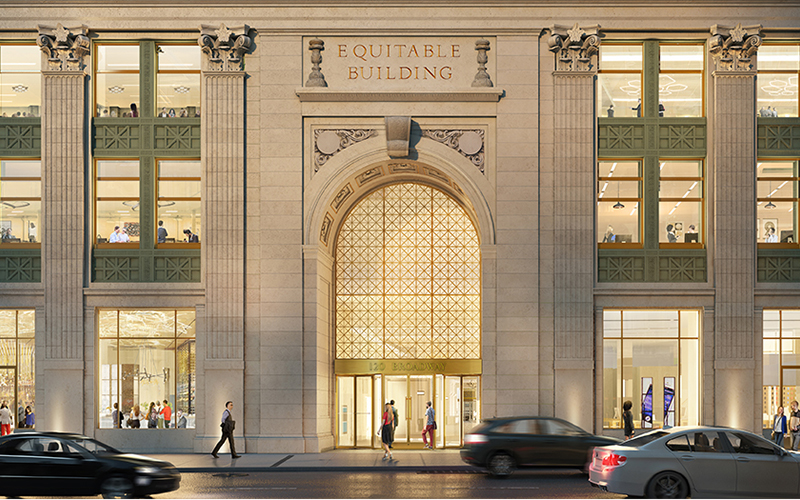
In 1985 Silverstein Properties purchased 120 Broadway. Today 25 years later, 120 Broadway is returning to its original grandeur, offering soaring vaulted ceilings, gold leaf accents, marble floors, and hand-carved architectural detail, it has been an icon of classic style for over a century. This Beaux-Arts masterpiece, located in the heart of Lower Manhattan, is widely considered Downtown’s original symbol of power and stature. Now, the property is set to undergo a series of major capital improvements by Silverstein Properties.

This endeavor will focus on restoring the building to its original grandeur.

Equitable Building Returns to its Original Grandeur


120 Broadway was designated a National Historic Landmark in 1978. New York City landmark in 1996. It was restored in 1983–90 by Ehrenkrantz, Eckstut & Whitelaw. Peirce Anderson as the architect-in-charge completed the building in 1915. At the time it was the largest office building in the world by floor area. This building was built to be the headquarters of the Equitable Life Insurance Company.

120 Proposed retail
Equitable Building Returns to its Original Grandeur

This site had previously been intended in 1906 for a 62-story tower designed by Daniel H. Burnham, but the project had been postponed. When the Equitable’s previous headquarters, the Equitable Life Building was destroyed by fire in 1912. 120 Broadway was chosen as the location for its new headquarters building. It was originally intended to be 40 stories high, but it was reduced by four floors on the advice of consulting engineer Charles Knox, who determined the lower height as being optimal for its elevators.

Bike Storage 120 Broadway
Equitable Building Returns to its Original Grandeur

Tenants will experience modern luxuries, including – rooftop terrace, tenant lounge & cafe, and for the many NewYorkers who ride to work, a bike storage with locker room & showers. New elevator cab finishes, turnstiles going into the elevators, retail renovation and activation, and a grand entryway are some of the planned updates.

120 Broadway Tennent Rooftop Amenities
Equitable Building Returns to its Original Grandeur


Rising 40 stories, the building spans a full city block bordered by Broadway and Nassau, Pine and Cedar Streets. The property has 1.9 million square feet of space, accentuated by a grand lobby with soaring ceiling heights and generously-proportioned 50,000 square foot floor plates.

120 Broadway Street View
Equitable Building Returns to its Original Grandeur


LEASING CONTACTS

Categories
Business Featured Real Estate

A Return To The Classics In Real Estate

As development in New York City continues to evolve, modern glass and steel towers are more prevalent than ever before. Architecture, it seems, has only gotten more futuristic, with New York’s appearance living up to the nickname “an urban jungle” through its shiny, metallic wake. Though these modern towers are eye-catching and distinct from afar, some developers are opting to go a different route, returning to the classics: stately stone buildings and homes that offer visions of grandeur and recall a different time period through modern design and sophistication. These developments recall an era in which skilled masonry work and handcrafted aesthetic signified utter luxury.

Paying homage to the past, a trend has slowly taken root among some of today’s developers, and the return to classic building materials is making a comeback. From hand-laid brick to elegant limestone facades, these buildings aim to provide the appeal of a pre-war building, but with all of the comforts and conveniences in today’s luxury homes. Take a peek at the dream-worthy homes below to see the latest interpretations of the classics.


70 Charlton

Photo: Courtesy of Evan Joseph

Designed by Beyer Blinder Belle, and the first development to break ground in the recently rezoned Hudson Square neighborhood, 70 Charlton is composed of two contextual towers connected by an enclosed breezeway overlooking a lushly landscaped courtyard. Known for their work in historic and site-sensitive districts, the architects crafted 70 Charlton to seamlessly integrate the development into the neighborhood. The facade of the building is a nod to its surroundings that include the robust, masonry buildings typical of the area’s former “Printing District” days. The building’s brick, metal and glass facade compliments its contemporary structure and anchors it to its environs.


150 Wooster

Photo: Courtesy of KUB Capital

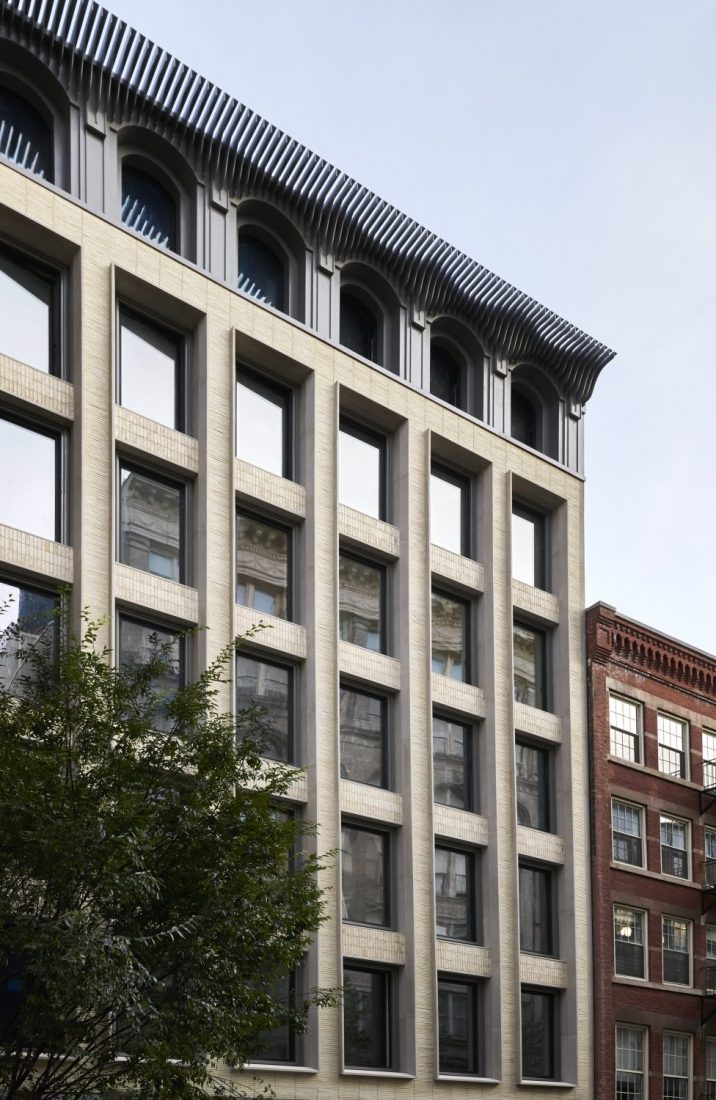
150 Wooster Street is an extremely rare ground-up development on one of the last remaining lots in SoHo’s Cast-Iron Historic District. The building’s contemporary masonry façade references the neighborhood’s landmark prestige and is clad in imported Danish brick, handcrafted and stamped using 19th-century techniques, and framed by piers of rustic Indiana limestone that accentuate large uninterrupted expanses of glass. At the 7th floor, the facade transitions into precision cut steel paneling and cornices that take classic SoHo as a point of departure. 150 Wooster was developed and designed entirely in-house by KUB, a firm based in SoHo.


20 East End Avenue

Photo: Courtesy of Hayes Davidson

Located in the heart of one of the most coveted neighborhoods of Manhattan, 20 East End Avenue is a boutique amenity-rich condominium designed inside and out by Robert A.M. Stern Architects. The buildings design concept embodies a modern interpretation of classic pre-war architecture, with an intricate brick and handset grey Indiana limestone façade. Many residences feature oversized bay windows to maximize each home’s natural light and views of the skyline and East River, Juliet balconies, and numerous setback roof terraces.


180 East 88th Street

Photo: Courtesy of March Made for DDG

Situated in the Upper East Side’s coveted Carnegie Hill neighborhood, 180 East 88th Street is a striking condominium being developed, designed and constructed by national real estate firm DDG. The property’s facade features nearly 600,000 handmade bricks from Petersen Tegl in Denmark. These distinctive bricks, which include the elegant, elongated Kolumba style, possess a thoroughly unique texture and color palette that reflect their handmade quality. The artisanal nature of 180 East 88th Street’s facade not only provides a welcome contrast to many of today’s steel and glass towers, but also provides a point of resonance with many of the pre-war buildings dotting the Upper East Side while maintaining a modern twist.


145 President

Photo: Courtesy of Arc Media

Situated in the heart of historic Carroll Gardens is 145 President, a rare new condominium that just launched sales in September. Designed and developed by Avery Hall Investments, a prolific young development firm known for its successful Brooklyn buildings, the firm’s design team took extreme care to create a building and aesthetic that is both timeless and warm, one that resonates with the location. With a nod to the surrounding architecture, the facade is comprised of handmade Danish bricks by acclaimed brickworks Petersen Tegl. Being handmade, each brick differs slightly in size, color and texture, thus providing the facade with great dimension and depth as well as a connection to the neighborhood’s past.


211 Schermerhorn

Photo: Courtesy of Arc Media

211 Schermerhorn, a boutique Boerum Hill condominium, features a custom aesthetic by renowned architect Morris Adjmi. Adjmi, who famously made his mark on Williamsburg with the conversion of an old factory building into the celebrated Wythe Hotel, was inspired by Boerum Hill’s historic architecture and old-world charm when imagining the look of 211 Schermerhorn. His team selected a handcrafted Petersen brick façade and designed generously scaled casement-style windows that seamlessly blend with surrounding styles of the neighborhood dating back to the 1800’s.