Categories
Architecture Design Featured

120 Broadway: Out With The Old and in With The New

One of the most famous office buildings in Lower Manhattan, 120 Broadway aka the Equitable building, owned by real estate firm, Silverstein Properties, just completed its massive 50 million dollar renovation. A ribbon-cutting ceremony was held in celebration of the new designs Wednesday night, July 17, 2019. Redesigns were constructed by building tenant, Beyer Blinder Belle Architects, and Planners (BBB).

Photo courtesy of Silverstein Properties

Property owner and American businessman, Larry Silverstein, aimed to expand to the younger audience through the new designs within the lobby area and the buildings exterior materials. While renovating this entire building, much of the new renovations were also inspired by the original 1915 designs that architect Ernest R. Graham created for 120 Broadway, giving it a more modern and sophisticated taste. “The goal was to recreate what Ernest had designed throughout the building,” Carlos Cardoso, Director of Construction Administration for Beyer Blinder Belle Architects, and Planners said.

Renovations were done to the lobby, elevators, lighting, the 40th floor and more. The 40th floor and the rooftop were the most relevant areas to be redesigned since it is home to the Bankers Club, which was an exclusive club for professionals. The 40th floor has now been transformed into a rooftop lounge welcoming all tenants in the building to be able to enjoy the bar for food and drinks while resting on work breaks. The outdoor rooftop includes beautiful greenery and built-in seating to provide comfort and relaxation. 

Equity Building
Photo courtesy of Silverstein Properties

The Equitable building was first designed by Ernest R. Graham in 1915 and stood to be the largest office building in the world until 1930. The Equitable Building is also very famous for changing the zoning laws in New York City due to problems with ventilation, transit facilities, local residents, and more. The building’s height made an impact on how sunlight could reach into the city which affected a lot of people. Many people around the area made complaints and city officials quickly became concerned. Later in 1981, Silverstein Properties, owned by Larry Silverstein, purchased the Equitable building and yesterday he was able to cut the ribbon in honor of the building’s new transformation.

Categories
Business Design News Real Estate

NYSERDA Announces Governor Cuomo’s Groundbreaking $30M Buildings of Excellence Competition

licia Barton, President and CEO, NYSERDA announces the launch of the Buildings of Excellence Competition at the Building Energy Exchange in Surrogate’s Courthouse on March 6th (Philip Kamrass/New York Power Authority)
Alicia Barton, President and CEO of NYSERDA, announces the launch of the Buildings of Excellence Competition at the Building Energy Exchange in Surrogate’s Courthouse on March 6th (Philip Kamrass/New York Power Authority).

Just last month, New York took quite the leap to put part of Governor Cuomo’s Green New Deal in action. In conjunction with the New York State Energy Research & Development Authority (NYSERDA), the Governor’s $30M Buildings of Excellence Competition was announced. The groundbreaking competition, which is open for submittals through June 4th, aims to spur the state onto the path of a carbon-free economy while also highlighting and acknowledging the buildings that currently operate at net-zero.

Governor Cuomo’s Green New Deal—part of what brought the competition to life—is designed to enhance, in various ways, New York’s commitment to fighting climate change from the ground-up—literally. It also supports the state’s proposed Clean Energy Standard mandate that requires 70% of the Empire State’s electricity to be generated through renewable energy sources by 2030. By encouraging a low-carbon building stock, energy, and fuel use will be lowered through the reduced need for fossil fuels while simultaneously shifting to renewable energy systems for electricity and heating.

The competition, which will include three rounds, will offer financial incentives to build and operate cost-effective projects the employ replicable low-carbon or carbon neutral designs while also reducing residents’ energy costs. Part of the end goal is to convince developers just how much design has advanced—creating a low-carbon building does not forswear profitability, affordability for residents, or attractiveness. The hope is that this kind of advanced building will be adopted into the New York State Conservation and Construction Code and help increase energy efficiency across the state. With over 150,000 workers currently employed in New York’s clean energy sector, the added bonus of increasing jobs is a big plus.

The Details at a Glance

Each of the three competition rounds will provide up to $10 million, with up to $1 million available per project.

Round One: Multi-family Buildings, applications accepted through June 4th

Eligibility:

Projects must be located in one of the six electric investor-owned New York State utility company territories. Proposals can be for new construction or rehabilitation projects. Mixed-use buildings are eligible, but at least 50% of the building—by square footage—must be for housing. Projects must demonstrate design and construction methods that can be easily adopted by professionals for future projects.

More information about the competition, its funding, and the advisory council formed to assist with the development of the Buildings of Excellence competition can be found on NYSERDA’s site.

Feature Image: Matt Brown, Alicia Barton, Richard Yancey, and Ilya Azaroff, at the Buildings of Excellence Launch event, held at the Building Energy Exchange in the Surrogate’s Courthouse. Photograph: (Philip Kamrass/ New York Power Authority).

Categories
Architecture Culture Design Music

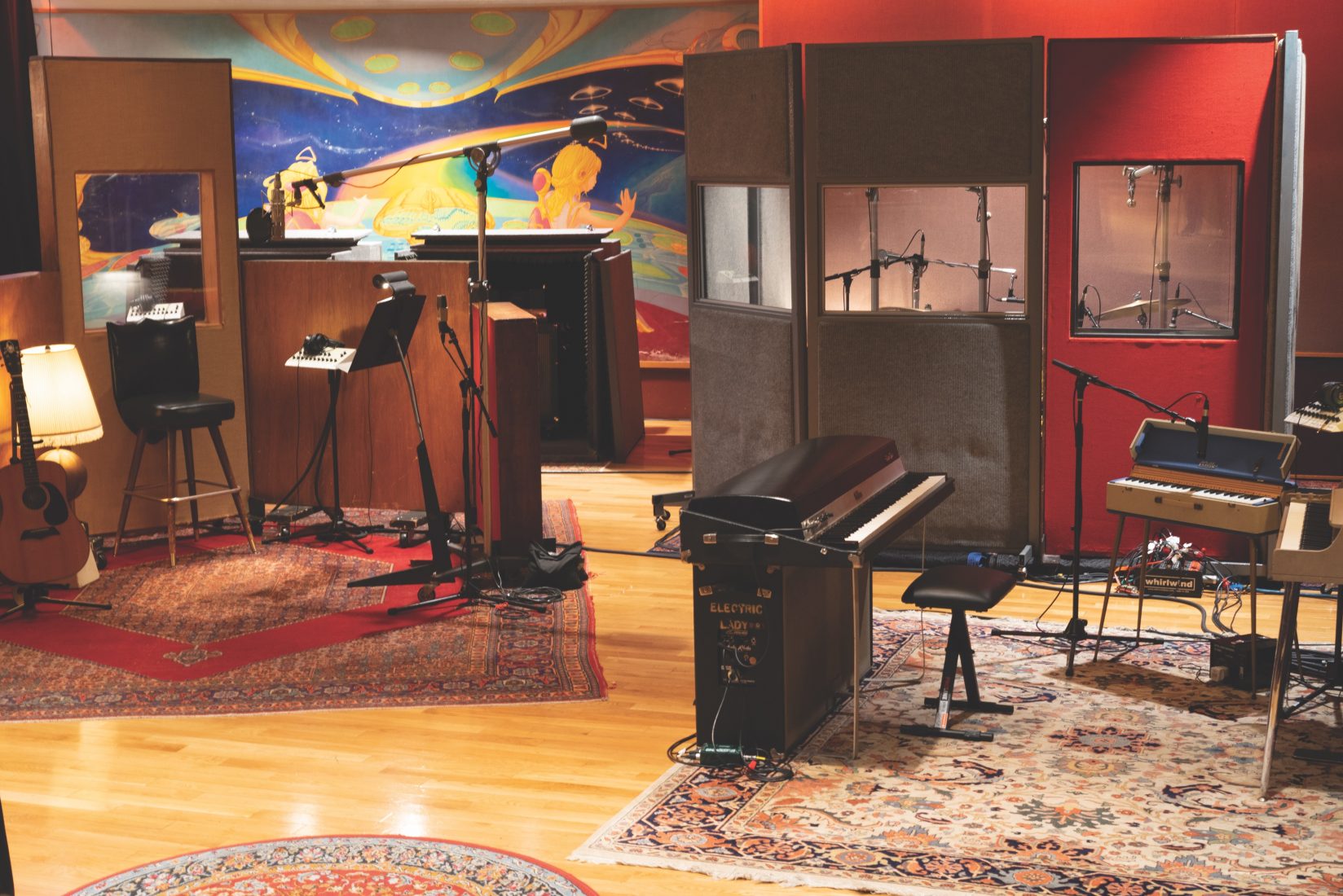
Electric Lady Studios’ Architect John Storyk tells his story

New York has more than its share of historic music spaces, from Carnegie Hall to The Village Vanguard. But the most mythical of these spaces sits in an unassuming little building on West 8th Street in the West Village-Electric Lady Studios.

“My tee shirt should read, ‘Serendipity’ because that really sums it up,” says John Storyk. His firm—WSDG—is celebrating its 50th anniversary, and we are sitting in one of the most legendary rooms in one of the most legendary recording studios in the world: Studio A of Electric Lady Studios. Storyk built this studio when he was just 22, and the project changed the trajectory of his life. 

Electric Lady Studios was the brainchild of Jimi Hendrix and his UK manager, Michael Jeffery. The building was home to a blues club called Generation, where Hendrix sometimes played as a young man. Storyk, who was also a blues musician, frequented the club as well, but that isn’t where they met. “I was in a blues band and if you wanted to hear blues you came to New York.” He points out that he probably heard Jimi play, though he doesn’t remember specifically. Hendrix eventually bought the lease for the club. “I always thought he bought it to erase his bar bill,” laughs Storyk.

In the meantime, Storyk, who had graduated from Princeton with a degree in architecture, landed a gig to build an experimental club in SoHo. “I was on line to get ice cream and it was taking too long so I grabbed the East Village Other [an underground newspaper], and was checking out the classifieds. Remember those days? Now we just look at our phones.” He saw something that intrigued him. “There was an ad that said, ‘Wanted, carpenter to work for free in experimental nightclub.’ So I get my ice cream, put a dime in a pay phone and 30 minutes later I am on the Upper West Side with these two nuts who were talking about pods, and people changing into white robes, and there’s smoke and lights and all kinds of stuff.” They needed someone to build the club, and Storyk agreed, provided he could change the plans. The club, Cerebrum, was located in SoHo, and it opened in November 1968. In January 1969 it landed on the cover of LIFE Magazine. Cerebrum attracted New York’s bold-faced names, one of which was Jimi Hendrix. And still, they hadn’t met. 

John Storyk, photo by Andrew Matusik

“I get this call from Michael Jeffery and he says, ‘Do you want to build a club for Jimi Hendrix?’ Jimi had been to Cerebrum. And I said ok. It seemed like a normal phone call. In retrospect it was not a normal phone call.” Storyk met with the team and started to design the club but at the last minute, Hendrix’s engineer, Eddie Kramer, talked them out of the club and into a recording studio instead. “It had a little control room already which was pretty unusual in 1968. So the club’s off and I wanted to kill Eddie. Now he’s one of my oldest friends and godfather to my daughter.” 

Hendrix, Jeffery, and Kramer asked Storyk to design the studio that would become Electric Lady. “I didn’t know anything about recording studios, I had never even been in one. But they said, ‘Well maybe you can learn, fast.’” So Storyk read everything he could find on the subject and took classes at Columbia. Work started on the space in 1969 and a year later the studio opened.

It was a legendary summer for the young architect. In addition to working on the studio, he was also selected by Edward Schlossberg to participate in a 6-week program with architect and visionary, Buckminster Fuller. “Bucky had a program where he selected 20 students to come in and listen to lectures and then to work on developing his World Game Theory. Eddie had been to Cerebrum and suggested me. So every afternoon we would research subjects like how much energy you could get if you harnessed the Bay of Fundy. Stuff you can get from Google now.” Storyk reflects on his schedule at the time. “In the morning I’m going to school at Columbia. I’m building Jimi Hendrix’s studio, then I’m going to Bucky’s place just down the street. Then at night I’m hanging out in Fillmore East. This all seemed normal to me. It wasn’t until the 25th anniversary of Electric Lady that I took the time to reflect on all of this and appreciate just how special it was.”

50 years later, Storyk is looking back on a career that includes building studios, stadiums, and performance spaces for powerhouse clients such as Bruce Springsteen, Harry Connick Jr, Alicia Keys, Jazz at Lincoln Center, Carnegie Hall, and New York University to name just a few. He lectures at schools all over the country, and is an adjunct professor of acoustics and studio design at Berklee College of Music in Boston. “I love to teach and mentor young people but one thing I always tell them is that it helps, when making a career, to have your first project become famous. That’s serendipity.”

Categories
Design Featured

Get a Glimpse into the World of Emily Summers with “Distinctly Modern Interiors”

Emily Summers new book from Rizzoli.
© 2019 Distinctly Modern Interiors by Emily Summers, Rizzoli New York.

Distinctly Modern Interiors by Emily Summers with Marc Kristal is a beautiful body of work that highlights Summers’ interiors over the years. With an engaging foreword by Pamela Fiori, who first fell in love with the designer’s work on a trip to Dallas during her tenure as editor-in-chief of Town & Country, the book is a must read for design lovers of all styles, modernists, of course, included.  

A Dallas home designed by Emily Summers.

From Summers’ renovation of her Dallas home, Touchstone House, designed by MIT-trained architect Robert Johnson Perry in 1965, to her stunning homes in Colorado Springs and Palm Springs, Distinctly Modern Interiors offers Summers’ fans a glimpse into how she lives. And that’s not all, the book is a fascinating read on how Summers arrived where she is now. From an early life growing up in the Midwest with a mother that wielded an astute decorating hand, the designer voraciously studied all things art, architecture, and interiors, and traveled as much as possible. Her early career alone included a co-owned firm specializing in commercial work, an award for a desk she co-designed for Dunbar, three years as the Director of Exhibitions and Funding for the Dallas Museum of Art, and a role on the Washington-based Advisory Council for Historic Preservation—a position for which she was directly recruited to by President George W. Bush.

Today, Emily Summers Design Associates encompasses a team of architects, designers, and art consultants, and consistently works with artists and creatives of all types. The interiors in this book reflect a well-curated eye, a love of color, nature, biophilic design, and above all, a love of collaborating with each and every client.

Categories
Business Featured Real Estate

From the Tallest Building to the Most Luxurious Penthouse: The History of the Woolworth Building

During the early 1600’s, European entrepreneurs were seeking new markets for their wares as well as for scarce natural resources.  In 1609, Henry Hudson was hired by the Dutch West India Company for a voyage of exploration. He came to North America and sailed up what he then called the North River, the soon-to-be-named Hudson River. Within a year, the Dutch had begun trading for furs with the Native Americans along this as well as the Connecticut and Delaware River Valleys.

It was intended as a simple trading post. At the southern tip of this settlement, the Dutch governor purchased the island of Manhattan from the Manhattan tribe and called the area New Amsterdam. However, the transaction was not a smooth one, and there was much conflict between the natives and the colonists.  Between 1626 and 1664, the main town of the Dutch colony of New Netherland was New Amsterdam. They established Fort Orange at present-day Albany to take advantage of the lucrative fur trade with the Iroquois Indians. Beginning with the ‘purchase’ of Manhattan, the town of New Amsterdam was founded as a way to help protect trading areas further upriver while providing a great port of entry.

new amsterdam map

The English took control of New Amsterdam in 1664 and renamed the area New York.  While this area was henceforth British, the Dutch applications of laissez faire economics, religious freedom and free speech had already taken root.

There are numerous examples of successful American business enterprises exhibiting this Dutch flavor, but few more so than Woolworth’s.

F. W. Woolworth was born in 1854 in the small town of Rodman, New York. Woolworth started out working for other men, most significantly, William Harvey Moore, at his store Augsbury & Moore. In the fall of 1878, Moore’s store in Watertown, New York had a counter laden with goods pre-priced at 5 cents. This was not a new idea, but was still something of an innovation. Instead of asking the store clerkto weigh out items and then price accordingly, as was common at the time, the customer helped themselves. It was quick, convenient, had a high turnover, and required fewer store clerks to operate. Woolworth realized that what worked for one counter could work for a whole store. In 1878, he borrowed $300 and opened “The Great Five Cent Store” in Utica, New York. The store in Utica failed. Undeterred, Woolworth opened a 5 and 10-cents store on June 6, 1879, in Lancaster, Pennsylvania. The shelves were stocked with attractive, but inexpensive everyday objects — pencils, napkins, coal shovels, cake tins, boot blacking, police whistles — products designed to catch the eye, but not dent the pocket book. The store was a success. Woolworth attributed this in part to “the thriftiness of the Pennsylvania Dutch.” He opened other stores. Some failed, others, like the one in Scranton opened in 1880, did not. As more stores opened, Woolworth developed a formula for identifying the best place to locate his businesses; to wit: a small town with a prosperous economy, on a busy high street, and in the commercial part of that town.


Woolworth’s eponymous stores caught on, and by 1910 F.W. Woolworth and Company had nearly three hundred Five and Ten Cent Stores, including branches on the up market Ladies Mile around 5thand 6thAvenues in Manhattan as well as seven branches in the United Kingdom.  Woolworth’s colleagues when he worked for William Harvey Moore described him as a poor salesman. He was, however, particularly good at buying and made a number of trips to Europe to look for goods to sell in his shops. While in Europe, Woolworth became captivated by the architecture he saw there. This exposure would soon influence the design of the New York skyline.woolworth building construction


The term skyscraper, according to the Oxford English Dictionary, had been around for years before it was used to describe a “high building of many stories, especially one of those characteristic of American cities.” It was used to describe tall men, race horses, sailing ships, tall hats, big hits in baseball, and even tall stories. Seemingly anything deemed lofty in stature could be called a skyscraper. The early leader in the development of the skyscraper in America was the city of Chicago. Between 1880 and 1900, a number of skyscrapers were built there, the first of which was commonly thought to be William Le Baron Jenney’s ten-story Home Insurance Building.

Iron and then steel frames made the construction of very tall buildings possible, negating the necessity of the thick masonry walls of earlier buildings. With a sturdy, yet light steel frame, buildings could be strong, tall, and elegant. It also meant that due to the relatively thin walls and increased height, a property developer might generate maximum profit from a small area of very expensive real estate. Technology at the end of the 19th century meant that skyscrapers could now be built as high as proportion would allow. A similar engineering renaissance is currently taking place evidenced by ultra slim towers taking form upon narrow footprints assuming elevations seemed impractical just a decade or so ago.

It seems appropriate that a man like F.W. Woolworth should be behind the construction of the Woolworth Building. He was keenly aware of the importance of image and brand, and he already knew where to locate a building for full effect.  Woolworth moved his operations to New York City, originally with offices in the Sun Building at 280 Broadway.  Woolworth soon decided to build his own headquarters. The man himself said that he was given the idea to build a skyscraper when visiting Europe, where he was frequently asked about the Singer Building at 149 Broadway. He realized the Singer Company had built not just a headquarters, but an international talking point. In 1908, Woolworth began talks with the Irving National Bank regarding the construction of a modest office building to house both companies’ headquarters, which would eventually evolve into the world’s tallest skyscraper, the Woolworth Building. Beginning in 1910, Woolworth began to take measures to get the building constructed, and within a few months had selected and bought a site, arranged the financing of the project, and chosen an architect.

woolworth building postcard

With City government growing and 500,000 people a day streaming across the Brooklyn Bridge on their way to Manhattan, Woolworth saw the commercial potential of the skyscraper’s location, with the building acting as a “giant signboard,” advertising the greatness of his company, and as a way to make money, leasing floors to other companies, which would in turn raise the value of his real estate.

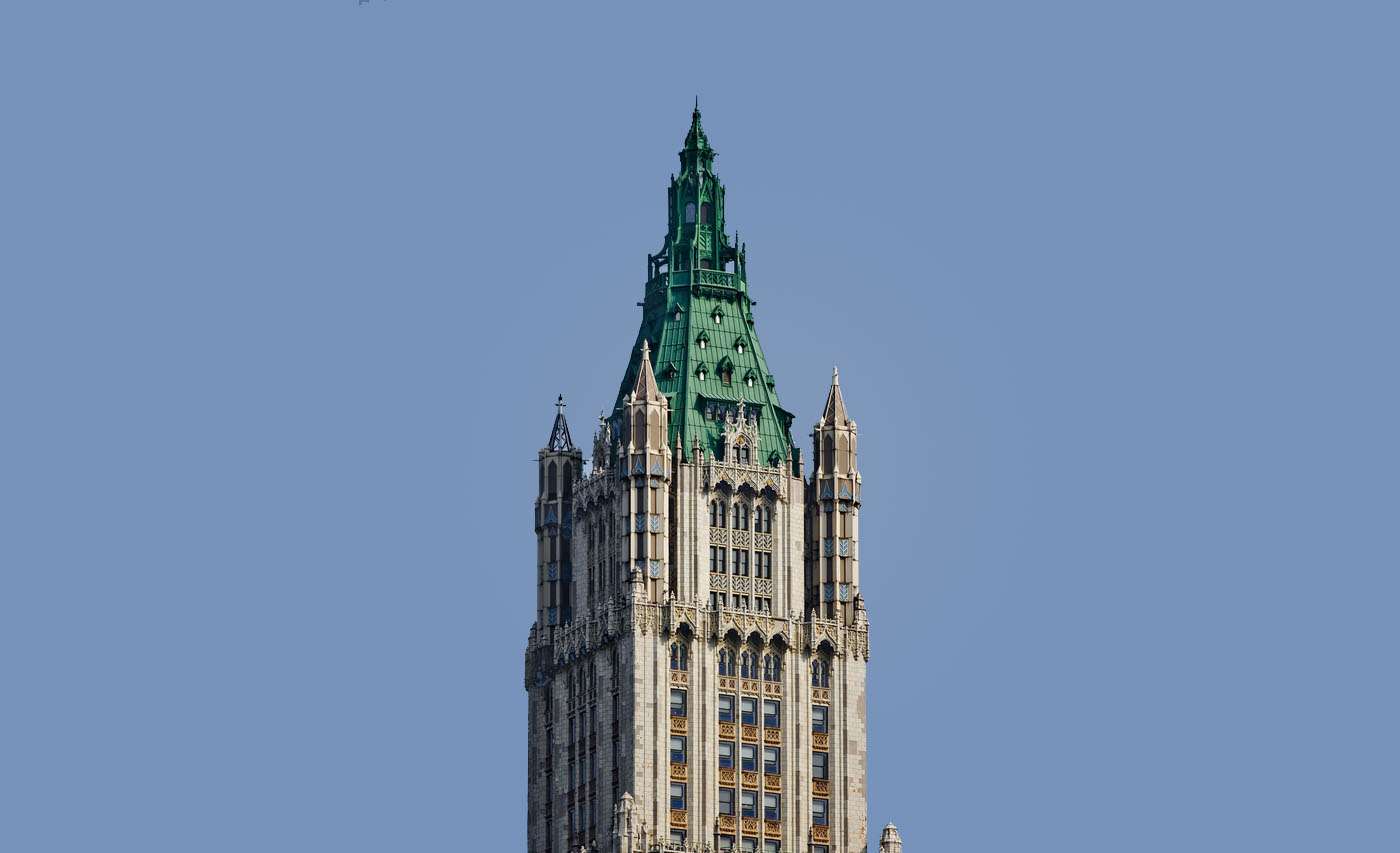
Soon dubbed the “Cathedral of Commerce,” the 60-story masterpiece was once the world’s tallest building. The breathtaking lobby contains jewel-like mosaics, filigree brass work and, hidden among the gnarled gargoyles tucked into the corners, figures of Cass Gilbert and the building’s namesake F. W. Woolworth. Woolworth, of “five-and-dime” store fame, paid $13.5 million in cash. While the lobby is no longer open to the public, the sheer majesty of the building is evident with the subtlest of glances through the front doors.  A Landmark Preservation Commission internal proprietary report in 1983 described the Woolworth Building as a 60-story skyscraper that rises 792 feet above street-level. It occupies the entire block front along Broadway, between Barclay Street and Park Place and features a 30-story tower built on a 30-story base. Its construction consists of a steel frame, designed by engineer Gunvald Aus, covered with masonry and Atlantic terra cotta and features carving and decorative motifs that are Gothic in inspiration.  It was built with a type of bracing to protect against high winds that had previously been used in the construction of bridges. It had its own power plant (a first), barber shop, restaurant, doctor’s office and swimming pool. Gilbert designed the building in a U-shape so that every office had access to daylight through one of 2,843 windows, as the corridors ran through the middle of each floor. The F. W. Woolworth Company, including Woolworth’s own marble lined office, located on the 24thfloor, occupied one and a half floors of the skyscraper until the company sold the building in 1998.

woolworth building

Today, under the architectural and aesthetic direction of Thierry W. Despont, the top thirty floors of this celebrated structure have been reimagined into thirty-three prized luxury condominium residences, crowned by the extraordinary, five-story Pinnacle Penthouse, which represents a new paradigm for penthouses in New York City.


woolworth penthouse


Categories
Culture Entertainment Featured

Banksy Comes to the Famous Houston Bowery Wall

The famous Houston Bowery wall, owned and managed by Goldman Properties, has hosted a number of acclaimed artists since its reinvention in the late 70s with a mural by American pop artist Keith Haring. Featuring pieces from artists from a full range of genres and styles, the Houston Bowery wall’s newest piece is an image of protest from the once-underground and often-political artist, film director and activist Banksy.

Banksy distanced himself from the silent political majority with his sobering works featuring vandalized phone boxes, rioters throwing flowers and several other pieces that have made him a clear and consistent voice in the artistic community. Maintaining his anonymity while simultaneously gaining a massive following, Banksy’s pieces seem to pop up anywhere and everywhere, including fine art auctions where they have been sold for nearly $2 million.

Banksy Houston Bowery Wall with Projection

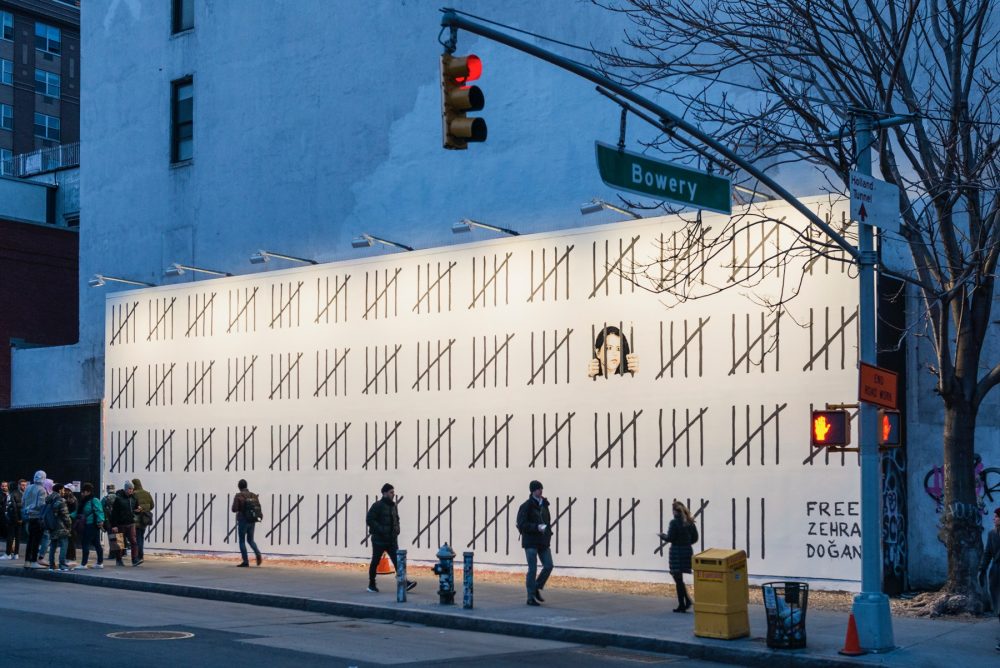
Banksy’s newest piece (the Houston Bowery wall’s newest feature) is a depiction of the time spent in prison by Turkish journalist Zehra Doğan, who was sentenced to nearly three years in prison for painting a watercolor picture of the town of Nasyabin, which was destroyed in an attack by the Turkish military, and sharing it on social media. The piece’s jarring and repetitive black and white design is only broken with a bright image of Doğan behind bars and the text in the bottom right: “Free Zehra Doğan.” At night, NYC passersby have the opportunity to view Banksy’s addition to the Houston Bowery wall accompanied by an image of the original painting responsible for Doğan’s sentencing, which is projected above the mural.

Banksy Houston Bowery Wall

Banksy hasn’t had any pieces in New York for five years, and the Houston Bowery wall is one of two pieces with which he returns back to the city and leaves his mark, with the other being a depiction of a rat running around an exercise wheel-styled clock above a former bank building at 14th Street and 6th Avenue.

For more on what’s going on in the city, visit our news section.

Images courtesy of 6sqft.com