Categories
Architecture

130 William Reimagines the Downtown Skyline

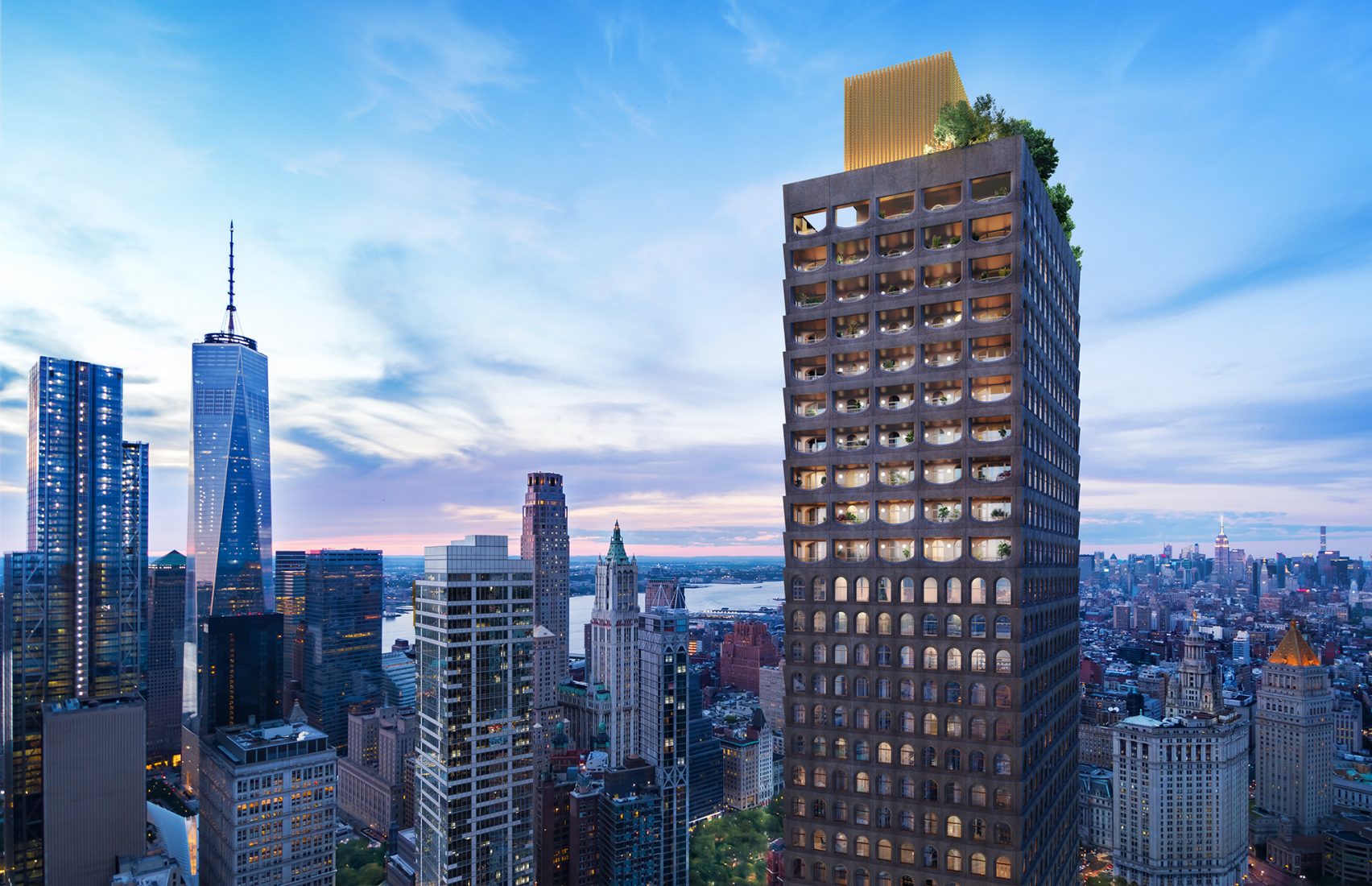
Renowned architect Sir David Adjaye reimagines the Downtown skyline with his first luxury highrise at 130 William.

New York has always been a Siren’s call for innovation—a place where big thinkers thrive. And so Lightstone, the real estate development giant responsible for 130 William’s production, gave international architect, Sir David Adjaye a ring.

“We did not want a plug and play tower,” says Scott Avram, SVP of development at Lightstone. “That was not our vision. When we met David, it was clear we wanted the same things.”

The exterior of 130 William will recall the neighborhood’s former, far grittier, stone masonry aesthetic. Standing tall in Lower Manhattan, the building will simultaneously balance a massive, black hand-cast concrete facade with airy, curvaceous windows and balconies jutting out over the city. The entire exterior will be swathed in a light texture for added visual interest. “It’s going to stand out in the skyline because we’re using a really heavy textured concrete,” explains Avram. “And you don’t really see it in black either.”

Adjaye’s use of unusual shapes and materials to fabricate a visually arresting, but tranquil space will attract designphiles and luxury hounds alike. Upon completion, the building will feature 244 residences, each outfitted with oversized, arched windows, harkening back to the era when lofts ruled Lower Manhattan, and custom designed bronze fixtures and hardware by Adjaye.

“David hand-selected the marble blocks in Italy for the kitchen and bathrooms,” says Avram. “The level of craft is all David’s brilliance; the entire building is incredibly layered with detail.”

130 William will enliven the Lower Manhattan skyline, but it will also bring more luxury shopping to the area with the addition of retail on the building’s ground floor.

“We’re really seeing a renaissance of Downtown,” says Avram. “It lagged a little behind the rest of the city, but now you can see all these great things happening, and the expanding vibrancy of this neighborhood is so exciting to watch.”

Categories
Culture Living Music

Glow Up

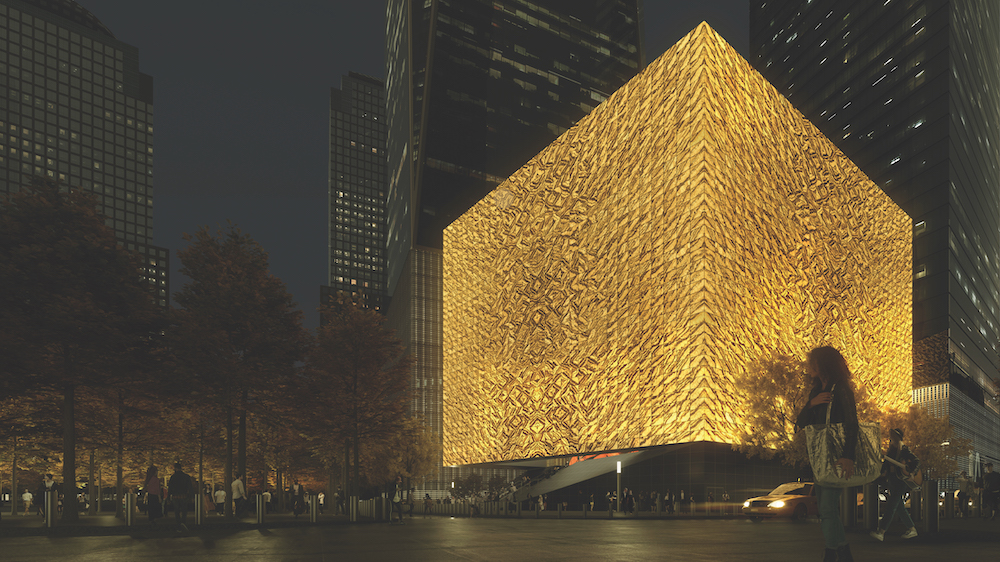
SHINE ON The PAC’s translucent marble walls will light up from the inside at night. Photography by Luxigon.

The Perelman Performing Arts Center will bring beauty and closure to downtown.

IN THE WAKE OF THE SEPTEMBER 11TH ATTACKS on the World Trade Center complex, great architectural minds gathered around the devastation to rebuild. Nearly 20 years later, their plan is coming to fruition. The Ronald O. Perelman Performing Arts Center, or PAC, will mark the final construction effort in the decades- long project.

The building, a massive cube wrapped in translucent marble and laminated with insulated glass, will let in sunlight during the day and emit a visible glow from internal lights at night. The inside will feature three modular theater spaces and a rehearsal room, all with movable walls and seating, capable of 11 unique configurations to accommodate audiences of 99 – 1200 people. With the last steel beam placed this summer, the PAC is looking to host its first performance in 2023.

“I think it’s extraordinary,” says PAC Creative Director Bill Rauch, “that there was an impulse to include arts and culture as part of the rebuilding, and we kept that impulse alive and nurtured it.”

The PAC was a cornerstone piece of the original 2003 recovery plan. The project was designed by the Brooklyn-based firm REX, replacing the earlier choice of Frank Ghery, in collaboration with theater designer Charcoalblue and executive architect Davis Brody Bond. Rockwell Group is handling the design of the restaurant and lobby space. The planners hoped that it would be the cultural lynchpin of the World Trade Center, helping to redefine Lower Manhattan as a cultural destination.

“In the planning for the recovery and rebuilding of the World Trade Center,” says PAC president Leslie Koch, “[former] Mayor Bloomberg articulated the importance of integrating the arts into a vision for Lower Manhattan as a dynamic 24/7 neighborhood with workers, residents, and visitors.

“Now,” Koch continues, “18 years after the World Trade Center plan was adopted, Lower Manhattan is thriving, with tens of thousands of residents, media, and technology firms joining the financial anchors of New York City and literally millions of visitors. As the city emerges from the pandemic, the Performing Arts Center, with Mike Bloomberg as our chair, will again be both an icon and a catalyst of New York’s resurgence.”

The PAC is also dedicated to reaching out to the community, both locally and citywide. They hired Jenna Chrisphonte as their Director of Civic Alliances, charged with cultivating relationships with community-based organizations and groups, marginalized populations, and community officials across all five boroughs. They also hope that the building can be a resource to the local community. The first level will be accessible to the public, open until midnight every night. It will feature a cafe and bar, lobby area, dance podium, and performance art space, the latter two of which will periodically have free performances.

Rauch hopes that PAC will be a symbol of its surroundings and of human resilience.“Whether the art is tragic or joyful, all the work that we do is in celebration of humanity,” he says. “There’s a reason why [the PAC] glows from within.” DT

For more information, visit theperelman.org.

Categories
Living

From Darkness, Light

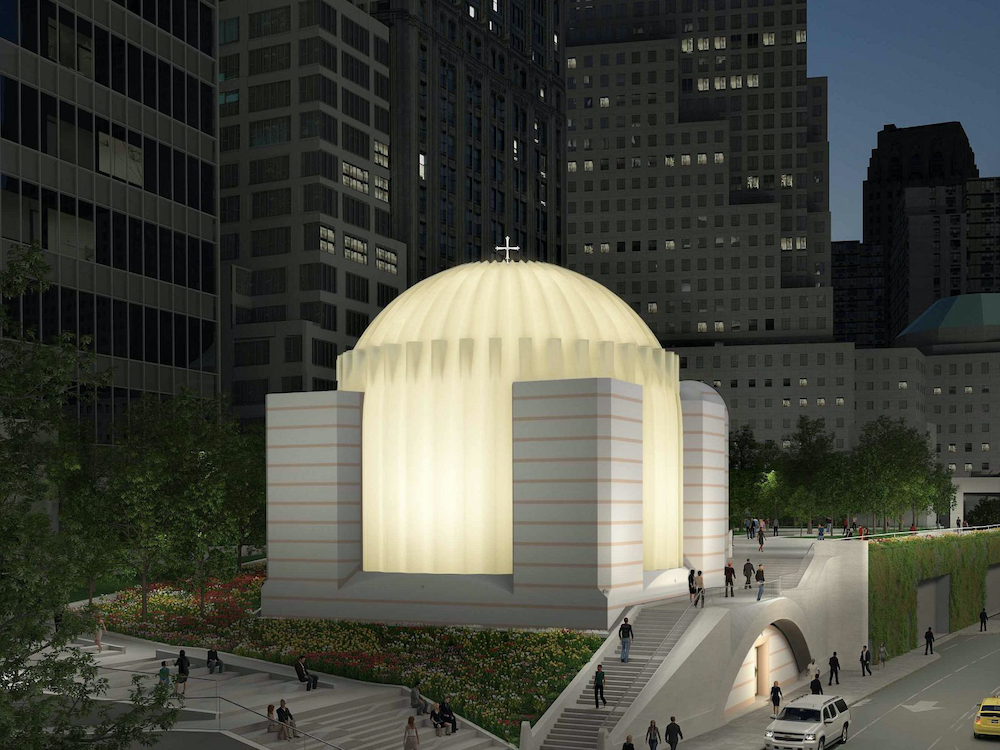
The pleated, marble-clad exterior of St. Nicholas Greek Orthodox Church and National Shrine will glow from inside. Rendering by Santiago Calatrava Architects and Engineers.

St. Nicholas Greek Orthodox Church and National Shrine will be a beacon for the world.

FAITH CAN GUIDE US THROUGH EVEN THE MOST DIFFICULT OF TIMES. On the evening of September 11, 2001, New York’s collective faith shone through the rubble of the St. Nicholas Greek Orthodox Church, which, though destroyed, still served as a gathering place that day in downtown.

“The church is reflective of the lives lost, and the light that was lost. For us, every life is a light that shines in the world, and when we lost 3,000 souls we also lost their light,” says Father Alex Karloutsos, Vicar General of the Church. Yet with faith came perseverance, and in a rebuilding process that lasted over 20 years, the St. Nicholas Greek Orthodox Church and National Shrine was redesigned, constructed, and is now set to open in April 2022.

“The rebuilding of St. Nicholas is a resurrection of those souls, the resurrection of those lives, and the resurrection of that light,” Karloutsos says, adding, “as the St Nicholas shrine lights up the world, we think about those souls, and their story, their lives. Their light is part of the St. Nicholas story for us.”

The push-pull behind the church in its 20 years of rebuilding was similar to that of the World Trade Center, which faces numerous delays and permit challenges even to this
day. Though the proposal was immediately approved by then-Governor George Pataki, there were seven to eight years of negotiations with the Port Authority, as well as another seven years of fundraising efforts which delayed construction until 2020.

Santiago Calatrava, the architect behind the World Trade Center transportation hub known as the Oculus, was selected as the designer for St. Nicholas following an invitation-only call for proposals. His design, which draws inspiration from the Hagia Sophia in modern-day Istanbul, pays homage to the roots of the Greek Orthodox Church while bringing in elements of light that give an impression of spiritual ephemerality. Karloutsos describes Calatrava’s vision as though, “He felt that it should be like a candle, and as they say, ‘Better to light a candle than curse the darkness.’”

This past September 10, St. Nicholas Church also participated in the Tribute in Light to the 20th anniversary of 9/11 by casting blue light projections over its facade, with some key members of the church including Vice Chairman Michael Psaros helping to facilitate the first public event at St. Nicholas. “With the church lit up it will draw people to it, because people always move towards the light over darkness,” Father Alex emphasizes.

When St. Nicholas Church opens to the public during Easter season in April 2022, it will act as a gathering place not only for worshippers, but for New Yorkers seeking to commemorate the history of Lower Manhattan. “We’re going to be showing icons of the resurrection of St. Nicholas Church, which will recognize first responders, firemen, Port Authority police, and the New York City police who were lost,” Father Alex says, including that members of the public “will have an opportunity to meditate, to offer prayers, to reflect.” Tours explaining the iconography and history of St. Nicholas, as well as a bereavement center offering counseling for individuals, will also be featured.

Looking towards the upcoming opening, Father Alex says, “we’re very excited that we will help bring people together, not with hatred but with love, and with the ultimate symbol of forgiveness.” DT

Follow the project’s progress and learn more about the St. Nicholas Church and Memorial opening at stnicholaswtc.org.

Categories
Featured News NYC

What is took to Rebuild the World Trade Center

The World Trade Center in a pivotal era of rebuilding

A wealth of information exists out there on what happened during the 9/11 attacks. Documentaries, films, podcasts, books, you name it: most are a few clicks away. Yet considerably less so exists for what happened in the wake of those attacks, how the World Trade Center was rebuilt and Lower Manhattan was transformed into the thriving commercial and residential neighborhood it is today.

Top of the World, a podcast produced by Muddhouse Media in collaboration with Silverstein Properties, explores what it took to rebuild the World Trade Center campus and many of the other centers across downtown from the eyes of the rebuilders themselves.

Larry Silverstein, Daniel Libeskind, Mayor Michael Bloomberg, and Mary Ann Tighe are among those who led the development, design, and policy-making which indelibly changed the downtown landscape as the neighborhood sought to recover.

Top of the World also comes in the wake of another crisis: as Kris Meyer, the CEO of Muddhouse Media describes the podcast as it focuses on “the rebuilding and recovery of New Yorkers, again at lower Manhattan, but bookended with the rebuild and the recovery coming out of COVID for New Yorkers.” Yet as the city’s resilience carries on following this very different type of public health crisis, we can see that the spirit of New York remains strong as ever. “As Larry Silverstein says, ‘Never count New York out,’ New Yorkers are resilient, strong, and they’re rebuilders. Just as every city in the country, in the world, has to rebuild and recover, I think we as a people have that in our DNA: to rebuild and recover and come out stronger and better than we were before,” Meyer continues.

Stories from the Rebuild

As the podcast goes through the initial design competition for architectural proposals of One World Trade Center into the many negotiations that took place between developers and the Port Authority, guest features speak through their experiences while on the front lines of it all, including the anecdotes, pitfalls, and personal successes that accompany any project of a scale like this. Meyer recalls that of the most interesting points, listening to Larry Silverstein talk about the research put into making those buildings the safest in the world: what it took to build those and the research on how to build a better building, a safer building, a greener building, a cleaner building,” stood out as a particularly distinct nod towards the future of resiliency in Lower Manhattan.

Other highlights including hearing from the artists-in-residence at the World Trade Center on their unique role in capturing life downtown during its rebuilding phase, as well as the perspectives of leading designers Michael Arad and Daniel Libeskind, architects of the 9/11 Memorial and One World Trade Center, respectively, and those of policy leaders such as Jessica Lappin of Downtown Alliance, Mayor Michael Bloomberg, and Rick Cotton of the Port Authority. With New Yorkers checking out podcasts on the streets, in the subways, and while in offices, the beauty of Top of the World is its accessibility: “If you want to continue to learn and get educated on what it took to rebuild the World Trade Center, you can do it anywhere you listen to podcasts,” Meyer emphasizes. 

Top of the World was produced by Muddhouse Media with Creative Director Mark Carey, Production Director Mike Gioscia, Head of Business Development Annie Powell, and producer Stefen Laukien at the helm. Top of the World is available on podcast streaming channels including Apple, Spotify, Stitcher, iHeart, Google, and Pandora.

Categories
Architecture Art Culture Design Featured

Groundbreaking Harlem Arts School Breaks Ground

Photos courtesy of the HSA

Harlem
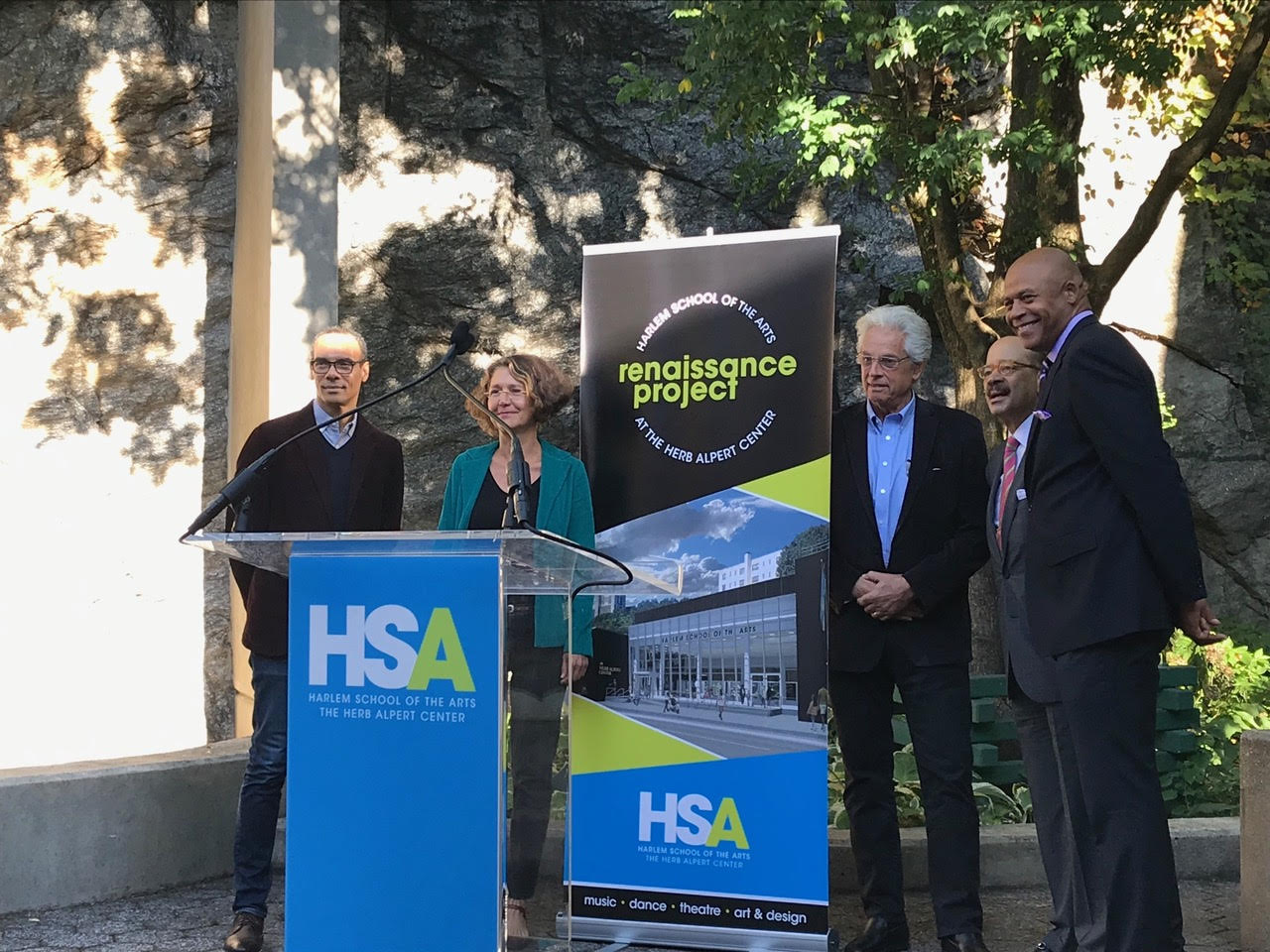
(L-R) Manhattan Borough President, Gale Brewer, Founding Partner/Director of Design WSDG, John Storyk, principal designer and director of Imrey Studio LLC, Celia Imrey, Architect of Record on the project is Eric K. Daniels, Daniels Architect P.C and Eric Pryor, President HSA

On September 13th, Harlem School of the Arts broke ground on a $9.5 million renovation project on their upper Manhattan building. The project, called The Rennaisance Project, includes the replacement of the building’s brick exterior and the renovation of the lobby, which doubles as a performance space. The building is set to debut in the Fall of 2020. 

Harlem School of the Arts began in a church across the street from its current location. Founder Dorothy Maynor organized the program in 1964 as a way to stimulate growth in the children of the surrounding neighborhoods, primarily low-income brown and black families. Within ten years the program had outgrown its confines. The current building, on 645 St. Nicholas Avenue, opened in 1979. 

Since its inception, HSA has maintained a reputation as an excellent, unique, program. It offers four disciplines–music, theater, visual arts, dance–to children from pre-school through high school. More than 1000 each year. Its alumni fill your entertainment feed, from theater to music to television, but they also fill the school. Many of the staff present at the groundbreaking, as well as department heads, were former students who had attained success and returned to teach. 


Harlem
The group of designers, architects, acousticians, construction specialists and project management team gathered his morning for the official HSA Renaissance Project Groundbreaking Event.

The renovation will be orchestrated by Imrey Studio in conjunction with John Storyk, a legendary acoustical engineer. Imrey Studio will replace a portion of the brick exterior with clear glass, opening up the lobby area/performance space. Storyk, who has worked on projects from Jimi Hendrix’s Electric Lady Studios to the Barra Olympic Park in Rio de Janeiro, helped redesign the space to make it an ideal performance space to show off the skills of the students. 

If math is not your child’s favorite and are looking for help with their calculus assignments and write –  do my math homework online or do my homework choose one of the offered disciplines by HSA. Your child will study with ease and won’t need to order essay online.

The renovation has been made possible through the donations of Herb Alpert, famous jazz musician, and his wife, vocalist and author Lani Hall Alpert. The two donated the full cost of The Rennaisance Project, part of their continued philanthropy and support of HSA. 

Categories
Architecture Design Featured

Downtown Q&A: GISUE HARIRI

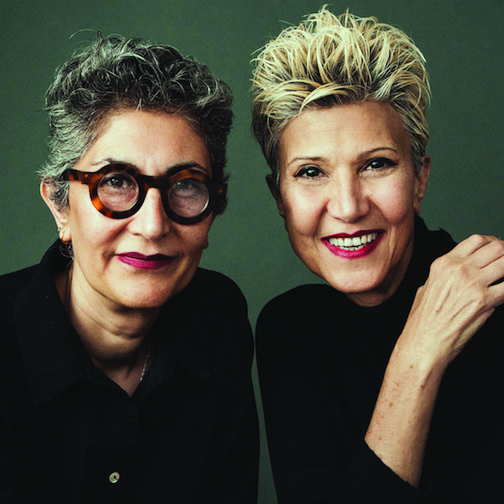
GISUE HARIRI Architects, authors, jewelry designers for Swarovski, and founders of Hariri & Hariri in 1986. Members of the Interior Design Hall of Fame. They left their home in Iran in the 1970’s to study architecture at Cornell University. In 2005, Hariri & Hariri won the Academy Award in Architecture at the American Academy of Arts and Letters awards, and their work has been included in exhibitions in the Museum of Modern Art, and the Guggenheim. Gisue Hariri serves as an adjunct professor at Columbia University, a visiting critic at Cornell, Parsons School of Design, and McGill University. Hariri & Hariri is described by critics as one of the most progressive firms currently working in the United States.

1. Name three women that inspire you, and tell us why.

Joan of Arc was one of my childhood idols, and I admire her courage, outstanding achievements, and her superhuman-like abilities—I believe that all women have the kind of power she possessed, but need to find it within themselves. Gloria Steinem became one of my role models later on. I was fortunate enough to see this longtime feminist Icon, writer, and political activist at the 2017 Women’s March in Washington DC. She emphasized that sometimes we must put our bodies where our beliefs are. This resonated with me and I have since become an activist, realizing that women have to speak up and be there physically to support one another if we want to make a change. And finally the in 2016 U.S. presidential election, we witnessed how an incredibly qualified, experienced, educated, compassionate woman—Hillary Clinton—was side-tracked by a white male, unfit to hold office. Hillary’s strength, courage, and determination to crack the highest glass ceiling will always inspire me. 

2. What has been the secret to your success? 

Being a warrior and not having fear of defeat. Examine everything and look within myself for answers and to find a way to express your own ideas and experiences in life. If architecture is about ideas and ideas are what we experience, then architecture that is created by women must be very different from architecture designed by men. Women experience and think very different than men. Our design approach and outlook on life is different, how could that not have an impact on what we create? Defining for ourselves what success is, what Architecture is, and what our goals are. For us, architecture cannot be defined as one thing, style, philosophy, or ism. It is the amalgamation of many things, which at its best can help us define who we are today and who we might be tomorrow. It is where beauty, sensuality, functionality, technology, and philosophy connect the body and mind. 

3. If you were going to pass on one piece of advice to a young woman, what would it be? In the “Old Boy” network mentality, being part of the “Boys Club” was a measure of success that defined who you were. For us, it is finding your “inner-voice,” using your Feminine-wisdom, and trusting your vision that gives you success and ultimately defines who you are. 

4. In the fight for equality, what area do you think needs the most attention? 

In my generation, most women ignored the gender-related roadblocks in our careers and now, when I look at my two daughters I realize that young women today are still dealing with the same issues! We must speak up and change this. Women can and should do a better job of helping one another. Society can and should support female-owned businesses, even if it does not make sense at times. In order to have equality, we first need equity and access to capital. The media and our cultural institutions have a duty to seek and find great, visionary women, educate them and introduce them to the larger public. 

5. What are you most proud of in your career?

I’m proud of our 35 years of hard work in a male-dominated profession and the fact that we never gave into the idea that we needed a male partner to succeed. A competition in Salzburg Austria, which we won, called JEWELS OF SALZBURG by the town’s Mayor. This residential and mixed-use complex is currently one of the largest all-encompassing projects Hariri & Hariri Architecture has completed. Winning among the world’s best known architects such as Souto Moura (Portugal), Snøhetta (Oslo), Kengo Kuma (Tokyo), Yamaguchi (Osaka), Toshiko Mori (NY), Delugan-Meissl (Vienna), Langhof (Berlin) to name a few. This 80 Million Dollar development includes 100 Apartments, exhibition space, courtyards, and underground parking Garage. It is, however, neither the scale nor the challenges we confronted that makes our Salzburg project significant. It is this relationship between architecture and nature that have created a dialogue and meditative experience that we have carved at the edge of the site’s rock face which guides and invites the public through the site. For us, architecture is more than construction of buildings—it is where our dreams transcend the realities of life. It is a commitment that will carry you to places you had never dreamed of or known could exist before. Finally, this project is significant being one of the very few new constructions permitted in the historic city of Salzburg, offering Mozart’s birthplace a destination for the architecture of the 21st century. 

6. Where do you get your confidence? 

From my inner guide, believing in myself, vision, and talent. 

7. What makes a woman beautiful? 

Having a sense of self, CONFIDENCE, and having a point of view. 

8. What gives you joy?

Sisterhood among women architects and women supporting one another. Having 102 Women in the U.S. House of Representatives.