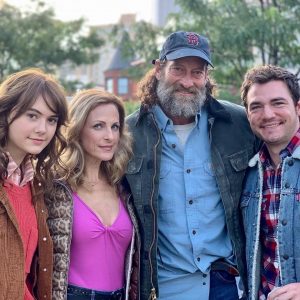
Communication between teens and parents is notoriously tough. It has been fodder for hundreds of coming-of-age stories. CODA (2021), whose title is an acronym for “Child of Deaf Adult,” tells the story of a teenager whose parents and older brother are all deaf and her struggle to find her voice and be seen through her love of singing. This simple premise alone breathes new life into a coming-of-age story and infuses every moment with detail and love.
Ruby Rossi grows up in Gloucester, MA, the only hearing member of her family. All her life, she has acted as the ears and as translator for her mother, father, and brother. When her senior year comes around, she picks choir, mostly to impress a boy. There, she finds her voice through song, a talent she had never been able to share or express with her family. As Ruby starts to move toward her dream of attending a university of the arts, her family moves toward their dream, one that relies heavily on Ruby as their translator. The plot follows the tension between the two as life forces Ruby to choose between expressing her family’s voice or her own.
CODA is a remake of a 2014 French film, La Famille Bélier, which it sometimes mirrors shot for shot. It is one of those examples of what I consider to be a justified remake. They took a look at the movie and said to themselves, “No, we can do better.” The original was a comedy, played much more for laughs, with most Deaf characters played by hearing actors. Much of the humor is at the expense of the Deaf characters. The emphasis on comedy takes the impact away from some of the strongest scenes in the story.
The core story is a simple one: a family trying to get by and a girl expressing herself and getting the boy. What sets it apart, what forms its soul, is outside of language. There are two moments in this movie that, I believe, describe the experience of music better than anything else I’ve seen. The first is when Ruby’s choir teacher, Bernardo Villalobos, asks her what it feels like to sing. Unable to describe it aloud (before joining choir, nobody outside of her family had been around while she sang, so no one had ever heard it), she expresses herself through ASL. It is a moving moment, something that cannot be said out loud. The second example, equally if not more moving, is much deeper into the story, but I think you will know it when you get there.
There is something in CODA, a certain je ne sais quoi (if we want to, like CODA, borrow from the French) that transcends language. Like music, it is something that you have to feel to understand. It demonstrates a deep understanding of its subject matter, displays stunning performances throughout, complete with great chemistry in the cast, especially the Rossi family. But that doesn’t entirely cover it.
There is only one real way to understand the heart of CODA and those making it: watch it. Please. Go to a theater if it’s showing there. Hop on Apple TV, or head to your friend’s house if they have it. Watch this movie.
We are at the dawn of Scorpio season: a time of introspection and the upheaval of emotional baggage. It is a time for forgiveness of those who have damaged our self-worth, and of the darkness we self-generate in response. We need an anthem that cuts through the nitty-gritty to ask deep-burning soul questions. Are we worthy of love? Are we ready for it? It explores the deep fear of intimacy in a world of Tinder disposability, mass anxiety, substance abuse, and the emptiness of casual companionship.
British artist Sophie Kilburn’s searing new single, Indigo Fever, proves the perfect soundtrack for your inner healing. With a roaring voice and lyric style reminiscent of compatriots P.J. Harvey, Florence Welch, and Kate Bush, she repeats the question, “How can you love your body when nobody is loving you?” It becomes an exorcism of cumulative pain, finding itself at the stage of recognition; nearly at the precipice of healing.
So I went down, down dirty
Acted too flirty
Drank too much, too soon
In a hurry
These pheromones
Lead to hearts of stone
The Derbyshire native has taken her time to craft her debut and lay the groundwork for its release. “I have been such a perfectionist with the song that I have had to force myself to say ‘enough, Sophie, it’s time to let it go!’ The payoff is sublime. She does not hold back on the pathos in her deliverance of the blues; there is a mesmerizing gravitas in her voice that commands attention. The atmospheric flair in the song highlights this demand for balance and the realization that it must come from within.
“The song is me asking how can I feel comfortable in myself, when all I can think about is how people see me?” says Kilburn. “Am I doing what I want or what I think people want me to do? It goes deeper than just wanting to be liked – it is the overriding pressure to feel needed.”
Indigo Fever was recorded and mixed by platinum-selling producer Jack Gourlay
Sophie Kilburn
(Rhodes, Caitlyn Scarlett, and Paradisia) with soaring guitar work provided by fellow artist The Last Morrell. Kilburn is now back in the studio, recording her debut EP, My Room Made Public. Her second track, Broken Thing, will be released in early 2020.
Sophie Kilburn’s true passion is live performance, and she hopes to bring her sound to the United States. Indeed, her acclaimed live shows have been gaining attention in the UK, where she has played legendary venues such as the Troubador, the 02 Islington, and the Camden Roundhouse, where she served a year-long residency and earned the status of Young Trustee. She has also shared the stage with folk legend Shirley Collins, whose melancholic English folk renditions lightly echo within the more cutting-edge art pop of Kilburn’s sound.
It is time to reclaim your own power this Scorpio season. What a magnificent debut for Sophie Kilburn. Good luck and godspeed to all our souls.
General Magic perfectly captures the childlike excitement of the most ambitious project of a generation.
Some stories are ahead of their time. Early Indian scholars and mystics may have invented string theory thousands of years before the invention of modern calculus. Leonardo da Vinci’s helicopter, or “aerial screw,” didn’t take off for another four centuries. The gaps between these visionaries and the eventual realization of their ideas grow smaller as technology accelerates, but they are much more meaningful.
General Magic, a documentary directed by Sarah Kerruish and Matt Maude, tells the story of a small Silicon Valley startup which invented the first smartphone in the ’90s. General Magic invented touchscreens, apps, mobile games, emojis, USB’s, and even tv streaming, at a time before most people knew what the internet was. Ultimately, it was not to be, but those who worked at General Magic have since become some of the biggest names in Silicon Valley.
General Magic follows the eponymous company’s employees from the company’s founding through its ultimate failure and the phoenix-like rise of those employees to the high places of the tech industry. It’s a story of obsession, camaraderie, and the pressure to do the impossible.
There are no spoilers in the story of General Magic. We’re as sure at the start that the company will fail as we were that the Titanic would sink in the 1997 film. After all, there were no smartphones in the year 2000. If you know enough about Silicon Valley, you’ll recognize the names of every employee. General Magic is the story of a group of brilliant people who came together to attempt the impossible and who eventually became some of the biggest names in Silicon Valley. Names like Tony Fadell, known today as the “father of the iPod.”
What is perhaps most impressive about the documentary is the sheer volume of video recording available for the documentary-makers. The employees, possibly sensing something monumental in the works, had hired a cameraman to record all of the goings-on of the company as it worked. Because of this, we viewers can experience the highs and lows of General Magic as the employees did. Without that one decision, there would have been no film.
General Magic just finished its showing at Manhattan’s IFC Center and is an excellent example of the kinds of independent films shown there. If you’re interested in tickets to films like General Magic, check out their website here. General Magic is also available on Showtime.
If you think that the fun stops with summer, you have been misinformed!
On September 1st, the Synergy Business Forum will bring together some of the biggest names in the world right here, to New York City. As the future changes, the markets will definitely reflect. Listen to Steve Forbes, Arianna Huffington, Robin Wright, and Jimmy Wales, to name a few, discuss their knowledge on how to become an innovative entrepreneur.
There will be lots of topics covered throughout the forum, such as motivational experiences, the future of businesses with an emphasis on finances, the stock market, and leading businesses in today’s competitive market.
The forum was created with entrepreneurs in mind, as a networking and learning opportunity. With technology and financial markets progressing at record pace, businesses will need to be savvy to keep up.
This forum is a refresher for all entrepreneurs and a way to plug back in after your summer.
Speakers such as Jack Welch will share his secrets to management and leadership, while Ray Kurzweil, recognized for his multi-voice recognition systems and the winner of a Grammy Award will speak on inventions and the future, and Guy Kawasaki, an Apple Evangelist and Venture Capitalist, will share his experiences at Apple and thoughts on investing.
But it doesn’t end there, to get a full list of all speakers and to sign up visit Synergy Business Forum’s website.
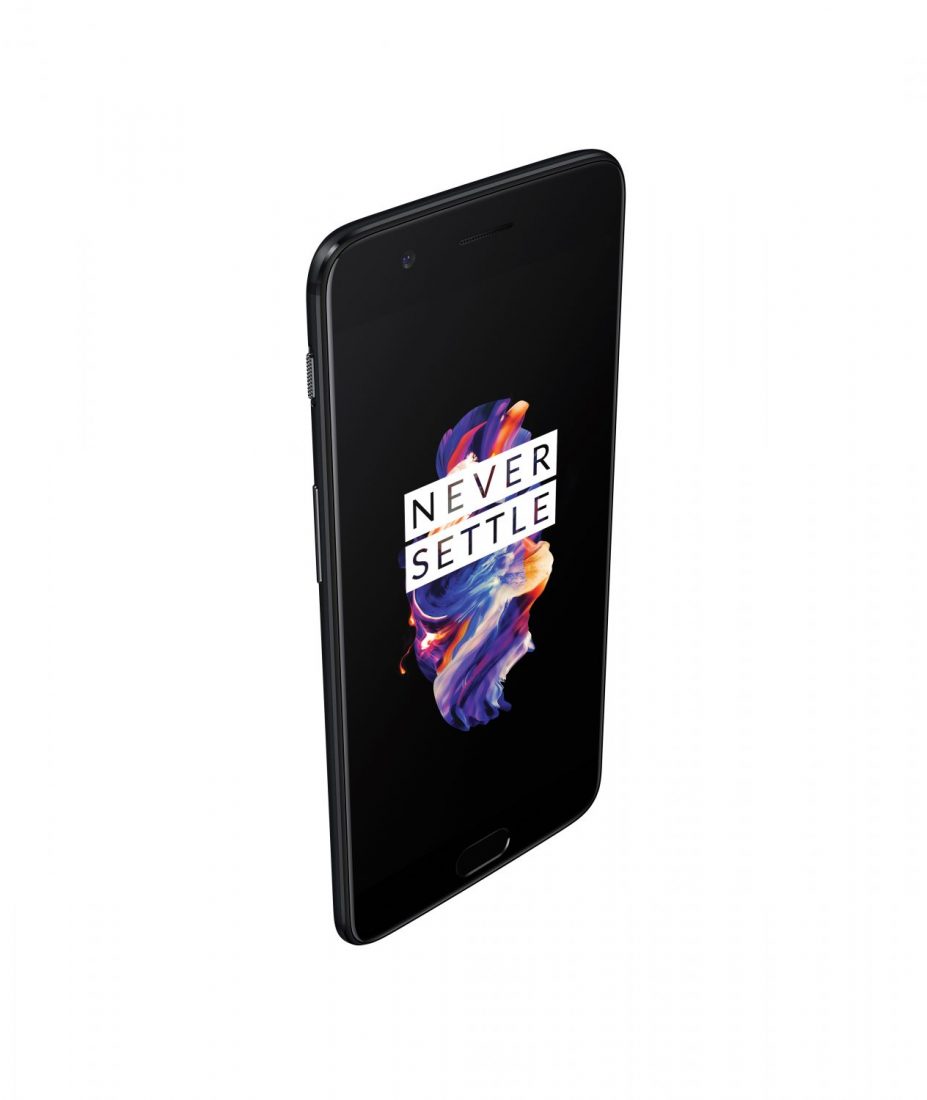
The struggle of low phone battery is over! The OnePlus 5, the latest smartphone designed and created by OnePlus, was launched to the public yesterday and boasts the fastest charging solution on the global smartphone market.
Photo courtesy of broke-ass stuart
With the use of a technology known as Dash Charge, you no longer need to charge your phone overnight. Simply pop it in for half an hour and you’ll have enough power for the whole day.
Photo courtesy of OnePlus 5
Dash Charge offers a shift in power management within your device and re-routes it from the handset to the adapter to keep your phone cooler, as it charges. The 3,300 mAh battery also lasts up to 20 percent longer than the company’s previous product, the OnePlus 3T.
Thanks to the Qualcomm Snapdragon 835 platform, the technical performance is vastly improved. OnePlus 5 draws up to 40% less power and can run numerous apps in the background without slowing down your phone.
The new smartphone also claims to feature the highest resolution dual-camera system available on the market, with a tailor-made 16MP sensor supported by a 20MP sensor. The telephoto lens can accurately determine the distance between the object and the sensor, the camera aperture of f/1.7 provides faster snaps and improves the overall image stabilization.
Initially, the OnePlus 5 was offered in a drop sale to customers who were given a special code during the product keynote event, as well as in one-day pop-up stores in New York and various locations in Europe including London, Paris and Amsterdam.
Interestingly enough, the OnePlus 5 has arrived just ahead of Apple’s 10-year anniversary for the launch of the first iPhone, which will be celebrated by the tech giant tomorrow.
Online sales for opened yesterday with two options to choose from: the Midnight Black with 8GB RAM and 128 GB storage, priced at $539.00 and the Slate Gray, which offers 6GB RAM and 64GB storage at $479.00.
Have you ever dropped your cell phone? Odds are that you have, and that drop led to its screen being cracked. Instead of feeling hopeless and clumsy, there is a wonderful alternative out there in the form of Smartbulance. Founded by Ralph Shulberg, Smartbulance is an economical and efficient repair service for smartphones. Customers are offered emergency repairs via pickup and drop-off as Smartbulance services all five New York City boroughs and neighboring Hudson County. And for those dropping off, Smartbulance also provides a bit of spectacle, as its team emphasizes its emergency concept by working out of an ambulance.
Ralph spoke to Downtown about what inspired him to start up the company, which is in the midst of tremendous growth. He opened up about Smartbulance’s new partnership with the MTA; the first kiosk under this collaboration launches in May. For more on all things Smartbulance, please visit www.smartbulance.com.
Before launching Smartbulance, you owned several Sprint stores. When did you first get a cell phone?
Ralph Shulberg: The answer to that question is quite ironic. I opened my first store in 1998 during my Junior year at St. John’s University while working on completing my undergrad degree. My mother had given me all her savings to get started with my first store. I didn’t get my first cell phone until four months after I opened because I was trying to keep costs down.
Out of curiosity, what kind of phone do you own? Or at least use regularly?
Ralph Shulberg: I currently use an iPhone 7. I have been using a 4.7-inch screen since the iPhone 6. The first reason for choosing that model is because of the size, it is extremely important to use the phone with one hand to accomplish a task quickly and move on. The second reason for that model is the operating software, iOS is user-friendly and stable. No wasting time trying to figure things out.
Ralph in action
How does Smartbulance different from the average retail location where someone can get their phone fixed?
Ralph Shulberg: From the consumer point of view — the average retail location:
1. Find a shop, be aware of their hours, and you should make sure that they have your item or part in stock before you go so you don’t waste a trip.
2. Once you have decided to use that shop you must travel to the shop by foot, train, or car. If by train you’re spending money and time to travel. If by car you still spend money and time but now you must look for parking and risk getting a parking ticket.
3. Once you get to the retail location you must give up your phone and either wait a minimum half hour, or if they are backed up you could wait up to three hours to get your phone back. If you don’t wait at the shop now you must leave WITHOUT A PHONE and come back later to pick it up. The entire process can take anywhere from an hour up to four hours of your day, a waste of time for consumer or small business.
Smartbulance offers several options for the consumer…
Curb Side Service
A state of the art Smartbulance repair truck and technician conveniently arrives at your location. Simply bring the unit or units down to the tech and they will perform the repair in the truck in 20 minutes or less per device. Loaner phone available. If you have a Smartbulance repair truck stationed near your office simply walk over and drop off your phone for repair.
Desk Side Service
In the event you cannot come out to a truck we offer desk side service. An experienced technician will come to your office, apartment, neighborhood coffee shop, middle earth, wherever and perform the repair or repairs in 20 minutes or less per device.
Automated Service
Smartbulance 24/7 is a fully automated self-service repair and recharge kiosk. Located in Grand Central – 42nd street Station, in the “S” shuttle passage corridor. Drop off your broken smartphone, get a loaner and pick up a few hours later. Or pick up a portable battery pack charger, available for purchase or rental. We are planning to install these automated kiosks throughout the NYC Subway system and office building lobby’s.
Ralph in action
Does someone need to make an appointment? Or they can just walk up for a repair?
Ralph Shulberg: You can simply walk up to any Smartbulance repair truck and get your smartphone repaired quickly. You can also make an appointment on our website, www.smartbulance.com, and we show up within a two-hour time window that the customer chooses. We are currently servicing New York City’s five boroughs, and Hudson County New Jersey.
Where did the idea for the ambulance come from? Did you have the idea for the vehicle before you had the name?
Ralph Shulberg: Retail stores have been suffering a steep decline in sales and customers due to internet sales taking over. An article published on wired.com by Davey Alba on 4/27/16 stated that the smartphone market will reach saturation by the end of 2016. Market saturation is a huge problem for brick and mortar wireless carrier stores and independent retailers. Sales continue to decline while they struggle to keep up with their expenses leading to an overall decline for that business model.
I identified this trend and timing of the market saturation early in 2012. I developed a transition strategy to downsize my brick and mortar locations down to 2, apply to business school with the end goal of entering the mobile device repair industry when I graduated. I enrolled in Rutgers’ Executive MBA program in 2013. It was during this time when I realized just how busy working professionals are. They are busy with work, family life, and many had decided to go back to school thus reducing their free time even further. My classmates constantly were showing up to class with broken devices with no time to get them repaired. I asked about their IT departments and most of them laughed and explained how inefficient the repair process was for enterprise accounts. By January 2014 I had developed a business plan on how we would use state of the art repair trucks to bring the repair shop to enterprise customers, their employees, and individual customers. So the idea for the trucks came first.
I wanted to create a brand that would outlast the smartphone trend and that would be sustainable for decades to come. The name for Smartbulance came after taking a series of marketing classes during the Rutgers Executive MBA. I learned the criteria for establishing a strong sustainable brand. The name Smartbulance doesn’t necessarily mean emergency service for smartphones. Smartbulance can eventually offer emergency services for Smart Homes, Smart Cars, Smart Drones, Smart Wearables, Smart Appliances, Smart Offices, eventually Smart Cities, and all the Internet of Things. I chose the name Smartbulance because it met all the criteria listed above, the domain name was available along with all the proper social media handles, and I was able to successfully trademark all the relevant corresponding intellectual property.
I graduated with my Executive MBA from Rutgers on May 20th took 10 days off and started Smartbulance on Jun. 1, 2015 by purchasing my first truck. It took 2 weeks to customize and we were on the road and in business by Jun. 15, 2015.
Did you ever try to get actual ambulances? Those are sprinter vans that you customized, right?
Ralph Shulberg: I had spent a lot of effort researching on what was the best option. I had considered using actual ambulances. New ones were too expensive to buy, had unnecessary features, and were not set up the way that would give the customer and the technician the best experience. Used ambulances were extremely beat up and would require a lot of customization and a full mechanical overhaul. That would be a waste of time and resources. The vans were purchased completely bare and completely customized.
I created a mock-up Smartbulance in the back of one of my retail stores based on the measurements of the inside of the truck. Then with the help of my best friend George, I proceeded to make a full blueprint for what the inside of the Smartbulance would look like. I took those blueprints and sourced all the materials from multiple vendors across the county. I showed the shop my blueprints and then delivered all the materials and asked them to put it together. They thought I was crazy, but since I was a paying customer they did exactly what was asked of them and even provided additional feedback to make the first Smartbulance better.
We took the comfort of the technician and the customers interaction with the truck as top priority to create the most efficient and user friendly design for both parties. The trucks are fully insulated to keep the technician comfortable in extreme hot and cold temperatures. The trucks have awnings to project the customer from rain or the sun when they are standing by the walk-up window. The trucks have full lighting and electrical systems, white spot light on the side and back of the trucks to create a warm inviting lit environment during the darker hours of the day. There are many other state of the art features that you’ll have to see for yourself when you call a SmartBulance for your next repair.
Smartbulance will be working with the MTA. How did that relationship come about?
Ralph Shulberg: On Jan. 8, 2016 the governor made a speech to modernize the MTA and bring the MTA into the 21st century to dramatically improve the travel experience for the millions of Yew Yorkers and visitors. (https://www.governor.ny.gov/news/8th-proposal-governor-cuomo-s-2016-agenda-bring-mta-21st-century-dramatically-improve-travel)
In January, I pitched the idea to the MTA as part of the Governors initiative to have these Smartbulance branded 24/7 fully automated self-service repair and recharge rental kiosks throughout the busiest stations in the NYC Subway. After many rounds of presentations and document submissions, the MTA agreed that this will bring high value to their customers, the subway riders. We were granted full approvals, signed the contract and we were given a high-profile location for the pilot deployment. The location for the pilot program is in the Shuttle passage at the 42nd Street Grand Central Station that connects Grand Central to Times Square. There are roughly 700,000 people passing through each month.
How exactly will you be working with the MTA?
Ralph Shulberg: The subway already has a wireless network and WiFi built by Transit Wireless. Mobile usage has skyrocketed in recent years. Mobile phone ticketing is coming to the NYC subway system and is already in play for Metro North and Long Island Rail Road. Soon, you will use your phone instead of metro cards to get to get into the subway.
Once the first kiosk goes live by May 1, 2017, the plan would be to deploy the full-service technology kiosks throughout the NYC Subway, Long Island Railroad, and Metro North. The objective is to support the MTA in keeping the commuter connected to emergency services, their loved ones, work, or whatever is most important to them.
MTA collaboration aside, what is coming up for Smartbulance? More locations? Any proprietary technology?
Ralph Shulberg: We are in negotiations with a couple of high-profile global property management firms — we can’t disclose names until negotiations are complete — focused in Manhattan to install these technology kiosks in the largest commercial buildings in Manhattan as an amenity. The amenity is quickly becoming a necessity. Like this kiosk is the first of its kind, we are working on a new proprietary technology that will enhance the consumer experience for 2025 and beyond. I am just not at liberty to discuss now.
Do you have any major goals for Smartbulance? Like a certain number of locations you want open? Or the brand having a certain reach?
Ralph Shulberg: Our goals are to deploy a national network of fully-automated “Repair, Recharge, Recycle, Replace” kiosks strategically placed in mass transit systems, corporate buildings/plazas, hospitals, universities, and airports all over the U.S. Simultaneously, we will be deploying Smartbulance trucks to service the kiosks, enterprise customers, and individuals nationwide.
Who else works with you on the Smartbulance team?
Ralph Shulberg: Part of our transition strategy was to retain the key members of our Sprint retail chain and convert them into key members of our Smartbulance team. We have all worked together for at least ten years and consider Frank, Juan, Laurence, Ray, and Fernando Jr. to be my second family! Together we have close to 100 years of experience in the wireless industry. I have had the privilege to have guidance from two of my Executive MBA professors at Rutgers, Nacho and Shen. Fellow classmates Jorge, Matt, Josh, Alec, Chris, and Alex have also been a tremendous help.
When not busy with Smartbulance, how do you like to spend your free time?
Ralph Shulberg: Free time is not something I have had a lot of in the last two years building Smartbulance. I am working every waking moment to make this the biggest success in the shortest amount of time. When I do have free time, I enjoy traveling the globe and learning about new people and cultures.
Do you have a favorite restaurant in New York?
Ralph Shulberg: Whatever restaurant my wife wants to go to is my favorite restaurant. I have an amazing, supportive wife Victoria and try to make her happy every chance I get.
Finally, Ralph, any last words for the kids?
Ralph Shulberg: 1) Follow your dreams. 2) Get the best education you can without going into debt. 3) Setbacks will only better prepare you for your next success. 4) Get a good pokerface. 5) Have a strong stomach.