Categories
Lifestyle NYC Real Estate

Why multicultural cities are great places to live and work

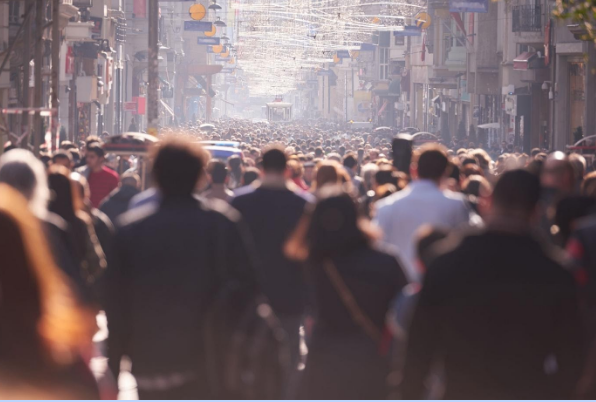
Have you ever thought about all the benefits that living in a multicultural city brings? From the conversations you have to the food you eat, the entertainment you enjoy, and the learning opportunities you have, there’s a great deal to be grateful for if you live in such a city.

You can meet more interesting people

When everybody shares the same background and has been raised with the same set of ideas, what’s to talk about? Multicultural cities are full of interesting people with engaging stories to tell. They’ll open up your eyes to the wider world and make you feel grateful for the good things you have, as well as inspiring you to discover new things. Make friends with people from different backgrounds, and you’ll find yourself rethinking aspects of your own identity, exploring things that you took for granted, and ultimately coming to know yourself better. Meanwhile, your city will benefit from the wealth of different ideas that a diverse community brings. For instance, in the workplace, it makes it easier to find solutions when problems arise and adapt to new ways of doing things. First-generation immigrants have a lot of experience where that’s concerned.

Kids get a better education

Teachers often note that in cities with recent immigrants – especially those who have escaped from war zones and other places where their education was disrupted – everybody works harder, with the immigrant kids’ enthusiasm inspiring others. Kids who come from the same city but have grown up with different cultural traditions or have had different experiences because of their race or ethnicity also improve the educational environment. As the academic Bree Picower noted, they can help identify biases in the system, which may not be evident to those with majority privilege. They can also share different perspectives, which benefit all the children to develop a richer and more nuanced understanding of the information with which they’re presented. That helps to improve the critical thinking skills they will use for the rest of their lives.

It’s a creative space

Where lots of different perspectives and traditions come together, it’s not just good for kids – it creates a fusion of ideas that provides fuel for creative work. It’s no surprise that cities like New York, London, and Toronto are creative powerhouses, nor that many of their most productive arts organizations are known for their diversity. People from different backgrounds bring different folklore and different story formats and unique musical traditions, styles of theater, and so forth. They learn from each other and find new ways of looking at the world. Different religious, moral, and philosophical ideas also enrich creative output and help it speak to diverse audiences. Creative work produced in this way has great potential to travel and be understood in different places worldwide. However, if you’re a creative person – even at an amateur level – there’s nothing like being in the belly of the beast.

Amazing things happen with food

Just as the arts benefit from a fusion of traditions, so does the cooking. From New York to old Amsterdam, there’s a history of innovation in the same areas where one can enjoy a different ethnic cuisine every day of the month. You’ll also find delightful little twists on old favorites where chefs from different backgrounds cross over. Food festivals are also a real treat in cities like this, with something happening almost every week of the year. They provide the ideal starting point for those wanting to sample the best of cuisine they’ve never tried. People who like to experiment at home can obtain a much larger variety of ingredients than they would find elsewhere. It’s not just food, either – if you like coffee, tea, or liquor, you’ll encounter many more variants, and every one of them with a story attached.

It’s easy to learn languages

Did you know that more than half of the world’s population speaks two or more languages fluently? Although most Americans know at least a small amount of Spanish, true bilingualism remains rare outside recent immigrant communities. That puts us at a disadvantage when traveling and limits our access to information, meaning that we miss out on some beautiful poetry and prose which can never be fully captured in translation. Learning another language will open up your horizons and give you a much richer understanding of your own language as you start to understand why words sound and interact as they do. It’s much easier to do so in a multicultural city where you can hear other languages every day and perhaps find native speakers who don’t mind answering your questions or helping you practice.

All these advantages make multicultural cities a great place to spend time, and they are deeply rewarding to live in. We all live richer, more fulfilling lives when we celebrate our variety.
 

Categories
Featured Lifestyle Living NYC

“Lights of Hope”

Long gone are the days when Downtown was dominated by the financial industry and the sidewalks were rolled up at 5:00 p.m., after the final call of the day. New businesses like Condé Nast, Seaport, Group M, Spotify, 10 Corso Como, Uber, Zola, have brought a vibrant, young and family-focused workforce with them.

Once again, Downtowners have banded together to send a message to the world. We have been publishing for 11 years now, and the changes we have witnessed and been a part of are epic. It’s difficult to report on the tragic news but, with tragedy, there is always triumph. Here in Lower Manhattan, like the rest of New York, we bounce back.

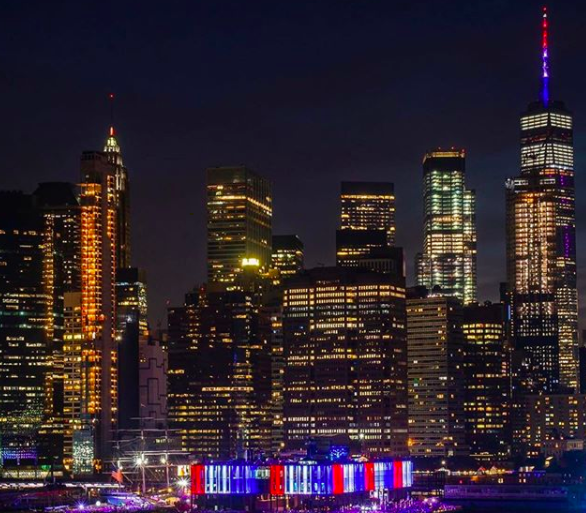
“Lights of Hope” Buildings in Lower Manhattan to Shine in Red, White, and Blue


Lights of Hope
Photo by Kirit Prajapati


One World Trade Center, Pier 17 at the Seaport District, Brookfield Place, 111 and 115 Broadway, 55 Water Street and 20 Exchange Place will be lighting up in red, white, and blue to show hope and solidarity, while other Downtown buildings are working to join them over the next several days. Buildings throughout the entire city are encouraged to follow suit and add their own “lights of hope.”

“This is a moment to band together, show pride in a tough time, and light up the Lower Manhattan skyline with hope,” said Jessica Lappin, President of the Alliance for Downtown New York. “Whether it’s red, white and blue or with a single white beacon, buildings across Lower Manhattan will light themselves in honor of our determination to endure and recover.”

One of the initiating property owners offered this:

“In this time of need, we as New Yorkers and Americans are looking for symbols of hope – both in our communities and across the country,” said Saul Scherl, President of the New York Tri-State Region of The Howard Hughes Corporation. “We Wanted to unite our community and light up the buildings of Lower Manhattan together to show our solidarity, our resiliency, and our persistent hope for the future.”

We as a city and world have gone through a lot in the past 20 years, the greatest trait is that we always come out on the other side stronger and better than before. Thank you to our leaders mentioned in this piece, and thank you to all who believe in hope!

See More

Development: Downtown’s New Diversity

Pier 17 Promises To Reopen The Waterfront

The “Big U” to Protect Lower Manhattan

Sale of 1 Chase Plaza Another Sign of Upturn in Downtown Real Estate

Categories
Featured

To Cook, Order or Dine Out For Thanksgiving

It’s the time of year… Families gather, birds are stuffed, wine is opened (note: 19% pour it before noon).

What category do you fall into? While many cannot wait to start prepping for the holidays, some feel a bit overwhelmed. The history of Thanksgiving, In 1621, the Plymouth colonists and Wampanoag Indians shared an autumn harvest feast that is acknowledged today as one of the first Thanksgiving celebrations in the colonies. For more than two centuries, days of thanksgiving were celebrated by individual colonies and states. It wasn’t until 1863, in the midst of the Civil War, that President Abraham Lincoln proclaimed a national Thanksgiving Day to be held each November.

Seventy-Five Percent of Americans choose to cook Thanksgiving to avoid family, and more than half start sipping wine while the turkey cooks – some before noon! Which category do you fall under, before noon or at the start of the meal?

Recipes for Thanksgiving Success

In addition to a few rewards for the cook, there are some serious trends among Shopkickers:

  • Thrifty Turkey: Thanksgiving doesn’t need to break the bank; half of those surveyed plan to spend less than $100 on the meal, even with 68 percent taking two to four trips to the grocery store!
  • Only a Few Fryers: Traditional turkey reigns supreme; four in five will roast their bird, and only 10 percent will deep fry this year.
  • Why Whip? More than half make pies from scratch (53 percent), but take a shortcut on the whipped cream. Four out of five people will use store-bought, with Cool Whip taking more of the pie than Reddi Whip.
  • The Right Stuff: Every state’s favorite side is stuffing – except in Arizona, where they prefer mashed potatoes.

In the days after Thanksgiving, people start to emerge from the safety of their kitchen, with a full 86 percent planning on holiday shopping that weekend. Despite the growth in ecommerce, if forced to choose, more consumers like to shop in-person on Black Friday (29 percent) versus online on Cyber Monday (20 percent). The most popular plan is to shop on both days (37 percent).

Which category do you fall into? Do you dine in, order in or cook?

Categories
Culture Living News

Labor Day Stats Courtesy Of Budweiser

Photo courtesy of Budweiser

Based on a representative survey of 2,000 Americans — ages 21 and up — as conducted by Learndipity Data Insights, Budweiser asked respondents about their eating, drinking, and leisure plans for Labor Day 2016. Some of the interesting findings:

BARBECUING VS. MOVIE WATCHING:

– 214 million Americans (67%) plan to fire up the grill this year while 115 million Americans (36%) plan to watch a movie at a theater or at home.
– Other top Labor Day activities include having some quiet time (35%), hiking and other outdoor activities (27%), attending a party (26%), and shopping (23%).

Photo courtesy of Budweiser

HAMBURGERS VS. HOT DOGS:

– Across the U.S., 150 million Americans (70% of barbecue-goers) expect to bite into a juicy burger compared to 109 million hot dogs eaters (51%).
– New trend: Barbecued chicken (40%), now edges out steak (37%) and ribs (32%) on Labor Day plates.

DOMESTIC BEER (E.G. BUDWEISER) VS. IMPORTED BEER

– 98 million Americans (44% of barbecue-goers) will drink an ice-cold domestic beer — like Budweiser — while only 49 million (22%) will drink an imported beer.

BARBECUE LOVE: SOUTH VS. MIDWEST VS. EAST VS. WEST

– Eastern states have the highest percentage of Labor Day barbecue plans (70% of all residents).
– The Western U.S. (67%) tops the South (65%) and Midwest (63%) for second place.

https://youtu.be/xICOIpChHbQ