Categories
Art Culture Movies NYC

City of Change

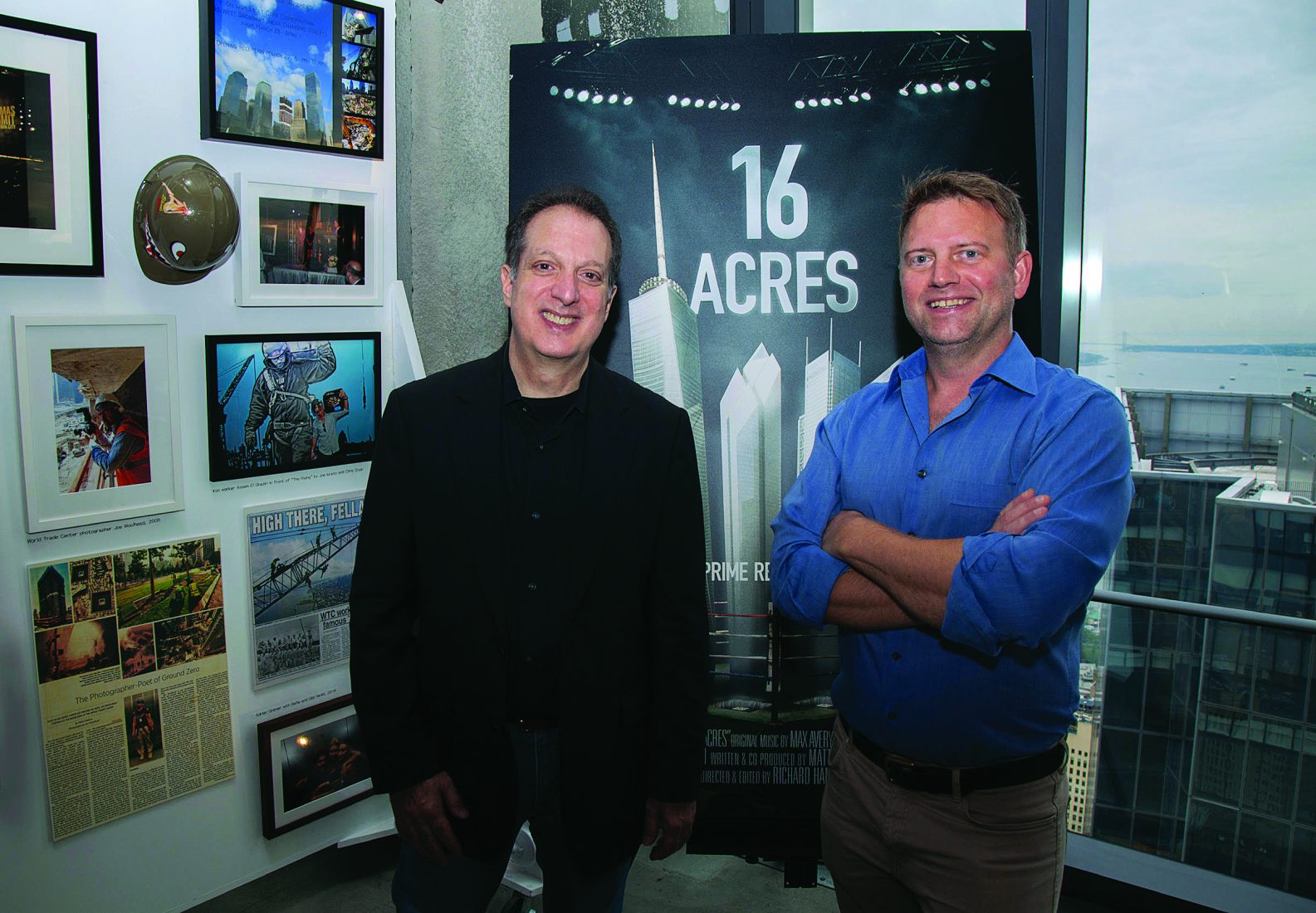
The production team behind 16 Acres, Mike Marcucci (left) and Matt Kapp, are working on a sequel documentary. Photo by Joe Woolhead.

The sequel to the Downtown documentary—16 Acres—will show the dramatic changes in Lower Manhattan

THOUGH THE TWIN TOWERS COLLAPSED IN ONLY SECONDS, it took more than 10 years to rebuild One World Trade Center, once known as the Freedom Tower. Nearly another 10 years since the release of 16 Acres, a documentary directed by Richard Hankin and produced by Mike Marcucci and Matt Kapp, and the cityscape continues to evolve, with the team now working on a sequel film.

16 Acres

In those first years following 9/11, it was unclear whether another World Trade Center would ever be built in Lower Manhattan. Contentions rose as many residents, family members, and friends of victims advocated against rebuilding on what they viewed as sacred ground. Larry Silverstein, having purchased the Twin Towers only six weeks before the attack, became a focal point for rebuilding tensions, and yet his determination and investment to erect a new World Trade Center campus is now recognized as a catalyst of Lower Manhattan’s revitalization today. 16 Acres, released in 2012, detailed the events, discussions, and expectations at Ground Zero’s 16-acre campus in the first 10 years following 9/11. From the first town halls hosted in Lower Manhattan to receive stakeholder input on rebuilding plans, to the push-pull of the architectural design and build process that continues today, the film navigates the many dynamics that come with building on “the most famous construction site in the world,” as Marcucci calls it.

Though Larry Silverstein has served as a driving force in restoring Lower Manhattan these past 20 years, 16 Acres explores the considerable resistance he faced, both from the local community as well as heads of agencies. “A lot of New Yorkers really just tuned out. They weren’t returning, it wasn’t a very happy place. There was a lot of conflict, sadness,” Marcucci recalls, pointing to local reluctance to ever attempt revitalization following the aftermath of 9/11. As Kapp adds, “all you heard was bad news here.”

Yet the documentary highlighted a distinctly New York-type resiliency that manifested through the prolonged design and build process for the World Trade Center. From the give-and-take between competing visions by master planner Daniel Libeskind and lead designer David
Childs, to the extensive permitting and revisions mandated by the many agencies involved, the story behind Ground Zero is at once complex and yet steadfastly geared towards the ending we now know today: four World Trade Center towers, coupled with a 9/11 Museum and Memorial and a transportation hub built to draw people in. “If you’re a New Yorker, you can’t not want to be involved in the telling of this story,” Kapp emphasizes.

Today, Marcucci and Kapp are working together to film a sequel to 16 Acres, a documentary exploring downtown’s historic past and inevitably bright future. “We’re also going to look at the past and project the future a little bit, all based on what’s happening now. So, it’s the story of downtown, more than anything,” Marcucci says.

Starting with what was known as “Radio Row” in the 1920s, to the future of living and working with downtown’s changing demographics, the sequel sets out to offer a broad look at the history of Lower Manhattan while building on how recent events, such as 9/11, Hurricane Sandy, and COVID-19, will affect the culture here moving forward. Yet the two producers remain upbeat about downtown’s future. Marcucci notes, good or bad, “there’s always change. It seems downtown is destined for more of that.”

16 Acres can be streamed on Epix, DirectTV, Paramount Plus, Apple TV, Amazon Prime, and Vudu. 16acresthesequel.com DT

Categories
Architecture Art Culture Living News NYC Outdoor Uncategorized

Sky Light

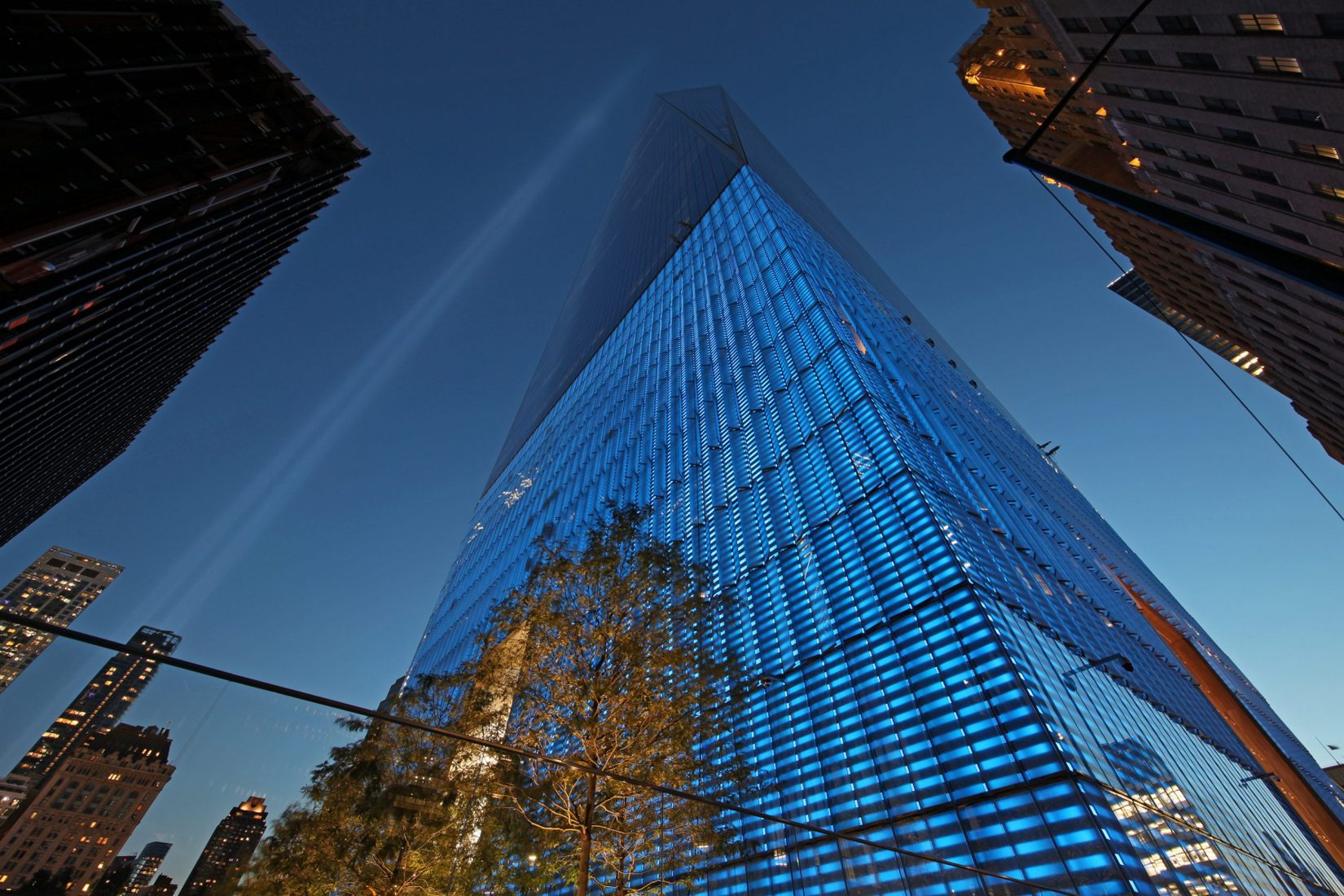
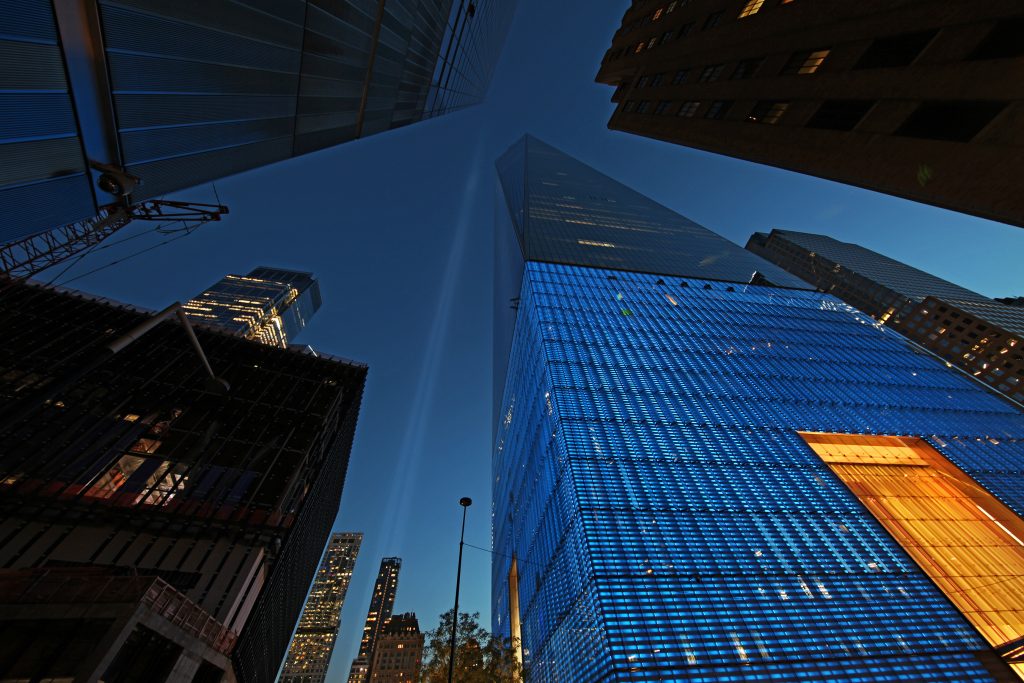
Twenty years later, Tribute in Light helps New York City heal. Photo by Joe Woolhead.

IN NEW YORK, art isn’t limited to the galleries and theaters; it overflows into the streets, draping itself across the city’s skyline. Architects, artists, social organizations, and New York’s many public agencies each play a hand in building the immersive installations that speak towards some of today’s most pressing topics. New York-born architect and artist Gustavo Bonevardi is recognized for his many public projects exploring the impact local and global crises have on our population, and in New York today he is perhaps best known, along with creative partner John Bennett and lighting designer Paul Marantz, as among the artists behind Tribute in Light, an annual light projection commemorating the anniversary of 9/11. Today managed by the 9/11 Memorial & Museum, Tribute in Light was conceived with the support of the Municipal Art Society as two beacons echoing the Twin Towers as they defined New York City’s skyline. Though the two light beams don’t represent the actual size of the towers, which were each an acre in size, the gap between the beams and the net acreage the installation occupies is approximate to the size of the towers. “What we’ve settled on is to create not the buildings themselves, but the void between those,” Bonevardi notes, emphasizing “this tension between these two vibrating pillars.” With the beacons of light reminiscing what the Twin Towers represented, Bonevardi adds that, “to my mind, it always seemed like the World Trade Center towers were sort of like a gateway, like a door to the city,” symbolizing open arms to the millions passing through each year. In the 20 years that Tribute in Light has taken place, it has acquired a steadfast following that looks to those lights each year, recalling that same message the towers once represented.

Tribute in LIght
Tribute in Light. Photo by Joe Woolhead.

Yet, Bonevardi hopes that the installation looks less at what was, and more at what could be. The Freedom Tower now erected serves as a new vision for the city’s reception of travelers and immigrants alike. Lower Manhattan on its broader spectrum has transformed from a once “beautiful and haunting” evening ghost town, as Bonevardi describes it, to a thriving neighborhood accommodating both residential and commercial tenants collaborating together to build a culture of arts, activism, shopping, and dining.

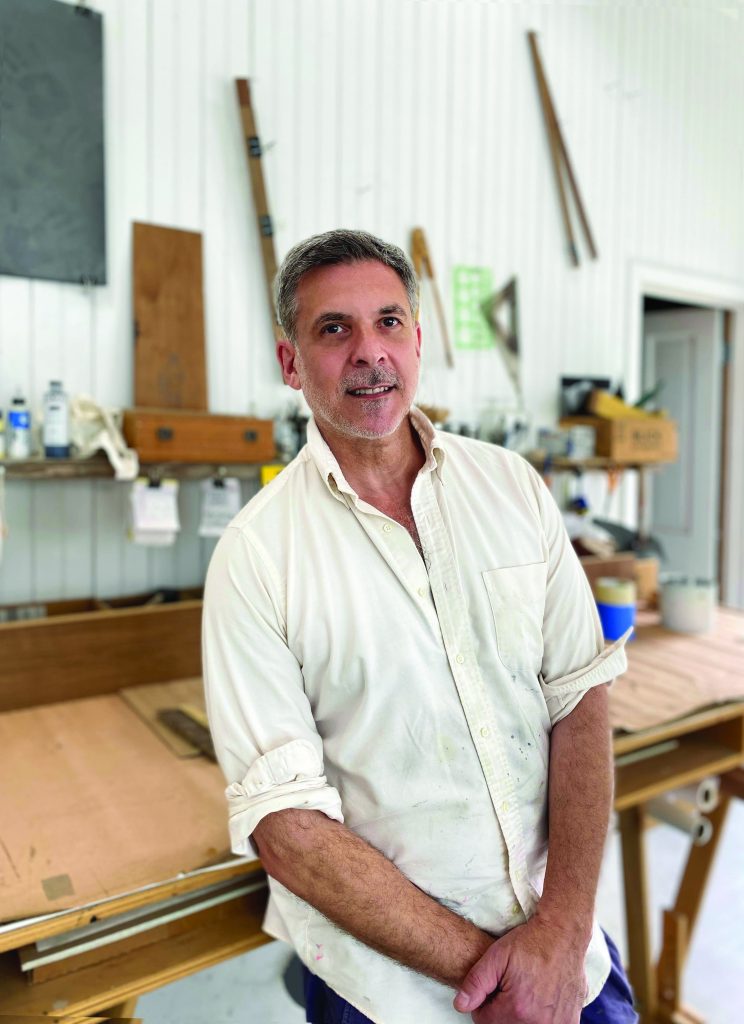
Gustavo Bonevardi
Gustavo Bonevardi. Photo by Ann Foker.

“I think that’s what New York is, it’s always fresh and new and vibrant,” Bonevardi notes, adding that when it comes to downtown’s future, “I expect it to be something unexpected. I expect to be surprised somehow. I mean, the city is constantly reinventing itself.” His most recent proposal, Missing, explores what traces the COVID-19 pandemic left on cities through footsteps echoing the many who passed away these nearly two years. Whether through such unexpected displays of resilience or delicate works of art, Bonevardi and the many other artists across New York show that this city champions perseverance and adaptability above all, underscoring what it takes to be a New Yorker.

Learn more and view a selection of Bonevardi’s works at gustavobonevardi.com.

Categories
Culture Entertainment Featured Music NYC Theater

Downtown Q&A: Hyung-ki Joo and Ron Losby

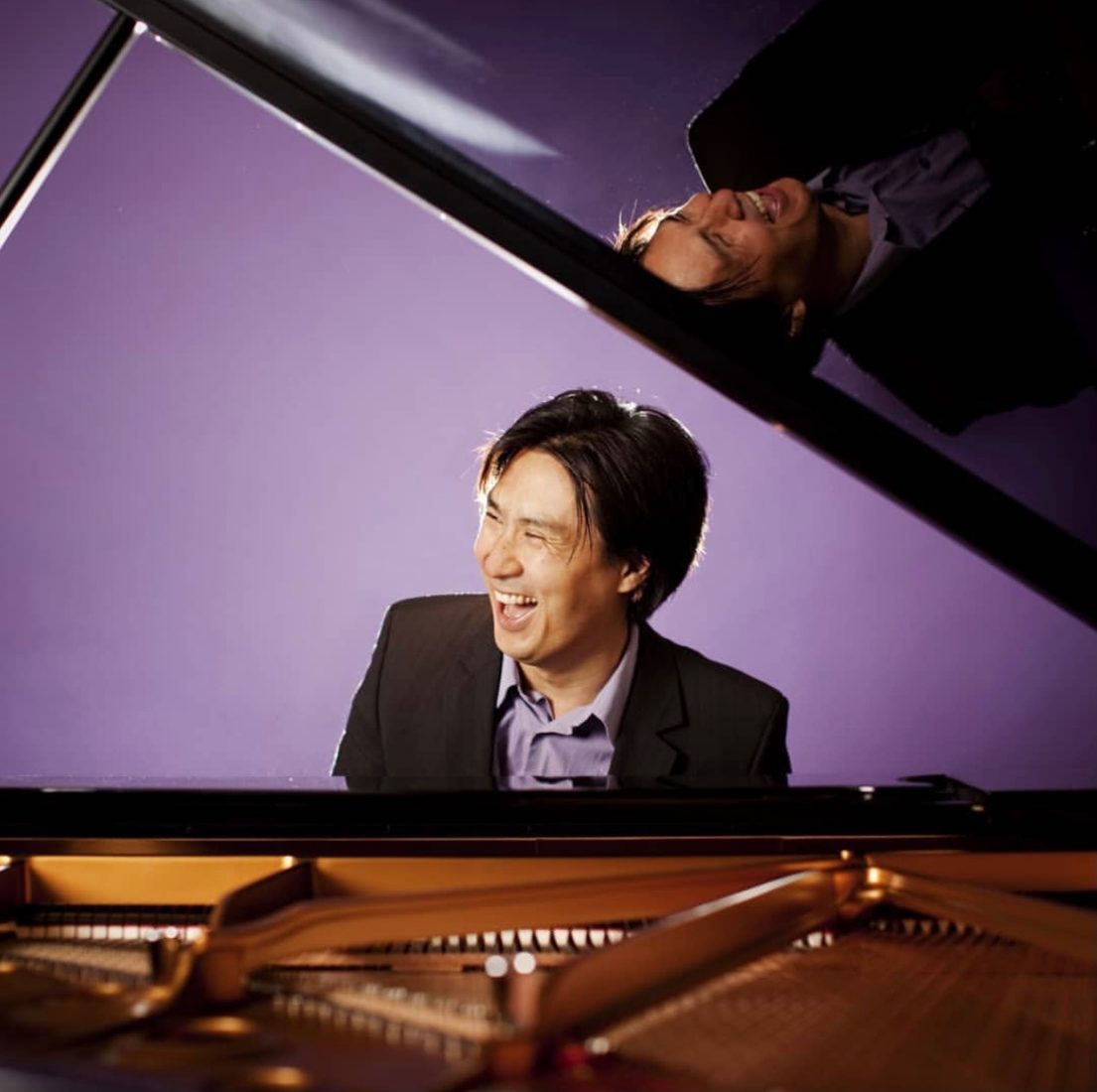
June 21st was Global Make Music Day, and in celebration, Steinway and Sons put on a special performance from several world-class artists, including British-Korean composer-pianist, Hyung-ki Joo. The show took place in The World Trade Center’s Oculus. Joo premiered his “Chandeliers”, a hauntingly evocative piece written in memoriam of 9/11, at the site at which the tragic event occurred. The premiere also marked the triumphant return of live music in New York City, coming out of the dark times of the last year and a half. We spoke to Hyung-ki as well as Ron Losby, the esteemed CEO of Steinway & Son’s for a Downtown Q&A.

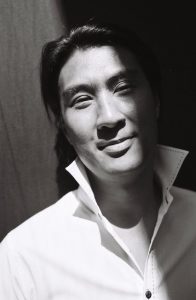
Hyung-ki Joo
Downtown: What does global music day mean to you?

Hyung-ki Joo: Ideally, we should be celebrating music every day, all over the world. Music needs to be more respected and treasured.  Since the start of the “Corona-era,” I feel as though Art and Music have been disrespected and devalued. Even before Corona hit, far too many places in the world, including the affluent Western World, had no educational classes for music in schools.  I believe that music should be a part of every child’s life and I don’t say this because I’m a musician. There are plenty of studies that show how important music is for brain growth, cognitive skills, social and developmental skills.  Music is one of the very few things that bind us as a human race. In a band, or an orchestra, you can have players of all colors, nations, and creeds, and despite their backgrounds, they can make good music together. I believe that musical literacy should be a human right, and as Nietzsche said, “Without music, life would be meaningless.”

DT: Playing your song at the memorial campus for 911 must-have evoked a profound feeling. Would you share any of how you felt with our readers?

HJ: I never imagined that “Chandeliers” would be performed at The World Trade Center, the site that inspired the piece. To see something new and positive existing in the place where so much devastation took place in 2001 is a testament to the New Yorkers and the many others who suffered on that horrible day. To me, the new World Trade Center signifies hope and light.

DT: You wrote this beautiful piece to honor the memory of 911. How did this come about, and how long did it take you to write it?

HJ: 2001 was a year of immense change throughout the world as well as for me. After 9/11, everything changed. I was living in New York at the time and one of the things that struck me most profoundly was, despite the darkness that was towering over us all, light prevailed. I remember vigils and ceremonies aglow with candlelight and lanterns. There was a genuine spirit of solidarity that was touching to witness and experience; especially in a city where aggression and apathy are normalized. I pictured swirling chandeliers hanging from the skyscrapers and thus I began to write this musical sonnet for piano: Chandeliers.

DT: Where were you on 911 and how did you learn about this tragedy?

HJ: I was living in New York at the time. Everyone was glued to TV sets- it was impossible to miss.

DT: What was it like having your music played in our stunning Oculus?

HJ: I was honored that my new book of 10 piano pieces, under the album title, “Chandeliers”, was given a World Premiere at the Oculus. The premiere was given by 8 pianists from my Alma Mater, The Manhattan School of Music.

The 8 pianists were: Ryan Bridge, Xiyu Deng, Elham Fanous, Claudia Hu, Yan Li, Keiju Mori, Yi Zeng, William Zhang.

“Chandeliers” was performed beautifully by the marvelous pianist, Elina Christova, who also studied with me at Manhattan School of Music.

DT: What is your favorite place in downtown New York City?

HJ: Well, the Oculus is definitely one of the most stunning works of architecture in downtown, NYC.

I love the Wild Horses of Sable Island Gallery in Soho.

And one of my all-time favorite places to relax and enjoy a meal is the Olive Tree Cafe in Greenwich Village.

The “Earth Room” is also a unique place I quite enjoy.

DT: You are not only known for your music but also your comedic zaniness, we hear that it’s infectious. Where does this come from, and do you always include this in your performance?

HJ: Victor Borge said that “Laughter is the shortest distance between two people.” Classical concerts alienate audiences because the atmosphere is too elitist and intimidating. Concert Halls, presenters, and Orchestras need to find a new way to connect to today’s generation or the halls will be empty soon. It is 2021, and we are playing music that was created between 1700 and 1950. Laughter is healing, and it helps to put people at ease. I don’t always include “comedic zaniness” in every performance I do, but it is important to make the audience feel at ease and welcomed. In the time of Liszt and Schubert, there was no divide between the artist and the audience, and it is a shame we have lost this tradition. Composers like Mozart, Rossini, Haydn, Prokofiev, and many others, did not put on a comedy hat, and then put on a serious hat. Humor and Non-Humor [were] just two sides of the same coin, and those composers didn’t take their craft less seriously when they were writing humorous music. I always found that classical musicians do not take the humor in music seriously enough! When I started my duo with Aleksey Igudesman, we simply wanted to make concerts that we would want to go to ourselves. And to have the element of surprise back when we go to concerts, I think that everyone should produce concerts that they would like to attend themselves. Just think of the variety and fun we all will have!
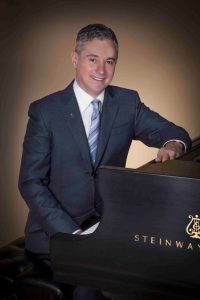
 

Ron Losby

Downtown: How did Steinway become involved in this concert at Oculus?

Ron Losby: I heard about the event from Hyung-ki Joo, who is a Steinway Artist and a good friend. “Make Music Day” is obviously something that Steinway & Sons wholeheartedly supports, with such a noble goal of spreading the beauty and power of music to everyone. Upon hearing of the event, I let Hyung-ki know that we could support their piano needs for the event – and assist in any way needed. 

DT: Steinway has had a stellar reputation since it opened more than 150 years ago, tell us your secret?

RL: For Steinway & Sons, the secret has really been [the] continuous improvement of our piano and innovation. Since the early days, Steinway has innovated within its factory – always utilizing the best mix of handcraftsmanship and technology to build a piano that is always a little bit better than the one we built last year, the year before that, and so on. But we have also innovated with our product. The clearest example there is the introduction of Spirio, the world’s finest high-resolution player piano. Now, with the touch of an iPad, even non-pianists can listen to concert-level performances on demand, on an acoustic Steinway. And for the pianists out there it is, of course, still a fully playable Steinway.  

DT: We have worked with many celebrities who were brand ambassadors for Steinway and Sons, how are they chosen?

RL: Steinway Artists apply to be on the roster and a very interesting thing is that they are not paid endorsers, but choose to be Steinway Artists for the love of their craft and the instrument that we provide. All Steinway Artists actually own a Steinway, which is a part of the requirement to joining our roster of talented and acclaimed pianists. 

DT: What is it like to be in The Oculus as a grand performance space?

RL: The Oculus is a spectacular feat of design and engineering – creating a space that is beautiful and modern, but also very practical and usable. It has a certain look to it that is a part concert hall and part coliseum … so it seemed a very appropriate space for today’s musical performance meant to be shared with the masses. 

 For more Downtown Q&A, click here.
Categories
Featured News NYC

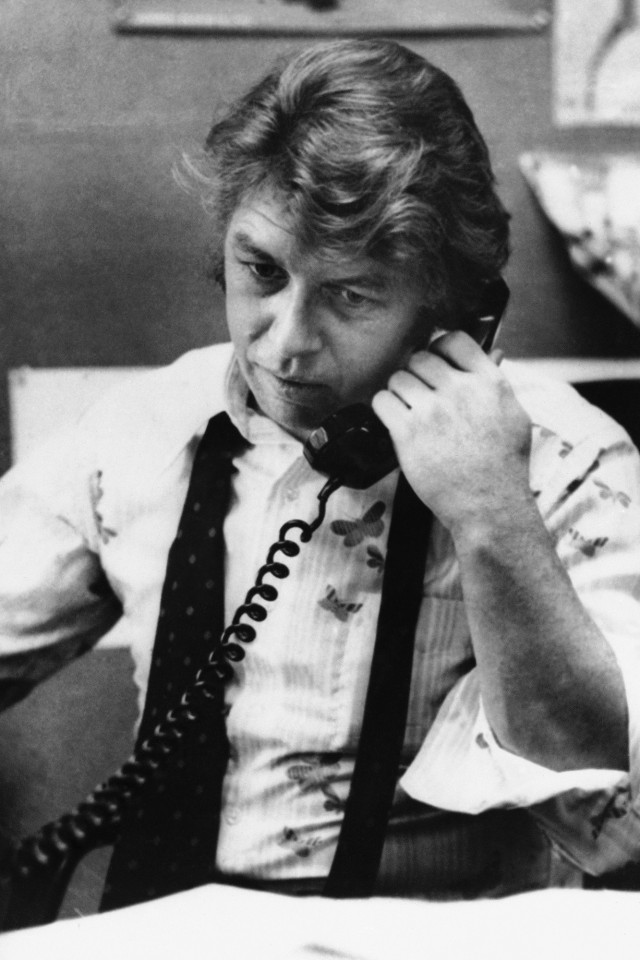
Pete Hamill The Quintessential Journalist 1935-2020

My literary hero is Pete Hamill

by John Esposito

His storied career as an acclaimed journalist, iconic newspaperman, editor of both the New York Post and the New York Daily News, best selling novelist, superb essayist, respected educator, lecturer, and screenwriter leaves behind a rich and enduring legacy that the journalism world can only hope to emulate. For many, he was the living embodiment of New York City who chronicled the life of New Yorkers more than anyone of his generation.

Pete Hamill served as my major influence and inspiration in pursuing a writing career. I loved his newspaper columns, novels, nonfiction, memoirs, and countless magazine essays.

He never forgot his Brooklyn roots and wrote powerful pieces that identified with working-class men and women including the suffering and downtrodden in our society.


Pete Hamill The Quintessential Journalist 1935-2020

Mr. Hamill’s writings are filled with honesty, real nostalgia, not sentimental drivel, and never syrupy sweet. He was proud of the writing craft and served it with great honor. He was immensely proficient as a hard-hitting tabloid columnist reporting on international and national events, local city politics, America’s urban riots of the 1960s, murders, strikes, the 1966 civil rights march, the Vietnam war, conflicts in Nicaragua, Lebanon and Northern Ireland, and the September 11, 2001 terrorists attack at the World Trade Center, as much as he was an equally skilled generalist in writing and conversing about the likes of Jackie Robinson and his beloved Brooklyn Dodgers, New York City history, Diego Rivera and painting, jazz, Ernest Hemingway, Jackie Gleason, Madonna and Howard Cosell, a love of newspapers, newsrooms, typewriters and deadlines, Milton Caniff and comic-book heroes, famous women in his life: Jacqueline Onassis, Shirley MacLaine, and Linda Ronstadt, talking boxing while mentoring Jose Torres, the education of Mike Tyson in prison, Greek coffee shops, the Great American Songbook, Paul Sann, editor extraordinaire, the indispensability of public libraries, drinking at the Lion’s Head, Billie Holiday and the blues, life on the Brooklyn stoop and playing stickball on streets empty of cars, the artistry of Bob Dylan and John Lennon, living in Mexico, Ireland and Rome, friendship with Robert Kennedy, the Knicks, sobriety, the art and cultural treasures to be found in museums, and the voice and tenacity of Frank Sinatra.

Pete Hamill The Quintessential Journalist 1935-2020
Pete Hamill

I had the good fortune of knowing Pete Hamill since 2001.

Our association resulted in five published interviews and book reviews for Downtown, My Manhattan, a memoir (2004), a required reading in certain New York City public schoolsthe best-selling novels, North River (2007) and Tabloid City (2011); the short story compilation, The Christmas Kid, and Other Brooklyn Stories (2012), and the national best-selling book essay, Why Sinatra Matters (1998 and re-released 2015). His masterpiece novel, Forever (2003), has taken its place among the great works of historical fiction, with New York City as the centerpiece. This tome is destined to stand alongside his most famous best-sellers, A Drinking Life (1994) and Snow in August (1997).

At the time of his passing on August 5, 2020, Pete Hamill, age 85, was writing a memoir about growing up in his native Brooklyn, where he had recently returned to live after achieving fame and notoriety in Manhattan and becoming a legendary journalist. It was to be titled, “(Returning to) The Old Country.” Mr. Hamill’s affinity for New York City, his proud Irish-American heritage, and proclivity to be the best possible newspaperman one could be, were only surpassed by the love and devotion he had for his wonderful and supportive wife, Fukiko Aoki Hamill, and the large, close-knit family that adored him.

Pete Hamill will be remembered best by those who knew him as a regular guy, a kind-hearted gentleman, who was always patient and giving of his time to young writers. I have never known anyone who disliked the man.

His politics differed from mine at times but that never mattered to me.

It was all about the writing, friendship, and respect. Mr. Hamill had a long list of friends and admirers. He was someone with whom you felt an immediate connection, whether meeting him for the first time on the Lower Manhattan streets or from reading his books and columns. In many respects, he personified the everyman, but we all knew he was so much more. When final days came calling for certain celebrated individuals who received high marks in various fields of renown, their greatness was sometimes embellished and exaggerated. That is unquestionably not the case when considering the merits of Pete Hamill. He is truly an American gem, whose contributions as an outstanding journalist and an admirable man will always be cherished.

In tribute to Pete Hamill, the name of my website, “Piecework Journals,” www.PieceworkJournals.com was borrowed liberally from the book title of his excellent work, Piecework (1996), a collection of brilliant essays. Thank you. Pete.

Byline: John Esposito is a freelance journalist based in New York and New Jersey. His work has appeared in various newspapers and magazines including USA Today, The New York Times, The Star-Ledger, The Philadelphia Inquirer, Greenwich Time, Stamford Advocate, The Record, Downtown-NYC, New Jersey Newsroom, The Irish Echo, UNICO, and Rosebud. Mr. Esposito maintains a website at www.PieceworkJournals.com


Categories
Featured News NYC

FIREFIGHTERS SELF-ISOLATE TO KEEP THEIR FAMILIES SAFE

IT’S BEEN DIFFICULT STAYING AWAY FROM EVERYONE


The firefighters of Lower Manhattan’s Engine 4/Ladder 15 have been through some pretty tough times. The company lost about a dozen men during September 11, having been one of the first companies to respond. In 2012, the firehouse was seriously damaged in Superstorm Sandy after a six-foot wave of floodwater broke through the door. John Leary, a lieutenant in Ladder 15, is certain he and his fellow firefighters will get through the COVID-19 pandemic, too. “The FDNY has been through a lot throughout the years,” he told the Downtown Alliance. “This firehouse especially has been through it all. We’ve learned a way to tackle the next thing.”

The daily routine has changed a little at the firehouse. “It’s not what it used to be,” Leary said. Instead of putting firefighters on frequently-switching shifts, they keep the same groups together to minimize contact. In between shifts, everybody sanitizes. “We clean the firehouse like crazy,” Leary said, noting that the firehouse provided firefighters with sanitizing equipment. There are also fewer trips outside the firehouse since the FDNY has cut back on building inspections and other routine tasks to keep firefighters safe.

And when firefighters do go out on emergency calls, everyone wears masks. New Yorkers have been good about giving firefighters space and social-distancing, Leary said, but the anxiety still lingers. “It’s definitely a different feeling now,” Leary said. “It’s a different feeling to walk into somebody’s apartment and wonder, Could they be a person who has COVID?

One of the most difficult changes comes when firefighters leave the firehouse;

at home, many try to isolate themselves from their loved ones in case they were exposed on the job. A few firefighters at the firehouse have tested positive for COVID-19, though so far everyone appears to have recovered. “I’m trying to stay away from my family,” firefighter Frank Rupp said. “I wait for them to finish eating and make food for myself. It’s been a little difficult staying away from everyone. I don’t talk to everyone as much as usual.”

Still, Leary has been heartened by the city’s response, particularly the respect paid to health-care workers on the front lines.

“We are doing the ‘clap out’ for the nurses and the doctors,”

he said. “I’m still part of the response, but it also feels good to be on the side of the people giving cheers. It’s like paying it forward.”


Downtown Alliance 

Categories
Culture Featured Movies

Review: In The Shadow of the Towers: Stuyvesant High on 9/11

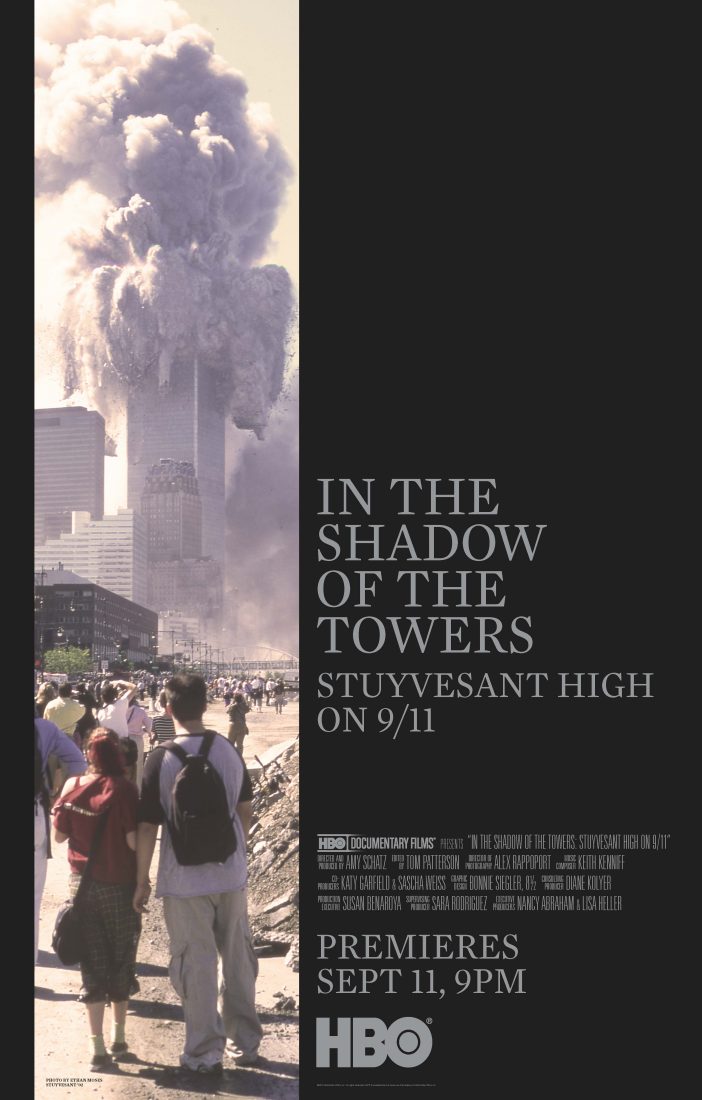
In The Shadow
Poster courtesy of HBO

I was ten years old on September 11th, 2001. It was a big day of firsts for me. It was, for example, the first time that I experienced a feeling of unreality surrounding an unbelievable moment. I was, however, very young and 130 miles away, watching the collapse of the towers on television at a family friend’s house after my Jewish elementary school evacuated in the hour after the first attack. 

“In the Shadow of the Towers” focuses on the experiences of students at Stuyvesant High School, a commuter school only a few blocks away from the twin towers. Through interviews, pictures, and videos, they retrace that day from the perspective of children close enough to see the planes hit the twin towers from the windows of their classrooms, and the reflections of those students who have long-since grown up. 

The documentary, which is only half-an-hour long, doesn’t expand much past that day. It spends a few minutes in the end on reflection, from the bigotry experienced by some of the students of color–many of whom were the children of immigrants–to the ways they memorialize that day. The film feels almost understated in a post-9/11 world saturated with portrayals, documentaries, and commentaries. That focus aids the narrative. It knows you know the story, so it skips the broad strokes. Instead, it offers intimate recollections and personal disclosures of how that day changed the interviewees, and the ways they saw their world change in its wake. 

It is likely not a mistake that many interviewees for “In The Shadow” were the children of immigrants. The film isn’t afraid to contrast the emotional impact of the 9/11 tragedy on these students with the otherizing they experienced after the fact. Two of the men recall a man shouting anti-muslim slurs at a classmate as they fled the destruction. She was wearing a hijab, and the man shouted at her to “go back where she came from.” One of those two men became a rapper, and the documentary ends on one of his songs. The lyrics recount the experience of his middle-eastern family shopping for American flags after 9/11, both out of patriotism and the desire to show that they belong. It’s a sentiment echoed by other interviewees, all of whom make a call for unity and an end to post-9-11 racial paranoia. 

The story of “In the Shadow of the Towers” is one of vivid recollection and resiliency. It’s the story of the last, youngest, people to clearly remember the pre-9/11 United States. These teens were as much at the epicenter culturally as they were physically– I’m sure some of their classmates signed up for the subsequent war in Afghanistan. “In the Shadow” is a perfect vehicle to share their experiences. It is an important watch for those able to reflect on such things as the 17th anniversary approaches. 

In the Shadow of the Towers: Stuyvesant High on 9/11 will air on HBO tomorrow, Wednesday September 11th, at 9:00 pm Eastern Time. The film will be available on HBO NOW, HBO GO, HBO On Demand and partners’ streaming platforms.