Categories
LA Music

Raising The Bar With Hank Fontaine

Hank Fontaine is ready for revolution.

On New Year’s Day, the Los Angeles musician trumpeted a public call for creative reformation:

You’re a creator? Awesome. Create. This idea that you’re supposed to be a living, breathing “brand” is gross and someday it’s gonna look really dated. Whether you paint, write, sing, or complain, own that it’s an extension of your soul, not “content” that you excrete on a daily basis like a robot. Can we please make 2020 the year that branding dies?

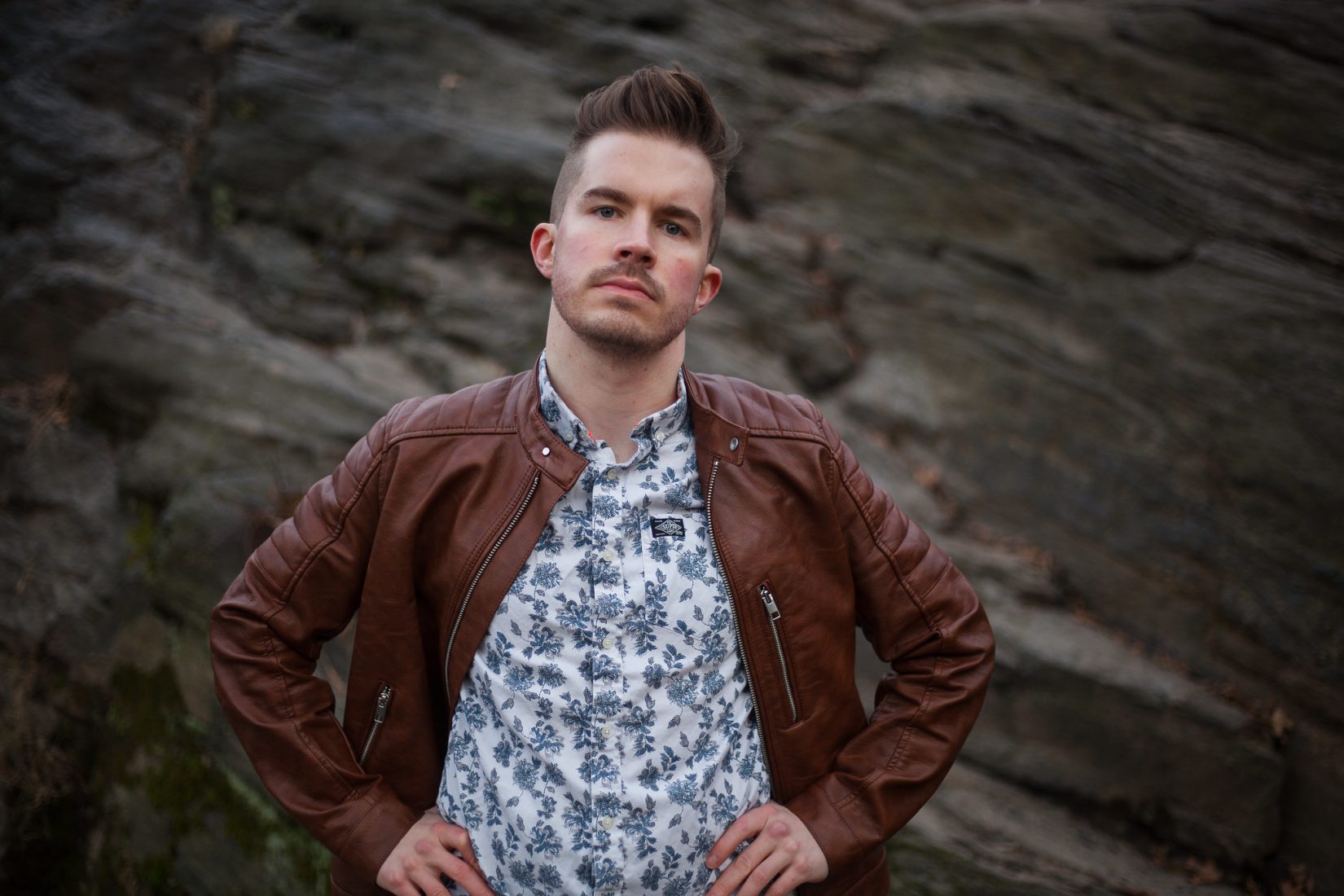
Hank Fontaine is a powder keg in an industry bursting with soul peddlers thirsty for fame and power. He refuses to be contained. He is content to stay honest to himself, his whims and his art. Conformity does not interest him in the least. Fontaine is a restless soul forever on the prowl for inspiration, both a citizen and student of the world. Ten years of touring as a guitarist; a lifetime of transience. For the time being, he’s existing in Los Angeles, eschewing that plastic Stepford Wife nonsense.

Living in the City of Angels has only deepened his determination to bring authenticity to his craft, encouraging others to follow suit. He walks the walk. After four years as half of sibling duo The Fontaines, touring with Dylan Gardner and Valley Queen, and resetting his path with a couple of singles, Fontaine released his first solo album in 2019: The Globalist Agenda or: Welcome To Frogtown. It is an eclectic tour de force.

Fontaine’s sound is impossible to pigeonhole, and he likes it that way. There are some echoes of retro influence, particularly in Fontaine’s guitar licks, but his lyrics are firmly rooted in the 21st century experience. He effortlessly weaves elements of Harry Nilsson, early Billy Joel, Supertramp, and Electric Light Orchestra in his sound, through the filters of English music hall, New Wave, and breezy California surf rock. Although Fontaine is primarily known for his guitar chops, he is a powerful and emotive vocalist who croons, growls, whispers and fearlessly falsettos.

Photo: Alice Teeple

Hank Fontaine’s strength lies in his curious voyeurism and refusal to mould himself to a false concept. He takes that kid-in-a-candy-store approach to sound, reminiscent of Odelay-era Beck. His self-penned Spotify bio cheekily mocks the industry push to brand musicians, which he sees as a limiting force on creativity. Not a single song on this album sounds like any other, but all work together in a sonic crazy quilt as varied as the people who influenced them. The Globalist Agenda was inspired by people Fontaine met while living in the Frogtown neighborhood of Los Angeles.

“I like to pretend to be other people when I’m writing. I think that’s gonna get me in trouble someday,” he quips.

Fontaine’s love of Seinfeld shines through in his observational lyrics: always wryly wondering, “what’s up with that?” This is best exemplified in his debut single, Bad Love, which sounds like a powerful breakup ballad, but was in fact about a time he got cut off in a Trader Joe’s parking lot. “I asked, what happened to this person to make them like this?” Fontaine explains. The ethereal, forlorn Hope Don’t Leave Me Now was inspired by a compulsive lottery ticket gamber at his local 7/11.

The album was a collaboration with his friend and producer Jason DeMayo. The pair recorded all the instruments together, one at a time.

“It was a very freeing way to work that I never tried before,” says Fontaine.

Fontaine headlined the Troubadour in LA to celebrate the release of The Globalist Agenda, and then took off the rest of 2019 to focus on writing. He’s in NYC for a few months doing an artist residency, working on a new EP of songs he wrote in his hometown of Paris.

Keep your eyes and ears on this one in 2020. Hank Fontaine is just getting started.

You can purchase The Globalist Agenda Or: Welcome To Frogtown here:

https://hankfontaine.bandcamp.com/releases

You can stream it here (but consider buying it, he’s completely independent):

Can’t Give It Up Single

See More

Album of the Year: Civilian by Frank Tovey

Clan of Xymox Materializes At Le Poisson Rouge

Blake Charleton Keeps It Fresh

Christine Smith Waits On The Far Side Of A Star

Adrian Sexton Draws The Death Card

Categories
Beauty Featured Health LA Wellness

Barber Surgeons Guild: A Portal to Haircuts Past and Future

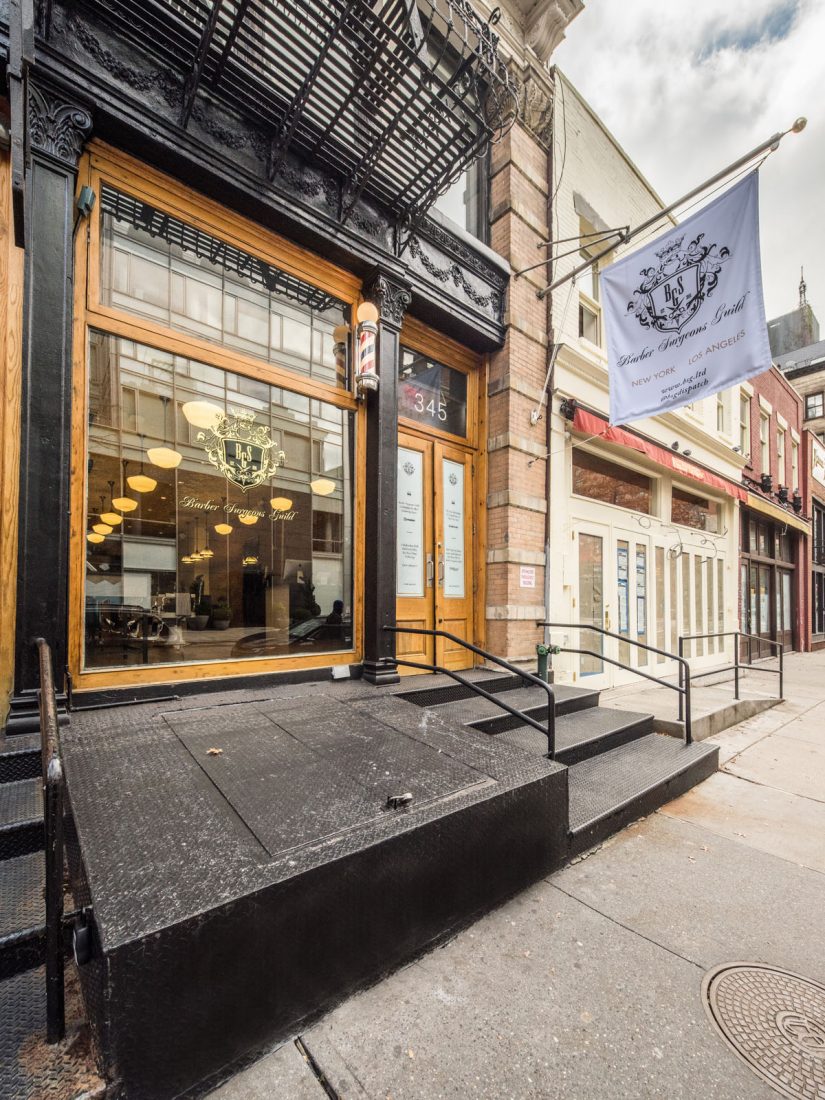
A step into the Barber Surgeons Guild is a step into the past. The barbers look ready for a prohibition-era night on the town in button-downs, vests, and the occasional fedora. The back wall is a ’20s-era man-cave with lounge seating, a wall of period books, and a readily available collection of whiskeys. Yes, you’re welcome to grab a glass. From the chairs to the barber capes to the tile walls and light fixtures, there is an effort to transport you to another place and time. 

Keep going far enough, though, and you step right back into the future. The back of Barber Surgeons Guild is a state-of-the-art hair restoration facility offering a variety of services for its clientele. Robotic hair restoration, PRP, scalp camo, and more–if you want more hair than you have, or are worried about losing what you’ve got, they have the tools to help. 

The name “Barber Surgeon” might sound strange, but it comes from a tradition more than 1000 years old. In the middle ages, doctors or physicians had a lot more in common with a medical school professor, a family doctor, or both. If you wanted surgery, you had to go to the other medical professions, the only ones who traveled and carried the knives needed for surgery–barbers. For hundreds of years, the jobs of haircuts and surgery were shared by this strange class of professionals, even being enshrined in English society with the creation of the Company of Barber-Surgeons in 1540. 

Ari S Goldberg
Ari S Goldberg, owner of the Barber Surgeons Guild.

The tradition, of course, fell off with the rise of the physician-surgeon and the surgeon-surgeon, but the archetype was fascinating for Ari Goldberg, the founder of The Barber Surgeons Guild. The company has two locations: one in Los Angeles and one in NYC. Downtown spoke to him about his unique business hybrid. 

Downtown: Yeah, so you have a very unique aesthetic for a, I don’t know what the LA location looks like, but for the New York location I really liked the…it felt like a kind of 1920s theme.


Ari Goldberg: Yeah. The classic barbershop.


DT: How did that aesthetic come about?


AG: I think it’s just rooted in what we wanted to create with the brand. The vision was to combine consumer and medical. And then, from a brand perspective, I wanted to create something that was very much like a heritage program, like kind of a Double RL. It was rooted in history and timeless was a word that came up a lot. It all plays off of timeless. Or we would always say like a gentleman’s lounge. And then when you look at the history of the barber surgeon, you know, it’s a real thing.


DT: So why combine those two? Do you have a background in hair regrowth?


AG: No, I do not. My background is in marketing. My expertise is very deeply rooted in advertising. My initial starting point was to expand my career and my investment portfolio. I was interested in the convergence of consumer and medical. There were a lot of consumer brands but not so much the medical component.


DT: What inspired you to do that?


AG: I really just kind of seen the market opportunity. You know, I was the guy that cared about health and wellness and cared about style and appearance. I know there’s a lot of other guys like me. And having a healthy head of hair is obviously something that’s paramount, something of interest to a lot of us. There are a lot of snake oil salesmen out there on both the consumer and medical trends, and both come up with products and services. And I really wanted to create a brand that was good for the people around us–that had medical research and science to back it up.

Barber Surgeons Guild


DT: How do you convince people that you’re the real deal?


AG: Well, I think having a business partner that is a doctor was a big thing for me. I wanted this to be backed by medical research and science, you know, not some kid in Silicon Valley with that idea. Um, so that was it. Uh, you know, all of the ladies are verified. You know, we don’t sell snake oil, you know, “you put this on your head and your hair magically grows.” Like, it just doesn’t work like that. There’s no topical solution that you just rub on and magically you have a full head of hair. That’s why I’m trying to offer the full arsenal of products.


When we started the process, I said to them, you know, I don’t care about price right now. I want to create the highest quality products. That’s what we wanted to do as a brand.


DT: What specifically are you looking for in a barber?


AG: I think we’re looking for someone that’s obviously a master at his craft, who cares about it. You know, I think what’s great about the guys in (our shop). You know, they really see themselves as artisans and craftsmen. They take it seriously, which is great. We want them to be super personable and easy to talk to. We want them to have a trusting kind of bond with the client. A lot of times, especially as guys are starting to lose hair, it becomes a very sensitive subject. So we want someone that kind of shoots you straight, but you know, does it with a soft touch. And we want guys that are knowledgeable and interested in the products and services that we offer so they can educate the client on the options and the additional things that are available to them.


DT: what do you want people to know about your business?


AG: I want them to know that we created this for ourselves and for our friends and family. You know, we use these products every day. We want to create a product that we were willing to use, not something that we could just give to the consumer for the highest profit margin. It’s like you gotta be the customer you want–you gotta use the stuff too and believe it’s the best. And you know, we’re going out of our way. I use it every day because as far as I know, it is the best product out there. I get my hair cut (at Barber Surgeons Guild) because I think we have the best barbers. I think, in a way, it came from a selfish place because Justin and I are two guys and this is what we wanted and we knew that there were other guys out there like us and you know, we could formulate something around that.

New York City’s Barber Surgeon Guild is located at 345 W Broadway, New York, NY 10013

See More

Downtown’s Holiday Gift Guide 2019 For Him

Downtown’s Holiday Gift Guide 2019

Luxury Gift Guide for Dad

How A Healthy Lifestyle Can Help Promote Hair Growth

Categories
Culture Featured LA Movies Music

Film Review: Desolation Center Celebrates a Lost Moment in the West Coast Punk Scene

Desolation Center
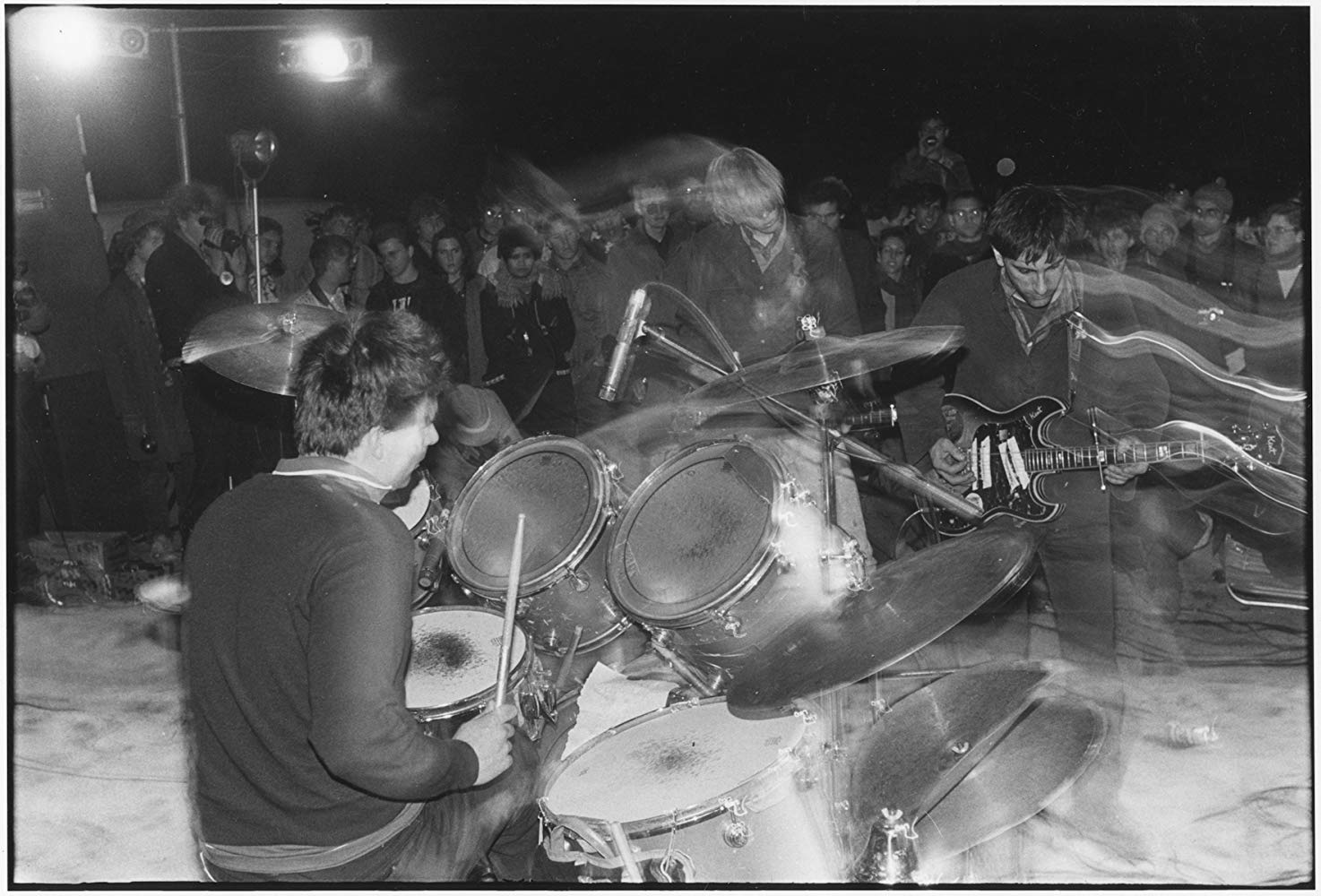
Blixa Bargeld and FM Einheit of German band Einstürzende Neubauten, performing at an event in the Mojave Desert. Photo credit: Fredrik NIlsen (1984)

The story of punk rock in the US reads a bit like the story of jazz: a time of musical experimentation where even influential moments and artists can slip through the cracks of history. Many stories were never written down, and many artists failed to leave a trace: no recordings, few pictures–only the memories of those who were there to see and know them. 

That’s part of what makes Desolation Center such a treat. The documentary is a wealth of never-before-seen pictures and videos, revealing a near-forgotten story about a series of guerrilla music and art performances in 1980’s Southern California that changed the music world. Director and sometimes-protagonist Stuart Swezey mixes buried photos and live performance footage with interviews of attending musicians and concert-goers. The result is a brilliant, if sometimes hyper-focused, story of youthful innovation and rebellion, and which directly inspired projects like Lollapalooza, Burning Man, and Coachella. 

The ‘80s So Cal punk scene, as Swezey remembers it, was a hotbed of diversity and musical experimentation. It was also a favorite raiding target for the police, who were looking to drum up headlines and media attention. At 20 years old, Swezey founded a production company, Desolation Center, aiming to produce shows where the police wouldn’t find them. Early attempts focused on obscure Los Angeles locations, with no success. As long as they were in the city, he decided, the police would find them. 

The solution he came up with was a secret concert in an undisclosed location in the Mojave Desert. Punks clamored onto bright yellow school busses for an hours-long drive into the wilderness. The “stage” was small and ran on a generator that barely worked. The wind and sand were so severe that Swezey had to reposition the busses to protect the stage. Nobody made any money; everyone was dehydrated; it was a huge success.

Over the next few years, Desolation Center produced only a few more shows. A second desert show featured pyrotechnics artists Survival Research Laboratories, and German experimental band Einstürzende Neubauten, who made music with scrap metal and construction tools. Another show performed on a hastily-crafted stage built onto a whale-watching ship. Each attracted more attention while focusing–for the most part–on the local punk rock scene. 

Desolation Center
Punks exit a bus after an hours-long trip into the desert. Photo from IMDB.com

We are lucky that so much of these events were preserved. Desolation Center disbanded after only a half-dozen shows–long before they reached the mainstream–leaving the underground sensation to fade into obscurity. As of this writing, neither the film nor the production company have wikipedia pages. If the performances had happened a decade earlier, the documentary probably wouldn’t exist. Instead, home video technology captured rare performances, reactions, and emotions in ways that the cameras of the late ‘60s and early ‘70s could not have. It is one thing to hear about Survival Research Laboratories blowing up a cave, or to see a picture of Einstürzende Neubauten banging rocks on sheet metal. The videos bring the stories to life. 

If the documentary suffers from anything, it is overly-focus and a sometimes-monotonous pace. The story marches from one performance to the next, start to finish, with little consideration for a larger story or evolving cultural context. For such an influential series of events, there is little discussion of changing culture until modern festival founders pop up at the end to cite Desolation Center as an inspiration. The format, at times, feels like a count-by-numbers procession of events which begins to become tedious as the story goes on. 

Overall, Desolation Center is still a fascinating watch. If you’re a punk rock enthusiast, you’ll love the never-before-seen footage and reflections into an influential music scene. If punk rock is not your thing, there is still a wealth of hilarious, absurd, and sometimes heartfelt anecdotes of a movement full of anarchic experimentation and youthful rebellion. If you’ve never given much thought to punk rock before, bring a pen. You might want to write down a band name or two for later. 

Desolation Center
Courtesy of IMDB.com

Rooftop Films

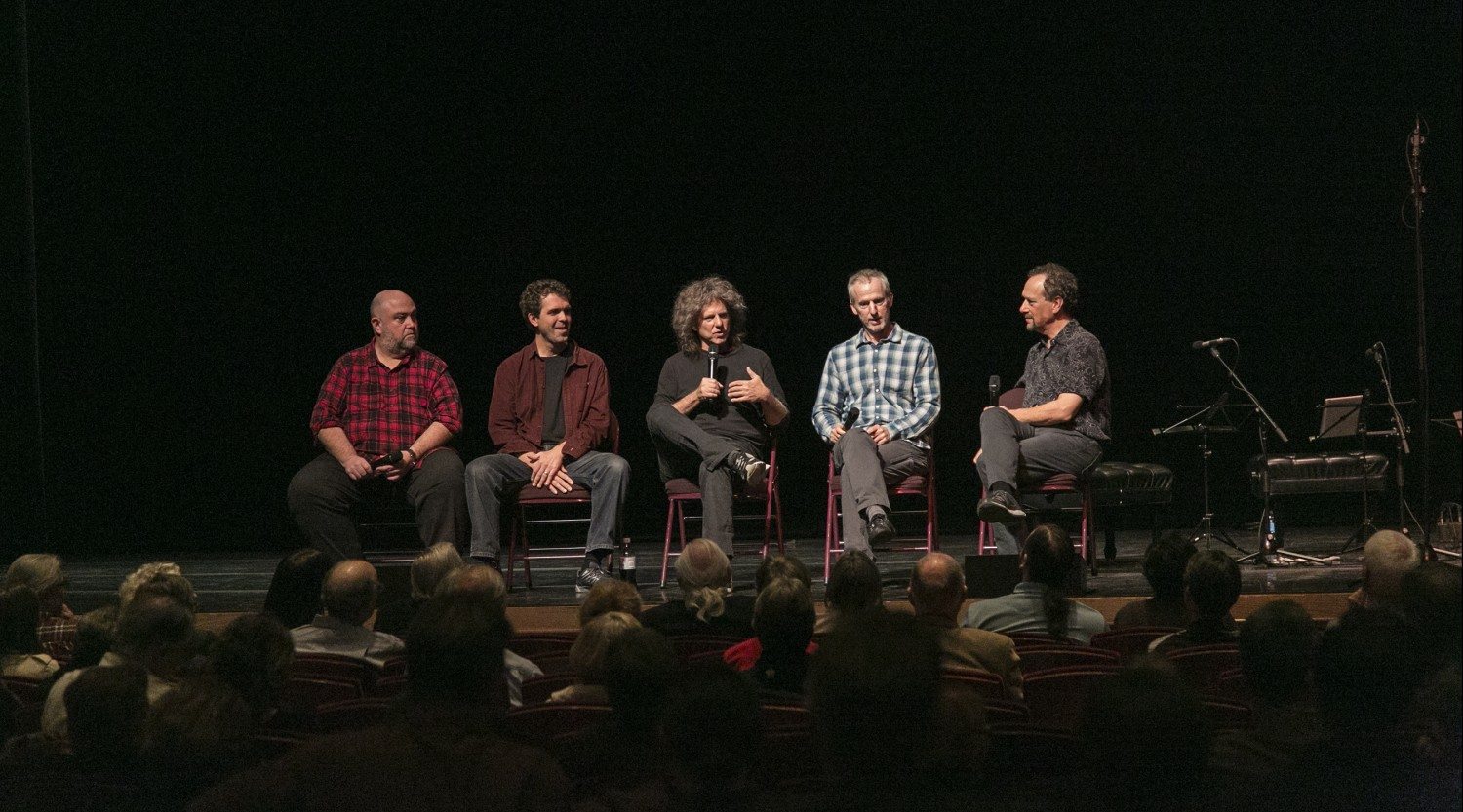
Desolation Center made its New York premiere at the Greenwood Cemetery as part of the Rooftop Films’ 2019 Summer Series. The event featured a Q&A with filmmaker Stuart Swezey, Lee Ranaldo (Sonic Youth) and Bob Bert (Sonic Youth, Pussy Galore, Lydia Lunch Retrovirus, Wolfmanhattan Project). If you’re interested in attending a Rooftop Films event, check it out here

Categories
Culture Entertainment LA Movies Theater

“Waitress” star Chris Diamantopoulos returns to Broadway

Photo: Randall Slavin

Chris Diamantopoulos is the rare sort of actor who 10 people would probably recognize from 10 different roles. On Silicon Valley, he has portrayed the recurring ex-billionaire Russ Hanneman. On the U.S. version of Episodes, he was the TV network boss Castor Sotto. On the Amazon Original series Good Girls Revolt he played Evan Phinnaeus “Finn” Woodhouse. And that’s without discussing turns on The Office, Up All Night, Arrested Development or 24.

Prior to finding success within the film and TV worlds, Chris was a regular in the theater world. Chris made his return to Broadway on Mar. 31 by taking on the role of Dr. Pomatter in the hit Waitress. Beyond its wonderful cast — which also includes Tony Award nominee Will Swenson — Waitress is the first Broadway musical in history to have four women in its four top creative team spots, featuring a book by Jessie Nelson, a score by six-time Grammy Award-nominated singer-songwriter Sara Bareilles, choreography by Lorin Latarro and direction by Tony Award-winner Diane Paulus.

Downtown had the pleasure of speaking with Chris via phone about Waitress, his long-standing history with New York and why he keeps coming back to our city. Chris can be followed on Twitter via @ClassicChrisD. More on Waitress can be found at www.waitressthemusical.com.

Wikipedia says that you met your wife [Becki Newton] in a New York City subway station. Is that true?

Chris Diamantopoulos: Yeah, we actually met in Times Square. It was in the middle of rush hour, she was walking from the tunnel connecting the A/C/E to the 1/9 and I was walking in that direction. We walked by each other and smiled at each other and I — for some reason that day —had the wherewithal actually do something about that. You know there have been so many times walking through New York, you sort of pass strangers by or something, I never had the balls to do anything about it. But she was just so beautiful, and so, she just seemed so approachable…The worst that can happen is she could scream and run away, but she didn’t, and we’ve been together ever since.

That’s a wonderful New York story, there’s not a lot of those out there. But in terms of projects you’ve worked on, you have done a lot of film work, a lot of TV, you’ve done voiceovers, and you’ve done a lot of theater. How much of your time is usually spent in New York?

CD: Well, you know it’s funny because I moved to New York when I was 20 years old and I was working 100 percent in the theater at the time. I had started having some national tours, Webber’s Music Of The Night and Joseph & The Amazing Technicolor Dreamcoat, then I landed in New York with Les Miserables…I did a ton of readings and workshops for new musicals. But I’d always sort of had my sort of set my sights on trying my hand at the small and big screen, and I wanted to head out to Los Angeles, so it was very shortly after meeting my wife where I’d expressed to her a little bit of starting to get a little stir crazy in New York. She suggested that we go to L.A. and try it out, so I gave my notice…and we went out to L.A.

It was a tough go for me because my entire life and career were New York-based, all the voiceover work and the theater work could only really happen while I was in New York. So when I went to L.A., the first two years, I let go of all employment and couldn’t get an agent, couldn’t get hired because…musical theater wasn’t what TV and film agents and casting directors wanted to see on a resume…Some offers were coming in for some theater work, but I really wanted to give L.A. a go, and letting all that go and I really thought I’d made a terrible mistake. It wasn’t until the third year that things sort of started to pick up. It was, just so you know, small small little bits…As soon as that happened, New York kind of stopped being a place for me to work for a good decade, and I worked you know exclusively on the West Coast and then you know in Canada or wherever else things were shooting.

But I sort of stepped away from New York for a while, which is why I’m so grateful for this opportunity to come back, because I just love working in New York. I love living in New York. I’m a New Yorker, I still have a New York phone number. When we went out to L.A., even though we built a house there, it was always just like “okay, we’re just here on location, we’re just here temporarily”…We got a little sidetracked with children and whatnot, but we’re still trying to claw our way back to the city.

https://www.youtube.com/watch?v=fUEIqbOthqY

Had you worked with anyone in the Waitress camp before?

CD: Well, you know I was in L.A., I was working on Silicon Valley, the HBO show that I was doing…My theatrical agent called me and said, “Hey I know you haven’t done theater” — and then at that point it had been 12, 13 years — “so I know it’s been a long time.” Oh, that’s not true, I had done a City Center production of Girl Crazy at the urging of my wife…But other than that, it had been a very long time and he said, “You know there’s this workshop of a new show Diane Paulus is directing,” I’ve been a big fan of her work, and Sara Bareilles wrote the music, and I’ve always been a huge fan of hers, and the musical director, Nadia [DiGiallonardo] is someone that my wife knows. He said it’s just 10 days in New York, any interest in doing it?…My daughter was an infant at the time, so we brought my son and my daughter and we went for 10 days and we had a ball. I did the 10-day workshop, it was very very low pressure, I had a great time, I love the role…It seemed like it was a really great way to come back, to come back again, and then unfortunately my schedule just forbade me from doing the Broadway production…Diane was quite generous…

Then of course another show came up, and it was just too hard to pass up with two kids…I took the other TV gig and it broke my heart because this was really the one that got away and I said, “Oh well, it’s not going to happen.” So when I found out that Sara was going into the company and they started sort of reaching out saying, “Hey, you know we don’t want to reach out if we know what the answer is going to be and if the answer is ‘no.’ We’re just sort of checking to see.” I wasn’t working on a TV show and I ran it by my wife and she was chomping at the bit to come back…So we jumped at the opportunity and I’m really glad I did.

A little bit ago you mentioned Silicon Valley. I think your character Russ Hanneman is a lot of people’s favorite character on the show, but you seem to be the opposite of that guy. Do you often get confused for Russ?

CD: The writers on Silicon Valley, Alec Berg and Mike Judge, are really generous with regard to how they give material to actors…I think one of the reasons is because most of the actors that they work with are stand-up comics. I’m not a stand-up comic, I’ve never been in stand-up comedy, it terrifies me. But I think that what was fortuitous about that for me was that they had a lot of trust with regard to giving me material, or even giving me just some skeletal material and letting me kind of put the flesh on the bones. So I had a lot of fun playing with that character ,and again in television it’s rare to have an opportunity to play a really broad character. It is something I actually seek out because I didn’t get in the business to play myself, I see myself every day, I’d rather be somebody completely diametrically-opposed to who I am.

So I think that it’s a confluence of me having fun with great material, working under great directors and great writers, with great actors on the show that people like…I think more than any role that I’ve done, that seems to be the catcall that I’ll get when I’m walking around the airport with my kids. It’s a really strange thing when my six-year old says, “What did he say?” and “No, no, no, he didn’t say anything.” But it’s really funny too, I had a priest come up to me and say, “Oh I love Russ Hanneman.” You know it’s just such an odd thing, but there’s something about him just being so undeniably and unabashedly-reprehensible. (laughs) He represents…how we are all wishing to be, I guess…

So do you have a favorite restaurant in New York City?

CD: I have a ton, and I’ve got a lot of nice little hole-in-the-wall places, or places you’d never find, but the one that I’m going to tell you about is in such an obvious area, and I almost don’t want to tell people about it because it’s so fucking good. It’s called La Masseria, it’s an Italian place on 48th…The chef there has created basically this prototypical authentic Italian experience, and I’m sure you can find that in hundreds of restaurants in New York. Well I haven’t been able to find, and it’s not often on the menu, they have this dish called Bottarga Spaghetti. Basically it’s the simplest thing — you know what bottarga is?

I don’t. I’ve been there, but what is it?

CD: You’ve got to ask them for it. So bottarga is a block of sun-dried fish roe. It looks kind of like an orange block of parmesan, but it’s actually dried fish. They bring the spaghetti, with a little bit of parsley and a little bit of cracked black pepper and a little bit of olive oil, a little bit garlic and they grate this bottarga onto the spaghetti and it melts in the spaghetti. The idea is you want to pair it with an amazing bottle of a nice big red wine, and you want to take a nice little fork full of that and you want to swish around the wine after you’ve had that bite. It’s incredible, but I love the place…They make me feel like I’m family and I’ve been going there for 12, 13 years since it’s been open.

Aside from all the work, because it seems like you’re always working now, what do you like to do when you’re not working? Do you have any main hobbies?

CD: I’m pretty boring, I mean I’m a homebody. I love cooking, that’s something that I do and my family does, my wife does and my kids are into it now. Cooking kind of calms my mind. I’m also just, again, boringly a big walker, which is why I want to back to New York, because in L.A. there’s not a whole lot of walking unless you’re hiking, which I do. But I just like going wherever the road leads, even though I’d walk the streets thousands of times, finding a street I’ve never seen before…just seeing where the adventure leads. Other than that, I enjoy exercise here and there and, but I’m a relatively-boring guy.

So, finally Chris, any last words for the kids?

CD: For the kids? I would say the best advice I ever got was, “Follow the spark.” Because there’s a spark of curiosity, spark of intrigue. It will lead to something huge, it will take you somewhere. Find you’re curious about something, follow it and look into it — it’s the only way you’ll grow.

Categories
Culture Events LA Music

The Los Angeles Guitar Quartet talks to Downtown about its Nov. 5 show at the 92Y

Los Angeles Guitar Quartet with Pat Metheny

The Los Angeles Guitar Quartet is a Grammy-winning ensemble that formed in 1980. Its current lineup of John Dearman, William Kanengiser, Scott Tennant and Matthew Greif — Matthew replaced original member Andrew York in 2006 — has toured around the world, playing everything from bluegrass to Bach. The ensemble’s worldwide acclaim has led to notable composers writing music for the LAGQ to perform, one recent example of such being by guitar hero Dweezil Zappa.

On Nov. 5, the Los Angeles Guitar Quartet makes a return to 92Y, a venue the group has a long-standing history with. This evening will feature a performance of the Pat Metheny composition Road To The Sun, which 92Y co-commissioned. Mr. Metheny will be in attendance for the event, which opens 92Y’s Art Of The Guitar series.

Downtown caught up with John Dearman, William Kanengiser and Scott Tennant for some Q&A about their Nov. 5 show, their personal histories with our city, and what else is coming up for the LAGQ. More info can be found at www.lagq.com.

https://www.youtube.com/watch?v=D_d0Bep9xf0

What do you remember about the first time you ever performed live in New York? Where was it?

Scott Tennant: I don’t know if it was our first New York City performance or not, but I strongly recall our Merkin Hall debut. I remember walking up to the hall excited, not nervous at all. Couldn’t help but be energized by the New York musical vibe!

William Kannengiser: My New York City performance was at my Senior Recital upon graduating from the Mannes Conservatory Preparatory School in May 1977. I was a high school senior living in New Jersey, and I studied guitar, Music Theory and Ear Training at Mannes for three years, making the trek into the big city every Saturday. It was my first complete solo recital, and right in the middle of it a huge storm hit, replete with lightning and huge claps of thunder. Somehow I maintained my composure and got through it.

John Dearman: I think the first time we played in New York City was for the Concert Artists Guild competition held annually at Carnegie Hall. I remember that we stayed in a hotel across the street from Carnegie and someone told me that Van Cliburn lived in that hotel — not, like, stayed there when in town, but LIVED there! That impressed me, that a classical musician was living like a rock star.

And on the evening of our performance in the competition, just beforehand, I decided to stop in at the Russian Team Room, right next door to the entrance to Carnegie. And who did I see? Woody Allen himself — who famously was a regular there — with Mia Farrow. So, even being from L.A., I was pretty starstruck on my first visit to the Big Apple.

What’s to be expected from your upcoming show at 92Y?

ST: An intoxicating drink of hip and sexy music from Latin America, plus what we think will become one of the more important guitar works from one of the most important and influential guitar players of our generation.

WK: This would be the “troisiéme”, or third performance of Pat Metheny’s amazing Road To The Sun. Having gone through the first-performance jitters at the world premiere in Denver two weeks before, and with a ton of tweaks suggested by Pat and another performance under our belt in Santa Barbara, I’m looking forward to us just sitting back and enjoying the ride. It’s also going to be fantastic to work with Pat again on little details and having him in the house to inspire us.

JD: Well, it will of course be very special because of the Metheny performance with Pat in attendance. So we’re pretty psyched about playing there as it’s really one of our “home” concerts where we have a very loyal following. I think this will be something like our seventh or eighth appearance at 92Y.

Any restaurants or attractions in New York you’re hoping to check out while in town?

ST: My absolute favorite place is gone. You’ll think I’m crazy, with all the foodie shrines in Manhattan. But I always went to Big Nick’s on Broadway and West 77th! The flight from L.A. would always land at JFK [Airport] in the evening, and my routine was to check into my hotel across the street and immediately head to Big Nick’s for a huge Greek salad and a burger — usually around 11:00 PM or midnight. No matter what the weather was I would sit out in front under the seemingly-eternal scaffolding and eat while watching people walk by.

WK: My wife is celebrating a big birthday today, and in honor of her I’m planning on having a nice spinach and goat cheese omelet at the lovely Sarabeth’s Kitchen on Madison and 92nd. I’ve had many memorable breakfasts there with my wife and daughter when we’ve come to New York City to play.

JD: Eating and museums are always top priority for me when I visit. I always pay a visit to MoMA and then try to fit in something extra like the Frick or some galleries. Haven’t done my research on restaurants yet but one thing I’ve always loved about New York City is the abundance of great old-style Italian, so-called red-sauce joints, so I’ll try to hit one of those. Also have never been to Peter Luger’s, so I may head out to Brooklyn…

What is coming up for you after the show at 92Y? Other projects?

WK: We’re planning on a recording project featuring Road To The Sun as the centerpiece, as well as a piece recently written for us by Dweezil Zappa. In April we’ll be premiering a piece for LAGQ and guitar orchestra by former LAGQ member and acclaimed composer Andy York. We’re going to do a three-concert tour in Arizona with a 40-member orchestra of talented student guitarists from all over the state. It will be partly based on traditional Havasupai chants.

When not busy with work, how do you like to spend your free time?

ST: I will have a little dog soon and that will take over my free time. But otherwise I like collecting and riding odd recumbent trikes. I also like lifting weights. It focuses me and calms me down like nothing else can.

WK: I love to cook. I just made my wife some cast-iron seared sushi-grade ahi with a sesame, chia and nigella seed crust, topped with a soy, miso and olallieberry reduction, along with grilled Japanese eggplant and roasted Yukon gold potatoes with chives and crème fraîche. Cooking for others is a creative, relaxing and rewarding respite for me.

JD: I’ve got a serious motorcycle habit: three bikes including a restored 1973 Norton 850 Commando. Also, spending too much spare time — and money — on golf these days! Played in Ireland last summer when we were on tour there. Why do otherwise sane people play golf in the wind and the rain?

Los Angeles Guitar Quartet with Pat Metheny

What is your favorite album of 2016?

WK: I have two, but they actually share the same title. Sephardic Journey by Apollo’s Fire has some incredibly evocative early music from the Jewish diaspora, reminiscent of the work of Jordi Savall that inspired me so much in adapting our Don Quixote project. Sephardic Journey by the flute/guitar husband-and-wife team Cavatina Duo features world premiere recordings of new chamber works commissioned especially for this heartfelt CD. All the works are inspired by Hebraic themes, including wonderful pieces by my friends Clarice Assad and Carlos Rafael Rivera.

JD: Not sure about a favorite album…I’m on Spotify most of the time now. Listened to a lot of Bowie after his passing, in catch-up mode; I missed out on a lot of great moments from the past when I was obsessing about becoming a classical musician. One of my favorite new discoveries was Rene Jacobs, conductor/early-music specialists. I watched all the YouTube videos of a guy who has a channel called 80-20 drummer where he does lessons in how to play like Jack DeJohnette, or Mark Guiliana, Stewart Copeland, gospel licks, rap drummers — I’m kind of all over the place in my tastes.

Finally, any last words for the kids?

WK: It going to be quite a night for us, helping to realize Pat Metheny’s creative vision, with him sitting right there in the hall. It’s thrilling, inspiring, humbling and terrifying all at the same time!