Categories
Culture Entertainment Featured Music NYC Theater

Jenna Chrisphonte Joins The Ronald O. Perelman Performing Arts Center

Welcoming Jenna Chrisphonte as Director of Civic Alliances

As of July 6, The Ronald O. Perelman Performing Arts Center welcomed its new Director of Civic Alliances, Jenna Chrisphonte. She will work under the leadership of the theater’s Artistic Director Bill Rauch and President Leslie Koch. Chrisphonte will serve as the liaison between the PAC and “community-based organizations, NYCHA residents, community boards, immigrant groups, marginalized populations, cultural institutions, and elected officials”, according to a press release.

Support from Artistic Director Bill Rauch

“I am so thrilled to welcome Jenna to our team, given the vast experience, passion, and energy that she brings to this new role,” said Rauch. “The work of the Director of Civic Alliances is core to our mission of making connections between artists and communities from across all five boroughs of New York City.”

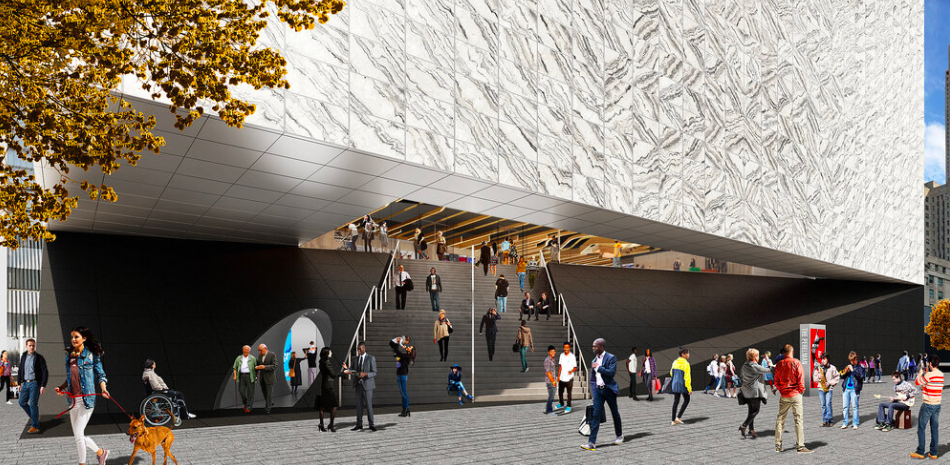
Chrisphonte’s new leadership is not the only change being made at the PAC. The theater, located at the World Trade Center, is under renovation. The improved establishment “will celebrate life and humanity, redefining Lower Manhattan as a cultural destination and serving as a living testament to the power of the arts to inspire and unite,” according to the statement.

President Leslie Koch Cheers Her On

“The PAC aspires to be a shared space for neighborhood residents and workers in Lower Manhattan, New Yorkers from throughout the city, and visitors from around the world,” said President Leslie Koch. “Jenna will be building relationships well before we open, introducing our new center to the city and world.”

Much like Chrisphonte, the PAC will match the energy in versatility and will create and present performance in many forms. It will be a sanctuary for dance, music, and chamber opera.

Chrisphonte was born in Haiti and got her education in New York City’s public schools. Her impressive background is multifaceted. It begins with her B.A. and J.D from the University at Buffalo, and branches into her experience as director of community engagement at the Dramatists Guild of America. She also served as the Assistant District Manager at Manhattan Community Board 4 and worked at the Consulate General of Canada in New York City. She now resides in Douglaston, Queens.


Jenna Chrisphonte Joins The Ronald O. Perelman Performing Arts Center
Jenna Chrisphonte Director of Civic Alliances


“It is an honor to join the PAC, said Jenna Chrisphonte. “Helping New York foster new relationships and opportunities to come together in peace and art is a privilege that I am excited to share with everyone.”

For additional information, visit theperelman.org.

For more from Downtown on happenings about town, click here.

Categories
Entertainment Featured Music NYC

Downtown Q&A: Seth Kessel

Seth Kessel

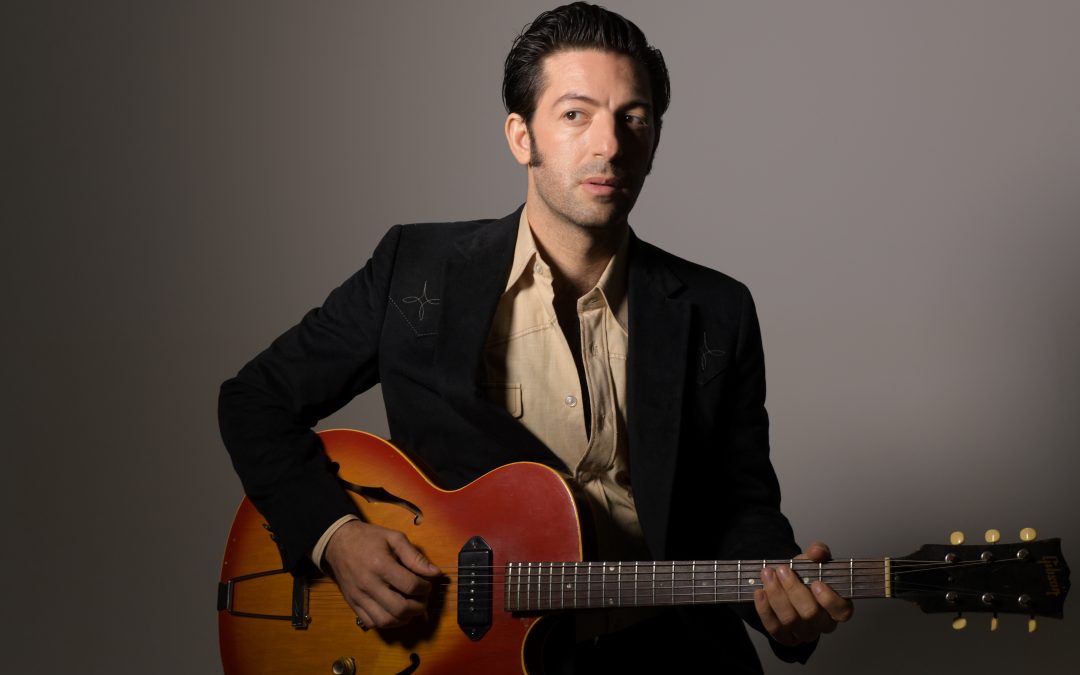
Meet Seth Kessel, the rising rockabilly artist we’ve been craving since the dawn of icons like Elvis Presley, Johnny Cash, and Roy Orbison. Kessel marries a modern sound with this nostalgia for yesteryear. Having been a band member, producer, and studio engineer, he is a true musical veteran, and now he’s started his own band. Kessel just dropped his latest album, “Ride on Through”. Leading up to his record release with Gotham Easy at Berlin on July 17th, we had a chat with him about his career, inspiration, and everything in between.

Join Seth Kessel and Gotham Easy on July 17th at 9 pm at Berlin on 25 Avenue A, NYC 10009.

Downtown: Who/What are some of your major musical influences?
Seth Kessel: Some of my influences include Chuck Berry, The Misfits, Johnny Cash, and Tom Petty. I’m also really attracted to artists from various genres that have a “rawness” to them.

DT: This isn’t your first rodeo with music. You’ve been in the industry for a while, as a band member, a producer, and a studio engineer. What made you move toward being a solo artist?
SK: It wasn’t really a conscious decision, I’ve always written songs, and starting my band was just something I sort of gravitated towards that felt right.

DT: Through listening to your music, it is clear that there is this sense of nostalgia for classic, rockabilly style music. What made you want to put more of this vibe back out into the world?
SK: I’ve been heavily influenced by a lot of the original purveyors of rock and roll and it filtered through these songs. With that being said, these songs have one foot in the present time lyrically and emotionally.

DT: What sets your album, “Ride on Through” apart from other work that you’ve done before?
SK: “Ride on Through” is the most legitimate record I’ve made so far in my career. I’m a control freak and had never felt comfortable giving so much freedom to someone else working on my songs. My producer Steve LaRosa, made this record cohesive.

DT: We love that you’re a Brooklyn native. Has your birthplace saved as a vessel of inspiration for you?
SK: I believe everyone’s hometown influences them whether they realize it or not. Being in Brooklyn, I was able to have the freedom to attend Punk shows and be exposed to many environments that most people who don’t grow up in New York aren’t.

DT: What do you love most about NYC? Where is your favorite spot to perform?
SK: What I love most about NYC is the people. You never know who you’re gonna meet and NYC has all walks of life here. My favorite spot to perform would be Skinny Dennis in Williamsburg.

DT: If you could travel back in time, and perform with an idol of yours, who would it be?
SK: Bad Brains. I think they’re the greatest band of all time.

Join Kessel and Gotham Easy on July 17th at 9 pm at Berlin on 25 Avenue A, NYC 10009.

Can’t make it? Listen to “Ride on Through” here.

For more Downtown Q&A, click here.

Categories
Music Technology

How Long Do SSDs Last?


The world of technology has come a long way over recent years, and we can now look forward to using tools, services, and equipment that provide us with the ultimate efficiency, ease, and convenience. One solution that many people turn to these days is SSDs instead of HDDs, and this is because of the wide range of benefits they offer. Of course, there are pros and cons with both, but for many, the increased speed and efficiency of SSDs make them a natural option.

Of course, you need to keep in mind that even SSDs are not designed to last forever despite the many benefits that they offer. The lifespan can vary based on a range of factors, which we will look at more closely in this article. Also, to find out more about how long SSDs last, you can also refer to information from the manufacturer as this can give you a better idea about specific SSDs rather than a generalized one. So, in this article, we will look at some of the factors that can play a part in how long they last.

Some of the Factors that Can Play a Part

There are various factors that can play a part in the overall lifespan of an SSD, so it is worth bearing these in mind. One of the things that can play a part is the applications for which how it is used. There are some applications that are more suited to SSDs but others that are better suited to HDDs. So, the lifespan can be affected by the applications you use and whether these are suited to the technology that you are using.

The design of the SSD can also play a part in how long it lasts, and manufacturers will often provide details of the expected lifespan. This then gives you a better idea of what to expect in terms of how long it is likely to last. Of course, the manufacturer’s information is not a definitive promise that this is how long it will last – it is just an idea of how long you can expect it to last. Other factors will also affect the actual lifespan of your SSD such as the applications you use it for as mentioned above.

In normal circumstances and with standard use, you can get years of use from your SSD, so this is reassuring. However, at the same time, it is impossible to know when it will develop problems and fail, which is why it is advisable to ensure you have a backup of files and data by using solutions such as backing up to the cloud. Many SSD users tend to replace their drives, not because of failure but because they want to upgrade for greater speed or capacity.

If you do notice signs of problems with your SSD, it is important to look at replacement as soon as possible rather than waiting it out. This will help to ensure you do not lose access to the data stored on the drive. 


Categories
Culture Entertainment Featured Music NYC Theater

Downtown Q&A: Hyung-ki Joo and Ron Losby

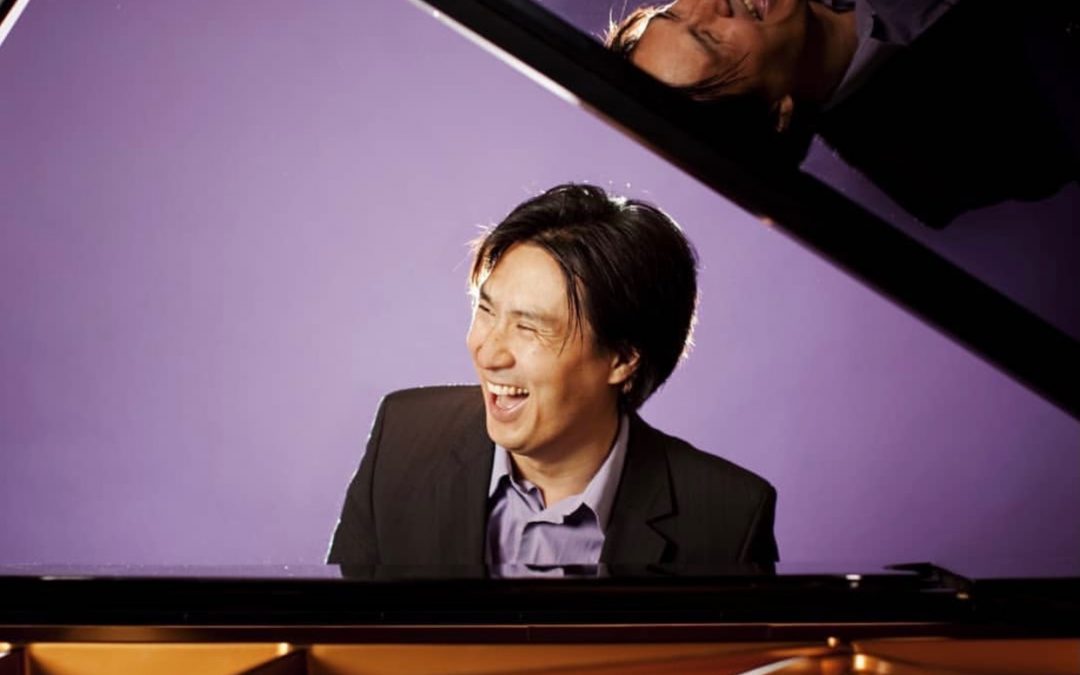
June 21st was Global Make Music Day, and in celebration, Steinway and Sons put on a special performance from several world-class artists, including British-Korean composer-pianist, Hyung-ki Joo. The show took place in The World Trade Center’s Oculus. Joo premiered his “Chandeliers”, a hauntingly evocative piece written in memoriam of 9/11, at the site at which the tragic event occurred. The premiere also marked the triumphant return of live music in New York City, coming out of the dark times of the last year and a half. We spoke to Hyung-ki as well as Ron Losby, the esteemed CEO of Steinway & Son’s for a Downtown Q&A.

Hyung-ki Joo

Downtown: What does global music day mean to you?

Hyung-ki Joo: Ideally, we should be celebrating music every day, all over the world. Music needs to be more respected and treasured.  Since the start of the “Corona-era,” I feel as though Art and Music have been disrespected and devalued. Even before Corona hit, far too many places in the world, including the affluent Western World, had no educational classes for music in schools.  I believe that music should be a part of every child’s life and I don’t say this because I’m a musician. There are plenty of studies that show how important music is for brain growth, cognitive skills, social and developmental skills.  Music is one of the very few things that bind us as a human race. In a band, or an orchestra, you can have players of all colors, nations, and creeds, and despite their backgrounds, they can make good music together. I believe that musical literacy should be a human right, and as Nietzsche said, “Without music, life would be meaningless.”

DT: Playing your song at the memorial campus for 911 must-have evoked a profound feeling. Would you share any of how you felt with our readers?

HJ: I never imagined that “Chandeliers” would be performed at The World Trade Center, the site that inspired the piece. To see something new and positive existing in the place where so much devastation took place in 2001 is a testament to the New Yorkers and the many others who suffered on that horrible day. To me, the new World Trade Center signifies hope and light.

DT: You wrote this beautiful piece to honor the memory of 911. How did this come about, and how long did it take you to write it?

HJ: 2001 was a year of immense change throughout the world as well as for me. After 9/11, everything changed. I was living in New York at the time and one of the things that struck me most profoundly was, despite the darkness that was towering over us all, light prevailed. I remember vigils and ceremonies aglow with candlelight and lanterns. There was a genuine spirit of solidarity that was touching to witness and experience; especially in a city where aggression and apathy are normalized. I pictured swirling chandeliers hanging from the skyscrapers and thus I began to write this musical sonnet for piano: Chandeliers.

DT: Where were you on 911 and how did you learn about this tragedy?

HJ: I was living in New York at the time. Everyone was glued to TV sets- it was impossible to miss.

DT: What was it like having your music played in our stunning Oculus?

HJ: I was honored that my new book of 10 piano pieces, under the album title, “Chandeliers”, was given a World Premiere at the Oculus. The premiere was given by 8 pianists from my Alma Mater, The Manhattan School of Music.

The 8 pianists were: Ryan Bridge, Xiyu Deng, Elham Fanous, Claudia Hu, Yan Li, Keiju Mori, Yi Zeng, William Zhang.

“Chandeliers” was performed beautifully by the marvelous pianist, Elina Christova, who also studied with me at Manhattan School of Music.

DT: What is your favorite place in downtown New York City?

HJ: Well, the Oculus is definitely one of the most stunning works of architecture in downtown, NYC.

I love the Wild Horses of Sable Island Gallery in Soho.

And one of my all-time favorite places to relax and enjoy a meal is the Olive Tree Cafe in Greenwich Village.

The “Earth Room” is also a unique place I quite enjoy.

DT: You are not only known for your music but also your comedic zaniness, we hear that it’s infectious. Where does this come from, and do you always include this in your performance?

HJ: Victor Borge said that “Laughter is the shortest distance between two people.” Classical concerts alienate audiences because the atmosphere is too elitist and intimidating. Concert Halls, presenters, and Orchestras need to find a new way to connect to today’s generation or the halls will be empty soon. It is 2021, and we are playing music that was created between 1700 and 1950. Laughter is healing, and it helps to put people at ease. I don’t always include “comedic zaniness” in every performance I do, but it is important to make the audience feel at ease and welcomed. In the time of Liszt and Schubert, there was no divide between the artist and the audience, and it is a shame we have lost this tradition. Composers like Mozart, Rossini, Haydn, Prokofiev, and many others, did not put on a comedy hat, and then put on a serious hat. Humor and Non-Humor [were] just two sides of the same coin, and those composers didn’t take their craft less seriously when they were writing humorous music. I always found that classical musicians do not take the humor in music seriously enough! When I started my duo with Aleksey Igudesman, we simply wanted to make concerts that we would want to go to ourselves. And to have the element of surprise back when we go to concerts, I think that everyone should produce concerts that they would like to attend themselves. Just think of the variety and fun we all will have!


Ron Losby

Downtown: How did Steinway become involved in this concert at Oculus?

Ron Losby: I heard about the event from Hyung-ki Joo, who is a Steinway Artist and a good friend. “Make Music Day” is obviously something that Steinway & Sons wholeheartedly supports, with such a noble goal of spreading the beauty and power of music to everyone. Upon hearing of the event, I let Hyung-ki know that we could support their piano needs for the event – and assist in any way needed. 

DT: Steinway has had a stellar reputation since it opened more than 150 years ago, tell us your secret?

RL: For Steinway & Sons, the secret has really been [the] continuous improvement of our piano and innovation. Since the early days, Steinway has innovated within its factory – always utilizing the best mix of handcraftsmanship and technology to build a piano that is always a little bit better than the one we built last year, the year before that, and so on. But we have also innovated with our product. The clearest example there is the introduction of Spirio, the world’s finest high-resolution player piano. Now, with the touch of an iPad, even non-pianists can listen to concert-level performances on demand, on an acoustic Steinway. And for the pianists out there it is, of course, still a fully playable Steinway.  

DT: We have worked with many celebrities who were brand ambassadors for Steinway and Sons, how are they chosen?

RL: Steinway Artists apply to be on the roster and a very interesting thing is that they are not paid endorsers, but choose to be Steinway Artists for the love of their craft and the instrument that we provide. All Steinway Artists actually own a Steinway, which is a part of the requirement to joining our roster of talented and acclaimed pianists. 

DT: What is it like to be in The Oculus as a grand performance space?

RL: The Oculus is a spectacular feat of design and engineering – creating a space that is beautiful and modern, but also very practical and usable. It has a certain look to it that is a part concert hall and part coliseum … so it seemed a very appropriate space for today’s musical performance meant to be shared with the masses. 

 For more Downtown Q&A, click here.

Categories
Culture Entertainment Featured Music NYC

Fascinating Rhythm

Bandleader, composer, musician, entrepreneur – Jon Batiste’s moment is now


KEY OF LIFE Jon Batiste gives an impromptu concert on a Steinway & Sons baby grand piano, looking out over the city from the 79th floor of 3 World Trade Center.


Batiste stands in front of “Akoma,” a mural by artist Georgie Nakima, in 3 World Trade Center. He is wearing a Coach X Jean-Michel Basquiat trench coat.


TAKE THE A TRAIN Batiste plays the classic Duke Ellington/Billy Strayhorn tune.


He has said that Duke Ellington is one of his many inspirations

IN A CAVERNOUS SPACE ON THE 79TH FLOOR of 3 World Trade Center, a tall, Black man summons glorious sounds from a baby grand piano, surrounded by endless views of Manhattan. He is full of kinetic energy, sometimes standing, sometimes sitting, shoes off, feet working the pedals, hands in motion, jumping from classical themes to jazz riffs to popular songs in a seamless flow of Music, with a capital M. This is Jon Batiste.

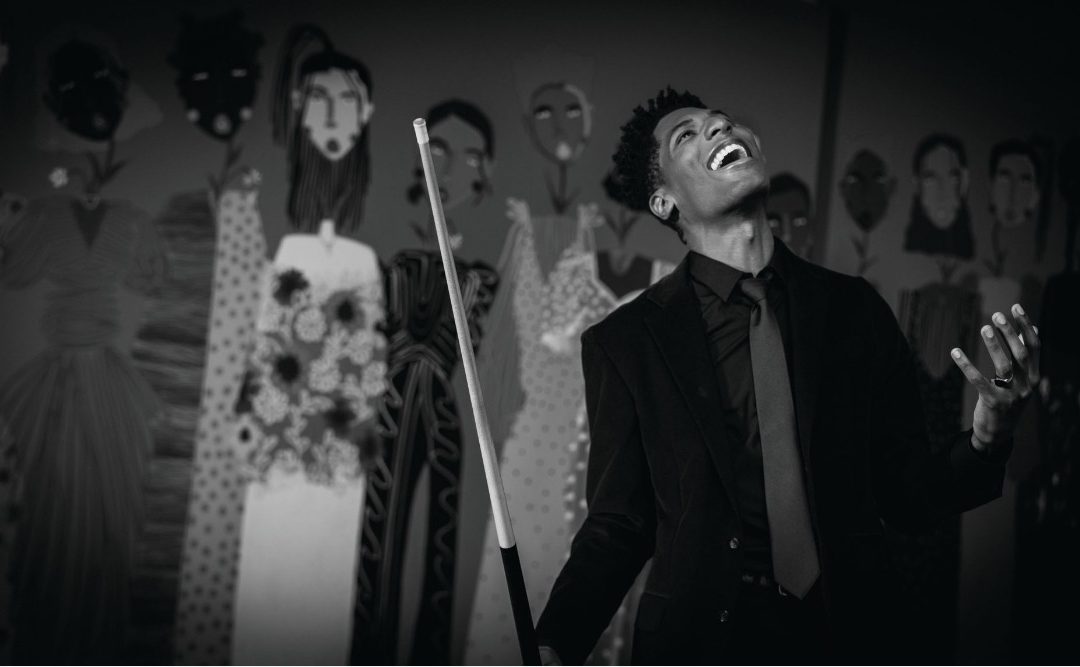
He arrives at our photoshoot tossing a tennis ball and sporting a jacket decorated with a Jimmy Carter campaign button. He radiates joy, and the personal soundtrack playing in his head spills out in phrases, snippets of songs, mischievous looks, inside jokes. Then the music goes on and it’s Billy Joel’s New York State of Mind. “Oh, that sax, Billy!” Batiste sings a little, plays air guitar on a pool cue, toggles between Rat Pack cool cat and exuberant man-child: “YEAH!” he shouts as Billy sings. He shares that he is really into Elton John lately, and we agree that Elton looks so happy with his family. “He’s at peace,” Batiste says. “It’s what we all want.”


“It must have been The Itsy, Bitsy Spider.”


Batiste’s musical timeline threads back through several generations. He is part of the legendary New Orleans Batiste family of jazz musicians. There is a pool table at our shoot and he shares that his dad became something of a pool sharp while touring on the Chitlin’ Circuit, where there was always a pool table to fool around with between sets. He knows a great deal about music history because his family helped write it. His first cogent musical memory is of being pushed on stage during the filming of a commercial. “I must have been around seven or eight, and I believe it was for a concert, a performance that my family was doing in Japan. I was asked to sing a nursery rhyme. It must have been The Itsy, Bitsy Spider.” Was he a natural? “I remember having such intense stage fright and going through many different takes. Fast forward 25 years later, and I’m on TV.”

Yes, he is. The Late Show with Stephen Colbert just recently celebrated its 1,000th show, and Batiste has been the show’s bandleader, with his band Stay Human, from the start. So, he has a day job that involves an intense schedule of composing music for the show, rehearsing, and taping—all complicated by a global pandemic. And while that would be a full slate for some, it’s just the tip of the iceberg for Batiste. He recently completed scoring, and collaborating on a Christmas Day Pixar release called Soul: “I put so much of myself in the film, it’s emotional to see this character’s essence in his story, and the things that are happening in his world draw so much from my personal experience in New York.”


This year, he also received two Grammy nominations


He has written a symphony that is scheduled to be performed next year at Carnegie Hall, where he will be the artist in residence. He says, “If you think about Beethoven, well, his Seventh Symphony is the one. The seventh one. Writing a symphony takes so much of yourself, so I wanted to start taking a swing at it at age 31 or 32 when I started it.” This year, he also received two Grammy nominations, and he is always working on new music. A body in motion, to the beat of his own internal soundtrack. And what does all of this sound like?

“It sounds like transition, evolution, growth, and leadership. It’s been quite a journey. If you look at the things that have happened over the last five or six years in my life: graduating from Juilliard and going on the road; doing television; writing plays and musicals; releasing albums; and all of the different awards and all of the people that I’ve met…” He pauses and then continues, “Now I feel like I’m at a stage where I’ve become a leader. And I’ve always, innately, felt like a leader and wanted to show people a better way. But now it has evolved into a very tangible state. I feel like I can see how my position in the world is meant to be facilitated, how it’s meant to be enacted.”

He’s grateful for the experience of working on The Late Show. “When you have something that you do five days a week for over five years, the consistency gives you perspective in a way that nothing else can. And I think that doing something like that is a blessing for me because if I didn’t have that, I don’t know if I would recognize this point in my evolution.”


It has always been a way to bridge the gap and connect.


Music isn’t only entertainment for Batiste. During the Black Lives Matter protests this summer he performed for the crowd at Barclay’s Center, and on election day he shared his particular brand of love and inspiration for people going to the polls in Philadelphia. He says, “Music is a gift because it can touch people and they don’t have to know why or how. It has always been a way to bridge the gap and connect. All of the different times that I’ve experienced really transformational life moments, there’s been some sort of music involved. Whether it’s through the form of tradition or whether it’s ritualistic, whether it’s worship, or whether it’s just nostalgia, there’s always some sort of soundtrack.”


TOP OF THE WORLD Batiste’s Grammy-nominated 2018 album, “Hollywood Africans,” was named after a painting by Jean-Michel Basquiat, which makes participating in the new Coach x Jean-Michel Basquiat campaign a perfect fit.


This year, he collected two more nominations: Best Contemporary Instrumental Album for Chronology of a Dream: Live at the Village Vanguard; and Best New Age Album for Meditations.


“The intention of something is always felt at a higher frequency when it’s about something bigger than oneself, and that’s across the board.” — Jon Batiste


Does he miss the live performance? “I miss performing in front of people, but I will say that I am enjoying thinking of different ways of presenting music, even in the virtual environment, because I think it’s more like being a movie producer now. I’ve always been into creating visual worlds and thought at some point that I would get into film as a director. But it takes a different muscle. And I don’t think a lot of musicians want to deal with that stuff.

So, the musician side of me is sick of it, and I just want to be able to go and play a show in front of people, even if it’s in my house. But the director side of me is having fun experimenting.”

He thinks the limits posed by COVID-19 offer a reset button for the way we experience music. “Music—before it was
put into the context of selling products and scaled so that it could be a commodity—was a part of the fabric of everyday life. It was something that people used to entertain themselves, in their home, in community gatherings, rituals, and cultural traditions, dating back to African tribes and drum circles or rumba sessions in Cuba. In New Orleans today, we have the second line in funerals. Social music is what I call it.”

He says, “I believe social music is really what we’ve always been primed for. People’s relationship to music is inherently social, and when it’s made into a commodity it skews that relationship. We lose something essential. Even with the protests that I’ve been doing, and in all of the different ways that I see music being made now remotely and online, it’s going back to a more social context, playing in small groups where the presentation is more geared to smaller community gatherings.”

I feel the responsibility to my family and my lineage.

He is conscious of his role as a leader. “I think about the different lineages that I’m a part of. Both New Orleans musicians, and all of the different styles of music and culture that I’ve drawn from, and I think about my great-great-uncle who fought in World War II, and my grandfather who was in the Korean War, and my uncle and my cousins who were in Vietnam. I think about the range of sacrifice that has allowed me to be a financially independent, successful Black entrepreneur, musician, artist. Apart from what I think the role of a musician is in society, I feel the responsibility to my family and my lineage.

Art doesn’t always have to be for a cause or to raise awareness. But I do think that for me, the intention of something is always felt at a higher frequency when it’s about something bigger than oneself, and that’s across the board.”

Photography and post-production by Andrew Matusik, Hair by Jenna Robinson, Makeup by Jesse Lindholm, Manager, David Patterson, Chris Chambers, Lauren Woulard, The Chambers Group
Piano by Steinway & Sons Location: 3 World Trade Center 79th floor Silverstein Properties

Categories
Architecture Art Culture Design Featured Lifestyle Living Music NYC Technology

ART AND CRAFT

Eschew the production line and choose a one-of-a-kind piece to tie your room together.

KYOTO TABLE

Poltrona Frau revisits the iconic Kyoto table designed by Gianfranco Frattini in 1974. The elegance of Japanese design blends with the rich and tactile qualities of solid wood. The table is crafted with precision dovetail joints, making the craft part of the decorative appeal. 

poltronafrau.com


RONDEL PENDANT LIGHT

A simple, yet elegant glass rondel hovers beneath an LED light and copper hardware. This pendant light is also available as a flush mount light or sconce. 

tracygloverstudio.com


HYALINE I RUG

Bec Brittain’s Taxonomy collaboration with Edward Fields continues with designs based on the structures and functions of the natural world. Hyaline I mimics the patterns of insect wings writ large. Brittain continues to re-contextualize the science of taxonomy, not as limiting or separating force, but as a means of revelation. 

edwardfields.com


CLUB CHAIR

Taylor Forrest designs and produces his furniture in New York. The Club Chair is crafted with vegetable-tanned saddle leather. The sling is fixed to a solid metal frame with an oversized saddle stitch. Hammered brass rivets on the armrests add contrast while keeping the leather in place. 

taylorforrest.com


JEFFERSON LAMP

Lodes introduces a crystal suspension lamp designed by Venetian designer Luca Nichetto in honor of the brand’s 70th anniversary. Jefferson uses a reinterpretation of the vortex pattern of Bohemian glass, which casts a swirling play of light. 

blightingcollection.com


EASY PEASY

Adds quirky portable style to any room. The rechargeable table lamps from Lodes have a metal base that houses an LED light, and a methacrylate diffuser wrapped by a glass bell. A solid knob functions as a dimmer, and also allows users to control the intensity and warmth of the light.

jblightingcollection.com


TOSS CUSHIONS

From Marimor Objects are ultra-soft and feature contrasting colors and textures, adding a punch of personality and playfulness. Toss is available in five color combinations and two shapes, lending itself to a range of aesthetics and color schemes.

marrimor.com


FACTORY FLOOR photography by Antoine Bootz

RALPH PUCCI INTERNATIONAL introduced a new concept in their Chelsea flagship location, last year. The (factory) collection includes work by Patrick Naggar, Paul Mathieu, Vladimir Kagan, John Koga, and Olivier Gagnere, as well as new exhibits. Many of the works are produced entirely in Pucci’s 18th Street workshop, using techniques and materials born out of the company’s history and experience producing mannequins.

Currently, the floor also houses the large-scale, sculptural wood designs of Stefan Bishop (Orka side table, above) and light sculptures created by Ana Meier and Hervé Descottes for Richard Meier Light (below).

Bishop creates organic forms inspired by the iconic redwoods of his home in Oregon. He works in wood, bronze, and steel, and his pieces beg you to touch them and appreciate the tactile textures that evoke tree bark smoothed and shaped by the elements.

Currently, the floor also houses the large-scale, sculptural wood designs of Stefan Bishop (Orka side table, above) and light sculptures created by Ana Meier and Hervé Descottes for Richard Meier Light (below).

Bishop creates organic forms inspired by the iconic redwoods of his home in Oregon. He works in wood, bronze, and steel, and his pieces beg you to touch them and appreciate the tactile textures that evoke tree bark smoothed and shaped by the elements.

In a limited-edition collection that explores light, color, shape, and shadow, the light sculptures of Meier and Descottes are inspired by the architectural shape of a construction I-beam. ralphpucci.com