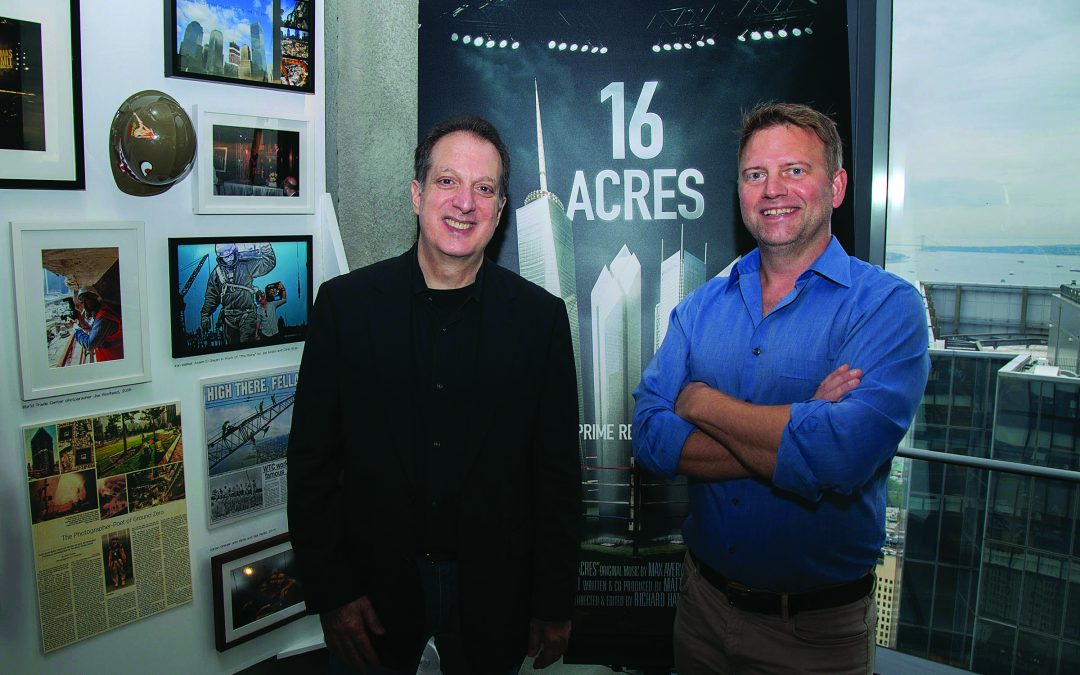
The production team behind 16 Acres, Mike Marcucci (left) and Matt Kapp, are working on a sequel documentary. Photo by Joe Woolhead.
The sequel to the Downtown documentary—16 Acres—will show the dramatic changes in Lower Manhattan
THOUGH THE TWIN TOWERS COLLAPSED IN ONLY SECONDS, it took more than 10 years to rebuild One World Trade Center, once known as the Freedom Tower. Nearly another 10 years since the release of 16 Acres, a documentary directed by Richard Hankin and produced by Mike Marcucci and Matt Kapp, and the cityscape continues to evolve, with the team now working on a sequel film.
In those first years following 9/11, it was unclear whether another World Trade Center would ever be built in Lower Manhattan. Contentions rose as many residents, family members, and friends of victims advocated against rebuilding on what they viewed as sacred ground. Larry Silverstein, having purchased the Twin Towers only six weeks before the attack, became a focal point for rebuilding tensions, and yet his determination and investment to erect a new World Trade Center campus is now recognized as a catalyst of Lower Manhattan’s revitalization today. 16 Acres, released in 2012, detailed the events, discussions, and expectations at Ground Zero’s 16-acre campus in the first 10 years following 9/11. From the first town halls hosted in Lower Manhattan to receive stakeholder input on rebuilding plans, to the push-pull of the architectural design and build process that continues today, the film navigates the many dynamics that come with building on “the most famous construction site in the world,” as Marcucci calls it.
Though Larry Silverstein has served as a driving force in restoring Lower Manhattan these past 20 years, 16 Acres explores the considerable resistance he faced, both from the local community as well as heads of agencies. “A lot of New Yorkers really just tuned out. They weren’t returning, it wasn’t a very happy place. There was a lot of conflict, sadness,” Marcucci recalls, pointing to local reluctance to ever attempt revitalization following the aftermath of 9/11. As Kapp adds, “all you heard was bad news here.”
Yet the documentary highlighted a distinctly New York-type resiliency that manifested through the prolonged design and build process for the World Trade Center. From the give-and-take between competing visions by master planner Daniel Libeskind and lead designer David
Childs, to the extensive permitting and revisions mandated by the many agencies involved, the story behind Ground Zero is at once complex and yet steadfastly geared towards the ending we now know today: four World Trade Center towers, coupled with a 9/11 Museum and Memorial and a transportation hub built to draw people in. “If you’re a New Yorker, you can’t not want to be involved in the telling of this story,” Kapp emphasizes.
Today, Marcucci and Kapp are working together to film a sequel to 16 Acres, a documentary exploring downtown’s historic past and inevitably bright future. “We’re also going to look at the past and project the future a little bit, all based on what’s happening now. So, it’s the story of downtown, more than anything,” Marcucci says.
Starting with what was known as “Radio Row” in the 1920s, to the future of living and working with downtown’s changing demographics, the sequel sets out to offer a broad look at the history of Lower Manhattan while building on how recent events, such as 9/11, Hurricane Sandy, and COVID-19, will affect the culture here moving forward. Yet the two producers remain upbeat about downtown’s future. Marcucci notes, good or bad, “there’s always change. It seems downtown is destined for more of that.”
16 Acres can be streamed on Epix, DirectTV, Paramount Plus, Apple TV, Amazon Prime, and Vudu. 16acresthesequel.com DT
Just in time for the fall film blockbusters such as the highly anticipated Dune,No Time to Die, and The French Dispatch, Alamo Drafthouse Cinema has just opened its third location in NYC (it’s first in Manhattan), Alamo Drafthouse Cinema Lower Manhattan. Double the size of Alamo Drafthouse in Downtown Brooklyn, this state-of-the-art, reserved seating location has 14 screens, occupying 37,000 square feet in the building’s sub-basement 2 and sub-basement 3 floors. Moviegoers are eagerly returning.
Once again, founder Tim League strikes the right balance of offering not only a selection of commercial releases but a decent choice of independent films, as well as repertory films. In addition, Alamo patrons can order directly from the comfort of their reclining seat dinner and dessert choices, all freshly prepared on the premises, from pizza to chicken sandwiches, popcorn, and other movie fares.
Cinephiles will also want to check out The Press Room, a hybrid museum/printing press area/bar, where they can choose from an inventory of retro film posters. On-site, there are also demonstrations on a working 1938 Vandercook letterpress being given. At the side is a bar where patrons can create their own cocktails, or purchase craft beer.
The opening month being October, a carefully curated selection of horror classics are being shown, including Halloween 1 and the new Halloween Kills. There will even be a Scream brunch on Halloween.
November 3 marks Godzilla’s 67th anniversary. In its honor, fans will be able to partake in Godzilla Day, where they will be able to catch the world premiere of the highly anticipated 4K remastering of Gojira, 1954 original (in Japanese with English subtitles.)
Regular moviegoers may want to take part in getting an Alamo season pass. You can also order tickets with the Alamo app. For more information, visit drafthouse.com
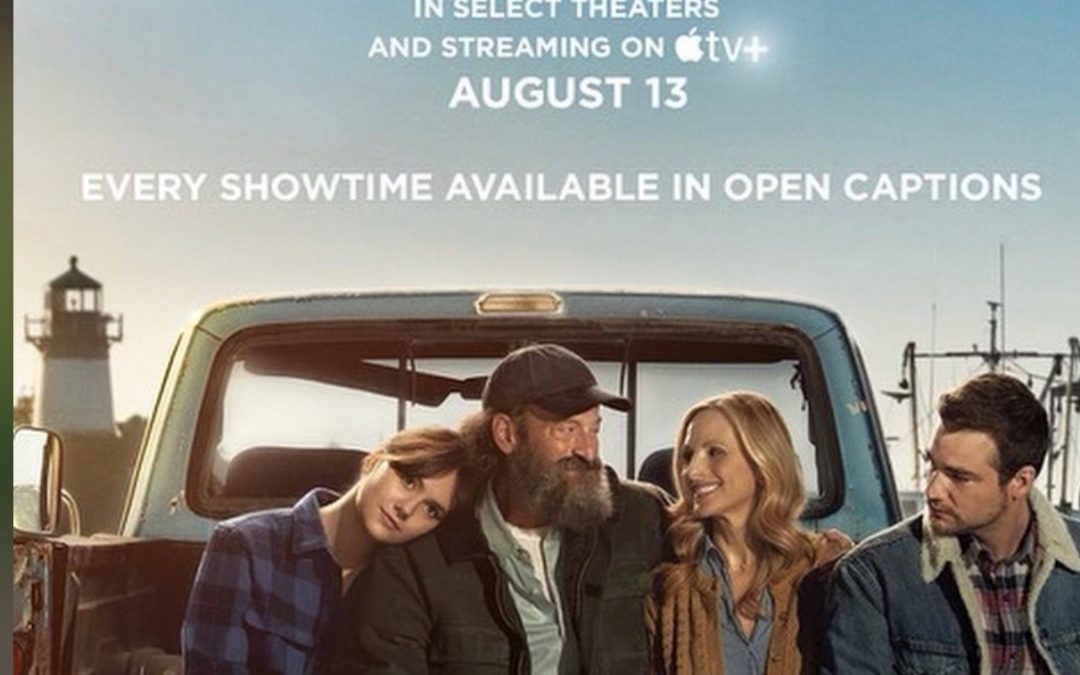
Communication between teens and parents is notoriously tough. It has been fodder for hundreds of coming-of-age stories. CODA (2021), whose title is an acronym for “Child of Deaf Adult,” tells the story of a teenager whose parents and older brother are all deaf and her struggle to find her voice and be seen through her love of singing. This simple premise alone breathes new life into a coming-of-age story and infuses every moment with detail and love.
Ruby Rossi grows up in Gloucester, MA, the only hearing member of her family. All her life, she has acted as the ears and as translator for her mother, father, and brother. When her senior year comes around, she picks choir, mostly to impress a boy. There, she finds her voice through song, a talent she had never been able to share or express with her family. As Ruby starts to move toward her dream of attending a university of the arts, her family moves toward their dream, one that relies heavily on Ruby as their translator. The plot follows the tension between the two as life forces Ruby to choose between expressing her family’s voice or her own.
CODA is a remake of a 2014 French film, La Famille Bélier, which it sometimes mirrors shot for shot. It is one of those examples of what I consider to be a justified remake. They took a look at the movie and said to themselves, “No, we can do better.” The original was a comedy, played much more for laughs, with most Deaf characters played by hearing actors. Much of the humor is at the expense of the Deaf characters. The emphasis on comedy takes the impact away from some of the strongest scenes in the story.
The core story is a simple one: a family trying to get by and a girl expressing herself and getting the boy. What sets it apart, what forms its soul, is outside of language. There are two moments in this movie that, I believe, describe the experience of music better than anything else I’ve seen. The first is when Ruby’s choir teacher, Bernardo Villalobos, asks her what it feels like to sing. Unable to describe it aloud (before joining choir, nobody outside of her family had been around while she sang, so no one had ever heard it), she expresses herself through ASL. It is a moving moment, something that cannot be said out loud. The second example, equally if not more moving, is much deeper into the story, but I think you will know it when you get there.
There is something in CODA, a certain je ne sais quoi (if we want to, like CODA, borrow from the French) that transcends language. Like music, it is something that you have to feel to understand. It demonstrates a deep understanding of its subject matter, displays stunning performances throughout, complete with great chemistry in the cast, especially the Rossi family. But that doesn’t entirely cover it.
There is only one real way to understand the heart of CODA and those making it: watch it. Please. Go to a theater if it’s showing there. Hop on Apple TV, or head to your friend’s house if they have it. Watch this movie.
Tango Shalom has just won Best Film for Peace and Tolerance at the AFI awards for peace and tolerance at the Cannes Film Festival. Earlier in July, we sat down with a star of a film, Judi Beecher. Here’s what we learned.
We met Judi Beecher at the rally for the Battery Park City Community which won the fight to prevent Governor Cuomo from building a large monument for essential workers on their beloved land. While standing on a common ground for the love of grass and trees, we discovered another common ground. Beecher is not only a lover of Downtown but a lover of the arts. She is a multi-award-winning international actress, singer-songwriter, and filmmaker. Talk about a triple threat.
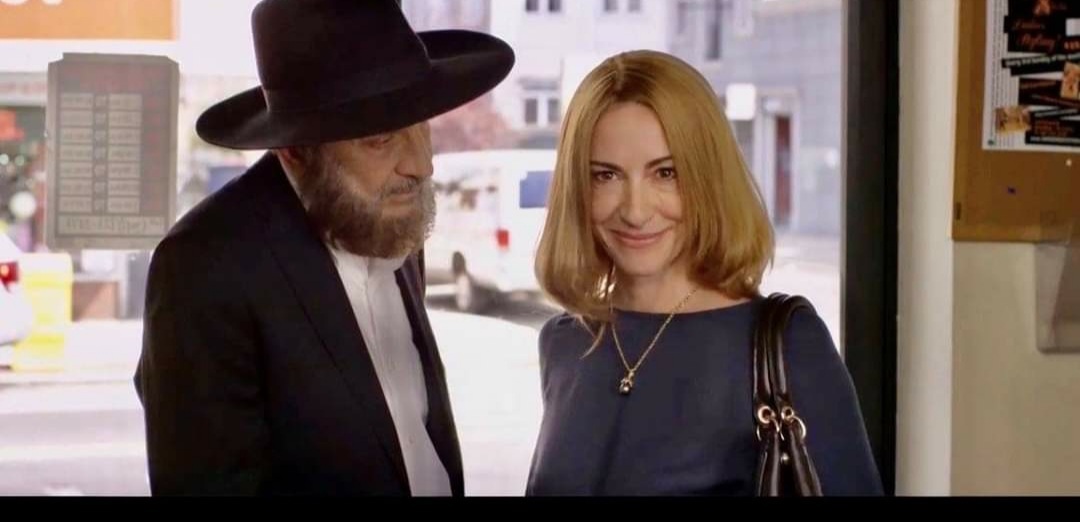
Her most recent project is with the NYC-based-in “Tango Shalom”, a film about a Rabbi who gets a calling from God to become a tango dancer, but his religion prevents him from touching women he is not married to. To get some sage advice, he confides in several other religions. Beecher plays the role of the Rabbi’s wife and tells us all about it – all the way from Cannes Film Festival.
Judi Beecher
Downtown: How did you get into acting? Judi Beecher: I studied business and international relations at Cornell University then interned for six months in a French Bank in Paris while modeling on my lunch breaks. I then briefly had a very successful import-export company at 512 7th Avenue in NY, repping upscale French and Italian clothing lines. When my best friend from college asked me where I saw myself in 5 years, I realized I wasn’t completely happy doing what I was doing. So I read the book “What Color is Your Parachute”. I realized that since I was a child I was always performing, everything pointed to acting, singing, and directing, so I closed my business and enrolled in Acting School.
DT: Who did you study under? JB: I studied with acting masters and founders of the Actors Studio; Uta Hagen, Billy Hickey, Bobby Lewis, and Elaine Stritch at the Stella Adler Conservatory. I also did a two-year Meisner program at Gately Poole and Actors Movement Studio and Playwrights Horizons in NYC. In Los Angeles, I studied with Larry Moss and Gordon Hunt.
DT: Can you name some of your previous works? JB: I was just on the French TV series, “La Garçonne” the same producers as “Call My Agent”. I was in “Taken 3” with Liam Neeson, Dany Boon’s, “Family is Family”, “Law and Order,” “The Shield”, “Jag” and much more. 😉 I won Best Actress for the Romantic Comedy, “Only in Paris” which I also produced, and I was the voice and motion capture of the lead character Madison Paige in the acclaimed video game “Heavy Rain” where I was voted 25 best VO performances of all time by the “Complex” magazine.
DT: What roles did you have in the making of Tango Shalom? JB: I played the role of Raquel Yehuda, the Chassidic Jewish Mother of five and the wife of Rabbi Moishe Yehuda who is told by God that he must enter a televised dance competition to resolve his financial problems. I was also an executive producer on the film.
DT: Where did the inspiration for the film come from? JB: The inspiration came from Jos Laniado who plays Moishe Yehuda and who also co-wrote the film with his brother Claudio Laniado and Joseph Bologna. Jos is an actor, teacher, and also a Tango Dancer, who went regularly to Chabad where he imagined what would happen if a Rabbi got a calling to dance the Tango, and Tango Shalom was born!
DT: What motivated you about this particular film? JB: Tango Shalom is about bringing cultures and religions together in a sweet, loving, fun way. It exemplifies the power of family, love, support, and being open to others’ faiths. In the film, Moishe is forced to ask a Catholic priest, a Muslim imam, and a Sikh holy man for advice. Together, they hash out a plan to help Moshe dance in the Tango contest without sacrificing his sacred beliefs.
The film industry is a powerful medium, just before meeting Claudio Laniado at the Cannes Film Festival. I had recently had an epiphany that I needed to work on projects that would do something to change the consciousness of the planet, a few years later I auditioned for the lead role! The film is a feel-good film, with a message, fabulous music and dance! I can watch the film over and over again and never tire of it.
DT: Tango Shalom has garnered an 80% rotten tomatoes rating already. That’s quite the high score for rotten tomatoes! How does that make you feel? JB: It makes me feel fantastic. The film isn’t out yet and already we have won 7 awards. I can’t wait for it to open in theatres worldwide so everyone can see it!
DT: For how long have you lived in downtown NYC? JB: I’ve lived in Battery Park City/Tribeca for 11 years, it is the longest I’ve lived anywhere!
DT: What is your favorite spot in Downtown NYC? JB: I love Rockefeller Park and Grand Banks when the weather is nice. I love to sit on the sailboat, have dinner and feel like I’m traveling in the Caribbean, in my own backyard.
It was a cloudy summer afternoon. I was home alone, surfing the television, in need of an uplifting movie to watch. After a few minutes too long of no luck, I resorted to a scroll on Instagram. The first post that popped up was one by Netflix, promoting a new film, “2 Hearts”. The main character in the teaser was recognizable: it was Jacob Elordi, the rising star from HBO’s “Euphoria”, and Netflix’s “The Kissing Booth”.
Without hesitation, I queued up the film, given zero context of the plot. “This seems like a simple, light romantic comedy for my relaxed Sunday,” I thought. Two hours later, I was uncontrollably sobbing, irreparably moved by this less-than-simple film. Two days later, I jumped on my email to get in touch with anyone I could that was a part of it. Two weeks later, I heard back from three important men. I sat down to begin writing this story. I felt as though it needed to be spread.
2 Hearts, 2 Intertwined Lives
Jorge Bacardi was born on April 6, 1944, with primary ciliary dyskinesia, a debilitating lung disease. He was also born into his family’s business: Bacardi rum, which produced spirits for 150 years. Jorge met Leslie Bacardi when she was a Pan Am air hostess. They later married. By the age of 64, Jorge’s life was slipping from his fingers. He was in need of a new set of lungs.
Christopher Mark Gregory was born on December 13, 1988. He was raised in Maryland, with his two older brothers, and his mother and father, Eric and Grace. Chris attended Loyola University in New Orleans, where he completed his first and only semester of college. In the middle of his second, Chris suffered a ruptured brain aneurysm. He was later pronounced braindead.
The real Chris Gregory
On March 27, 2008, Jorge and Leslie received a phone call. There was a match found. Jorge would receive Chris’s lungs. Under 24 hours after the transplant, Jorge was walking around the hospital, without a breathing tube. The nurses dubbed him “Superman”.
Soon after his lung transplant, Jorge and Leslie Bacardi gave funds to Mayo Clinic and founded Gabriel House of Care, a nonprofit hospitality house for families awaiting an organ donation. Gabriel was the pseudonym the Bacardis used for Chris until they learned his real name.
What Could Have Been
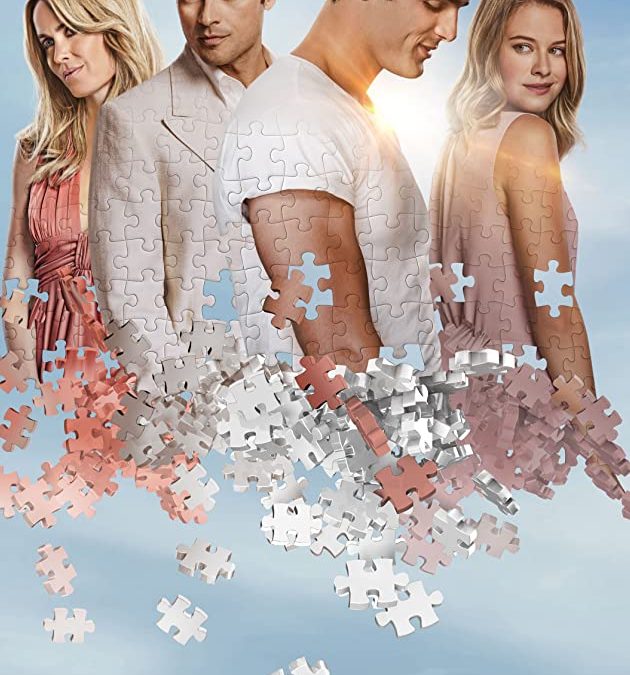
2 Hearts follows two true love stories that lasted a lifetime. One of Jorge and Leslie, and that of Chris and his college girlfriend, who is referred to as Sam in the film. The plot fantasizes about what Chris’s life might have looked like if he had lived on. But unfortunately, it stops short and continues on in another body. In Jorge’s, and in the other six other recipients of Chris’s organs.
The Story Heard ‘Round The World
After speaking with Robin Russin, the co-writer, the director, Lance Hool, and Chris Gregory’s father, Eric Gregory, it became very clear to me that I was not the only one who was so touched by the film. Each three of these men remarked on how people from all over the world reached out to them individually, sharing how moved they were by the story.
The story is a kismet entanglement of and stunning example of right place right time. Not only in the plot of the film, but in the way that all of the puzzle pieces came together to bring the project to fruition.
Robin Russin
Robin Russin
Robin Russin was the co-writer on “2 Hearts”. He is a screenwriter, playwright, and director. He studied at Harvard, Oxford, The Rhode Island School of Design, and UCLA. He is currently a professor at UC Riverside. He was approached by Lance Hool to work on this story.
Marley Gifford: How did you first hear about Chris Gregory’s story?
Robin Russin: Lance Hool approached me about it after his brother Conrad met Jorge Bacardi while on vacation and learned of the lung transplant and how he and the Gregorys got to know each other. I’d worked with Lance on several other projects, and he thought I had the right sensibility for this story. As it progressed, Veronica Hool brought in the idea of exploring the life Chris might have had, but never got the chance to.
MG: What moved you to want to be a part of the film, “2 Hearts”?
RR: I loved this story from the start because it was so moving, both sad and yet uplifting—how out of an unimaginable tragedy, a new friendship emerged. More than that—it was as if through this shared trauma these two families became one, and truly came to love each other.
MG: What sets it apart from other films in its genre right now?
RR: I think, as mentioned, it is different because — other than the fantasy sequence of the life Chris might have had — it is based on the generosity, courage, and decency of these real people. I really fell in love with these people myself.
MG: Did the actors in the film, like Jacob Elordi (Chris) and Adan Canto (Jorge), bring to life what you had co-written in the way you had imagined?
Yes, absolutely— they felt so real and so appropriate to the characters they were portraying. I also want to give a shout-out to Tahmoh Penikett, who perfectly embodied Eric, Chris’s father. But they were all great, and all so on-target with their representations.
MG: This must have been a big success for you, to have a film that you have co-written debut on Netflix? What was that like?
RR: A bit surreal, to tell the truth. I’ve been working in the film business for a long time, but often on projects that never got this kind of response. I’m hearing from people around the world, how moved and inspired they were by the film. I really owe Lance a great debt of gratitude for believing in me and involving me in the film.
MG: What message do you want viewers to take away from the “2 Hearts” film? What lessons did you learn through your journey with the film?
RR: I want people to come away from the film with the feeling that life is short, precious, and unpredictable— but that through love and sacrifice, life can achieve [greater] meaning and purpose than anyone could imagine. I want people to realize that even in death, a gift of life can be given to others, and that grief can be transformed into love.
Lance Hool
Lance Hool directed “2 Hearts”. He has also worked as a writer, executive producer, distribution company chairman, studio chief, and actor. He has produced over twenty-five major motion pictures. Two of which have reached number one at the US box office; “Missing in Action” and “Man on Fire”.
MG: How did you first hear about Chris Gregory’s story?
Lance Hool: My brother Conrad met and befriended one of the couples. He told me their story and asked if I saw a movie in it.
MG: What moved you to want to direct “2 Hearts”?
LH: My first impulse was: this is a great story but a very, very tough movie to make. How do we tell the story of two couples that are so far apart in age and in time? And how do we keep the mystery going of how they get together through a whole 100-minute film? I told him: “This is not in our wheelhouse.” “Man on Fire”, “Missing in Action”, those movies were. And if it was a comedy, “Pure Luck” and “Crocodile Dundee”. But this one was something that I’d been looking for for a long time, which was a story that was really deep in the human aspect of our lives. And so he convinced me, “You can make a great movie out of this story.” And so I jumped into it. Fully dressed, into the swimming pool. I was looking for a human story that was real.
MG: What sets “2 Hearts” apart from other films in its genre right now?
LH: It is a film that relies entirely on human relationships. There are no bad guys, no guns, it is based on pure love.
MG: What was it like working with the actors in the film, like Jacob Elordi and Adan Canto? Did they bring to life your vision for 2 Hearts?
LH: Because it is such a unique story, I always felt that I needed to have actors that weren’t known. You have to get so involved with the character as an audience, the worst thing is to say, “Oh look, there’s Tom Cruise playing a doctor” or whatever. You just can’t get divorced from that for a while, so you’re out of the story. I wanted to capture every character so that the audience could easily identify with [it] immediately. So it was a six-month period of casting, in which we interviewed hundreds of people.
I had an extremely set vision that I saw throughout the film. The first character I cast was the only “known” actor, Radha Mitchell, whom I had worked with in”Man On Fire”. She is a terrific actress who I knew would immediately create a base for all the actors. Jacob Elordi was very green and took a lot of work but was a pleasure to be around, and Adan Canto is a revelation. A tremendous actor and [a] great human being. The other actress with a huge future is Tiera. I worked with a great cast and they performed beautifully. The screenplay is exceptional.
MG: Congratulations on 2 Hearts Reaching Top 10 in the U.S. on Netflix! That must be a gratifying feeling, is it?
LH: It hit number one. We are all thrilled at the millions of people who have seen the film and love it. It is very gratifying.
MG: What message do you want viewers to take away from the “2 Hearts” film? What lessons did you learn through your journey with the film?
LH: Take every moment of your life as it could be your last. Leave a legacy. Remember always that you can’t take it with you and do your absolute best to do good and love.
Eric Gregory
Eric Gregory
Eric Gregory is the father of the late Chris Gregory. Less than four years after the death of his son, he wrote “All My Tomorrows: A Story of Tragedy, Transplant, and Hope.” In 2014, Jorge Bacardi met Conrad Hool, Lance’s brother and eventual producer of the film. From there, the manuscript was turned into “2 Hearts”. Eric carries on the legacy of his son through this story.
MG: What compelled you to open your heart and write your son’s story, “All My Tomorrows”, years after the passing of your son, Chris?
Eric Gregory: The project actually began in February 2012, less than four years after Christopher’s death. By then, we had become close friends with Jorge and Leslie Bacardi and met most of the other four recipients of Christopher’s organs. In the back of my mind, there was always the biological clock; that they might not survive long enough to see this project’s completion. It took me five years to finally get it into print.
Beginning with Jorge and Leslie, among the first questions I asked each of these unique individuals (when we met) was “where were you when you got the call” that an organ was available for them? In Jorge’s case, he received two calls in the same evening, an extremely rare event. But as they each told us of the incredible events surrounding their transplants I started to overlay their experiences with our own. For instance, Nic was sent home (to die) after his failed angiogram about the same time that the second neurological exam confirmed Chris was truly brain-dead. Jorge was waking up from surgery about the time we were cleaning out Chris’ dorm room.
It seemed to me that everyone’s stories were intertwined and really interdependent upon each other. That’s when I thought it was a story that deserved to be told and I tried to convey this when I constructed the narrative of the book.
I really felt like I owed it to Chris to tell his story. I just hoped that I had the perseverance and writing skills to pull it off. I wanted to celebrate my son’s too-short life, promote the cause of organ donation and maybe offer some hope to other grieving parents since this was their story as much as mine.
MG: When did you first learn that your story was going to become a movie? What was that experience like?
EG: I believe in 2014 Jorge Bacardi called me and said that he had met a movie producer while on a cruise ship in the Pacific. The producer was Conrad Hool (Man on Fire), Lance’s brother. During their conversation, Conrad learned of Jorge’s transplant, about Chris, and about the friendship that was developing between the Bacardis and us. Basically, I was in disbelief. Jorge said, “I told him he needs to talk to you because you’re writing a book about it.”
Grace and I went to Santa Fe and met Conrad and discovered how serious he was. So I told Conrad that whenever I had a manuscript completed I would share it with him.
I can tell you that the research and writing process was an emotional roller-coaster and not the cathartic experience people assume it to be. There were many, many moments when I said, “I just can’t do this.” And then I’d get a call from Jorge, “Hey Boss. How’s that book coming? Conrad wants to know when he might get to read it.” And I’d throw myself back into the project.
I assure you thirteen years ago we never imagined talking about books or movies or any of this in the present context. It is very bittersweet and it isn’t lost on us that most donor families do not share this kind of experience.
MG: When did you watch “2 Hearts” for the first time? Were you with your family? Were you emotional when you watched the film for the first time?
EG: We saw it for the first time at a screening in Los Angeles. The Bacardis were there with some of their family and friends. Grace and I flew out from our home in Arizona. I was stunned by how well Jacob Elordi captured Christopher’s mannerisms and spirit.
I have seen the movie six times. I get emotional every time because, while some creative license was taken, the movie is still very true to the real story. So much of the dialogue comes from actual conversations and situations. I have heard from people who were actually there (at the hospital) saying that it is difficult to watch.
Lance told me after the screening, “Thank you for trusting us with your son’s story.” I have never regretted doing so. The Hool family always took care to treat Christopher with respect and to portray the subject of organ transplantation accurately. That meant a lot to us. It was the same meeting the cast and crew. They seemed genuinely invested in the story.
MG: I love the sentiment behind the letters that Jorge sent you and your family, and how he said he was “with Chris” when he was doing something like going fishing. What does that mean to you?
EG: I should mention that Jorge passed away in September but we remain close to his family, especially Leslie. I loved getting those letters and we still love hearing from Leslie or any of their family. They are always special. Those first letters were what stopped our downward spiral and let us know that we could survive the loss of our son.
We were told by the organ procurement agency that we shouldn’t expect to hear from anyone for years maybe. And even then we shouldn’t expect too much. But those first letters and e-mails, Leslie calls them the “love letters,” did more to help us heal than I can describe.
MG: It is clear that Chris’s story has made an impact, and will continue to now that this film is getting out there more. How does that make you feel?
EG: Grateful. Humble. I am getting e-mails from people I’ve not met saying how much Christopher’s story has touched them. It means his life hasn’t really ended and that his love remains very much in this world. Especially when folks tell us that they signed up as an organ donor. That’s why your interview is so important. Most people register to be organ donors at their local motor vehicle administration office. But because New York has so few drivers compared to the rest of the country, they have a smaller donor base but a greater need for organ donors.
While the movie features Chris, it is about donors everywhere. They’re all so young and they die so suddenly. Justin Harrison was only fifteen. Tim Susco was twenty-four. Dru Mayon was ten. Their deaths were unexpected and they left behind holes in their families that can never be filled. Their parents didn’t get to plan their weddings. They had to plan their funerals instead. But somebody else lived because those kids died and that has to count for something. They didn’t die for [no reason]. I think the movie makes that point.
You know each of us has a story and we tell our story in the way we live our life. Well, Chris never got to finish his story. So I tried to tell his story through the medium of print. And now Lance and Robin and the cast and crew have told his story through the medium of film. And that means his story will be told forever because cinema is art and art doesn’t die. The craft of storytelling is powerful and compelling and permanent.
MG: What do you think Chris would say about having his story shared with the world right now?
He wouldn’t say anything. He would just get a wry grin on his face that meant he knew something the rest of us didn’t.
The Importance of Organ Donation Specifically in New York
Chris’s father imparted to me the need for organ donation in the state of New York; a region in which there are fewer drivers than in other states, meaning less opportunity for organ donors, in a state in dire need of organs. If you reside in New York, or anywhere else, consider checking the organ donor box the next time you can. Any opportunity to save a life is one worth taking.
Visit organdonor.gov to make the choice that could save a life, or seven, just like Chris.
Thinking about what to do during the week, or for Labor Day Weekend?
Look no further than your own back, city yard that is.
Don’t have a car to drive to the nearest drive-in movie, not a problem walk, bus, Uber, Citi bike, or subway downtown to our very own oasis at The Greens Seaport District.
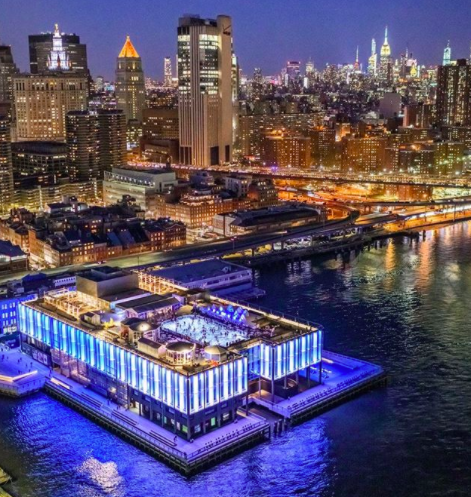
They brought the Seaport Cinema to The Greens the newest Pier 17 rooftop local. Enjoy the big screen with your favorite movies voted for the movies on select Tuesdays & Wednesdays. Enjoy dinner, drinks, and a movie, with spectacular views. Due to COVID-19 guidelines, you must have a reservation to attend. Reservations are limited be sure to sign up early.
Seaport Cinema
Seaport Fit has been back – it’s time get working out before the colder weather sets in. The Greens on The Rooftop at Pier 17 for complimentary small group workouts curated and led by some of New York’s top fitness experts. Can’t make it to a class in-person? They have you covered, workouts posted every Tuesday & Thursday on our IGTV. Strengthen your mind, test your body, and challenge your fitness limits at Seaport Fit.
Peace, Love & Happiness was created in Spring 2020 by Scott Gerber, artist and founder of Tube Dude.
Seaport Art Designed by Scott Gerber
Enjoy, and spread some love from Scott Gerber’s new designs downtown at the Seaport District in New York City, a way for people to come together and heal through art. The “Peace Sign” is a signal to viewers to bring calm to one’s mind when distracted not only by major global events but also by everyday occurrences. By crafting the “Heart”, Gerber urges the viewer to be kind and spread love to those who are suffering.
Lastly, the “Smiley Face” is meant to evoke happiness and positivity to the viewers so that they in turn may spread joy through our communities. Through its simple yet powerful iconography, “Peace, Love and Happiness” sends a universal message of hope and altruism to all that view.