Categories
Featured NYC Real Estate

The Real New York with Emanuele Fiore

“Emanuele identified a real estate niche market amongst his fellow models who had moved to Milan”

At the age of 18, Emanuele Fiore, left Torino, Italy for Milan to start what would be a very successful modeling career, and he did just that and more.

While in Milan, Emanuele identified a real estate niche market amongst his fellow models who had moved to Milan from around the World to try their luck in the Fashion Capital. Emanuele started a real estate agency chain “CASA IN” handling rentals and sales throughout Italy as well as partnering with other agencies throughout Europe.

Having traveled the world for work as a model, Emanuele established a very strong and successful network in the fashion world, celebrities, politicians, and business leaders who are keen to be in the New York Real Estate market.

Being fluent in 4 languages, Italian, English, Spanish, Portuguese, Emanuele has successfully par-laid that international experience into a discerning NY real estate career. Emanuele now with over 10 years of experience in the USA real estate market, can guide you through notable condominiums, cooperatives, and townhouses. He has worked with private individuals and developers to identify a townhouse for purchase, renovation, and resale at significant profits in addition to working with individuals to identify townhouses as long-term homes.

He is adaptive to client needs, discreet, and known for his careful negotiations on their behalf.


DOWNTOWN had the opportunity to interview Emanuele Fiore

DTM: What do you like most about being a broker in New York City?

EF: Being a broker in New York City, is probably the most difficult and competitive city in the world.. a good thing is that the price point of real estate is high compared to everywhere else, so once the hard work is done and the deal is sealed, the commission is worth the immense effort. I very much like being a broker here in New York, the properties are spectacular!

EF: Casa Cipriani,Piccola Cucina, 6 bond Street

DTM: What is your go-to place to just hang out on the weekend in New York City?

EF: Dumbo House

DTM: Share some of the properties this week?

EF: Unit 56 at 23 East 22nd Street in Flatiron entered contract this week, with the last asking price of $16,995,000. Built-in 2009, this gut-renovated condo spans 3,310 square feet with 4 beds and 3 full baths. It features a 360-degree park, river, and city views, a private foyer with a south-facing view, a primary suite with an en-suite bathroom and walk-in closet, hardwood floors, and much more. The building provides a full-time doorman and concierge, a state-of-the-art fitness center, an indoor pool, a steam room, a parlor room, and many other amenities.

Compass – Unit 56 at 23 East 22nd Street

Also signed this week was Unit 36B at 15 Central Park West on the Upper West Side, with the last asking price of $15,250,000. Built-in 2007, this condo spans 2,367 square feet with 2 beds and 2 full baths. It features unobstructed park views, floor-to-ceiling windows, custom white rift oak shelving and storage throughout, a paneled wall that accommodates a gas fireplace, an open eat-in kitchen with high-end appliances, a west-facing primary suite with an en-suite bathroom, and much more. The building provides a large fitness center, a lap pool, a private restaurant/catering, and many other amenities.

Unit 36B at 15 Central Park West
 
Looking for the perfect broker, while finding just the right home, look no further!

Emanuele Fiore
Licensed Real Estate Salesperson
M: 516.653.8279
efiore@compass.com

Cover photo – https://richardsteinbergteam.com/properties/36-e-69th-street-unit-4-ab-newyorkcity-ny-10021-olrs-1968085

Categories
Business Finance News NYC Real Estate

A New York Story

Larry Silverstein has spent a lifetime shaping the New York City skyline. He isn’t done yet.

Photography by Andrew Matusik

“BUY CORNERS,” Larry Silverstein replies without hesitation when asked what the most important lesson is that his father Harry taught him about the real-estate business. “If you buy a corner, you have frontages on at least two streets, right? And if you get lucky enough to be able to buy a block front, that gives you even more possibility.” Trained as a classical pianist, Harry had struggled to provide for the family during the Great Depression, eventually becoming a commercial real-estate broker to make ends meet.

Curious about the business, Larry went to work for his dad after graduating from N.Y.U. in 1952. “Something that hit me very early on,” he recalls, “is that I wanted to own something. I wanted to be an owner.” Lacking cash for a down payment, the Silverstein father-son duo took a page from Harry Helmsley and Lawrence Wien’s playbook, scraping together a syndicate of investors to buy their first property, a shabby industrial loft building on East 23rd Street, in 1957. It may not have been a corner property, but they made it work by converting it to office space and leasing it out to white-collar firms. “It was sink or swim,” Larry says of their first venture. “Failure was not an option.”

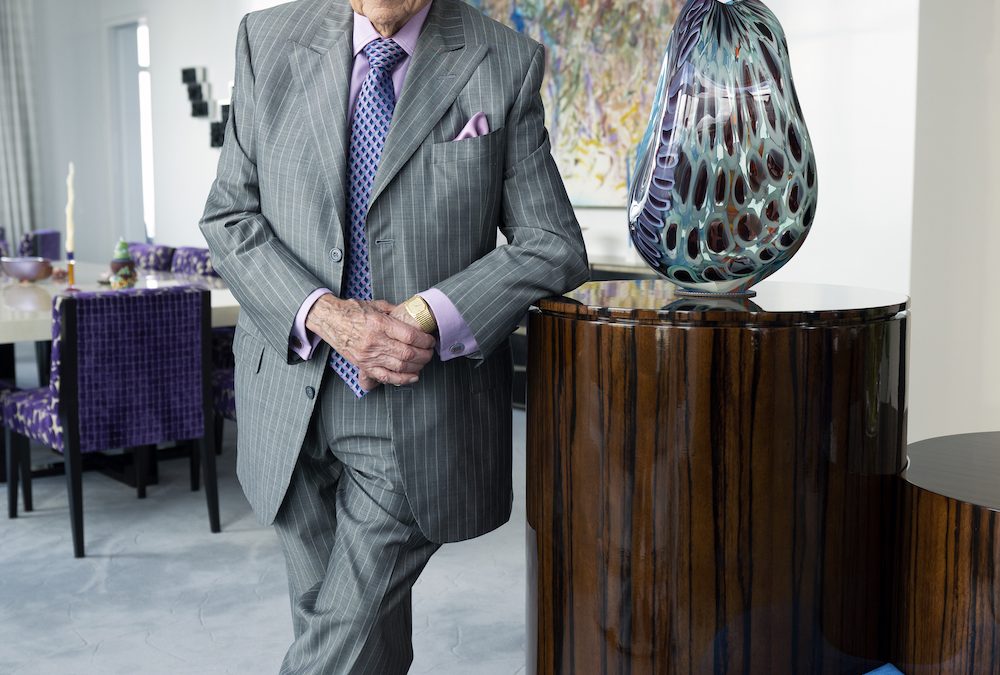
Silverstein, who turned 90 in May, still reports to the office almost every day, invariably dressed to the nines in a double-breasted suit with a colorful tie and matching pocket square, dispensing friendly salutations to everyone he passes along the way. But behind the elegance and old-school charm, the Brooklyn grit and street smarts remain. “It was not a very luxurious existence,” he recalls of his upbringing on the top floor of a six-story walkup in Bed-Stuy, “which wasn’t nearly as trendy of a place as it is today.”

THE REBUILDING

That Brooklyn grit would come in handy when it came to rebuilding the World Trade Center. When Silverstein acquired the Twin Towers in July 2001, he could never have imagined that within months they’d be gone—and he’d be stuck with a 99-year lease that obligated him to continue paying the Port Authority, which owns the site, $10 million a month in ground rent. The lease also stipulated that he rebuild all the office and retail space that had been destroyed on 9/11.

To make matters worse, quite a few of the two dozen companies that had insured the towers—to the tune of $3.5 billion—were refusing to pay Silverstein’s claims. It took five years of litigation and the intervention of New York governor Eliot Spitzer to finally move the needle. “I called him, and I said I can’t collect,” recalls Silverstein. “So, he brought them all to New York and told them, ‘The courts have found that these are your obligations, so if you don’t pay, you’re never gonna do business again in the state of New York.’” In May 2007, they finally agreed to pay Silverstein the $2 billion he was still owed, marking the single biggest insurance settlement in history. A tidy sum indeed, but still not nearly enough to fully rebuild the Trade Center.

Fumihiko Maki Larry Silverstein Norman Foster and Richard Rogers photo by Joe Woolhead
STARCHITECT LIFE: Prtizker-prize winning architects Fumihiko Maki, Lord Norman Foster, and Lord Richard Rogers, with Silverstein, in front of an architectural model of the World Trade Center campus. Maki designed 4 WTC, Foster’s 2 WTC is expected to begin soon, and Rogers designed 3 WTC. (Photo credit Joe Woolhead)

Despite the many professional battles, Silverstein says it was the “naysayers” who personally affected him the most. “The negative voices kept telling me I would never succeed,” he says. “No one will ever come down here. No one will ever rent space. Why are you wasting your time?” Yet he remained determined to rebuild. Not for personal gain—he stood to make little money from the effort and was already well beyond retirement age—but because otherwise would signal defeat. “If you don’t rebuild it, then the terrorists have won, right? I absolutely couldn’t let that happen.” When pressed if there was ever a point at which he doubted that rebuilding office towers adjacent hallowed ground was the right thing to do, his answer is immediate and unequivocal: “Never.”

“[Downtown is] young, it’s vibrant, it’s enormously exciting. Should add ten years to our lives.”

Larry Silverstein at opening of 3 WTC.
OPEN FOR BUSINESS: Silverstein at the opening of 3 World Trade Center in 2018, with CEO Marty Burger, President Tal Kerret, daughter Lisa, son Roger, and architect Richard Paul. Photograph by Joe Woolhead.


Roger, Lisa, Klara, Larry, and Lenny Boxer pose with the ceremonial keys to the World Trade Center on July 24, 2001.


NEW KID ON THE BLOCK

“When we bought the Twin Towers, this place was a ghost town,” Silverstein recalls. “After six o’clock, you could roll a bowling ball down Wall Street or any place you wanted.” But after watching the neighborhood evolve after 9/11—and after more than 30 years in the same Park Avenue apartment—Larry and his wife of 65 years, Klara, decided it was time for a change.

“Something that hit me very early on is that I wanted to own something. I wanted to be an owner.”

Larry Silvestein
Larry Silverstein poses with the children of some of Silverstein Properties’ employees during “Take our daughters and sons to work day ” in 2013.

So, in 2018 they moved into a penthouse at 30 Park Place, one of his developments. The 82-story tower, designed by Robert A. M. Stern to look as if it could have been built a century ago, opened in 2016 and includes residences atop a Four Seasons hotel. “If you look far enough,” Silverstein jokes about the view from his 80th-floor terrace, “you can see the curvature of the earth.”

“Two things really tipped the scale in favor of moving down here,” he explains. “Number one: my grandson said, ‘Poppy, if you move down here, I’ll show you how to go to work by skateboard every morning. It’s two blocks, downhill, piece of cake.’” Number two was
the rejuvenated neighborhood. “It’s young, it’s vibrant, it’s enormously exciting. Should add ten years to our lives.” Downtown’s residential population has more than tripled since 9/11, and according to Silverstein, the area now has the highest work-live ratio in the country: 27 percent.

That ratio will soon tilt even more residential. Last February, the Port Authority awarded Silverstein—in partnership with Brookfield Properties and two other firms—the rights to build 5 World Trade Center on the site where the plagued Deutsche Bank building once stood. The sleek 900-foot-tall tower, designed by Kohn Pedersen Fox, will feature more than 1,300 residential units, a quarter of which will be set aside for households earning less than 50 percent of the neighborhood’s median income.

While significant obstacles to groundbreaking remain, so does Silverstein’s trademark eternal optimism. Not only will the new tower be a model of energy efficiency and sustainability, he says, but “the firms that take office space at the new World Trade Center will be able to house their employees in the same campus if they want to, which is pretty damn unique, right?”

PRESERVING HISTORY

LOVE STORY: Larry and Klara Silverstein in the lobby of 4 World Trade Center.

Silverstein’s earliest memory of downtown is of the “extremely tall, very impressive buildings.” Little did he know he’d one day own one of them, 120 Broadway. Known as the Equitable Building, it became the biggest—if not the tallest— skyscraper in the world when it opened in 1915, occupying an entire city block between Cedar and Pine streets. It was so big that it spawned the city’s 1916 Zoning Resolution, which limited new construction to a percentage of lot size to ensure at least a modicum of sunlight could reach the surrounding canyons.

When Silverstein bought the landmarked building in 1980, many of its historic details had been neglected, if not concealed outright. “The previous owner had no feeling, no sensitivity to the importance of historic landmarks,” he recalls. “They hung acoustical drop ceilings without any kind of architectural detail at all. Added fluorescent lights and so forth. It was dreadful.” So, Silverstein immediately set about renovating it, carefully restoring such original details as the terra-cotta window frames and the lobby’s Tennessee-pink-marble floor, and vaulted, coffered ceiling with carved rosettes. “It makes such a difference,” he says. “Tenants appreciate what a detailed restoration can produce.”

ART & COMMERCE

Something tenants also appreciate, Silverstein says, is art. When he opened the original Seven World Trade Center, in 1987, he immediately realized he had a big problem on his hands. “I looked at the lobby, and I said to myself, I’ve gone crazy.” He explains that he had “fallen in love with” a particular carmen-red granite he’d personally selected from a Finnish quarry for the building’s façade.

But he didn’t stop there. “The entrance to the building? Carmen-red granite. The toilets? Carmen-red granite. The elevators? Carmen-red granite. Everything! Carmen-red granite. The place looked like a mausoleum.” He called Klara in a panic and asked her to come down and have a look for herself, hoping maybe she wouldn’t think it was all that bad. “One look around and she said, ‘You know what? Looks like a mausoleum.’”

They agreed the lobby could use some art to spruce it up, so they set about scouring the city for contemporary works large enough to adequately cover all that carmen-red granite. One of their first purchases was a fourteen-by- six-foot Roy Lichtenstein entablature. Works
by Frank Stella, Ross Bleckner, and Alexander Calder soon followed. “We ended up collecting a whole realm of first-class contemporary art,” he says. “That taught me something, that is art has a huge impact on people’s attitude towards buildings, a very positive attitude. It made an enormous difference.”

“We ended up collecting a whole realm of first-class contemporary art. Art has a huge impact on people’s attitudes towards buildings.”

Larry Silverstein at the piano.
AT HOME: Larry Silverstein at the piano.

Larry with his wife Klara, in their apartment atop the Robert A.M. Stern designed 30 Park Place.

“Whether I’m still around or not, the Trade Center will be done. And what we will have put back is vastly superior, not just in terms of quality or architectural design. The parks, the neighborhood-totally transformed.”

Art plays a bigger role than ever in and around the new World Trade Center campus. Not only are there remarkable lobby installations, like Jenny Holzer’s “For 7 World Trade” and Kozo Nishino’s “Sky Memory,” Silverstein even hired street artists Stickymonger, Ben Angotti, and BoogieRez to paint the corrugated metal walls that sheathe the base of what will eventually become 2 World Trade Center, now an entrance to the transit hub.

BACK TO WORK

“There’s been no shortage of naysayers all over again,” Silverstein replies when asked if he sees parallels between post-9/11 and post-pandemic downtown. “New York is done, finished. No one’s ever coming back. The office buildings are gonna be vacant. Fold up the tent and steal away into the night.” Not surprisingly, he’s as sanguine as he was after 9/11 about the potential for recovery after covid. “Will it be 100% back to the way it was? No, I don’t think so. But people will come back. Of course. It’s gonna happen. So much comes out of talking together around the water cooler.”

And what does he think downtown will look like in another 10 years? “Well, whether I’m still around or not, the Trade Center will
be done,” he says. “And what we will have put back is vastly superior, not just in terms of quality or architectural design. The parks, the neighborhood—totally transformed.”

“Buy corners” may have been the best professional lesson Harry Silverstein imparted to his son, but it’s this bit of wisdom that endures: “Whatever you do in your life, be truthful with people,” Harry told him. “And never equivocate.” Impeccable advice for an age where truth has become all too relative. DT

Categories
Architecture Design Featured Real Estate

The Bay is Framed by this Modern A-frame

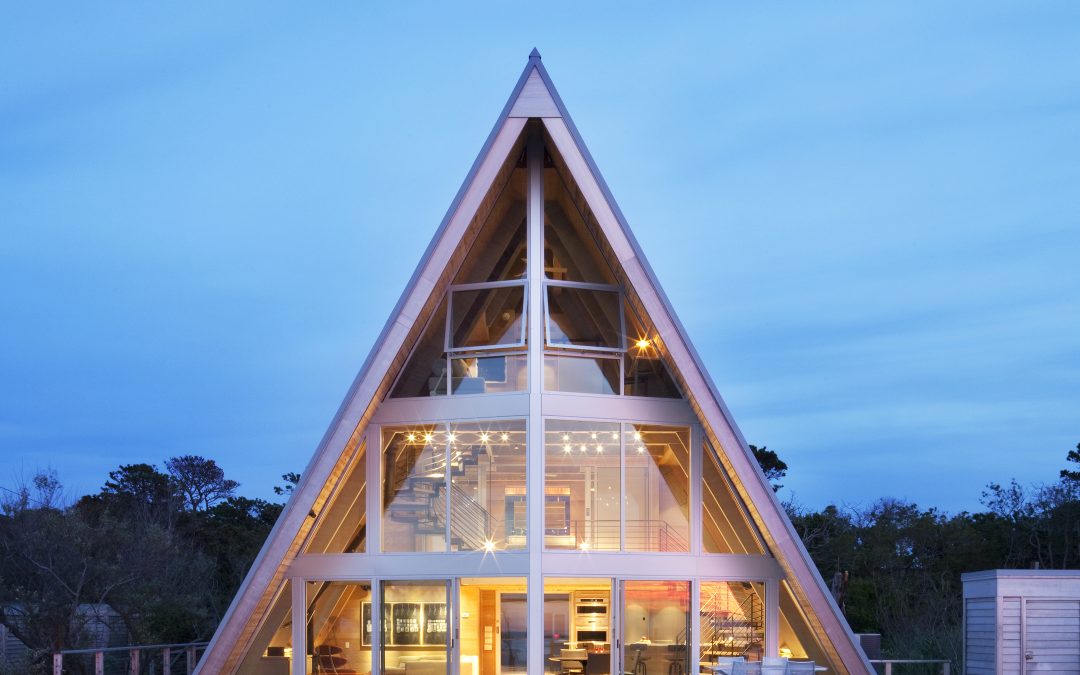
IN A TOP-TO-BOTTOM RENOVATION of a bay-side A-frame home on Fire Island, Bromley Caldari turned a seasoned beach rental into a sleek, modern hide-out. Rethinking the iconic 1960s A-frame form, architects R. Scott Bromley and Jerry Caldari broke through the envelope of the building to weave a sculptural staircase through the airy three-story structure. Working with local builder Walter Boss, the team made preserving the surrounding natural habitat and pristine views a priority.


photos by Mikiko Kikuyama


The A-Frame home had a spiral staircase that split the center of the home; four cramped, dark bedrooms; a leaky roof; and a cracked pile foundation. It was not the beautifully designed vacation home that is so often associated with Fire Island Pines. However, the architects, builders, and clients saw the potential, and the poolside sunsets over the Great South Bay were spectacular.

Blocking that great view and occupying the heart of the house was the old, six-foot-diameter steel spiral staircase. The clients were willing to sacrifice a bedroom or two to remove that remnant.


photos by Mikiko Kikuyama


With the lot coverage at its limit, Bromley and Caldari took advantage of a local law that permits bay windows to project a maximum of two feet from the building envelope. The new stair would tuck into two large bay windows staggered at different elevations on each side of the house, with a cat-walk balcony off the master bedroom to connect the two sides. Views of the bay are framed at each elevation.


photos by Mikiko Kikuyama


On the main level, of this A – Fram is a double-height living and dining room stretches the length of the window-clad North façade. The open kitchen and house utilities run along the south side. The master bedroom suite has full-height glass sliding doors to take advantage of the view. When privacy is required, the sliding glass doors fog up at the flick of a switch.


photos by Mikiko Kikuyama


Under the peak on the third level is a quiet second bedroom and den, which doubles as a third bedroom when needed. The two rooms are connected by a walkthrough bathroom with a glass shower enclosure on one side and a glass-enclosed powder room on the other. Pocket doors at each end allow for privacy

Categories
Real Estate

Why You Must Avoid Letting Foundation Problems Get Worse


The foundation of your home is crucial to the stability of the structure, which is something that most of us are aware of. At the same time, most of us rarely give a second thought to the foundation of our homes because we never expect anything to go wrong with it. In addition, it is not something that we physically see, which is why we tend to put it out of our minds. However, damage to the foundation can occur for a range of reasons, and the repercussions can be serious.

If you do believe your foundation is damaged, it is important that you do not let these problems get worse and that you get the damage assessed as soon as you can by a foundation repair specialist. While you cannot see the foundation itself, there are some signs that you can look out for as they may suggest there is foundation damage. Some of these include cracks appearing in floors and walls, areas of the floor sinking, walls beginning to bow or bulge, and windows and doors around the home getting stuck all the time.

The Impact of Foundation Damage that Is Not Repaired

In the event you do not take action to have foundation damage at your home repaired, a range of problems can arise. Some of the effects of foundation damage include:

Creating Dangers Around Your Home

One of the problems that can occur as a result of damage to the foundation of your home is that it can create dangers around your property. All sorts of hazards can arise from unaddressed foundation problems, and these can put your household and any visitors to your home at risk. Some of the problems that can create dangers are uneven floor surfaces and weakened walls from cracks and movement. In addition, sticking doors and windows can also increase the risk of injury to those trying to open and close them.  

Affecting the Appearance of Your Property

Another thing that foundation damage can result in is a negative impact on the appearance of your home. We all want to inject aesthetic appeal into our properties and ensure they look attractive both inside and out. However, when you have cracked walls and uneven floors, this can leave your property looking in bad condition. These issues can have a serious effect on the aesthetics of your home in many ways.

Lowering the Value of Your Home

Another key thing to keep in mind is that foundation problems can have a serious impact on the value of your home. The fact that there are foundation issues that have not been rectified could have a huge negative impact on your property value as well as on salability. In addition, the effects of foundation damage such as sunken floors and cracked walls could further negatively impact your property value and your ability to sell your home.

These are among the many reasons why it is important to ensure any foundation problems are not left unaddressed. 


Categories
Lifestyle NYC Real Estate

Why multicultural cities are great places to live and work

Have you ever thought about all the benefits that living in a multicultural city brings? From the conversations you have to the food you eat, the entertainment you enjoy, and the learning opportunities you have, there’s a great deal to be grateful for if you live in such a city.

You can meet more interesting people

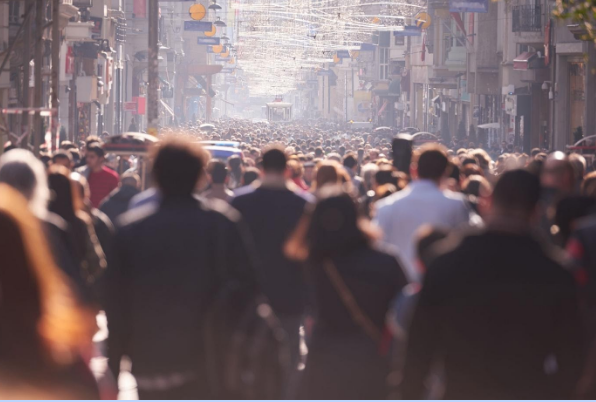
When everybody shares the same background and has been raised with the same set of ideas, what’s to talk about? Multicultural cities are full of interesting people with engaging stories to tell. They’ll open up your eyes to the wider world and make you feel grateful for the good things you have, as well as inspiring you to discover new things. Make friends with people from different backgrounds, and you’ll find yourself rethinking aspects of your own identity, exploring things that you took for granted, and ultimately coming to know yourself better. Meanwhile, your city will benefit from the wealth of different ideas that a diverse community brings. For instance, in the workplace, it makes it easier to find solutions when problems arise and adapt to new ways of doing things. First-generation immigrants have a lot of experience where that’s concerned.

Kids get a better education

Teachers often note that in cities with recent immigrants – especially those who have escaped from war zones and other places where their education was disrupted – everybody works harder, with the immigrant kids’ enthusiasm inspiring others. Kids who come from the same city but have grown up with different cultural traditions or have had different experiences because of their race or ethnicity also improve the educational environment. As the academic Bree Picower noted, they can help identify biases in the system, which may not be evident to those with majority privilege. They can also share different perspectives, which benefit all the children to develop a richer and more nuanced understanding of the information with which they’re presented. That helps to improve the critical thinking skills they will use for the rest of their lives.

It’s a creative space

Where lots of different perspectives and traditions come together, it’s not just good for kids – it creates a fusion of ideas that provides fuel for creative work. It’s no surprise that cities like New York, London, and Toronto are creative powerhouses, nor that many of their most productive arts organizations are known for their diversity. People from different backgrounds bring different folklore and different story formats and unique musical traditions, styles of theater, and so forth. They learn from each other and find new ways of looking at the world. Different religious, moral, and philosophical ideas also enrich creative output and help it speak to diverse audiences. Creative work produced in this way has great potential to travel and be understood in different places worldwide. However, if you’re a creative person – even at an amateur level – there’s nothing like being in the belly of the beast.

Amazing things happen with food

Just as the arts benefit from a fusion of traditions, so does the cooking. From New York to old Amsterdam, there’s a history of innovation in the same areas where one can enjoy a different ethnic cuisine every day of the month. You’ll also find delightful little twists on old favorites where chefs from different backgrounds cross over. Food festivals are also a real treat in cities like this, with something happening almost every week of the year. They provide the ideal starting point for those wanting to sample the best of cuisine they’ve never tried. People who like to experiment at home can obtain a much larger variety of ingredients than they would find elsewhere. It’s not just food, either – if you like coffee, tea, or liquor, you’ll encounter many more variants, and every one of them with a story attached.

It’s easy to learn languages

Did you know that more than half of the world’s population speaks two or more languages fluently? Although most Americans know at least a small amount of Spanish, true bilingualism remains rare outside recent immigrant communities. That puts us at a disadvantage when traveling and limits our access to information, meaning that we miss out on some beautiful poetry and prose which can never be fully captured in translation. Learning another language will open up your horizons and give you a much richer understanding of your own language as you start to understand why words sound and interact as they do. It’s much easier to do so in a multicultural city where you can hear other languages every day and perhaps find native speakers who don’t mind answering your questions or helping you practice.

All these advantages make multicultural cities a great place to spend time, and they are deeply rewarding to live in. We all live richer, more fulfilling lives when we celebrate our variety.


Categories
Lifestyle NYC Real Estate

Looking for a House in the Bronx

 How To Find the Perfect Place To Live


Moving to a new city brings with it both stress, and excitement. A good bit of anxiety comes with any move, what sort of house should you find for yourself, the type of neighbourhood you may want to move into, transportation, and lifestyle are all important decisions. Major cities in the US can sometimes be very difficult to manoeuvre, and it’s natural to be stricken with anxiety not only with how challenging such a bustling metropolis can be but also, the many varieties and options available. Such factors are especially true for a city as perfect and simultaneously as intimidating as New York.

The best and worst thing about New York City is that people here do not care about what you did with your past life. You could have been a successful entrepreneur, or possibly have had a very difficult life, but people will care more about what you will contribute to your new city and life here. New York is the perfect place for a fresh start. 

The Bronx 

The Bronx is a borough in New York City, which corresponds with Bronx county. It is one of the fourth-largest areas, fourth-highest population, and the third-highest population density in New York City. Lying North East of Manhattan, across the picturesque Harlem River, the Bronx has an area of 42 miles. It has both high and middle-income neighbourhoods, including Pelham Bay and Pelham Gardens, Riverdale, Fieldston, Morris Park, etc. Studded with parkland (about one-fifth of the total land area) and some astute shopping centres like The Hub, Gateway Centre, and Southern Boulevard. The Bronx is a beautifully aesthetic place to live in. This coupled with excellent connectivity through the New York subway, buses, and major highways, your experience settling down in the Bronx is sure to be nothing short of sublime.

What Are The Things to Look Out For

Research the neighbourhoods

Honestly, the biggest favour you can do for yourself before moving into a new place is to become familiar and aware of the area’s various neighbourhoods. A quick Google search will tell you what neighbourhoods exist in the Bronx, but beyond that, it is advisable to take a day to drive out, spend some time to see if the neighbourhood will fit with your needs and if this is what your budget allows. Every neighbourhood varies with regards to your potential neighbours and the people who live there, accessibility, schools, shopping, affordability, and all that it has to offer. 

Selling vs Renting

There are no two ways you can consider when it comes to a new home, renting or buying. Property in New York can cost a fortune, some may not be able to afford to buy a new house, especially, without good credit and a loan. If you’re the kind that doesn’t want to invest in a loan at this time, or if you do not have an intention to buy property, consider renting. Should you decide to purchase or rent a home, be sure to secure good homeowners/renters insurance. No matter where you live, especially in a city like New York, you must be prepared for future storms, theft, and or fires. Be sure to check Homeowners Insurance Made for New Yorkers

Most landlords will look at your credit score before they consider accepting your rental application. Assuming your credit comes back with a good rating. Be advised, New York requires that you earn around 50 times the rental rate to be accepted to lease. Some landlords may ask for a guarantor, who is able to step in to pay, should you default. A guarantor is required to make 100 times the rent, in order to qualify. Some landlords require the guarantor to live in the same state.


Looking for a House in the Bronx
Via Nelson Mejia Jr. on Flickr


Miscellaneous Details

You may not consider certain details to be as important, but they could come up when you are least expecting. New Yorkers love their pets, and over the years New York has become pet friendly, in all areas from housing to hotels. However, there are still properties who may not be pet-friendly. We’ve heard that landlords may not advise you about their no pet policy, until after you arrive with your pet. Be sure to discuss this upfront before signing any lease. Internet access, be sure to ask which provider is available in the area you have chosen, inquire about water and electricity, are they included in your lease or will you have to provide? We suggest, make a list of all the small things that are essential to you so that you are prepared before renting your property. It’s better to have that checklist on hand.

Food/Dining

Many city dwellers choose to rotate cooking, ordering in, or dining out. So it’s important to know what options are available and nearby. Doing your research before you sign a new lease, on the types of restaurants, delis, their rates, delivery options, dine-in hours, etc., is a good idea. Food delivery services such as UberEats, Seamless, Postmates and Grubhub are New Yorkers go-to delivery options. 

Transportation

Living in a city like New York, be sure to factor in transportation. What’s available and where is the closest subway and or bus stop? Unless you choose to have a car, the subway and bus are two of the best ways to get around this great city.

Owning a car, be sure to consider insurance, parking, alternate side parking on city streets, and petrol. There are other options such as Uber, Via and Lyft to get you where you need to go.

Should you consider driving and or taking a car service, be sure to look into road maintenance or rush hour, heavy traffic and possible accidents. Download the NYC subway and or public transportation apps, these are the best way to keep on top of your daily travel. Biking is also a great option, New Yorkers have taken to City Bike and or purchasing their own bikes for city travel. We highly recommend cycling, a great way to get your daily exercise and see the city.

Living in New York or any large city is not always easy, but if you do your homework, educate yourself and prepare, you will be sure to make right decisions for you, there is nothing more exciting, educational, cultural and refreshing than living in New York!