Categories
Business Culture Entertainment Music NYC

Making Waves

Blonde Records’ Founder Rebecca Autumn Sansom (first left) Seeks Inclusivity with Wavy Awards.

OCTOBER 23RD, 2021 MARKED THE FIRST EVER WAVY AWARDS SHOW, the name making  a play on digital audio WAV files. The show is  a celebration of “historically excluded talent,”  including musicians that are women, members  of the LGBTQ+ community, and persons with  disabilities. As each presenter took the stage at  Abrons Arts Center, they leaned into the mic and  described themselves — their hair color, outfit, or  personal aesthetic — for blind audience members  and nominees. The awards also featured two  American Sign Language interpreters who  took turns interpreting the speeches and  performances. For the brainchild of Blonde Records Founder Rebecca Autumn Sansom, The  Wavy Awards marked an ending, as well as a new  beginning, in her career.  

Sansom never intended to get into the music  industry. She considers herself a “filmmaker  trapped in an artist’s body.” She was at Stanford  doing performance and theater when she met  “M the Myth,” an artist, collaborator, and then undergrad. “I’m a filmmaker, so I’m drawn to  captivating subjects. So really, I would just film  these people. And then I realized after helping  M with their music video campaign for ‘Let’s Get  Drunk Anyway,’ that cheerleading artists, filming  them, and encouraging their careers is a job  called management.” She formed Blonde Artist  Management in New York City, named after  Marilyn Monroe, with whom she identifies and  felt might have lived with different support and  management.  

For five years, Sansom ran Blonde Artist Management. This past year she also founded  and ran Blonde Records and Blonde Music News, a weekly NYC music podcast. The Wavys were a big step for Blonde and its mission, but  also for Sansom, who is the first to recognize her  own privileges and those whose lack of privilege  often leaves them out of the spotlight.  

The Wavy Awards was always going to be a pivot point for Sansom. “The Wavys was going to be my last grand gesture,” says Sansom, “and then I was going to gather information and see what the next steps were for Blonde.” 

Wavy Awards 2021. Photo by Stephanie Aguello.

The ball started rolling in December 2020,  after a year of weekly Blonde Music News episodes. “I told (my team) about this idea and how we have enough people, enough artists to have a pretty robust pool to glean  from.”  There were eleven people at the first meeting. Then the team started expanding, with partnerships with organizations like Rampd  (Recording Artists and Music Professionals with Disabilities), local news website Scenes from the Underground, and Shira Gans from the NYC Mayor’s Office of Media and Entertainment. By the time the event actually happened, Sansom and partners were staring down a full house. 

The response was overwhelming. The Wavys have gone from a one-off event, into an annual awards show. It helped Sansom find a new direction; she will continue to support her coterie of artists, but the Wavy Awards has become her flagship effort. Blonde Music News, for example, has rebranded as Wavy Music News. “New York is the creative capital of the world and draws a lot of diversity,” says Sansom, “I think creating accessible spaces is the most important thing we can do right now, with the momentum that we have.”

In addition to the Wavys, Sansom has a film, Reckoning with the Primal Wound, coming out in 2022. It has already been accepted into seven film festivals. DT

For more information on The Wavy Awards, visit thewavys.org.

Categories
Business Finance News NYC Real Estate

A New York Story

Larry Silverstein has spent a lifetime shaping the New York City skyline. He isn’t done yet.

Photography by Andrew Matusik

“BUY CORNERS,” Larry Silverstein replies without hesitation when asked what the most important lesson is that his father Harry taught him about the real-estate business. “If you buy a corner, you have frontages on at least two streets, right? And if you get lucky enough to be able to buy a block front, that gives you even more possibility.” Trained as a classical pianist, Harry had struggled to provide for the family during the Great Depression, eventually becoming a commercial real-estate broker to make ends meet.

Curious about the business, Larry went to work for his dad after graduating from N.Y.U. in 1952. “Something that hit me very early on,” he recalls, “is that I wanted to own something. I wanted to be an owner.” Lacking cash for a down payment, the Silverstein father-son duo took a page from Harry Helmsley and Lawrence Wien’s playbook, scraping together a syndicate of investors to buy their first property, a shabby industrial loft building on East 23rd Street, in 1957. It may not have been a corner property, but they made it work by converting it to office space and leasing it out to white-collar firms. “It was sink or swim,” Larry says of their first venture. “Failure was not an option.”

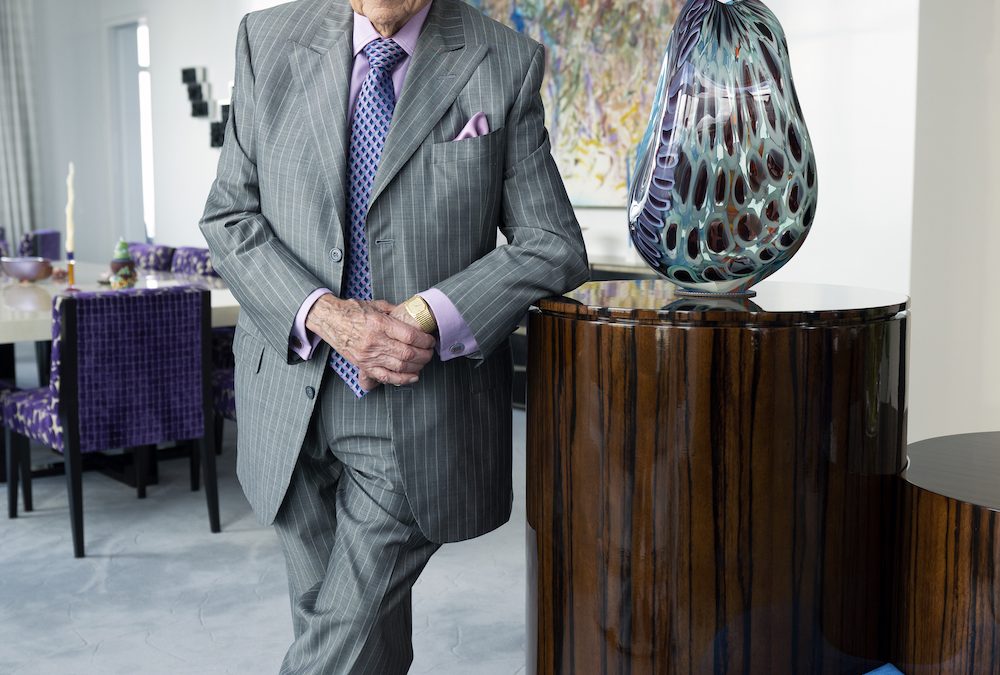
Silverstein, who turned 90 in May, still reports to the office almost every day, invariably dressed to the nines in a double-breasted suit with a colorful tie and matching pocket square, dispensing friendly salutations to everyone he passes along the way. But behind the elegance and old-school charm, the Brooklyn grit and street smarts remain. “It was not a very luxurious existence,” he recalls of his upbringing on the top floor of a six-story walkup in Bed-Stuy, “which wasn’t nearly as trendy of a place as it is today.”

THE REBUILDING

That Brooklyn grit would come in handy when it came to rebuilding the World Trade Center. When Silverstein acquired the Twin Towers in July 2001, he could never have imagined that within months they’d be gone—and he’d be stuck with a 99-year lease that obligated him to continue paying the Port Authority, which owns the site, $10 million a month in ground rent. The lease also stipulated that he rebuild all the office and retail space that had been destroyed on 9/11.

To make matters worse, quite a few of the two dozen companies that had insured the towers—to the tune of $3.5 billion—were refusing to pay Silverstein’s claims. It took five years of litigation and the intervention of New York governor Eliot Spitzer to finally move the needle. “I called him, and I said I can’t collect,” recalls Silverstein. “So, he brought them all to New York and told them, ‘The courts have found that these are your obligations, so if you don’t pay, you’re never gonna do business again in the state of New York.’” In May 2007, they finally agreed to pay Silverstein the $2 billion he was still owed, marking the single biggest insurance settlement in history. A tidy sum indeed, but still not nearly enough to fully rebuild the Trade Center.

Fumihiko Maki Larry Silverstein Norman Foster and Richard Rogers photo by Joe Woolhead
STARCHITECT LIFE: Prtizker-prize winning architects Fumihiko Maki, Lord Norman Foster, and Lord Richard Rogers, with Silverstein, in front of an architectural model of the World Trade Center campus. Maki designed 4 WTC, Foster’s 2 WTC is expected to begin soon, and Rogers designed 3 WTC. (Photo credit Joe Woolhead)

Despite the many professional battles, Silverstein says it was the “naysayers” who personally affected him the most. “The negative voices kept telling me I would never succeed,” he says. “No one will ever come down here. No one will ever rent space. Why are you wasting your time?” Yet he remained determined to rebuild. Not for personal gain—he stood to make little money from the effort and was already well beyond retirement age—but because otherwise would signal defeat. “If you don’t rebuild it, then the terrorists have won, right? I absolutely couldn’t let that happen.” When pressed if there was ever a point at which he doubted that rebuilding office towers adjacent hallowed ground was the right thing to do, his answer is immediate and unequivocal: “Never.”

“[Downtown is] young, it’s vibrant, it’s enormously exciting. Should add ten years to our lives.”

Larry Silverstein at opening of 3 WTC.
OPEN FOR BUSINESS: Silverstein at the opening of 3 World Trade Center in 2018, with CEO Marty Burger, President Tal Kerret, daughter Lisa, son Roger, and architect Richard Paul. Photograph by Joe Woolhead.


Roger, Lisa, Klara, Larry, and Lenny Boxer pose with the ceremonial keys to the World Trade Center on July 24, 2001.


NEW KID ON THE BLOCK

“When we bought the Twin Towers, this place was a ghost town,” Silverstein recalls. “After six o’clock, you could roll a bowling ball down Wall Street or any place you wanted.” But after watching the neighborhood evolve after 9/11—and after more than 30 years in the same Park Avenue apartment—Larry and his wife of 65 years, Klara, decided it was time for a change.

“Something that hit me very early on is that I wanted to own something. I wanted to be an owner.”

Larry Silvestein
Larry Silverstein poses with the children of some of Silverstein Properties’ employees during “Take our daughters and sons to work day ” in 2013.

So, in 2018 they moved into a penthouse at 30 Park Place, one of his developments. The 82-story tower, designed by Robert A. M. Stern to look as if it could have been built a century ago, opened in 2016 and includes residences atop a Four Seasons hotel. “If you look far enough,” Silverstein jokes about the view from his 80th-floor terrace, “you can see the curvature of the earth.”

“Two things really tipped the scale in favor of moving down here,” he explains. “Number one: my grandson said, ‘Poppy, if you move down here, I’ll show you how to go to work by skateboard every morning. It’s two blocks, downhill, piece of cake.’” Number two was
the rejuvenated neighborhood. “It’s young, it’s vibrant, it’s enormously exciting. Should add ten years to our lives.” Downtown’s residential population has more than tripled since 9/11, and according to Silverstein, the area now has the highest work-live ratio in the country: 27 percent.

That ratio will soon tilt even more residential. Last February, the Port Authority awarded Silverstein—in partnership with Brookfield Properties and two other firms—the rights to build 5 World Trade Center on the site where the plagued Deutsche Bank building once stood. The sleek 900-foot-tall tower, designed by Kohn Pedersen Fox, will feature more than 1,300 residential units, a quarter of which will be set aside for households earning less than 50 percent of the neighborhood’s median income.

While significant obstacles to groundbreaking remain, so does Silverstein’s trademark eternal optimism. Not only will the new tower be a model of energy efficiency and sustainability, he says, but “the firms that take office space at the new World Trade Center will be able to house their employees in the same campus if they want to, which is pretty damn unique, right?”

PRESERVING HISTORY

LOVE STORY: Larry and Klara Silverstein in the lobby of 4 World Trade Center.

Silverstein’s earliest memory of downtown is of the “extremely tall, very impressive buildings.” Little did he know he’d one day own one of them, 120 Broadway. Known as the Equitable Building, it became the biggest—if not the tallest— skyscraper in the world when it opened in 1915, occupying an entire city block between Cedar and Pine streets. It was so big that it spawned the city’s 1916 Zoning Resolution, which limited new construction to a percentage of lot size to ensure at least a modicum of sunlight could reach the surrounding canyons.

When Silverstein bought the landmarked building in 1980, many of its historic details had been neglected, if not concealed outright. “The previous owner had no feeling, no sensitivity to the importance of historic landmarks,” he recalls. “They hung acoustical drop ceilings without any kind of architectural detail at all. Added fluorescent lights and so forth. It was dreadful.” So, Silverstein immediately set about renovating it, carefully restoring such original details as the terra-cotta window frames and the lobby’s Tennessee-pink-marble floor, and vaulted, coffered ceiling with carved rosettes. “It makes such a difference,” he says. “Tenants appreciate what a detailed restoration can produce.”

ART & COMMERCE

Something tenants also appreciate, Silverstein says, is art. When he opened the original Seven World Trade Center, in 1987, he immediately realized he had a big problem on his hands. “I looked at the lobby, and I said to myself, I’ve gone crazy.” He explains that he had “fallen in love with” a particular carmen-red granite he’d personally selected from a Finnish quarry for the building’s façade.

But he didn’t stop there. “The entrance to the building? Carmen-red granite. The toilets? Carmen-red granite. The elevators? Carmen-red granite. Everything! Carmen-red granite. The place looked like a mausoleum.” He called Klara in a panic and asked her to come down and have a look for herself, hoping maybe she wouldn’t think it was all that bad. “One look around and she said, ‘You know what? Looks like a mausoleum.’”

They agreed the lobby could use some art to spruce it up, so they set about scouring the city for contemporary works large enough to adequately cover all that carmen-red granite. One of their first purchases was a fourteen-by- six-foot Roy Lichtenstein entablature. Works
by Frank Stella, Ross Bleckner, and Alexander Calder soon followed. “We ended up collecting a whole realm of first-class contemporary art,” he says. “That taught me something, that is art has a huge impact on people’s attitude towards buildings, a very positive attitude. It made an enormous difference.”

“We ended up collecting a whole realm of first-class contemporary art. Art has a huge impact on people’s attitudes towards buildings.”

Larry Silverstein at the piano.
AT HOME: Larry Silverstein at the piano.

Larry with his wife Klara, in their apartment atop the Robert A.M. Stern designed 30 Park Place.

“Whether I’m still around or not, the Trade Center will be done. And what we will have put back is vastly superior, not just in terms of quality or architectural design. The parks, the neighborhood-totally transformed.”

Art plays a bigger role than ever in and around the new World Trade Center campus. Not only are there remarkable lobby installations, like Jenny Holzer’s “For 7 World Trade” and Kozo Nishino’s “Sky Memory,” Silverstein even hired street artists Stickymonger, Ben Angotti, and BoogieRez to paint the corrugated metal walls that sheathe the base of what will eventually become 2 World Trade Center, now an entrance to the transit hub.

BACK TO WORK

“There’s been no shortage of naysayers all over again,” Silverstein replies when asked if he sees parallels between post-9/11 and post-pandemic downtown. “New York is done, finished. No one’s ever coming back. The office buildings are gonna be vacant. Fold up the tent and steal away into the night.” Not surprisingly, he’s as sanguine as he was after 9/11 about the potential for recovery after covid. “Will it be 100% back to the way it was? No, I don’t think so. But people will come back. Of course. It’s gonna happen. So much comes out of talking together around the water cooler.”

And what does he think downtown will look like in another 10 years? “Well, whether I’m still around or not, the Trade Center will
be done,” he says. “And what we will have put back is vastly superior, not just in terms of quality or architectural design. The parks, the neighborhood—totally transformed.”

“Buy corners” may have been the best professional lesson Harry Silverstein imparted to his son, but it’s this bit of wisdom that endures: “Whatever you do in your life, be truthful with people,” Harry told him. “And never equivocate.” Impeccable advice for an age where truth has become all too relative. DT

Categories
Business Featured Industry News Lifestyle News NYC Travel

Governor Hochul Announces MTA Board

DOWNTOWN’s board member Elizabeth Velez was named to the board of MTA,  along with Janno Lieber as Chair and CEO of the MTA Board.

“We’ve been fortunate to work with both Elizabeth and Janno, a perfect pair to ensure the continued success for MTA, and we are excited to see what the future holds for our public transportation system. We wish them the best in their newly appointed positions,” says DOWNTOWN’s publisher and founder,  Grace A. Capobianco., 

Governor Hochul today announced Janno Lieber has been nominated to serve as Chair and CEO of the MTA Board and Elizabeth Velez has been nominated to serve on the MTA Board.

“As Governor, my first duty to New Yorkers is to ensure that those who serve our state are experienced, committed, and ready to tackle the challenges we face,” Governor Hochul said. “Janno is leading the MTA forward with expert management and vision, and Elizabeth will bring a wealth of invaluable knowledge and expertise to our challenges together. These are strong, competent leaders who will help steer the MTA through this critical time. We will continue to make appointments that ensure our transit system delivers for riders.”

“I am honored and grateful to be nominated by Governor Hochul, who has been a supporter from day one of a smart transit system that serves all New Yorkers. I look forward to working with the governor, her team, and our partners in the legislature to ensure that subways, buses, and commuter railroads continue to be an engine fueling the region’s economic recovery,” Janno Lieber said. “Elizabeth Velez has a deep understanding of the value of transportation to New Yorkers, will be an excellent addition to the board and I’m eager to work with her on important issues facing the MTA, including a historic capital program that will modernize and expand the transit network and provide enhanced equity and accessibility to New Yorkers in the years ahead.”

“I am thrilled to be nominated by Governor Hochul to the MTA Board,”  Lieber said. “The MTA is a crucial connection point for New Yorkers throughout our city. With the impending influx of infrastructure dollars, the MTA is central to not only improving essential transportation but also to create opportunities both in workforce and procurement that affect our communities.”

Janno Lieber will be nominated to serve as Chair and CEO of the Metropolitan Transportation Authority Board. He has been Acting Chair and CEO since July 2021.

Janno Lieber photo by MTA

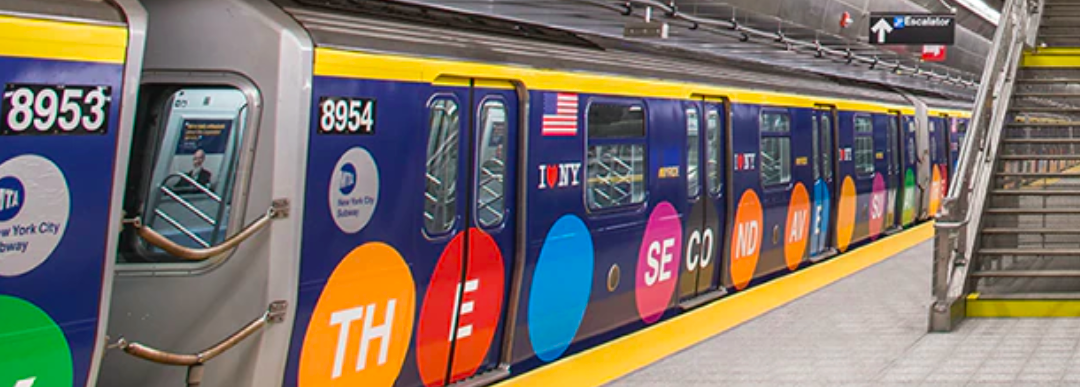
In his role at MTA Construction and Development, Mr. Lieber oversaw the agency’s $55 billion five-year capital program, including State of Good Repair investments in infrastructure and facilities of New York City Transit, Long Island Rail Road, Metro-North Railroad, and MTA Bridges and Tunnels. He is responsible for upgrades to signals and other major systems, system expansions, and mega-projects such as East Side Access, the second phase of the Second Avenue Subway, and the Third Track expansion of the Long Island Rail Road mainline. He is also responsible for upgrading and professionalizing the MTA’s project management capacity and for integrating real estate planning and economic development into MTA infrastructure projects.

From 2003 to 2017, Mr. Lieber served as President of World Trade Center Properties LLC, where he was responsible for managing all aspects of the Silverstein organization’s efforts to rebuild the World Trade Center site, including planning, design, and construction issues; business, financing, and legal matters; and public affairs, government, and community relations.

Earlier in his career, he held positions in the administrations of President Bill Clinton and NYC Mayor Ed Koch and worked as an attorney in private practice.

Elizabeth Velez will be nominated to serve on the MTA Board. She is currently the President of the Velez Organization, a second-generation construction firm started in1972 by her father, Andrew Velez.


Elizabeth Velez photo by Velez Organization


To her credit are hundreds of projects which have come to fruition under her direction, including over 600 units of housing made affordable by state and federal grants in the Bronx and Harlem, and over ten billion dollars of significant educational, healthcare, and large-scale projects throughout New York.

She is a Trustee of Boricua College; an accredited private institution serving primarily Latinas through three campuses in New York. She serves on the advisory boards of numerous New York City and New York State agencies, industry non-profits, and groups supporting mentorship and scholarships for youth. She is a member of the Board for Catholic Charities and the New York City Police Foundation. She is currently serving as a Commissioner of the New York City Property Tax Reform Commission. Following Hurricane Maria’s disastrous landfall, Elizabeth was appointed to the NY Stands with Puerto Rico Recovery & Rebuilding Committee, the NY Memorial Commission for Hurricane Maria, and has spearheaded numerous workforce and economic development programs – including a satellite corporate office in Ponce Puerto Rico. On the international front, Ms. Velez is Co-Chair of Iran 180 – an organization that advocates for human rights and the end to Iran’s nuclear threat. She is a contributor to media outlets such as Matter of Fact TV with Soledad O’Brien, Fox News Latino, The New York Daily News, The Wall Street Journal, El Diario, La Prensa, Hispanic Business, ENR, City & State, and Crain’s New York Business, and most recently, DOWNTOWN Magazine.

She is an outspoken advocate for diversity and empowerment of women and a sought-after speaker on women’s leadership and work/family balance issues. In addition to numerous awards and recognition, Ms. Velez was recognized by City & State as one of the “Manhattan Power 50“.

Help us in congratulating both Janno Lieber and Elizabeth Velez.

Reposted from https://www.governor.ny.gov/news/governor-hochul-announces-nominations-mta-board

Categories
Entertainment Technology

What Are the Best Online Games for the Festive Period


Christmas is the merriest time of the year and it’s not just because of the presents we get. It’s the time spent with family that matters, as we often lead hectic lives that don’t really give us too much time for such occasions. At the same time, the Christmas break is a perfect time for us to revisit hobbies or enjoy the stuff we couldn’t before it.

Enter casino games. The iGaming industry is always the most active during Christmas. That’s when casinos get a Santa makeover and when a slew of Christmas-themed slots are released. There are many games online you can play during Christmas, and we’ve listed the best for you below.

Jingle Mingle Bingo

A game you can play via Zoom, it’s one of the favorites Christmas titles for many companies around the world. To start playing, you should split the group into teams via breakout rooms then give each team a bingo card. Marking squares requires a player to find another one who fits the description. The team that marks five boxes in a row wins the round.

As the name explains, you can mingle and play bingo online with this game, making it a Christmas favorite for many.

Christmas Carol Megaways

Online casinos these days are filled to the brim with great slots and casino games. For example, Casumo has the latest casino games from top providers. From Christmas slots to blackjack, poker, and roulette, you can have fun for days during Christmas break.

If you ask us, the first game you should definitely try is Christmas Carol Megaways. Developed by Pragmatic Play, it’s a Christmas Carol story with the Megaways engine in tow and 200,704 ways to win. 

It’s a high variance game, but it pays up to 20,000x your bet. It’s a game that features popular Christmas characters and a wide range of modifiers that can definitely spice up your eggnog this holiday period.

Christmas Movie Charades

It’s Charades, but with Christmas movies. And yes, Die Hard will be the favorite of many. For your info, we’re in a group of people who consider it a Christmas movie. You don’t need to come up with the movies on your own. There are several movie generators on the web that will make things easier.

This is one of the top Christmas games you can play with friends online or in person, so don’t pass upon it.

Aloha! Christmas

In Aloha! Christmas, NetEnt has paired one of its most popular slot games with the Cluster Pays mechanic and a tropical setting. The result is a very merry holiday in the tropics with great mechanics and medium variance as well as wins of nearly 2,000x your bet.

Aloha! Christmas is one of the most unique holiday-themed slots on the market. The fact that it’s brimming with bonuses and special features should make things even more exciting. And all those tiki totems smiling on the reels will surely cheer you up and put you in the right mood, as no one should frown or pout during Christmas.


 photo credit – Pexels Andrea Piacquadio

Categories
Business Featured Industry News Lifestyle Living News NYC Outdoor

Lower Manhattan Plan To Combat Climate Change

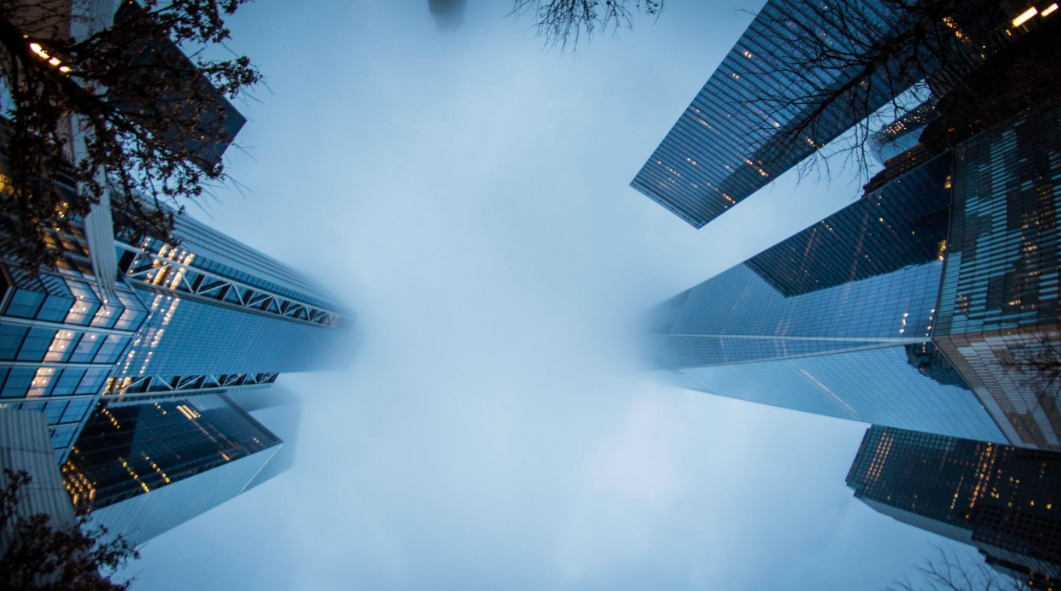
A new plan to protect Lower Manhattan from rising waters and the effects of climate change was unveiled last week, calling for flood walls, improved stormwater infrastructure, new open spaces, and a drastic reshaping of the shoreline.

The master plan from the Mayor’s Office of Climate Resiliency and New York City Economic Development Corporation aims to defend the one-mile stretch from the Brooklyn Bridge to the Battery from future storms like Superstorm Sandy and intense rainfall, like the soaking the city got from the remnants of Hurricane Ida last summer.

The plan would dramatically reshape the neighborhood’s relationship to the waterfront — adding more soft spaces to absorb water and extending the shoreline into the East River via a walkway. It calls for a multi-level construction that would add a water-level esplanade underneath the extended shoreline, where floodwalls would absorb waves from coastal storms. Piers and terminals for the NYC Ferry would also be reinforced.

The problem the plan is addressing is one that much of the borough, and the city, is facing in the climate crisis: Manhattan is made of hard surfaces, which give rain and floodwaters nowhere to go. The new plan would fix that via new stormwater pumps and green spaces that sponge up the water while creating coves to protect wildlife.

The project is expected to cost between $5 to $7 billion and would take an estimated 15 to 20 years to design and build. That’s already a tight timeline: according to the New York City Panel on Climate Change’s projections, rising tides have long been expected to flood Lower Manhattan on a monthly basis by the 2050s; in another 30 years after that, floods could become daily. Some frequent tidal flooding might occur as early as the 2040s, less than 20 years away.

This master plan is the last link in an overall Lower Manhattan Coastal Resiliency Strategy that has already proposed makeovers to shore up the rest of the tip of Manhattan. This particular stretch of neighborhood holds extra challenges because the built infrastructure — like subway tunnels, roads, and shipping ports — provides less green space and less wiggle room than other stretches of the waterfront.

The plan used input from the Climate Coalition for Lower Manhattan, which includes the Alliance for Downtown New York.

Read the full plan and see renderings here.

photo: Mayor’s Office of Climate Resiliency


Categories
Business NYC Uncategorized

3 Tips for Starting a Business in New York

Maybe you finally quit your corporate job, or perhaps you decided to move to NYC. Whatever the reason, starting a business in New York is an exciting endeavor. Here are 3 tips you need to know about getting your business up and running in the Big Apple.

Know What You Want to Sell

It might sound obvious, but before you start a business in NY, you need to figure out what you want to sell. You might be selling a service, or perhaps you’ve created something that you want to sell. 


If you invented something, before you go all-in on it, it’s highly recommended that you work with a patent lawyer in New York. This is important because you’ll want to make sure that your idea is not already patented by someone else, and the lawyer can also help you figure out if it’s worth getting a patent for your idea.  

Determine Your Location

Are you planning to have a brick-and-mortar store, or will your business live strictly online? If you choose to have a storefront, you need to carefully think about the neighborhood in New York that you want to be located in. Do you want to work in Manhattan, the cultural and financial capital of the world, or do you prefer a quieter area like Brooklyn? 


Anna Nekrashevich


You’ll also want to consider your budget since rent is not exactly cheap in New York. If spending thousands on rent each month is not something you can afford, basing your business online is likely a better option (at least to start).

Register Your Business

Before you can legally work in NY, you must correctly set up your business and get it registered. This includes doing the following:

  • Determining your business name (it’s a good idea to check with a trademark lawyer to ensure the name isn’t already trademarked)
  • Selecting a business entity (LLC, sole proprietorship, etc)
  • Registering it with New York’s Tax Department
  • Apply for an EIN
  • Obtain any necessary permits


Once you’ve done that, you can open up a business bank account, apply for business loans, hire employees, and get business insurance.

Final Thoughts

New York City is a great place to start a business filled with countless opportunities. Take time to get your business set up properly, and then connect with the community to spread the word about your new business.