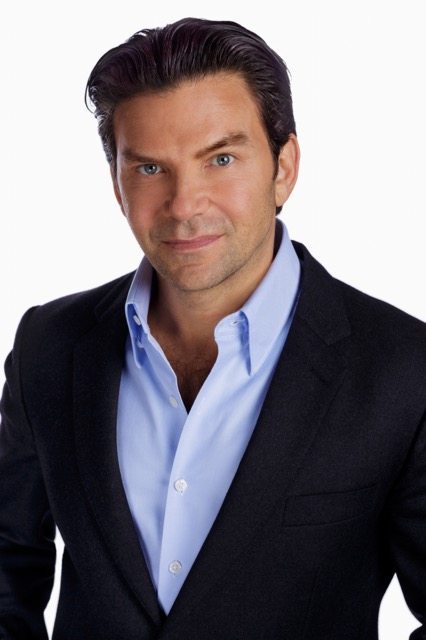
A recent journalism grad from Quinnipiac University with honors, Jackie has taken her writing and managing talents to Downtown Magazine. While at QU, she wrote for her independent newspaper, The Quad News, served on the planning board for her sorority, Chi Omega, and participated in the athletic intramural program.
She is extremely passionate about traveling, especially after studying abroad in London for 6 months. She also enjoys anything entertainment and pop culture related, the beach, spending time with her family, friends and cats, and of course, exploring NYC!
Belgian producer Lost Frequencies made his mark on the European dance music scene with singles such as “Are You With Me” and “Reality.” Available on Ultra Music, Lost Frequencies is ready to blaze a trail through the United States, kicking off a limited run of exclusive DJ shows tomorrow, Jan. 29 at Webster Hall. Other stops include Chicago, Los Angeles, San Francisco and Seattle. In the spring, he’ll return again to appear at Coachella Saturday, April 16 & 23.
Pictured top L to R: Andrew Bayer, ilan Bluestone; bottom L to R: Grum, Jason Ross. Photo courtesy of Anjuabeats Records
The 2016 ANJUNABEATS Tour kicked off last week in Toronto on Jan. 22, but it will be making a much anticipated stop at The Brooklyn Hangar (2 52nd St.) in Brooklyn, NY on Jan. 29. The tour is the largest — and most impressive — to-date. Set to play are Andrew Bayer, ilan Bluestone, Grum and Jason Ross, with special guests Seven Lions and Myon & Shane 54.
Originally founded by English progressive trance group Above & Beyond to house their own releases, ANJUNABEATS has quickly developed into one of the strongest and most dedicated fan bases in dance music today. Celebrating its 15-year anniversary, the tour will travel throughout Canada and the United States, making stops in Boston, Washington D.C., Atlanta, Orlando, Los Angeles, Vancouver and Calgary, just to name a few. Recently, additional tour dates were added in Chicago, San Antonia, San Diego, San Francisco, Seattle and Minneapolis.
In anticipation for the show on Friday, Jason Ross is launching his new single, “Frontier,” which can be premiered here:
In addition, music from all of the artists can be found on Beatport. For all the tour dates and ticket information, please visit the website here.
Dara Hartman from The Dogpound. Photo: Alisha Siegel
Everyone knows it can be hard to get up to go work out. Crawling out of bed, throwing on some ratty old sweatpants, an ugly T-shirt 3 sizes too big (that probably belonged to an ex-boyfriend), and ill-fitting sneakers you’ve had since college, is the most anyone can ask, right?
Wrong.
Wearing workout gear that looks good can make you feel good.
“If my workout clothes fit my body and suit my style, I start my workout feeling better about my body,” says Dara Hartman, ambassador for the fitness clothing store Bandier and personal trainer/fitness fashion guru at The Dogpound. “Go to the gym in something that makes you feel good about yourself, in something that is comfortable and fits, but also lets you express you. Accentuate the parts of your body you are proud of. Show off your hard work! If you think your back looks amazing, wear a strappy sports bra or a fun top with open-backed detailing and show it off. If it’s your legs, wear shorts or tights. Feel good about wearing your clothes. I like to wear crazy patterns, colors, and interesting cuts or mesh panels that are more striking. Because I’m pretty small, I like wearing crop tops–not to show off my abs, but because I feel like they make me look longer and taller.”
Dara Hartman from The Dogpound. Photo: Alisha Siegel
Fashion magazine Well + Good even followed Dara for a week last year to showcase her fashionable fitness attire. Some of her favorite workout outfits include Bandier’s printed leggings and her signature crop top!
Three Keys for a Fashionable Workout:
Wear shoes that fit. In a high intensity workout, your feet take the brunt of the punishment. Having shoes that fit well are paramount and can save you from ankle, knee, and back injury. Ditch your worn out running shoes that never fit quite right, and look for the proper shoe for your individual workout needs.
Find workout clothes you feel good wearing. Have a few outfits that are reserved for the gym. You don’t have to splurge on fancy leggings or strappy sports bras, but you should walk out the front door feeling positive. Feeling good about yourself and how you look before you work out will put you in a constructive mindset, and you may see yourself working harder, more effectively, and consistently. With all the amazing fitness attire out there, you can capture your unique personal style–whether it’s basketball shorts and loose fitting tank, or skin tight leggings and bandeau–get dressed, get out there, and smash it!
Own your sweat. No matter how you walk out of the gym–flushed and glowing, or drenched and salty– own your sweat! Those pit stains are your badge of honor. You worked it, and you worked it hard.
Ok, now hit the showers!
*Use Dara Hartman’s code DARA15 for 15% off Bandier apparel at www.bandier.com
“First and final,” says Darren Sukenik, as he explains to me the several different projects he has been a part of, while touring a gorgeous and massive duplex space for sale at one of his properties, 150 Charles St. As one of the top real estate brokers for Douglas Elliman downtown, Darren has been a major part in almost every new luxury residence building in the area. From 150 Charles St. to 10 Madison Square West (developed by Steve Witkoff), and 111 Murray St. (developed by Witkoff and the Fisher Brothers), these properties, as discussed in our Q&A, ring true to Darren’s catchphrase, “first and final.”
It is also fitting to point out that, given the title of the column, “The Real New York,” Darren is a quintessential New Yorker, born and raised, and knows the downtown area, especially the West Village, like no other. After being in the business for a number of years and with Douglas Elliman for 16 years, Darren is an old school broker who gets results based on his knowledge, experience and ability to relate to his clients on a personal level.
What would you say sets you apart from other brokers?
Darren Sukenik: Steve Witkoff [developer at 150 Charles St. and 10 Madison Square West] and I really started this formula where the street is reporting to the developer. It used to be that the developer just built the building, fingers crossed someone would buy in it…and that’s just not the way we do it anymore, especially at Elliman. But Steve and I, when Steve located this property [150 Charles St.], he engaged in me first, and I reported what the market was looking for, and he literally built exactly what the market was looking for. Fits, finishes, windows, kitchen, like everything.
Do you do that specifically, or do all Elliman agents [advise developers on what the market is looking for]?
D: There are a core of us within the company now that, sort of do that, but it was never like that before, whether it was Corcoran or Brown Harris, they always had a sales team on a new building that might or might not have been a big broker, or might or might not have known the neighborhood; they were just like a sales team that were hired for the building. We, and I hate to speak about myself in this way, “super broker” is a term that is whatever, but I’m a big broker downtown, and never before did they take a big broker and put them on a project, just because it was never done before, and it was me and Raphael De Niro [broker at Douglas Elliman]. So after that, Elliman realized there was huge value in that, because no one else was doing it, then Susan de Franca [President and CEO- DE Development Marketing] joined us from Related, and then we kind of spearheaded that whole movement, so there are a handful of the original brokers that did kind of spearhead this with them that stayed to continue the concept.
Did you do that with 111 Murray St.?
D: Yes, I did 10 Madison Square West, and then I went on to 111 Murray, and now I’m going to be doing it at Park Lane as well.
111 Murray St.
With these buildings, 150 Charles St., 111 Murray, 10 Madison Square West, how do you see these residential buildings impacting the neighborhoods they are in for the future?
D: In this particular case, with what 150 Charles did, is that it took a really, it took an exclamation point and put it at the end of the sentence. This is, and very much a legacy property in that it’s the first and final; it’s the first of its kind that’s so amenitized in the West Village. Usually, you could never live like this in the West Village, that’s why it appealed to a lot of Park Avenue and 5th Avenue because they could live the way they had been doing uptown, downtown. This was the first, and the last way that you could live like this in the West Village, because there’s no other footprint that could support something like this, so first and final here.
150 Charles St.
Same thing at Madison Square West. When we bought the toy building, it was a lovely park, you know Shake Shack started changing it, 1 Madison kind of changed it, but we became the anchor on the west side, and all of that park frontage and that kind of an A-plus building never existed on the park, so it really made the park a “park view,” it was never really a park view; it was a nice park, but it wasn’t a park. But now, everything is built full completely around it, the Edition Hotel is on the other side, so what we did, again, was first and final. The first big luxury building that could possibly be park front, and it’s the last, because there’s no other way you could possibly build on the park now, same thing with 111 Murray St.
10 Madison Square West
We had a 30,000-square-foot footprint, we chose to work with 10,000 square feet, with 64 stories in the air, and we’re completely protected views. And because of where we are in the triangle of TriBeCa, you get this incredible skyliner view of the city because it fans, nobody can ever do that again. It’s first and final, because it really is, and that’s what this audience wants; they don’t want something that somebody else can have. They want to have the best, and they want to make sure that no one can have what they have. That is how they want to live.
Very specifically, here [in the West Village], I know the market and I know what the clients want. I’ve always lived here, and I don’t profess to know Park Avenue, 5th Avenue, I could care less about the Upper East Side, not for me. But here, I know what color cars they’re driving, I know what kind of bag she’s wearing, I know where the kids go to school, I know where they have lunch; I know everything about this neighborhood.
I am their buyer, I know everything about their buyer because I live with them, we hang out with them in the kiddie park, like we are them. And before this building [150 Charles St.], there was never that direct connection between the street and the developer, and that’s what I’ve done. Instead of building a building and hoping that people would come, we’ve built a building for the market.
What would you say the most challenging part about your job is?
D: Having enough hours in a day, it’s really hard for me personally and professionally because my lives blur. This is what I do, and I could be out east having ice cream with my fiancee, and I could turn around and one of my developers could be standing there, so I’ll have to talk to him. So just finding enough time in a day, that’s the most challenging thing. I’m just very entrenched in, and I love what I do, but I’m engaged all the time. So it’s very hard to disengage.
Now you’ve lived in this area for awhile, is there something that just keeps you here?
D: Yeah, it’s interesting. I’ve been in this area since I’ve been born basically. My dad used to own a lot of the buildings along the West Side Highway, and I remember he used to have this big white Caddy, and I remember when we used to come and he used to visit, my mother used to push my head down in the backseat so I wouldn’t see what was going on because it was shady. And I grew up on Long Island, like 20 minutes from the city, but we were always here, and I went to NYU, so I went to NYU at 16, so I’ve just always been here, and I never left. So I just don’t know where I would go, really. But I’ve just always been here, I had a brief stint on 1st Avenue and 1st Street when I was in school, but I came back to the West Village, always. It’s the only place that has soul; it really has this feeling that you can’t replicate anywhere else, northwest TriBeCa especially is the same, and that’s why I think it appeals to so many Europeans is because it has this vibe that’s really a respite from the madness, while still being almost in it.
And especially now, a lot of people don’t have to live in the Upper East Side to get to Midtown to commute because Goldman Sachs is down here, Citigroup is down here, Conde Nast is down here, all of these big companies, NewsCorp is down here, so everything, especially now that Hudson Yards is going to be anchored to the north, and we have Brookfield and all of that to the south, you really have the stretch that I call the “Platinum Mile” that we never really have to leave.
I was reading on your bio that you have your own interior design firm (called ‘TWENTIETHCENTURY’), how did you get started with that?
D: I do, my background before real estate, I was in the fashion industry and I manufactured two lines of womenswear, and sort of at that time and after that time, I had an interior design firm. I have this sort of innate understanding of real estate, I used to buy and sell houses, like right after college I used to just get in there and redo them, and it’s always something I liked doing. And I bring that with me wherever I go.
So the interior design is offered to your clients as an extra service to them?
D: Yes, and it is offered to my sellers and to the developers because if I look at a floor plan and I’m like, ‘Where are they putting a sofa?’ Like, you don’t have the room for an 8-person dining table, and they have to seat eight people, or there’s no room for it, because I know how this audience lives, and I really know how to read a floor plan and how to design a house, that helps also. Obviously, they have their own architects and designers, but sometimes they miss stuff. And I vet for closets, and vet for all the things that I know.
Is there something you would say distinguishes good design from great design when it comes to buildings?
D: Yes, intuitive design. Something that once they move into the home, they can’t even believe that they have it. Like an extra storage room, like a real formal laundry room that they’re able to use and enjoy. Extra closet space, ceiling height, things that they don’t know that they would necessarily ask for, but things that really improve their quality of life.
Do you think there are any common mistakes that buyers and sellers make when trying to purchase or sell a home?
D: Some apartments show better empty, some apartments show better without pets and other things too. But I don’t think there’s a specific thing that they do wrong.
What would you say are some of the benefits of having a broker?
D: It depends on the broker, because brokers could add a lot of value. I have a bunch of clients that I know are looking, like I’m an old school broker. I could easily take the place of StreetEasy, people think they can go on StreetEasy and find an apartment. They can’t really, because they don’t know the background of the building, the numbers are a little skewed, the numbers might be a little dated, and looking for an apartment, I know every single building, I know every single floor plan in every single building in this neighborhood [West Village], and I also know people that aren’t necessarily looking to buy something today, but they would. I’m really an old school matchmaker, so I know.
How do you manage to keep organized with everything that you do? Are there any tools or apps you specifically use?
D: I’m embarrassed to say no. My nephew’s a few years younger than me so he keeps that under control, but it’s just old school…like sports, how some people just know every player, every stat, etc. And I also know what people don’t want. So, I’m never going to show someone an apartment that faces a brick wall and say ‘It’s fabulous!’ Often, people think they do know what they want, but they don’t. Nobody knows what they want, and that’s what I teach people that usually work with me; ‘Well they said they didn’t want so and so,’ I’m like, ‘No, no, they just don’t know that they do want so and so.’ So sometimes it’s more important, I think, and this is what I try to teach the people that work with me, it’s really more important to find out what they don’t want, rather than what they do want. Because what they do want often doesn’t exist, or it might not really be what they want. I know viscerally what somebody’s going to react to, and it might not be what they think they want, but I know what they want because I can emotionally and design-wise engage with who they are and who they want to be, and what they’re looking for but can’t express. I know because I’m in the business, but they don’t.
In support of their seventh studio album, Drones, the English band Muse will be performing at the Barclays Center in Brooklyn on Jan. 27. The Grammy-nominated album is a concept album that focuses on the dehumanization of modern warfare, featuring tracks such as “Dead Inside” and “Psycho.”
In addition, the performance is expected to reach new heights, with the band performing on the stage from the middle of the arena, allowing for the concert-goers to experience a true 360 degree audio and visual experience. The band is known for pushing boundaries with their stage production and performance, and ‘The Drones World Tour’ is no exception.
For more information and tickets, please visit their website.
When outside temperatures drop, working out outdoors becomes unappealing. Who wants to get their sweat on, only to have it freeze to their leggings? Don’t sacrifice your workout just because the mercury drops. There are several steps you can take to protect your body and get the most out of your workout, no matter the climate.
Working out in cold weather can be tricky. A drop in temperature seems to signal a time for eating and hibernating, not running or weight lifting. Avoid snowy day lethargy by understanding how your body works during a cold temperature workout.
Photo: Nigel Barker
The keys to cold weather workouts are to dress in layers and stay hydrated.
When it is cold outside, our bodies do whatever they can to stay warm. The easiest method for increasing body temperature is to provide fuel. Eating and digesting food heats up core temperatures (which could explain all of those pumpkin spiced muffin cravings), but isn’t always the best go-to when you’re feeling chilly and trying to stay in shape. Enter: the wintertime workout!
During a workout, body temperature increases. As muscles warm up, your heart pumps harder, and blood circulates throughout the body, raising the core temperature. In order to prevent body temperature from rising too high, the hypothalamus, the part of the brain responsible for many metabolic processes including monitoring and managing body temperature, sends out signals to create a sweat response. Even when outside temperatures are below freezing, internal body temperatures heat up during exercise. This is where dressing in layers become increasingly important.
As soon as you start sweating, remove layers. As your sweat evaporates, it can leave you feeling chilled. Combat this by dressing in sweat wicking clothing layered with breathable fleece or wool and avoid cotton as it stays wet against your skin. Properly insulated, you may be able to work out harder in cooler temperatures than warmer weather, simply because the cooler air keeps you from overheating quite so quickly. And as a huge bonus, you can burn more calories during your workout since your body has to work harder to keep you warm!
Studies have shown that cold temperatures can turn what is known as white fat, or white adipose tissue, into brown fat or brown adipose tissue (BAT). This brown fat goes to work burning calories in order to generate heat. BAT plays a pretty important metabolic role and can help with weight loss, and a colder environment can stimulate BAT production.
Proper hydration during working out is always important, but during a cold weather workout, it isn’t as intuitive to keep drinking. Every breath of cold, dry air, is warmed and humidified inside the body, causing the loss of hydration with every exhale, which can lead to dehydration. Dehydration negatively affects the overall effectiveness of your workout, and can prevent you from burning as many calories as you would while hydrated, leaving you feeling depleted, exhausted, and even sick. Stay at peak performance by keeping hydrated.
Working out in cold temperatures can have amazing fat burning benefits, help your heart stay healthy, and keep you feeling great all winter long.