Categories
Featured Fitness Health

Couples Who Sweat Together, Stay Together

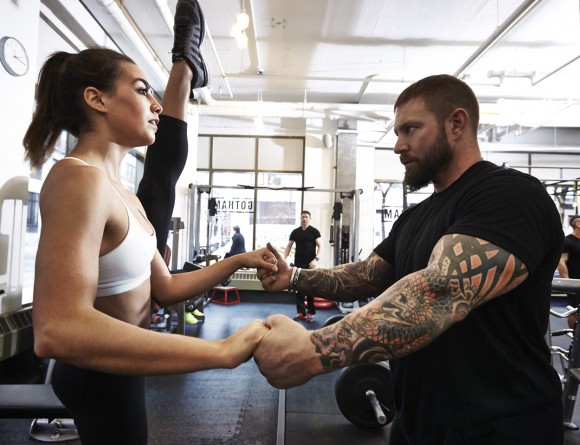
couple workout
Photo: Courtesy of Kirk Myers

Working out as a couple is a great idea and has many benefits. First and foremost, a “couple” workout doesn’t necessarily have to be with your significant other; it can be a friend, a mentor, or anyone that you are comfortable with.  For starters, couples often don’t get enough ‘alone time’ or are always preoccupied and stressed. Going to the gym is an activity that is ideal to share with a significant other. With fitness, motivation is always important, and what better motivation to have than a loved one.

The benefits of working out will aid the body and mind of both individuals, and communication is bound to improve between the two. The exercise itself has potential to have both a physical and emotional positive impact. Working out also promotes less stress, better sleep and a sharp brain. This is a win-win for everyone. Couples feel better about themselves and each other, while the energy between them flows smoothly. Add endorphins to all this goodness and no couple can refuse this idea. Endorphins spice up the relationship and keep both individuals at a positive level.

Sometimes, the two individuals can be into completely different kinds of workouts. If your guy only likes to lift and you want to do some cardio or yoga, there’s a clear solution. The key is to pick a full body workout that both of parties would enjoy, like boxing or cross-fit. If it is new to both, then it’s all the better. Going on a new journey together adds to the harmony as a couple.

There are several celebrities who like to work out together and it helps both of them. For instance, Reese Witherspoon and Jim Toth often jog together. Justin Timberlake and Jessica Biel bike and jog together. Gisele Bundchen and Tom Brady hike together. These are fun activities that can easily fit into busy schedules and help couples bond deeper.

Photo: Courtesy of Kirk Myers

That said, here are some a few partner exercises to try out:

Partner Pushups

You start by facing each other in pushup position. After you do each pushup, you high five each other using the same hand. This makes you hold the position longer and ultimately challenges you. You also support each other by being there for each other. When you high five, you keep each other going— what’s one more pushup?

Partner Situps

You start by having your legs face each other— intertwine your legs so that you can support each other’s body weight. After each sit up, have your hands meet your partner’s hands. You know you have a pair of hands waiting at the end of each sit up, so you’re less likely to keep your partner hanging!

Partner Leg Exercise- Step Ups

This exercise is done by each person standing on opposite sides of an elevated surface, like a bench. You shouldn’t be facing each other directly; rather you should be positioned diagonally. Then step up on the elevated surface with the inner leg that is between the both of you, while holding each other’s hands for support. When you’re done, switch sides and do the other leg.

These couple workouts are bound to make you and the other person more fit; both physically and emotionally. So grab your partner or friend, and try working out together for a change!


-by Kirk Myers, Personal Trainer and Founder of the DogPound 

Categories
Lifestyle Living

“Meet Your Neighbor” Spotlight: Dr. Michael Bruck

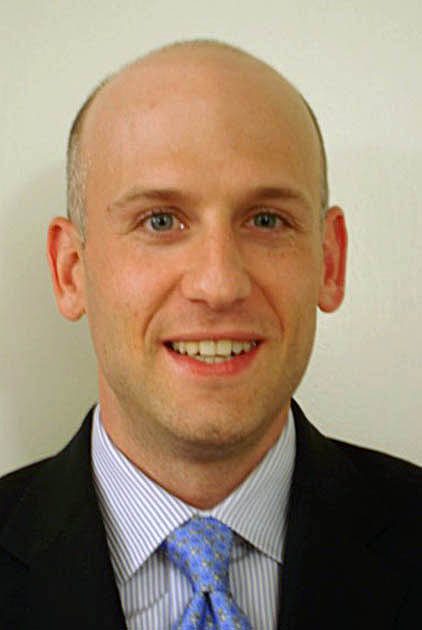
"Meet Your Neighbor" Spotlight: Dr. Michael Bruck
Dr. Michael Bruck

1.) Who are you, and what do you do?

I am Michael Bruck, a board-certified plastic surgeon whose practice is limited to aesthetic plastic surgery; both surgical and nonsurgical procedures.

2.) What is it like working in lower Manhattan? Busy! The Financial District seems to be bursting with energy.


3.) Have you always had your business downtown? What is it like compared to working in other areas of the city, or even other parts of the world? I work in both uptown, and more recently, downtown. I love both. Downtown patients seem to have a bit more hurried mindset, especially those patients who see me, early morning before work (Botox fillers– non-surgical) and those who try to squeeze in a “lunchtime” appointment–we never rush. Meticulous attention to detail takes time. Uptown (Upper East Side) is more relaxed. Just like the neighborhood, the patients are calmer. Out-of-town patients make a day of it– Shopping, lunch, and consultation for surgery.

4.) What kind of influence does the downtown area bring to your business? The downtown area is bringing new patients from a variety of fields–finance, publishing, real estate, etc. Downtown brings a more youthful patient population focused on prevention and preservation, as well as patients in their 40’s, 50’s, 60’s, 70’s who want to reverse the signs of aging.

5.) How do you see the growth of downtown affecting your business within the next 5-10 years? As the downtown area grows, I anticipate spending even more time in the area!

-by Jackie Hart
Categories
Business Featured Living NYC Real Estate

The Real New York: GRADE New York

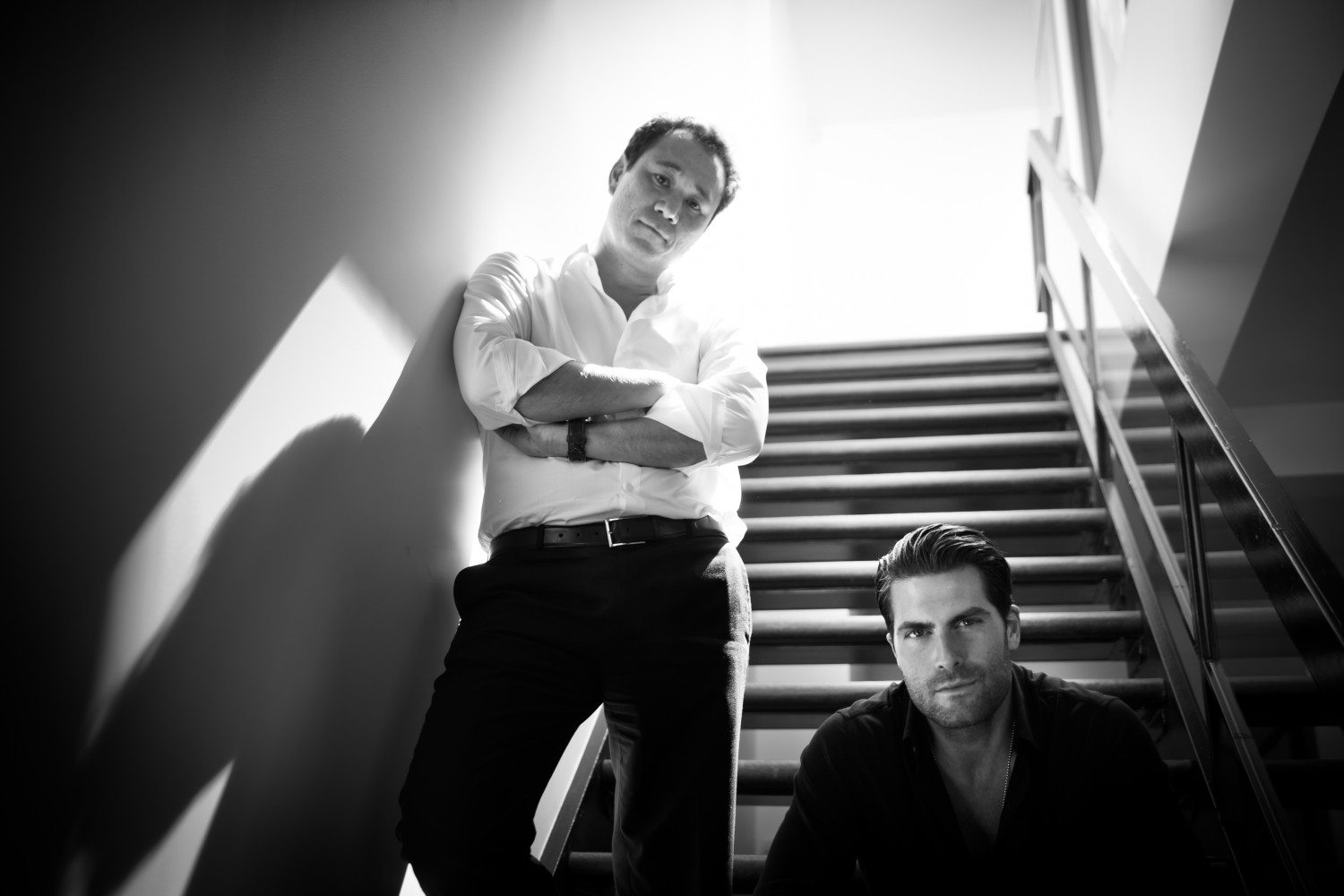
GRADE New York is a full service architecture and interior design firm led by Thomas Hickey and Edward Yedid specializing in curating personalized, luxurious spaces and uniquely articulated lifestyle experiences.  Between Hickey, Yedid and their team, GRADE has tackled many projects all around New York City, including downtown projects such as 52 Wooster, 87 Leonard and a new project on West 21st Street in Chelsea. While keeping busy in lower Manhattan, GRADE has also tackled projects in the Hamptons with developer Jay Bialsky; a trio of estates in Sagaponack that was listed earlier this year for $60 mill+. In addition, they also re-designed Oprah’s former penthouse at Place57, transforming the space into a high-tech Jetsons-esque residence where television screens pop out from panels behind artwork.

I was able to conduct some Q&A with Hickey and Yedid about their design aesthetic, projects and living in lower Manhattan and learn more about their respective professions.

GRADE Thomas Hickey and Edward Yedid
Thomas Hickey and Edward Yedid of GRADE New York

How did you two get your start in the industry and eventually end up partnering with one another to form GRADE?

Thomas: My experience has varied greatly from designing luxury boutiques for Donna Karan both domestically and internationally and also to my time as a project architect at Robert A. M. Stern Architects. I met Edward in 2002 while teaching at Parson’s School of Design. His perspective and design solutions were consistently aligned with mine which led us to joining forces and later partnering up.

Edward:  Before GRADE, I worked with interior designer, Noel Jeffrey and was involved with designing Kips Bay Show House and Southampton Show House. It was during my time there when I was exposed to high-quality, luxury design. 

How would you define what “great design” is? What distinguishes great design from just good design?

Good design solves the problem.  A great design creates pause…makes you stop to admire what you are seeing, feeling and experiencing.  Great design is high in quality, timeless and seamless. Much more than just aesthetic, it’s about curating a solution that exceeds expectations.

Does GRADE have a specific design aesthetic/clientele? Is there anything you think that sets your firm apart from others?

Our aesthetic is tailored, calm and highly detailed and attracts clients that are looking for those qualities in their projects. Our design stands apart from others because we incorporate a holistic approach, spearheading both the architecture and the interior design at once.  This allows our clients to anticipate what the finished project is going to look like. They know the details, they see the patterns, and they see the way the architecture is going to integrate with the decoration and vice versa.

How does working on projects in lower Manhattan compare to other projects you have done around the city and in other locations around the world?

All of our projects are specific to the client and their lifestyle while respecting the context of the structure within its surroundings. There’s a certain energy that goes into our downtown projects that would not be appropriate for our residential projects in the Upper East Side or the Hamptons. Projects in lower Manhattan have a certain excitement and vibrancy while maintaining a level of sophistication one expects from a world-class neighborhood. One aspect that’s cohesive throughout our portfolio regardless of location is that we approach each project with a New York attitude that anything can be done.

52-wooster_living-room_0702151
52 Wooster St.

I’m familiar with one of your projects currently under construction, 52 Wooster. How would you describe your work on this project so far? How did you come to the decision to use the materials that you did for the design?  

We took the likes of the European buyer in mind while designing this project, incorporating high-quality materials such as Italian marble slabs, stained Eucalyptus and high-gloss lacquers. We also wanted to create an experience that allows residents to feel like they are bathing in their own private, urban garden, so we were careful to consider the windows as an opportunity celebrate the flow of natural light radiating into the master bathroom as well as expand the space inside. 

Lower Manhattan has seen sort of resurgence in regards to real estate and luxury homes. What do you think draws people to downtown?  

Having lived in the far West Village, I appreciate the scale of neighborhoods and the familiarity it provides for the residents.  Whether it’s the connection with neighbors or its surroundings, there is a bond you have both physically and ephemerally.  That kind of vibe is unique to downtown living. 

Do you have a project-to-date that you’re most proud of?  

There is a moment of pride with all of our projects.  However, that wears off as we focus on the next project.  We are proudest with the ongoing project of maintaining our studio and creating a consistent body of work that retains the highest qualities.

Are there any projects that you will be tackling during the new year that you can share at this time?

We’re working on a condo on West 21st Street in Chelsea where we’ve designed a modern building with open-floor plans coupled with pockets of rooms for family living. We incorporated the qualities of materials like limestone, bronze and wood to provide a clean, rich feeling both in the interior and the exterior.  The design of the facade is an extrusion and translation of the lines from the neighboring Neo-classic building. The final project will result in six full-floor units, two duplex penthouses and one townhouse unit. 

grade ny west 21st
Rendering of the West 21st Street building in Chelsea

What would you say is the most challenging part of your job?  

The most challenging part of our job is managing expectations. Everyone wants everything all the time.

What advice would you give to people looking to get into this kind of field? Do you think there are any common misconceptions people have about architects/designers?  

Architecture and interior design have to be your passion.  This is not a field where you can work 9-5 and be fulfilled.  It takes 40 hours a week to create an average design…you have to be willing to put your time in to create something special.  The rewards are unlike any other field.  What other profession creates physical manifestations of creative ideas that dictate one’s life experiences?

-by Jackie Hart

Categories
Health Nutrition

Preventing Injuries During the Winter Sport Season

Dr. Darren J. Friedman is an attending surgeon at NewYork-Presbyterian/Lower Manhattan Hospital and a Clinical Assistant Professor of Orthopaedic Surgery at Weill Cornell Medicine. Board Certified in Orthopaedic Surgery and Sports Medicine, Dr. Friedman has expertise in surgery of the shoulder, knee, sports medicine and musculoskeletal trauma. His goal is to provide comprehensive patient care in a kind, thoughtful manner with a focus on the individual.

Dr. Friedman sees patients at 170 William St. – Eighth Floor, New York, NY  10038. For an appointment with Dr. Friedman, you may call (212) 312-5567.

Dr. Darren J. Friedman, NewYork-Presbyterian/Lower Manhattan Hospital

What types of injuries do you commonly see during the winter season? 

The most common injuries are ankle sprains and ankle fractures as the result of a slip and fall on ice, wrist fractures from a slip and fall on ice and knee ligament injuries from skiing and snowboarding accidents.

How do you go about determining what needs surgery versus what doesn’t? 

The determination for surgery comes down to the stability of the joint that is dealing with the ligament injury. Unstable joints tend to require procedures to allow for stabilization and appropriate healing. In addition, structural issues within a joint that may cause mechanical symptoms (catching, popping, locking) often require arthroscopic surgery to repair. Regarding fractures, we determine if surgery is necessary by the location of the fracture and the amount of displacement of the bone. The majority of fracture and ligament injuries can be treated with either casting or bracing and physical therapy.

What tips could you provide to help people stay safe and prevent serious injuries this winter? 

Wear good shoes that have appropriate traction in slippery conditions. The majority of slip-and-fall injuries are due to black ice that can be hard to recognize. Make sure to always look out in front of you when walking to avoid slippery areas. When walking up and down stairs or on a slippery surface, hold on to a railing or something stabilizing if possible.

How can people take precautions to reduce the risk of a serious fracture or injury during the winter sport season?

Skiing and snowboarding tend to produce the most injuries in the winter season. The majority of these injuries occur towards the end of the day or towards the end of the trip when muscles are fatigued and the surrounding joints are more vulnerable. Once you sense muscular fatigue, it is time to stop the activity. Don’t go for that extra run at the end of the day.

What sort of treatment/recovery paths are there for those who are recovering from a major injury that has required surgery?

It depends upon the type of surgery that is performed. The majority of orthopedic surgery is minimally invasive and done via arthroscopy. The joint is visualized through a small camera and the damaged structures can be fixed using instruments placed percutaneously (through tiny incisions). This allows for accelerated rehabilitation and for a more rapid return of function.

Do you believe there is anything NYC could do a better job of during the winter to help prevent some of these injuries? 

Appropriate salting of walkways is extremely important when it gets icy. In addition, adequate lighting is critical.

-by Jackie Hart

Categories
Events Travel

Mountaineer Gerlinde Kaltenbrunner to Present “K2: Danger and Desire on the Savage Mountain” at the NYU Skirball Center

The NYU Skirball Center for the Performing Arts resumes its four-part speaker series in tandem with National Geographic Live by kicking off the new year with mountaineer Gerlinde Kaltenbrunner showcasing her expeditions in a presentation titled, “K2: Danger and Desire on the Savage Mountain,” on Feb. 23 at 7:30 p.m.

A native of Austria, Kaltenbrunner grew up skiing and climbing the local mountains, and her drive for adventure led her to her career path today. Kaltenbrunner successfully reached the peak of K2 at 8,611 meters, where she co-lead a team with her husband, Ralf Dujmovits, in 2012. In total, Kaltenbrunner has climbed all 14 main peaks in the 8,000 meter series, making her the first woman to do so without using supplementary oxygen.

Single tickets range in price from $35 to $70. Member and student discounts are available. Tickets may be purchased online at www.nyuskirball.org/natgeolive, in person at the NYU Skirball Center Box Office: Tuesday-Saturday, 12:00–6:00 p.m., or by phone at 212.998.4941. The NYU Skirball Center for the Performing Arts is located at 566 LaGuardia Place at Washington Square, New York, New York 10012.

Photo: Ralf Dujmovits, Courtesy of National Geographic

What drew you to mountain climbing initially? How do climbing mountains for a living compare to everything else you have done so far in your lifetime?

I already started mountaineering in my childhood with the local priest of my home village. He was an enthusiastic climber and mountaineer. He taught me the first steps of rock and ice climbing as well as ski touring. Very early on, I learned about the big variation of mountaineering, and was fascinated by it.

I really appreciate being able to live from mountaineering. I really love what I do, and everything I have done and still do, is somehow connected with my profession. Building a school in Nepal together with friends, for example, is also a kind of summit – in a different way but also very deeply satisfying for life.

What was the journey like to the summit of K2? 

K2 is the most beautiful, but also most difficult 8,000 meter peak I climbed. This mountain gave me the broadest spectrum of experiences. Tremendous and happy moments, and also very sad ones. The North Pillar of K2 was very intense in all aspects. Doing the last steps to the highest point of K2 felt like a present from universe….the feelings and insights were so deep, I will never forget them.

approaching summit
Photo: Vassily Pivtsov, Courtesy of National Geographic

Out of all the climbs to the 14 8,000 meter peaks, would you say that the K2 climb was the most challenging?

Yes, for me it was the most challenging…

Did you at any point doubt yourself when making the decision to become a professional mountain climber? 

NEVER!

What do you think are some common misconceptions that people have about what you do? 

That I do a very dangerous sport! I always tell the people that I didn’t start from 0 to 8,000! I collected a lot of experiences before I went to the difficult and high mountains. Through precise preparation and my broad experience, I was able to dare the next step to another challenging route. However, I did everything to avoid the dangerous parts. Often, I turned back because the risk was too high.

What has been the most rewarding part about your career thus far? 

To be able to choose all my goals myself without pressure from my sponsors or others.

I am also very grateful that my presentations are still so popular. This gives me the chance to inspire other people!

What are some key things people should know about safety and climbing in general before they take on such an endeavor?

Passion is one very important aspect. If you don’t have passion for what you do, then it would be wasted energy. The second thing is to make sure you are properly prepared. I don’t think it is a good idea to go straight to an 8,000 meter peak before having tried out something smaller – maybe a nice 6,000 or 7,000 meter peak. Nepal is full of them and they are also very beautiful. Once you feel comfortable with the altitude, the equipment, the technical aspects and the ability to know about avalanche danger… then you can try to climb a higher mountain. But please do not underestimate the mental aspect. Mental strength (and this often comes with passion) is very important for high altitude climbing.

Kaltenbrunner on K2_CR Ralf Dujmovits
Photo: Ralf Dujmovits, Courtesy of National Geographic

What can people expect from your talk in New York on Feb. 23? 

I am very excited to take my audience to the top of my last 8,000m peak, K2 via its North Pillar. This will give me the opportunity to show them that with enthusiasm, perfect training, persistence, willpower, patience, discipline and respect for nature, it is possible to reach your goals…it doesn’t matter which goals you have in your heart.

What’s next for you? Do you have any upcoming expeditions and/or peaks you hope to climb soon?

At the moment, I really enjoy being in Europe and doing some backcountry skiing and later in the year, I will probably do some more mountaineering in the Alps.

Of course, I will go on another expedition to the Himalayas, Karakoram or South America, however, I haven’t planned anything in detail yet.

-by Jackie Hart

Categories
Business Featured Living NYC Real Estate

The Real New York: Jody Kriss, East River Partners

Jody Kriss is a principal and co-founder of East River Partners, a private equity investment and real estate development firm that was founded in 2010. Since 2010, Jody has been involved in many different residential development projects throughout Manhattan and Brooklyn, with a number of them being successfully completed, and quite a few are currently in progress. One of his latest projects, 415 East 6th St., is quite unique as it is a luxury condo conversion on top of an East Village synagogue.

For “The Real New York,” I was able to talk to Jody about how he got his start in the business, learn more about East River Partners and discover more about their ongoing project in Lower Manhattan.

Jody Kriss, principal and co-founder of East River Partners

Tell me a bit more about East River Partners and how you got started in the business. 

It was started by my partner and I five years ago. My partner’s name is Joseph Cohen, and we thought it would be a great time to be entrepreneurs again. We thought that during the downturn, it was so hard for the developers to get the construction on, that there was going to be virtually no new supply back in 2012.  So in 2010, we started buying and developing condos in brownstone Brooklyn. We started out with one project in Park Slope, and then we did another up the street, and then we bought another, and then in total we’ve done about 15 deals now.

What did you do before East River Partners?

I’ve been doing development in New York City since I got out of college.

So you’ve been working with a bunch of different developer companies, and then you just decided to do your own thing. 

Yes, exactly.

I know you have a lot going on in Brooklyn currently, but do you have any projects ongoing in lower Manhattan? 

Absolutely. We’ve got a project that we’re about to complete in the Lower East Side. The East Village. It’s at 415 East 6th St. It’s really an exciting project. First of all, it’s landmarked, and we’re restoring a 100 year old synagogue, and turning it into three residential lots, and the synagogue will remain operational on the ground floor. We’re restoring the building and creating a new space for it.

415E-6TH-ST-02-PH-BATH-MASTER-P5-MED
Renderings of 415 E 6th St.
415E-6TH-ST-01-PH-KIT-LIV-P7-FINAL-MED
Renderings of 415 E 6th st.

How did your firm get involved in that? 

A friend of ours was walking down the street and met them, and you know, called us up and said, ‘I’ve got this really, kind of interesting, off the beaten path opportunity for you,’ and we were excited about it.

Other than that instance, how do you usually find properties to develop? Do you have people that come to you, or do you scout different neighborhoods looking for empty lots? 

Yes, most of the time, there are folks that know what we’re looking for, and what we do, we just sort of sit in the office and pick up our phone and occasionally it rings with something we want to do.

Now as a developer, have you been noticing any sort of building trends within lower Manhattan? For example, larger buys, or more properties being used for luxury housing, more rentals, etc.? 

I think we’re seeing, from neighborhoods, like in downtown, you’re seeing the East Village and the Lower East Side, which weren’t traditionally neighborhoods where you would see new construction of condos and tie-in rentals, and it’s really exploded. Neighborhoods have really sort of hit a inflection point, where they are absolutely ripe for development, and I think the people who didn’t really consider living there five years ago, and certainly not 10 years ago, would be tickled pink to live there.

What about in Brooklyn? 

In Brooklyn, our focus is in the brownstone neighborhoods: Park Slope, Fort Greene, Cobble Hill. We keep producing relatively small projects, boutique buildings that are on tree-lined, sort of quintessential brownstone blocks. There’s an insatiable appetite for that. You can’t fill it, there’s no way.

Would you say there’s a lot of people who are looking to move out of Manhattan, but still want the city vibe, are looking into these neighborhoods in Brooklyn? 

Yes,  I think if you go on a nice, spring day to an open house, or a decently priced unit, 40-50 people will show up. It’s amazing. There’s definitely more people who want to live in Park Slope, than there are new homes in Park Slope. No question.

What would you say are some of the largest differences between working in Manhattan versus in Brooklyn?

To me, just the dollars are bigger in Manhattan, otherwise, it’s kind of the same.  It’s really very similar; the people who are buying are really similar. They are all buying their dream home, this is something they really aspire to. This huge, exciting moment in their lives, and typically, whether they are buying in Manhattan or Brooklyn, I find that they’re buying their first choice. I don’t find that people are settling for Brooklyn at all. I think they are absolutely excited to be there.

I mean, Brooklyn is very up and coming, so it has that appeal. 

No question.

Do you think there are any common misconceptions about property developers and investors? 

I think the misconception about developers is that they are all business people, I think really every developer is part artist and part business, and there’s probably a lot more of the artist than people realize in the developers. Maybe not quite as much as in the architects, but they’re somewhere on the spectrum between all business and all artist.

I mean, I think personally, developers have to have a really great eye for things, especially when you’re trying to find a space and what to do with the space, and who to bring on board to make it your vision.

That’s exactly what we do. You do really have to come up with a vision, and there’s something really fun in doing that.

Going back to current, ongoing residential developments around Manhattan and Brooklyn, are there any that come to mind that you think will really sort of huge impact on a certain neighborhood?

I think the Essex Crossing project is going to have a totally transformative effect on the neighborhood that it’s in in the Lower East Side. So they’ve known this project, and they’ve been planning it for a very long time, and the developers are absolutely top-notch.

What are the details on that project? 

They are building 1.9 million square feet, nine different buildings. There are 1,000 homes, half of which are affordable, and hundreds of thousands of square feet of new retail. It’s supposed to be completed in 2024, I read on their website.

What would you say have been some of your proudest achievements so far? 

I think creating terrific homes for folks to live in and enjoy. That’s a big achievement, and it’s really exciting for us. That’s the joy of doing what we do.

What do you think are some of the most important aspects of being successful in this industry? 

I think the real estate industry is a people industry, masquerading as a transaction industry. It’s really entirely about the people you surround yourself with.

Do you foresee high home prices and high demand continuing to be a trend in the future? 

Yes, generally speaking, we’re going to see a little bit of inflation over some long period of time. I can’t predict with any certainty what’s going to happen in 2016, but I think that if you’re buying a new home now, odds are really good that in 7 years, it will be worth more than it’s worth today.

-by Jackie Hart